The Vintage Motorcycles
Specialists in antique, classic, veteran and vintage motorcycles.
Specialists in antique, classic, veteran and vintage motorcycles.
A museum-grade collection of vintage sidecar motorcycles engineered as 3-wheel transport systems, spanning pre-war civilian mobility platforms, luxury touring configurations, and WWII military drivetrain innovations. These machines represent a rare category of mechanical design where asymmetric chassis geometry, load-bearing sidecar frames, and advanced traction systems redefined mobility across Europe, the UK, Germany, and the United States.
This archive is curated as an engineering reference collection of historically significant sidecar motorcycles. Each machine is evaluated for drivetrain configuration, structural integrity, historical role, and mechanical originality within military and civilian transport systems.
Sidecar motorcycles are not standard motorcycles - they are 3-wheel asymmetric transport systems. Unlike conventional 2-wheel machines, sidecar platforms introduce a load-bearing lateral chassis extension, transforming motorcycle architecture into a dual-track stability and cargo transport system.
Between the 1920s and WWII era, sidecar engineering evolved into two dominant systems: civilian touring mobility for pre-automobile societies, and advanced military logistics platforms designed for battlefield deployment and terrain adaptation.
Explore the full collector ecosystem including global vintage motorcycle inventory, Italian scooter collection, and curated brand archives across BMW, Zundapp, Indian, Norton, and more.
Sidecar motorcycles can be classified into three primary engineering categories based on drivetrain complexity, structural design, and operational use-case.
The most advanced sidecar motorcycles were developed during WWII as battlefield mobility systems. German engineering doctrine prioritized traction, torque distribution, and multi-terrain stability.
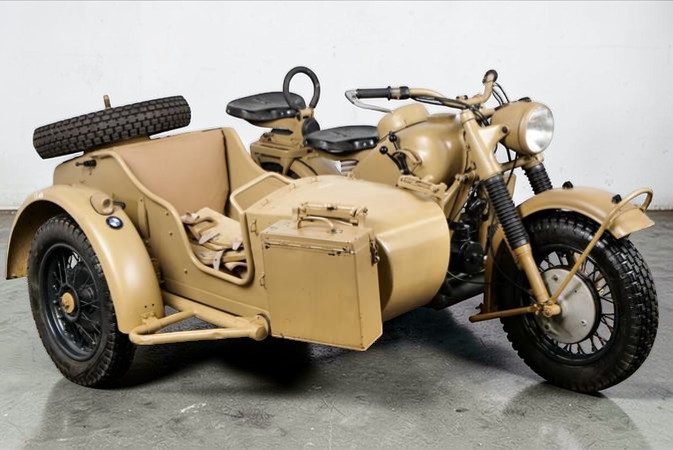
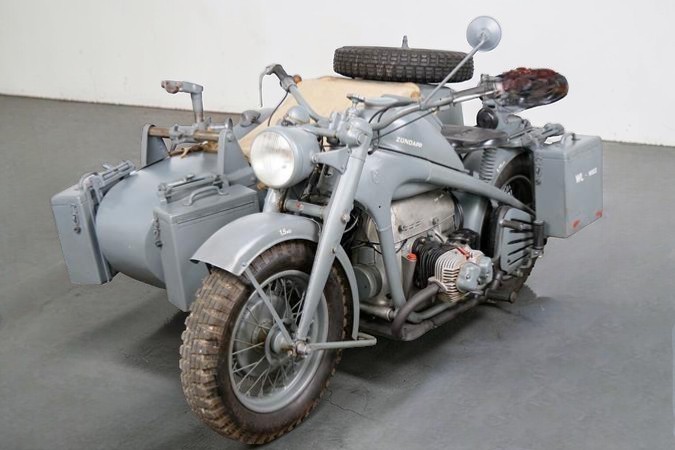
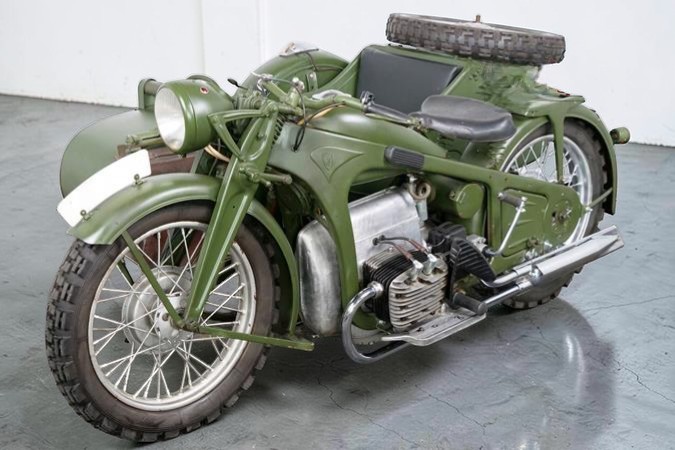
Key models include BMW R75 (1943), Zundapp KS750 (1943), KS600 Wehrmacht, and K800 military configurations. These machines were designed for reconnaissance, troop movement, and logistics under extreme terrain conditions.
Before widespread automobile adoption, sidecar motorcycles served as long-distance family transport and early luxury mobility platforms. Manufacturers such as Henderson, Norton, Sunbeam, and Indian developed refined touring systems focused on comfort and endurance.
These machines defined early intercity transport, combining mechanical reliability with passenger-carrying capability in an era before modern automotive accessibility.
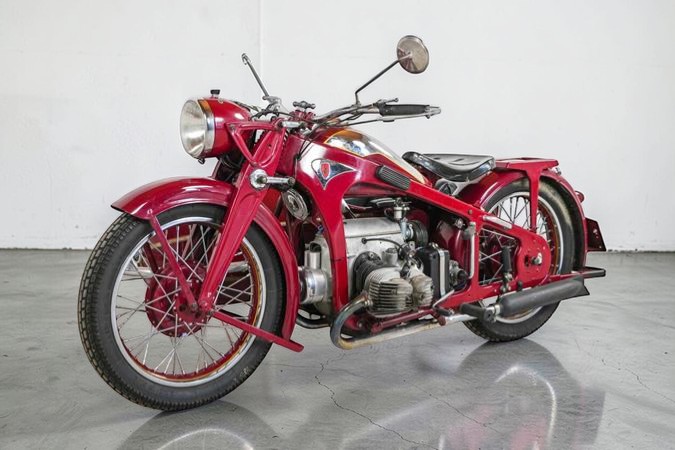
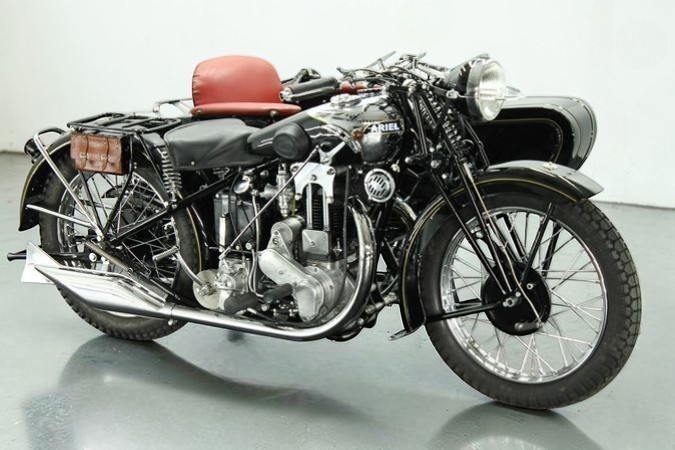
Civilian sidecar motorcycles represent a transitional engineering category between personal transport and early utility vehicle systems. AJS, Ariel, and early Zundapp civilian variants were widely used for police work, postal delivery, and light commercial transport.
These systems introduced modular adaptability into motorcycle design, enabling multi-purpose use across urban and rural infrastructure.
Military sidecar motorcycles introduced mechanical innovations that defined early multi-wheel vehicle engineering. Unlike standard motorcycles, these systems integrated drivetrain extensions and torque redistribution mechanisms.
Core engineering features include: driven sidecar wheel (BMW / Zundapp systems), shaft-drive transmission replacing chain systems, locking differential units for traction control, and reverse gear configurations for battlefield mobility.
These innovations represent some of the earliest forms of integrated 3-wheel drivetrain engineering in automotive history.
Power delivered to the sidecar wheel for increased traction across difficult terrain.
Improves torque distribution between motorcycle and sidecar wheels during off-road operation.
Reliable enclosed transmission system requiring less maintenance than chain-driven layouts.
Allows controlled maneuvering of heavy three-wheel systems in confined environments.
Sidecar motorcycles operate on asymmetric weight distribution principles, creating fundamentally different handling physics compared to 2-wheel motorcycles.
Key dynamics include counter-steering adaptation, lateral load transfer, and rigid-frame stability balancing between motorcycle chassis and sidecar structure.
The sidecar frame functions as a load-bearing structural extension, allowing heavy cargo transport while maintaining directional stability under variable terrain conditions.
Asymmetric chassis balance.
Different steering behavior from conventional motorcycles.
Designed for passenger and cargo support.
Integrated sidecar frame acting as part of the chassis.
Sidecar motorcycles played a critical role in global mobility evolution.
In the 1920s, they enabled early family and long-distance travel before mass automobile adoption.
In the UK, they were widely used for postal delivery and police transport systems.
In Germany, they became central to WWII military mobility doctrine and Blitzkrieg logistics strategies.
Across all regions, sidecar motorcycles represent a bridge between early motorcycle innovation and modern light utility vehicle engineering.
Two major historical categories define the evolution of vintage sidecar engineering: battlefield mobility systems and early luxury transport platforms.
WWII sidecar systems represent the peak of mechanical complexity in motorcycle engineering history. These machines were designed as battlefield logistics platforms capable of operating in mud, snow, and uneven terrain.
Key military models include BMW R75, Zundapp KS750, KS600 Wehrmacht series, and K800 configurations, all engineered for multi-role battlefield operations including reconnaissance and supply transport.
Pre-war sidecar motorcycles such as Henderson De Luxe, Norton Big Four, Sunbeam Model 6, and Indian Powerplus represent early luxury mobility systems designed for long-distance civilian travel.
These machines highlight the transition from horse-drawn transport to mechanized personal mobility across the early 20th century.
Key collector-grade models include:
1919 Indian Powerplus with Sidecar , a foundational pre-war touring system, and 1943 BMW R75 Military Sidecar System , one of the most advanced WWII drivetrain architectures ever produced.
Additional historically significant models include Norton Big Four, Henderson De Luxe series, Sunbeam Model 6, and Zundapp KS600 / KS750 / K800 military configurations.
Sidecar motorcycles are increasingly recognized as high-value engineering artifacts due to their rarity, complex drivetrain systems, and limited survival rates in original configuration.
Military driven-wheel systems (BMW / Zundapp) are considered the most valuable category, while pre-war touring sidecars represent historically significant mobility heritage assets.
Matching-number chassis with original sidecar frames significantly increases collector and investment value.
Below is a curated engineering archive of 3-wheel sidecar motorcycles spanning military, pre-war, and civilian systems. Each unit is verified for mechanical authenticity and historical significance.
Contact our specialists for availability, drivetrain specifications, and worldwide shipping options.
Request Availability!The development of sidecar motorcycles reflects a unique branch of engineering evolution within early motorcycling, where stability, load capacity, and multi-passenger transport became key design priorities. During the pre-war motorcycle era (1900-1939), sidecar configurations emerged as practical solutions for civilian transport, commercial utility, and early long-distance travel, integrating reinforced frames and adaptable chassis systems.
This concept was further advanced and standardized during the WW2 military motorcycle period (1939-1945), where sidecar-equipped motorcycles were extensively deployed for reconnaissance, transport, and battlefield mobility. Engineering priorities shifted toward durability, off-road capability, and rapid maintenance under combat conditions.
Following the war, the post-war motorcycle era (1945-1970s) saw the continuation of sidecar development within both civilian and utility markets, where improved suspension systems, standardized production, and enhanced comfort redefined their role in everyday transportation.
For a broader view of surviving machines, the global vintage motorcycle inventory includes rare sidecar platforms across multiple eras, reflecting their enduring relevance in both engineering history and collector culture.
Sidecar motorcycles operate as asymmetric three-wheel systems, featuring unique load-bearing frames, altered steering dynamics, and in some cases, driven sidecar wheels for enhanced traction.
Models such as the BMW R75 and Zundapp KS750 are considered the most advanced, featuring driven sidecar wheels, locking differentials, and purpose-built drivetrain systems for off-road military mobility.
Yes. Pre-war touring sidecars and WWII military models are highly collectible due to their engineering complexity, historical significance, and limited surviving examples.
Sidecars provided an early form of family and cargo transport, offering increased passenger capacity and load capability before mass automobile ownership became widespread.
Rare military models and well-preserved pre-war sidecar motorcycles are increasingly viewed as investment-grade collector assets due to their rarity and historical importance.
Vintage sidecar motorcycles represent a unique branch of mechanical history, defined not simply as motorcycles with attachments, but as fully integrated 3-wheel transport systems engineered for military, touring, and civilian utility applications.
This collection includes rare and historically significant machines such as the BMW R75 (1943), Zundapp KS750 (1943), and pre-war touring platforms like the Henderson De Luxe (1929). Each machine reflects a different evolution of sidecar drivetrain systems, load-bearing design, and real-world mobility solutions.
During World War II, sidecar motorcycles became critical battlefield assets, used for reconnaissance, transport, and logistics. Machines such as the BMW R75 and Zundapp KS750 introduced advanced engineering systems including driven sidecar wheels, locking differentials, and dual-wheel traction - effectively transforming them into compact 3-wheel military vehicles.
These machines represent the highest level of sidecar engineering ever produced, with drivetrain systems specifically designed for off-road capability, heavy load transport, and extreme terrain reliability.
Before the widespread adoption of automobiles, sidecar motorcycles functioned as practical family transport systems and long-distance touring platforms. Models such as the Henderson De Luxe (1929), Norton Big Four (1925), and Indian Powerplus (1919) demonstrate early innovations in load-bearing frame design and passenger transport.
These pre-war machines highlight the role of sidecars as early multi-passenger vehicles, bridging the gap between motorcycles and automobiles in the 1920s.
In civilian contexts, sidecar motorcycles evolved into versatile utility platforms, used for delivery, police work, and everyday transportation. Examples such as the AJS Model D (1924) and Ariel VF31 (1930) illustrate the transition from civilian transport to military adaptation.
These machines emphasize durability, adaptability, and multi-purpose functionality, making them essential components of early urban and commercial mobility.
Unlike standard motorcycles, high-end sidecar systems incorporated advanced mechanical features rarely seen in two-wheel designs. These include driven sidecar wheels, reverse gear, shaft-driven transmissions, and locking differentials - all engineered to improve traction, stability, and load capacity.
Military platforms such as the BMW R75 and Zundapp KS750 represent the pinnacle of this engineering philosophy, where drivetrain integration transformed motorcycles into fully capable three-wheel transport systems.
Sidecar motorcycles occupy a unique niche within the vintage motorcycle market, combining rarity, engineering complexity, and historical significance. Military models are particularly valuable due to their advanced drivetrain systems and direct connection to World War II logistics and mobility.
Pre-war touring sidecars, on the other hand, represent an earlier era of transportation, where motorcycles served as primary family vehicles. Together, these machines form a complete narrative of 20th-century mobility evolution.