The Vintage Motorcycles
Specialists in antique, classic, veteran and vintage motorcycles.
Specialists in antique, classic, veteran and vintage motorcycles.
A museum-grade collection of Indian motorcycles, representing the earliest foundations of American motorcycling. From pre-war V-twin touring machines to inline-four engineering and wartime military platforms, each motorcycle reflects a distinct era of mechanical innovation, industrial ambition, and collector significance.
Curated by international vintage motorcycle specialists. Each Indian motorcycle is selected based on historical importance, mechanical authenticity, and preservation quality suitable for elite private collections, museums, and investment portfolios.
Indian Motorcycle stands as one of the earliest and most influential manufacturers in global motorcycling history, predating many competitors and shaping the development of American two-wheel engineering.
From early V-twin platforms to advanced inline-four touring machines, Indian developed motorcycles that prioritized smooth power delivery, long-distance capability, and mechanical refinement.
These machines are not simply vehicles - they represent the origins of American industrial design, bridging early mechanical experimentation with fully realized transport systems.
Early Indian models from the 1910s and 1920s reflect a transition from basic V-twin configurations to more refined touring and performance-oriented platforms.
Machines such as the Powerplus series introduced improved engine durability and increased displacement, laying the groundwork for long-distance touring motorcycles in the United States.
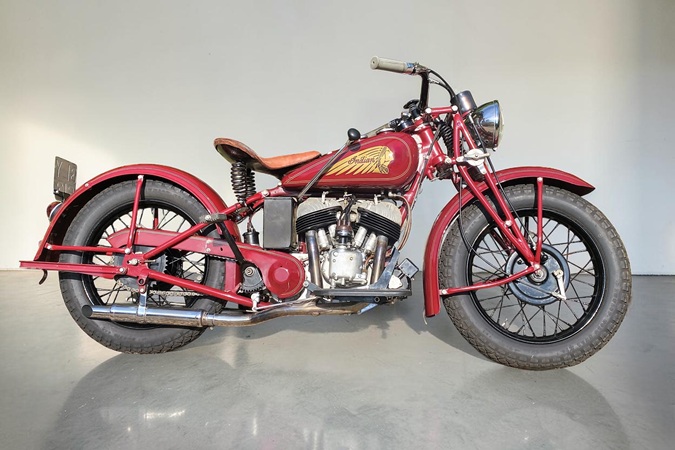
By the late 1920s, models like the Scout became globally recognized for their balance of performance, handling, and mechanical simplicity - making them among the most respected platforms of the pre-war era.
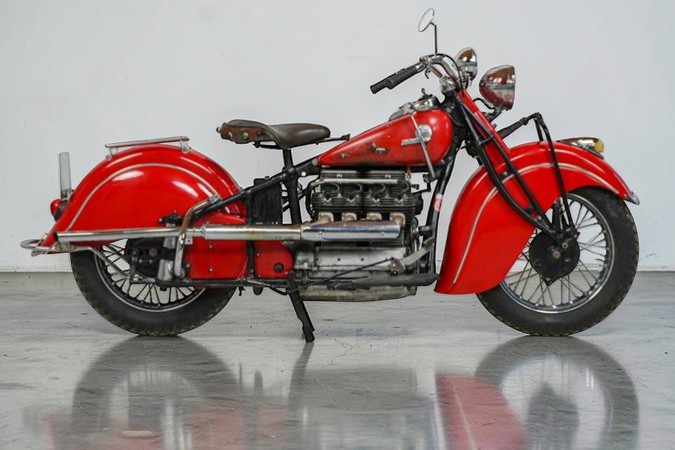
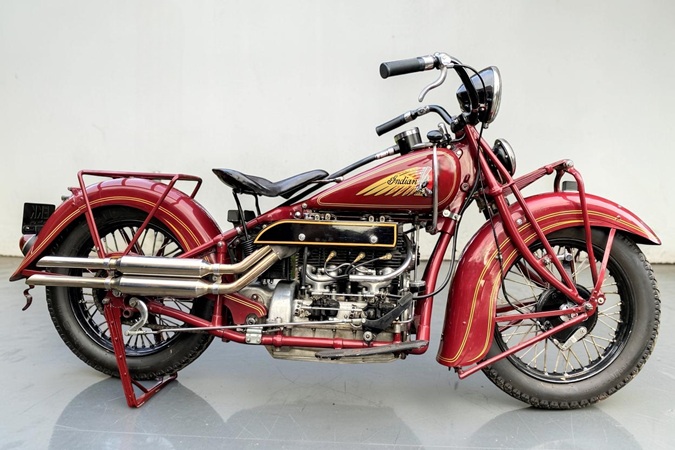
Indian's engineering reached a high point with inline-four models, including large-capacity touring machines designed for smooth operation and sustained highway travel.
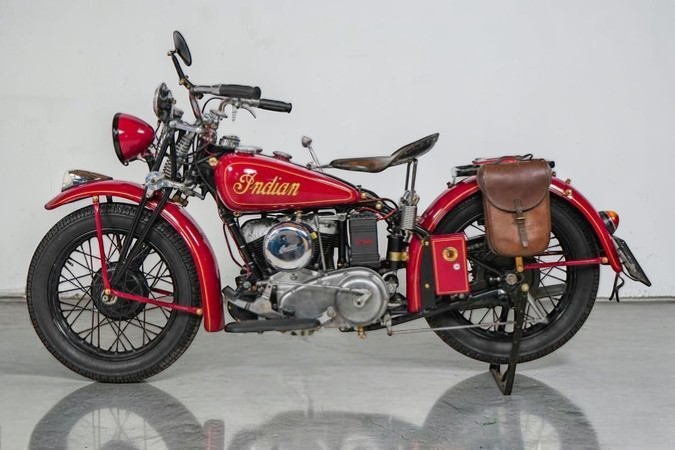
During World War II, Indian produced military motorcycles such as the 741 series, demonstrating adaptability in global conflict environments.
Today, surviving Indian motorcycles with original components and documented history are considered highly desirable collector assets due to their rarity and historical importance.
1901 - Indian Motorcycle was founded in Springfield, Massachusetts by George M. Hendee and Oscar Hedstrom, becoming the first major American motorcycle manufacturer.
1903 - The company produced its first production motorcycles, quickly establishing a reputation for reliability and early racing success.
1910s - Indian expanded rapidly, introducing advanced V-twin engines and dominating early American endurance and speed competitions.
1914-1918 - During World War I, Indian supplied large numbers of motorcycles to Allied forces, significantly boosting production scale and engineering development.
1920s - The brand reached its golden era, becoming one of the largest motorcycle manufacturers in the world with iconic models like the Scout and Chief lineage beginning to form.
1930s - Indian refined its Big Chief and Sport Scout models, focusing on smoother power delivery, improved chassis design, and stronger touring capability.
1940-1945 - Indian supported the U.S. military during World War II, producing military-spec motorcycles while civilian development slowed.
1950s - After the death of key leadership and ownership changes, the company struggled to maintain innovation against rising competition.
1953 - Production under the original Springfield Indian lineage effectively ended, marking the decline of the classic American-era company.
1960s-1990s - The Indian name changed ownership multiple times, with various revival attempts but limited continuity in engineering tradition.
2011 - The modern Indian Motorcycle brand was relaunched under new ownership, reintroducing heavyweight American V-twin cruisers with contemporary engineering.
Modern Era - Indian Motorcycle continues as a major Harley-Davidson competitor, known for its heritage styling, modern V-twin platforms, and revival of classic American motorcycle identity.
Indian motorcycles from the pre-war and wartime era hold a unique position in the collector market, combining early engineering heritage with limited surviving examples.
Inline-four models and early Scout variants are particularly sought after, while original military motorcycles represent historically significant artifacts.
Highly original examples with correct engine configurations and documented provenance are increasingly viewed as investment-grade assets within the vintage motorcycle market.
The Indian Motorcycle legacy is defined by a series of engineering milestones, each representing a distinct phase in American motorcycle development - from early V-twin powerplants to advanced inline-four systems and wartime military platforms.
Key collector-grade examples in this collection include:
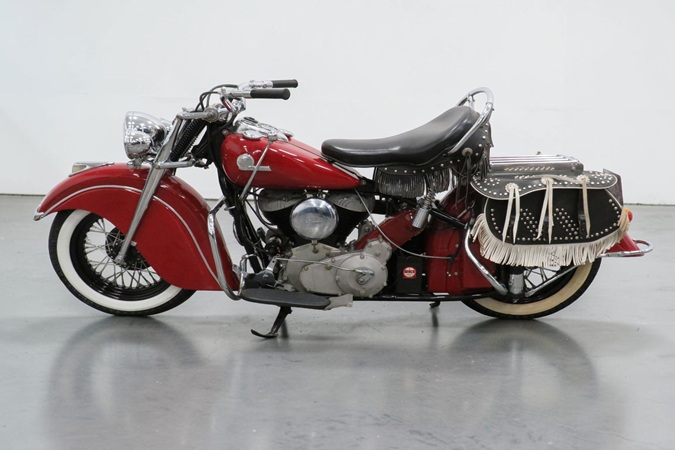
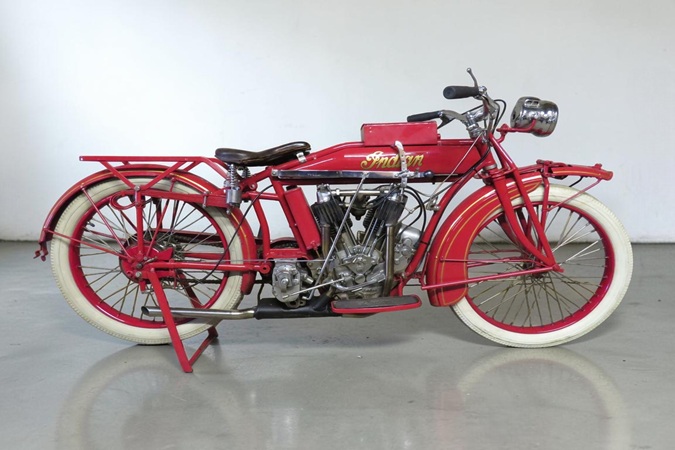
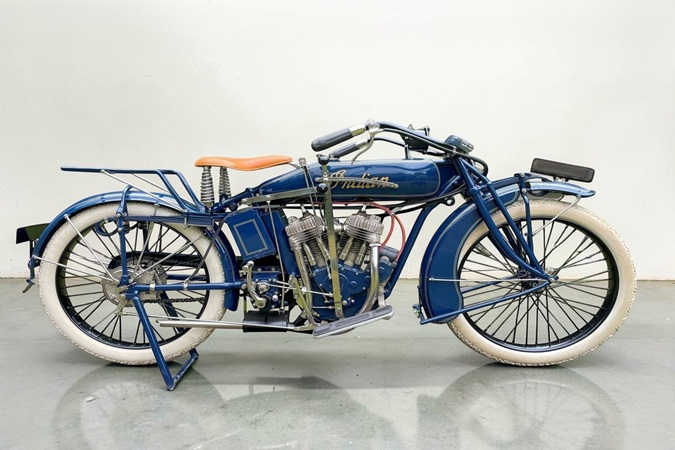
1928 Indian Model 101 Scout - widely regarded as the definitive lightweight performance platform, known for its exceptional balance, handling, and racing pedigree; 1940 Indian Model 440 Four - a landmark inline-four engineering achievement, representing one of the most refined and technically advanced motorcycles of the pre-war era; 1919 Indian Model Powerplus with Sidecar - an early V-twin development platform, illustrating the transition toward load-bearing multi-passenger transport systems; 1925 Indian Model Scout 600 - a foundational model in the evolution of the Scout lineage, combining reliability, accessibility, and early performance engineering; 1942 Indian Model 741B - a wartime military motorcycle developed for Allied forces, demonstrating durability, simplicity, and adaptability under combat conditions.
Together, these machines illustrate the full spectrum of Indian Motorcycle engineering - from early experimental V-twin systems to highly refined touring platforms and military-grade mobility solutions.
Indian motorcycles played a central role in the development of early transportation systems, particularly during the transition from experimental machines to practical long-distance vehicles.
Pre-war models contributed to the rise of touring culture, while sidecar-equipped platforms expanded passenger and cargo capabilities.
Military variants further demonstrated the adaptability of Indian engineering across diverse operational environments.
Pre-1950 Indian motorcycles are widely regarded as historically significant collectibles, representing the earliest phase of American motorcycle manufacturing.
Strong collector interest is typically focused on: original-condition machines, inline-four models, and early Scout or Powerplus platforms with verified provenance.
As availability continues to decline, well-preserved examples are increasingly difficult to source.
When acquiring an Indian motorcycle, collectors should prioritize authenticity, originality, and mechanical correctness.
Key considerations include: engine configuration, frame integrity, correct period components, and documented ownership history.
Each motorcycle in our collection undergoes expert verification to ensure museum-grade authenticity and long-term collector value.
Below is a curated selection of investment-grade Indian motorcycles available for acquisition. Each example is authenticated, documented, and sourced from reputable collections.
We offer Indian vintage motorcycles for sale to collectors worldwide, including the United States, Europe, United Kingdom, Australia, and Asia. Each motorcycle can be professionally crated and shipped with full export documentation and insurance.
Pricing varies depending on rarity, provenance, and restoration quality. Please contact us directly for current availability and private acquisition opportunities.
Contact our specialists for availability, pricing, and worldwide shipping options. Request Availability!
Explore Indian Motorcycle models by engineering category, including Scout performance platforms, inline-four luxury touring machines, early V-twin development systems, and wartime military motorcycles.
The historical development of Indian Motorcycle is best understood within the framework of pre-war motorcycle engineering (1900s-1939), a period widely regarded as the golden age of American motorcycle innovation. During this era, Indian pioneered both V-twin and inline-four configurations, with platforms such as the Scout and Four series representing some of the most advanced mechanical designs of their time.
This trajectory evolved significantly during World War II military motorcycle production, where Indian adapted its engineering toward durability and large-scale deployment. Machines such as the 741B were developed for military logistics, often operating alongside or in conjunction with sidecar-equipped transport systems, where load-bearing capability and mechanical resilience became critical design considerations.
In the post-war period, Indian entered a phase of transition within the broader context of post-war motorcycle development (1940s-1950s), where shifting market dynamics and industrial competition reshaped the trajectory of American motorcycle manufacturing.
For collectors seeking comparative insight across manufacturers and eras, global vintage motorcycle inventory archives provide a broader context in which Indian motorcycles can be evaluated alongside other historically significant machines.
What makes Indian motorcycles historically significant?
Indian Motorcycle, founded in 1901, is one of the earliest American manufacturers and a pioneer in both V-twin and inline-four engine development, contributing significantly to early global motorcycle engineering standards.
Are vintage Indian motorcycles rare?
Yes. Pre-war Indian motorcycles - particularly original-condition Scout, Four, and Powerplus models - are increasingly scarce, with many preserved in private collections or institutional archives.
Which Indian motorcycle models are most collectible?
Collector interest is typically focused on models such as the 101 Scout, the Indian Four series, and early Powerplus V-twins, alongside wartime machines like the 741B.
Are Indian motorcycles considered investment-grade assets?
Well-preserved Indian motorcycles with verified provenance are widely regarded as historically significant collector assets with strong long-term demand.
Indian motorcycles represent a distinct engineering trajectory within early American motorcycling, defined by technical innovation, racing heritage, and design experimentation. From the lightweight agility of the Scout platform to the mechanical refinement of inline-four engines, Indian developed machines that pushed the boundaries of pre-war engineering. Understanding model lineage, originality, and production context is essential when evaluating these motorcycles as historical artifacts.
The development of Indian Motorcycle is closely tied to the broader evolution of American industrial engineering and early global motorcycling. This context is explored through comparative studies of motorcycle manufacturers by country, alongside deeper insights into American motorcycle heritage and the wider landscape of American vintage motorcycle brands.
Within the global vintage motorcycle market, Indian motorcycles are positioned as historically significant assets, where rarity, engineering innovation, and provenance converge. These dynamics align with broader observations in vintage motorcycle market analysis, particularly in segments focused on early pre-war machines.
Indian Motorcycle engineering is characterized by early adoption of advanced configurations, including both V-twin and inline-four engines, which emphasized smooth power delivery and mechanical sophistication. These machines illustrate a period of experimentation prior to standardization, where performance, balance, and innovation were central design priorities.
Platforms such as the Scout prioritized lightweight handling and agility, while the Indian Four represented one of the most technically refined motorcycles of its era. Wartime machines like the 741B further demonstrate the adaptability of Indian engineering under military conditions.
Explore our complete library of buyer advice and workshop insights, featuring international logistics FAQs, model-specific troubleshooting, common vintage bike problems, and step-by-step restoration methods: