
The Vintage Motorcycles
Specialists in antique, classic, veteran and vintage motorcycles.
Specialists in antique, classic, veteran and vintage motorcycles.
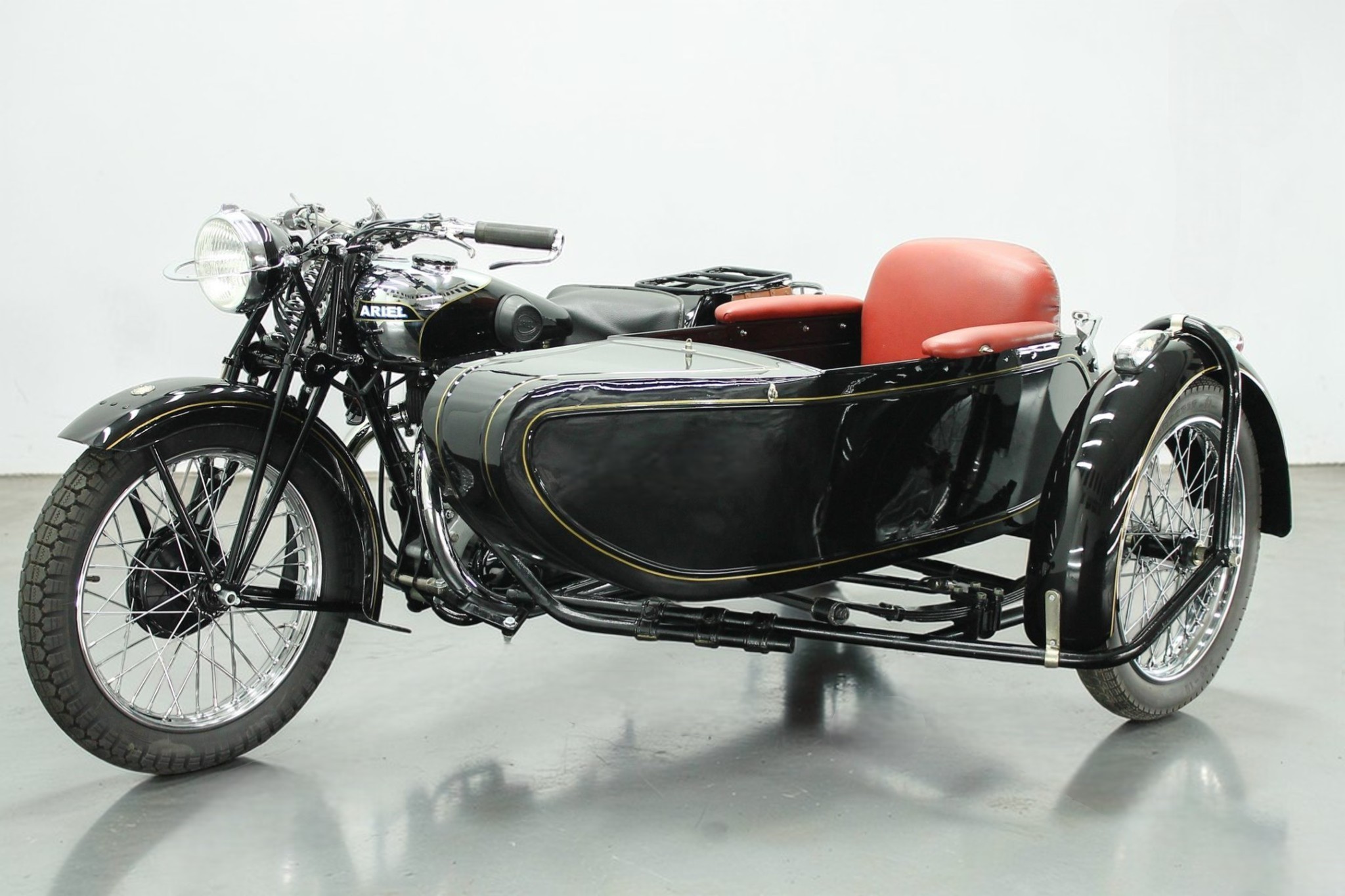
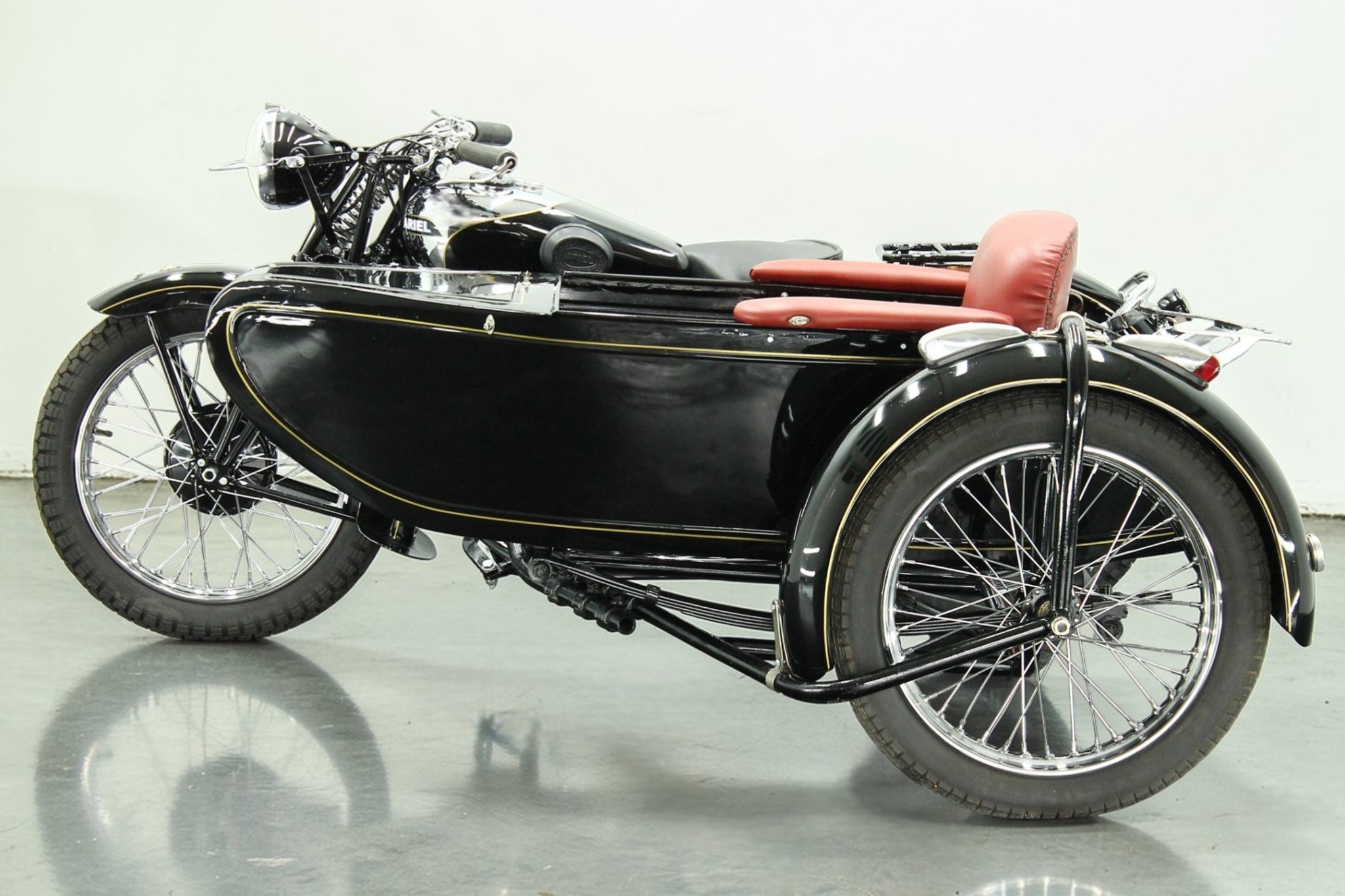
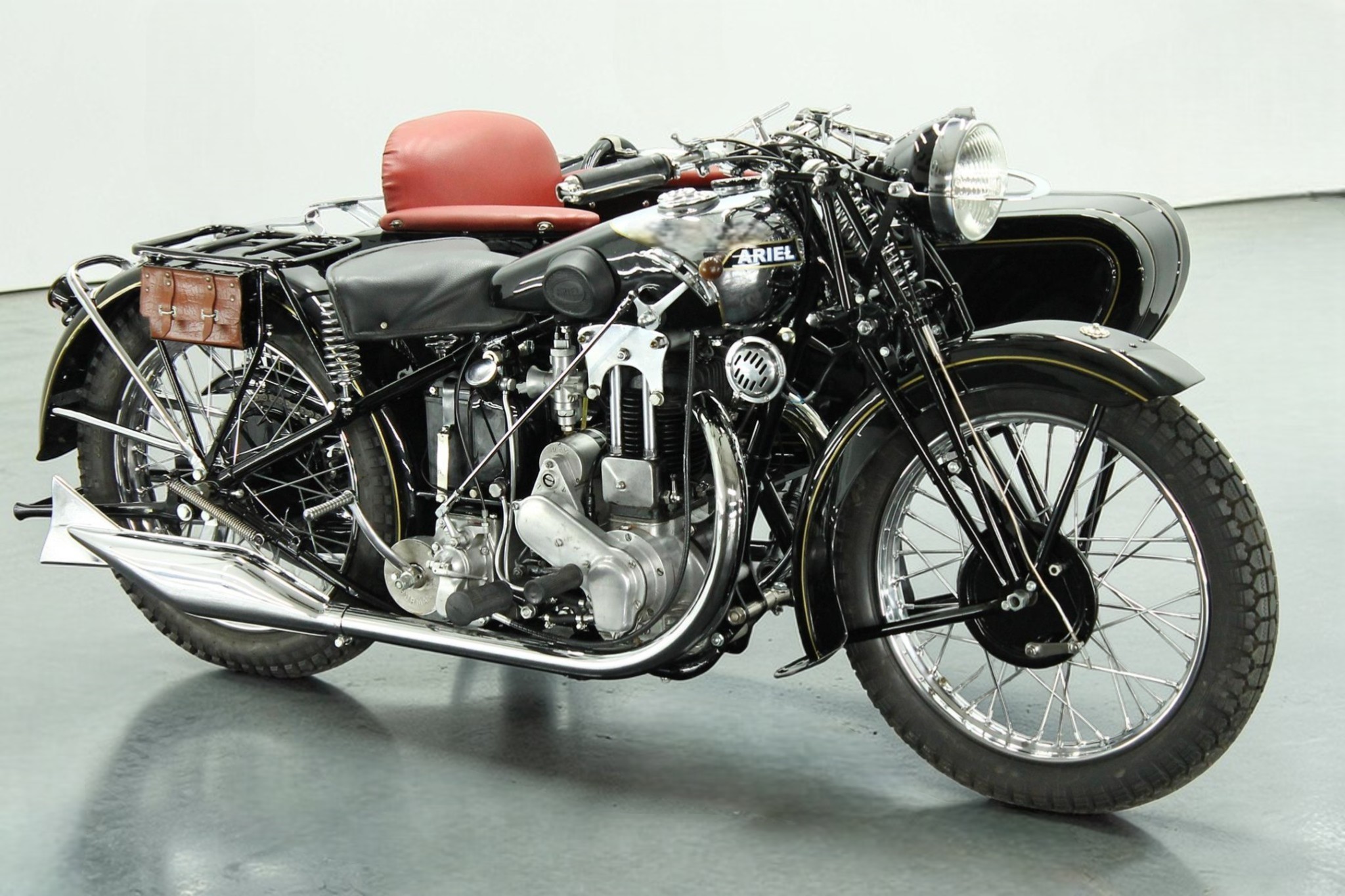
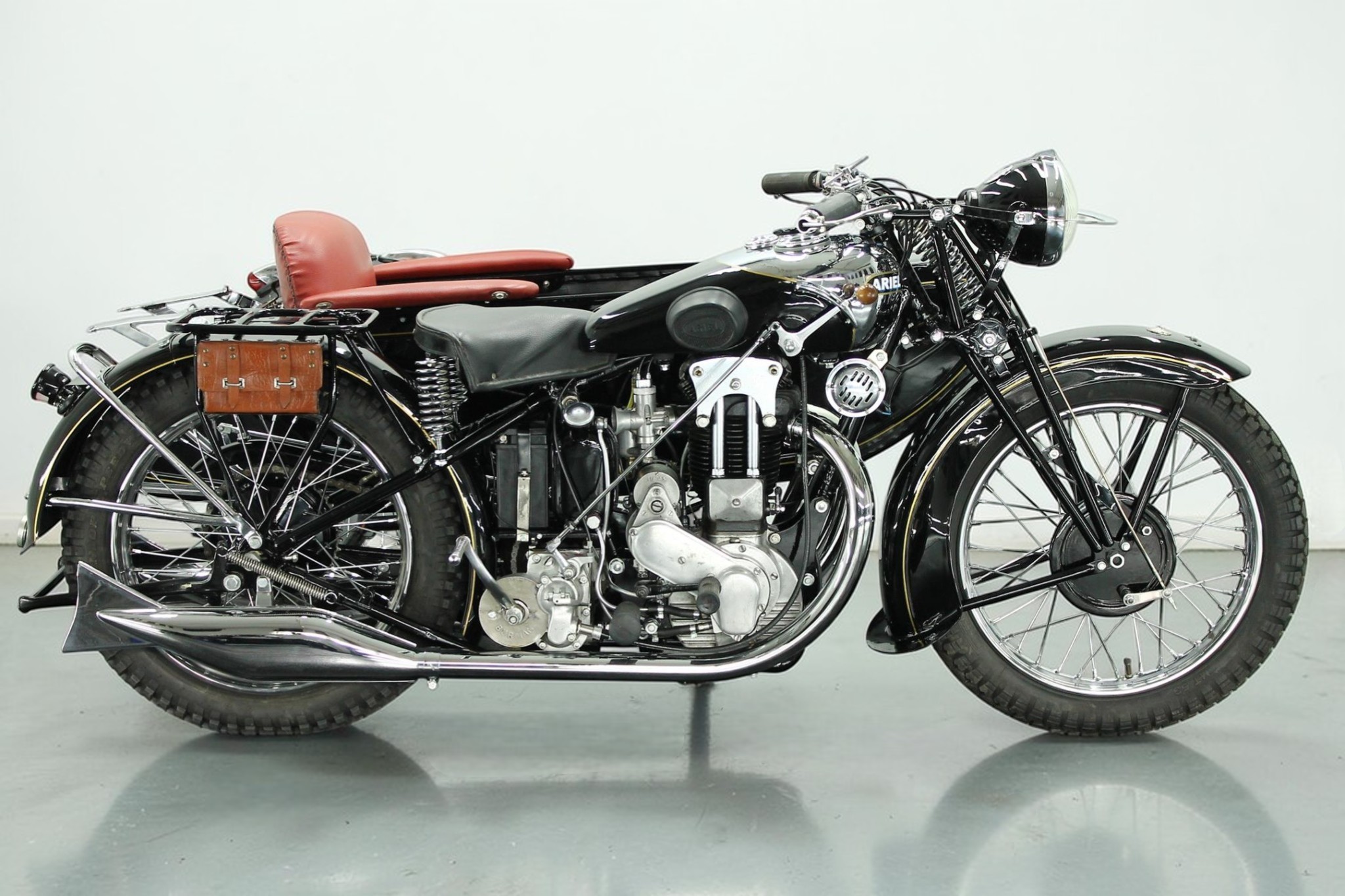
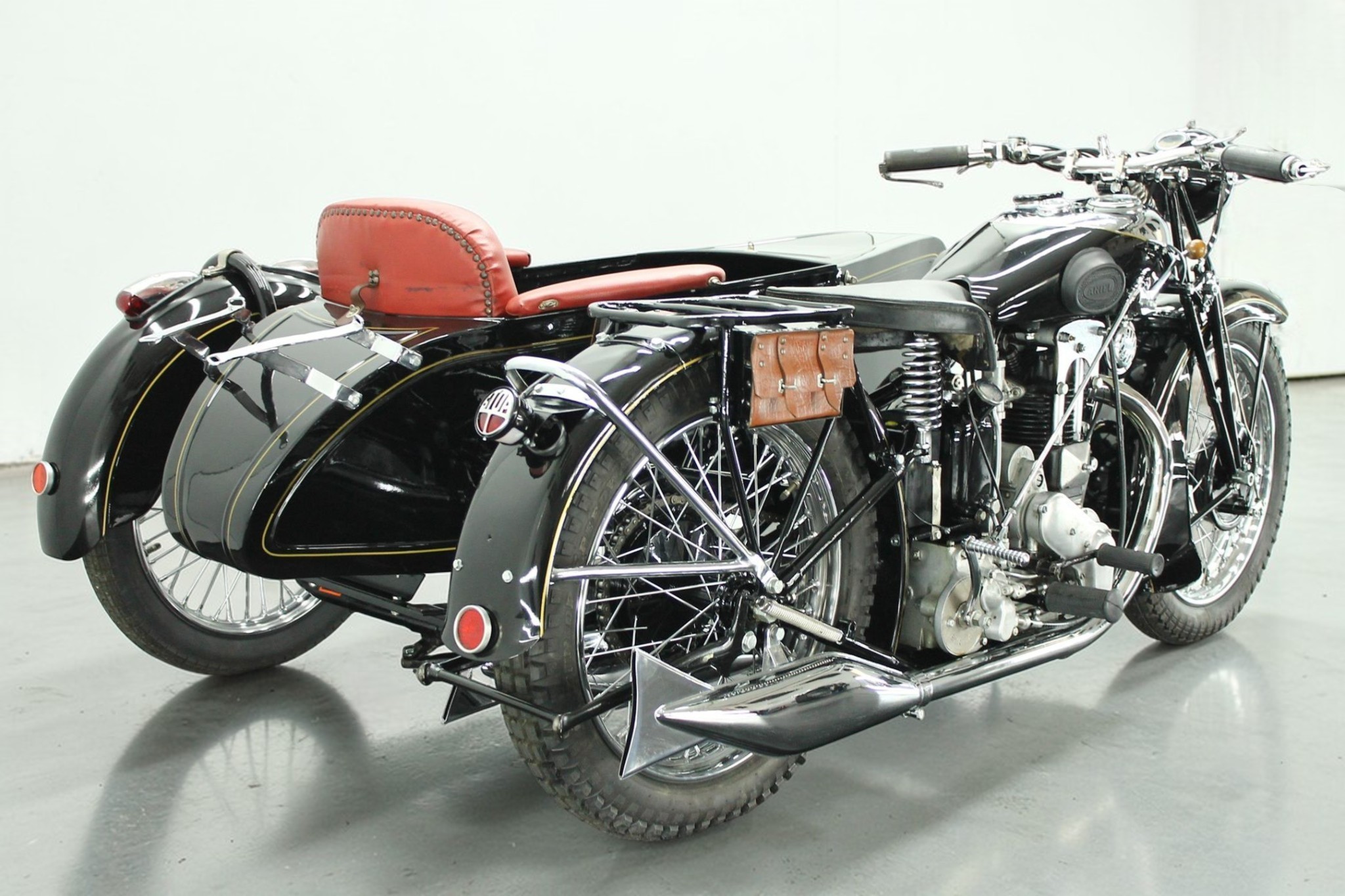

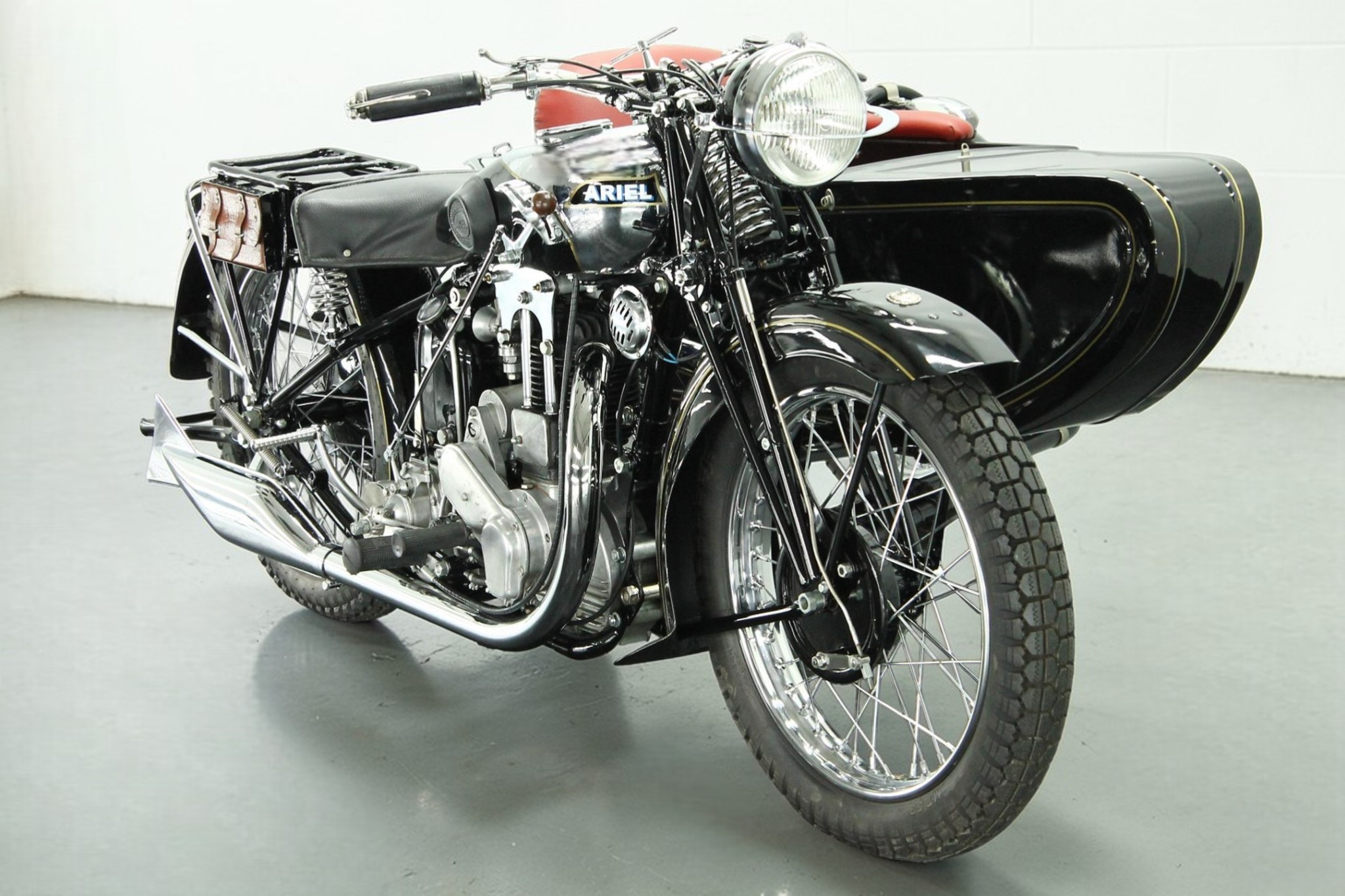
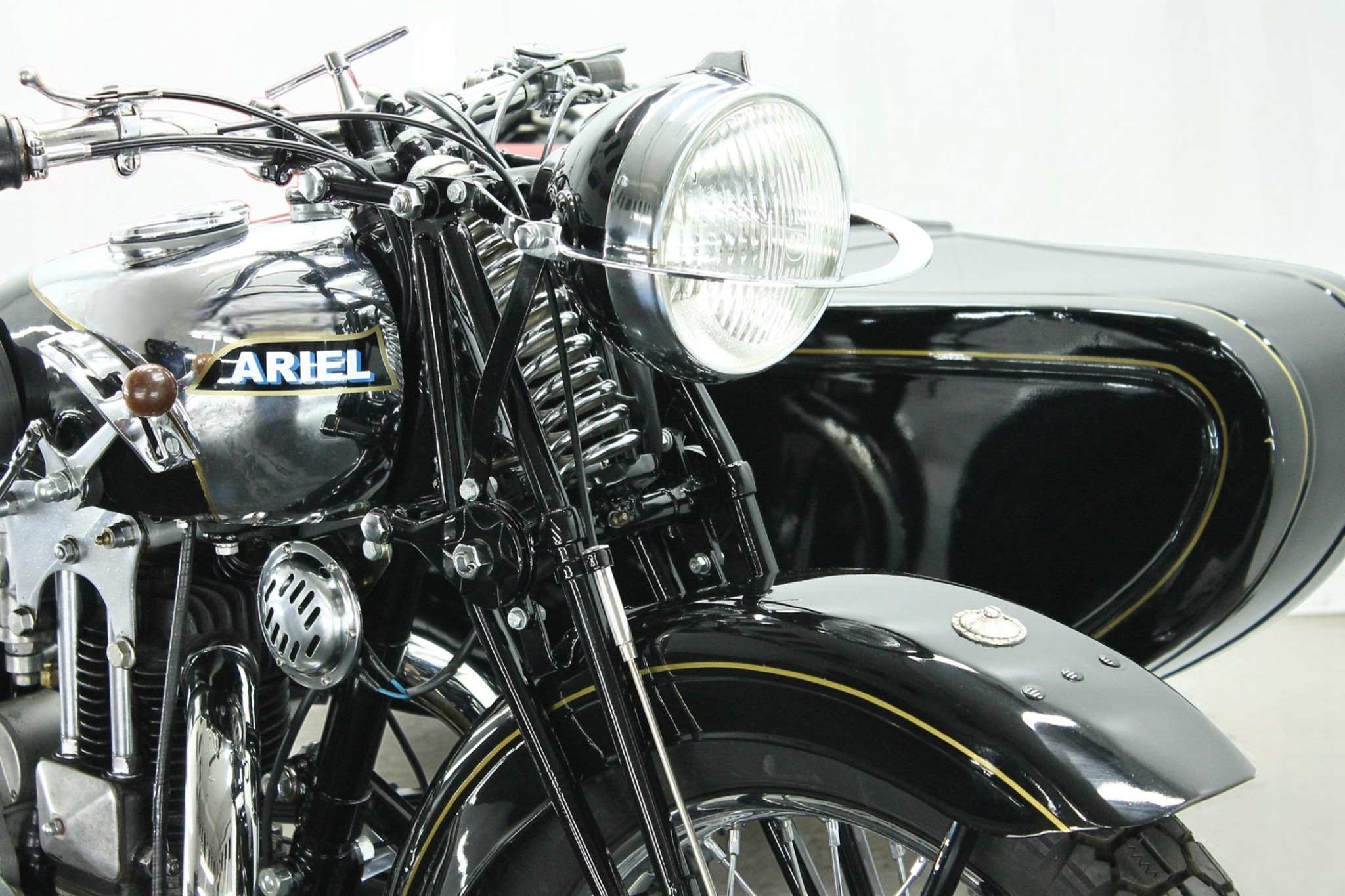
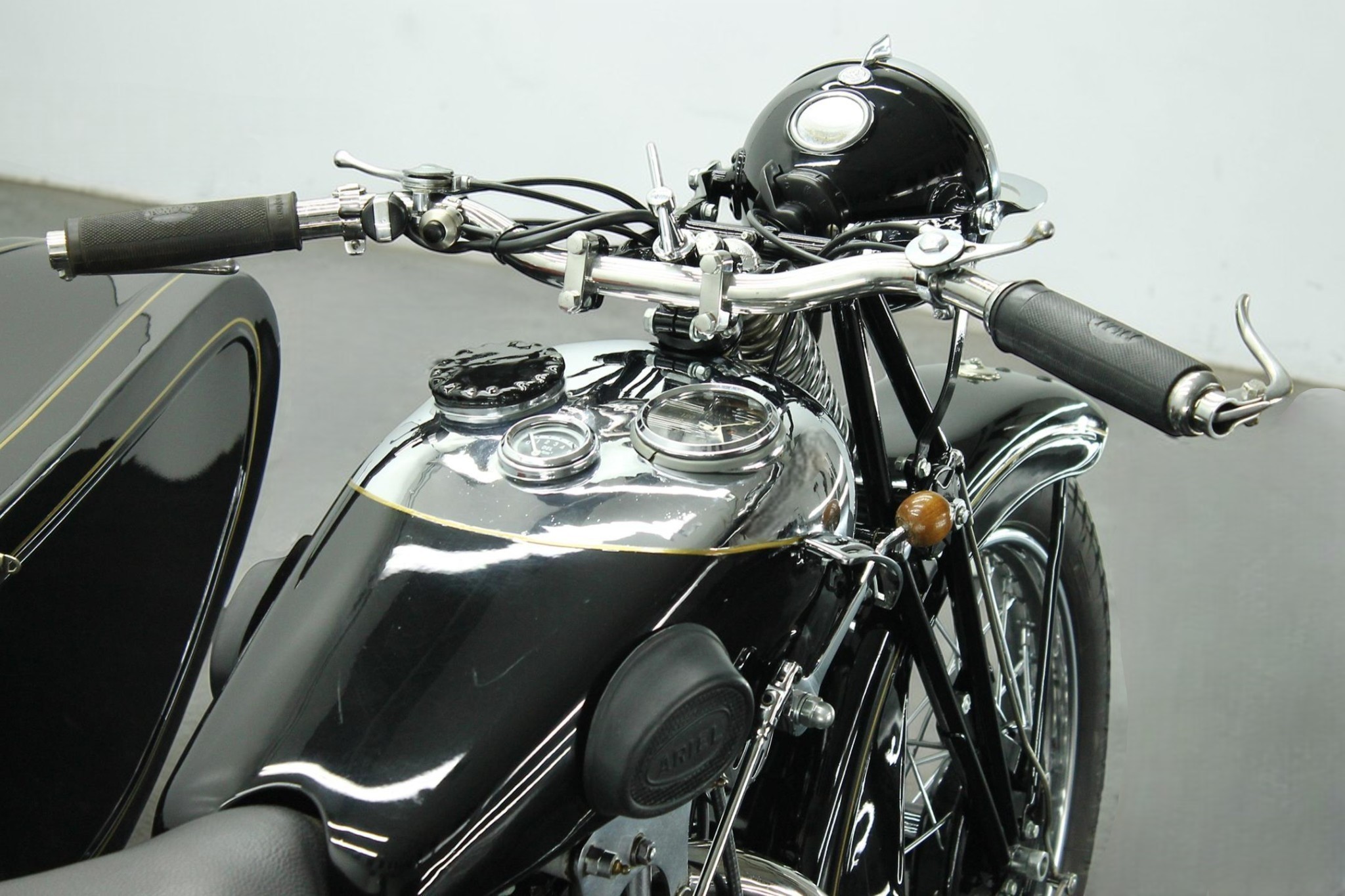
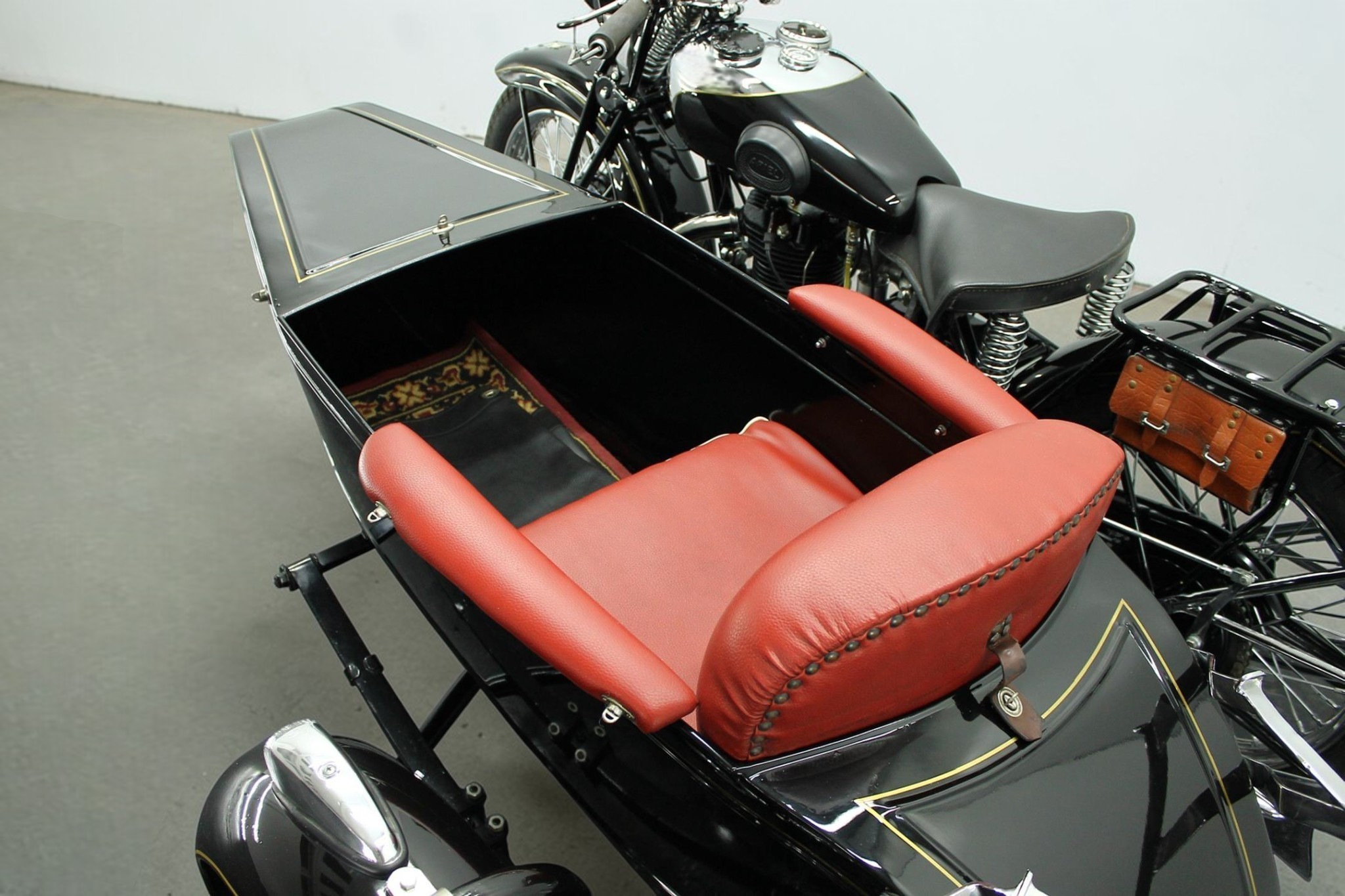





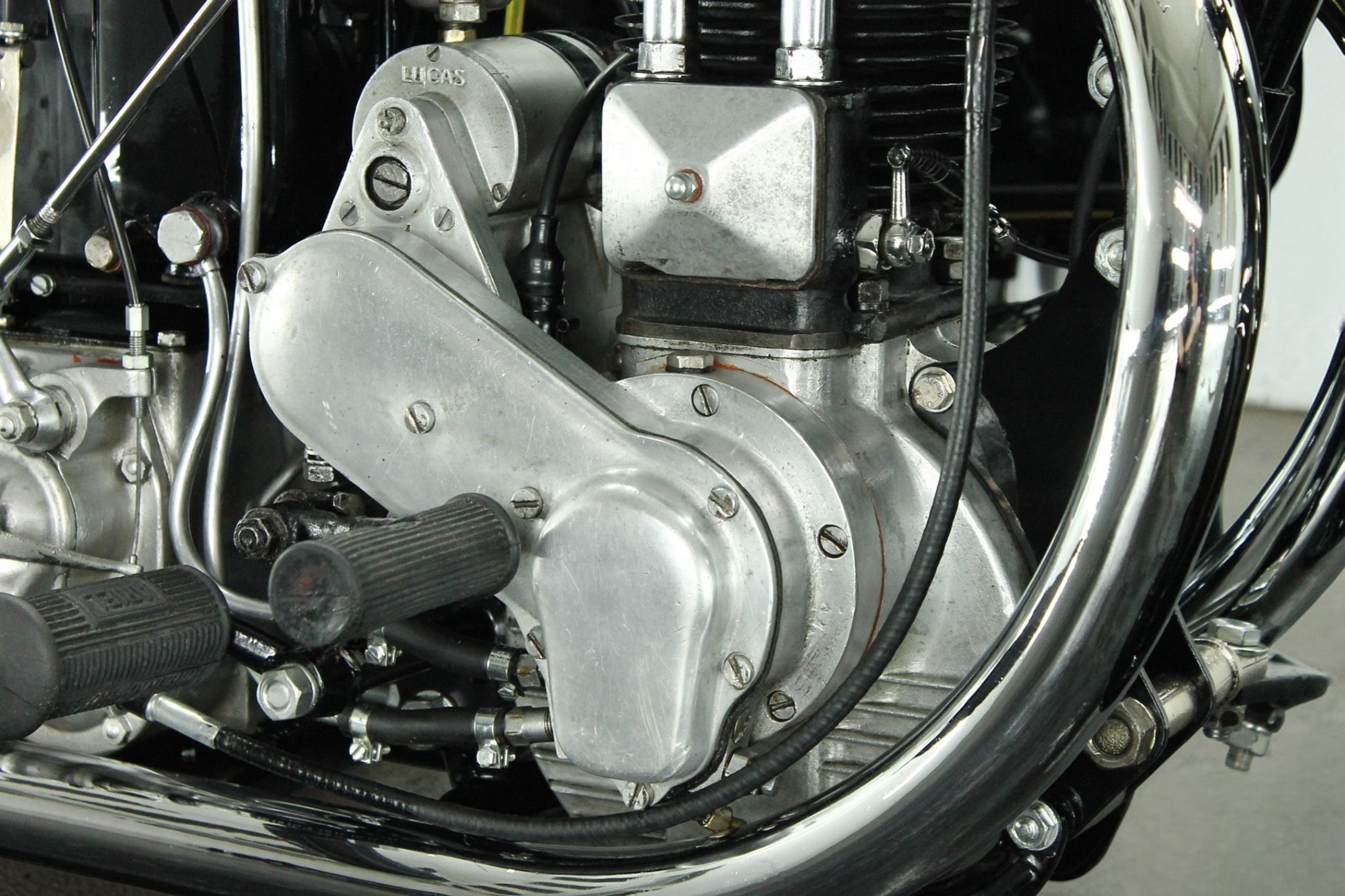
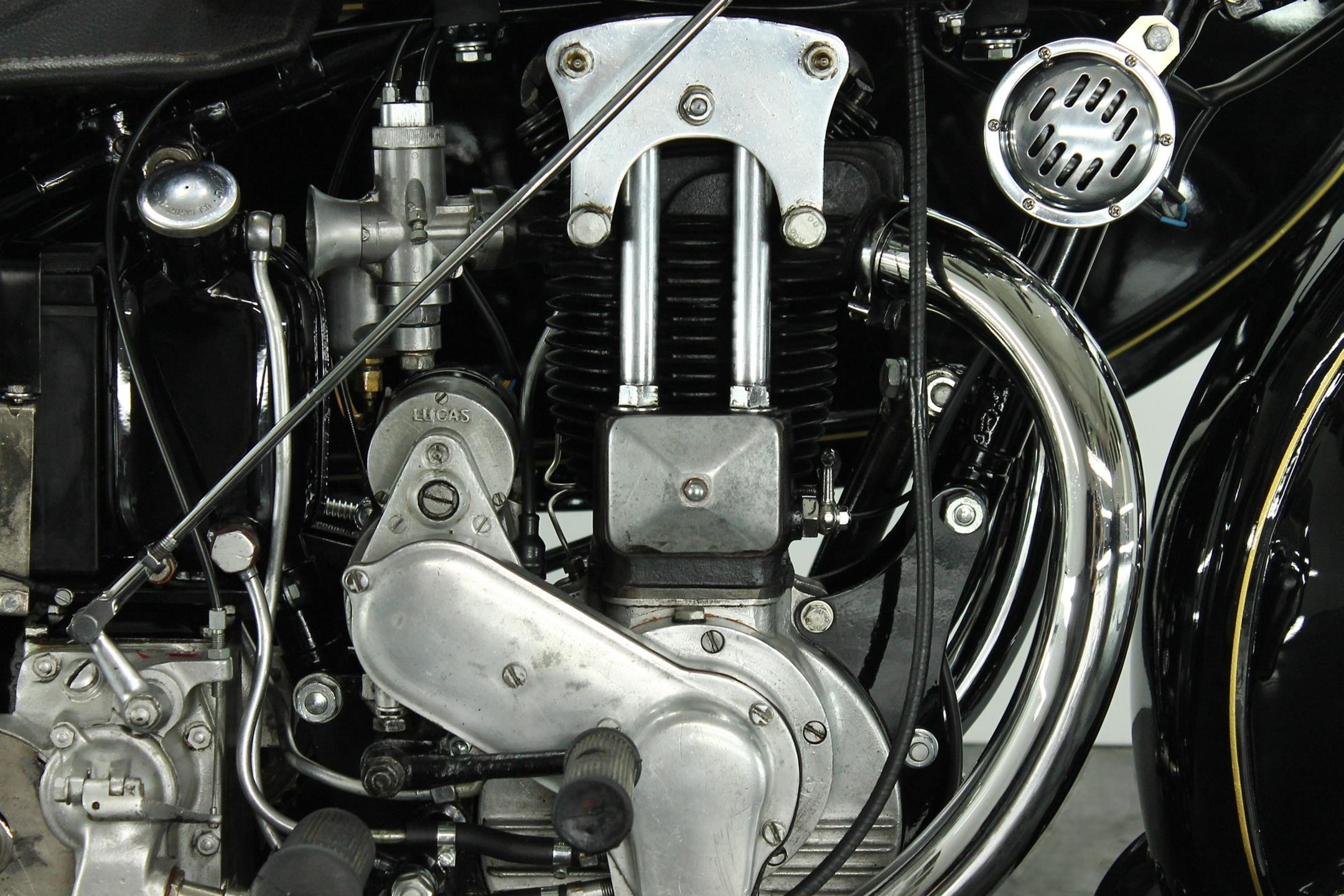
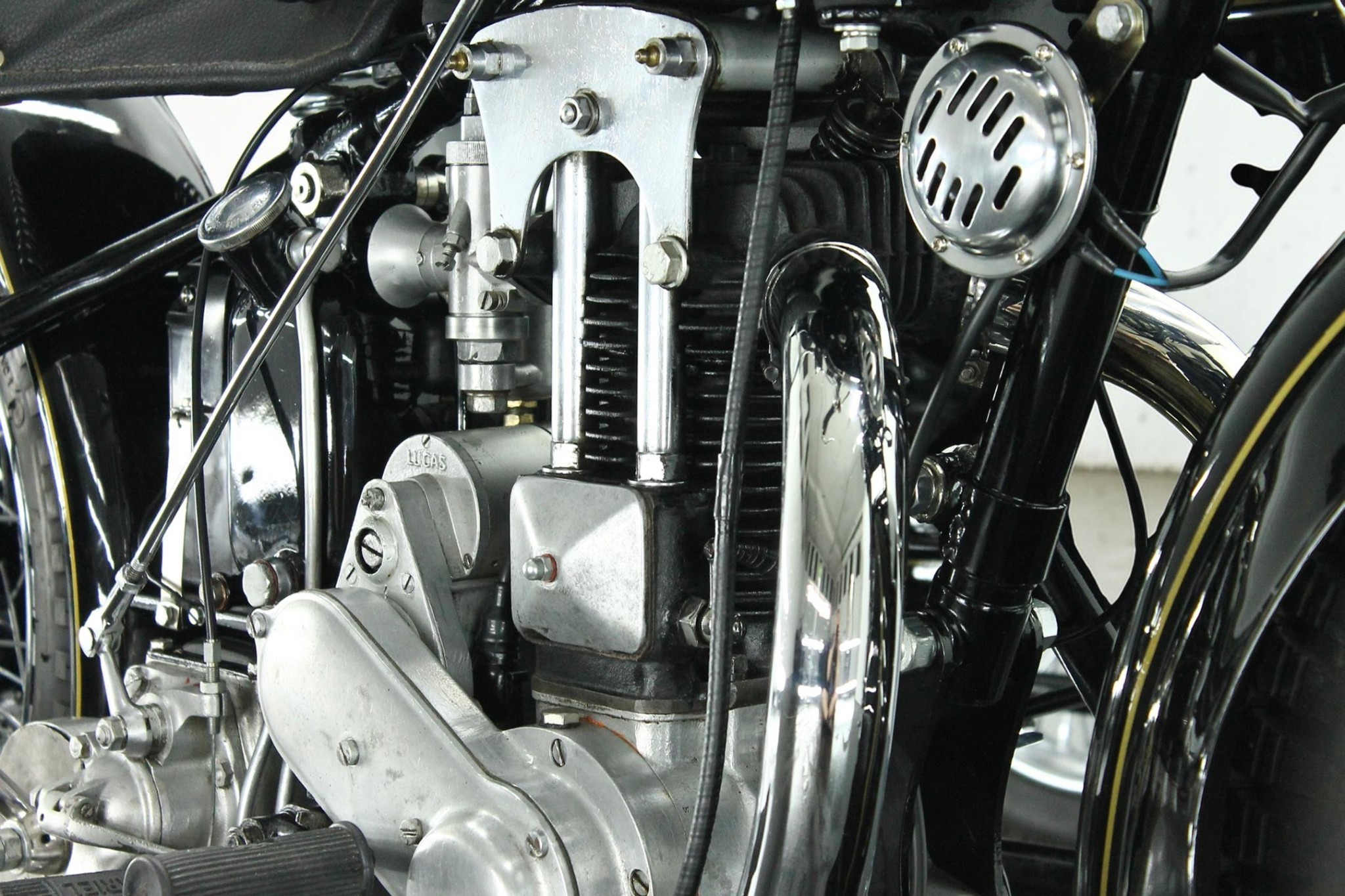


The 1930 Ariel VF31 was a substantial British overhead-valve single-cylinder motorcycle from Ariel's heavyweight range, developed during the period when Val Page was shaping the company's four-stroke lineup. With its 497cc engine, robust chassis, three-speed Burman gearbox, and strong sidecar capability, the VF31 was designed as a practical road machine capable of handling demanding touring and combination work.
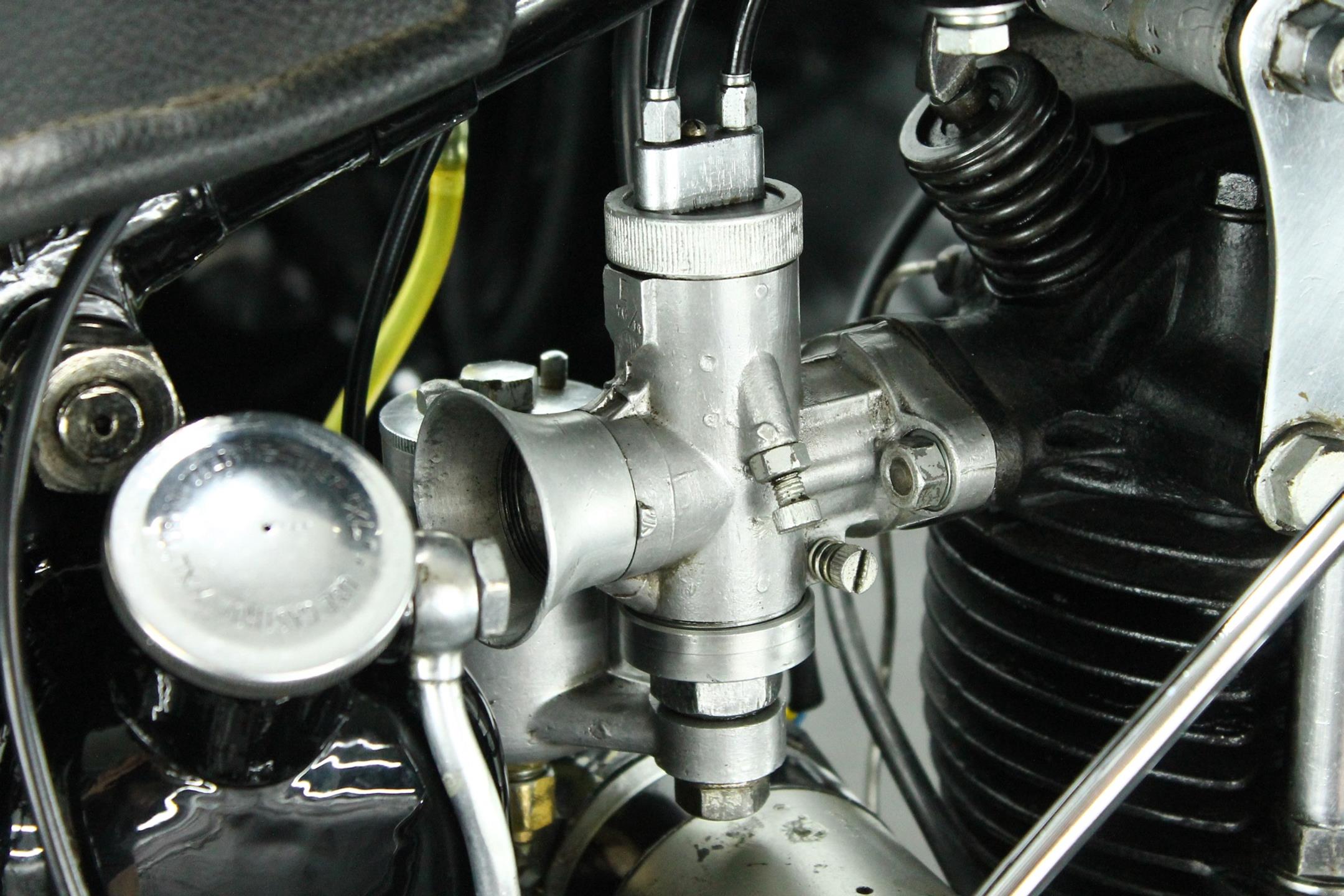
The VF31 used a 497cc air-cooled four-stroke single-cylinder overhead-valve engine. A surviving 1930 VF31 combination is recorded with an 86.4 x 85.0 mm bore and stroke and an output of approximately 20 horsepower at 4,800 rpm.
The motorcycle was particularly well suited to sidecar use. Contemporary road testing of Ariel's 497cc OHV combination described the machine as sturdy, stable, comfortable, and capable of handling rough going, with the engine showing strong pulling ability when working with a sidecar.
The VF31 belongs to the final stage of development of Ariel's early heavyweight vertical OHV singles before the company moved toward its later sloper and Red Hunter families. The model designation VF31 is also associated with Ariel's 497cc OHV vertical-engine range.
The engine's traditional single-cylinder layout gave the motorcycle a strong mechanical character, while overhead valves provided better breathing and performance than Ariel's side-valve alternatives.
For a period sidecar outfit, the combination of a large-displacement single, sturdy frame, three-speed gearbox, and generous braking system made the VF31 a practical machine for carrying both rider and passenger.
The 1930 Ariel VF31 is therefore an important example of Ariel's heavyweight OHV engineering immediately before the company's next major generation of motorcycles.
Ariel's four-stroke single-cylinder range had been developed under chief designer Val Page during the second half of the 1920s. Page established the basic architecture of the company's four-stroke singles and continued to refine the design as Ariel entered the 1930s.
The VF31 represents the vertical-engine branch of Ariel's heavyweight OHV range. Contemporary Ariel development during this period included side-valve and overhead-valve singles in several capacities, together with the technically ambitious Square Four developed by Edward Turner.
Ariel's design department at this time included several engineers who would become highly influential in British motorcycle history, including Val Page, Edward Turner, and Bert Hopwood.
The VF31's 497cc OHV engine provided a substantial increase in breathing efficiency compared with a side-valve arrangement, while the long-established single-cylinder architecture kept the motorcycle mechanically straightforward.
A contemporary January 1930 road test of a 497cc Ariel OHV combination emphasized the machine's robust construction and ability to cope with rough roads. The tester specifically praised the stability, brakes, starting performance, riding position, and the engine's ability to work hard when pulling the sidecar.
The Ariel VF31 is also documented within the company's 1931 model family as a 497cc OHV vertical-engine machine, showing that the VF designation continued into the following model year.
Because surviving period references can use different model-year conventions, individual motorcycles should be identified by their frame and engine numbers as well as their model designation when establishing exact production year and specification.
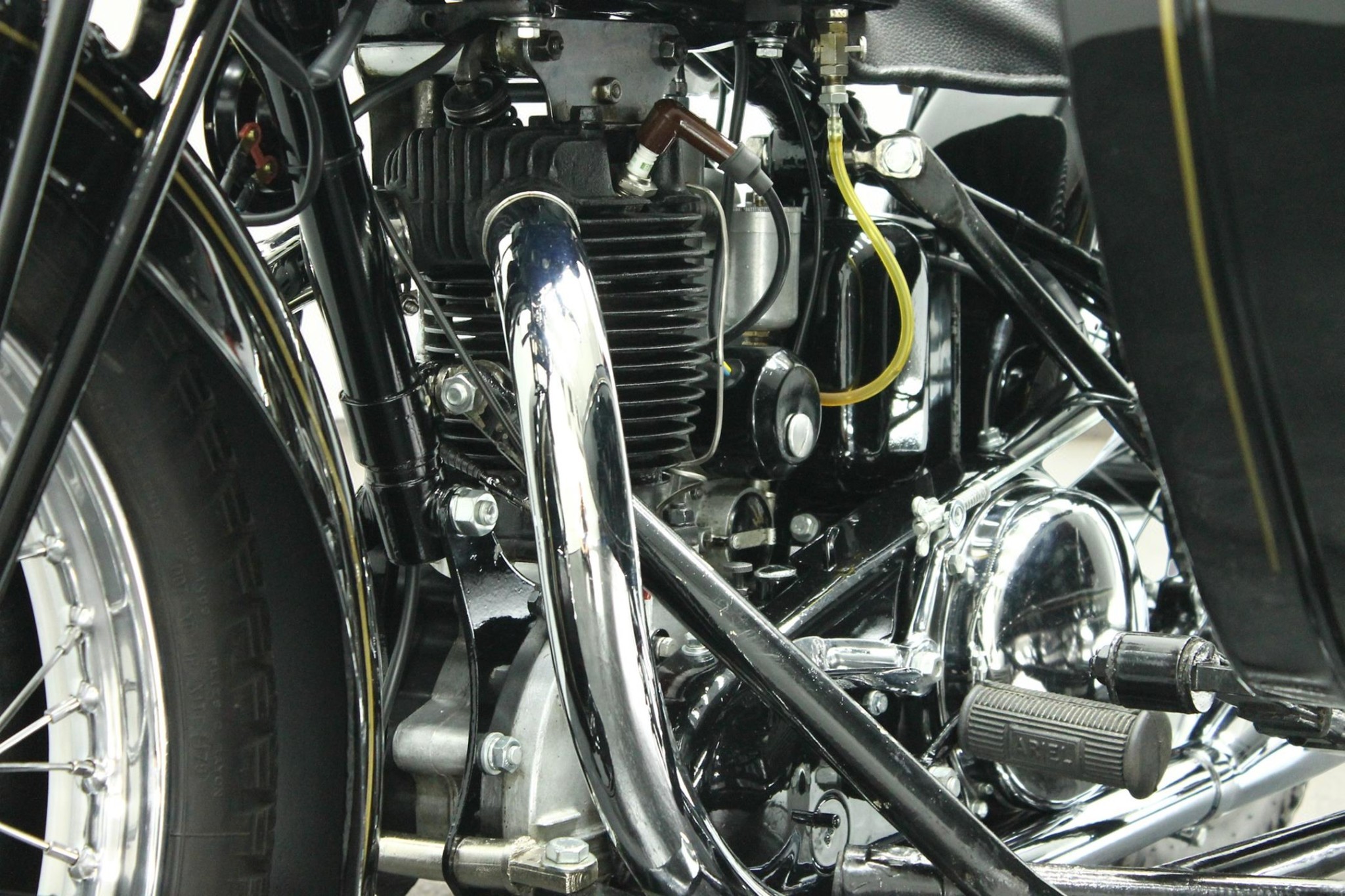
The Ariel VF31 uses an air-cooled four-stroke single-cylinder overhead-valve engine with a displacement of 497cc.
A documented 1930 VF31 has an 86.4 x 85.0 mm bore and stroke, giving the engine a near-square configuration. The recorded output is 20 horsepower at 4,800 rpm.
The overhead-valve arrangement places the inlet and exhaust valves in the cylinder head rather than beside the cylinder as on a side-valve engine. This allows the combustion chamber and gas flow to be designed more efficiently and contributes to the VF31's relatively strong performance.
The engine was designed as a practical heavyweight single rather than a high-speed racing unit. Its substantial displacement provided useful torque for road work and made it particularly suitable for pulling a sidecar.
Contemporary testing of Ariel's 497cc OHV combination found that the engine worked strongly under load and was particularly impressive on rough roads, where it continued to pull effectively without giving the impression of being overstressed.
The single-cylinder layout also gives the VF31 a characteristic exhaust note and mechanical rhythm that distinguishes it from Ariel's later multi-cylinder designs.
The engine's combination of 497cc displacement, overhead valves, and approximately 20 horsepower made the VF31 a capable heavyweight motorcycle for the early 1930s.
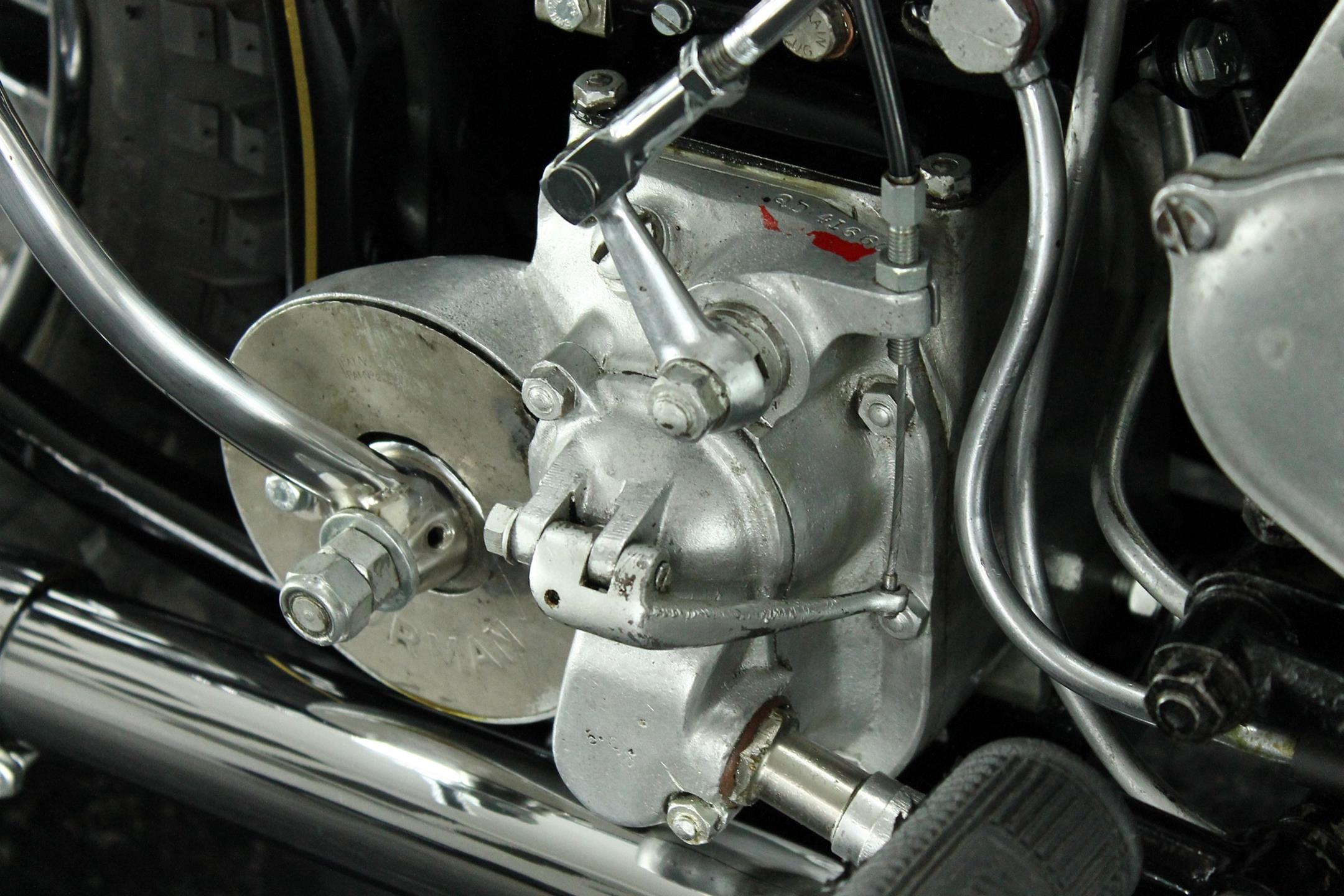
The VF31 uses a separate Burman three-speed gearbox. Contemporary road-test specifications for the 497cc Ariel OHV combination list a Burman transmission with three forward ratios.
The listed overall gearbox ratios were approximately 4.75, 7.6, and 13 to 1, representing the progressive gearing used to provide strong pulling ability from a standstill and useful road speed in the higher gears.
Final drive is by chain, with the engine driving the gearbox through chain transmission and the gearbox transmitting power to the rear wheel through a second chain.
The contemporary specification lists a 1/2-inch primary chain and a 5/8 x 3/8-inch rear chain.
Chain final drive was conventional for British motorcycles of the period and offered straightforward access for adjustment and maintenance.
The three-speed transmission was well suited to the VF31's intended role. Its lower gearing gave the large single the mechanical advantage needed for steep gradients, rough roads, and sidecar operation.
With a sidecar attached, correct gearing and clutch control were particularly important because the additional weight placed considerably greater demands on the engine and transmission.
The VF31 uses a robust conventional motorcycle chassis designed to withstand the demands of heavyweight road and sidecar use.
The substantial frame construction was one of the reasons contemporary testers regarded the Ariel combination as capable of handling rough conditions. The period road test described the machine as a solid and robust outfit, with the frame, engine, gearbox, and fittings all contributing to that impression.
The front suspension uses a traditional girder-type fork arrangement characteristic of heavyweight British motorcycles of the period.
The motorcycle was equipped with large 26-inch wheels and 3.25-inch tires according to the contemporary 497cc OHV combination specification.
The large wheel diameter helped the motorcycle deal with uneven road surfaces and contributed to the stable handling noted during contemporary testing.
The chassis was particularly effective when used with a sidecar. The period test praised the stability of the complete outfit over rough surfaces and described the riding position as restful and easy to control.
The VF31's chassis therefore reflects Ariel's emphasis on durability and practical road performance rather than lightweight sporting handling.
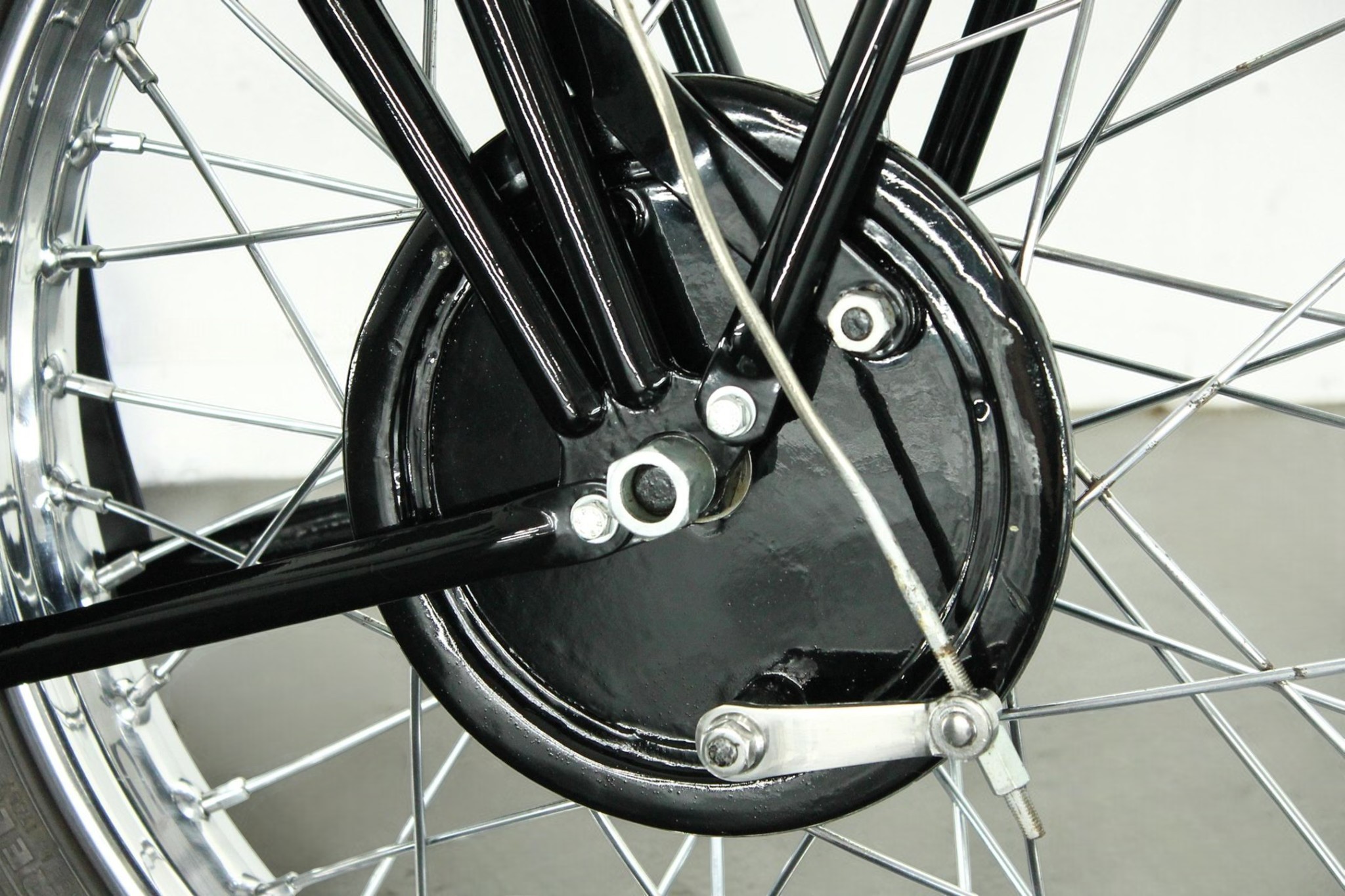
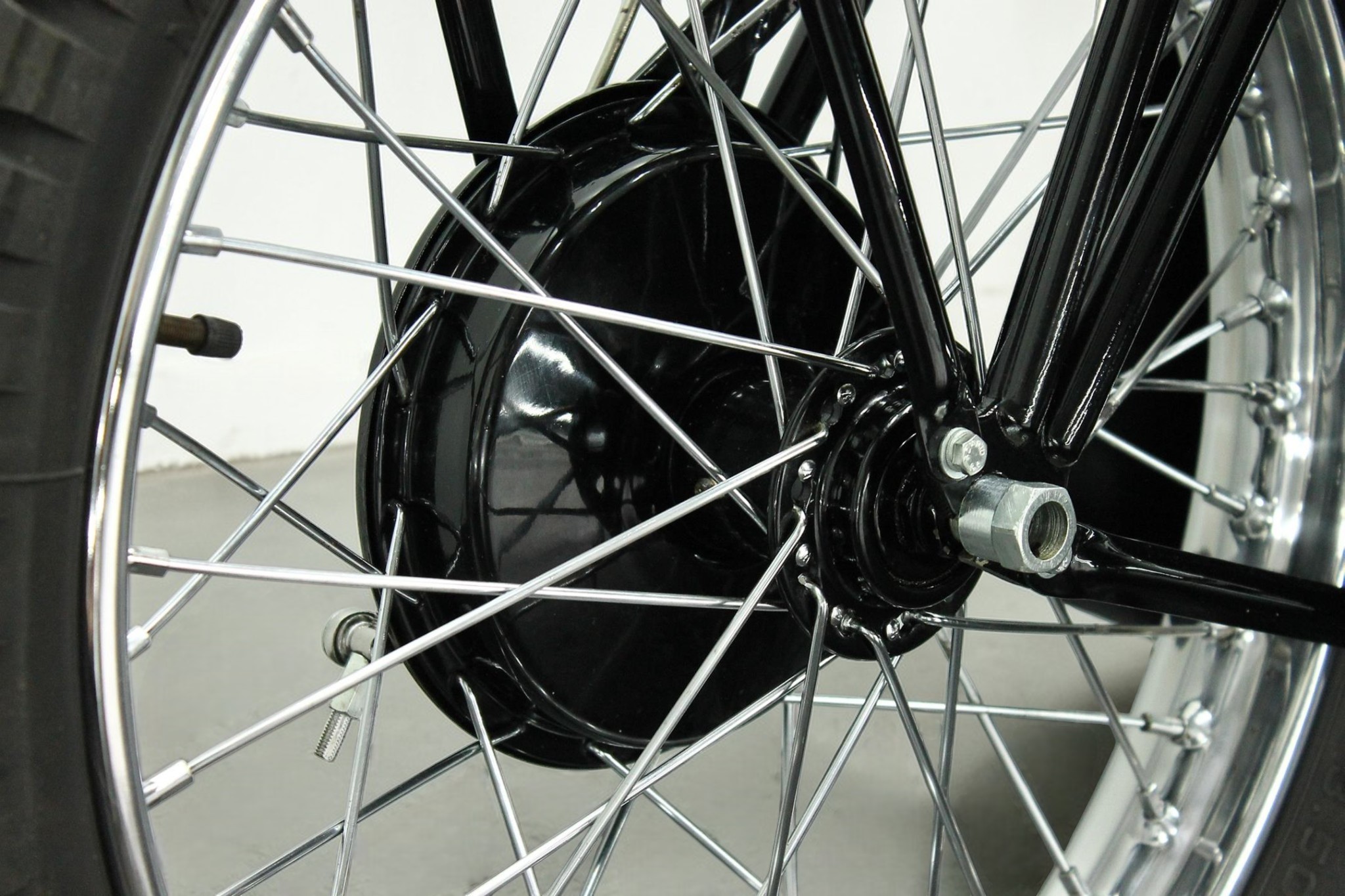
The VF31 was equipped with internal-expanding drum brakes at both front and rear. Contemporary specifications list 7-inch brakes at both ends.
The relatively large drum diameter provided useful braking capacity for a heavyweight motorcycle and was particularly important when the machine was operated with a sidecar.
Contemporary testers specifically described the brakes as excellent during their evaluation of the 497cc Ariel combination.
The combination of a substantial frame, large wheels, girder fork, and effective drum brakes gave the Ariel a stable and reassuring character on the road.
With a sidecar attached, the rider needed to account for the altered steering and braking characteristics of the asymmetric three-wheel layout. The VF31's robust chassis was designed to cope with these additional demands.
The period road test found the outfit particularly reassuring on rough surfaces, where stability and chassis strength were more important than outright cornering performance.
The 1930 Ariel VF31 has the unmistakable appearance of a British heavyweight motorcycle from the transition between the 1920s and 1930s.
The large vertical single-cylinder engine dominates the center of the frame, with the cylinder and cylinder head clearly visible beneath the fuel tank.
The overhead-valve configuration and associated rocker and valve gear give the upper portion of the engine a more substantial appearance than Ariel's side-valve models.
The motorcycle's large fuel tank, deep mudguards, wire wheels, girder front fork, and upright riding position reflect the practical touring character of the machine.
The overall design is functional rather than decorative. Ariel's engineering was intended to produce a motorcycle capable of dependable road use and, when required, the additional work involved in pulling a sidecar.
The VF31 also belongs to an important period in Ariel's history, immediately before the company's later models developed more distinctive sloping-cylinder layouts and the famous Red Hunter identity.
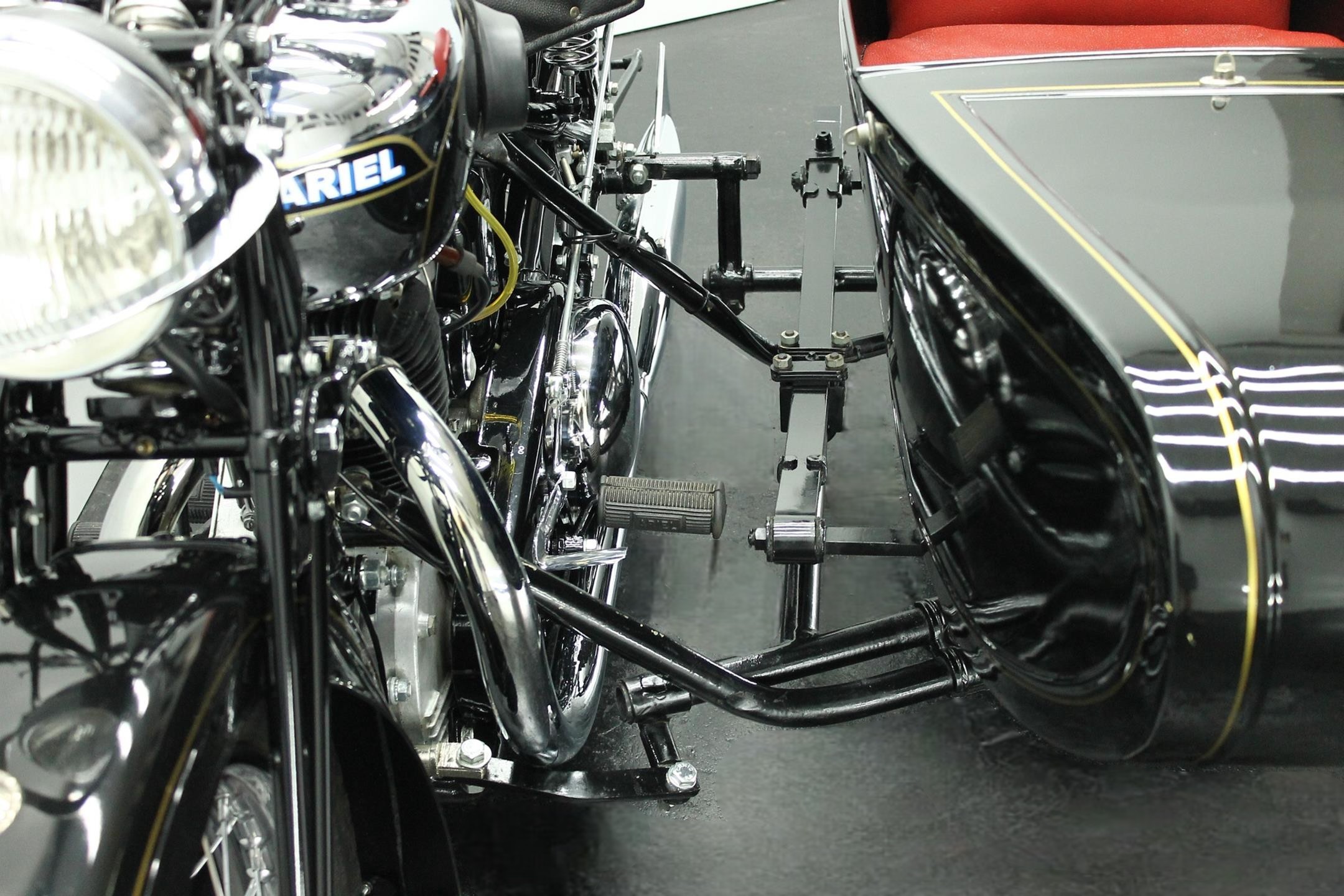
Sidecar operation was an important part of the VF31's practical role. A contemporary road test specifically evaluated the 497cc Ariel as a complete sidecar combination and found it capable of meeting normal road-speed requirements while remaining stable and comfortable.
The large 497cc single-cylinder engine provided the torque necessary to move the additional weight of a passenger and sidecar.
The machine's robust frame and substantial running gear were well suited to the extra loads imposed by combination work.
Contemporary testing found the engine particularly impressive on rough surfaces, where it continued to pull strongly while the chassis maintained stability.
The sidecar itself was described as comfortable and roomy, although the tester noted that the door arrangement could be awkward and that additional stiffness in the sidecar's near-side panel would have been beneficial.
The VF31 therefore demonstrates how British manufacturers designed heavyweight singles not only as solo touring motorcycles but also as practical passenger-carrying machines.
The VF31 has the unmistakable mechanical character of a large British single-cylinder motorcycle. The 497cc overhead-valve engine produces a strong, deliberate power delivery rather than the smooth, high-revving character of a multi-cylinder engine.
The relatively large single-cylinder displacement provides useful low- and mid-range pulling power, which is particularly valuable when the motorcycle is operated with a sidecar.
The three-speed Burman gearbox complements the engine by providing low gearing for difficult starts and gradients while retaining higher ratios for open-road riding.
The dry-sump lubrication system used by Ariel during this period was another important engineering feature. Contemporary Ariel documentation describes the system as a pressure-fed dry-sump arrangement designed to improve lubrication control compared with earlier total-loss systems.
The chain final drive is mechanically straightforward and reflects standard British motorcycle practice of the period.
Overall, the VF31 prioritizes torque, durability, serviceability, and practical road performance. It is a motorcycle designed to work rather than simply to impress with specification-sheet performance.
A January 1930 road test in Motor Sport evaluated a 497cc Ariel OHV combination during winter conditions, deliberately exposing the motorcycle to cold, wet, and rough roads.
The tester found the machine to be solid and robust, with the frame, engine, gearbox, and general fittings giving the impression of being capable of sustained hard use.
The Ariel was reported to have a maximum speed sufficient for normal requirements, while the riding position was considered restful and easy to control during long runs.
The motorcycle made its strongest impression on rough roads. The engine was described as continuing to pull strongly over difficult surfaces, while the stability of the complete combination was considered reassuring.
The brakes were praised, starting performance was considered good, and the mudguards were regarded as better than average.
The tester's main criticisms concerned details rather than fundamental engineering. The silencer fishtail arrangement could interfere with the rider's legs while putting the motorcycle onto its stand, while the sidecar door was considered awkward to operate.
This period road test provides useful evidence of how the Ariel performed in its intended environment and confirms the VF31 family's reputation as a sturdy and capable sidecar machine.
The VF31 belongs to an important stage in Ariel's development of large-capacity single-cylinder motorcycles.
Val Page had established the basic form of Ariel's four-stroke singles during the 1920s, and the company continued to refine both side-valve and overhead-valve versions as the decade ended.
The 497cc OHV engine provided a useful balance between performance and mechanical simplicity. It offered more efficient valve operation than a side-valve engine while retaining the uncomplicated character of a single-cylinder power unit.
At the same time, Ariel's engineering department was developing more ambitious designs. Edward Turner's Square Four appeared at the end of 1930 for the 1931 model year, creating a very different multi-cylinder direction for the company.
The VF31 therefore sits at an important crossroads in Ariel history. It represents the mature form of the company's traditional heavyweight OHV single just as Ariel was beginning to introduce some of its most famous new engine designs.
The later Ariel range would include sloper singles and the Red Hunter family, but the VF31 remains an important example of the engineering foundation from which those motorcycles developed.
The 1930 Ariel VF31 is significant to collectors because it represents a mature example of Ariel's heavyweight overhead-valve single-cylinder engineering at the beginning of the 1930s.
Its combination of a 497cc OHV engine, robust chassis, three-speed Burman gearbox, large drum brakes, and sidecar capability makes it particularly representative of the practical British motorcycle market of the period.
Originality is important when evaluating a surviving VF31. The correct 497cc engine, overhead-valve cylinder head, carburetor, magneto arrangement, Burman gearbox, frame, girder fork, wheels, brakes, fuel tank, controls, exhaust system, and period sidecar should all be examined carefully.
Frame and engine numbers are especially useful when establishing the identity and production period of an individual motorcycle. A documented example should ideally retain period registration records, ownership history, photographs, restoration documentation, or other evidence of provenance.
The engine should be inspected for cylinder wear, valve-guide condition, crankshaft and big-end wear, oil-pump condition, and evidence of previous repairs. The gearbox, clutch, primary chain, final-drive chain, and wheel bearings also require careful examination on motorcycles of this age.
The chassis should be checked for frame repairs, distortion, corrosion, fork wear, loose steering bearings, wheel-rim damage, and brake-drum condition.
For a sidecar combination, the sidecar frame and mounting points require particular attention. The attachment system should be period-correct where possible and free from distortion or fatigue damage.
A well-preserved VF31 with an original engine and documented sidecar history represents an attractive piece of Ariel's pre-war development and an important example of British heavyweight single-cylinder engineering.
The 1930 Ariel VF31 matters because it represents the mature development of Ariel's traditional heavyweight overhead-valve single-cylinder motorcycle at a pivotal moment in the company's history.
Its 497cc engine combined overhead-valve breathing with the strong pulling characteristics expected from a large single, producing approximately 20 horsepower at 4,800 rpm in a documented 1930 example.
The VF31 was also well suited to sidecar use. Contemporary testing demonstrated that the 497cc Ariel combination could handle rough roads, maintain useful road speed, and provide stable and comfortable operation with a passenger.
The machine's three-speed Burman gearbox, chain final drive, girder fork, large wheels, and 7-inch internal-expanding brakes reflect the practical engineering standards of British motorcycles at the beginning of the 1930s.
The VF31 is historically interesting because it belongs to the period immediately before Ariel introduced the Square Four for the 1931 model year. That transition marked the beginning of one of the most distinctive chapters in Ariel's engineering history.
For collectors, the VF31 provides a direct connection to the heavyweight Ariel singles developed under Val Page and to the engineering environment from which later Ariel models emerged.
This 1930 Ariel VF31 represents an important stage in the development of Ariel's heavyweight overhead-valve singles and provides a direct connection to the engineering work carried out under Val Page during the late 1920s and early 1930s.
Its 497cc air-cooled OHV single-cylinder engine provides the substantial torque required for practical road use and sidecar operation. A documented VF31 is recorded with 86.4 x 85.0 mm bore and stroke and approximately 20 horsepower at 4,800 rpm.
The motorcycle uses a three-speed Burman gearbox, chain final drive, girder front fork, 26-inch wheels, and 7-inch internal-expanding drum brakes. Contemporary testing of the 497cc Ariel OHV combination praised its robust construction, strong pulling ability, stability, braking, and suitability for rough roads.
The sidecar makes this VF31 particularly representative of its period. The 497cc engine and sturdy chassis were well suited to carrying a passenger, while the period road test found the complete combination comfortable and reassuring in difficult conditions.
As a pre-war Ariel heavyweight OHV single, the VF31 occupies an important position immediately before the company's transition toward the famous Square Four and later sloper and Red Hunter models.
Contact us for additional photographs, detailed specifications, frame and engine numbers, service history, originality assessment, provenance, restoration details, sidecar information, and purchasing information for this 1930 Ariel VF31.
Explore more Ariel motorcycles from the pre-war and classic eras.
The Vintage Motorcycles presents a curated selection of historically significant British vintage motorcycles, with a particular focus on Ariel as one of the most technically refined manufacturers in early 20th-century engineering. From early single-cylinder machines to later high-performance designs, Ariel played a central role in advancing both structural design and engine innovation within the British motorcycle industry.
This collection includes machines from Ariel alongside other historically important British motorcycle manufacturers, each contributing to the evolution of performance engineering, metallurgy, and mechanical efficiency. Ariel motorcycles are best understood within the broader framework of pre-war motorcycle engineering (1900-1939), followed by continued development in post-war motorcycle engineering, where the brand became closely associated with advanced engine configurations and competition heritage.
Each motorcycle within our collection is sourced based on historical provenance, structural originality, and mechanical integrity, ensuring alignment with museum-grade preservation standards. For collectors seeking acquisition opportunities, available machines can be explored through our global vintage motorcycle inventory, supported by a fully insured international shipping service.
Ariel engineering is characterized by a strong emphasis on precision manufacturing and innovative engine development, most notably through advanced overhead valve systems and later high-performance configurations that influenced British motorcycle design. The brand is particularly associated with technically sophisticated models that balanced road usability with competitive performance.
From early pre-war machines to more refined later developments, Ariel motorcycles illustrate the progression of British engineering from foundational mechanical experimentation to highly optimized performance systems. This legacy positions Ariel as an important reference point within the broader study of global motorcycle engineering evolution.
Key Highlights
Collector Assurance
All enquiries handled with discretion. We typically respond within 6 hours.
Choose the payment method that is most convenient for you. We accept widely used international payment methods as well as, where available, local bank transfer options that allow you to pay like a domestic transaction. Full payment instructions are provided for your specific purchase.
Direct international bank wire transfer is available for motorcycle purchases and export transactions.
Credit card payments can be arranged through Wise.com, subject to the applicable payment and processing conditions.
PayPal is accepted. A 5% PayPal processing fee applies to the transaction.