The Vintage Motorcycles
Specialists in antique, classic, veteran and vintage motorcycles.
Specialists in antique, classic, veteran and vintage motorcycles.
A museum-grade Norton collection representing the golden age of British motorcycle engineering. From heavyweight sidecar touring platforms to early single-cylinder performance machines, each Norton model reflects mechanical endurance, racing heritage, and industrial craftsmanship that shaped 20th-century motorcycling.
Curated by international vintage motorcycle specialists. Each Norton motorcycle is selected based on historical relevance, engineering originality, and preservation quality suitable for museum collections and elite private ownership.
Norton stands as one of the most respected names in British motorcycle history, known for combining mechanical simplicity with durability and performance-focused engineering. Its early machines defined the foundation of British single-cylinder development and sidecar touring capability.
Unlike lightweight European commuter motorcycles of the same era, Norton machines were engineered for endurance, load capacity, and long-distance reliability, making them a dominant force in early 20th-century British roads.
Today, surviving early Norton motorcycles are considered historically significant artifacts that represent the transition from veteran-era machines to pre-war engineering maturity.
Early Norton models such as the Model Big Four established the foundation of heavy-duty sidecar touring motorcycles, built around torque-rich single-cylinder engines designed for utility and endurance rather than speed.
By the late 1920s, models such as the Norton CJ introduced refined engineering principles, improving reliability, vibration control, and long-distance usability across British and colonial markets.
These motorcycles became essential transport machines in both civilian and military contexts, reinforcing Norton's reputation as a manufacturer of robust and dependable engineering platforms.
1898 - Norton Manufacturing Company was founded in Birmingham, England by James Lansdowne Norton, initially producing bicycles and components.
1902 - Norton entered the motorcycle industry with its first motorcycles powered by purchased engines, marking its transition into motorized transport.
1908 - The company began developing its own engines, establishing a foundation for independent British performance engineering.
1920s - Norton became a dominant force in motorcycle racing, especially at the Isle of Man TT, building its reputation for lightweight, high-performance singles.
1927 - The introduction of the Norton CS1 brought advanced overhead-camshaft engineering to production racing motorcycles.
1930s - The brand refined its famous "Featherbed" chassis concept, improving handling and setting new standards in motorcycle dynamics.
1940-1945 - During World War II, Norton produced military motorcycles such as the 16H, widely used by Allied forces.
1950 - The legendary Featherbed frame was officially introduced, revolutionizing motorcycle handling and becoming a benchmark for racing chassis design.
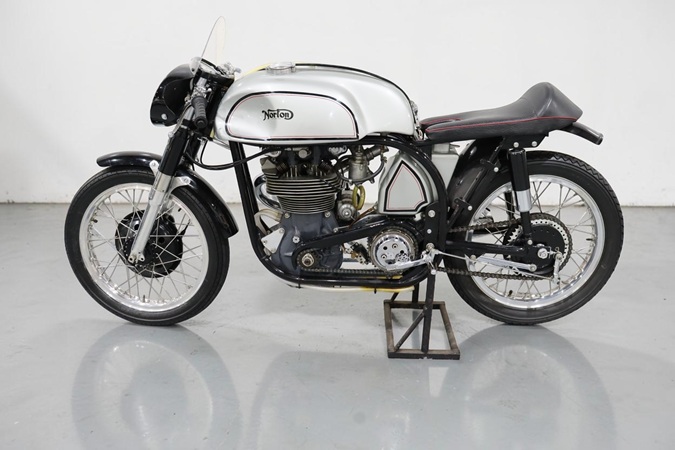
1950s - Norton achieved global racing success with models like the Manx, dominating Grand Prix racing in the single-cylinder class.
1960s - The company developed the Commando series, featuring the innovative Isolastic system to reduce vibration from large parallel-twin engines.
1970s - Financial instability and industry consolidation led to the decline of Norton's original manufacturing era.
1990s - Revival attempts began, keeping the Norton name alive through limited production and engineering experimentation.
2008 - A modern revival of Norton Motorcycles focused on high-performance hand-built machines and heritage-inspired engineering.
Modern Era - Norton remains a symbol of British racing heritage, known for its Featherbed chassis legacy, Manx racing dominance, and performance-oriented engineering identity.
Pre-war Norton motorcycles occupy a unique position in the collector market due to their mechanical simplicity and historical utility. Unlike racing-oriented British brands, Norton's early models represent real-world engineering evolution and industrial design thinking.
Models such as the Big Four with sidecar configuration are especially rare today, as most surviving examples were heavily used in commercial and rural transport applications.
Original-condition Norton motorcycles with documented provenance are considered highly stable long-term collector assets.
Key museum-grade Norton motorcycles available in this collection include:
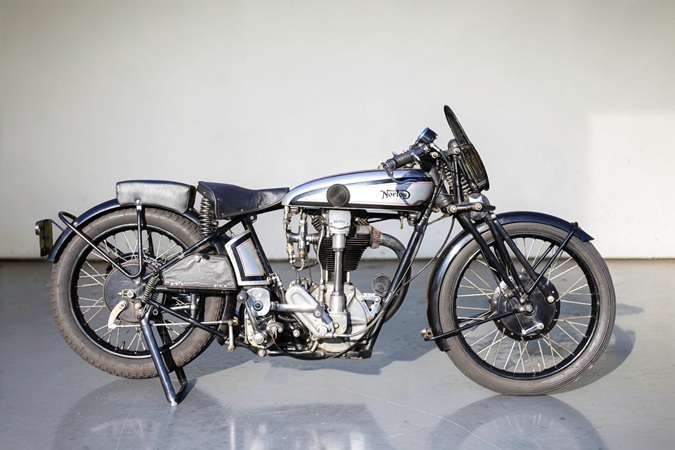
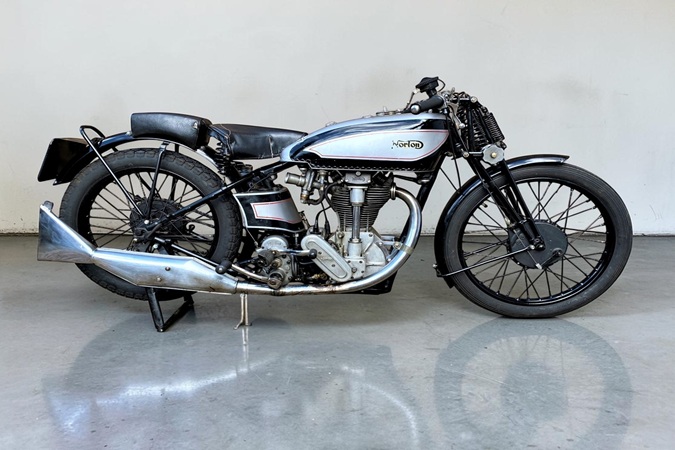
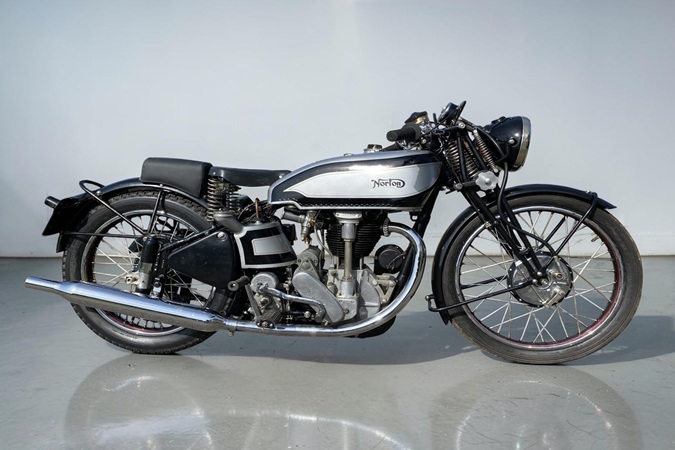
1925 Norton Model Big Four with Sidecar, a heavyweight British touring motorcycle designed for endurance, utility, and early sidecar transport applications.
1929 Norton Model CJ, a refined pre-war single-cylinder motorcycle representing the evolution of British mechanical efficiency and reliability engineering.
Norton is not defined by speed records or racing dominance alone, but by its contribution to everyday mechanical mobility in early 20th-century Britain.
Its engineering philosophy prioritized durability, serviceability, and long-term mechanical stability, which influenced generations of British motorcycle design.
From rural transport to colonial deployment, Norton motorcycles became a symbol of practical engineering excellence.
Pre-war Norton motorcycles are increasingly recognized as stable heritage assets within the vintage motorcycle market. Their value is driven by originality, completeness, and historical usage context rather than performance specifications.
Sidecar-equipped machines such as the Big Four are especially significant due to their declining survival rate and high restoration complexity.
Collectors prioritize machines with original frames, period-correct components, and documented ownership history.
When acquiring a Norton motorcycle, authenticity and mechanical integrity are critical. Collectors should verify engine originality, frame correspondence, and period-correct configuration, especially for sidecar-equipped models.
Each Norton in our collection is professionally inspected, documented, and prepared for museum-grade presentation and international export.
Below is a curated selection of collector-grade Norton motorcycles available for private acquisition. Each example represents verified British engineering heritage with historical documentation.
We offer Norton vintage motorcycles for sale to collectors worldwide including the United Kingdom, Europe, United States, Australia, and Asia. Each motorcycle is professionally crated, insured, and exported with full documentation.
Pricing depends on rarity, originality, and historical significance. Please contact our specialists for current availability and private acquisition consultation.
Contact our specialists for availability, pricing, and worldwide shipping options. Request Availability
The origins of Norton motorcycles are rooted in the broader framework of pre-war motorcycle engineering (1900-1939), where British manufacturers developed lightweight frames, single-cylinder engines, and mechanically efficient platforms designed for both touring and early competition use. Within this environment, Norton established a reputation for structural simplicity and durability.
This foundation evolved further during the period of post-war motorcycle development (1945-1960s), where lessons learned from earlier engineering and wartime production influenced refinements in chassis design, handling, and long-distance reliability.
A critical part of Norton's engineering context is linked to the demands of World War II motorcycle applications, where endurance, ease of maintenance, and load-bearing capability became essential design priorities. These requirements shaped the development of heavier-duty platforms capable of operating under sustained mechanical stress.
This is particularly evident in motorcycles designed to operate with sidecar-integrated configurations, where frame rigidity, torque delivery, and balance under load were critical. Models such as Norton's Big Four illustrate how engineering decisions were influenced not only by performance, but by practical utility and transport demands.
For a broader comparative view across manufacturers and mechanical philosophies, global vintage motorcycle inventory archives provide context for evaluating Norton alongside other British and European pre-war and transitional engineering platforms.
What makes Norton motorcycles historically significant?
Norton motorcycles are recognized for their lightweight engineering philosophy, early racing success, and durable single-cylinder platforms that influenced British motorcycle design.
Why are vintage Norton motorcycles highly collectible?
Limited survival rates, combined with strong competition heritage and utility applications, make original-condition Norton motorcycles increasingly rare.
Which Norton models are most collectible?
Collector interest often focuses on pre-war touring machines, early single-cylinder models, and heavy-duty sidecar-capable platforms such as the Big Four.
Are Norton motorcycles a good investment?
Well-preserved Norton motorcycles are considered strong long-term collector assets due to historical relevance, mechanical simplicity, and sustained global demand.
Norton motorcycles represent a critical intersection between utility engineering and early performance development. From pre-war touring machines to sidecar-capable platforms and competition-focused singles, Norton's engineering reflects a balance between mechanical efficiency and structural durability. For collectors, evaluating originality, frame integrity, and engine authenticity is essential when assessing these machines within their historical context.
The evolution of Norton can be understood within the broader landscape of British motorcycle development, where industrial design, competition engineering, and wartime utility intersect. This context is explored through comparative studies of global manufacturers, alongside insights into British motorcycle brand history and the wider narrative presented in the evolution of British motorcycling.
Within the vintage motorcycle market, Norton occupies a position shaped by both competition heritage and practical engineering applications. These dynamics align with broader observations in market trend analysis, particularly in segments focused on pre-war and utility-based machines.
Norton engineering is defined by its emphasis on lightweight construction combined with durability under load, particularly in applications involving long-distance travel and sidecar integration. These motorcycles illustrate the dual-purpose nature of early British engineering, where machines were required to perform in both civilian and military environments.
Examine exhaustive buying tutorials combined with advanced mechanical insights, such as international purchasing FAQs, brand-tailored troubleshooting, classic bike common faults, and workshop rebuild steps: