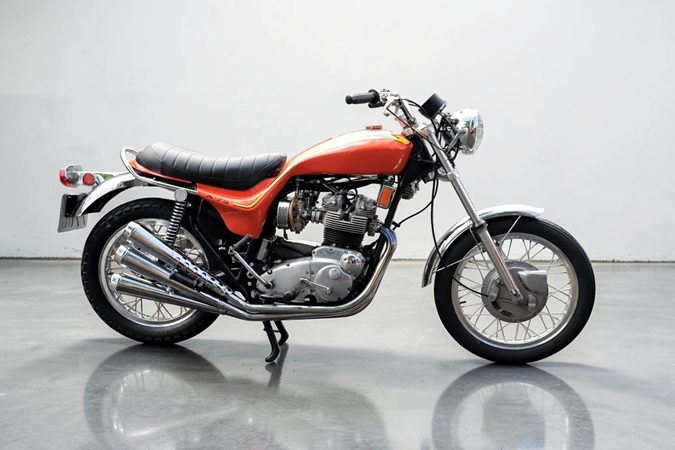
The Vintage Motorcycles
Specialists in antique, classic, veteran and vintage motorcycles.
Specialists in antique, classic, veteran and vintage motorcycles.
A museum-grade collection of post-war motorcycles and scooters, representing the transformation of global mobility from wartime engineering to modern performance and design. From early 1940s recovery-era machines to late 20th-century technological refinement, each example reflects a defining chapter in the evolution of modern motorcycling.
Curated by vintage motorcycle specialists with decades of experience sourcing and evaluating historic motorcycles in Vietnam, including machines preserved in private collections, family holdings, and historic workshops. Each machine is selected for originality, provenance, and historical significance.
Post-war motorcycles (1945 onward) represent one of the most transformative periods in motorcycling history. Following World War II, manufacturers rapidly transitioned from military production to civilian mobility, introducing new technologies, improved reliability, and entirely new categories such as scooters and touring machines.
Brands such as BMW, BSA, Harley-Davidson, Vincent, Vespa, and Lambretta redefined global transportation, combining engineering innovation with accessibility, performance, and cultural identity.
This era laid the foundation for modern motorcycling, bridging early mechanical engineering with contemporary design, usability, and global appeal.
Post-war motorcycles are defined as machines produced after 1945, following the end of World War II and the global shift from military to civilian manufacturing.
This period is characterized by improved engineering standards, mass production techniques, enhanced rider comfort, and the emergence of entirely new vehicle categories such as scooters and dual-purpose motorcycles.
While more widely produced than pre-war machines, collector-grade post-war motorcycles are increasingly valued for their historical importance, technological innovation, and cultural influence.
Industrial recovery and civilian production (BMW, Vincent, BSA)
Rise of scooters and urban mobility (Vespa, Lambretta)
Performance development and cultural expansion
Motorsport influence and high-performance engineering (XR750)
Dual-sport innovation and modern reliability (BMW GS series)
This collection includes some of the most influential manufacturers of the modern era, spanning Europe, the United Kingdom, and the United States.
Notable marques include BMW, BSA, Douglas, Harley-Davidson, Lambretta, Vespa, and Vincent - each contributing to a new era of motorcycle engineering and design philosophy.
From German precision engineering and British performance machines to Italian scooter design and American racing heritage, post-war motorcycles reflect a truly global transformation.
Post-war motorcycles occupy a unique position in the collector market, balancing historical importance with usability, design appeal, and broader accessibility.
Certain models - particularly early post-war machines, high-performance variants, and culturally significant scooters - are increasingly viewed as investment-grade assets.
As collector demand grows globally, well-preserved examples with original components and documented provenance are becoming progressively more difficult to acquire.
Key innovations of this era include improved suspension systems, overhead valve and overhead camshaft engines, enhanced braking technology, and the introduction of lightweight urban mobility platforms such as scooters.
By the late 20th century, motorcycles had evolved into highly refined machines, incorporating advanced materials, improved reliability, and specialized categories such as touring, racing, and dual-sport models.
This collection highlights a diverse range of post-war engineering milestones, including:
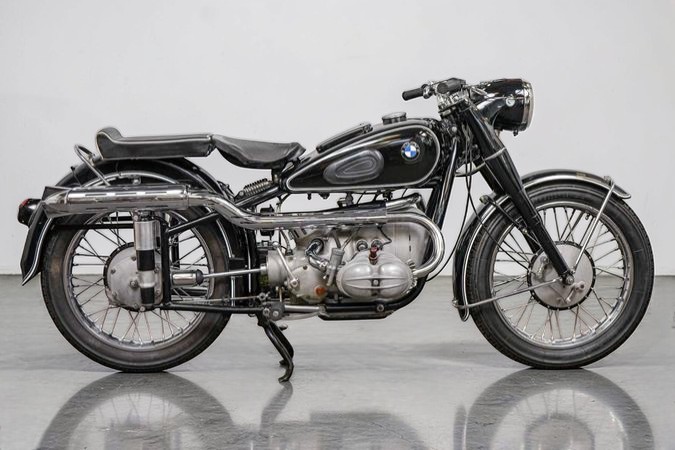
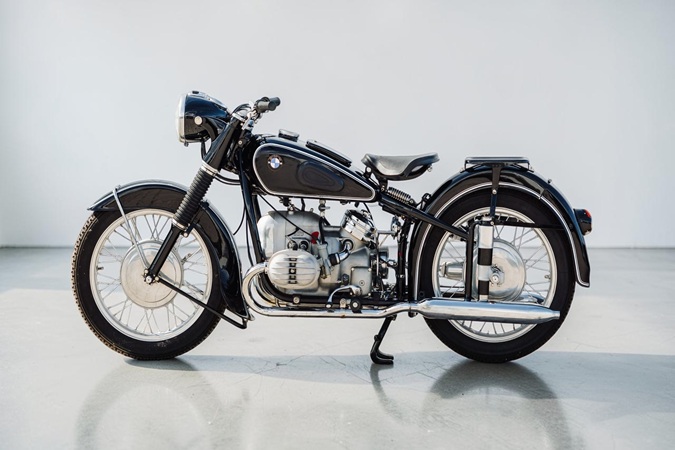
1952 BMW R68 - High-performance German touring motorcycle
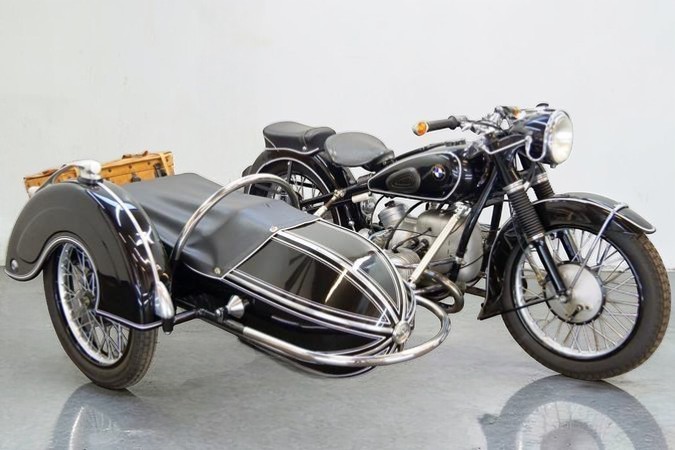
1952 BMW R51/3 with Sidecar - Classic post-war utility configuration
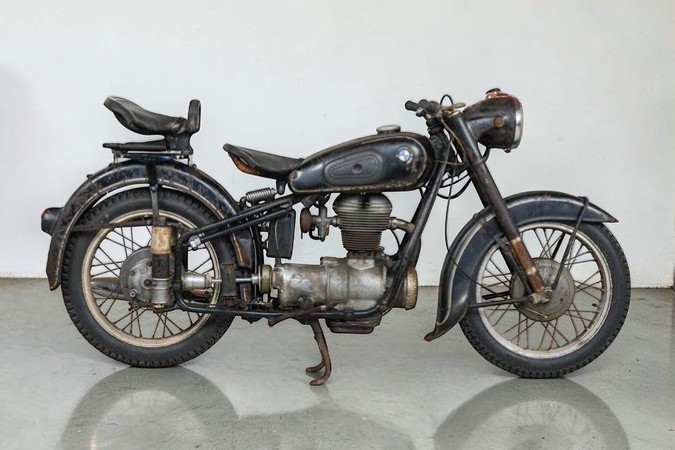
1954 BMW R25/3 - Lightweight precision engineering
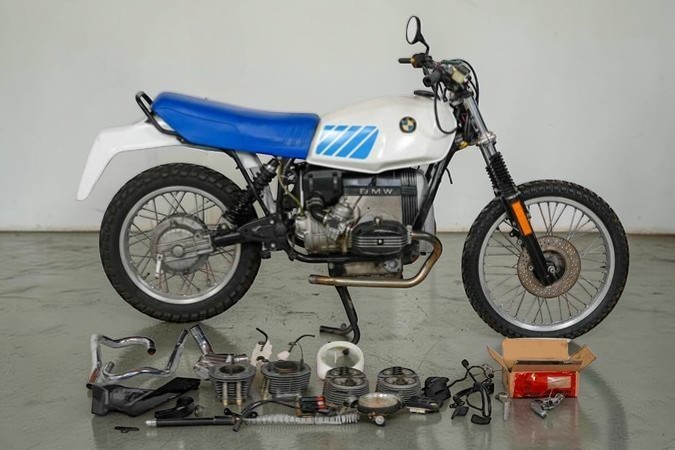
1987 BMW R65GS & 1996 BMW R80GS Basic - Dual-sport innovation lineage
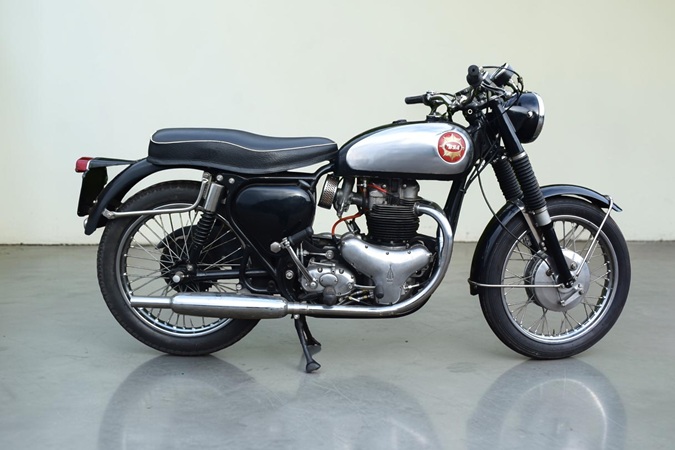
1955 BSA B32GS Gold Star - British performance engineering icon
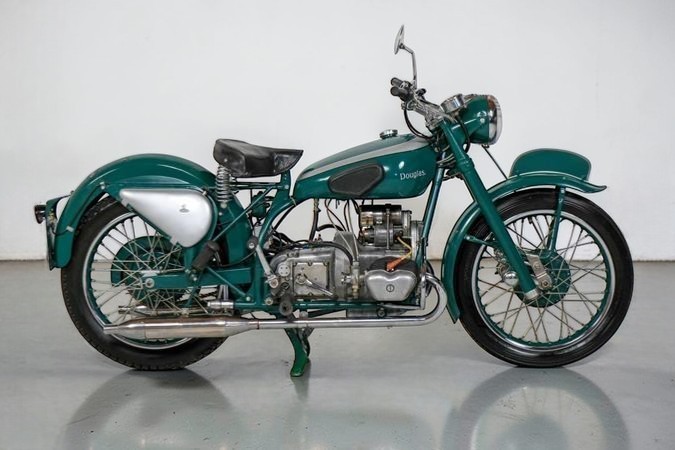
1952 Douglas Mark V350 - Final evolution of flat-twin design
1975 Harley-Davidson XR750 - Legendary American racing machine
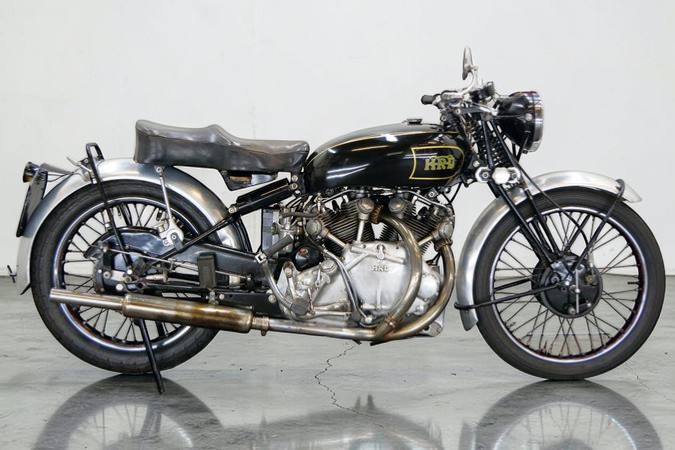
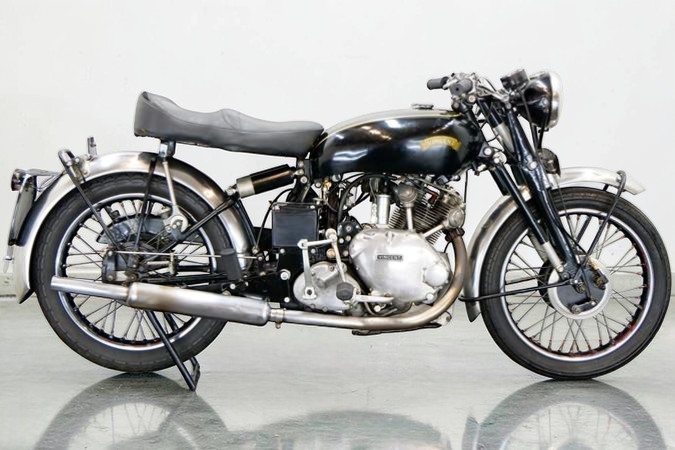
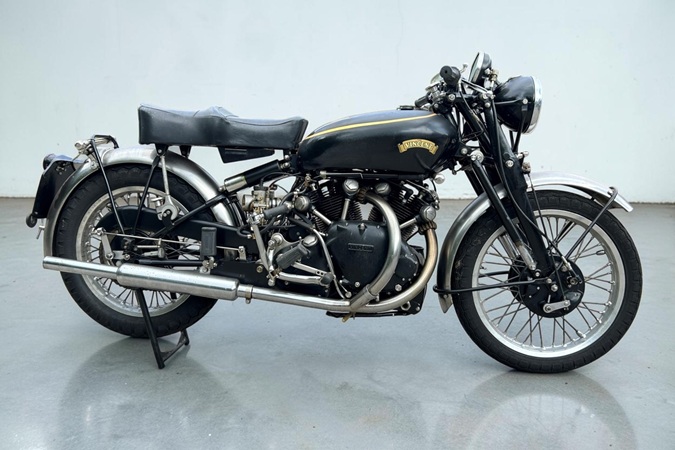
1947-1948 Vincent Rapide Series B - One of the fastest motorcycles of its era
1951 Vincent Comet Series C - High-performance single-cylinder design
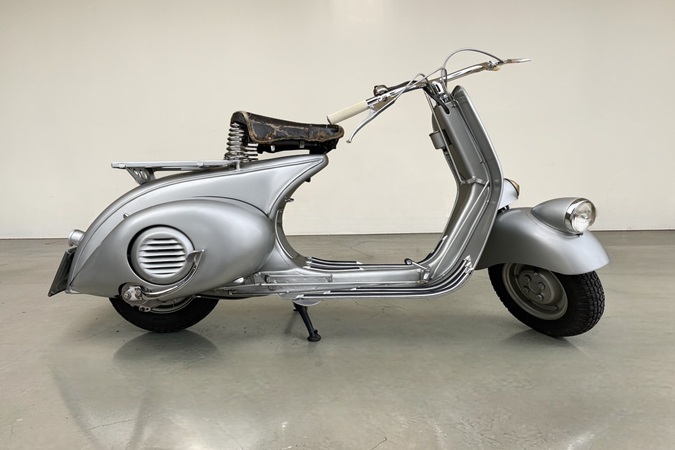
1947 Vespa 98 & 1953 Vespa Sei Giorni - Origins of scooter mobility
1962 Vespa GS160 & 1970 Vespa SS90 - Performance-oriented scooter design
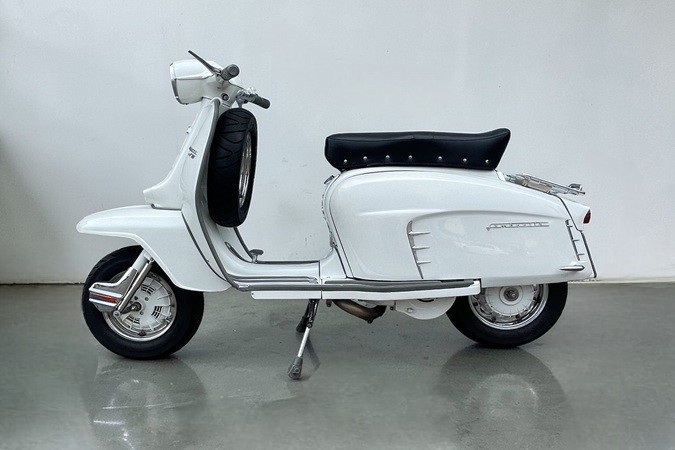
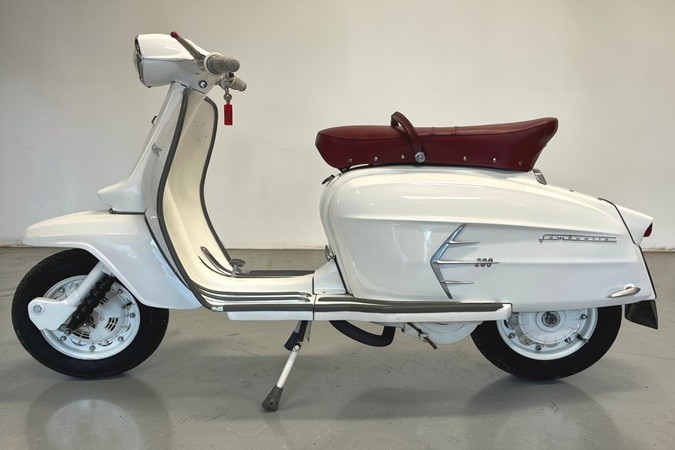
1965 Lambretta TV200, 1966 SX200 & 1971 GP200 - Peak Italian scooter engineering
These machines represent the full spectrum of post-war innovation, from early recovery-era engineering to performance, design, and cultural icons.
Post-war motorcycles represent the bridge between mechanical heritage and modern mobility. They combine historical significance with improved usability, making them highly desirable among collectors who value both authenticity and rideability.
Unlike pre-war machines, many post-war motorcycles can still be actively used, while retaining strong collector and investment value.
When acquiring a post-war motorcycle, collectors should focus on originality, matching numbers, and correct specification for each model and production year.
Particular attention should be given to restoration quality, as incorrect modifications can significantly impact value and historical integrity.
Each motorcycle in this collection is carefully inspected and documented to meet museum-grade standards and collector expectations.
Below is a curated selection of post-war motorcycles and scooters available for acquisition. Each example is verified, documented, and offered with international shipping options.
We offer collector-grade post-war motorcycles to clients worldwide, including Europe, the United States, United Kingdom, Australia, and Asia.
All motorcycles are professionally crated and shipped with full export documentation and insurance.
The history of vintage motorcycles is defined by several important eras, each representing a major transformation in engineering, manufacturing, design philosophy, and motorcycle culture. From pioneering early machines and pre-war motorcycles to military models, post-war classics, and modern collectible icons, every period reflects the technological progress and craftsmanship that shaped the motorcycle industry.
Our Vintage Motorcycle Eras Guide explores the key historical periods that define motorcycle collecting today, including significant manufacturers, engineering innovations, iconic models, and the factors that determine historical importance and collector value.
The Second World War represented a critical turning point in motorcycle development, transforming motorcycles from civilian transportation into highly specialized military machines.
The WW2 Military Motorcycle Era introduced motorcycles engineered for extreme reliability, field repairability, rugged terrain, and long-distance operational use. Manufacturers developed stronger frames, simplified mechanical systems, and durable designs that later influenced touring, utility, and adventure motorcycles for decades.
Following the wartime period, motorcycle manufacturers entered a new era focused on mass production, improved reliability, performance development, and global expansion. The transition into the Post-War Motorcycle Era (1945-1990s) introduced a new generation of machines that combined proven wartime engineering principles with modern manufacturing techniques and evolving rider expectations.
The post-war decades established many of the motorcycles now considered modern classics, including performance motorcycles, touring machines, and culturally significant models from major global manufacturers.
This era represents the bridge between traditional hand-built motorcycles and the advanced engineering standards that define contemporary collector motorcycles.
Explore Post-War Motorcycles →For a comprehensive overview of available machines across all historical periods, the global motorcycle collection provides a curated archive of collector-grade motorcycles, categorized by era, engineering type, and historical significance.
A post-war motorcycle generally refers to motorcycles produced after World War II, beginning around 1945 and continuing through the late 20th century. This era represents a major transformation in motorcycle engineering, with manufacturers moving from wartime development into improved performance, reliability, mass production, and specialized designs.
The post-war motorcycle era is commonly defined as the period from 1945 through the 1990s. This period includes the rise of modern motorcycle manufacturing, the expansion of global motorcycle markets, the development of superbikes, touring motorcycles, and iconic classic models that remain highly collectible today.
Some of the most collectible post-war motorcycle brands include BMW, Ducati, Triumph, Norton, Honda, Harley-Davidson, Yamaha, Kawasaki, Moto Guzzi, BSA, and other influential European, American, and Japanese manufacturers. Collectibility depends on rarity, historical importance, originality, racing heritage, and condition.
The value of a post-war motorcycle is determined by factors including model rarity, production numbers, originality, mechanical condition, restoration quality, historical significance, racing achievements, manufacturer reputation, and demand among collectors.
Post-war motorcycles represent the transition from traditional handcrafted machines to modern motorcycle engineering. This era introduced major advances in engine technology, suspension systems, braking performance, reliability, manufacturing methods, and specialized motorcycle categories.
Original post-war motorcycles with documented history and factory specifications are highly valued by collectors. However, professionally restored examples can also be desirable when restoration work maintains historical accuracy, uses correct components, and preserves the motorcycle's original character.
Investment-grade post-war motorcycles typically include rare production models, early examples from significant manufacturers, motorcycles with racing history, limited editions, and machines with strong documentation and collector demand. Historical importance often has a greater impact than age alone.
Before purchasing a post-war motorcycle, collectors should review authenticity, engine and frame numbers, ownership history, maintenance records, restoration documentation, originality of components, mechanical condition, and availability of replacement parts.
Many well-maintained post-war motorcycles can still be ridden regularly because they often feature more advanced engineering compared with earlier motorcycles. However, owners should consider maintenance requirements, mechanical condition, parts availability, and proper preservation practices.
Collectors typically find authentic post-war motorcycles through specialist vintage motorcycle dealers, private collections, historic auctions, and established marketplaces focused on classic motorcycles. A documented history and verified condition are important when acquiring a collectible post-war motorcycle.
For serious collectors, understanding the technological evolution and cultural impact of post-war motorcycles is essential before acquisition. The post-1945 era represents the transformation of motorcycling into a global industry, defined by mass production, engineering refinement, and the emergence of new categories such as scooters, touring motorcycles, and dual-purpose machines.
Manufacturers such as BMW, BSA, Harley-Davidson, Vincent, Vespa, and Lambretta played a critical role in shaping modern motorcycling - from high-performance road machines and racing legends to practical urban mobility solutions that redefined transportation worldwide.
This curated knowledge base explores the legacy of post-war motorcycles across multiple countries and manufacturers, offering insights into engineering innovation, cultural significance, and long-term collector value.
Explore the evolution of post-war motorcycles within the broader context of global industrial recovery and design innovation - including the rise of European, American, and Japanese manufacturers during the modern era of motorcycling (1945-1970s):
Post-war motorcycles occupy a dynamic segment of the collector market, where historical significance meets usability, design appeal, and global brand recognition.
Collectors evaluate these machines based on originality, matching numbers, model rarity, and cultural relevance - particularly for iconic models such as early BMW post-war machines, Vincent performance motorcycles, Harley-Davidson racing platforms, and Italian scooters from Vespa and Lambretta.
Understanding market trends and valuation factors is essential for acquiring investment-grade motorcycles and building a balanced, historically significant collection.
Explore the engineering advancements, performance evolution, and cultural significance of post-war motorcycles - from the rise of Grand Prix and endurance racing to the global influence of scooter culture and lifestyle movements.
This era introduced modern suspension systems, improved engine architectures, and design philosophies that continue to shape contemporary motorcycles today.