
The Vintage Motorcycles
Specialists in antique, classic, veteran and vintage motorcycles.
Specialists in antique, classic, veteran and vintage motorcycles.
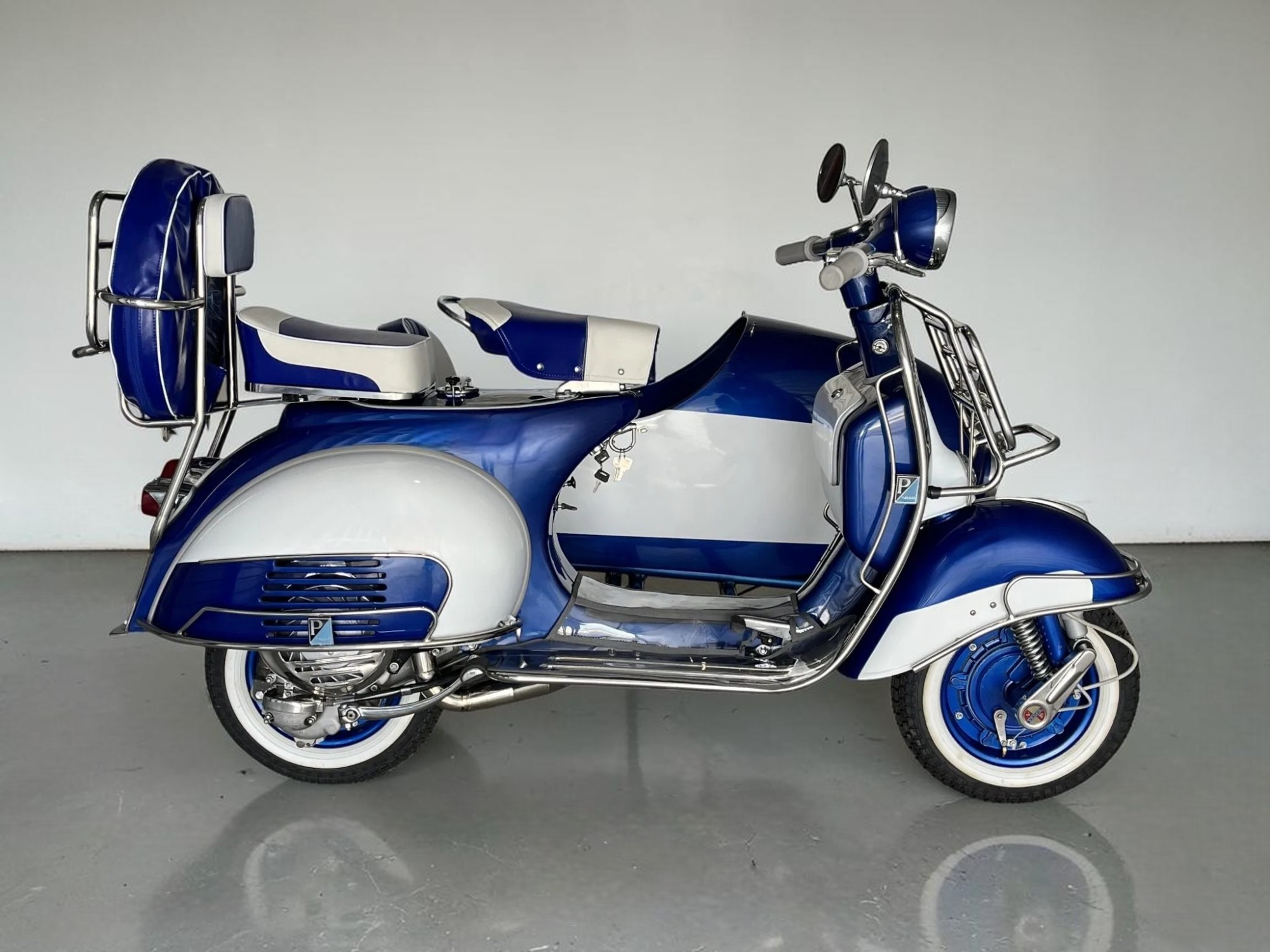
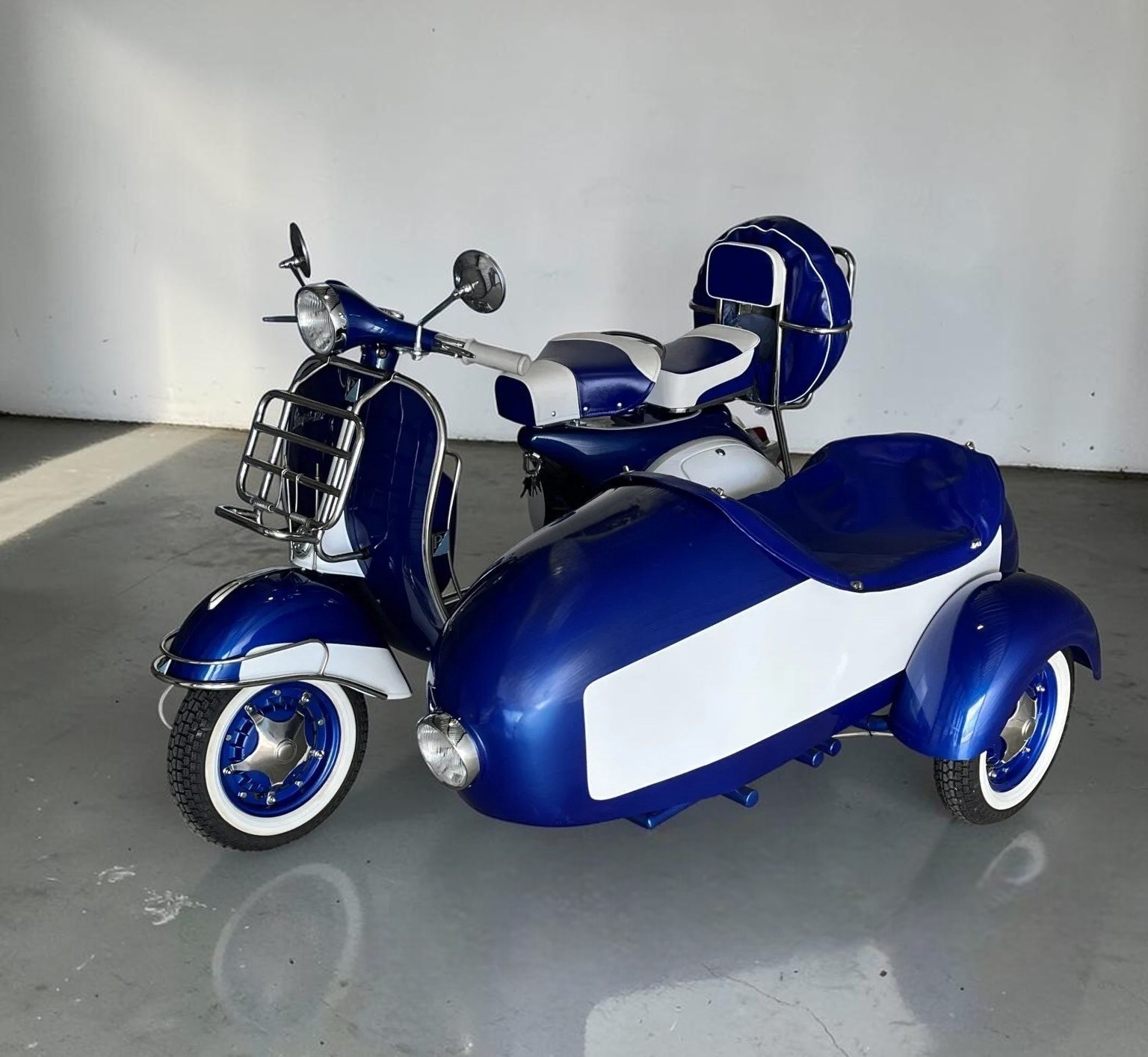
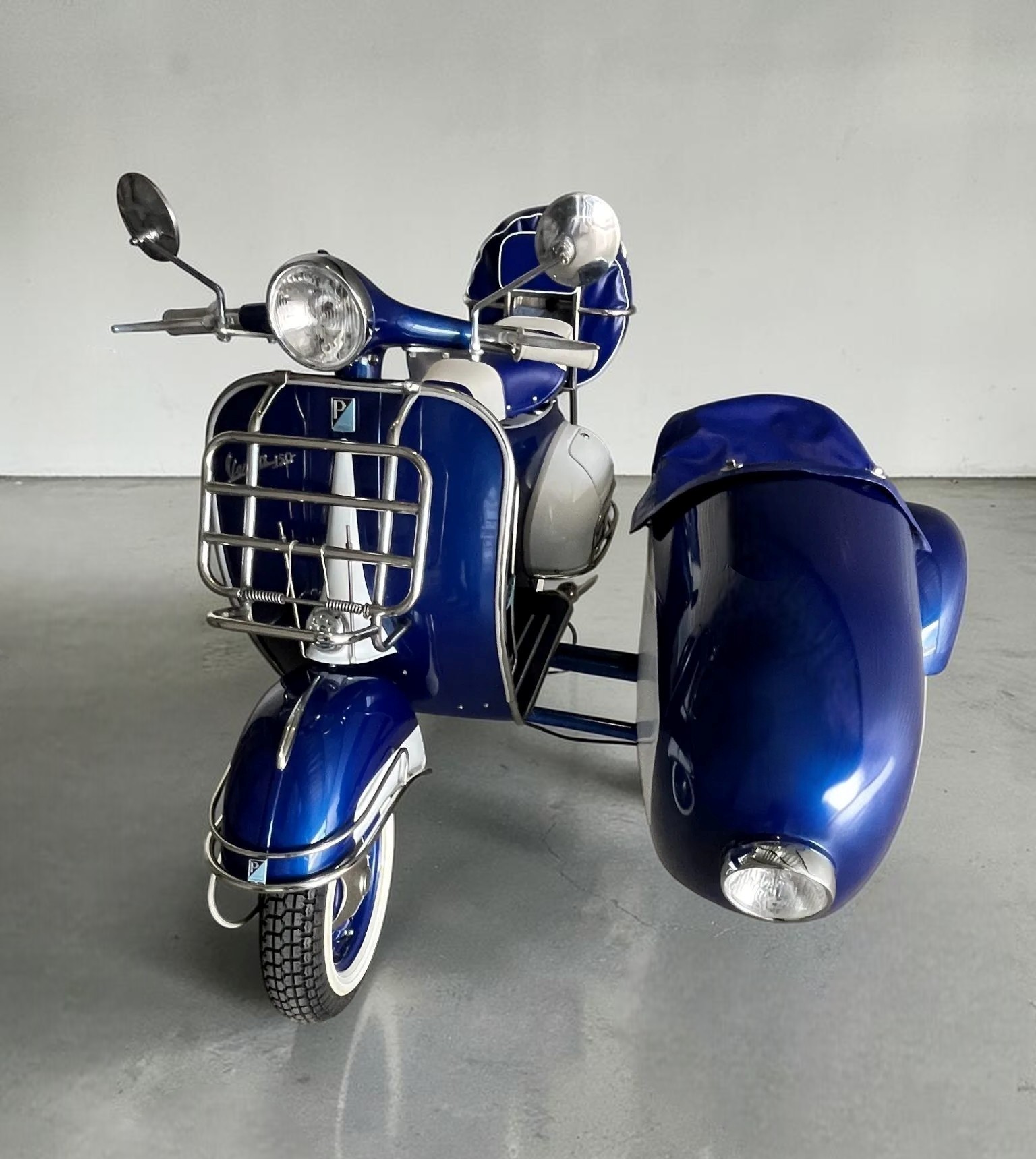
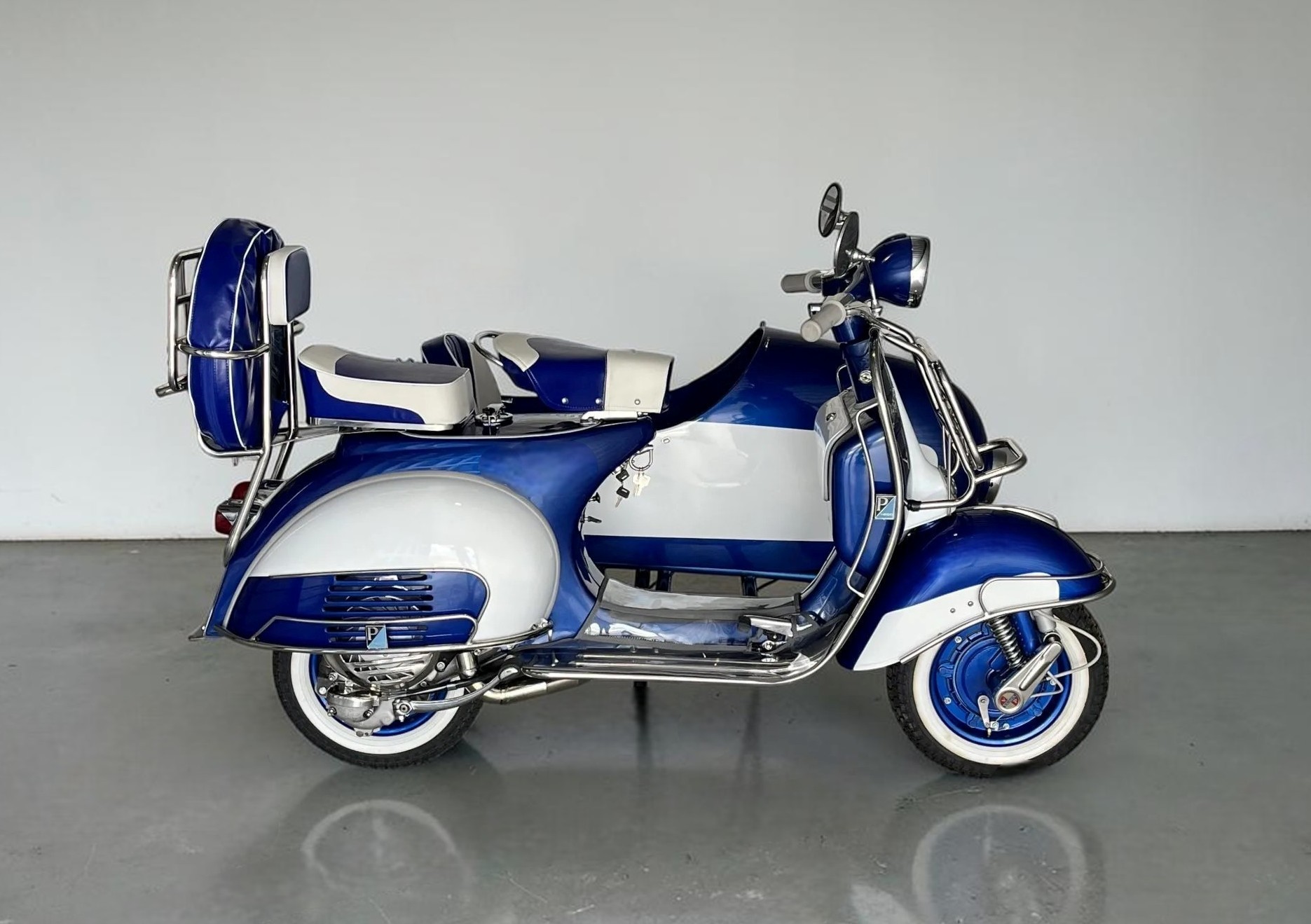
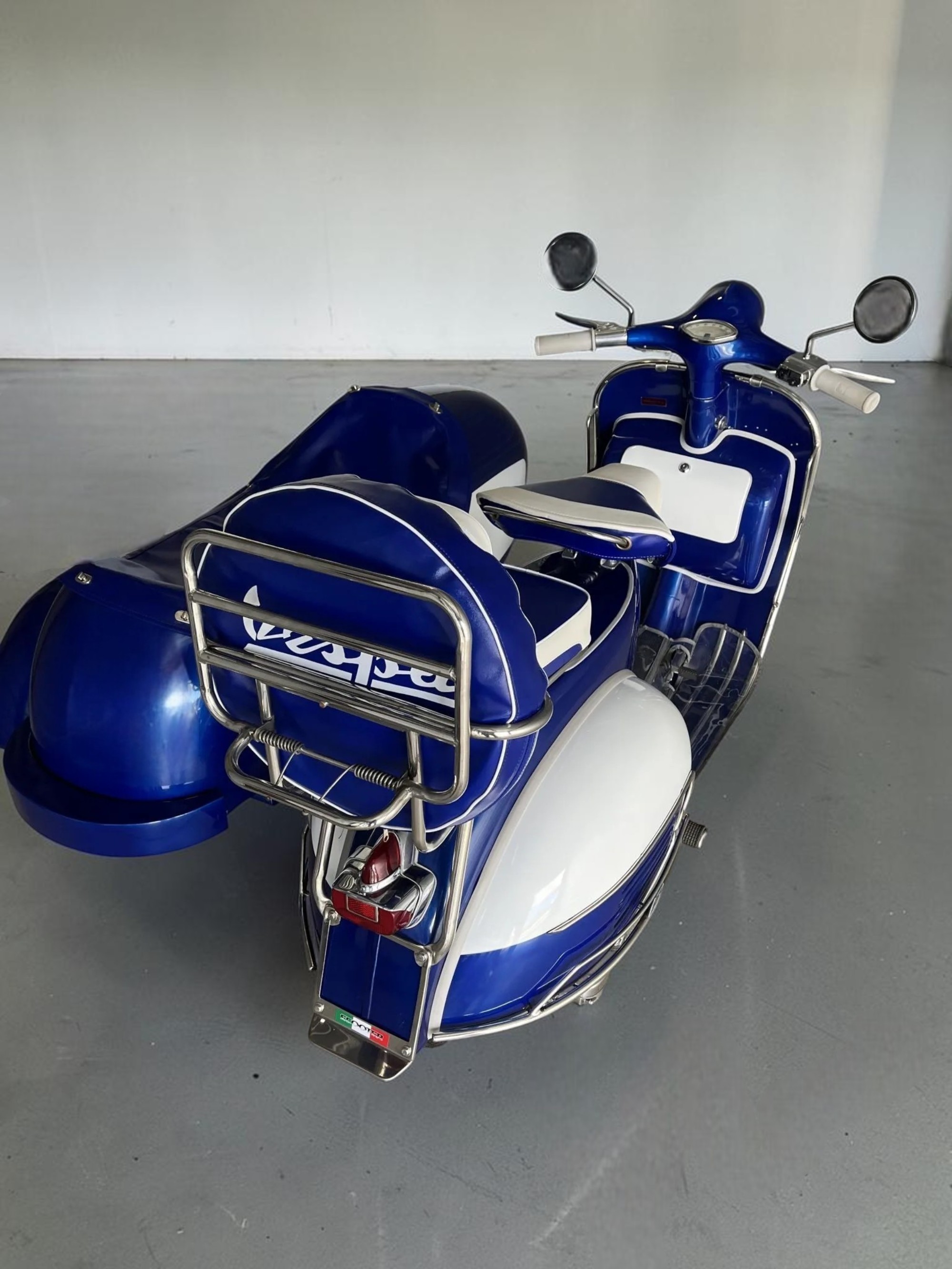
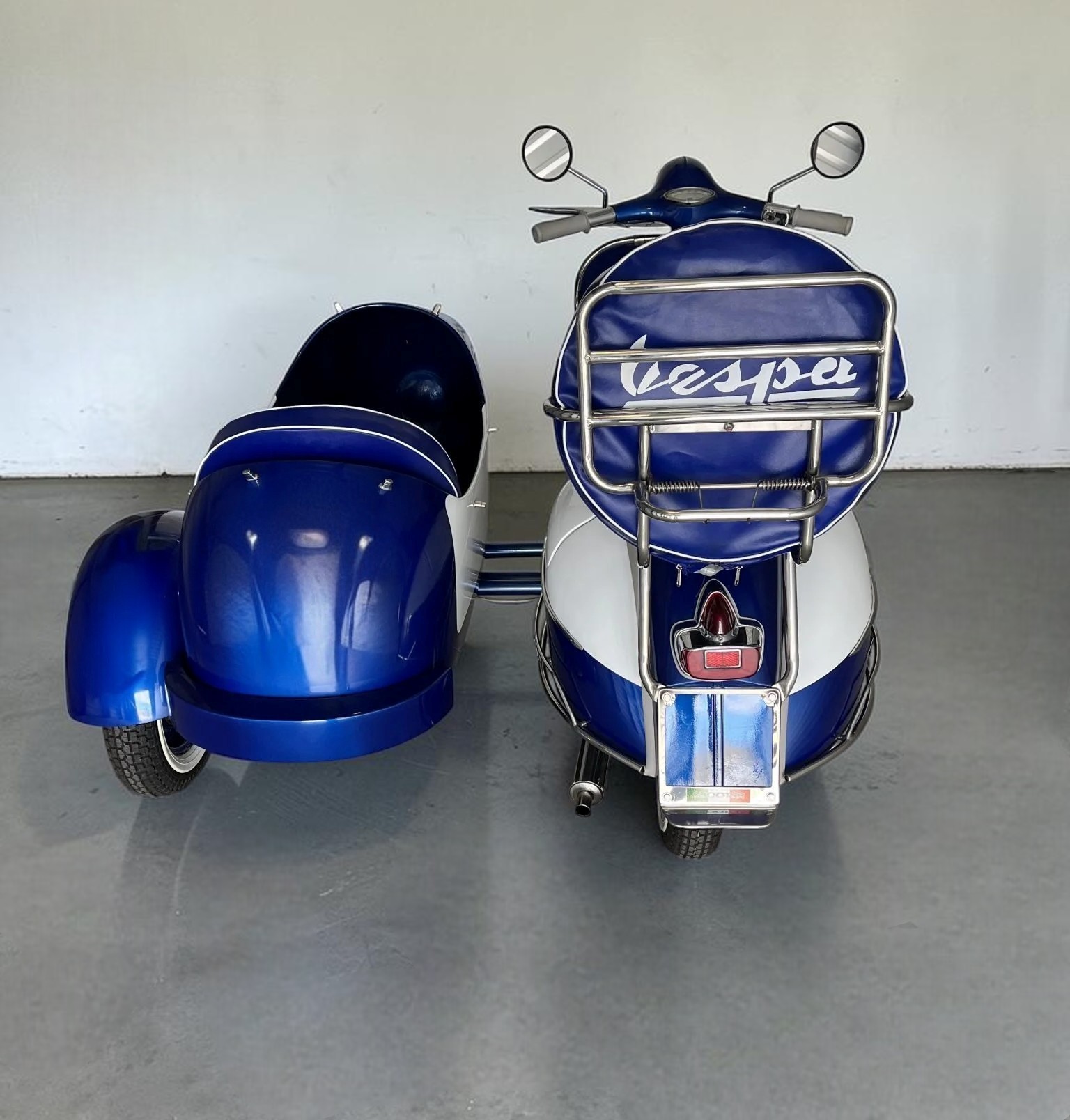
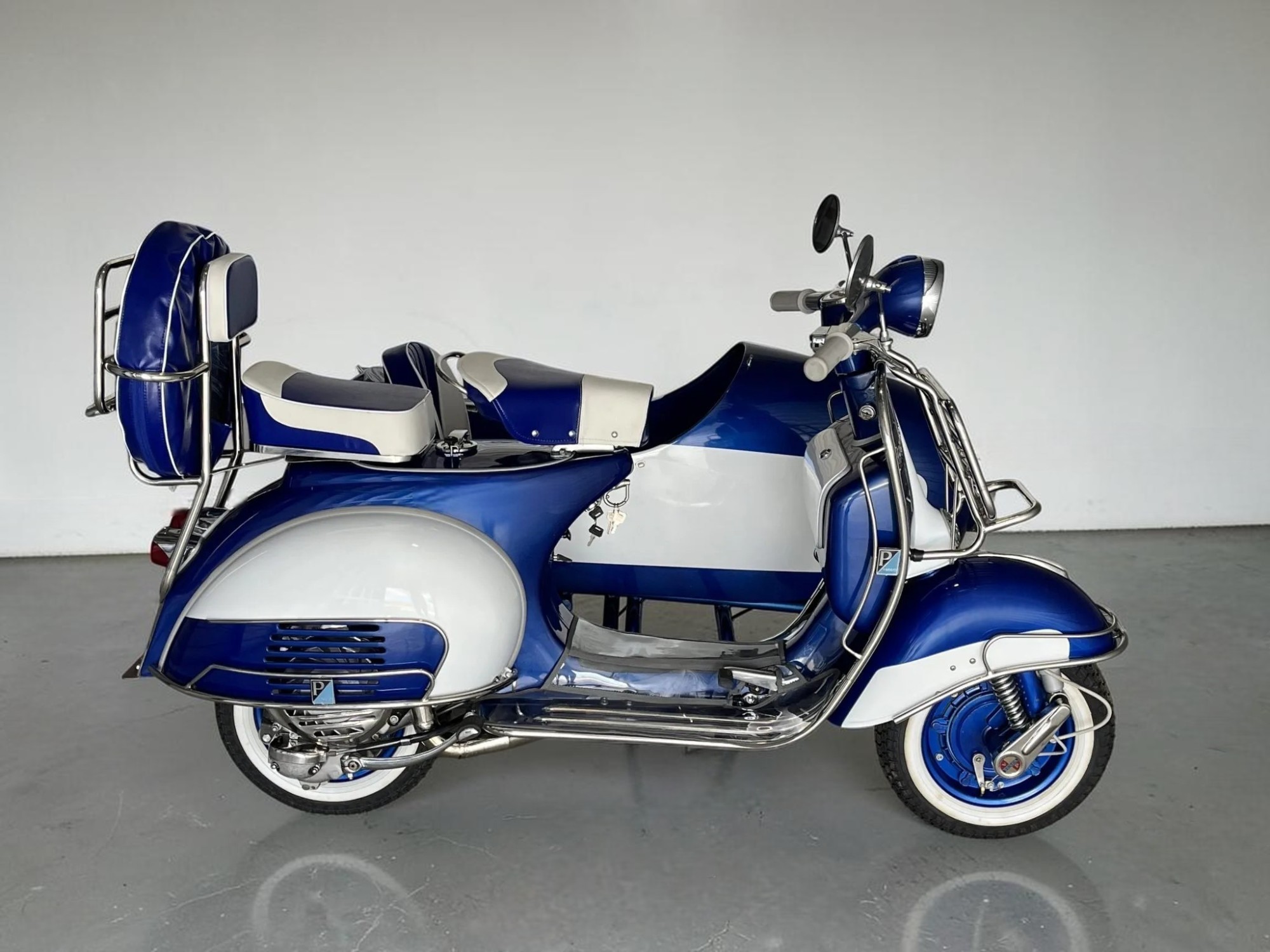
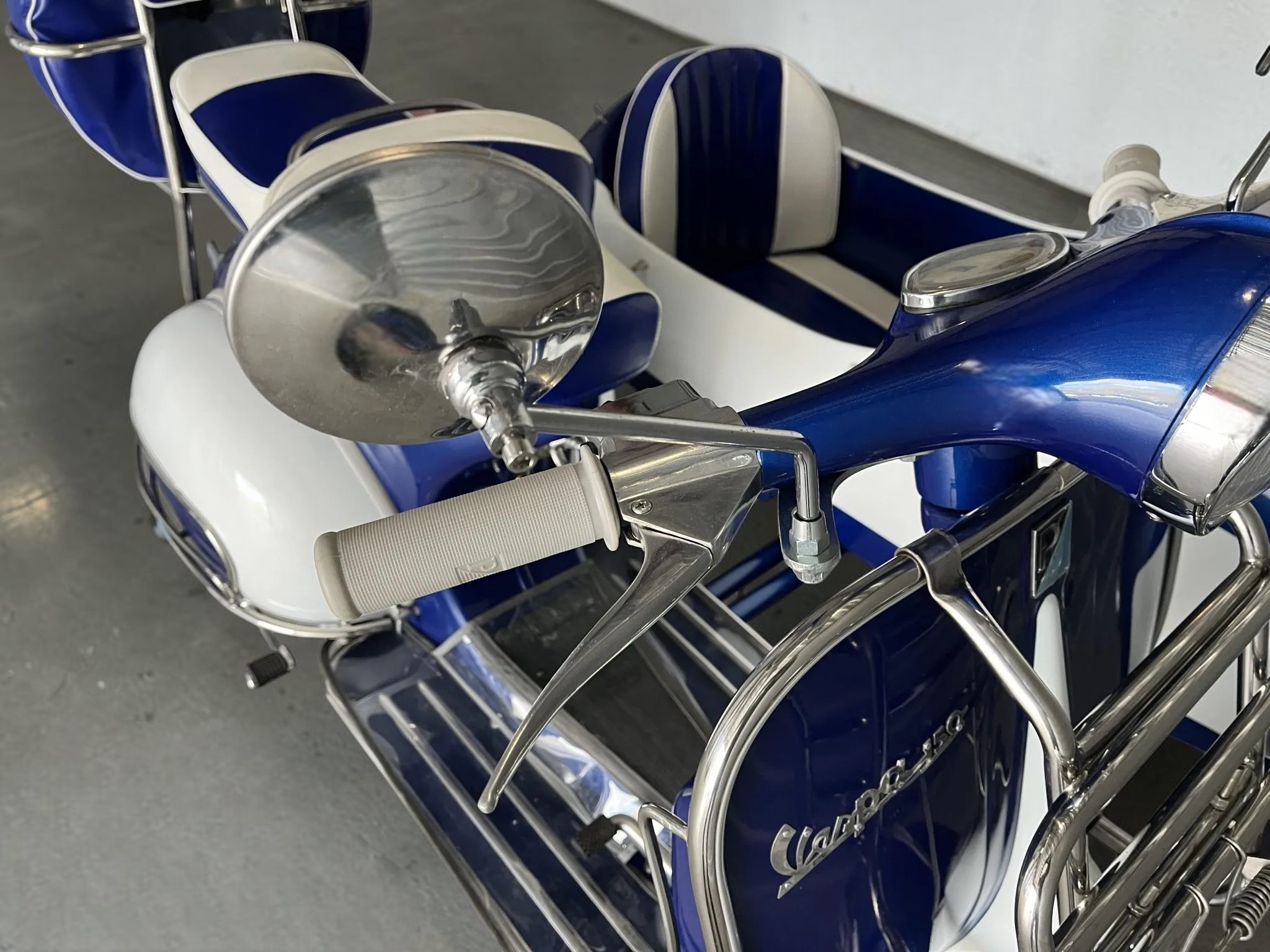
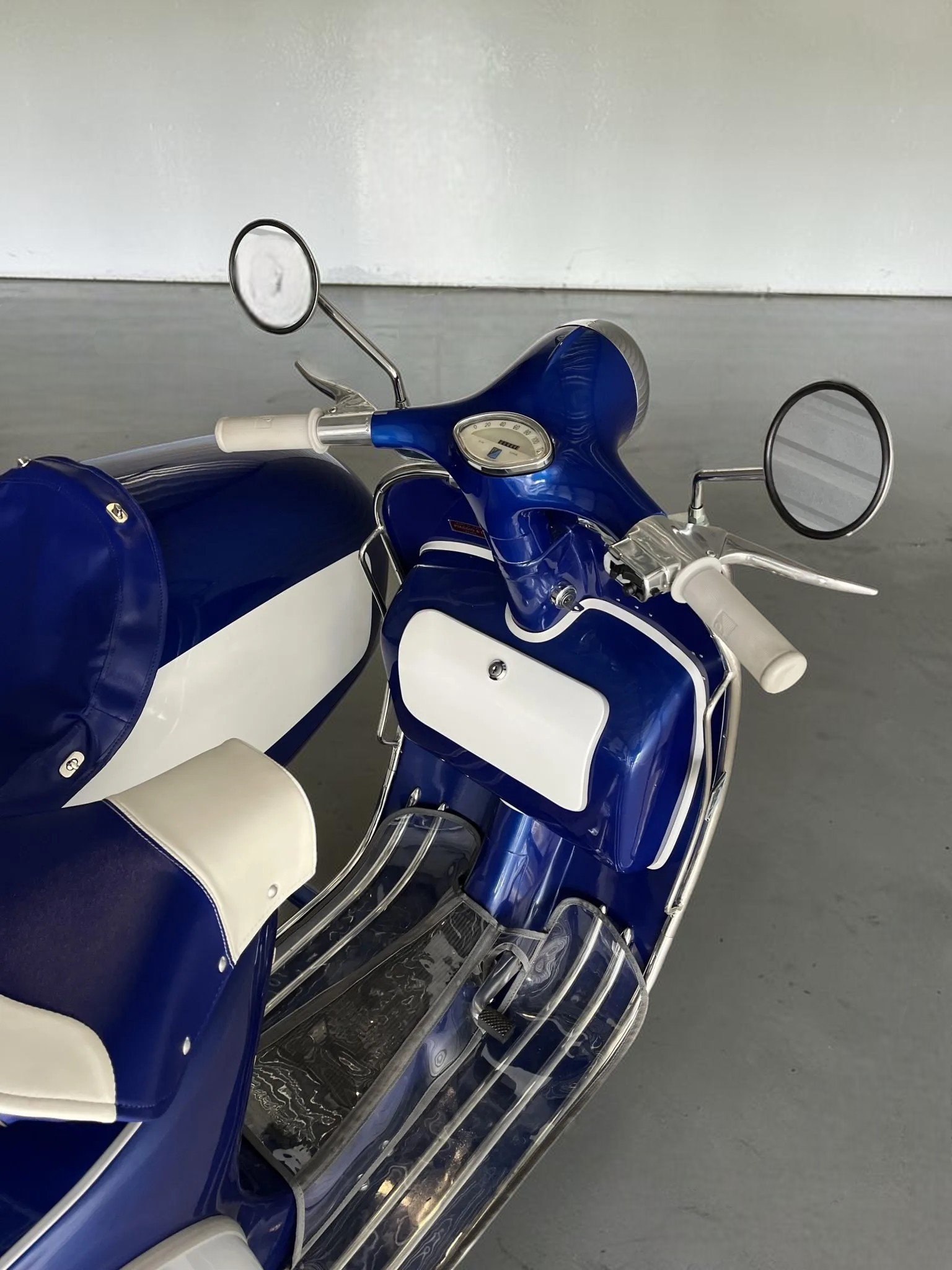
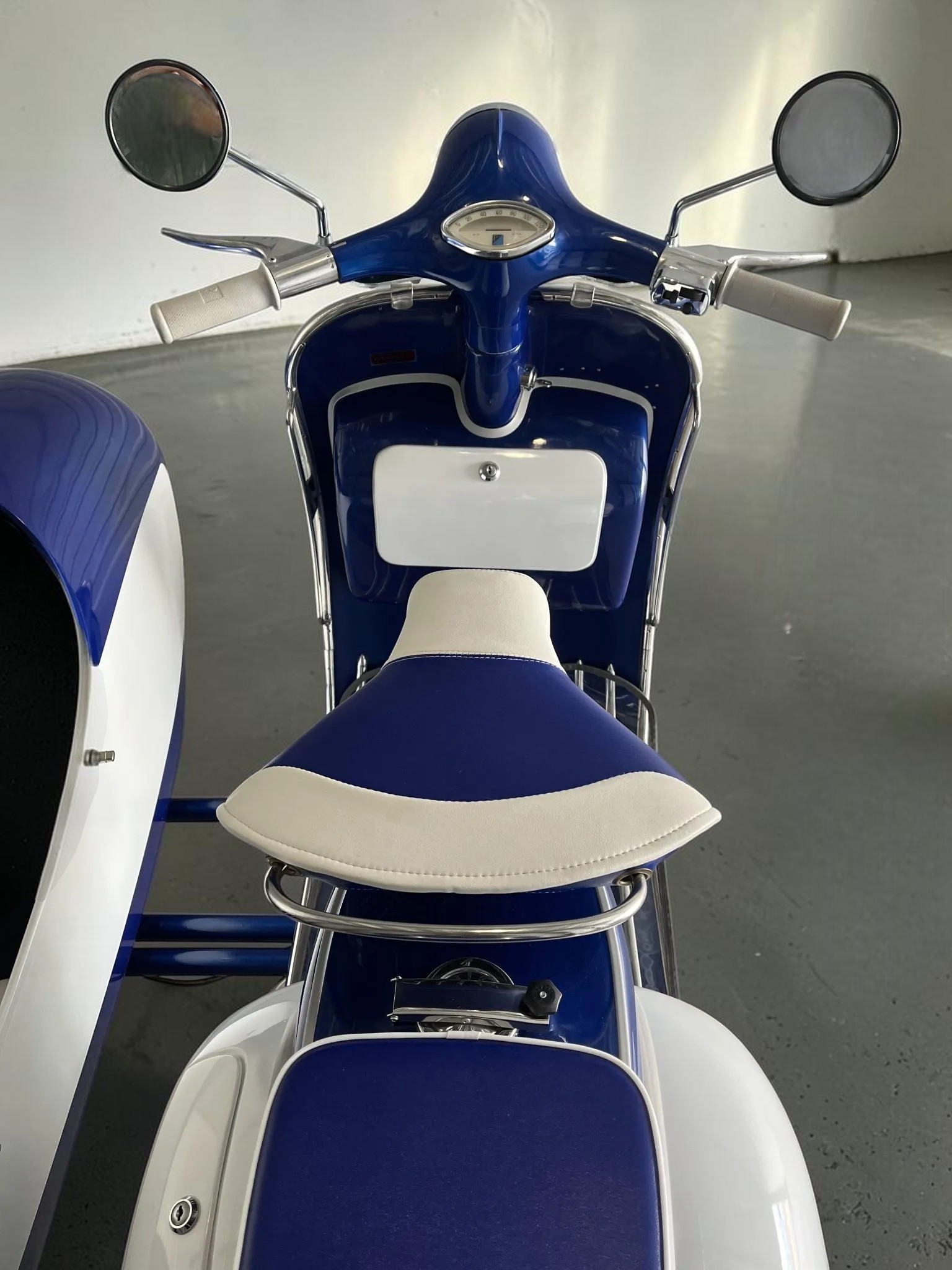
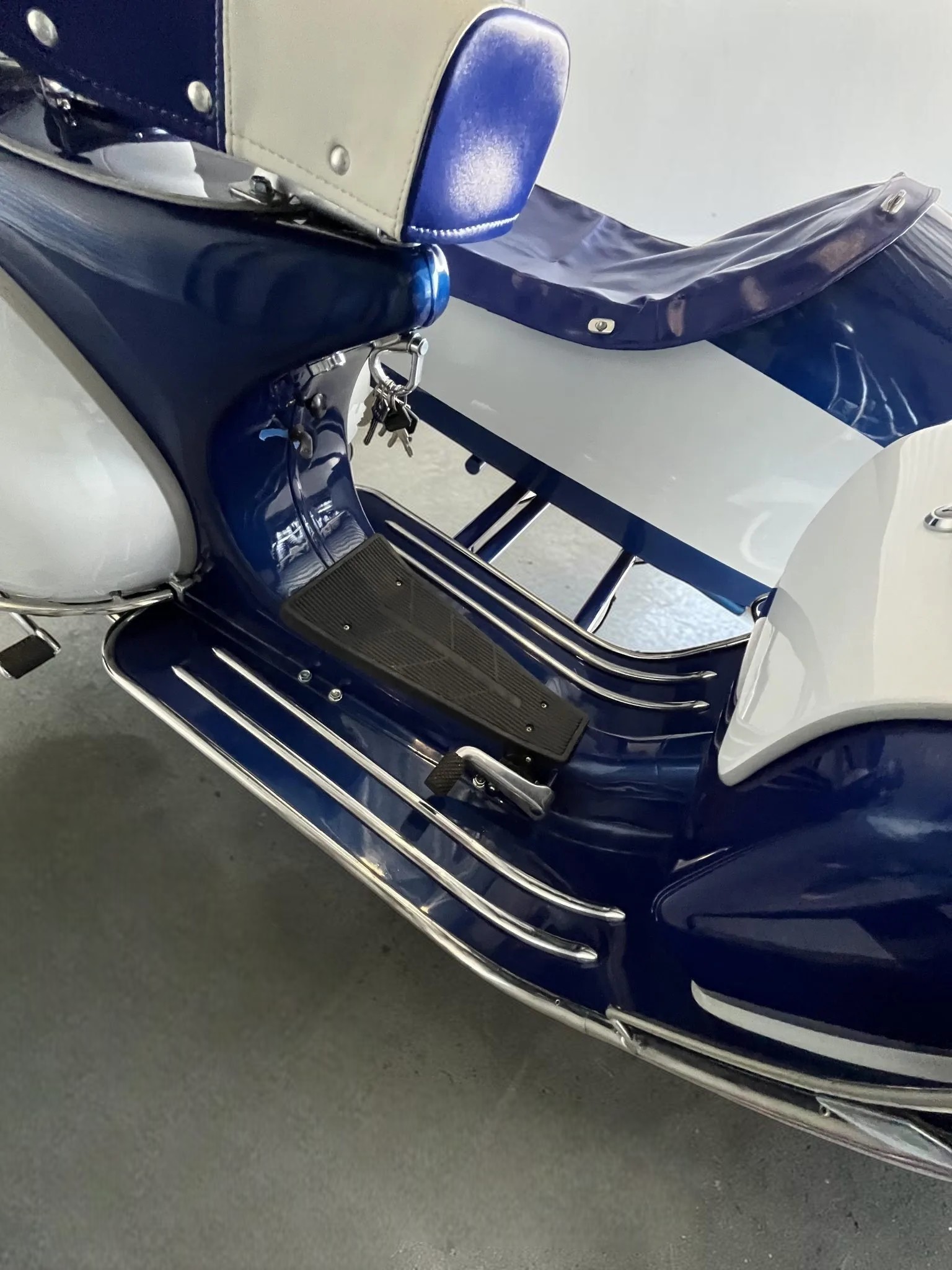
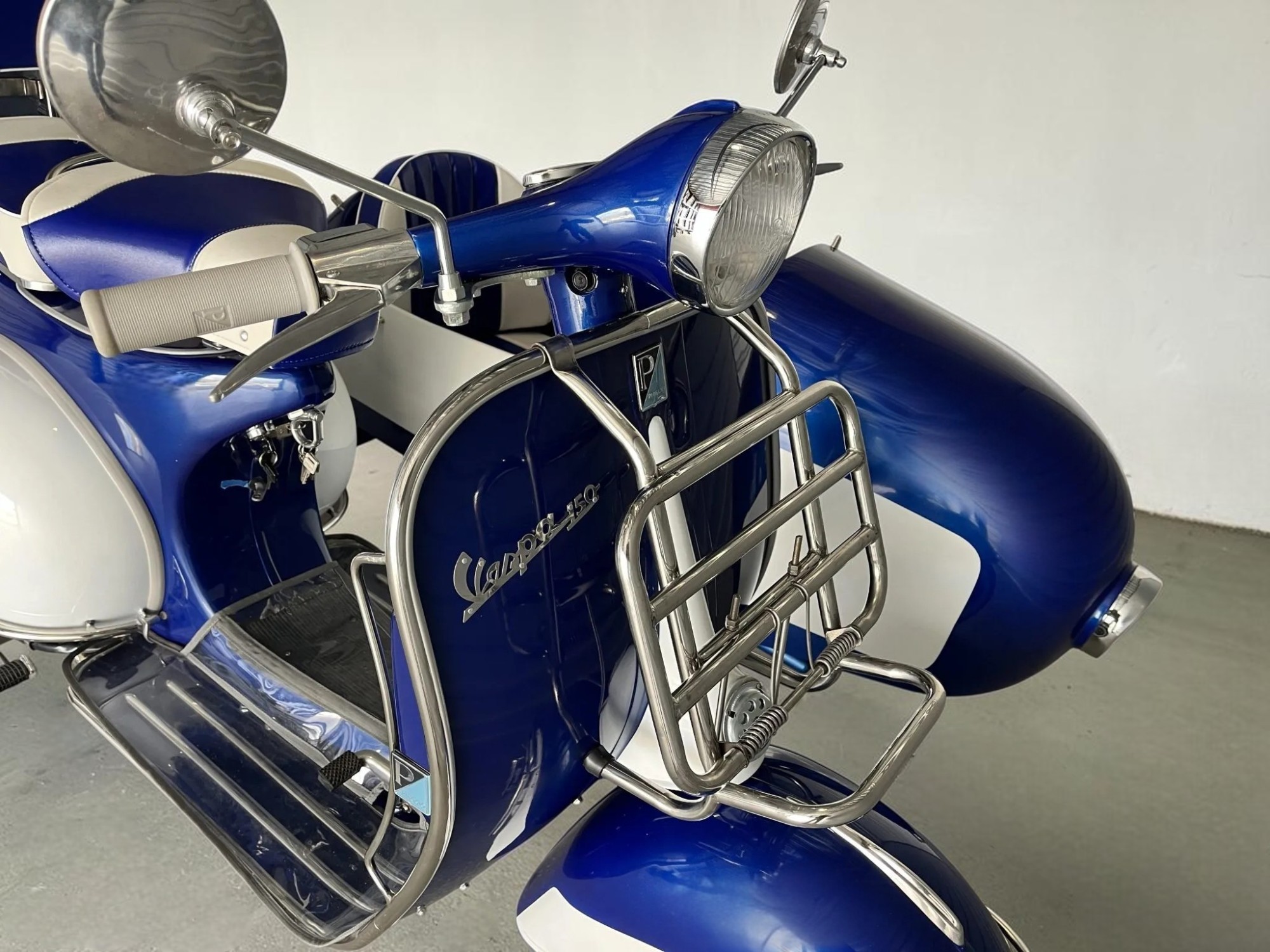
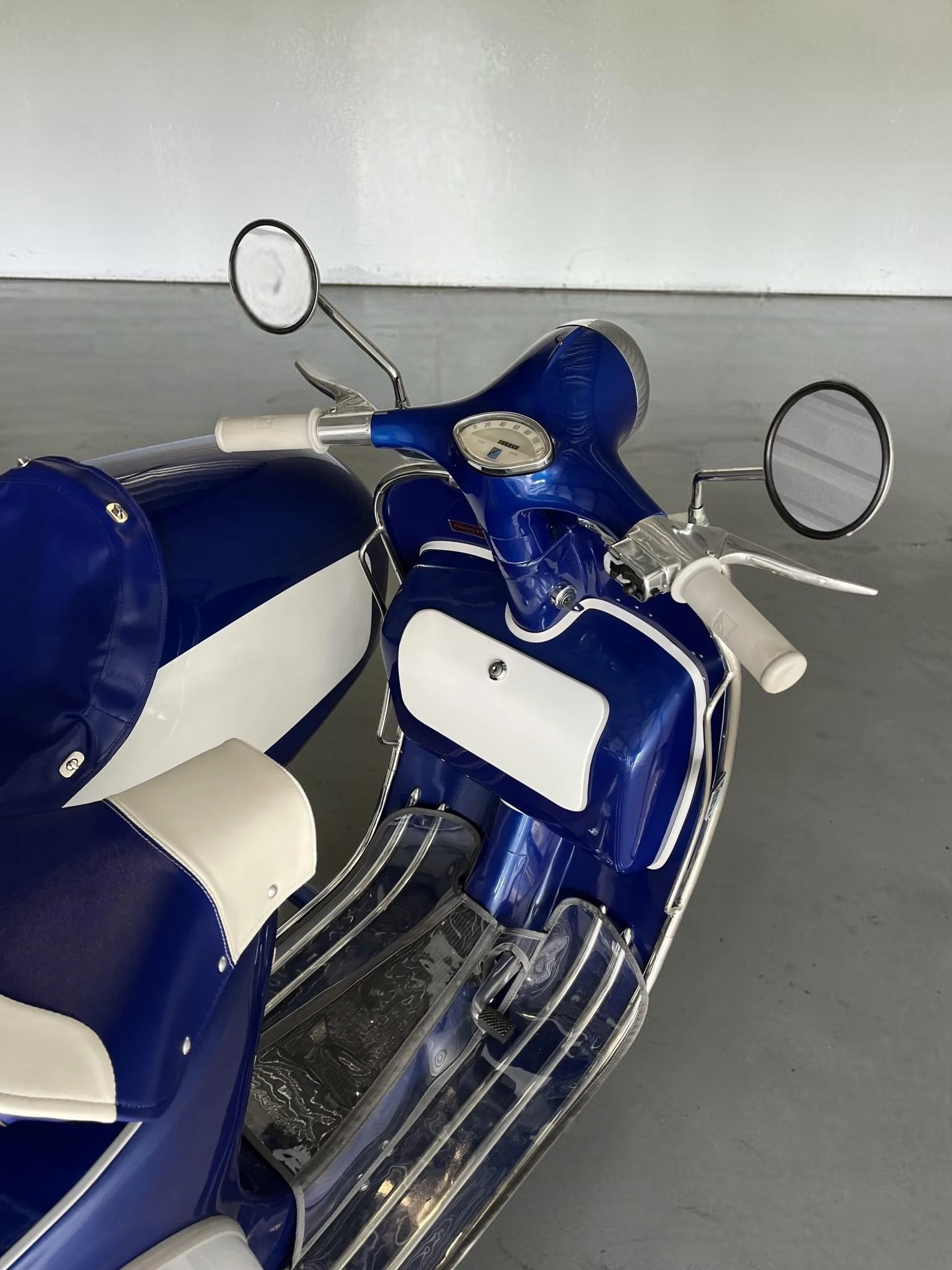
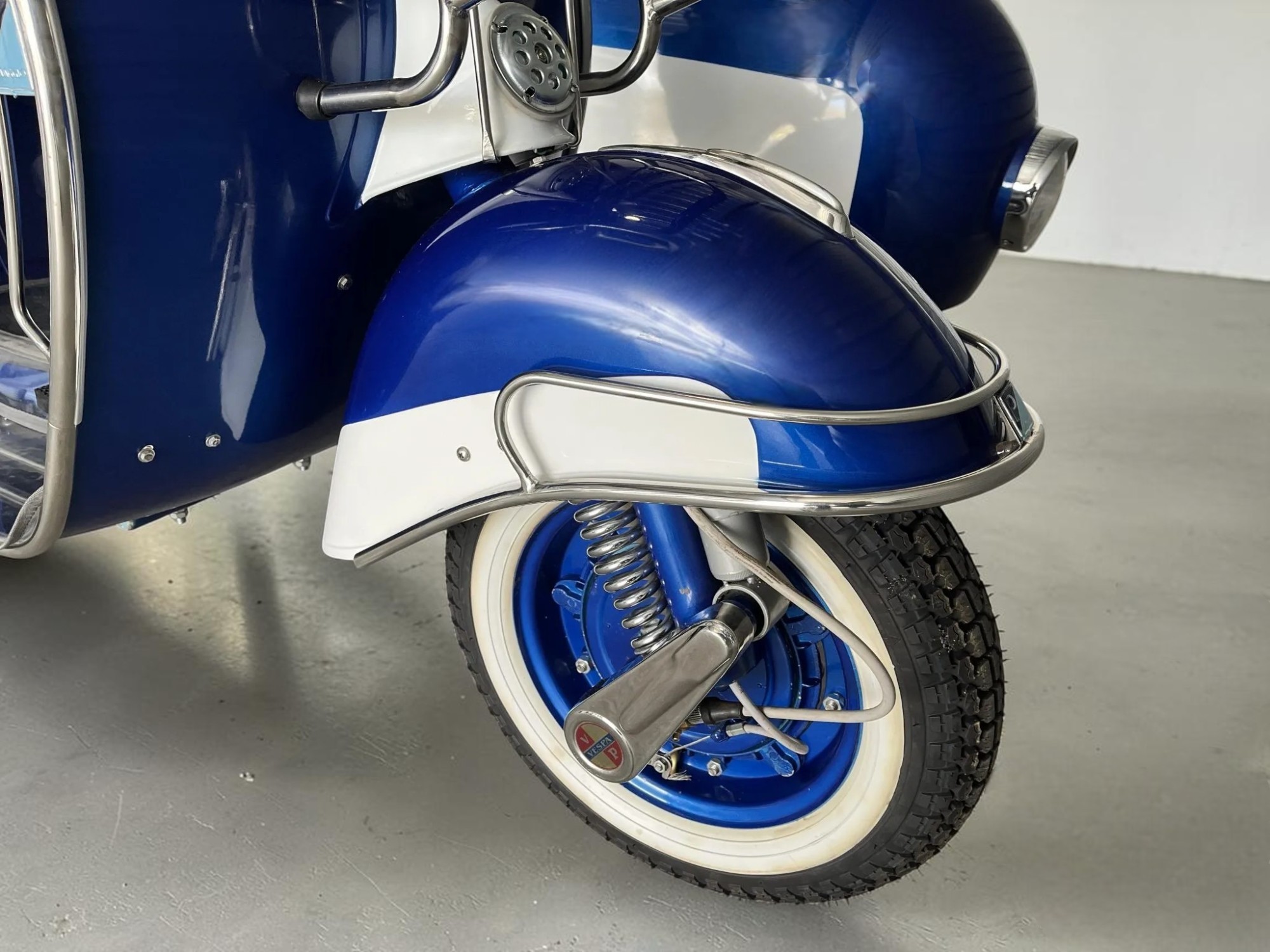
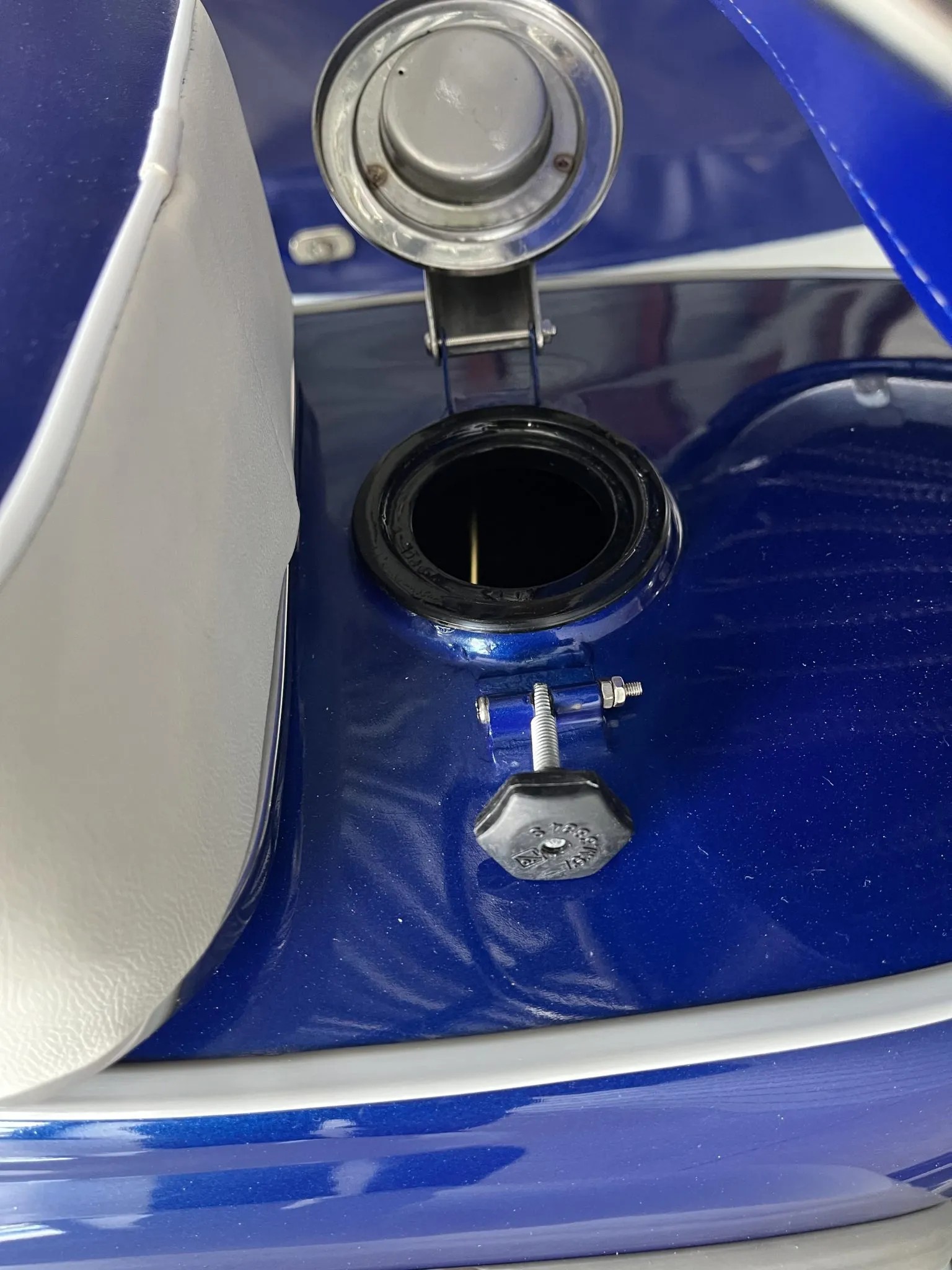
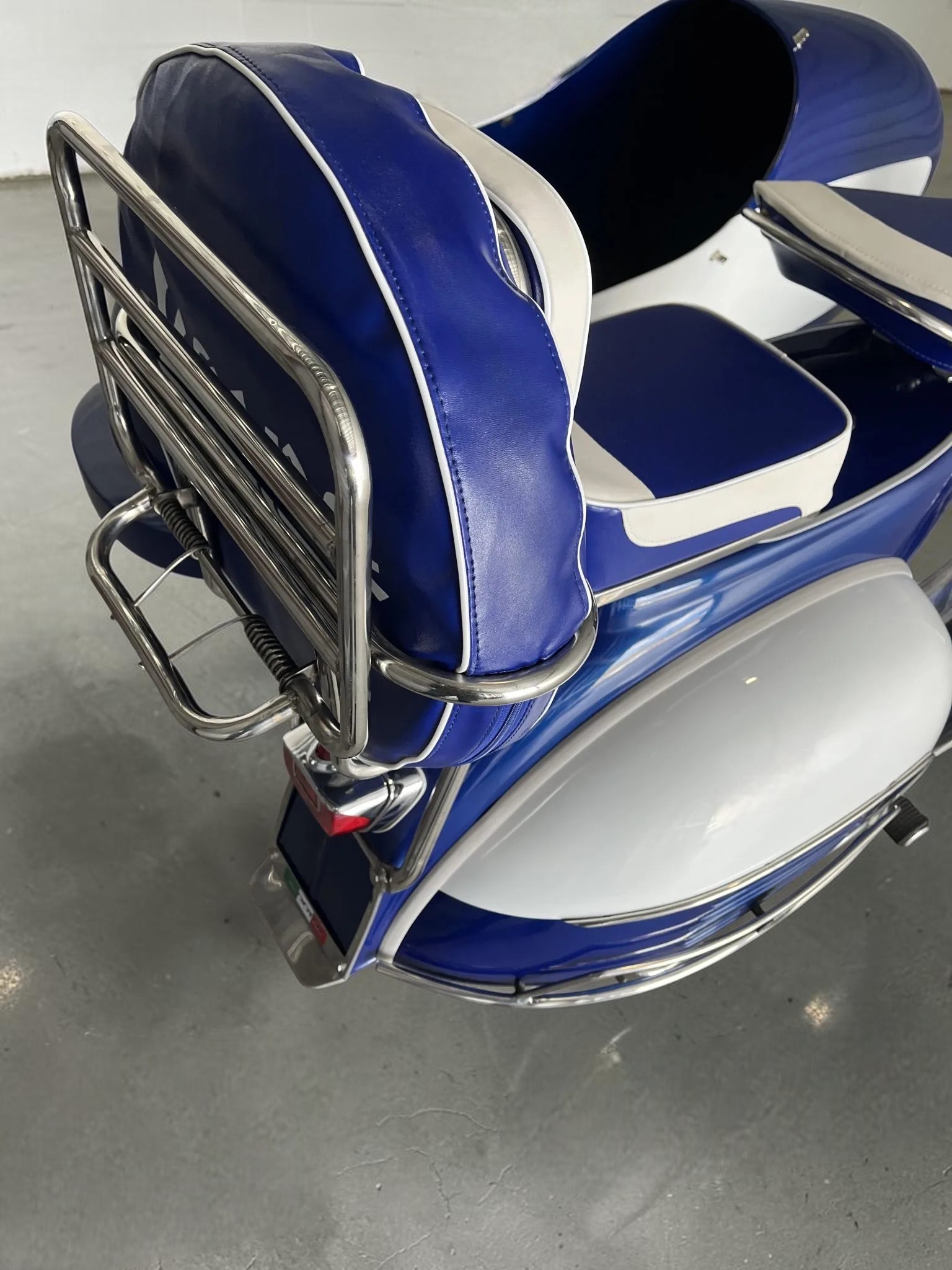
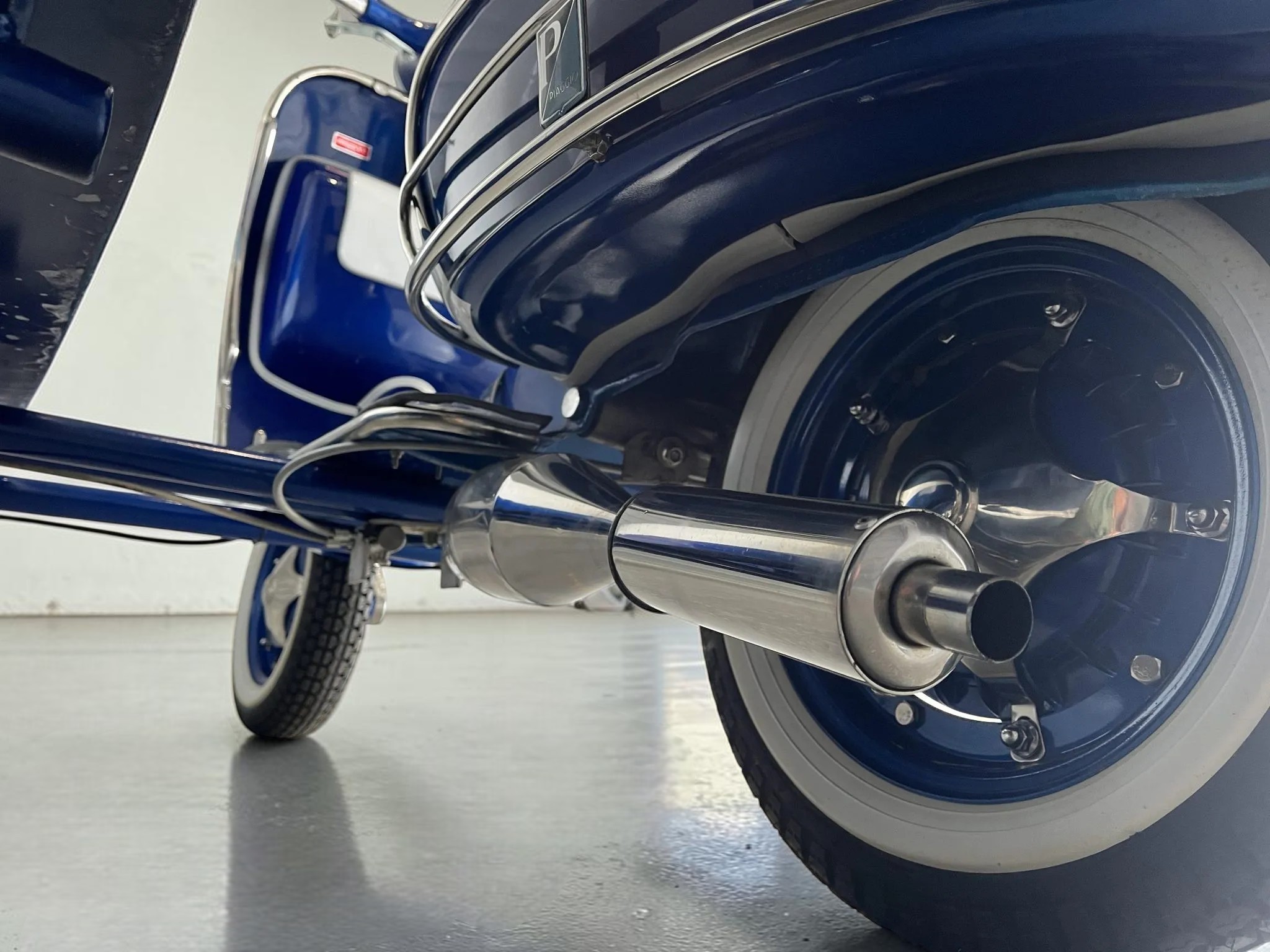
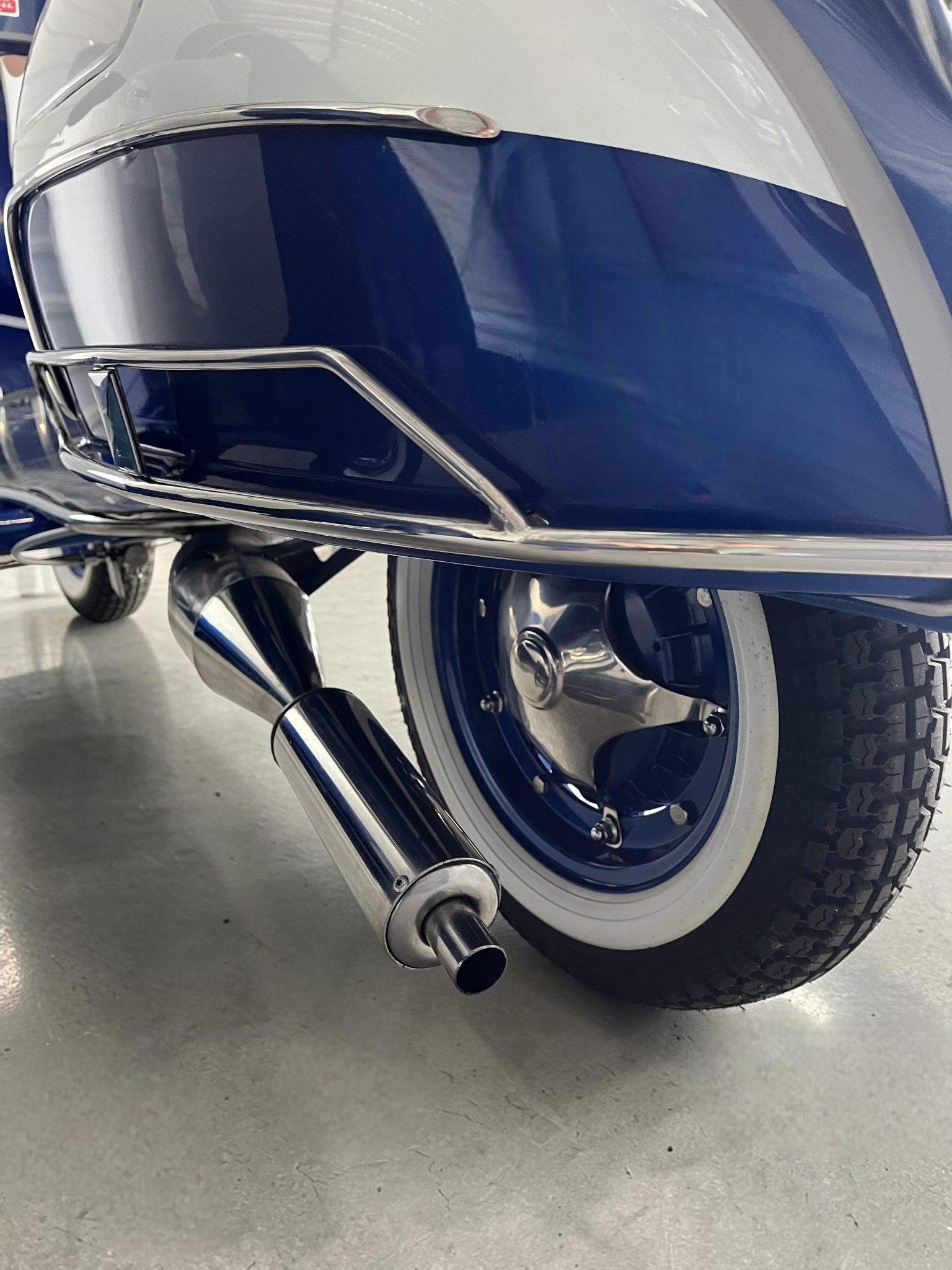
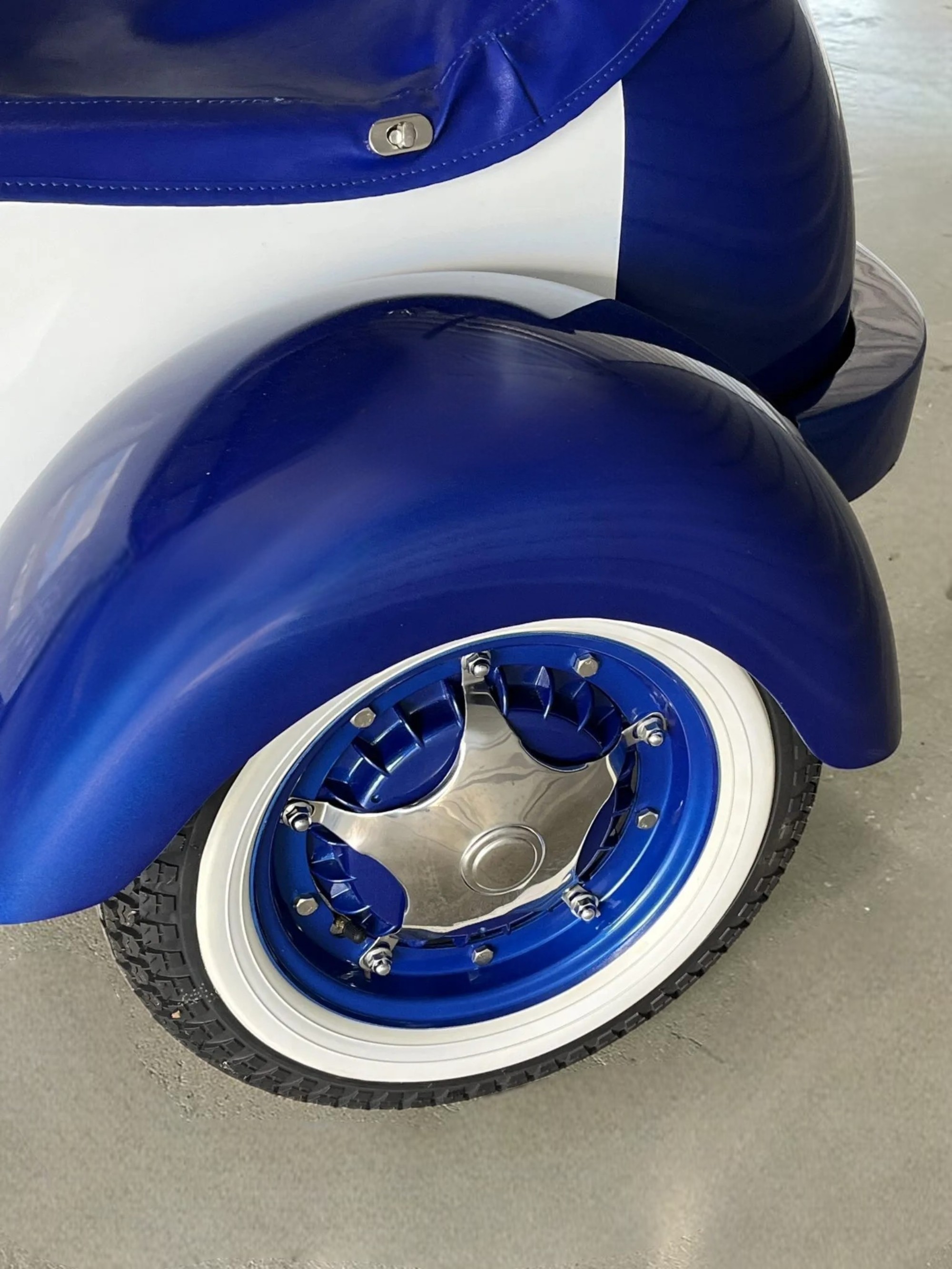
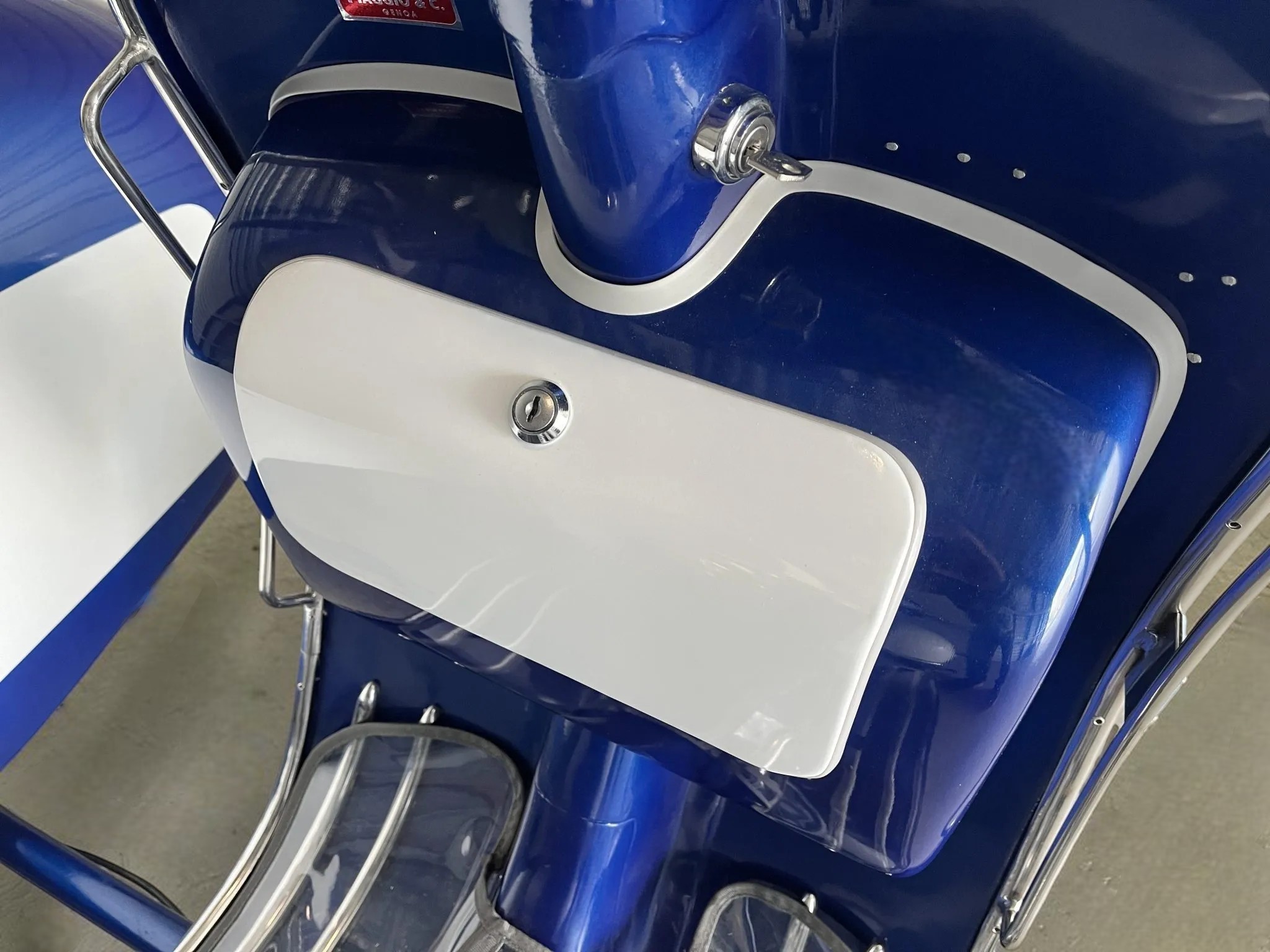
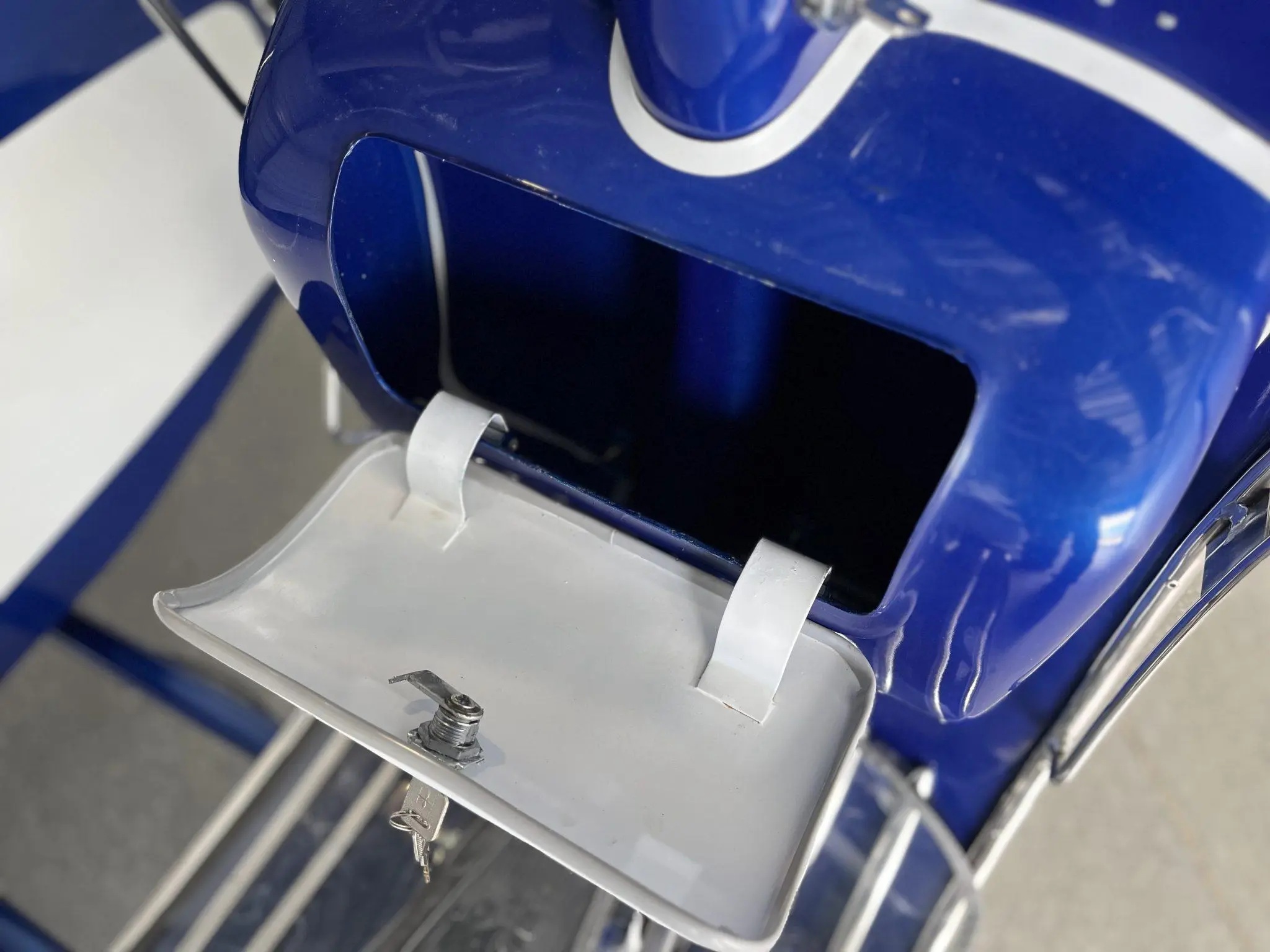
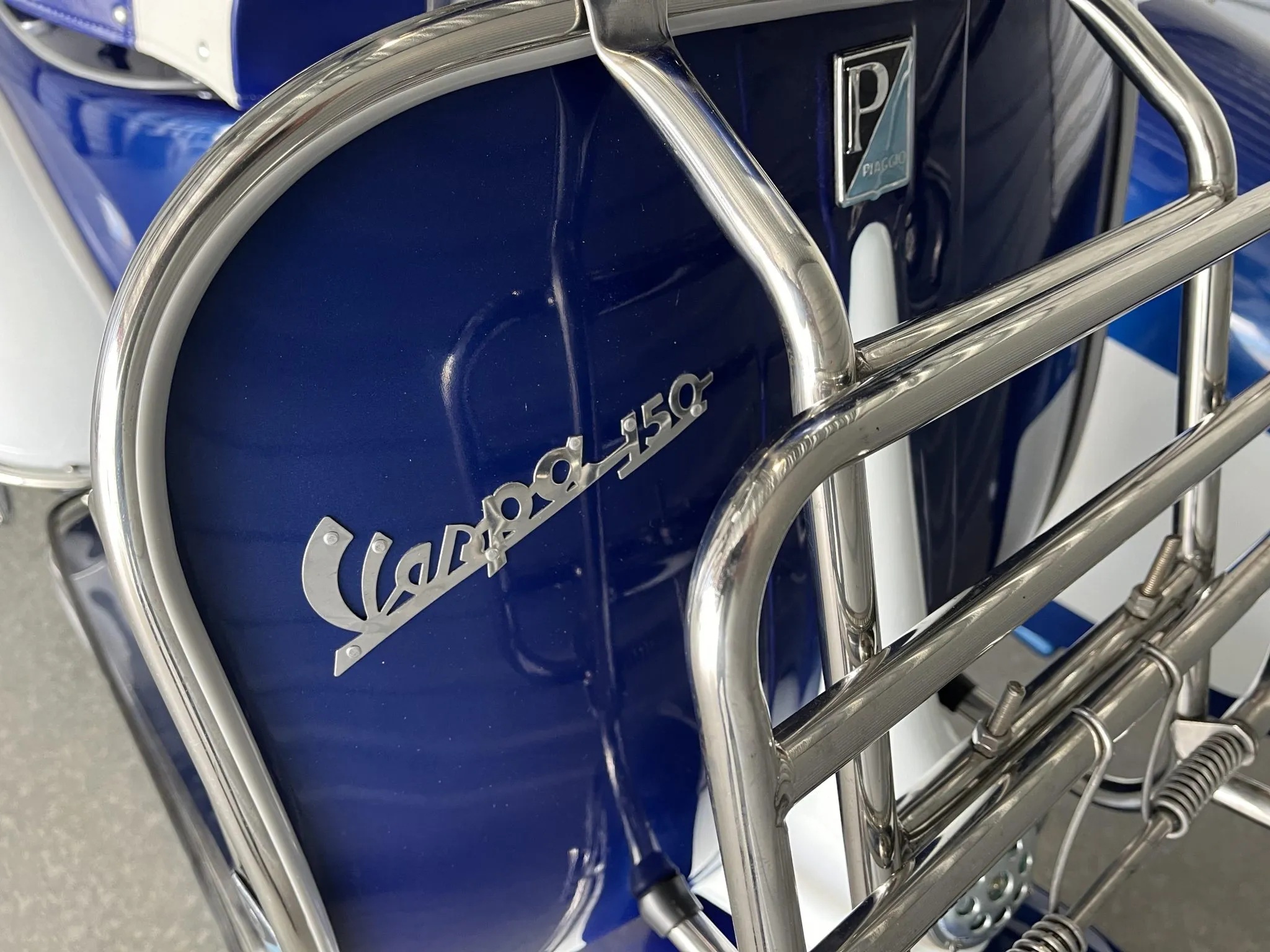
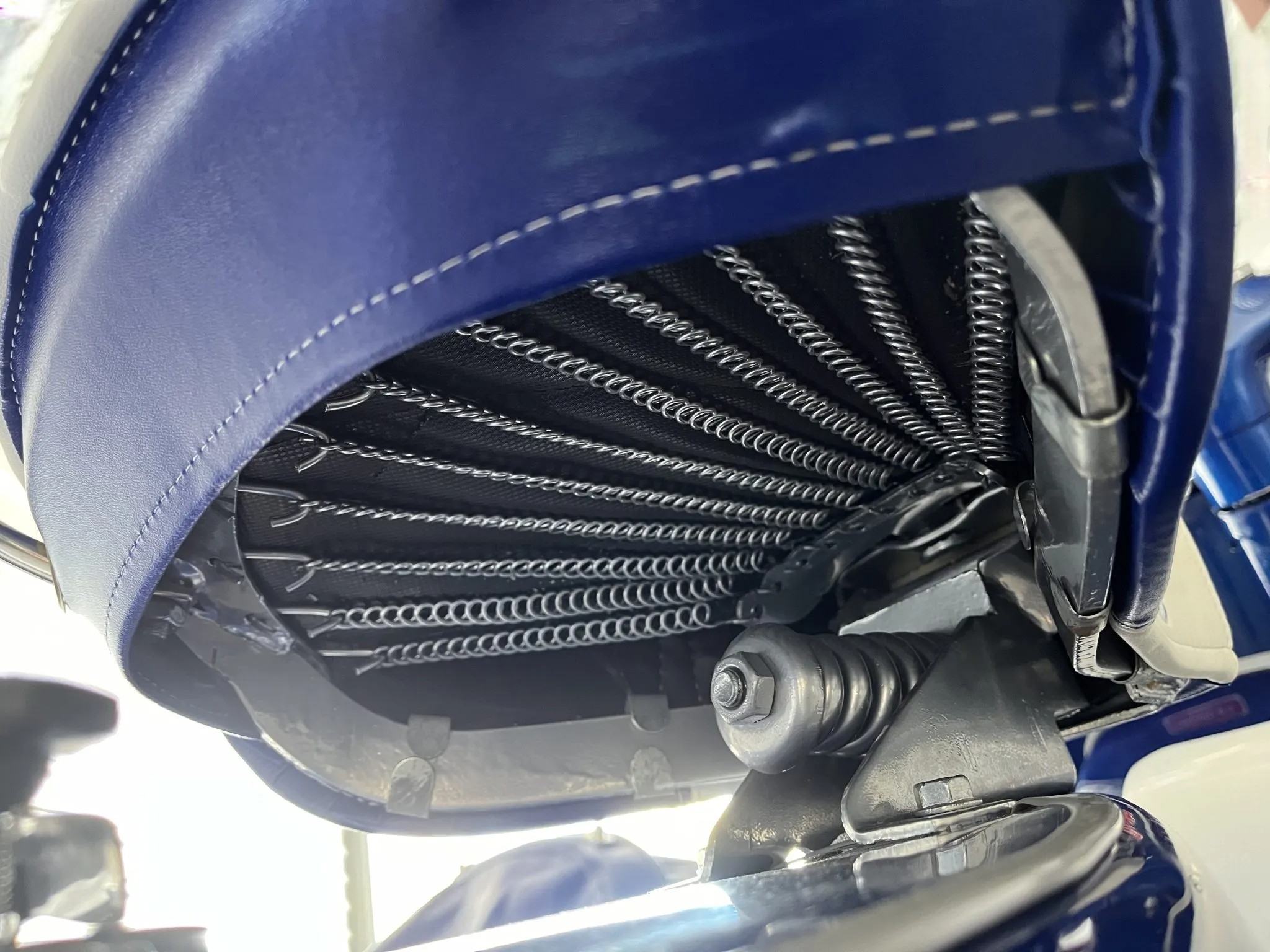
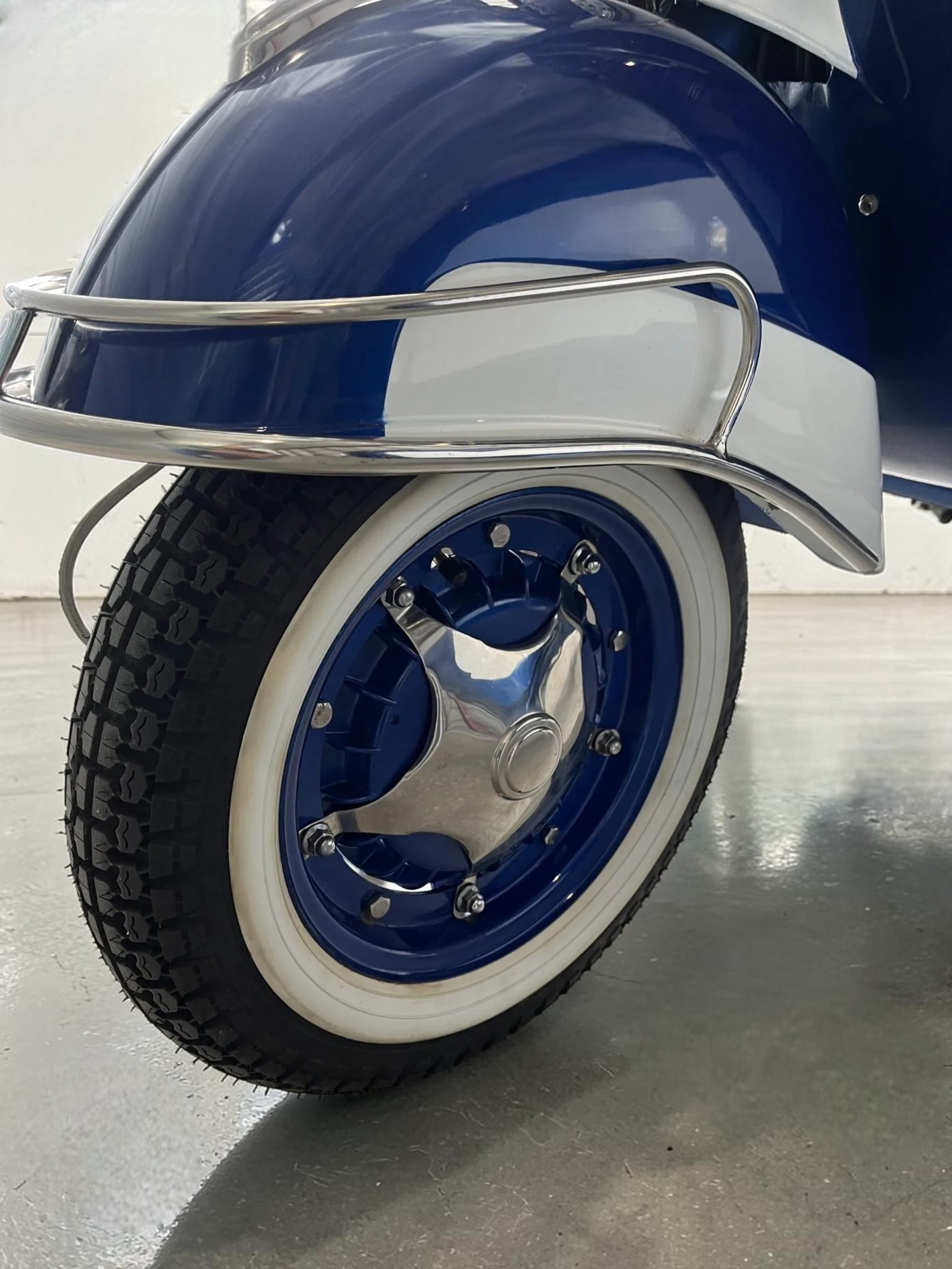
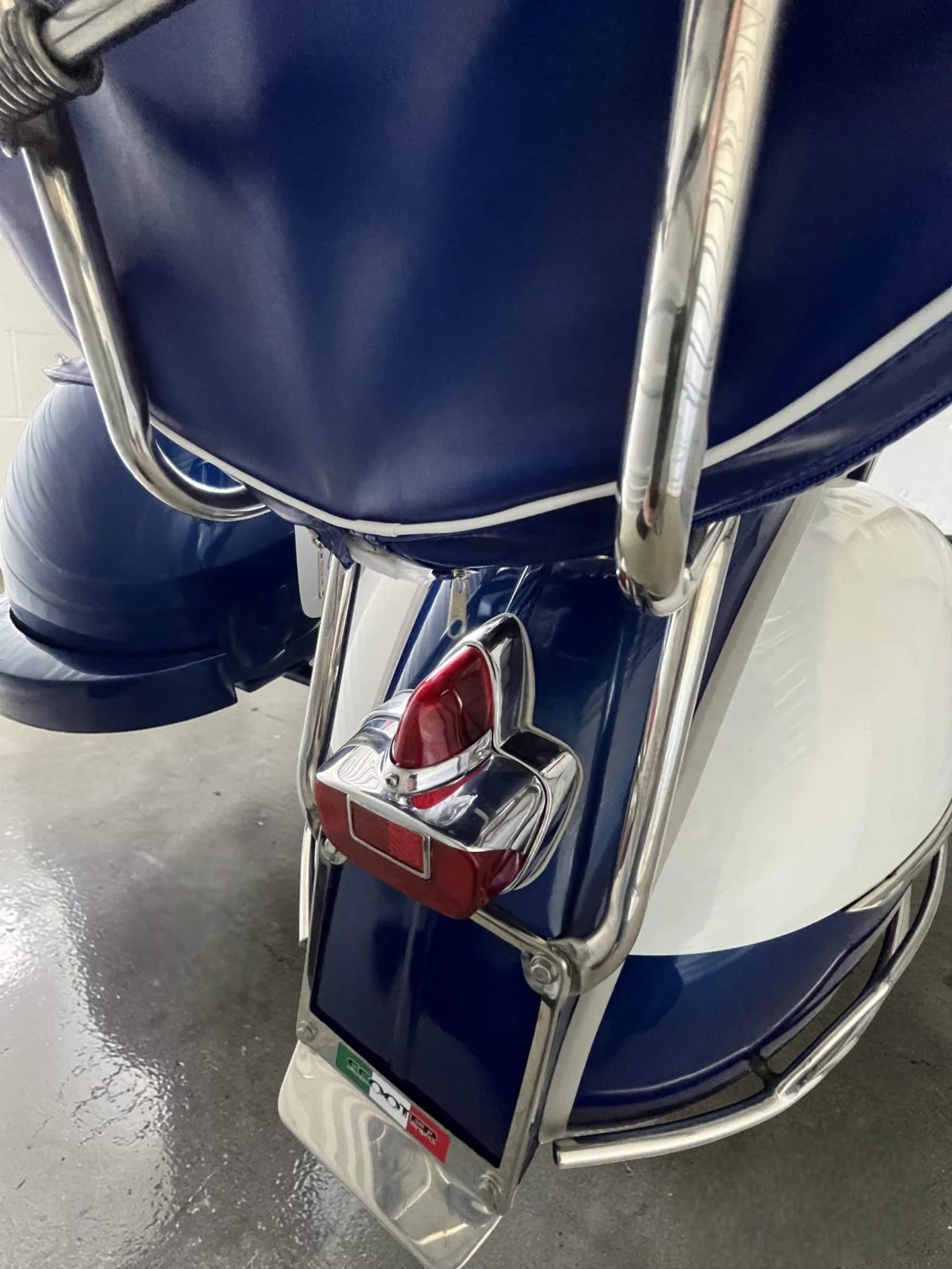
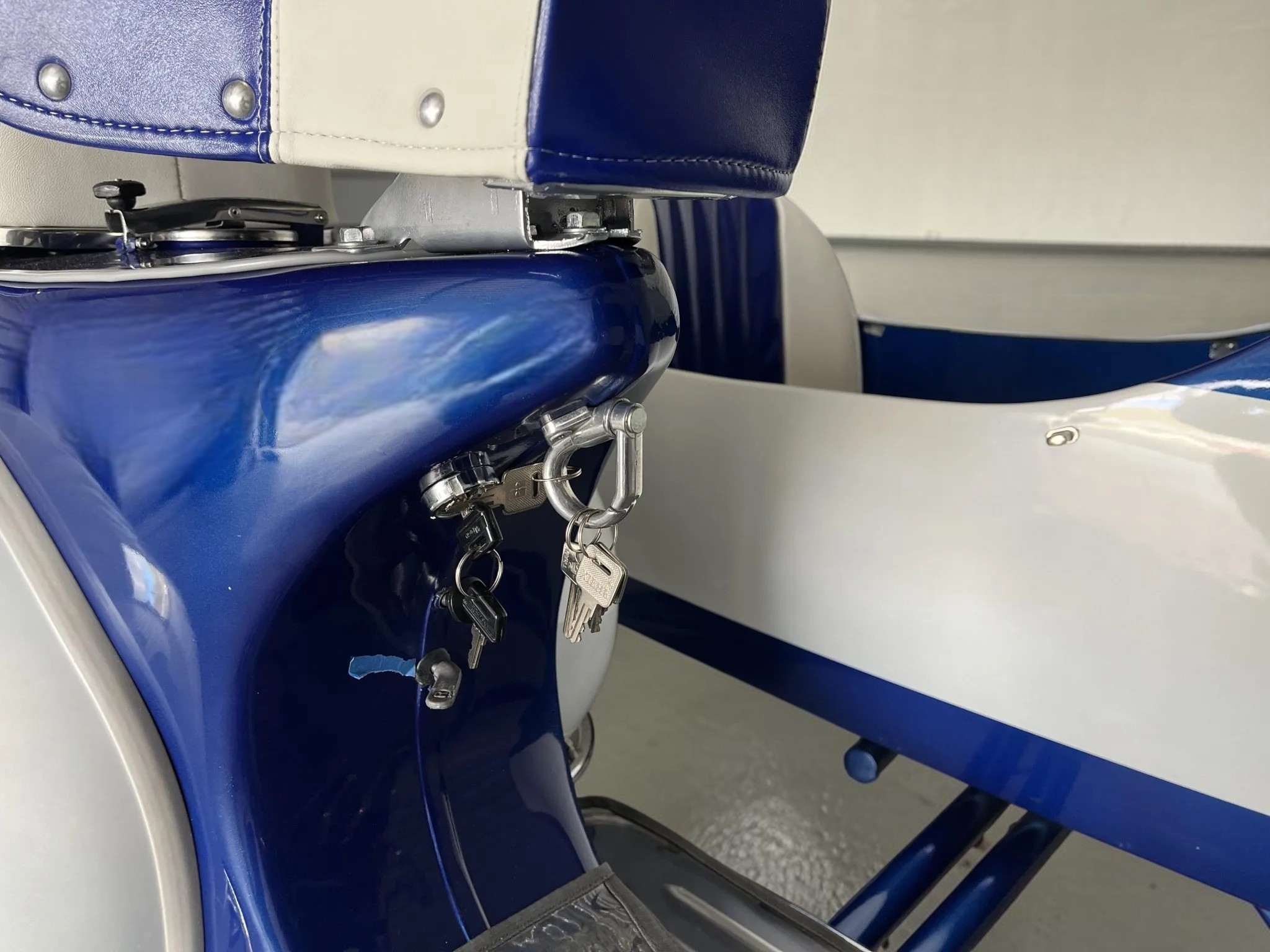
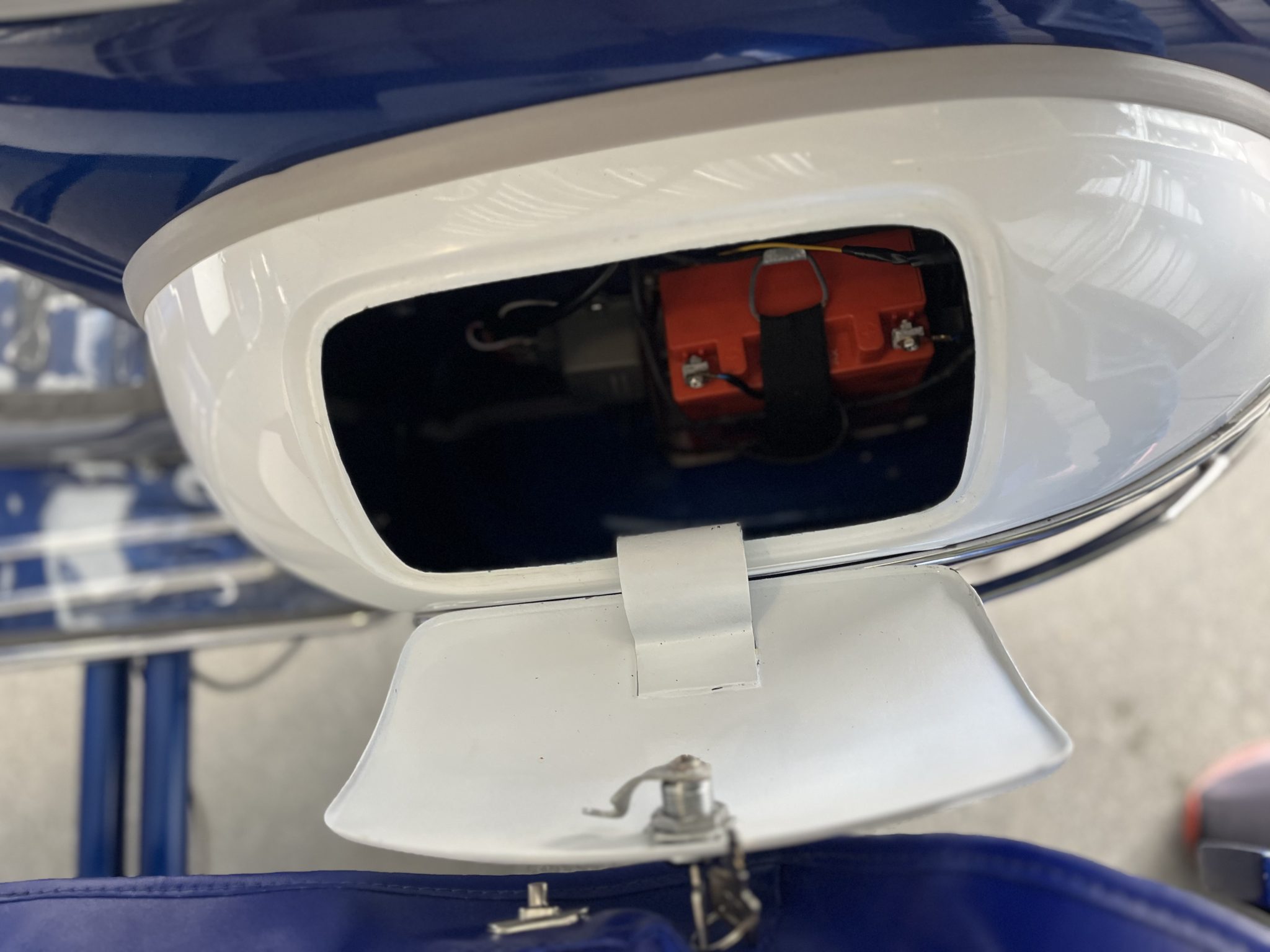
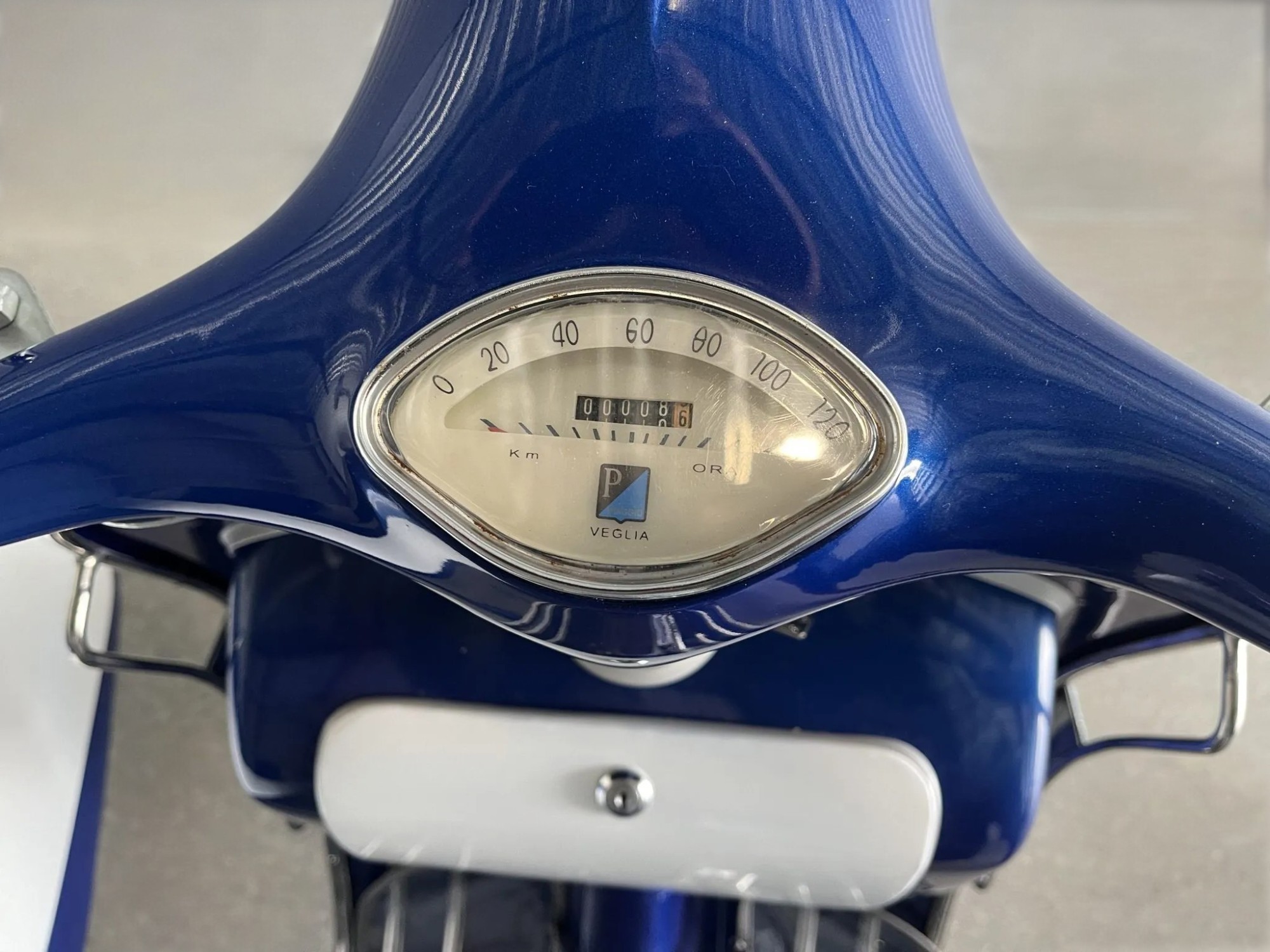
The 1962 Vespa VBB Sidecar combines the practical Vespa VBB platform with a period sidecar outfit, creating a distinctive three-wheeled configuration designed for additional passenger and carrying capacity. The VBB belongs to Piaggio's 150 cc large-frame Vespa family and represents an important stage in the development of the classic Italian scooter during the early 1960s.
The Vespa VBB uses a 150 cc single-cylinder, air-cooled two-stroke engine, a four-speed manual transmission, pressed-steel monocoque construction, and the characteristic step-through Vespa layout. The sidecar adds a separate passenger compartment to the right side of the scooter and changes the handling characteristics substantially compared with a standard two-wheeled VBB.
The VBB series was introduced in the late 1950s and continued into the early 1960s, with the VBB1T and VBB2T representing the principal Italian production versions. A scooter described as a 1962 VBB should therefore be identified through its frame and engine numbers rather than the registration year alone.
With its combination of Italian scooter engineering, practical sidecar accommodation, and classic early-1960s styling, a VBB sidecar is an especially interesting configuration for collectors and enthusiasts of historic Vespa combinations.
The Vespa VBB developed from Piaggio's successful 150 cc scooter range and was introduced as part of the company's continuing expansion of the large-frame Vespa family.
The VBB1T was introduced in 1960, followed by the VBB2T from 1962. The later VBB2T incorporated several technical and equipment changes while retaining the fundamental 150 cc Vespa architecture.
The VBB was intended primarily as practical transportation rather than as a dedicated sporting model. Its larger engine provided useful performance for carrying a rider and passenger, while the robust pressed-steel chassis made it suitable for everyday use.
The addition of a sidecar increased the vehicle's practicality by providing seating for an additional passenger and additional luggage capacity. Sidecar-equipped Vespas were particularly useful in markets where a small, economical vehicle with greater carrying capacity was desirable.
A 1962 VBB sidecar should be examined carefully because the VBB2T began production in 1962 and because sidecars could be installed separately from the scooter during the vehicle's lifetime.
Frame and engine numbers, sidecar identification, registration documents, period photographs, ownership records, restoration documentation, and evidence of period installation can all contribute to establishing provenance.
The Vespa VBB is powered by a single-cylinder, air-cooled two-stroke engine with a displacement of approximately 150 cc.
The engine has a bore of approximately 57.8 mm and a stroke of 57 mm, giving a displacement of approximately 150 cc.
The engine uses a carburetor and conventional two-stroke lubrication, with the crankcase and transmission integrated into the rear portion of the pressed-steel chassis.
Output is approximately 5.5 to 5.6 horsepower, depending on the exact VBB version and specification reference.
The VBB was designed primarily for reliable everyday transportation, and its engine provides adequate power for normal road use in standard two-wheel form.
With a sidecar attached, the additional weight and aerodynamic drag substantially reduce acceleration and hill-climbing performance compared with a solo VBB.
Actual performance depends on engine condition, carburetor adjustment, ignition timing, gearing, sidecar weight, tire condition, passenger load, and the alignment of the complete outfit.
A sidecar-equipped VBB should therefore be operated within the limits of its original engine, braking, and chassis technology rather than treated like a modern high-performance motorcycle combination.
The VBB uses a four-speed manual transmission operated through the characteristic left-hand twist-grip gear selector.
The four-speed gearbox provides a wider range of ratios than the three-speed transmissions used on many earlier Vespa models and allows the rider to make better use of the 150 cc engine.
The clutch is manually operated through the left-hand lever and is integrated into the compact engine and transmission assembly.
Power is delivered to the rear wheel through the enclosed Vespa final-drive system. Unlike a conventional motorcycle sidecar combination, the sidecar wheel is not normally driven.
The addition of a sidecar places considerably greater demands on the clutch and gearbox because the engine must accelerate a heavier vehicle and overcome additional rolling and aerodynamic resistance.
Correct clutch adjustment, healthy gearbox components, and properly functioning shift cables are therefore particularly important on a sidecar-equipped VBB.
The rear hub, axle, wheel bearings, and final-drive components should also be inspected carefully during restoration because sidecar operation can increase mechanical loads.
The Vespa VBB uses a pressed-steel self-supporting monocoque chassis, one of the defining engineering features of the Vespa design.
The step-through frame provides easy access for the rider while the bodywork encloses much of the engine and drivetrain.
The front suspension uses the traditional Vespa leading-link arrangement, with the wheel carried on a short swing arm.
The rear wheel is mounted as part of the engine and transmission assembly, following the established Vespa layout.
With a sidecar installed, the original scooter suspension must support a substantially different load distribution than in solo configuration.
The sidecar itself has its own wheel and suspension arrangement and is attached to the Vespa chassis through a rigid mounting structure.
Correct sidecar alignment is essential. Toe-in, lean-out, wheel alignment, mounting security, and suspension condition have a major influence on steering behavior and stability.
Frame members and mounting points should be inspected carefully for cracks, distortion, corrosion, or evidence of previous repairs, particularly around the areas where the sidecar chassis attaches to the Vespa.
The VBB uses small-diameter Vespa wheels designed around the large-frame chassis.
The standard VBB configuration uses 10-inch wheels, providing improved stability compared with the smaller wheels used on many earlier Vespa models.
The scooter uses mechanical drum brakes at the front and rear.
A sidecar outfit introduces additional braking demands because the vehicle has greater mass and different weight transfer characteristics than a solo scooter.
The sidecar wheel may also be equipped with its own brake depending on the specific sidecar and installation.
Because sidecar specifications varied according to manufacturer and market, the exact sidecar braking arrangement should be documented on an individual vehicle rather than assumed from the VBB scooter specification alone.
Brake drums, shoes, cables, wheel bearings, rims, spokes, tires, sidecar mounting hardware, and wheel alignment should all be inspected before use.
The VBB retains the unmistakable visual language of the classic large-frame Vespa.
The pressed-steel body forms a smooth protective shell around the engine and drivetrain, while the open central section provides the characteristic step-through riding position.
The front leg shield protects the rider from road debris and contributes to the structural rigidity of the chassis.
The side panels conceal the rear mechanical components and create the rounded silhouette associated with the late-1950s and early-1960s Vespa models.
The 10-inch wheels, handlebar-mounted headlamp, large side panels, and four-speed transmission distinguish the VBB generation from many earlier Vespas.
With a sidecar attached, the visual character changes significantly. The additional body creates an asymmetric three-wheeled profile and gives the vehicle a distinctly utilitarian appearance.
Period sidecars varied in shape, construction, trim, and equipment, so the exact appearance of a surviving VBB sidecar should be evaluated according to the manufacturer and period of installation.
The year 1962 is particularly important in the VBB production history because it marks the transition to the VBB2T generation in the Italian market.
The VBB2T retained the 150 cc two-stroke engine and four-speed transmission but incorporated several improvements over the earlier VBB1T.
Production identification should therefore be based on the frame prefix and number, engine prefix and number, and other model-specific details rather than the year shown on a registration document.
A genuine 1962 VBB2T can be distinguished from earlier VBB examples through its correct frame and engine identification and its period-specific components.
The sidecar itself should also be investigated separately because it may not have been manufactured at the same time as the Vespa.
A period-correct sidecar with documented installation history can be particularly interesting from a historical perspective, while a later reproduction sidecar should be identified as such.
A Vespa VBB in solo form is known for its light steering, compact dimensions, low center of gravity, and practical urban riding characteristics.
Adding a sidecar transforms the riding experience completely.
The asymmetric wheel arrangement means that steering inputs, acceleration, braking, and road camber all influence the outfit differently from a two-wheeled scooter.
Acceleration is slower because of the additional mass, while braking requires greater anticipation.
Turning behavior is also different. The outfit tends to behave differently when turning toward or away from the sidecar, and careful alignment is essential for predictable handling.
The sidecar provides additional passenger capacity and makes the VBB useful for carrying people or luggage, but it should not be ridden as though it were a standard solo Vespa.
A restored sidecar combination should be checked professionally for alignment and mounting security before regular road use.
The Vespa VBB is historically important because it represents one of Piaggio's mature large-frame scooter designs from the early 1960s.
By this period, Vespa had developed from the original post-war transportation concept into a broad international product family that included utility scooters, sporting models, touring versions, and sidecar combinations.
The VBB demonstrates the durability and flexibility of the basic Vespa architecture. The same pressed-steel chassis and integrated drivetrain could be adapted for practical transportation with an additional sidecar passenger.
The VBB also belongs to the generation of Vespa scooters that helped establish the classic visual and mechanical formula associated with the marque worldwide.
Sidecar combinations are especially interesting because they show how Vespa scooters were adapted to different transportation requirements before modern compact cars became widely accessible in many European markets.
A VBB sidecar is an appealing collector vehicle because it combines a relatively common Vespa platform with a much less common three-wheeled configuration.
Collectors generally examine the Vespa frame and engine numbers first, followed by the sidecar manufacturer's identification, construction details, mounting hardware, wheel, suspension, bodywork, and trim.
The authenticity of the sidecar is important. A genuine period sidecar that was fitted to the Vespa during its historical service life can have considerably greater provenance value than a modern reproduction added during restoration.
Original paint, period accessories, correct Vespa components, matching numbers, factory documentation, registration records, and photographs showing the scooter with its sidecar can all strengthen the historical case.
Because VBB scooters were produced in substantial numbers and many have been modified over the decades, originality should be evaluated component by component.
Evidence of professional restoration can be valuable, but a restored vehicle should still be distinguished from an untouched or largely original example.
Authenticating a 1962 Vespa VBB Sidecar requires examination of both the scooter and the sidecar as separate historical components.
The Vespa frame number should correspond to the appropriate VBB production series, while the engine number should match the correct engine prefix and displacement.
The scooter should retain period-correct VBB bodywork, engine, four-speed transmission, suspension, wheels, brakes, electrical equipment, and controls.
The sidecar should be inspected for manufacturer identification, construction methods, period hardware, wheel specification, suspension, bodywork, and evidence of modification.
Mounting points are particularly important because improper or later-added mounting systems can alter the structural integrity of the scooter chassis.
Period photographs, registration records, ownership documents, and restoration records can help determine whether the sidecar was historically associated with the scooter.
A later sidecar fitted to an authentic VBB can still create an attractive and usable combination, but it should not be represented as an original factory sidecar outfit without supporting evidence.
The 1962 Vespa VBB Sidecar matters because it combines one of Piaggio's most recognizable large-frame scooters with a practical three-wheeled configuration that expanded the usefulness of the Vespa concept.
The 150 cc two-stroke engine, four-speed transmission, pressed-steel chassis, 10-inch wheels, and compact dimensions provide the foundation of the VBB, while the sidecar adds passenger capacity and a distinctive period character.
The 1962 model year is also historically significant because it falls within the transition to the VBB2T generation, making correct identification particularly important.
For collectors, a well-documented VBB sidecar offers an interesting combination of Italian scooter history, practical transportation design, and period three-wheel engineering.
An authentic combination with matching Vespa numbers, period-correct sidecar equipment, sound mounting points, and documented provenance is especially desirable.
This 1962 Vespa VBB Sidecar combines the classic large-frame Vespa platform with a period-style three-wheeled configuration designed to provide additional passenger and carrying capacity.
The approximately 150 cc single-cylinder two-stroke engine is paired with a four-speed manual twist-grip transmission, while the pressed-steel monocoque chassis, 10-inch wheels, mechanical drum brakes, and integrated rear drivetrain retain the essential characteristics of the VBB.
The sidecar significantly changes the vehicle's handling and adds practical passenger capacity, making the combination a distinctive example of how Vespa scooters were adapted for alternative transportation requirements during the early 1960s.
Because 1962 marks an important transition in VBB production, the frame and engine numbers should be carefully verified. The sidecar should also be evaluated separately for its manufacturer, period, mounting system, originality, and documented history.
A well-preserved or correctly restored VBB sidecar with matching numbers, period-correct components, secure mounting points, and strong provenance is an especially interesting collector vehicle.
For more information about the Vespa marque and other historic models, visit Vespa vintage scooters.
Contact us for additional photographs, detailed specifications, frame and engine numbers, sidecar details, service history, originality assessment, provenance, restoration information, historical documentation, and purchasing information for this 1962 Vespa VBB Sidecar.
The Vintage Motorcycles presents a curated selection of historically significant Italian machines, where Vespa represents one of the most influential developments in post-war mobility engineering. Introduced as a response to the need for affordable and efficient transportation, Vespa redefined two-wheel design through its monocoque chassis, enclosed mechanical systems, and highly accessible riding ergonomics.
Within the broader landscape of global vintage motorcycle manufacturers, Vespa stands apart from traditional motorcycle architecture, representing a shift toward integrated industrial design. This transformation can be better understood when contrasted with earlier pre-war motorcycle engineering (1900-1939), where exposed mechanical systems and rigid frame structures defined the dominant design philosophy.
The emergence of Vespa aligns closely with wider post-war motorcycle development, a period marked by economic reconstruction and the demand for lightweight, practical transportation solutions. Italian manufacturers, particularly Piaggio through the Vespa platform, played a defining role in this transition, introducing vehicles that combined mechanical simplicity with mass production efficiency.
Each Vespa within our collection is selected based on provenance, originality, and structural integrity, ensuring alignment with museum-grade preservation standards. Available acquisition opportunities can be explored through our global vintage motorcycle inventory, supported by a fully insured international shipping service.
Vespa's development is deeply connected to Italy's industrial recovery following World War II, where engineering priorities shifted toward efficiency, affordability, and accessibility. Unlike conventional motorcycles, Vespa introduced a fully integrated body structure that protected mechanical components, reduced maintenance complexity, and improved rider comfort.
This transformation reflects broader changes explored through WW2 military motorcycle development, where industrial capabilities and engineering knowledge were redirected from military production toward civilian mobility solutions. Vespa emerged directly from this context, adapting aeronautical and industrial manufacturing techniques into a new form of urban transport.
Although primarily designed as a solo urban vehicle, Vespa also intersected with broader European mobility trends, including adaptations and utility concepts related to sidecar-equipped motorcycles, highlighting how diverse engineering solutions coexisted during the mid-20th century.
Italian engineering, as embodied by Vespa, emphasizes the integration of form and function, where mechanical efficiency is combined with clean, purposeful design. This philosophy distinguishes Vespa from many contemporaries, positioning it not only as a vehicle but also as a cultural and industrial design icon.
From early models such as the Vespa 98 to later developments across the 1950s and 1960s, the brand continuously refined its engineering approach while maintaining its core identity. These machines represent a departure from traditional motorcycle evolution, focusing instead on accessibility, usability, and mass adoption.
Today, Vespa remains a critical reference point in the study of post-war transportation systems, illustrating how engineering innovation can reshape not only vehicle design but also social mobility. For collectors, these machines offer a unique combination of historical significance, design heritage, and enduring global recognition.
Key Highlights
Collector Assurance
All enquiries handled with discretion. We typically respond within 6 hours.
Choose the payment method that is most convenient for you. We accept widely used international payment methods as well as, where available, local bank transfer options that allow you to pay like a domestic transaction. Full payment instructions are provided for your specific purchase.
Direct international bank wire transfer is available for motorcycle purchases and export transactions.
Credit card payments can be arranged through Wise.com, subject to the applicable payment and processing conditions.
PayPal is accepted. A 5% PayPal processing fee applies to the transaction.