
The Vintage Motorcycles
Specialists in antique, classic, veteran and vintage motorcycles.
Specialists in antique, classic, veteran and vintage motorcycles.

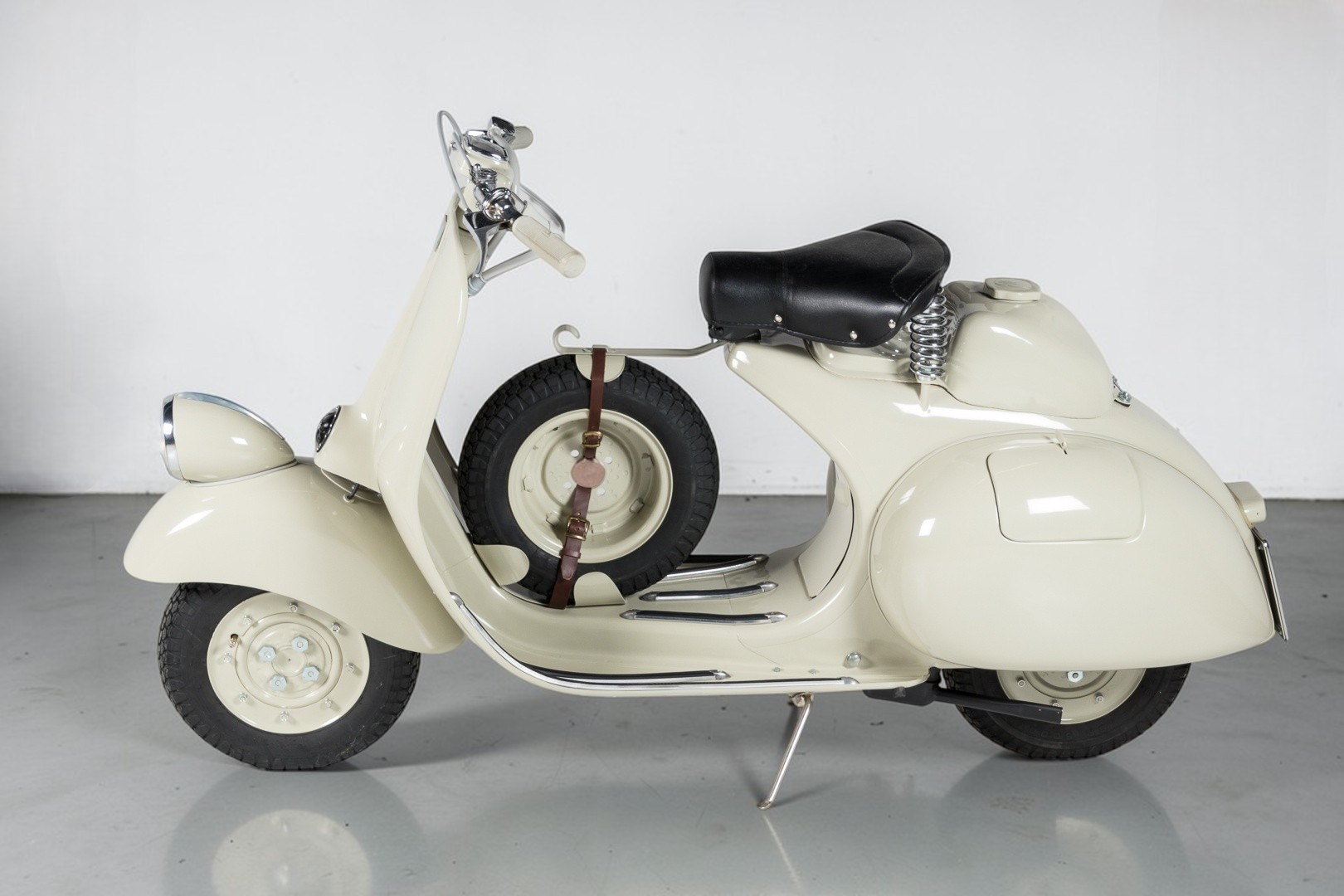

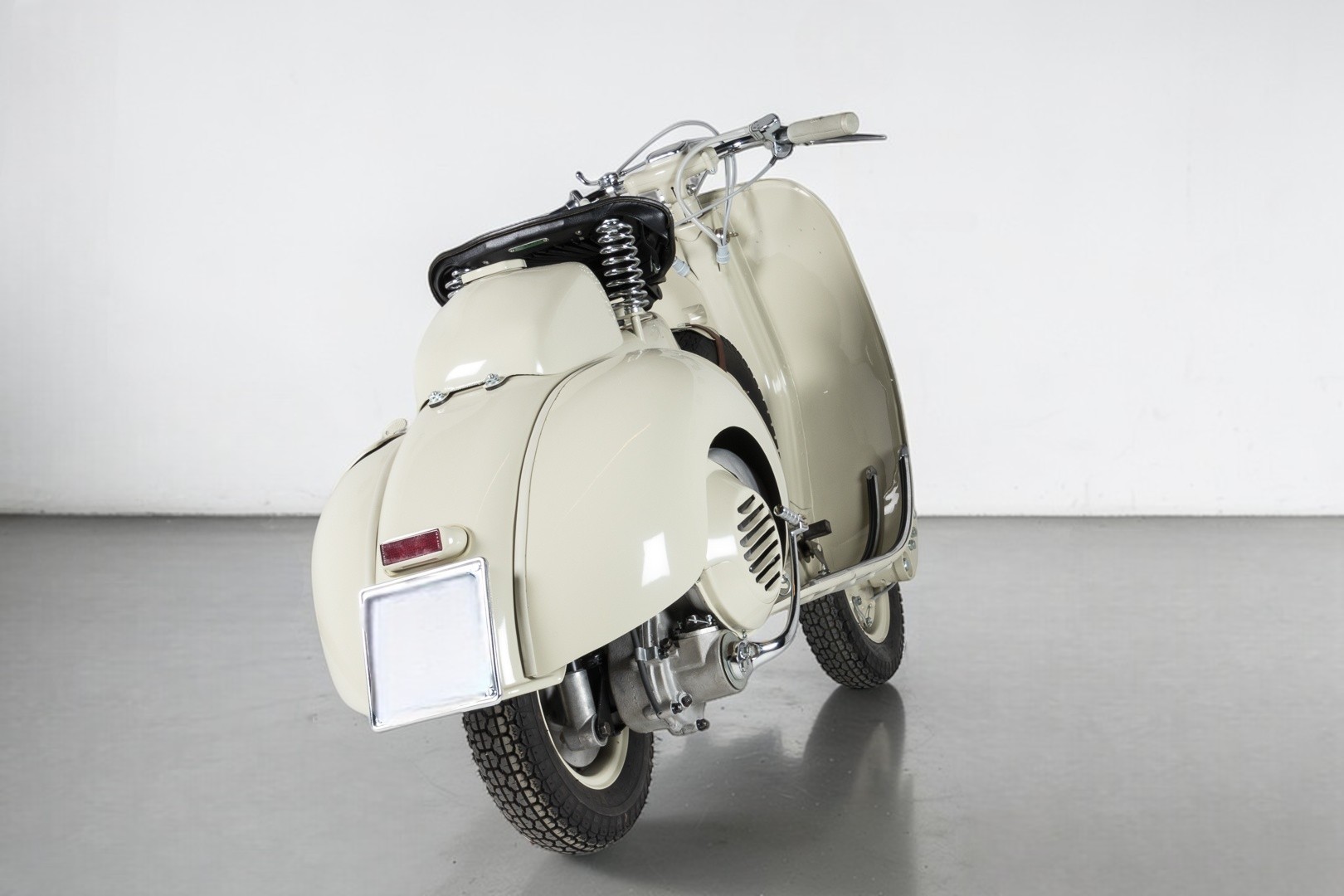


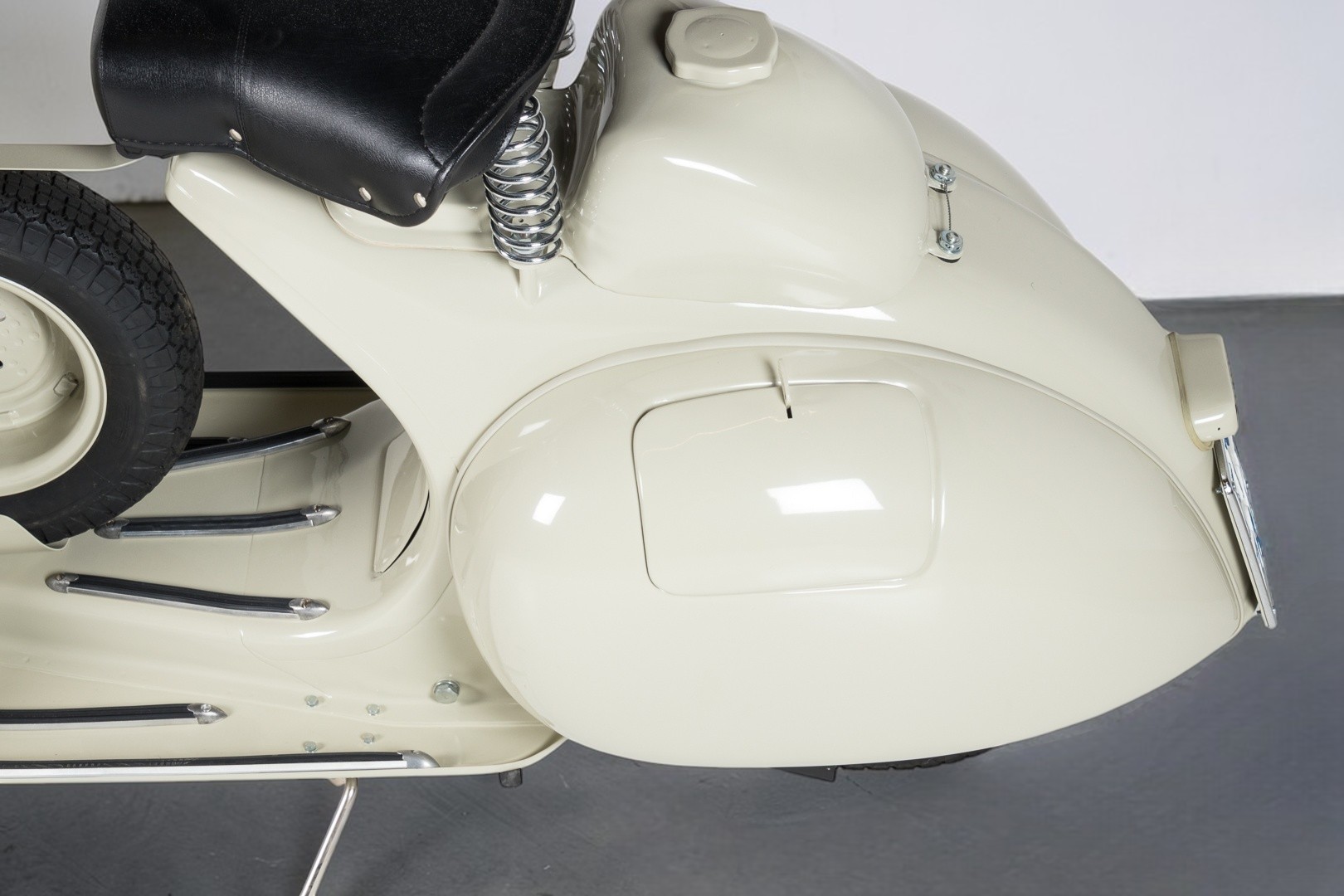

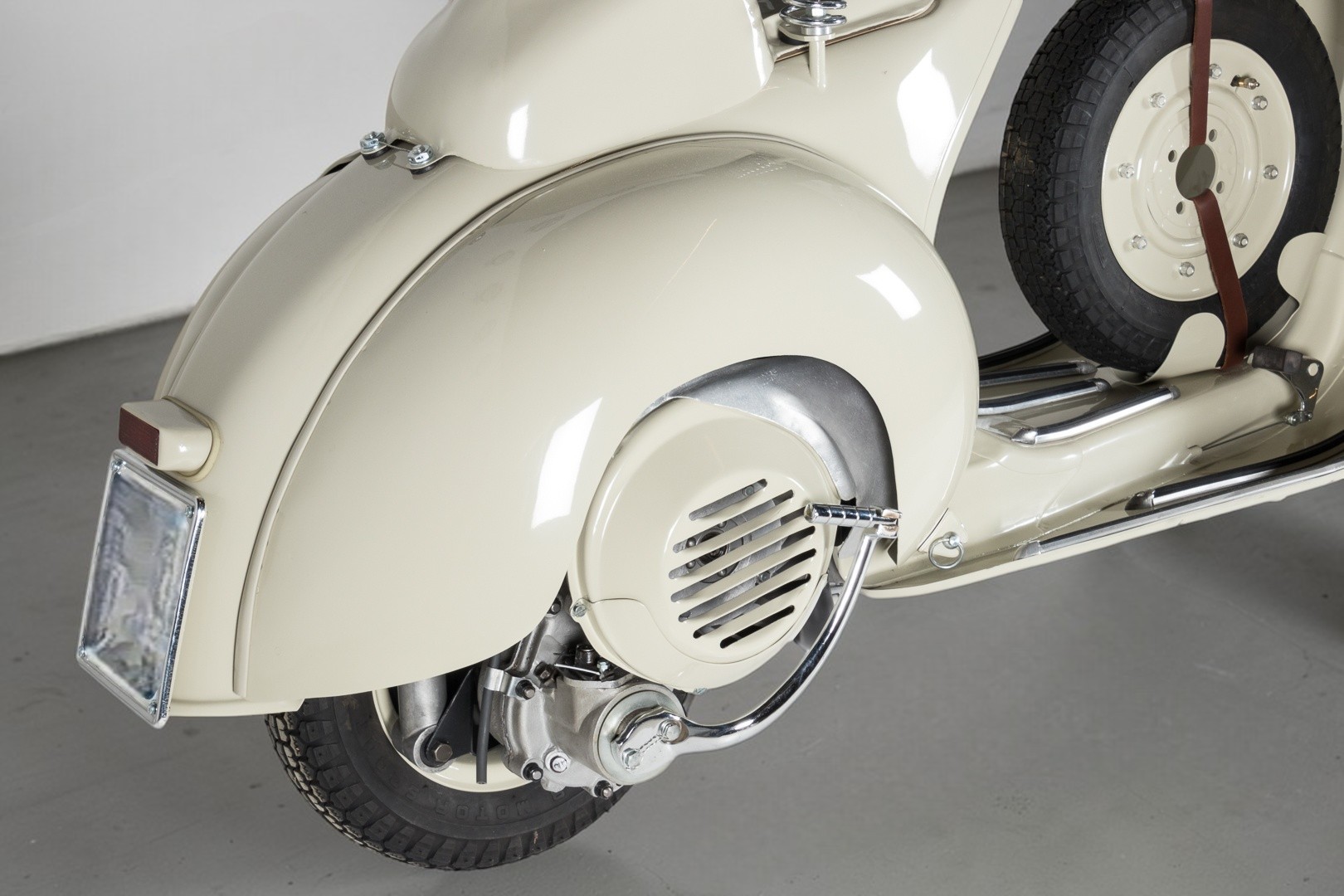

The 1953 Vespa Sei Giorni was a special competition scooter developed by Piaggio for the demanding International Six Days Trial, one of the toughest motorcycle endurance events of its era. Officially known as the Vespa Sport Sei Giorni, it was based on the standard Vespa concept but extensively modified to improve performance, handling, durability, and off-road capability.
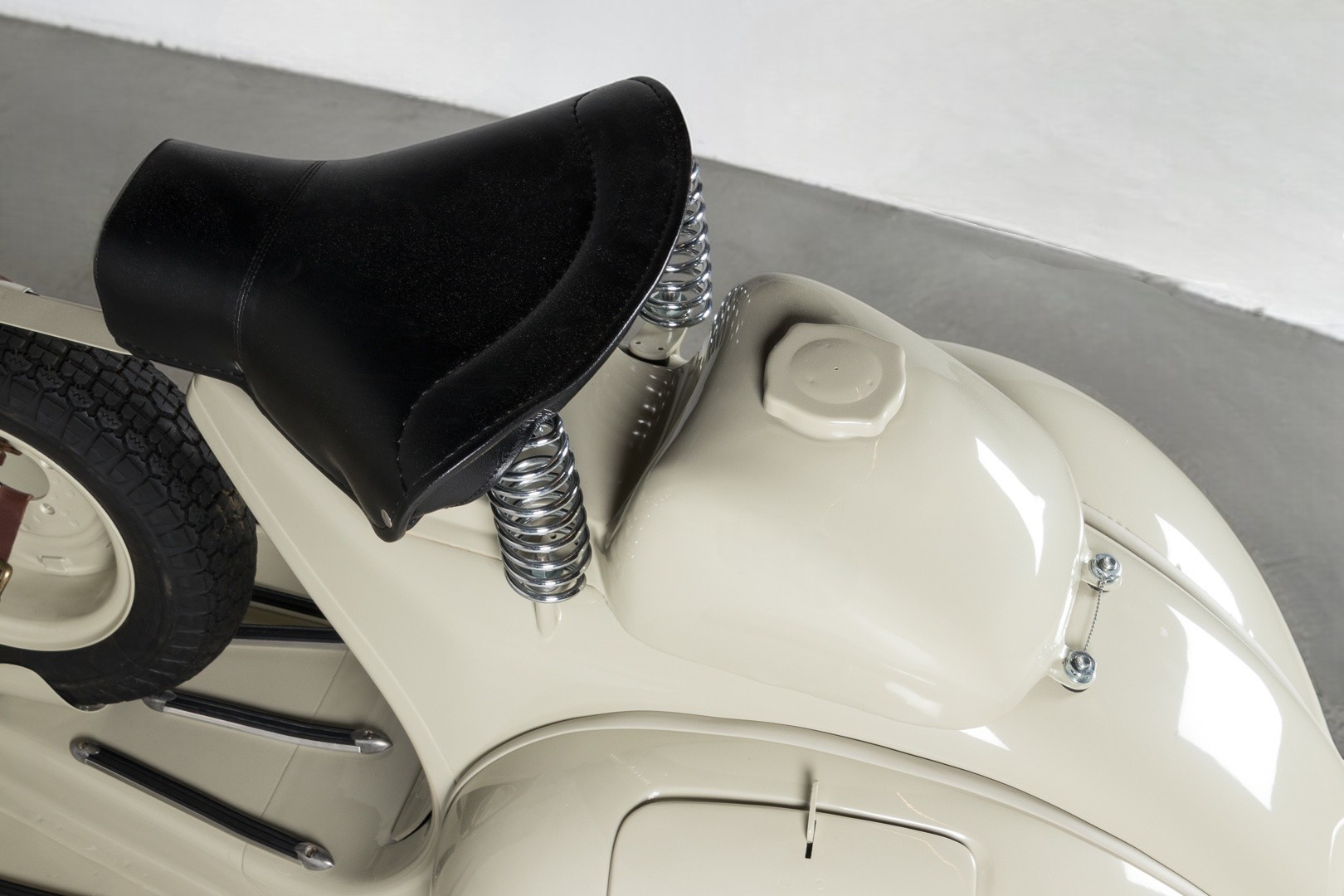
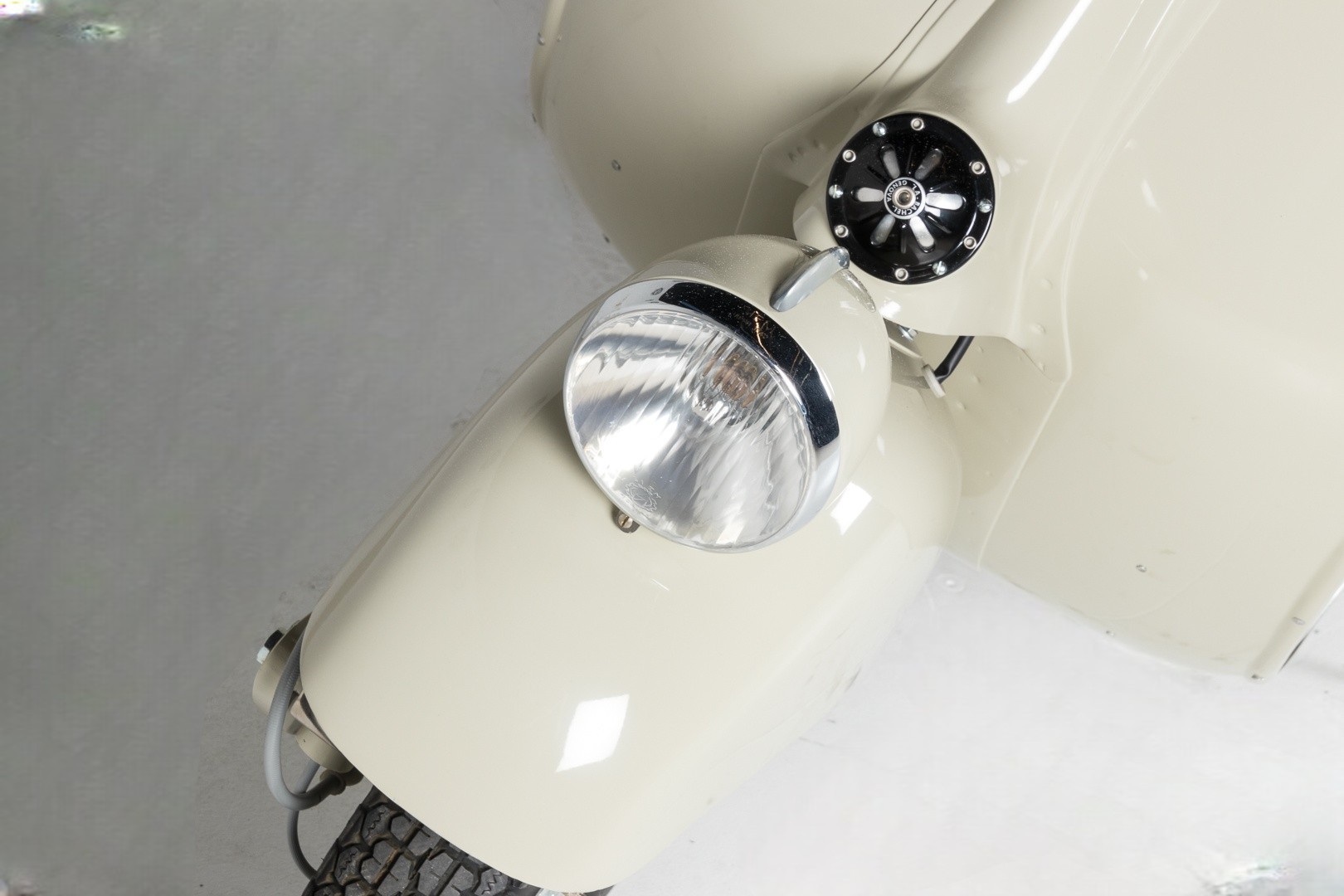
The Sei Giorni is particularly recognizable by its large external fuel tank mounted ahead of the seat, high-mounted spare wheel, enlarged front mudguard, racing-style leg shield, and low-mounted headlamp positioned on the front bodywork. These features gave the scooter a distinctive competition appearance while preserving the fundamental Vespa step-through layout.
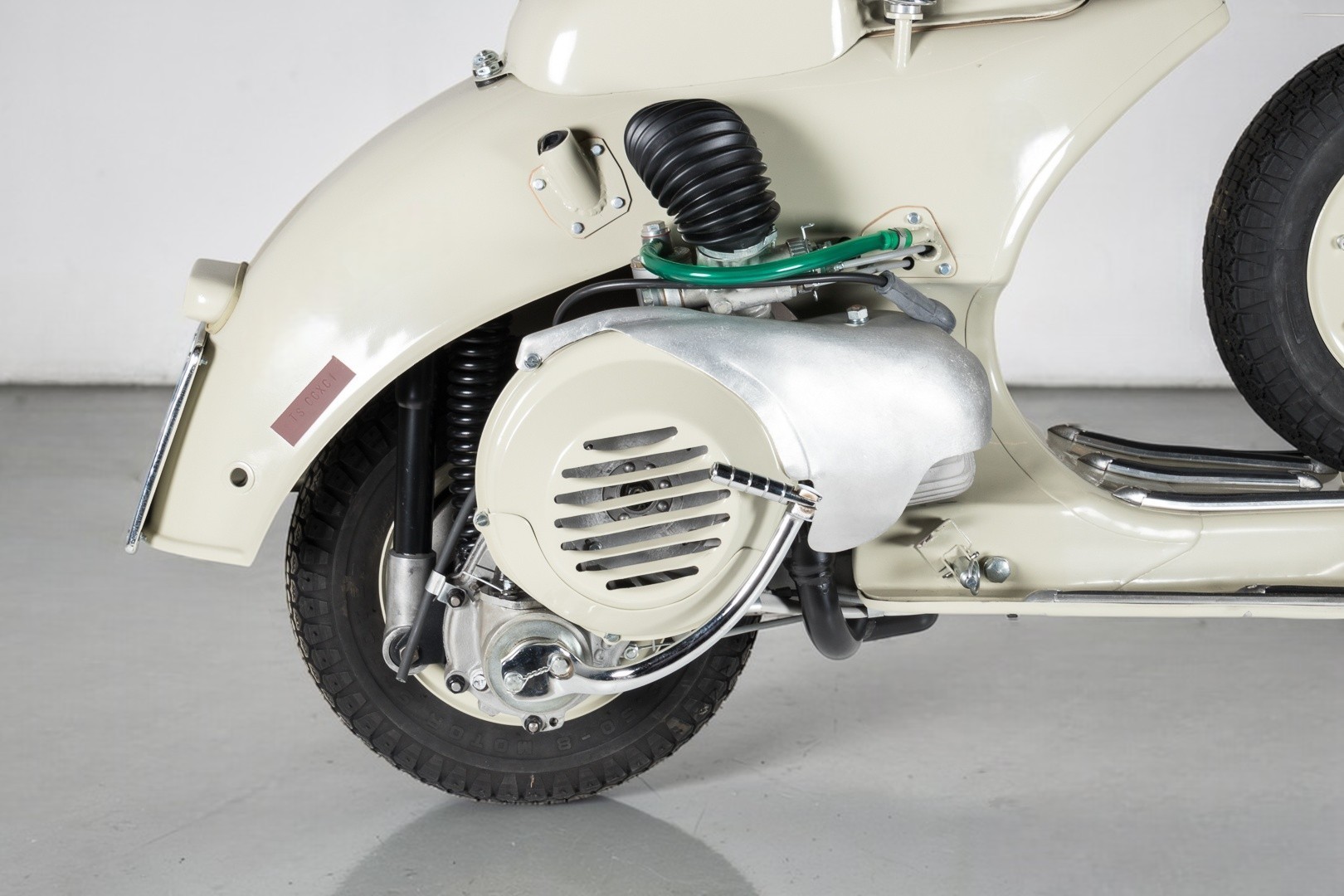
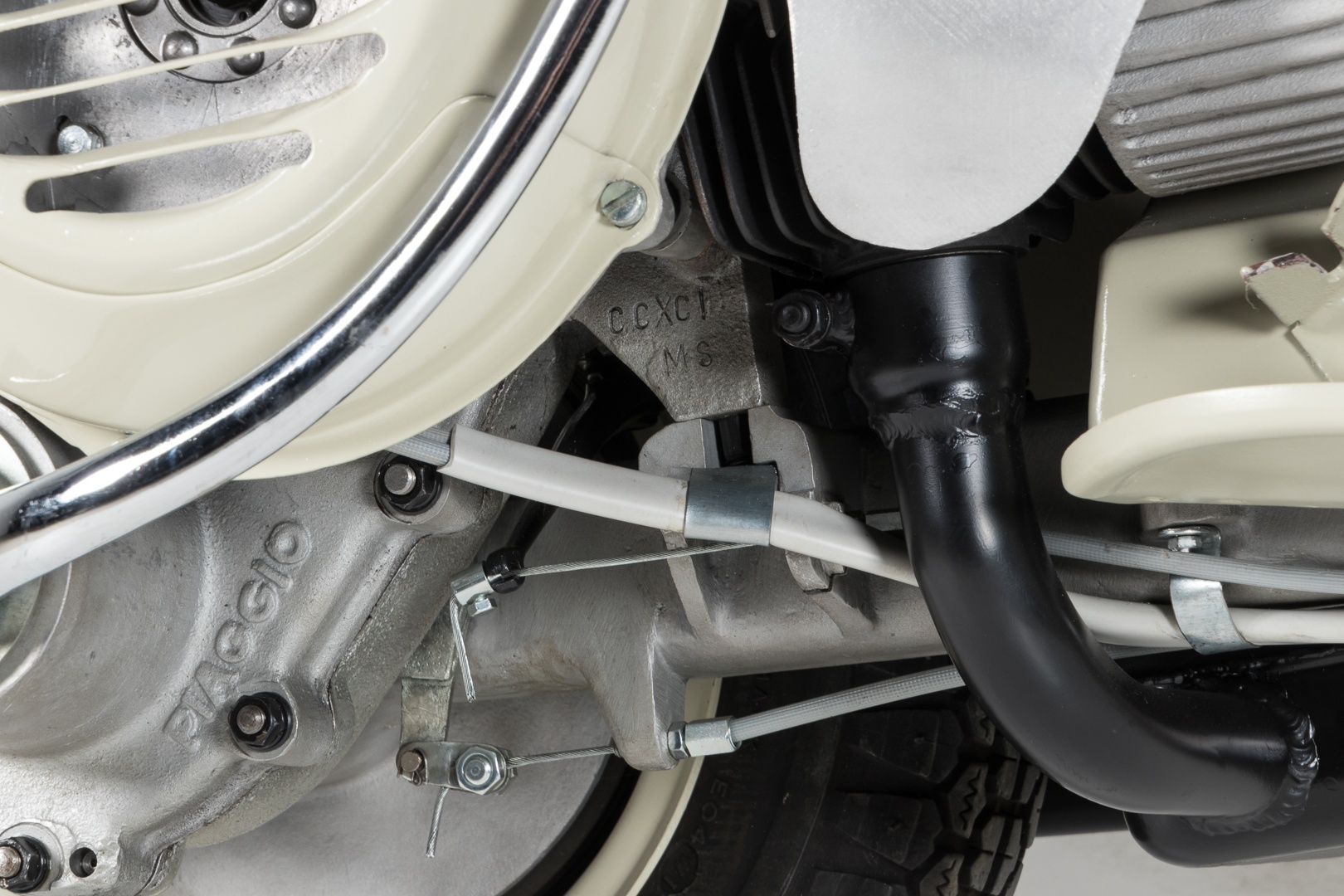
The scooter was powered by a 145.5 cc single-cylinder two-stroke engine derived from the Vespa 125 platform but enlarged for competition use. The engine was fitted with a larger 22 mm Dell'Orto carburetor and produced approximately 10 horsepower at around 6,000 rpm.
With its lightweight pressed-steel chassis, three-speed transmission, competition engine, large fuel capacity, and specialized suspension and tires, the Sei Giorni was capable of performing in conditions far beyond those normally associated with a conventional urban scooter.
The 1953 Vespa Sei Giorni is now one of the most collectible and historically significant competition Vespas, particularly because of its direct connection with the International Six Days Trial and the remarkable results achieved by Piaggio's factory riders.
The Vespa Sei Giorni was developed specifically for competition after Piaggio recognized that the scooter could be used successfully in endurance and off-road events.
The International Six Days Trial, later known as the International Six Days Enduro, required motorcycles and riders to cover long distances over difficult roads and trails while meeting strict time schedules. Reliability, handling, and rider endurance were more important than outright road speed.
Piaggio prepared a specialized Vespa for the 1951 International Six Days Trial. The machine proved that a scooter could compete effectively against conventional motorcycles in demanding conditions.
The competition Vespa became known as the Sei Giorni, referring directly to the six-day event for which it had been developed.
The model was subsequently produced in limited numbers, with the most commonly cited production figure being approximately 300 examples. This limited production makes an authentic Sei Giorni considerably rarer than standard Vespa models of the same period.
Piaggio's factory team achieved outstanding results with the Sei Giorni. At the 1951 International Six Days Trial, the factory riders demonstrated the scooter's ability to compete successfully against motorcycles of conventional design.
The Sei Giorni became particularly associated with the Italian riders Giuseppe Cau, Dino Mazzoncini, and Bruno Moretti. Cau was especially successful and helped establish the model's competition reputation.
The 1953 model belongs to the period in which Piaggio's competition Vespa had already established its reputation and was being offered as a specialized sporting machine rather than merely as a modified standard scooter.
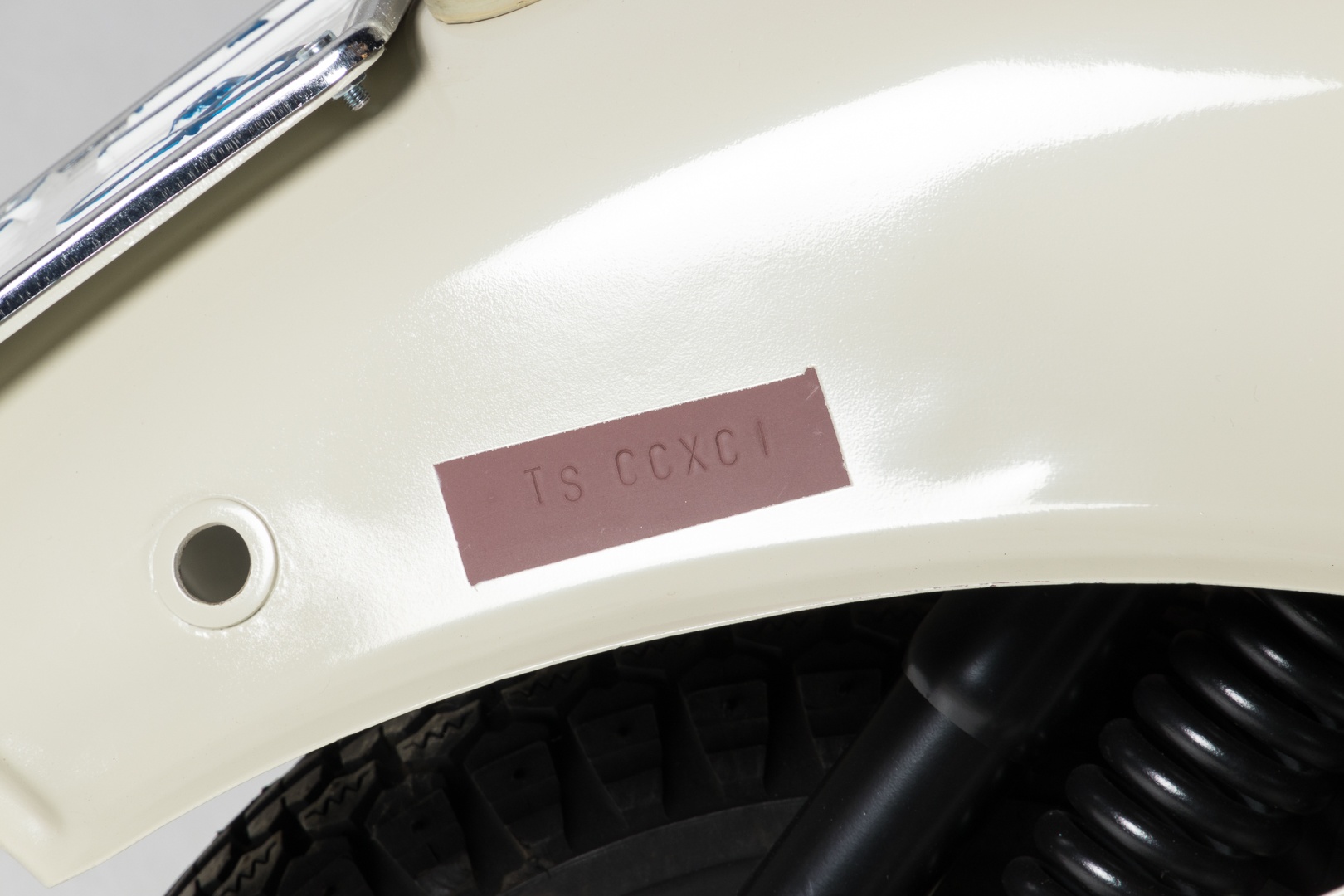
Original engine and frame numbers, competition history, period photographs, registration documents, factory records, race documentation, restoration records, and documented ownership history are particularly important when establishing the provenance of a surviving Sei Giorni.
The 1953 Vespa Sei Giorni uses a single-cylinder, air-cooled two-stroke engine with a displacement of approximately 145.5 cc.
The engine was derived from the Vespa 125 unit but enlarged to provide substantially greater performance for competition use.
The engine uses a bore of approximately 57 mm and a stroke of approximately 57 mm, giving a displacement of approximately 145.5 cc.
The competition engine uses a larger Dell'Orto carburetor, commonly identified as a 22 mm unit, compared with the smaller carburetion used on ordinary Vespa models.
Output is approximately 10 horsepower at around 6,000 rpm.
The additional displacement and competition tuning gave the Sei Giorni substantially stronger acceleration and hill-climbing ability than a standard Vespa 125.
The engine was designed to operate reliably for extended periods under difficult conditions, an essential requirement for the International Six Days Trial.
The actual performance of an individual surviving Sei Giorni depends on engine condition, cylinder and piston specification, carburetor setup, ignition timing, exhaust system, gearing, and restoration quality.
The 1953 Vespa Sei Giorni uses a three-speed manual transmission operated through the left side of the handlebar.
The characteristic Vespa twist-grip gear selector allows the rider to change gears without removing a hand from the handlebar, an especially useful feature during competition riding.
The engine and transmission are integrated into the rear portion of the scooter, creating the compact drivetrain arrangement that distinguishes Vespa from conventional motorcycles.
Final drive is enclosed within the rear engine and transmission assembly, eliminating the exposed chain and sprocket arrangement found on many motorcycles.
The competition gearing was selected to provide useful acceleration and hill-climbing ability while maintaining adequate speed on open sections of the course.
The clutch and gearbox were required to withstand repeated gear changes, steep climbs, rough surfaces, and prolonged competition use.
On a surviving Sei Giorni, the clutch, gearbox, gear selector, transmission bearings, seals, and final-drive components should be inspected carefully because correct operation is essential to maintaining the scooter's original sporting character.
The 1953 Vespa Sei Giorni retains the pressed-steel structural chassis used by the Vespa family but incorporates competition-oriented modifications.
The step-through layout remains central to the design, allowing the rider to mount the scooter easily while maintaining the protective leg shield and enclosed mechanical structure.
The front suspension uses the characteristic Vespa leading-link system, which was adapted for the demands of competition riding.
The competition chassis was designed to withstand rough roads, gravel surfaces, steep climbs, and repeated impacts that would be unusual for a normal road-going Vespa.
The rear wheel is carried by the engine and transmission assembly, with the power unit forming an important part of the rear suspension arrangement.
The Sei Giorni's chassis was kept relatively lightweight, allowing the scooter to remain manageable on difficult terrain.
The combination of compact dimensions, low center of gravity, step-through frame, and competition suspension gave the Sei Giorni an unusual advantage in tight and technically demanding sections.
Frame alignment, steering-head bearings, front fork components, suspension springs, engine mounting points, and evidence of competition repairs should be inspected carefully when evaluating an original or restored machine.
The Vespa Sei Giorni uses small-diameter wheels derived from the standard Vespa design but fitted with tires suitable for competition conditions.
The tires provided additional traction on dirt, gravel, grass, and rough roads compared with ordinary road-oriented Vespa equipment.
Both wheels use mechanical drum brakes.
The braking system was mechanically operated and designed to provide reliable control under competition conditions rather than the powerful braking performance expected from modern motorcycles.
Proper adjustment of the brake shoes, drums, cables, and operating mechanisms is essential on a restored Sei Giorni.
Wheel rims, spokes, hubs, bearings, tires, and axle alignment should also be checked carefully before use.
Because the scooter was designed for endurance competition, evidence of period repairs or replacement components is not necessarily evidence of poor maintenance, although originality should be assessed carefully on a collector example.
The 1953 Vespa Sei Giorni is one of the most distinctive Vespa models ever produced.
Its most recognizable feature is the large external fuel tank positioned in front of the seat. The tank increased fuel capacity for long competition stages and immediately distinguished the machine from ordinary road-going Vespas.
A spare wheel was mounted high behind the seat, allowing the rider to continue after a puncture without carrying a conventional motorcycle-style wheel inside the bodywork.
The front mudguard and leg shield were modified for competition use, while the headlamp remained mounted low on the front bodywork, preserving the characteristic appearance of the earliest sporting Vespa models.
The large fuel tank and exposed spare wheel created a compact but purposeful competition silhouette.
The Sei Giorni's appearance is therefore closely connected with its function. Nearly every major visual difference from a standard Vespa was intended to improve endurance, serviceability, fuel range, or competition performance.
The 1953 Vespa Sei Giorni represents the mature production form of Piaggio's specialized competition scooter.
It retained the 145.5 cc single-cylinder two-stroke engine, three-speed manual gearbox, pressed-steel chassis, competition-oriented suspension, large external fuel tank, and high-mounted spare wheel.
The larger engine and competition carburetor gave the Sei Giorni significantly more power than the ordinary 125 cc Vespa.
The external fuel tank provided the additional range required for long-distance competition stages.
The high-mounted spare wheel provided an immediate replacement in the event of a puncture, an important advantage during an endurance trial where outside assistance could be limited.
The 1953 model should be distinguished from standard Vespa 125 and 150 models, as well as from later sporting derivatives that borrowed elements of the Sei Giorni design.
Authentic production details are especially important because the Sei Giorni has been widely replicated and modified by collectors and restorers.
The 1953 Vespa Sei Giorni provides a riding experience that is substantially more sporting than that of an ordinary Vespa.
The 145.5 cc two-stroke engine delivers considerably stronger acceleration and hill-climbing performance than the standard 125 cc Vespa of the period.
The three-speed twist-grip gearbox allows the rider to keep the engine within its useful power range while navigating steep climbs and changing surfaces.
The compact chassis and low center of gravity make the scooter agile, particularly on narrow trails and technical sections.
The small wheels require the rider to pay attention to deep holes, rocks, and abrupt changes in terrain, but the scooter's lightweight construction makes it surprisingly manageable away from paved roads.
The competition-oriented fuel tank and spare wheel also influence the weight distribution and riding position compared with a standard Vespa.
A restored Sei Giorni should be ridden with consideration for its original mechanical and braking technology. Its historical importance and rarity generally make careful operation preferable to aggressive riding.
The 1953 Vespa Sei Giorni is historically important because it demonstrated that a scooter could compete successfully in an event traditionally dominated by motorcycles.
The International Six Days Trial demanded reliability, endurance, navigation, mechanical durability, and rider skill over difficult terrain and long distances.
Piaggio's success with the competition Vespa helped establish the scooter as a legitimate sporting machine rather than merely an inexpensive urban vehicle.
The factory team's results gave the Vespa significant international publicity and strengthened Piaggio's reputation during the company's rapid post-war expansion.
The Sei Giorni also demonstrated the flexibility of the Vespa's basic architecture. The pressed-steel chassis and integrated engine were originally designed for practical transportation, yet the same architecture could be adapted for serious competition.
The model became one of the most famous sporting derivatives in Vespa history and remains an important reference point for the development of later Vespa performance models.
The 1953 Vespa Sei Giorni is among the most desirable vintage Vespa models for serious collectors.
Its limited production, competition history, distinctive specification, and association with the International Six Days Trial make it significantly rarer and more historically important than ordinary Vespas of the same period.
Collectors pay particular attention to the frame and engine numbers, external fuel tank, spare-wheel mounting, front bodywork, headlamp position, engine, carburetor, transmission, wheels, brakes, exhaust system, and competition-specific components.
The large external tank is one of the most frequently reproduced components, making careful examination of its construction, mounting points, dimensions, and finish especially important.
Original competition equipment, period racing documentation, factory photographs, event records, rider associations, and documented ownership history can substantially increase the historical credibility of an example.
Because genuine Sei Giorni scooters are rare, many standard Vespas have been modified to imitate the appearance of the competition model. A correct frame and engine identity is therefore essential when assessing authenticity.
A highly original example with strong documentation is considerably more significant than a standard Vespa converted into Sei Giorni specification.
Authenticating a 1953 Vespa Sei Giorni requires careful examination of both the mechanical components and the competition-specific bodywork.
The scooter should have the appropriate Vespa Sport Sei Giorni frame and engine identification, together with the 145.5 cc competition engine specification.
The large external fuel tank, high-mounted spare wheel, competition bodywork, low headlamp, engine, carburetor, transmission, suspension, wheels, and brakes should be examined for consistency.
The 145.5 cc engine and larger carburetor are particularly important because ordinary Vespa 125 models can be made to resemble the Sei Giorni externally.
Frame and engine numbers should be checked against reliable historical Vespa records wherever possible.
Period photographs can also be extremely useful because they reveal details of tank shape, spare-wheel mounting, bodywork, controls, and factory competition preparation.
Original paint, factory markings, period fasteners, correct engine components, and documented provenance can help distinguish a genuine Sei Giorni from a later recreation.
A motorcycle containing replacement components may still be historically valuable, but reproduction and non-original parts should be clearly identified when assessing originality.
The 1953 Vespa Sei Giorni matters because it represents one of the most successful and influential competition versions of the original Vespa concept.
Its 145.5 cc two-stroke engine, competition carburetion, three-speed transmission, specialized chassis, large fuel tank, and spare wheel were developed specifically to meet the demands of long-distance trial competition.
The scooter's success in the International Six Days Trial helped change perceptions of what a Vespa could accomplish and demonstrated the remarkable versatility of Piaggio's pressed-steel scooter architecture.
The Sei Giorni also established a direct connection between Vespa's practical road scooters and the company's later sporting and competition models.
For collectors, the 1953 Sei Giorni combines rarity, Italian engineering, competition heritage, distinctive styling, and an important place in the history of both Vespa and post-war motorsport.
This 1953 Vespa Sei Giorni represents one of Piaggio's most important factory competition scooters and is directly associated with the International Six Days Trial, where Vespa demonstrated that a lightweight scooter could compete successfully against conventional motorcycles.
The 145.5 cc single-cylinder two-stroke engine produces approximately 10 horsepower and is paired with a three-speed manual twist-grip transmission, providing significantly stronger performance than the standard Vespa models from which the competition machine was developed.
The Sei Giorni's distinctive large external fuel tank, high-mounted spare wheel, competition bodywork, low front headlamp, specialized suspension, and lightweight pressed-steel chassis make it one of the most recognizable sporting Vespas ever produced.
With production limited to approximately 300 examples, authentic Sei Giorni scooters are exceptionally rare. Correct frame and engine numbers, original competition equipment, period documentation, and provenance are therefore especially important when evaluating one.
The model's combination of limited production, factory competition heritage, Italian design, and successful International Six Days Trial history makes it one of the most significant vintage Vespa scooters for collectors.
For more information about the Vespa marque and other historic models, visit Vespa vintage scooters.
Contact us for additional photographs, detailed specifications, frame and engine numbers, service history, originality assessment, provenance, restoration details, historical documentation, and purchasing information for this 1953 Vespa Sei Giorni.
The Vintage Motorcycles presents a curated selection of historically significant Italian machines, where Vespa represents one of the most influential developments in post-war mobility engineering. Introduced as a response to the need for affordable and efficient transportation, Vespa redefined two-wheel design through its monocoque chassis, enclosed mechanical systems, and highly accessible riding ergonomics.
Within the broader landscape of global vintage motorcycle manufacturers, Vespa stands apart from traditional motorcycle architecture, representing a shift toward integrated industrial design. This transformation can be better understood when contrasted with earlier pre-war motorcycle engineering (1900-1939), where exposed mechanical systems and rigid frame structures defined the dominant design philosophy.
The emergence of Vespa aligns closely with wider post-war motorcycle development, a period marked by economic reconstruction and the demand for lightweight, practical transportation solutions. Italian manufacturers, particularly Piaggio through the Vespa platform, played a defining role in this transition, introducing vehicles that combined mechanical simplicity with mass production efficiency.
Each Vespa within our collection is selected based on provenance, originality, and structural integrity, ensuring alignment with museum-grade preservation standards. Available acquisition opportunities can be explored through our global vintage motorcycle inventory, supported by a fully insured international shipping service.
Vespa's development is deeply connected to Italy's industrial recovery following World War II, where engineering priorities shifted toward efficiency, affordability, and accessibility. Unlike conventional motorcycles, Vespa introduced a fully integrated body structure that protected mechanical components, reduced maintenance complexity, and improved rider comfort.
This transformation reflects broader changes explored through WW2 military motorcycle development, where industrial capabilities and engineering knowledge were redirected from military production toward civilian mobility solutions. Vespa emerged directly from this context, adapting aeronautical and industrial manufacturing techniques into a new form of urban transport.
Although primarily designed as a solo urban vehicle, Vespa also intersected with broader European mobility trends, including adaptations and utility concepts related to sidecar-equipped motorcycles, highlighting how diverse engineering solutions coexisted during the mid-20th century.
Italian engineering, as embodied by Vespa, emphasizes the integration of form and function, where mechanical efficiency is combined with clean, purposeful design. This philosophy distinguishes Vespa from many contemporaries, positioning it not only as a vehicle but also as a cultural and industrial design icon.
From early models such as the Vespa 98 to later developments across the 1950s and 1960s, the brand continuously refined its engineering approach while maintaining its core identity. These machines represent a departure from traditional motorcycle evolution, focusing instead on accessibility, usability, and mass adoption.
Today, Vespa remains a critical reference point in the study of post-war transportation systems, illustrating how engineering innovation can reshape not only vehicle design but also social mobility. For collectors, these machines offer a unique combination of historical significance, design heritage, and enduring global recognition.
Key Highlights
Collector Assurance
All enquiries handled with discretion. We typically respond within 6 hours.
Choose the payment method that is most convenient for you. We accept widely used international payment methods as well as, where available, local bank transfer options that allow you to pay like a domestic transaction. Full payment instructions are provided for your specific purchase.
Direct international bank wire transfer is available for motorcycle purchases and export transactions.
Credit card payments can be arranged through Wise.com, subject to the applicable payment and processing conditions.
PayPal is accepted. A 5% PayPal processing fee applies to the transaction.