The Vintage Motorcycles
Specialists in antique, classic, veteran and vintage motorcycles.
Specialists in antique, classic, veteran and vintage motorcycles.
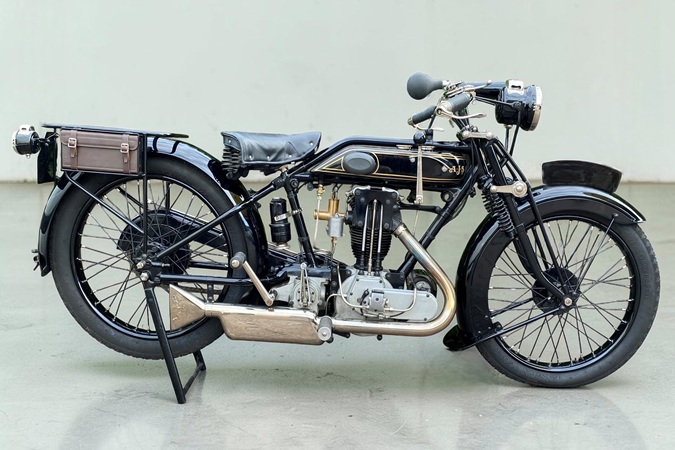
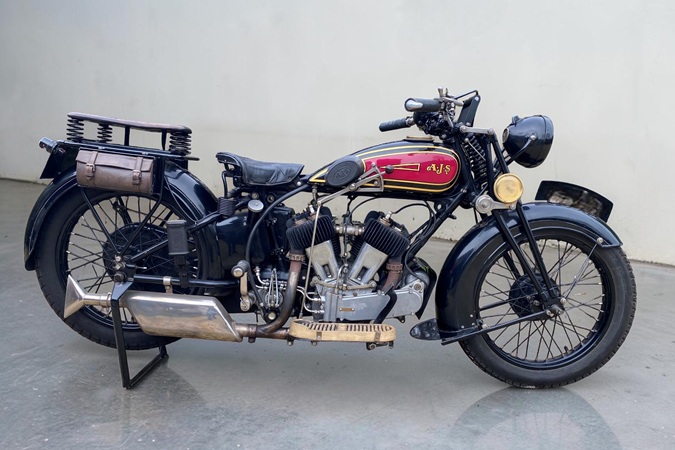
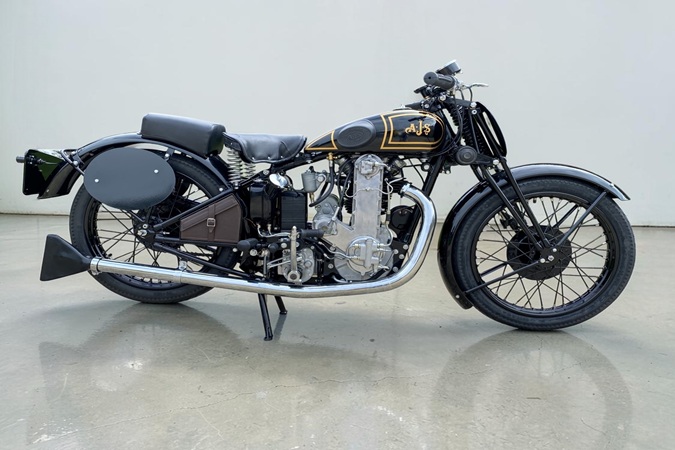
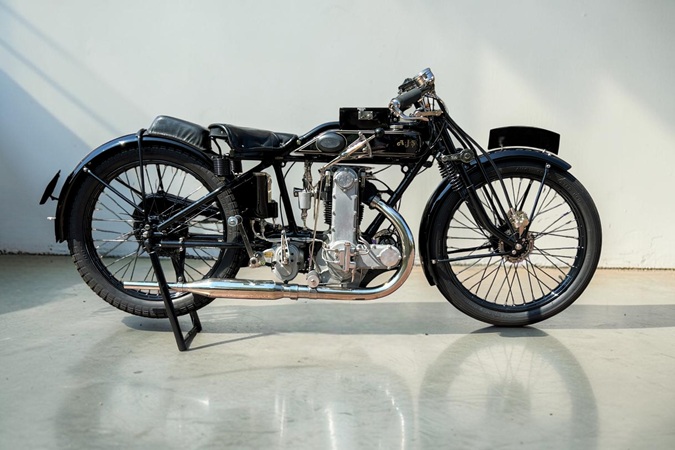
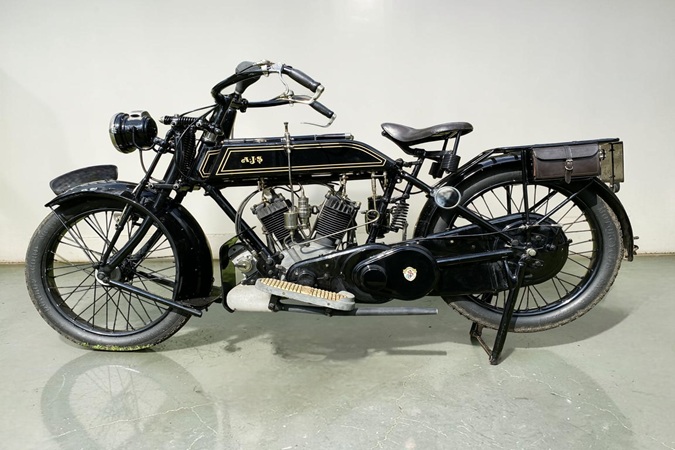
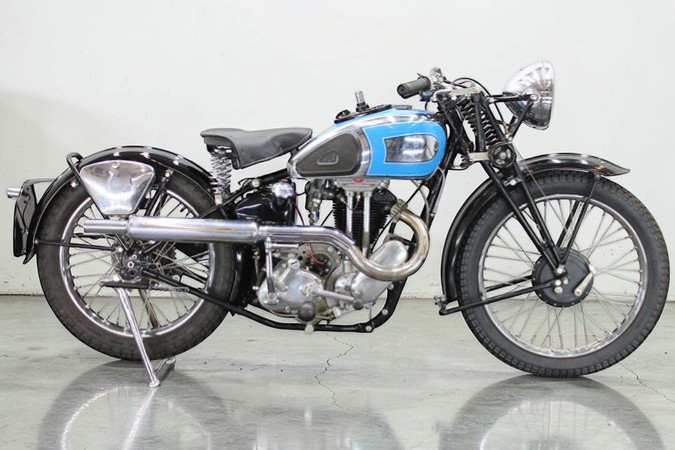
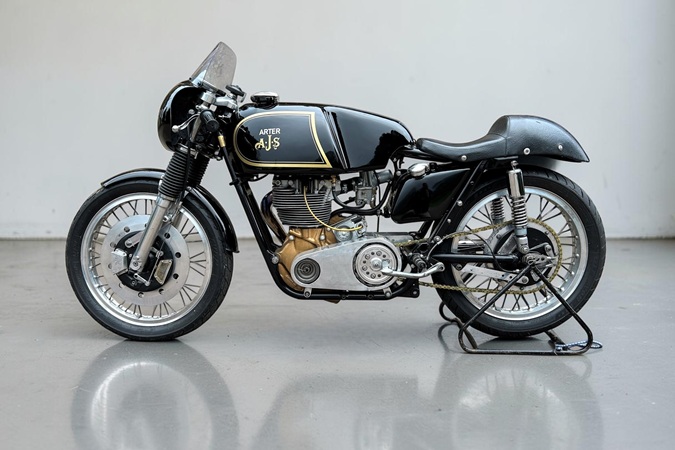
A curated museum-grade selection of early AJS motorcycles, representing one of Britain's most influential engineering marques. From the dawn of post-war production in 1918 through the refined interwar era of performance and endurance machines, each motorcycle stands as a preserved artifact of British industrial ambition and mechanical artistry.
Curated by European vintage motorcycle specialists with decades of archival sourcing experience. Each machine is selected for historical integrity, originality, and preservation quality worthy of museum collections and private auctions.
AJS (A. J. Stevens & Co. Ltd.) stands as one of the most respected names in early British motorcycling history. Born in the aftermath of World War I, the marque quickly established a reputation for precision engineering, endurance reliability, and competitive success in early motorsport.
These machines are not merely motorcycles - they are mechanical documents of a transformative era in British industry, where craftsmanship and engineering discipline defined national identity on two wheels.
The earliest AJS machines, including the Model D of 1918, emerged during a defining moment in British industrial recovery. Built in a period where engineering was transitioning from wartime necessity to civilian innovation, these motorcycles embody the foundation of modern British motorcycling.
By the late 1920s and 1930s, AJS had evolved into a marque associated with technical refinement and competitive excellence. Models such as the Model H and Silver Streak series represented the peak of pre-war British performance engineering, combining reliability with advanced mechanical sophistication.
Surviving examples are now exceptionally rare, with many preserved only through long-term private stewardship or institutional collections.
1909 - AJS (A. J. Stevens & Co.) officially entered motorcycle production in Wolverhampton, England.
1914-1918 - During World War I, AJS engineering experience expanded through military supply and industrial manufacturing work.
1920s - The company became known for reliable single-cylinder motorcycles, racing success, and rapid development of touring and road-going machines.
1931 - AJS achieved major competition success with supercharged racing technology and Grand Prix victories.
1930s - Engineering evolved toward smoother overhead-valve designs, improved chassis construction, and higher-performance road motorcycles such as the Silver Streak series.
1939 - Final pre-war refinements introduced stronger frames, improved suspension geometry, and more advanced engine tuning before wartime production changes.
1949 - AJS became part of Associated Motor Cycles (AMC), leading to shared engineering platforms with Matchless motorcycles.
1950s-1960s - The brand focused on practical British singles and twins, including competition-focused scramblers, roadsters, and military models.
1966 - The launch of the AJS Stormer marked the company's transition into lightweight off-road and motocross engineering.
Modern Era - AJS continues as a heritage British motorcycle marque associated with classic styling and historic racing legacy.
AJS motorcycles occupy a rare position in the collector landscape due to their early production era and limited survival rate. Unlike later mass-produced machines, each surviving AJS carries unique historical provenance shaped by decades of use, restoration, and preservation.
Authentic, matching-number examples are now considered highly competitive acquisition targets in the international vintage motorcycle market.
As a result, collector-grade AJS motorcycles often transact quickly when offered on the open market.
Key collector models include the AJS Model G8, AJS Model M1, AJS Model R10, AJS Model K10, AJS Model D with Sidecar, AJS Model 38/26 - Silver Streak, AJS Model D Vee-Twin, and the rare AJS Model 7R. And you can explore our full range of vintage motorcycles in the Inventory page.
These motorcycles are highly valued for their historical significance, early engineering innovation, and contribution to British motorcycling heritage.
AJS represents more than mechanical development - it represents the formation of British motorcycling identity. Its engineering philosophy influenced both civilian transportation and early motorsport culture, establishing benchmarks that would shape decades of British motorcycle design.
Today, AJS motorcycles are regarded as historically significant artifacts rather than simple collector machines. Their value is defined not only by rarity, but by their role in documenting the evolution of early 20th-century engineering thought.
When acquiring an AJS motorcycle, collectors should prioritize originality, matching numbers, and authenticity of restoration work. Early British motorcycles often vary significantly in condition due to age and usage history.
Each AJS machine in our collection is carefully inspected for mechanical integrity, historical accuracy, and collector-grade preservation standards.
Below is a curated selection of collector-grade AJS motorcycles available for acquisition. Each machine is verified, documented, and offered with full provenance.
We offer AJS vintage motorcycles for sale to collectors worldwide, including the United Kingdom, Europe, United States, Australia, and Asia. Each motorcycle can be securely crated and shipped with full export documentation and insurance.
Pricing varies depending on rarity, originality, and restoration condition. Please contact us for current availability and acquisition details.
Contact our specialists for availability, pricing, and worldwide shipping options. REQUEST AVAILABILITY!
The historical development of AJS motorcycles is best understood within the broader chronology of early motorcycling. During the formative decades of the twentieth century, machines emerging from the pre-war motorcycle era (1918-1939) established the engineering and competitive foundations that defined AJS. These early models reflected a period when British manufacturers were refining combustion efficiency, frame geometry, and endurance reliability through both road use and racing circuits.
The onset of global conflict introduced a functional shift across the industry. Motorcycles adapted for battlefield conditions - documented within the WW2 military motorcycle context-prioritized mechanical simplicity, serviceability, and durability. Although not limited to a single marque, this period reshaped engineering logic across British manufacturers, influencing how post-war machines would later be designed.
In the years following 1945, the post-war motorcycle period marked a transition toward performance refinement and renewed racing ambition. AJS motorcycles from this era illustrate how wartime engineering lessons were reinterpreted for civilian and competitive applications, particularly in club racing and Grand Prix environments.
For collectors seeking to situate specific machines within this historical continuum, the global vintage motorcycle inventory provides a curated view of surviving examples across different eras, including rare and collector-grade AJS models. Within this broader ecosystem, specialized configurations such as sidecar motorcycles further illustrate how design adaptations extended beyond solo riding into utility, transport, and competition roles.
AJS motorcycles represent a convergence of industrial engineering and competitive ambition. From early pre-war experimentation to post-war performance refinement, the marque's evolution reflects broader developments in mechanical design, materials engineering, and racing culture. Understanding originality, historical usage, and mechanical authenticity is essential for interpreting these machines within both academic and collector frameworks.
The evolution of AJS motorcycles is embedded within the broader landscape of British industrial engineering, particularly during the late nineteenth and early twentieth centuries when firms such as A. J. Stevens & Co. transitioned from precision metalwork into full-scale motorcycle production. This trajectory parallels developments seen across motorcycle manufacturers by country, where national industries developed distinct engineering identities. Within this framework, the emergence of British motorcycle brands highlights a shared emphasis on durability, modular design, and racing-led innovation.
AJS's early machines, particularly those developed during the pre-war motorcycle era, reflect a period of rapid experimentation in engine configuration and chassis construction. These developments unfolded alongside the wider history of British motorcycle development, where competition between manufacturers accelerated technical refinement.
Comparative analysis with contemporaries such as BSA's model evolution reveals how AJS balanced production efficiency with racing ambition, particularly in endurance events and early Grand Prix competition. For a broader historiographical context, this progression can be situated within a comprehensive overview of motorcycle history, where British marques played a defining global role.
The interruption of the Second World War introduced new engineering priorities, as seen across the WW2 military motorcycle era. Mechanical reliability, ease of maintenance, and adaptability became critical, influencing the structural logic of motorcycles that would later re-emerge in civilian markets.
This transition continued into the post-war motorcycle period, where AJS machines reflected a synthesis of wartime engineering lessons and renewed interest in performance-oriented design.
Within the vintage motorcycle market, AJS occupies a position defined less by mass production and more by historical continuity and racing pedigree. Its valuation is shaped by rarity, documentation, and mechanical originality - factors examined in global vintage motorcycle market analysis. As surviving examples become increasingly scarce, collectors tend to prioritize machines that retain clear links to their production context and competitive use.
Understanding these valuation dynamics often involves examining the underlying factors that influence motorcycle value, alongside strategic considerations outlined in collector acquisition guides. Practical frameworks for navigating this space, ranging from safe acquisition practices to authenticity verification - form an essential part of the knowledge base surrounding AJS motorcycles.
AJS engineering is characterized by its progression from precision component manufacturing into fully realized motorcycle systems, where engine performance, frame stability, and mechanical simplicity were carefully balanced. The foundations of this approach can be traced through pre-war motorcycle engineering history, a period defined by iterative experimentation and competition-driven refinement.
The structural and conceptual transition between eras - examined in the shift from pre-war to post-war motorcycle design-reveals how AJS adapted to changing technological and economic conditions. At the same time, participation in competitive environments, as explored through the development of vintage motorcycle racing, reinforced the marque's emphasis on durability and performance under stress.
When viewed in a broader European context, comparisons such as British versus German engineering approaches highlight the distinct philosophy underpinning AJS design, favoring mechanical accessibility and endurance over excessive complexity.
Navigate through key purchasing resources and thorough mechanical tutorials, featuring international buyer FAQs, specific brand repairs, classic motorcycle troubleshooting, and detailed workshop restoration guides: