
The Vintage Motorcycles
Specialists in antique, classic, veteran and vintage motorcycles.
Specialists in antique, classic, veteran and vintage motorcycles.


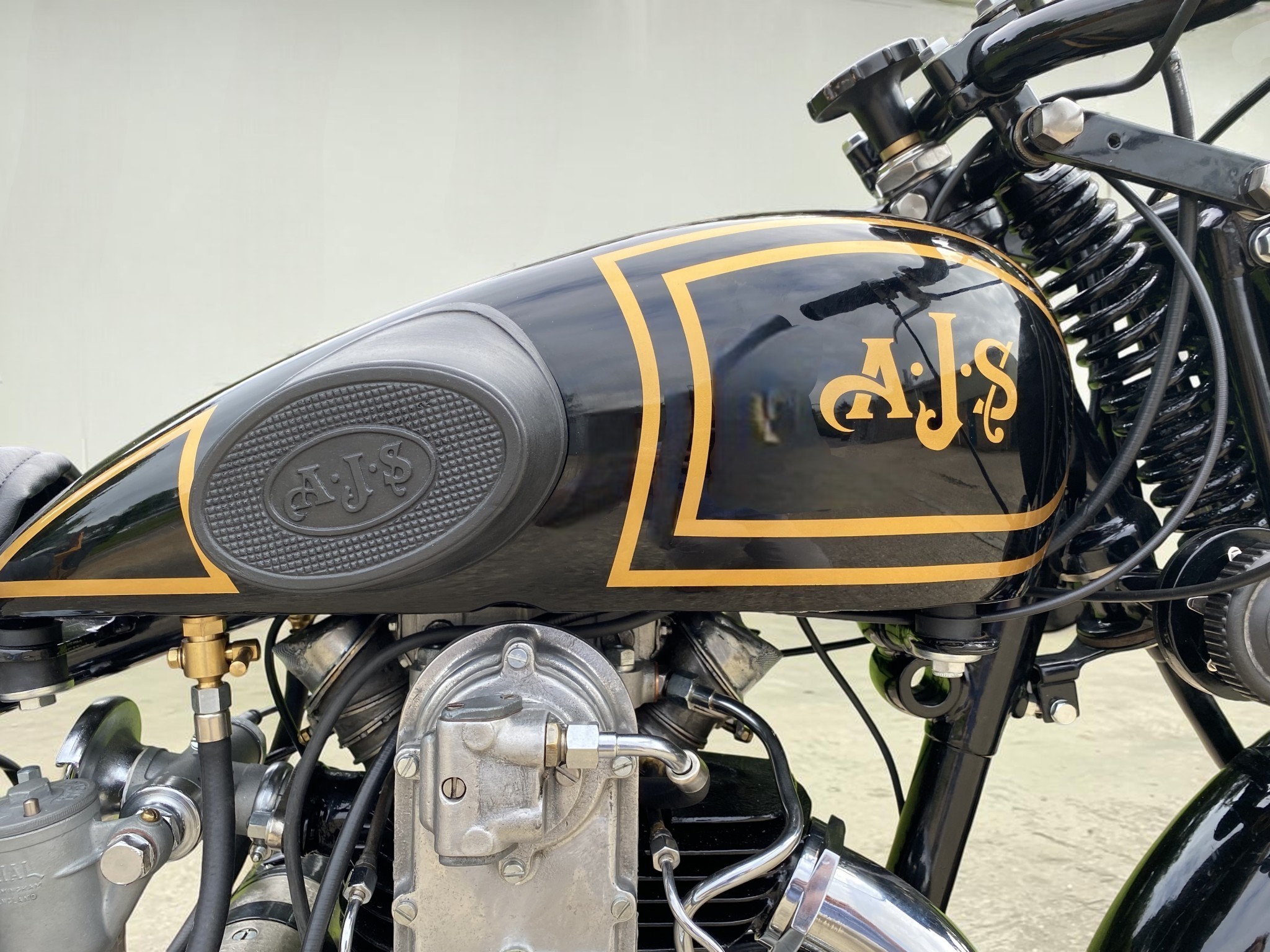


Composed, mechanically assured, and profoundly representative of mid-1930s British engineering priorities, the 1934 AJS Model R10 reflects a golden epoch in which the harmonious balance between sustained performance and enduring mechanical durability became the cornerstone of motorcycle design. Within the esteemed lineage of AJS vintage motorcycles, the R10 occupies a revered position defined by its robust large-displacement single-cylinder architecture and its exceptional suitability for serious, long-distance road touring.
At its core lies a formidable 498cc overhead-valve (OHV) single-cylinder power unit a configuration universally celebrated at the time as the optimal engineering compromise between raw torque output, thermal efficiency, and straightforward mechanical maintenance. The advanced OHV layout unlocked superior volumetric airflow and combustion scavenging, delivering a vastly more flexible and responsive power curve compared to traditional side-valve predecessors, particularly across demanding, changing road conditions.
The physical presence of the Model R10 is powerfully shaped by this engine architecture. The substantial finned cylinder, upright structural stance, and balanced duplex-loop frame geometry combine to create a motorcycle that feels impeccably grounded and purposeful. Rather than chasing fleeting records of outright speed, its timeless design communicates unshakeable high-speed stability, tractability, and effortless cross-country capability.
This pristine collector example has been restored with uncompromising adherence to period-correct specifications, faithfully preserving original material finishes, correct mechanical component arrangements, and authentic structural integrity. Meticulous attention to microscopic detail ensures the motorcycle retains its historical coherence while remaining mechanically dependable and visually identical to factory AJS production standards of the mid-1930s.
Relatively scarce in historically correct and complete condition, the AJS Model R10 offers a compelling, museum-grade representation of the classic 500cc class during the interwar years an enduring technical format that came to define British motorcycle dominance for decades to come.
By the mid-1930s, the 500cc single-cylinder motorcycle had matured into the absolute bedrock of the British industrial manufacturing sector. Premier marques such as AJS continuously refined these capable machines to serve a vast spectrum of applications, from daily urban commuting to grueling long-distance continental touring, reflecting the sophisticated expectations demanded by riders of the era.
The Model R10 emerged within this dynamic context as a proud member of a legendary lineage emphasizing overhead-valve efficiency and absolute mechanical reliability. Breakthroughs in metallurgical casting and precision machining allowed these high-compression engines to operate with unprecedented operational consistency, permanently reinforcing their reputation as dependable, all-weather power units.
Motorcycles within the competitive 500cc class were particularly treasured for their multifaceted adaptability. They supplied abundant, muscular power for steep gradients and heavy touring loads while remaining mechanically manageable and remarkably economical to run, cementing them as the preferred vehicle choice for discerning riders seeking equilibrium between sporting performance and pragmatic utility.
Over the shifting decades, intense commercial usage, motorsport modifications, and changing technological trends led to the attrition of countless machines from this fragile interwar window. As a direct result, surviving examples of the Model R10 especially those retaining matching numbers, correct engine specifications, and genuine period details are increasingly rare and historically priceless.
Today, the 1934 AJS Model R10 is regarded by historians and elite collectors alike as a defining masterpiece of mid-capacity British motorcycling, beautifully embodying a design philosophy anchored in structural balance, endurance, and the quiet, understated refinement of proven engineering principles.
The Vintage Motorcycles presents a curated selection of historically significant British vintage motorcycles, representing one of the most influential engineering traditions in European motorcycling history. From early single-cylinder machines developed during the formative years of industrial mobility to highly refined pre-war and post-war performance motorcycles, British manufacturers played a defining role in shaping both road and racing motorcycle development.
This collection includes machines from landmark marques such as AJS, Triumph, Vincent, Sunbeam, Matchless, BSA, Norton, Douglas, Royal Enfield, and other historically important British motorcycle manufacturers, each contributing to advancements in engine architecture, chassis design, and competitive performance engineering. These motorcycles are best understood within the broader framework of pre-war motorcycle engineering (1900-1939), as well as the subsequent evolution seen in post-war motorcycle development, where British engineering became closely associated with racing success and mechanical refinement.
Each motorcycle within our collection is sourced based on historical provenance, structural originality, and mechanical integrity, ensuring alignment with museum-grade preservation standards. For collectors seeking acquisition opportunities, available machines can be explored through our global vintage motorcycle inventory, supported by a fully insured international shipping service.
British motorcycle engineering is defined by its strong association with performance development, mechanical durability, and competition-driven innovation. Manufacturers such as AJS contributed significantly to the advancement of single-cylinder performance engines, overhead valve configurations, and racing-oriented chassis design, particularly during the interwar and post-war periods.
From early road-going machines to competition-proven racing motorcycles, British engineering reflects a continuous evolution shaped by endurance racing, circuit competition, and the pursuit of mechanical efficiency. This legacy positions British motorcycles as a central reference point within the broader study of global motorcycle engineering history.
Key Highlights
Collector Assurance
All enquiries handled with discretion. We typically respond within 6 hours.
Choose the payment method that is most convenient for you. We accept widely used international payment methods as well as, where available, local bank transfer options that allow you to pay like a domestic transaction. Full payment instructions are provided for your specific purchase.
Direct international bank wire transfer is available for motorcycle purchases and export transactions.
Credit card payments can be arranged through Wise.com, subject to the applicable payment and processing conditions.
PayPal is accepted. A 5% PayPal processing fee applies to the transaction.