
The Vintage Motorcycles
Specialists in antique, classic, veteran and vintage motorcycles.
Specialists in antique, classic, veteran and vintage motorcycles.
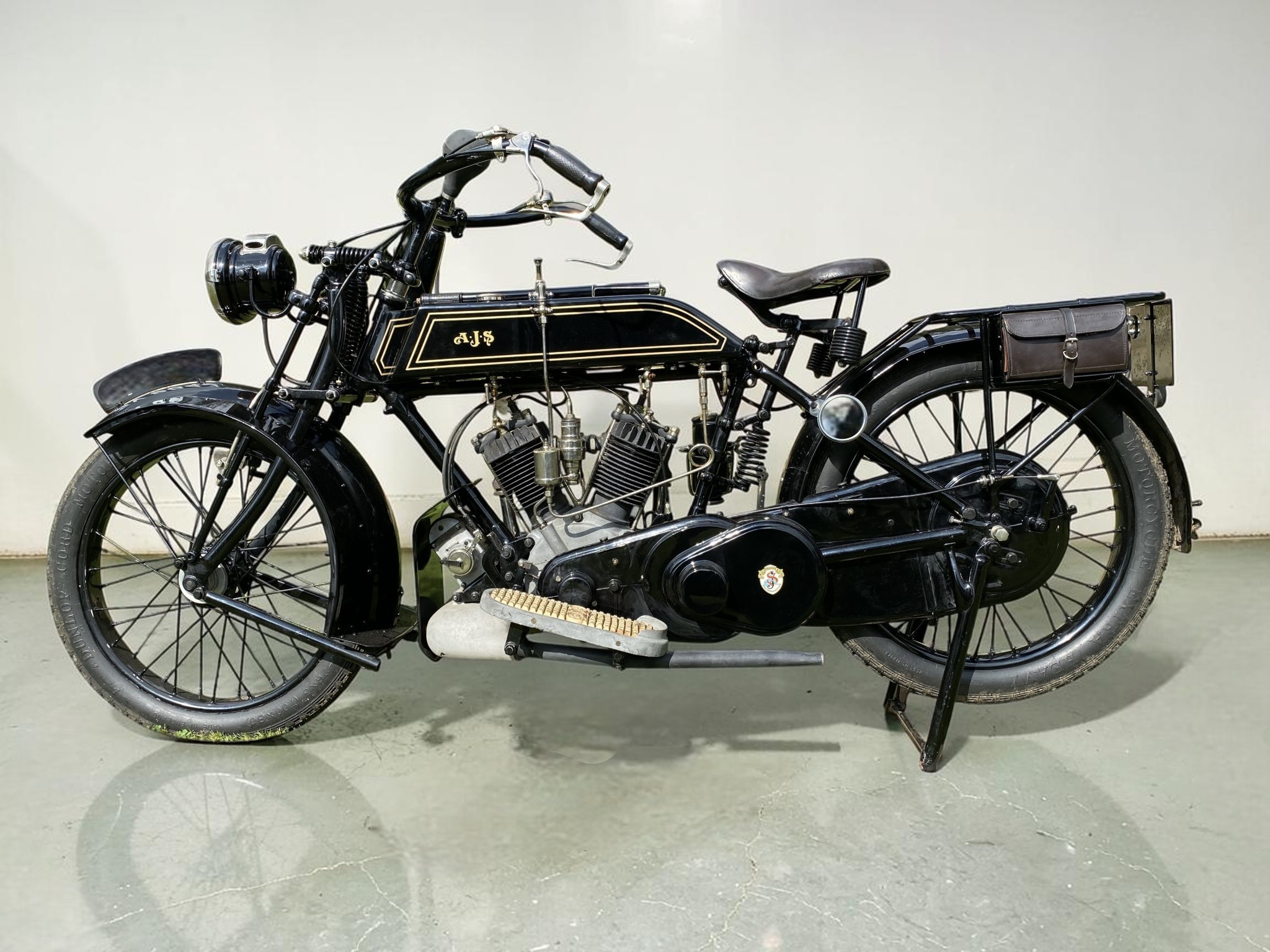
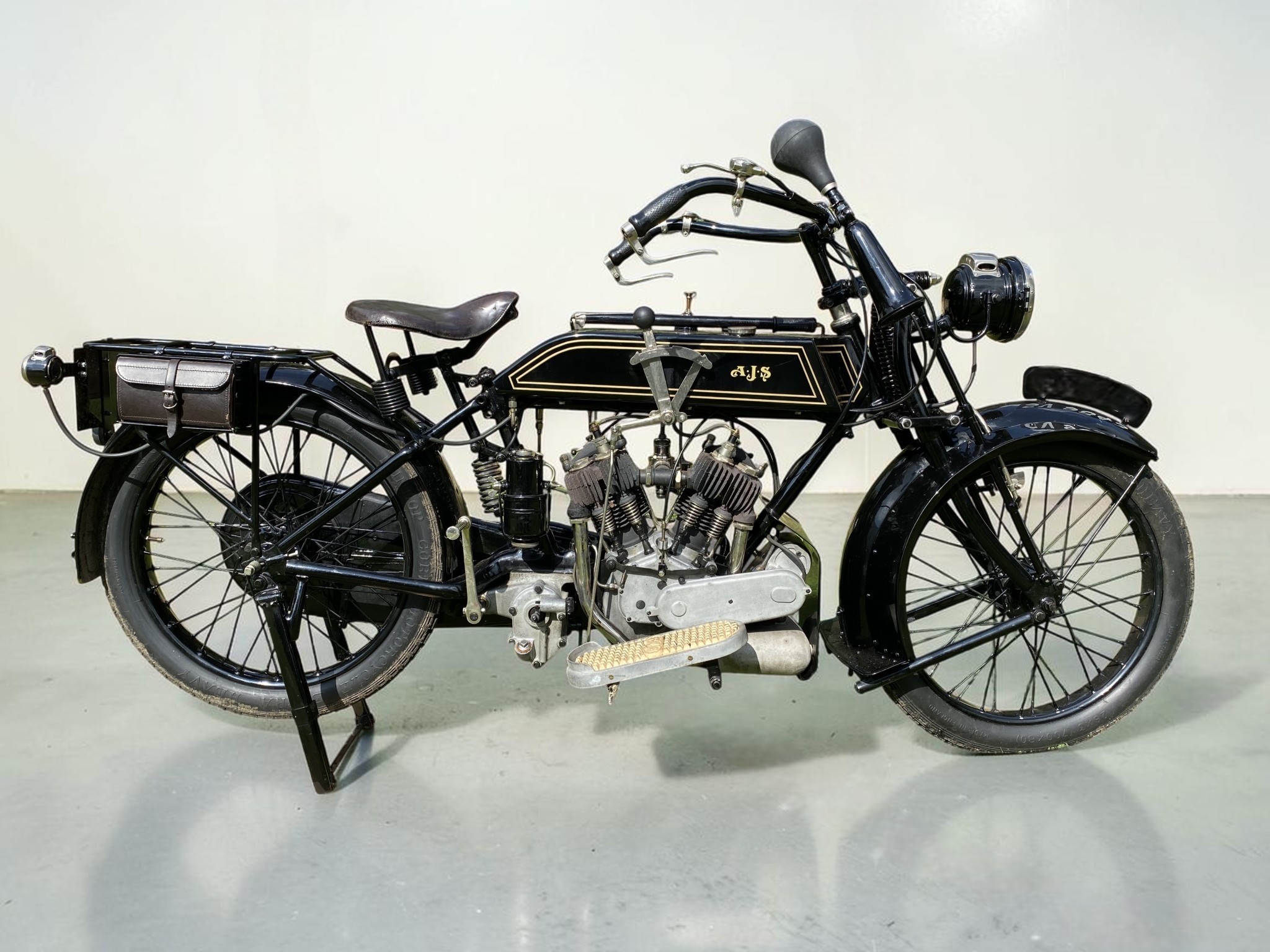


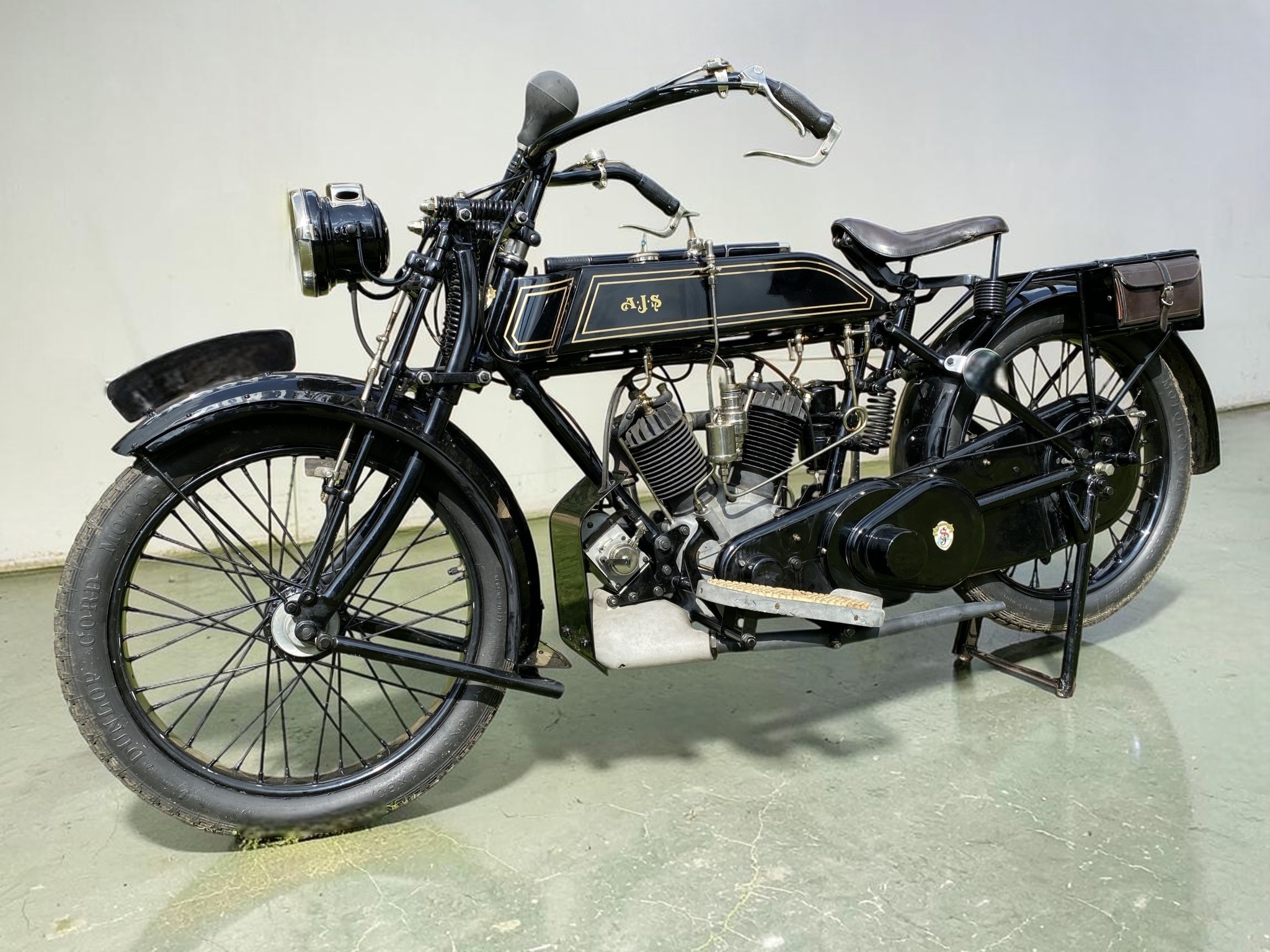




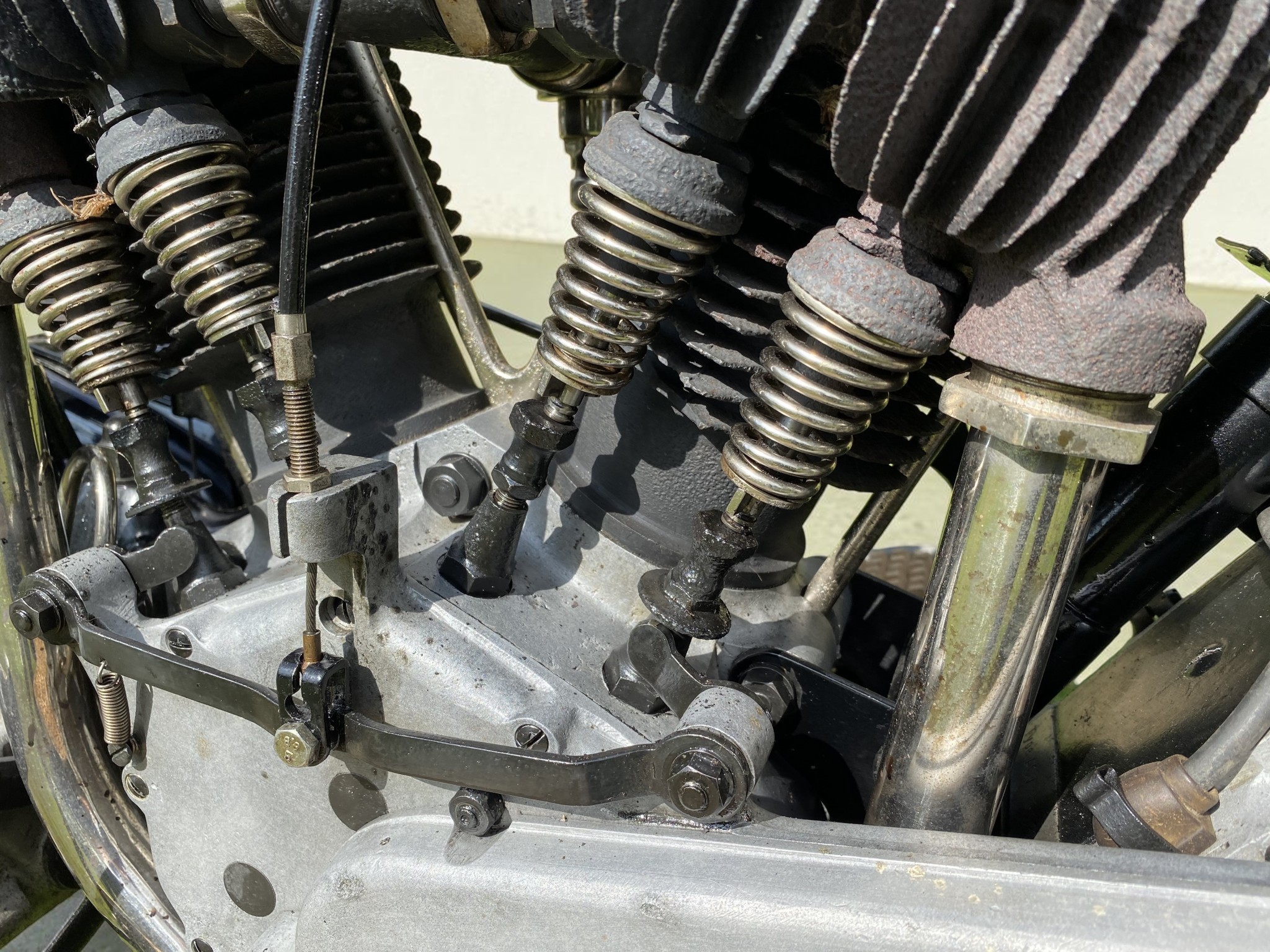

Large in stature, mechanically substantial, and deeply characteristic of early post-war British engineering, the 1920 AJS Model D Vee-Twin represents one of the defining large-capacity motorcycles produced during the formative years of civilian motorcycling. As part of the expanding lineage of AJS vintage motorcycles, the Model D embodied the growing demand for machines capable of combining durability, torque, and long-distance practicality.
At the heart of the motorcycle is a large-capacity 748cc V-twin side-valve four-stroke engine, a configuration favored during the period for its smooth power delivery and mechanical resilience. Designed to produce strong low-end torque rather than outright speed, the engine was particularly well-suited to demanding road conditions and sustained touring use, where reliability remained paramount.
The Vee-Twin architecture defines the visual and structural character of the machine. Broad engine cases, exposed valve mechanisms, and the elongated frame geometry create a distinctly authoritative presence, reflecting an era when motorcycles were engineered with clear emphasis on function, endurance, and serviceability.
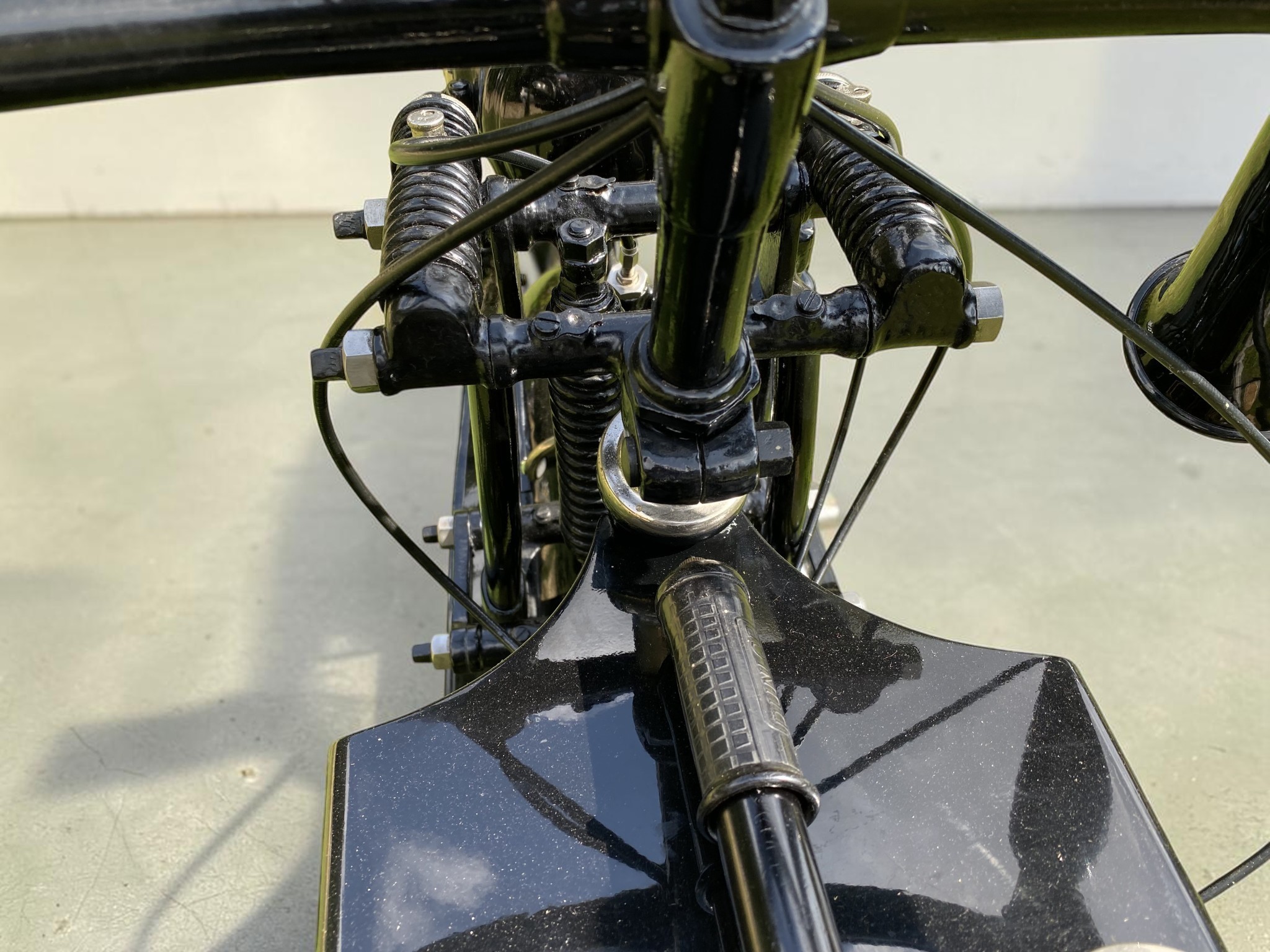
This example has been restored with careful respect for period specification and mechanical authenticity. Attention has been given to preserving original engineering details, finishes, and component integrity, ensuring the motorcycle retains both its historical character and operational coherence.
Increasingly rare in complete and accurately restored condition, the 1920 AJS Model D Vee-Twin stands as an important representation of early British multi-cylinder motorcycle design and the transitional period that followed the First World War.
The years immediately following World War I marked a significant expansion in motorcycle manufacturing across Britain. Companies such as AJS adapted wartime engineering knowledge and production experience to meet the rising civilian demand for reliable transportation, particularly for machines capable of covering longer distances under difficult road conditions.
Within this environment, large-capacity V-twin motorcycles became increasingly prominent. Their smooth-running characteristics and substantial torque output made them especially suitable for touring, commercial duties, and sidecar applications, roles that smaller single-cylinder machines often struggled to fulfill effectively.
The Model D formed part of AJS's broader effort to establish itself within the upper tier of British motorcycle manufacturers. Its engineering reflected contemporary priorities: robust side-valve simplicity, accessible maintenance, and structural durability capable of withstanding prolonged everyday use.
As motorcycle technology evolved throughout the 1920s and 1930s, many early V-twin machines were either modified extensively or discarded as newer designs emerged. Consequently, surviving examples of the 1920 Model D Vee-Twin are now comparatively scarce, particularly those retaining historically correct mechanical and cycle components.
Today, the AJS Model D Vee-Twin is appreciated not only for its mechanical presence and engineering significance, but also as a tangible link to a foundational period in British motorcycling history - an era defined by experimentation, resilience, and the establishment of enduring engineering traditions.
The Vintage Motorcycles presents a curated selection of historically significant British vintage motorcycles, representing one of the most influential engineering traditions in European motorcycling history. From early single-cylinder machines developed during the formative years of industrial mobility to highly refined pre-war and post-war performance motorcycles, British manufacturers played a defining role in shaping both road and racing motorcycle development.
This collection includes machines from landmark marques such as AJS, Triumph, Vincent, Sunbeam, Matchless, BSA, Norton, Douglas, Royal Enfield , and other historically important British motorcycle manufacturers, each contributing to advancements in engine architecture, chassis design, and competitive performance engineering. These motorcycles are best understood within the broader framework of pre-war motorcycle engineering (1900-1939), as well as the subsequent evolution seen in post-war motorcycle development, where British engineering became closely associated with racing success and mechanical refinement.
Each motorcycle within our collection is sourced based on historical provenance, structural originality, and mechanical integrity, ensuring alignment with museum-grade preservation standards. For collectors seeking acquisition opportunities, available machines can be explored through our global vintage motorcycle inventory, supported by a fully insured international shipping service.
British motorcycle engineering is defined by its strong association with performance development, mechanical durability, and competition-driven innovation. Manufacturers such as AJS contributed significantly to the advancement of single-cylinder performance engines, overhead valve configurations, and racing-oriented chassis design, particularly during the interwar and post-war periods.
From early road-going machines to competition-proven racing motorcycles, British engineering reflects a continuous evolution shaped by endurance racing, circuit competition, and the pursuit of mechanical efficiency. This legacy positions British motorcycles as a central reference point within the broader study of global motorcycle engineering history.
Key Highlights
Collector Assurance
All enquiries handled with discretion. We typically respond within 6 hours.
Choose the payment method that is most convenient for you. We accept widely used international payment methods as well as, where available, local bank transfer options that allow you to pay like a domestic transaction. Full payment instructions are provided for your specific purchase.
Direct international bank wire transfer is available for motorcycle purchases and export transactions.
Credit card payments can be arranged through Wise.com, subject to the applicable payment and processing conditions.
PayPal is accepted. A 5% PayPal processing fee applies to the transaction.