
The Vintage Motorcycles
Specialists in antique, classic, veteran and vintage motorcycles.
Specialists in antique, classic, veteran and vintage motorcycles.
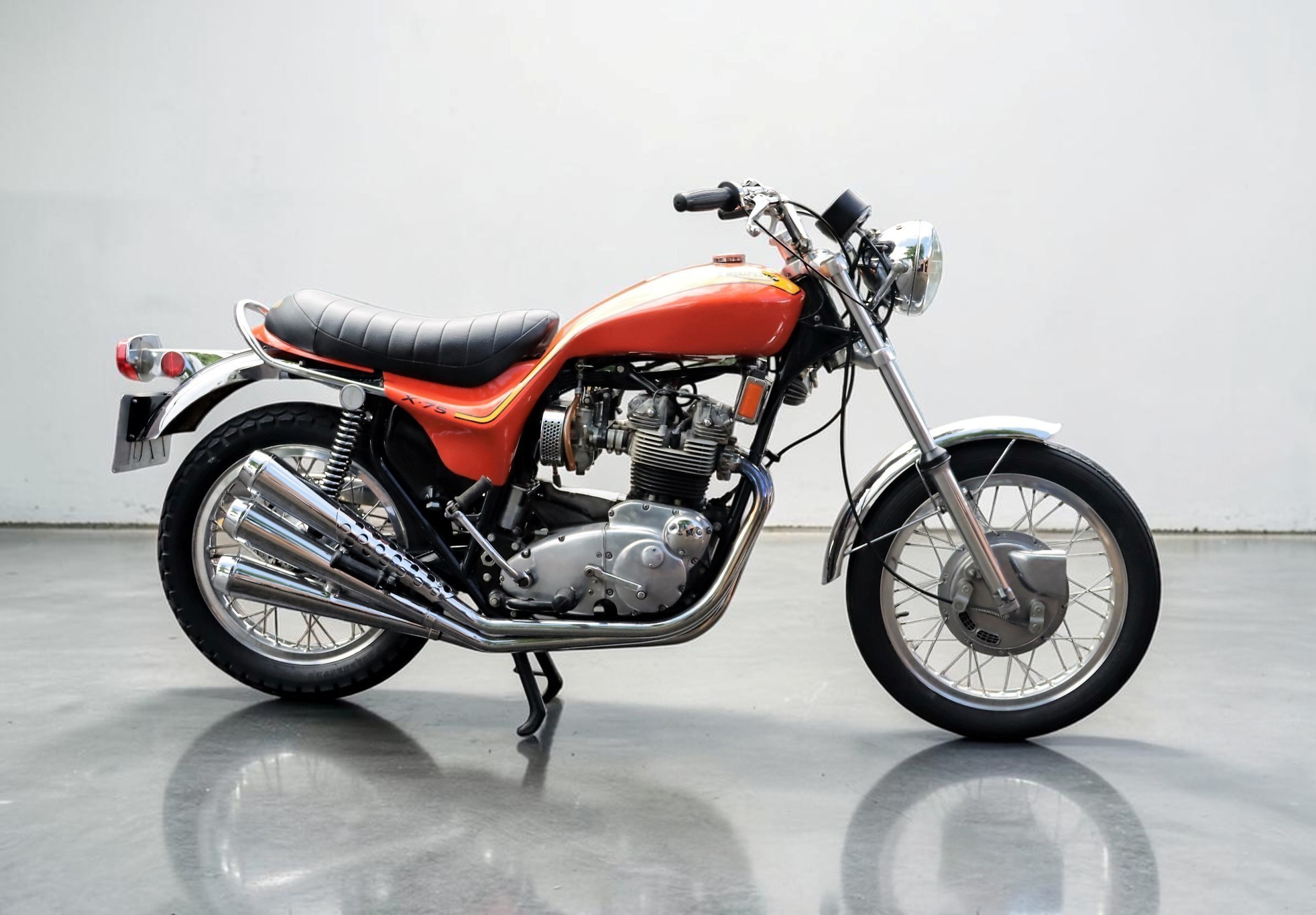
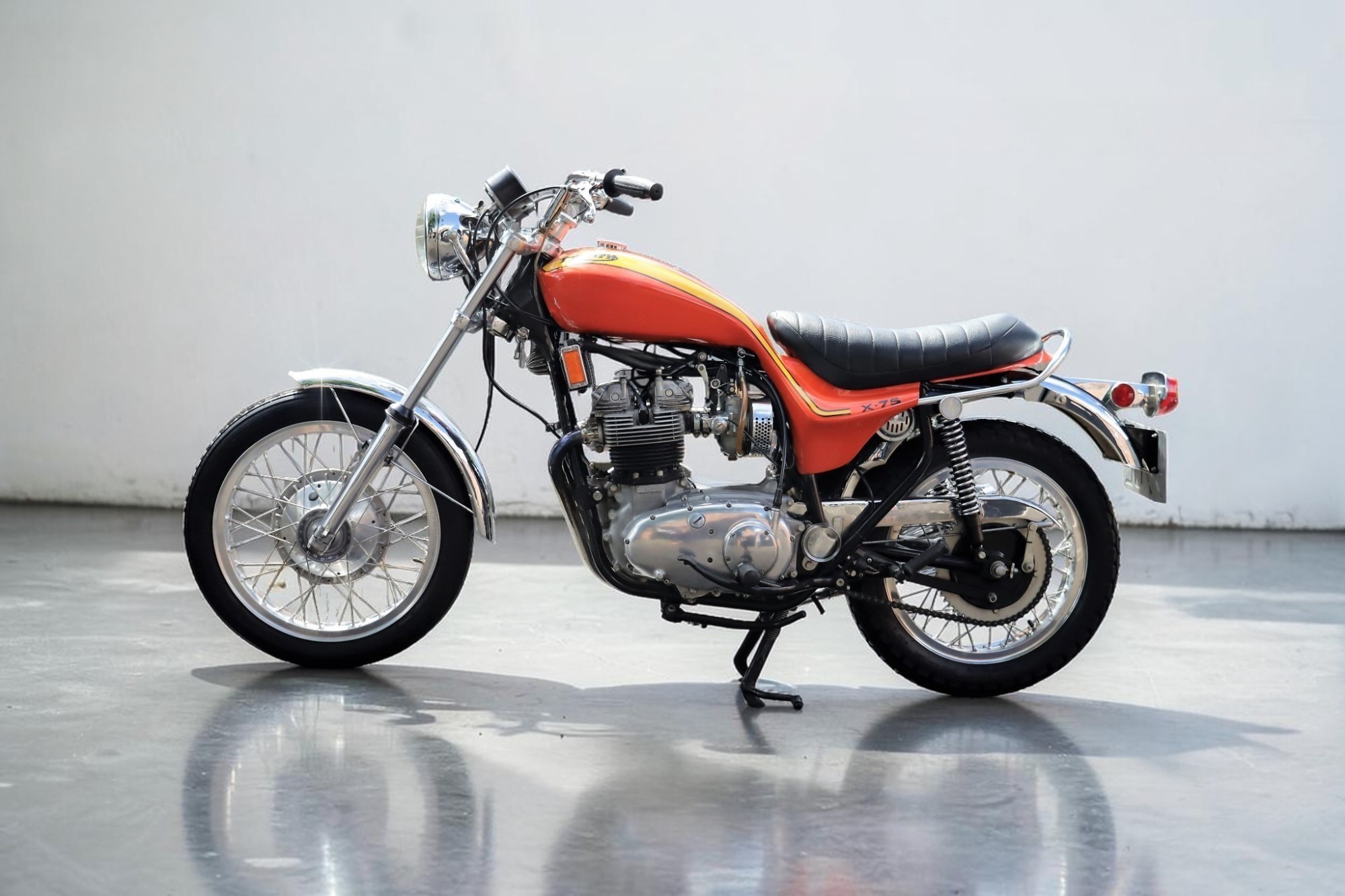
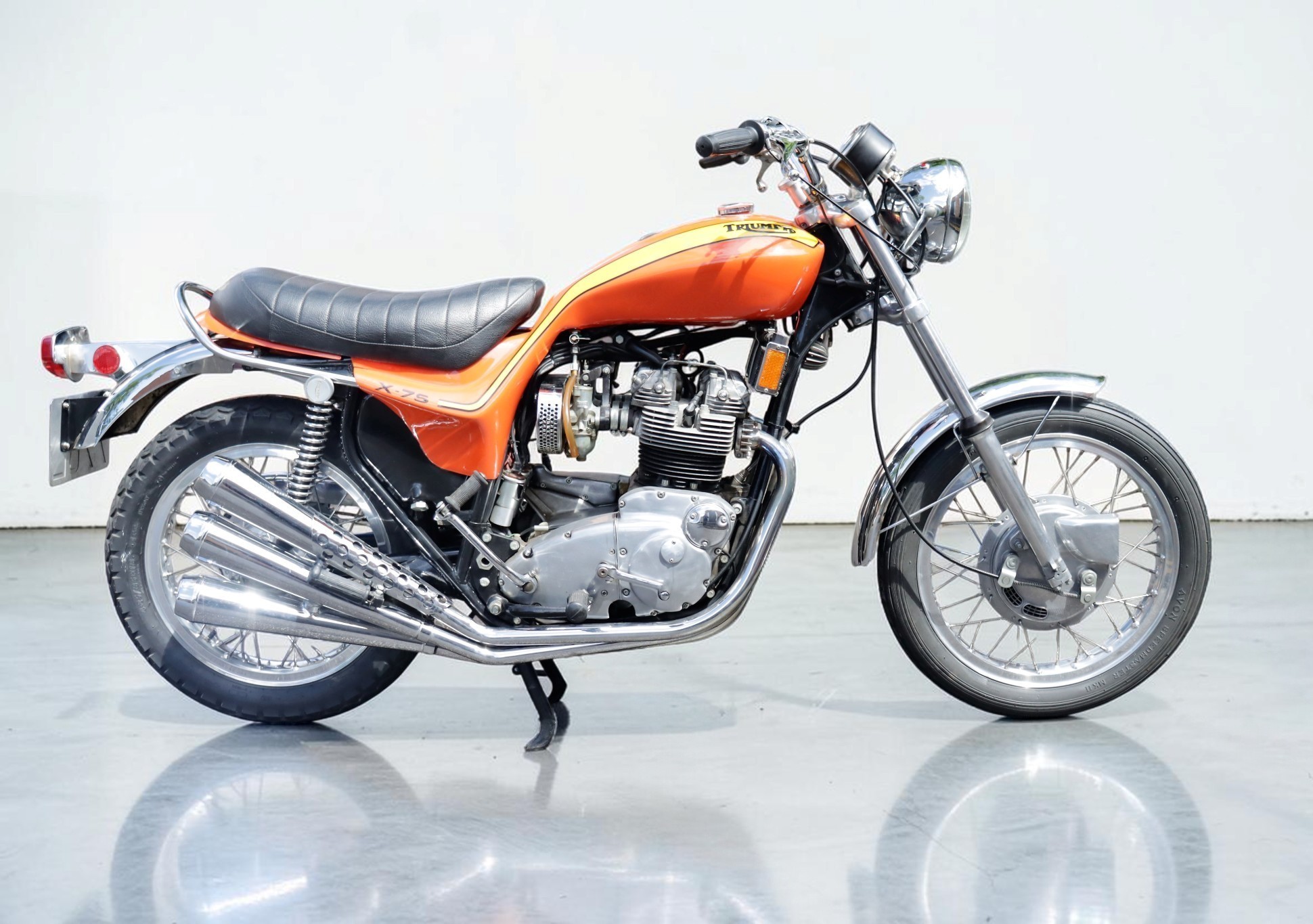
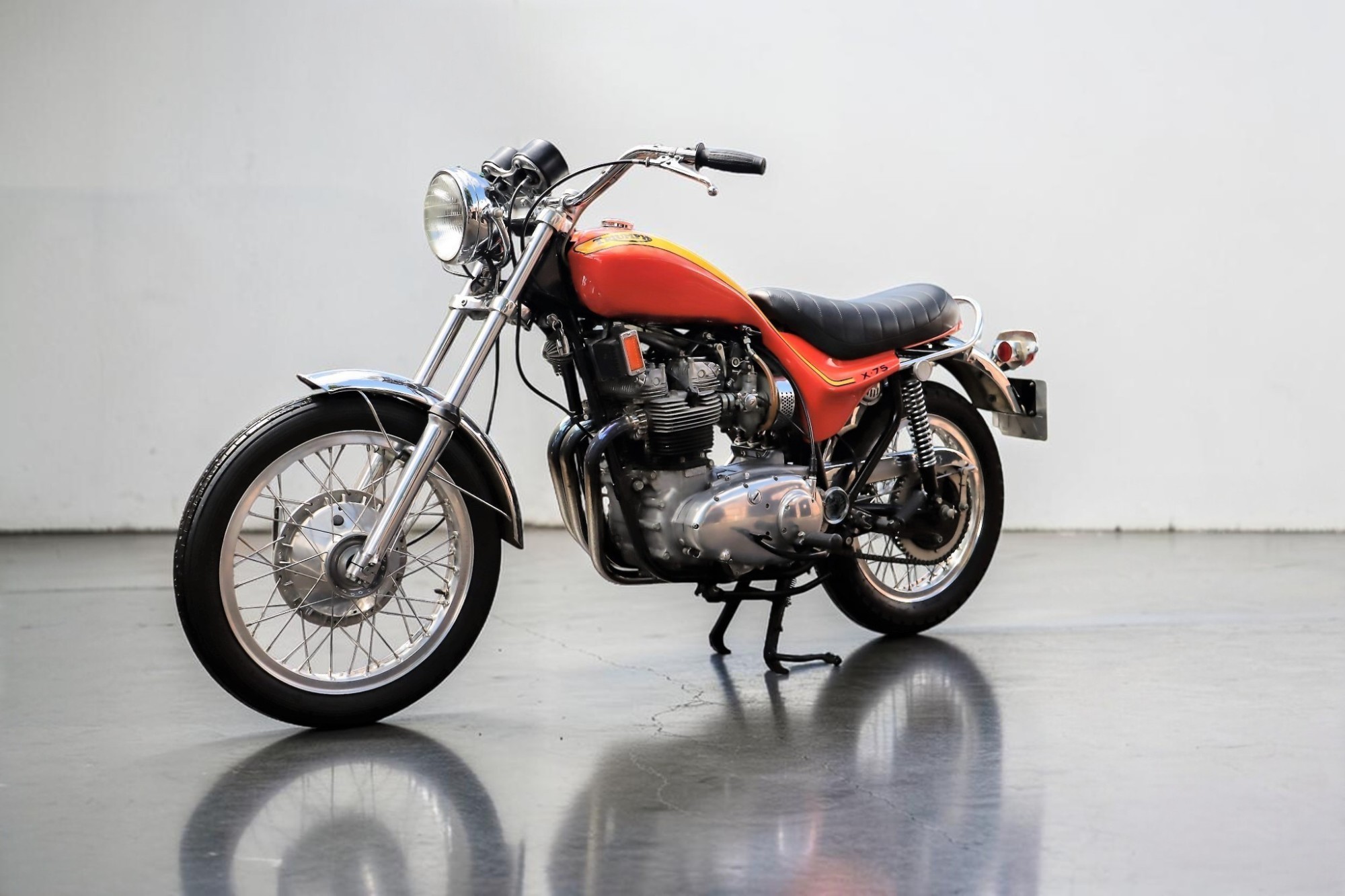
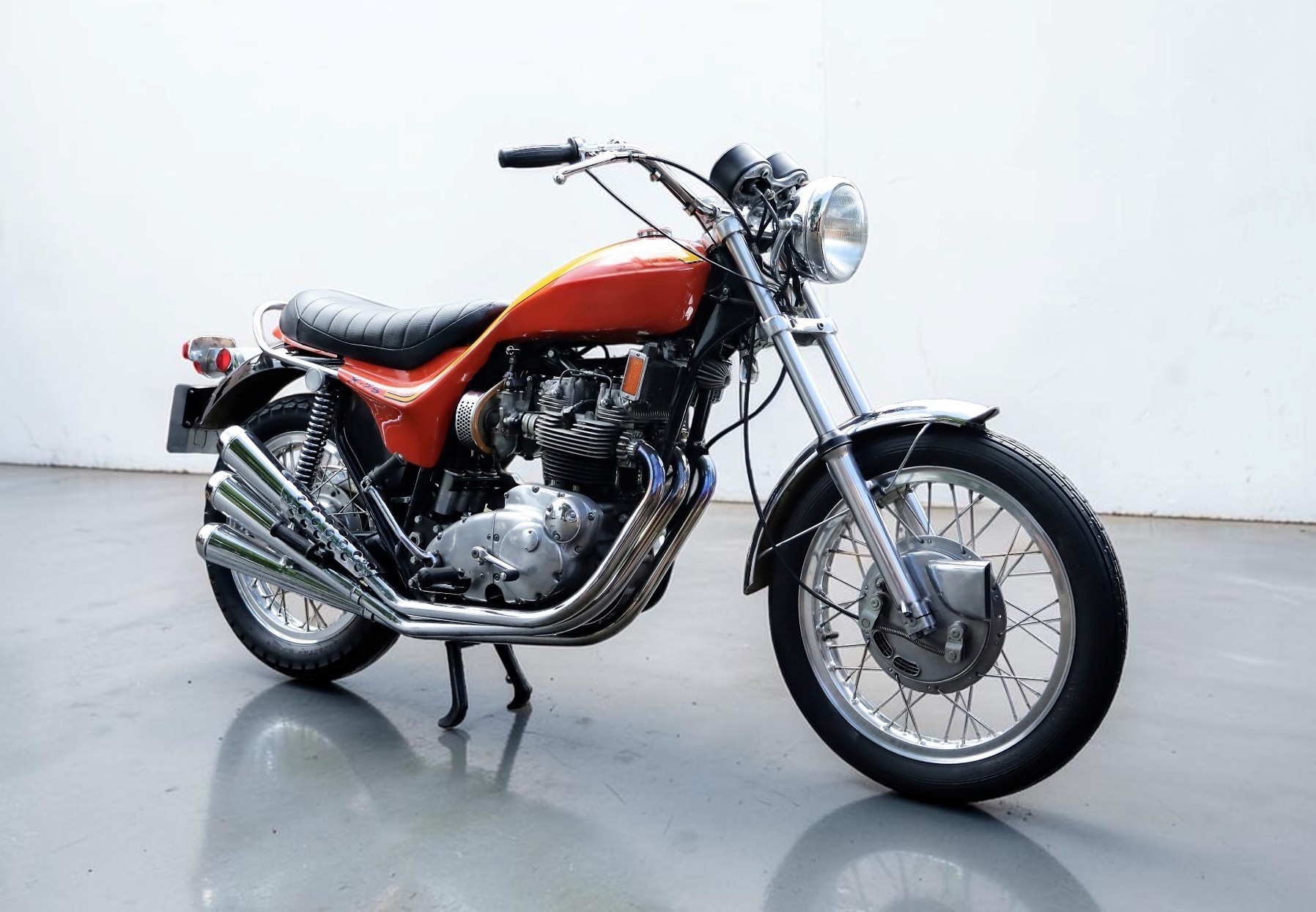
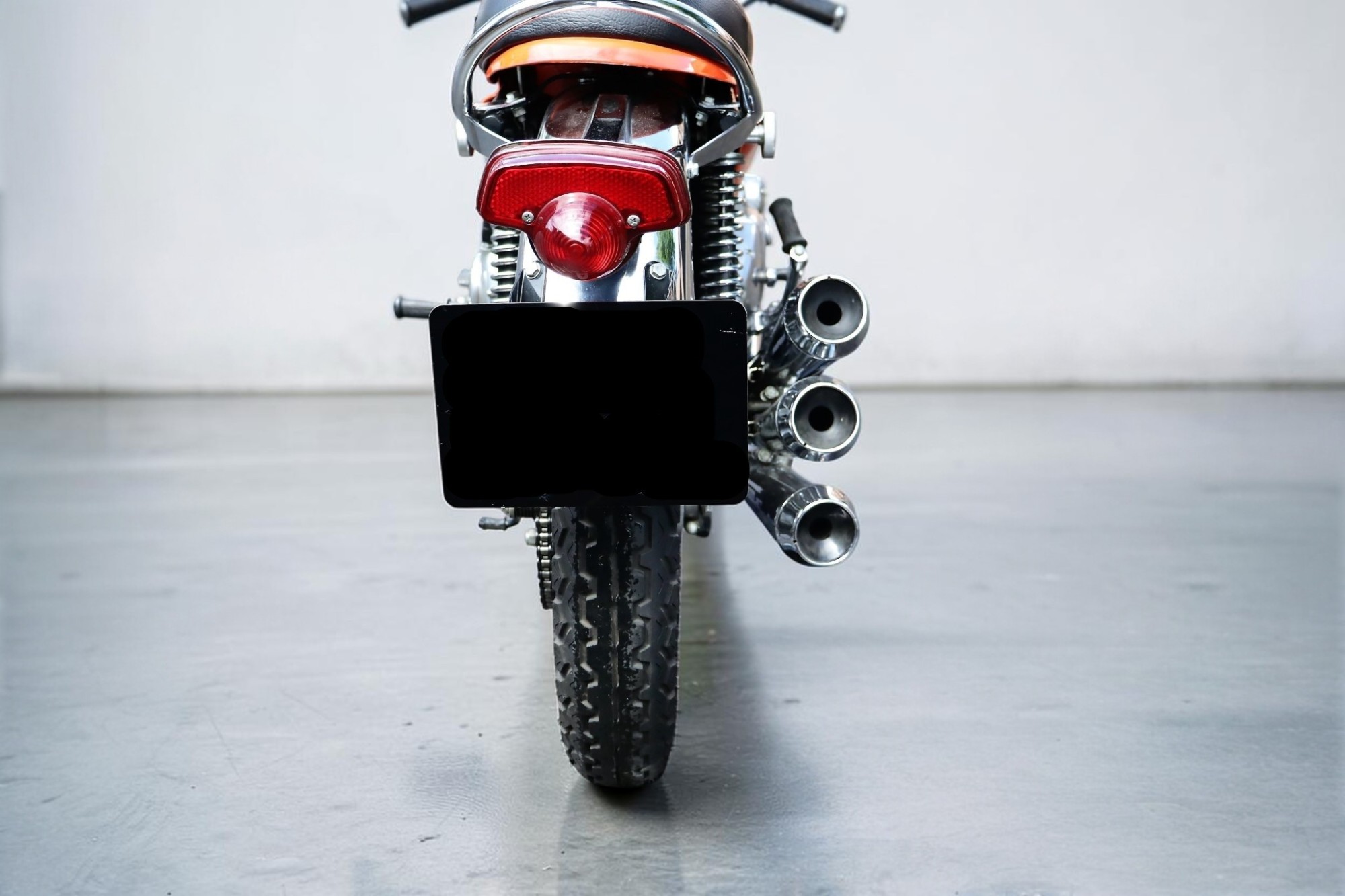
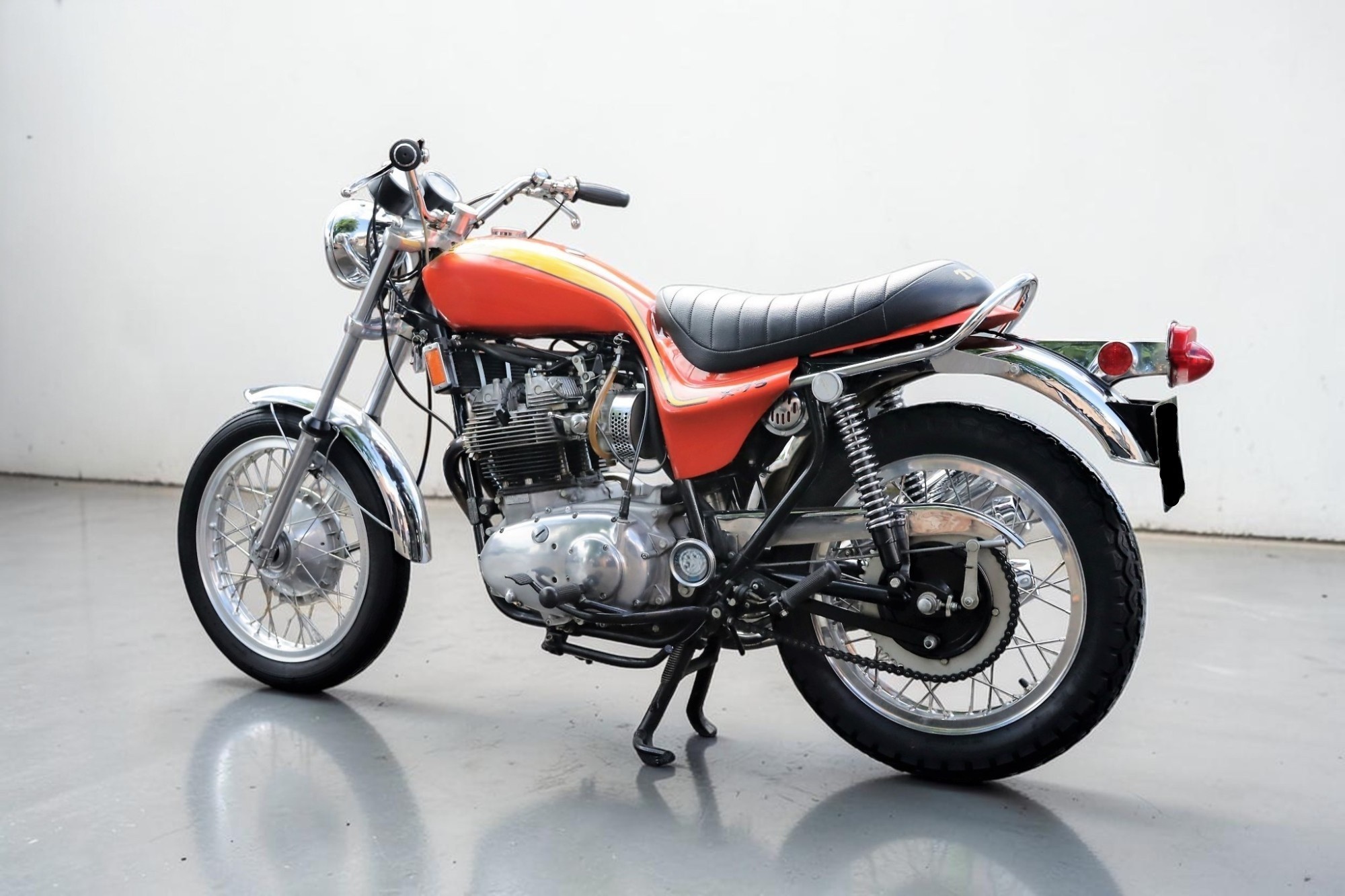
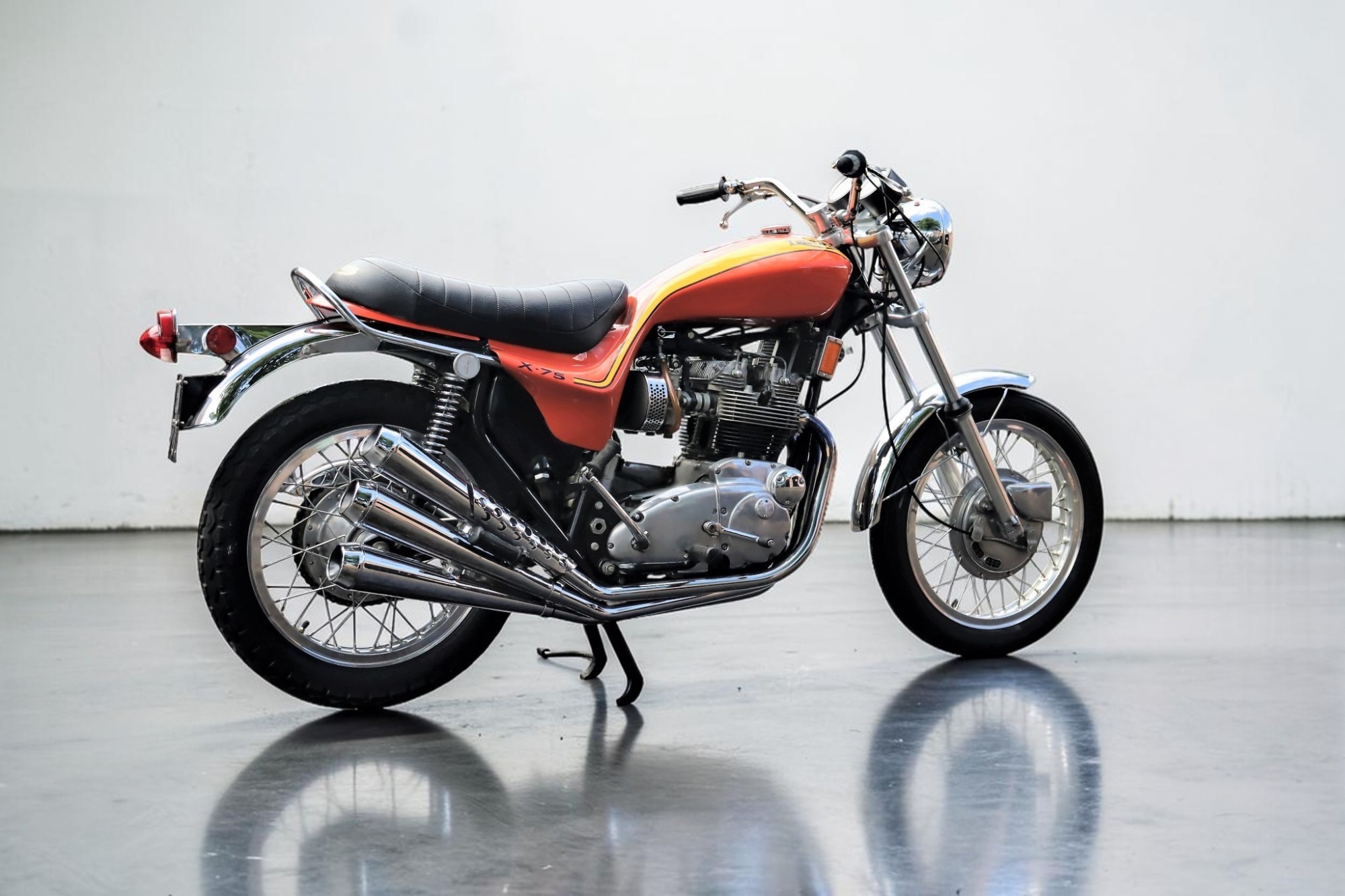
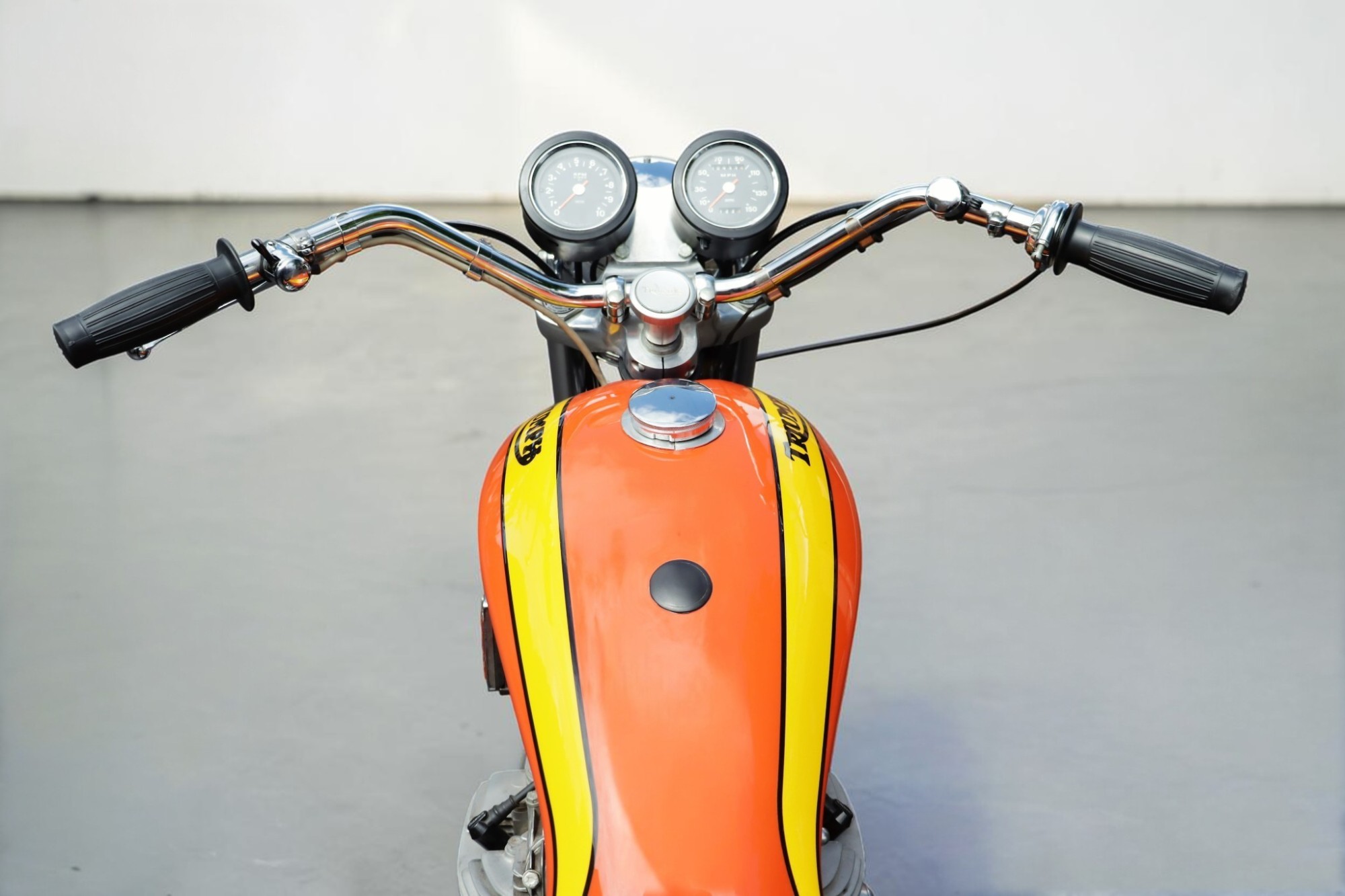
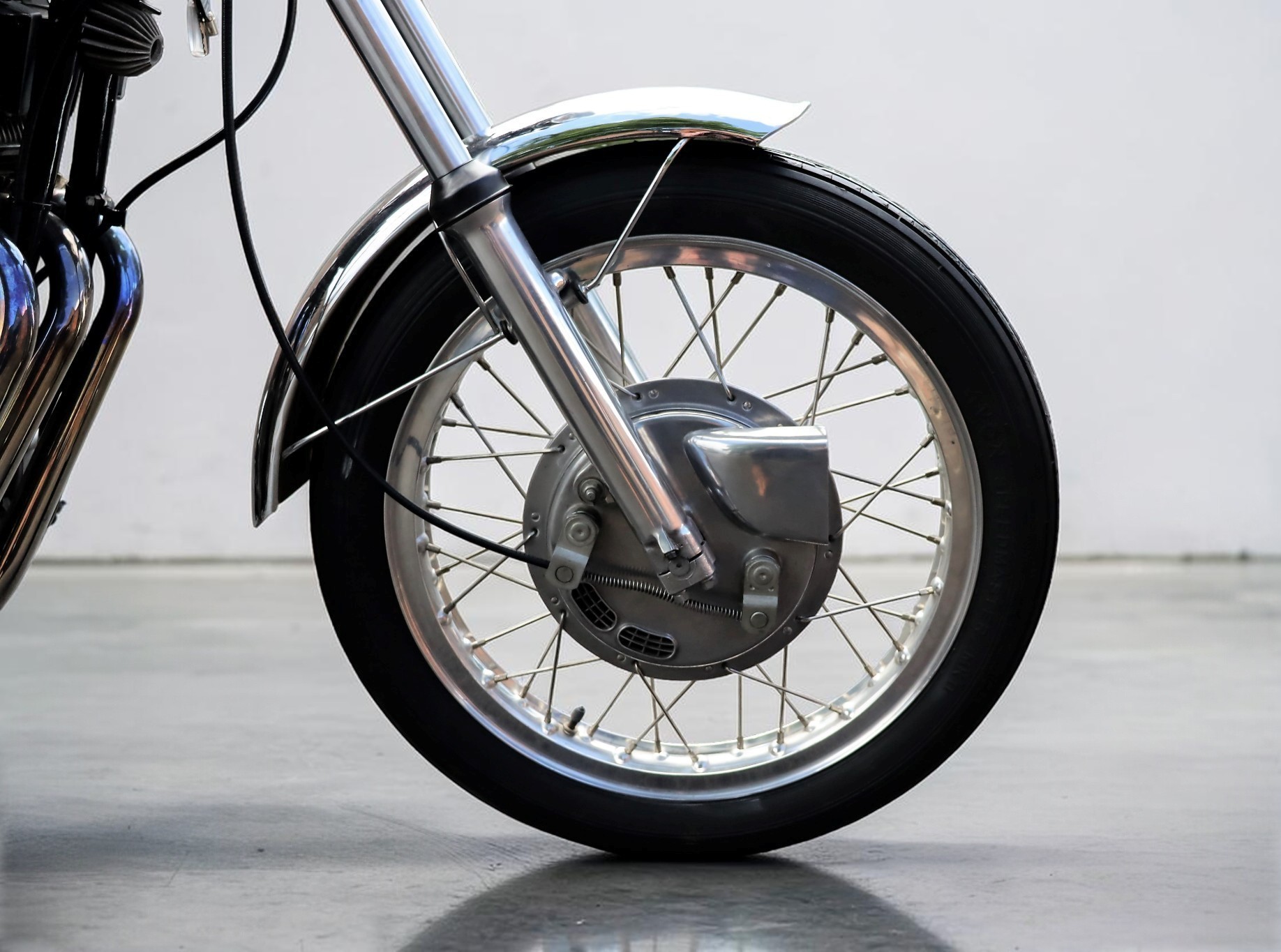
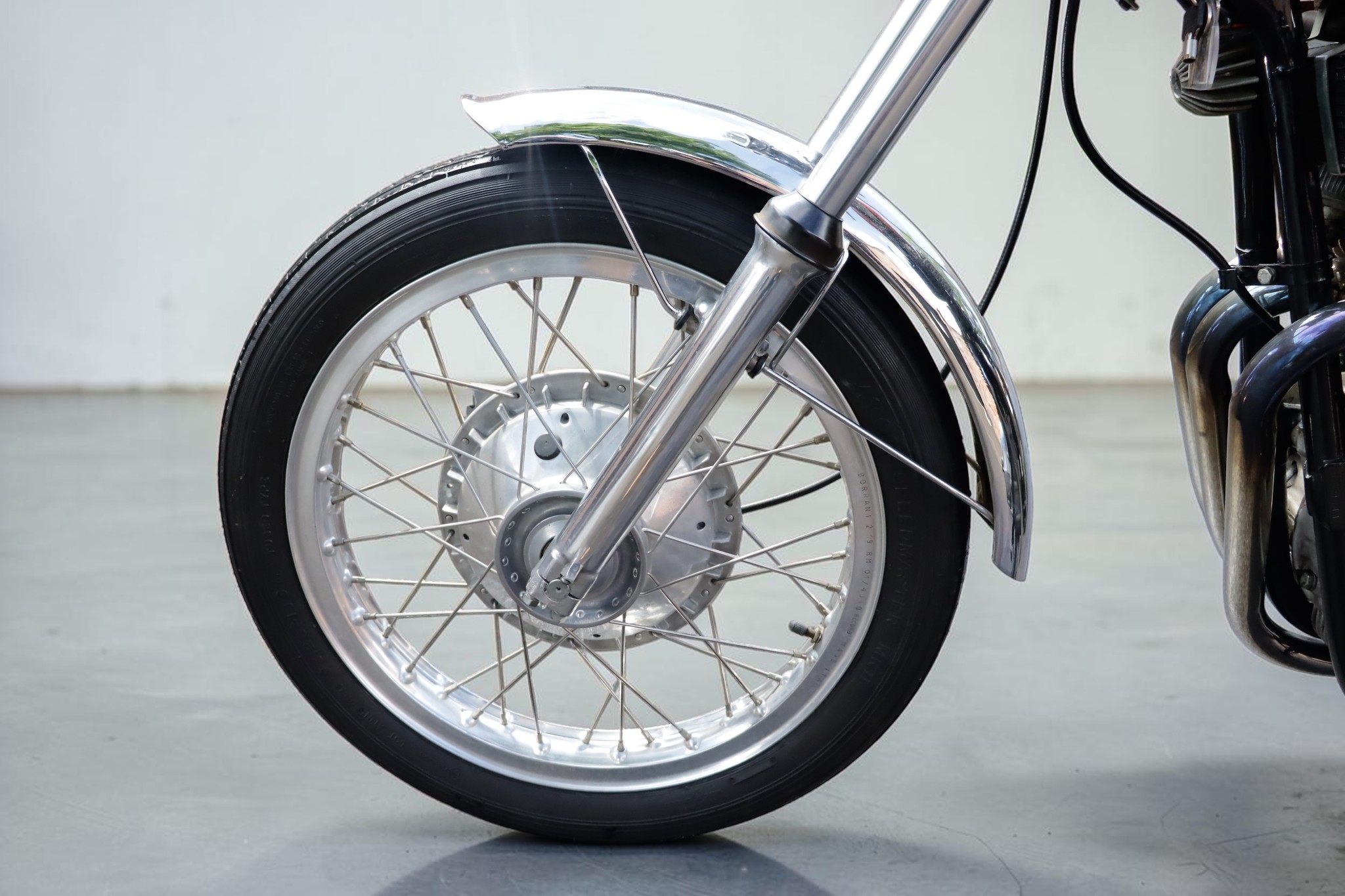
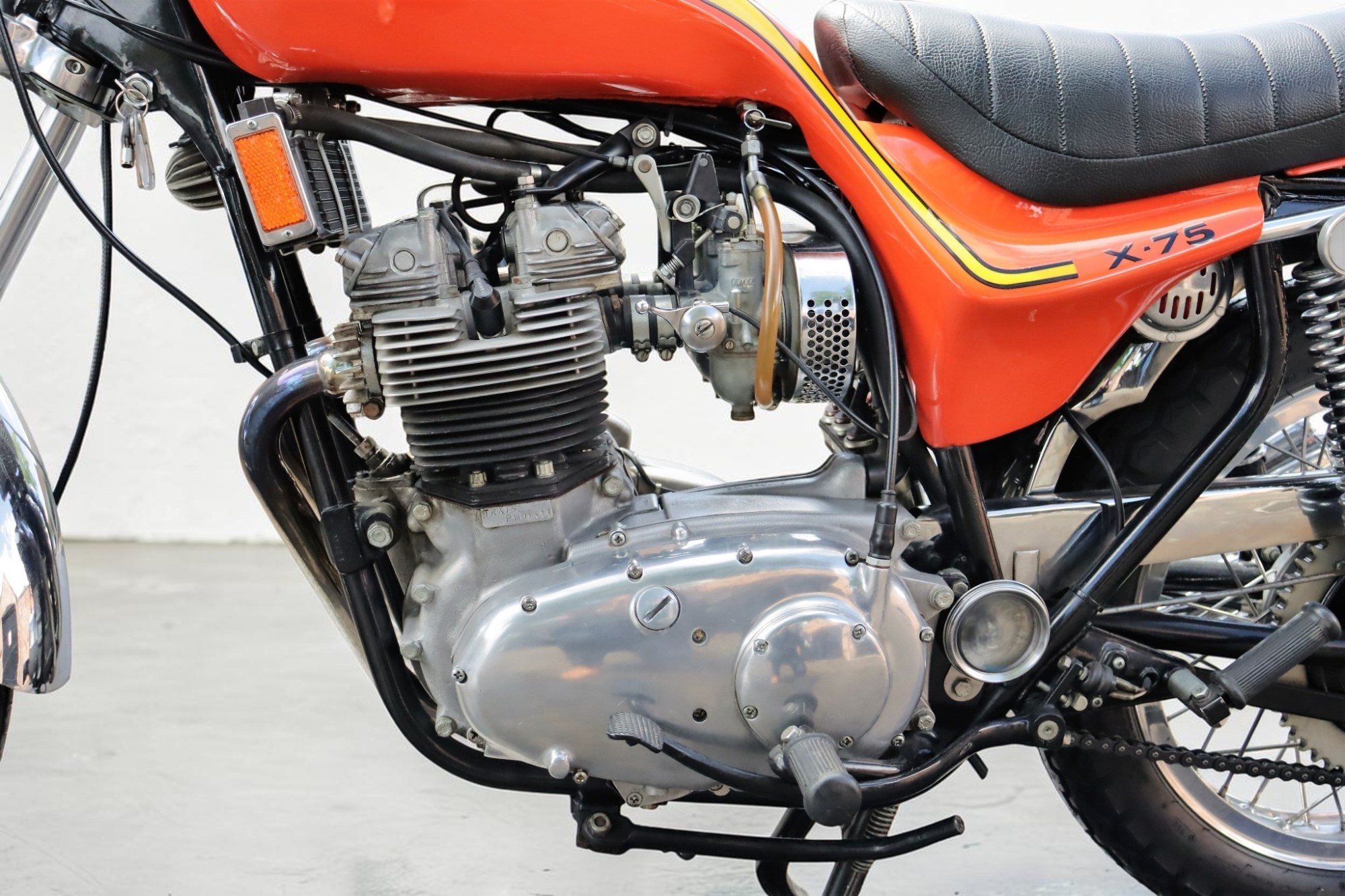
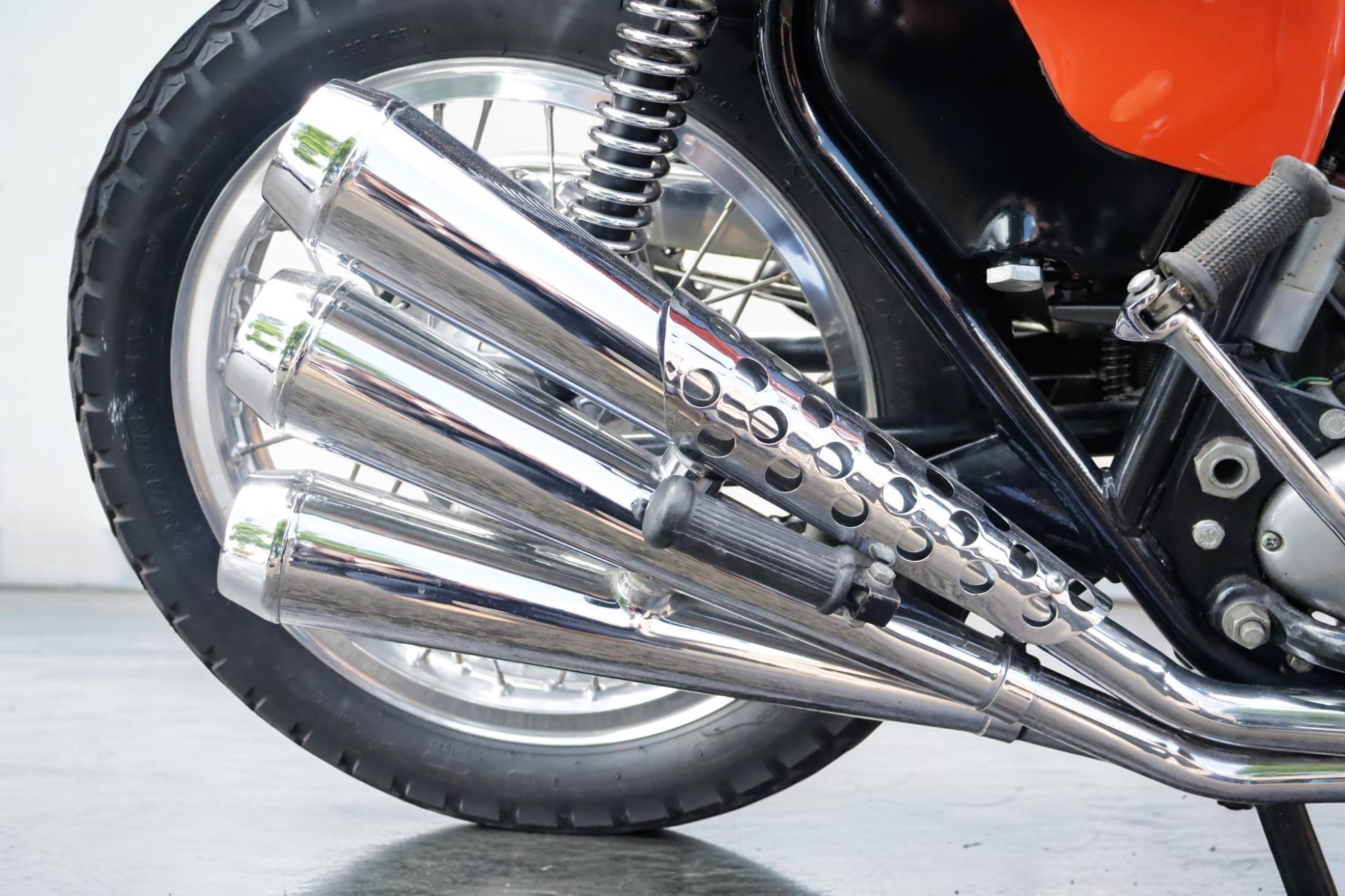
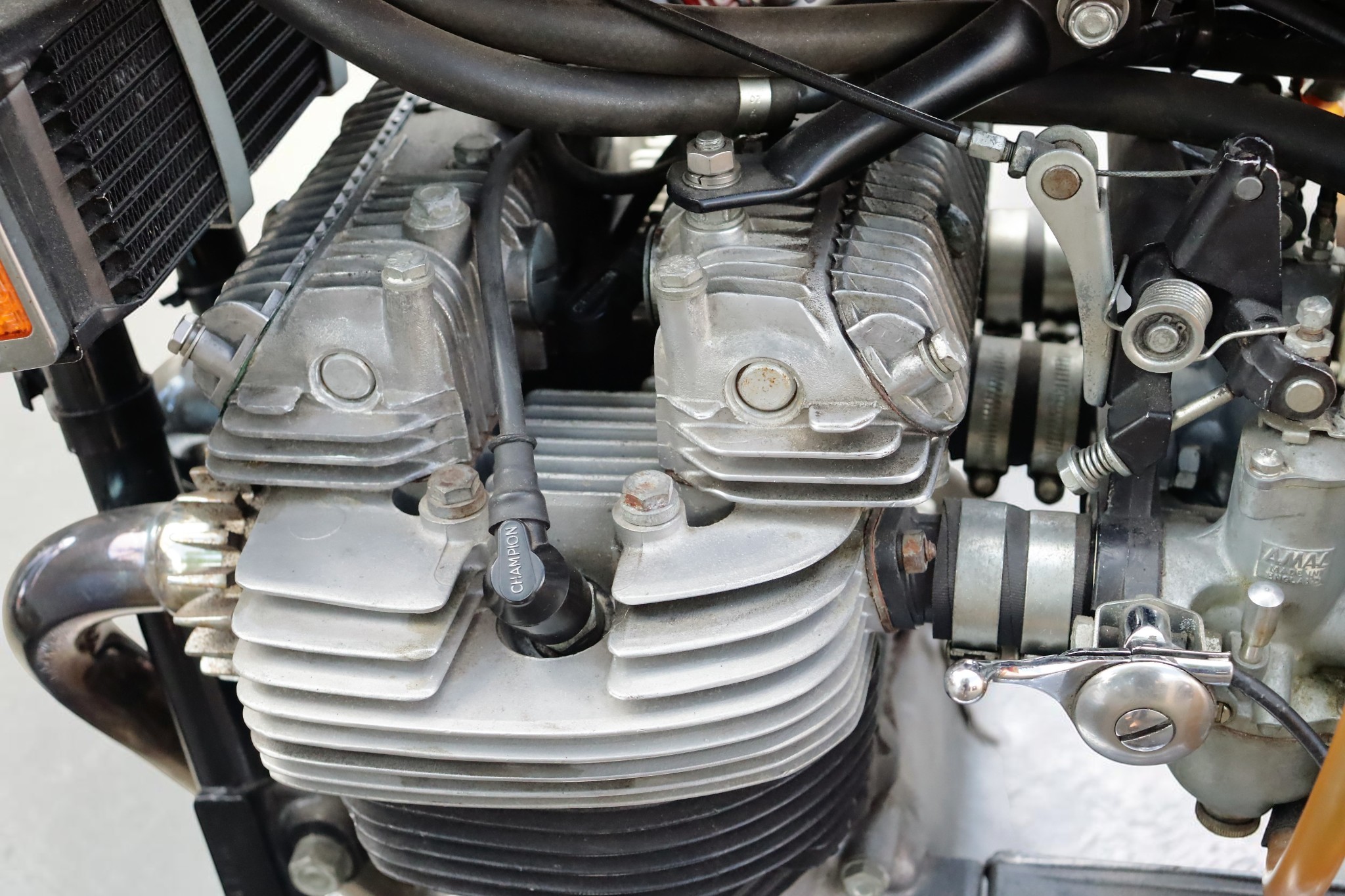
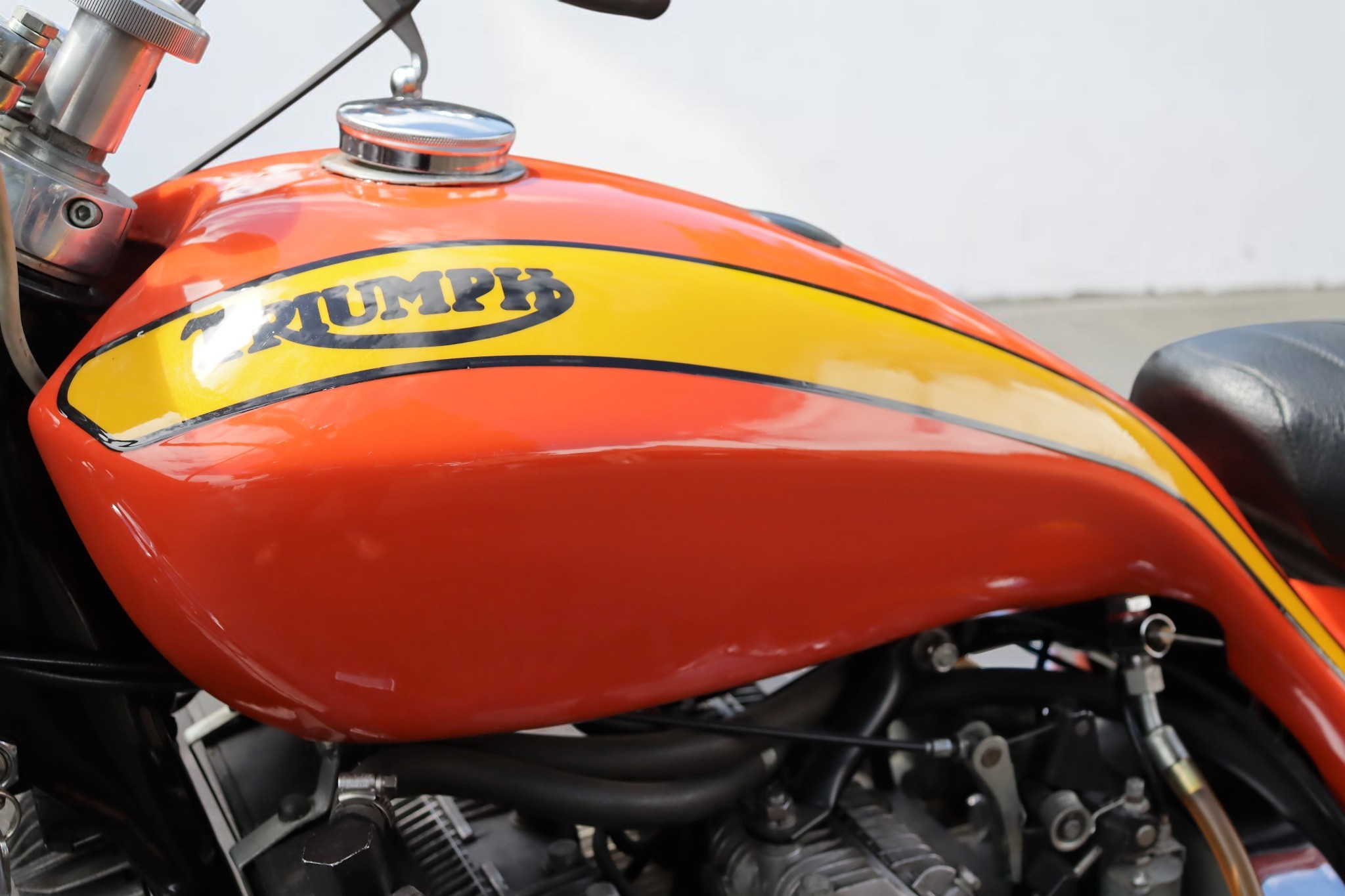
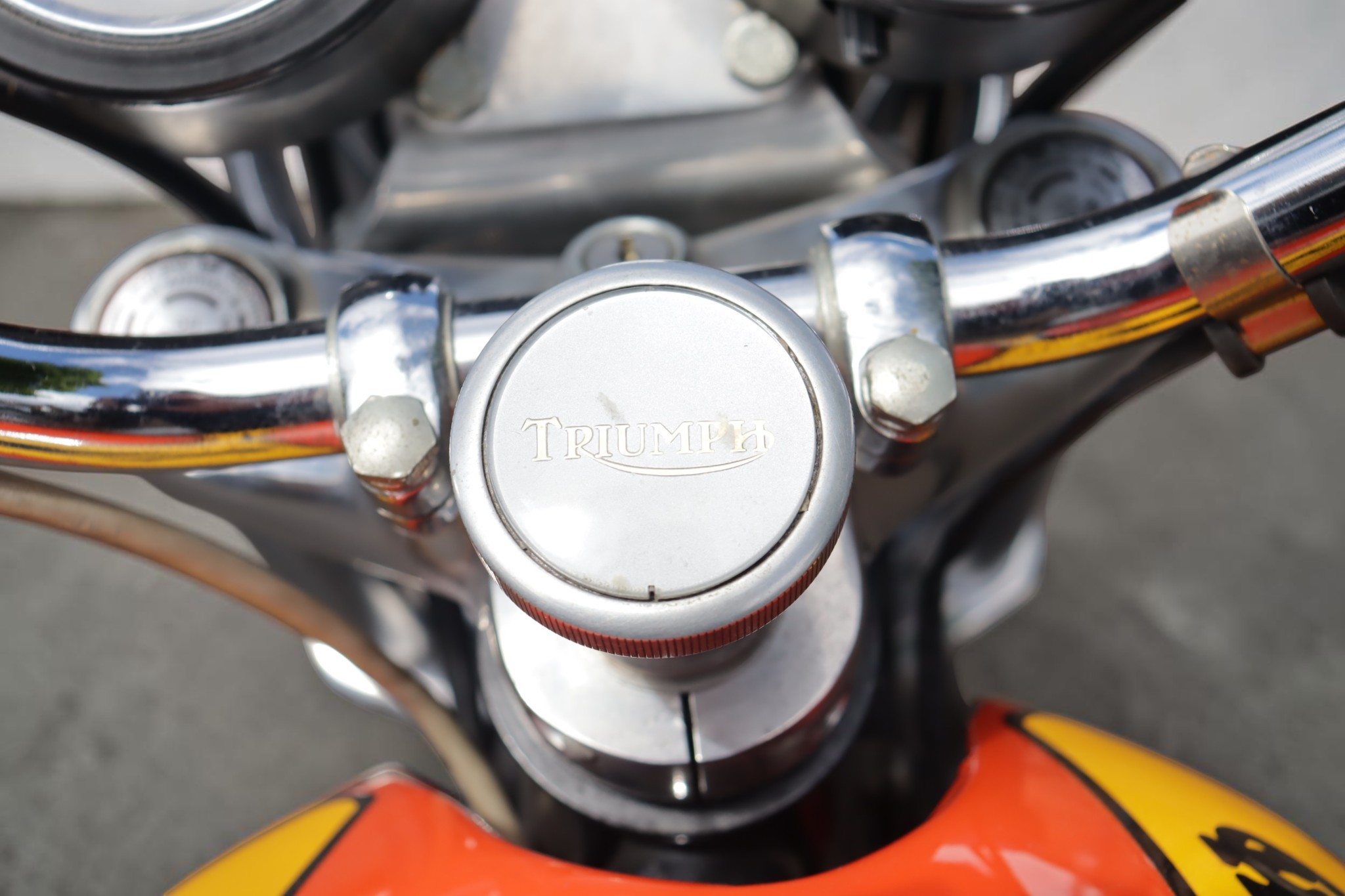
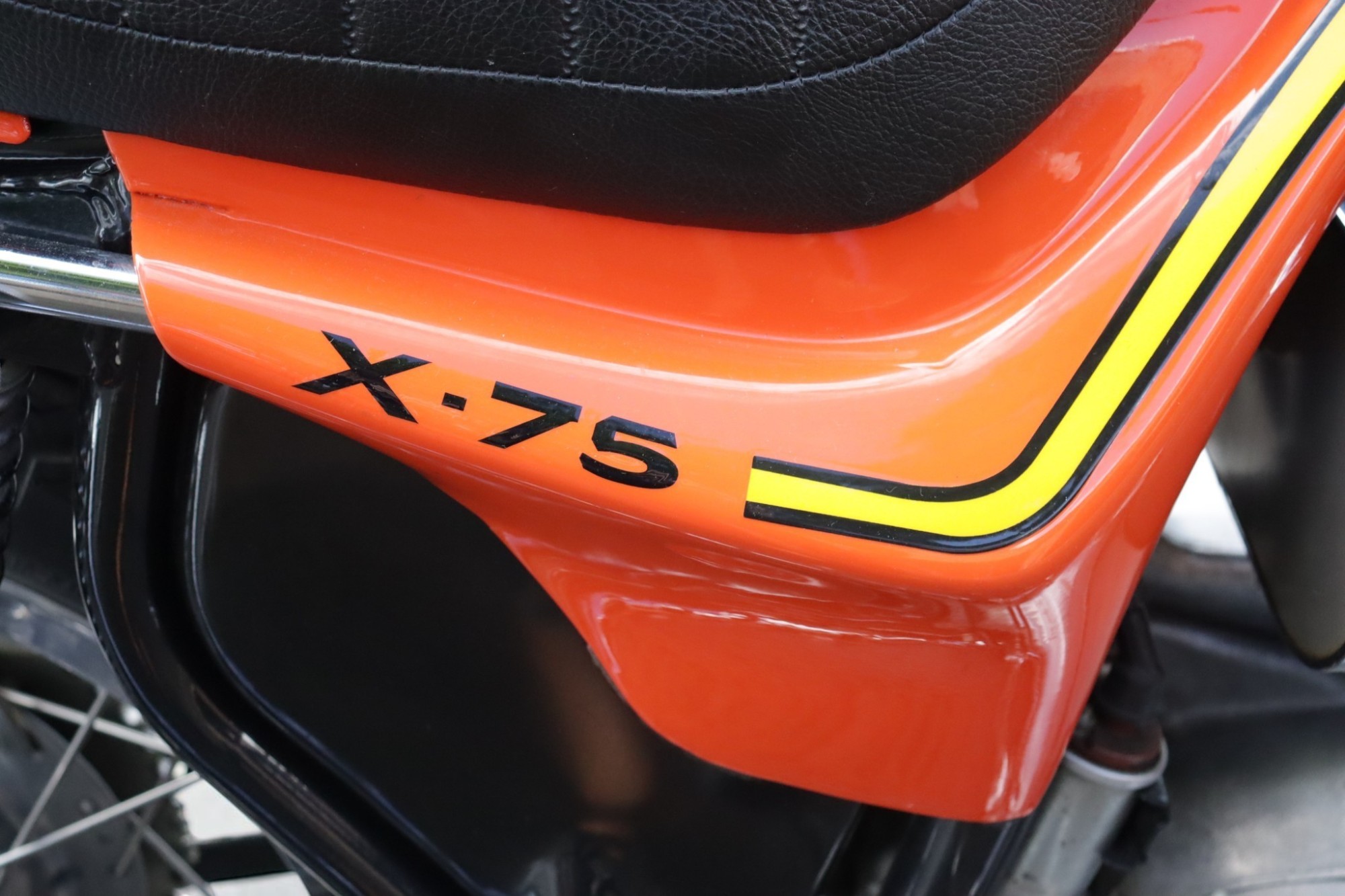
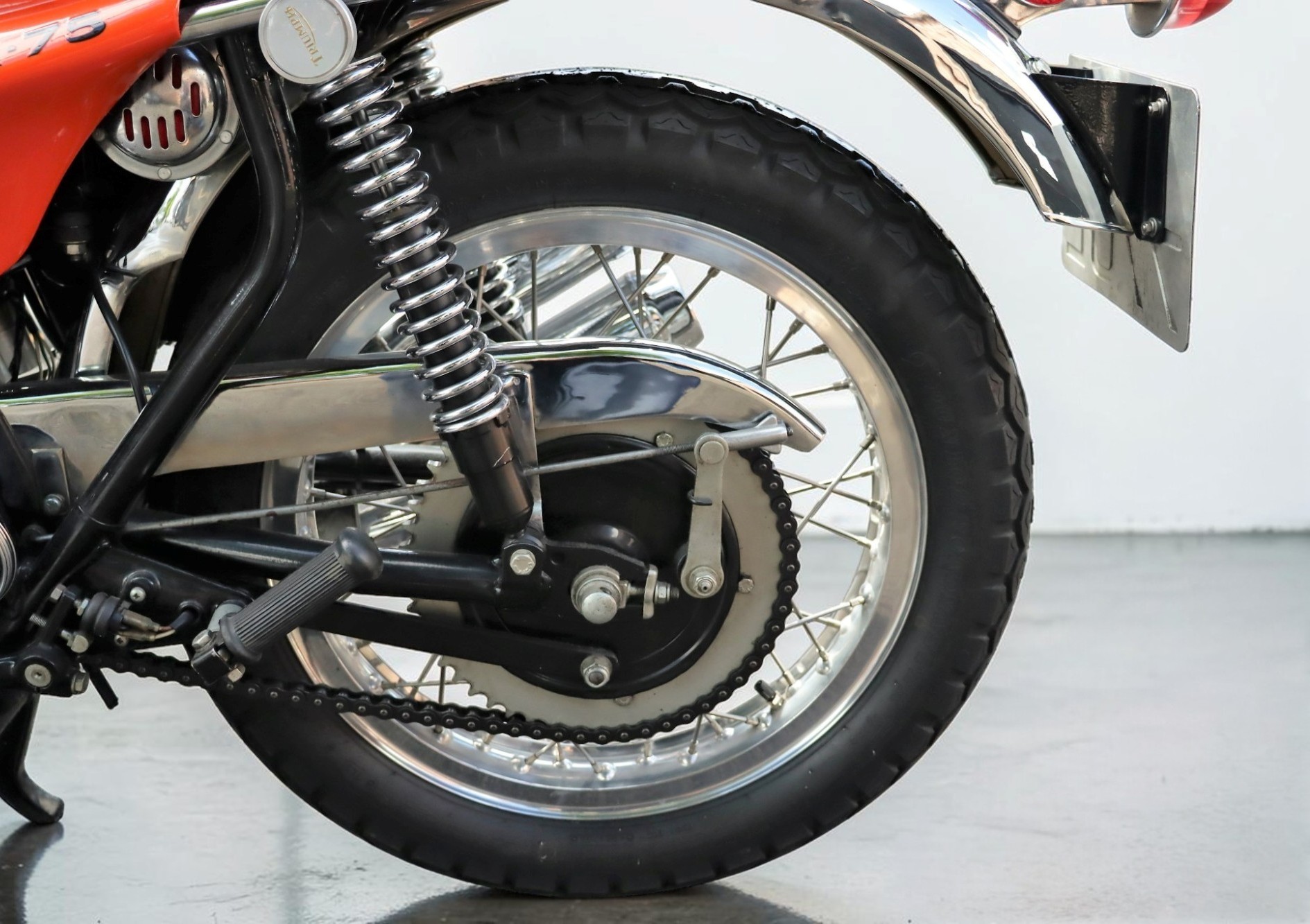
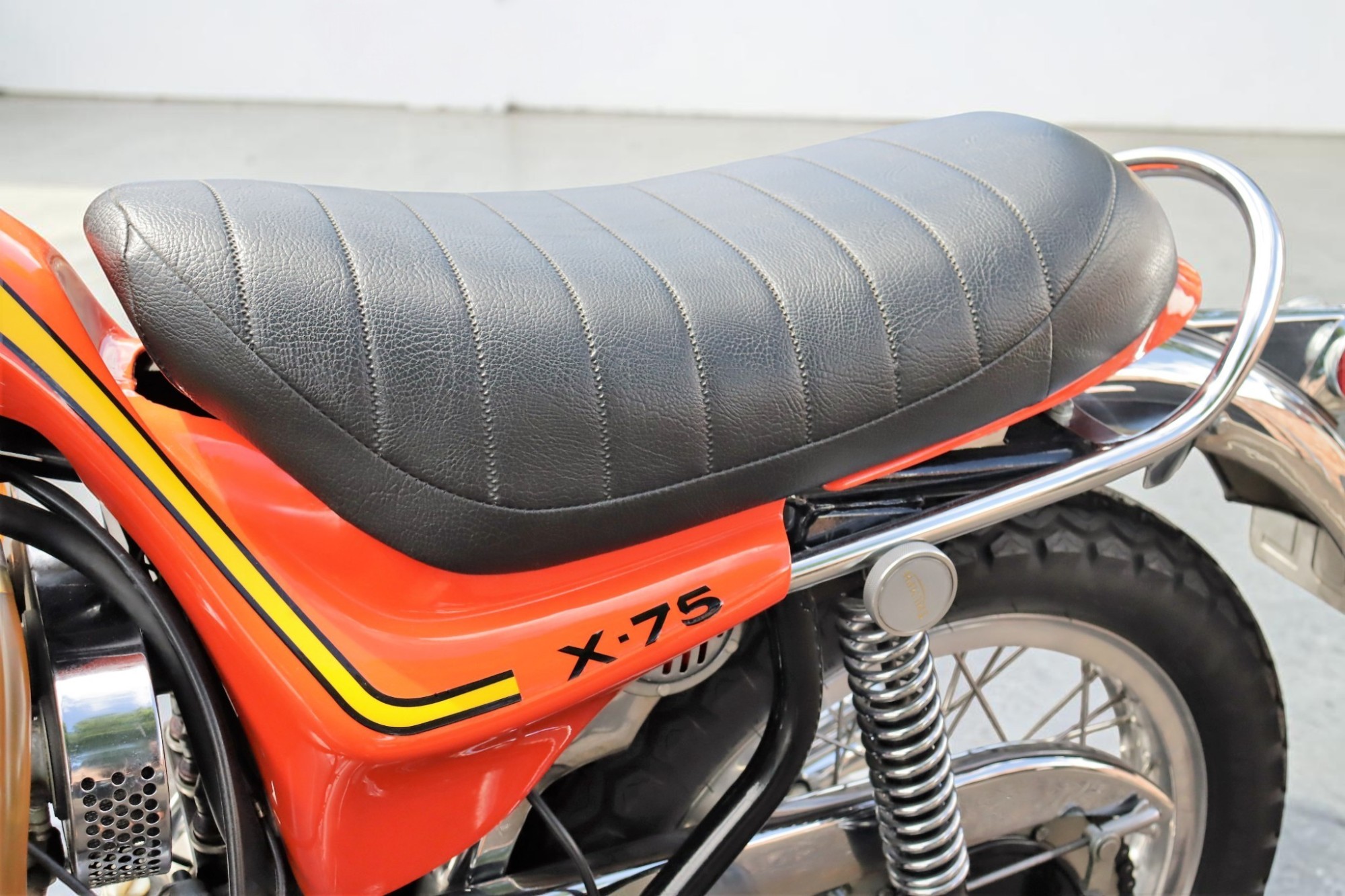
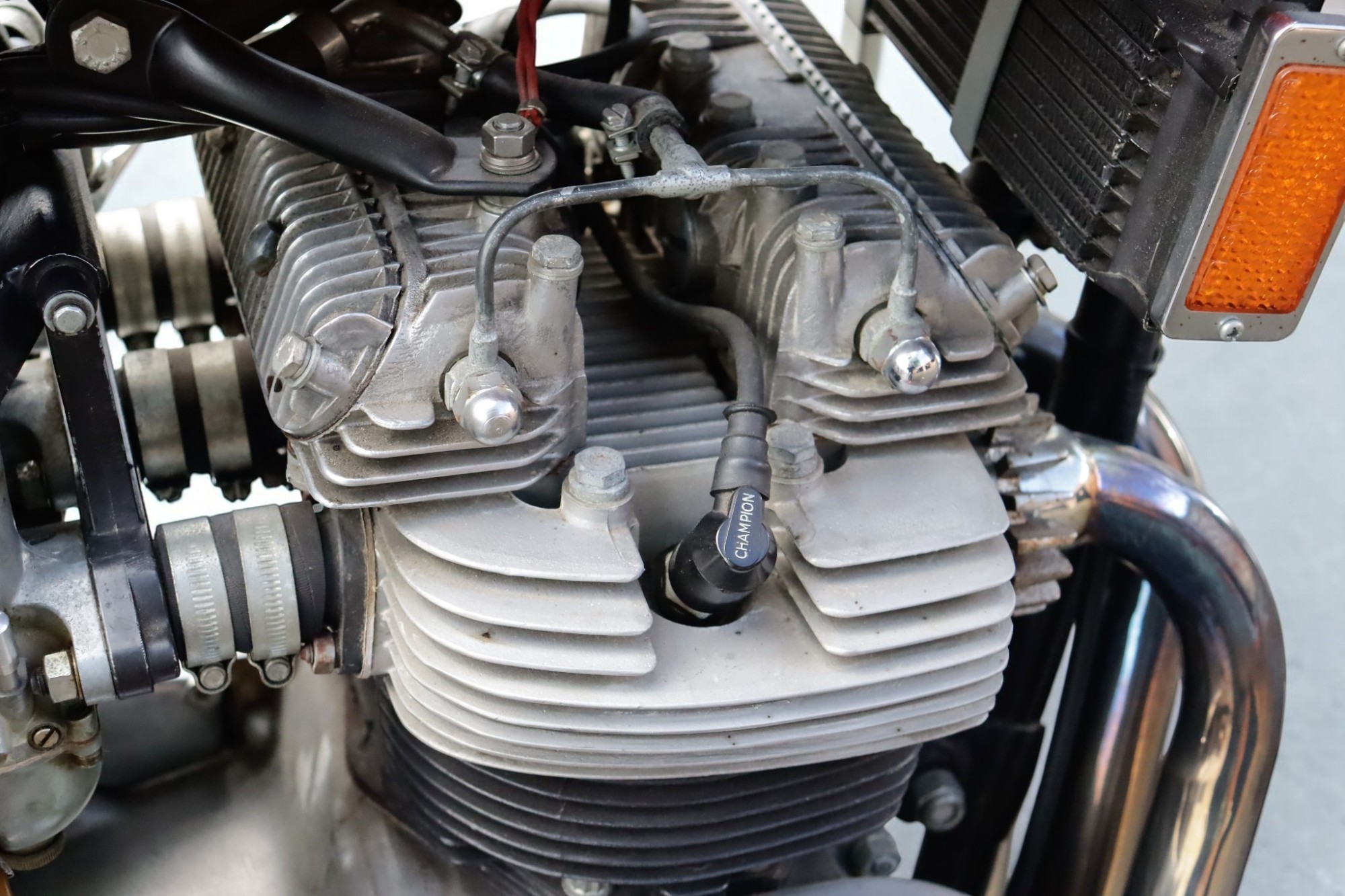
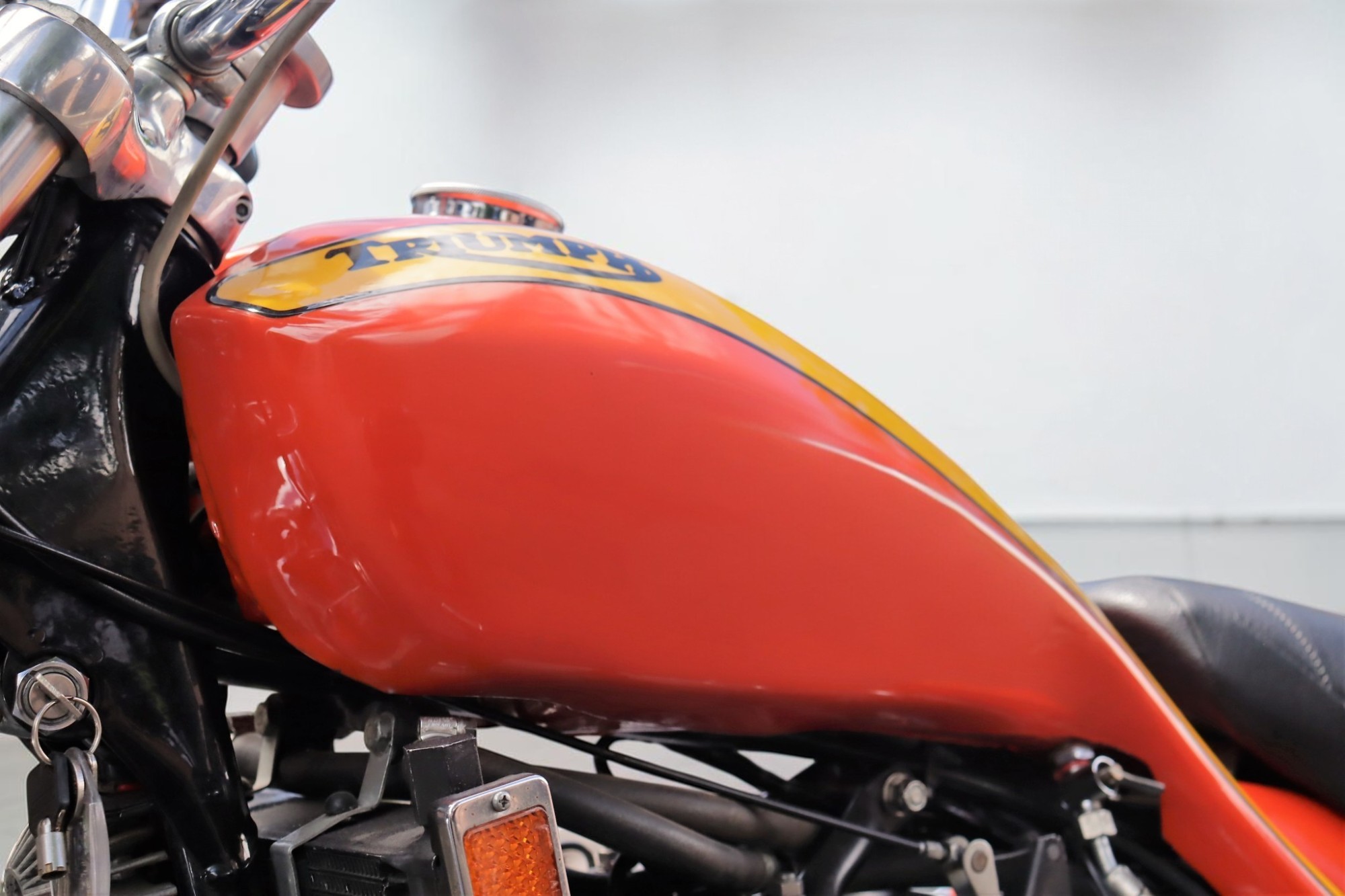
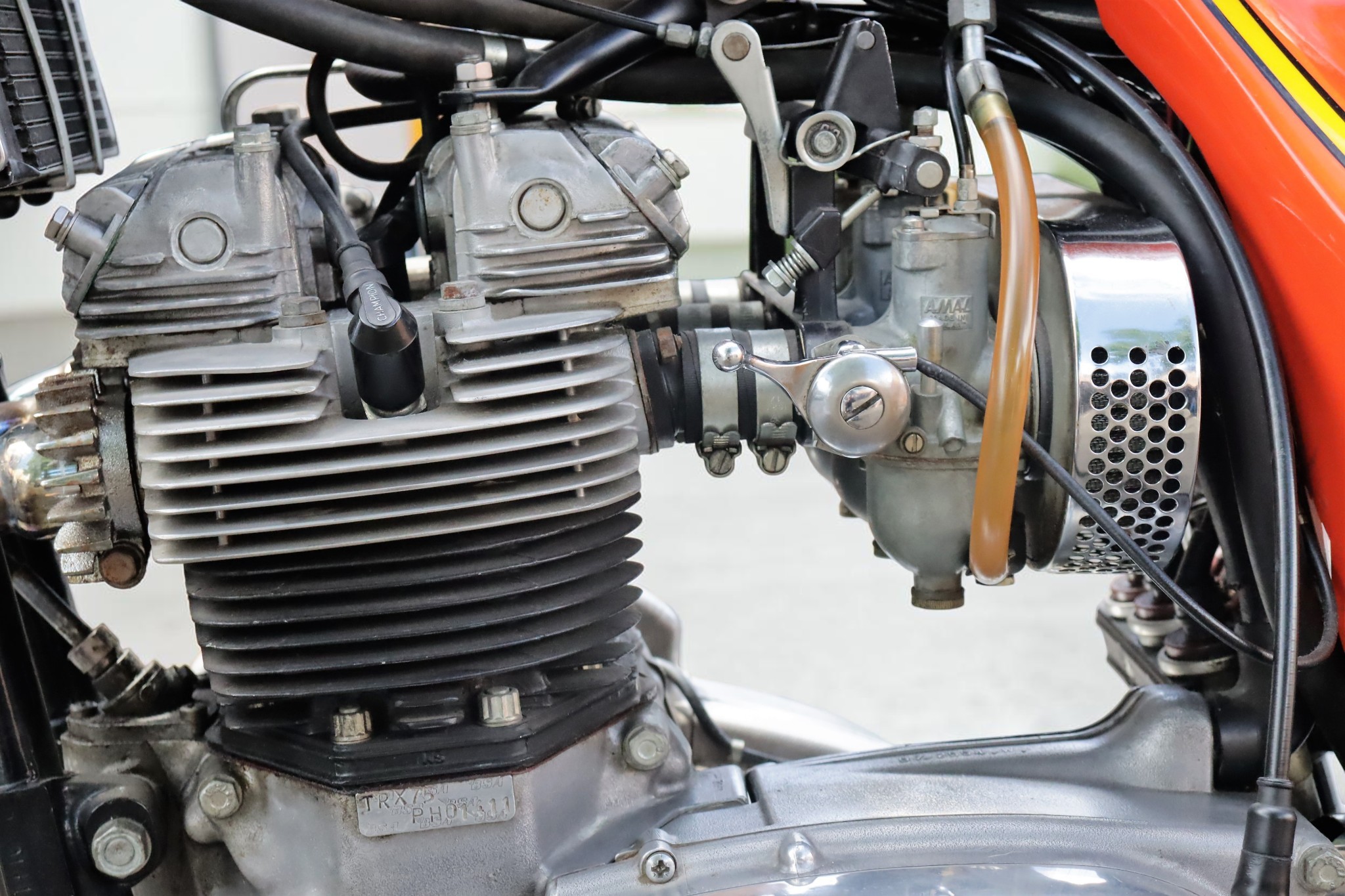
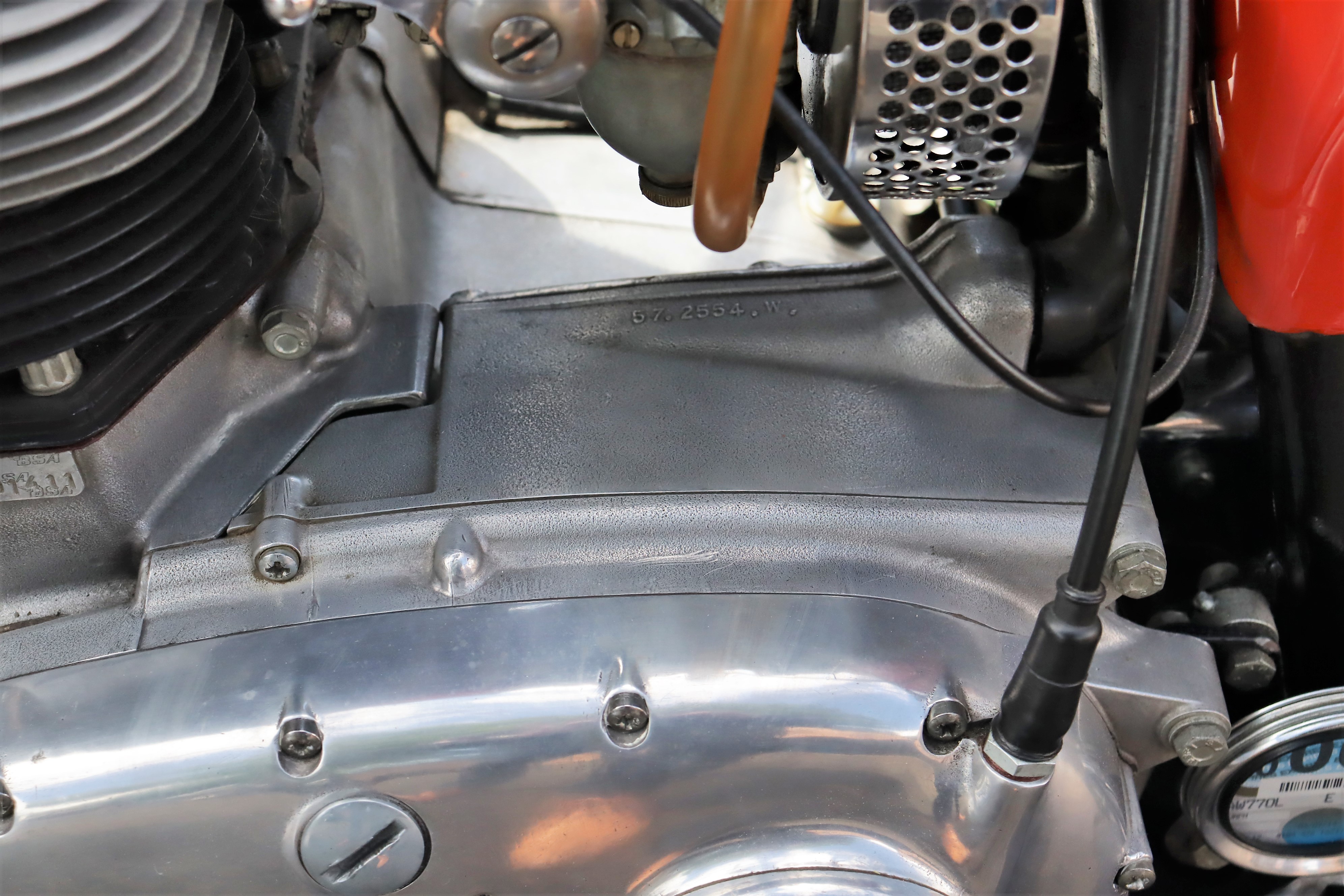
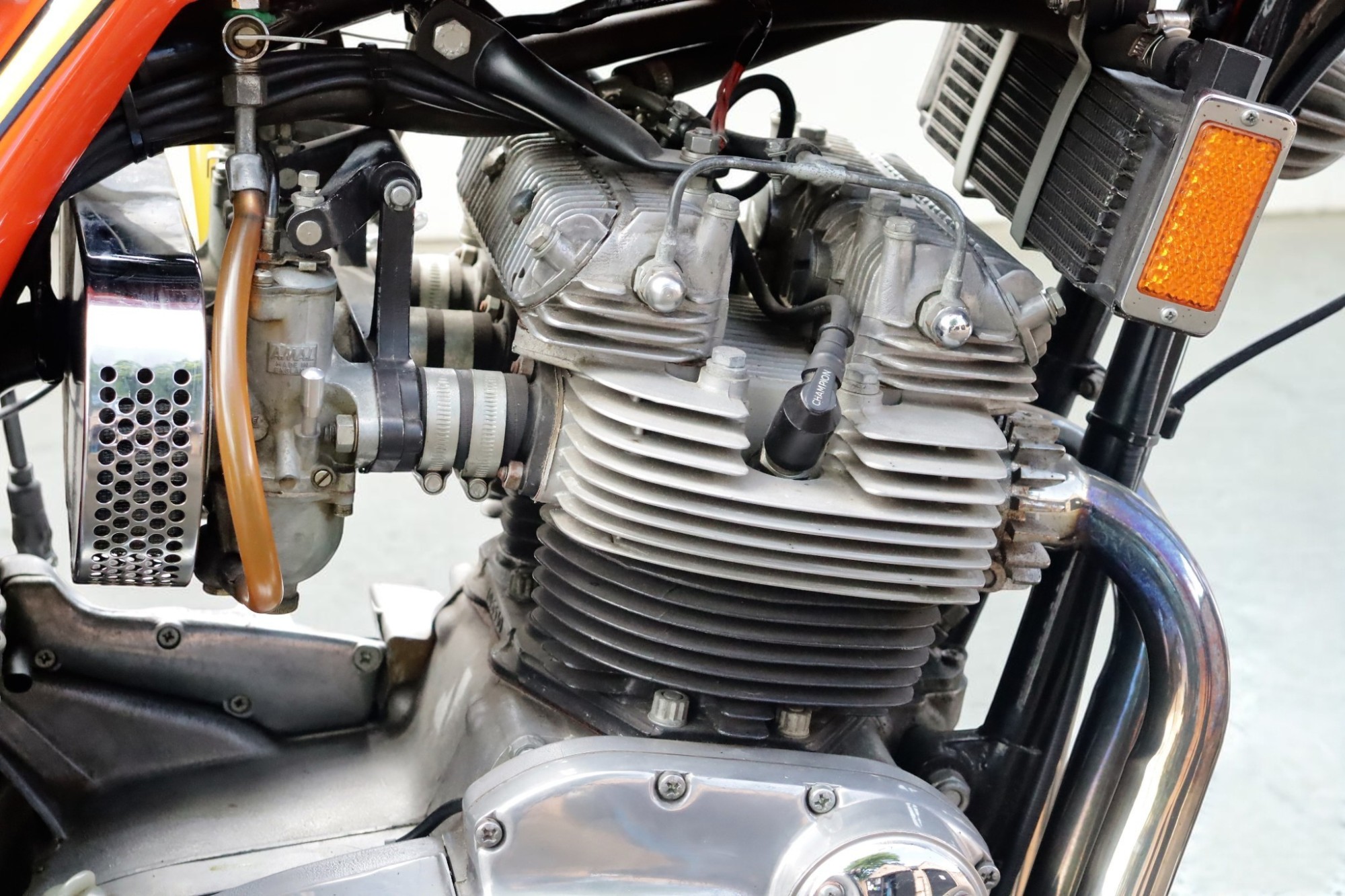
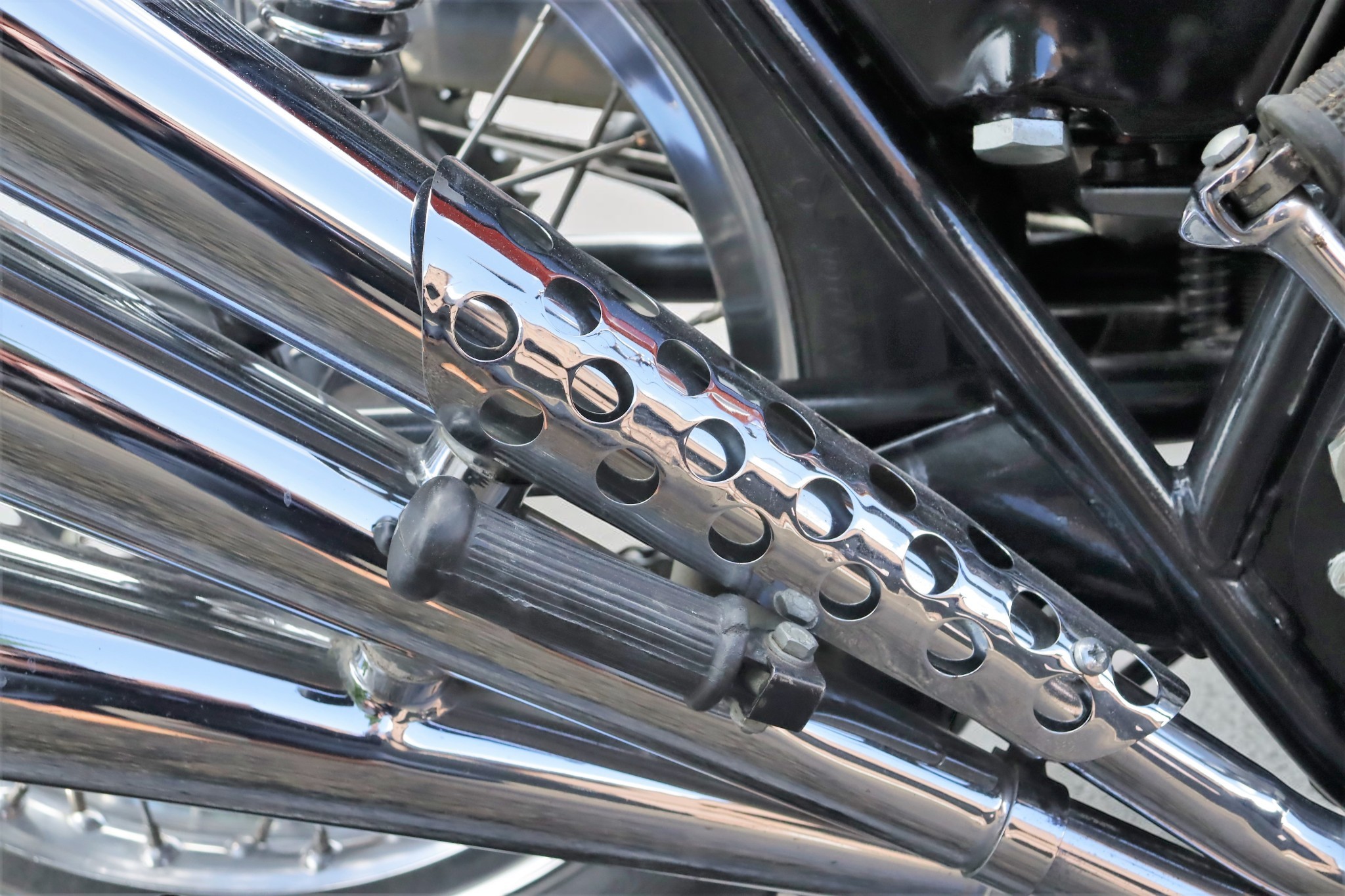
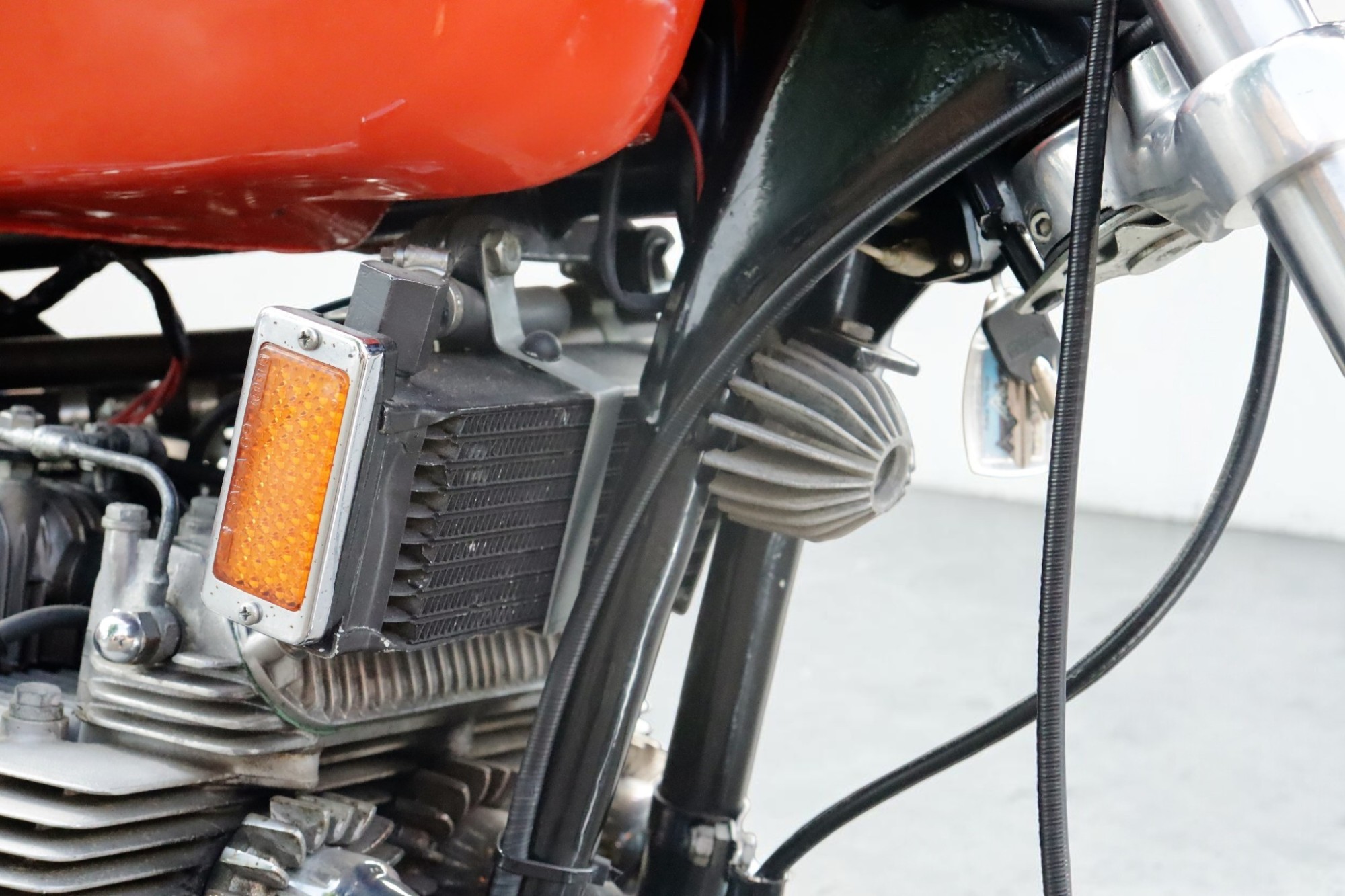
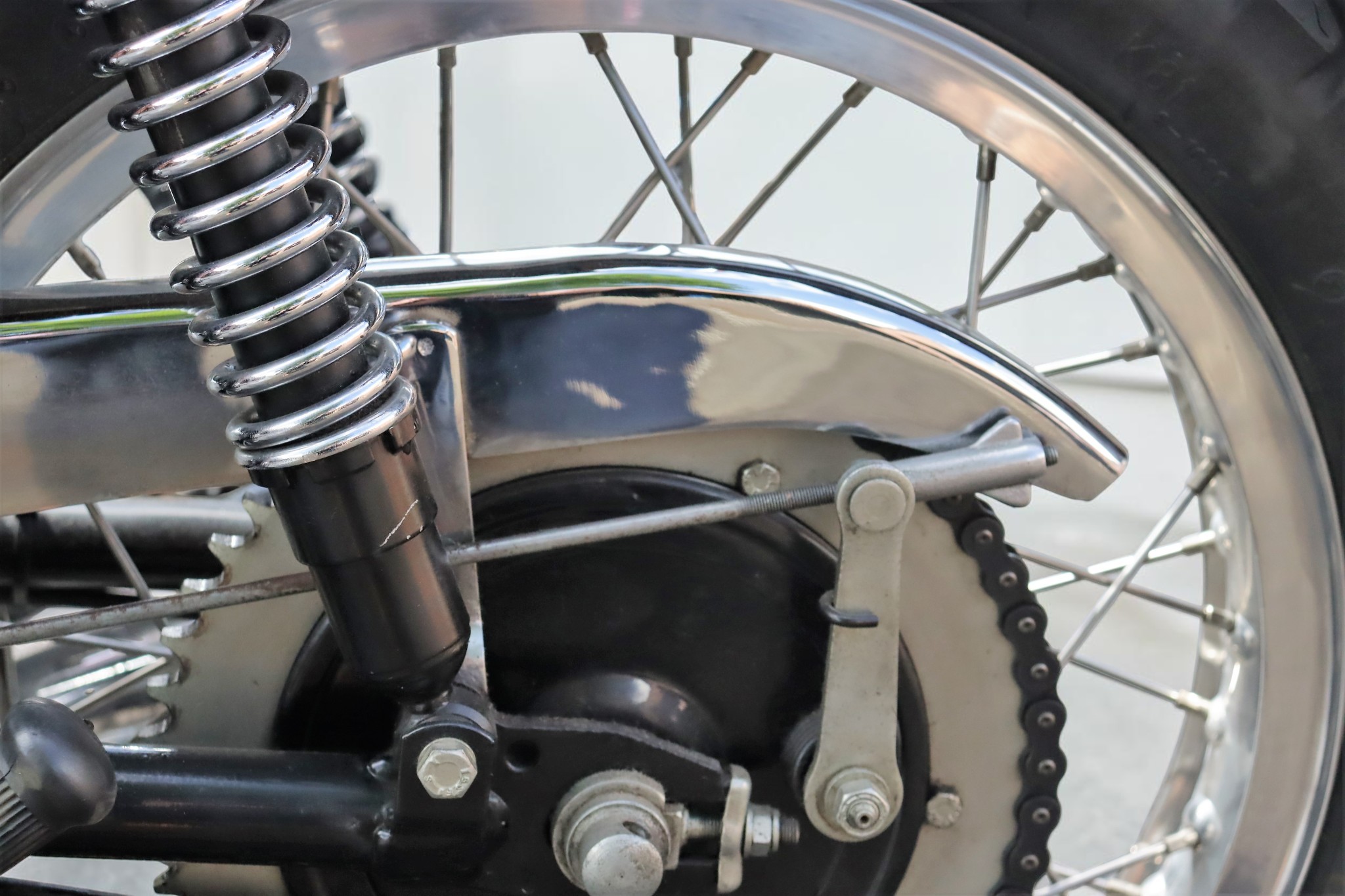
The 1973 Triumph X75 Hurricane is one of the most distinctive and historically important factory-custom motorcycles of the British motorcycle era. Designed by American industrial designer Craig Vetter and developed from the BSA Rocket 3 platform, the X75 combined a British 744cc three-cylinder engine with radically different fiberglass bodywork, a sculpted fuel tank, integrated side panels, a compact seat section, and three upswept exhaust pipes on the right side.
Unlike a conventional Triumph road motorcycle, the X75 Hurricane was conceived primarily around styling and market positioning. The project began in 1969 when Craig Vetter was asked to rethink the appearance of the BSA Rocket 3 for the increasingly important American market. Vetter's design replaced the conventional British motorcycle silhouette with a longer, lower, more visually integrated form that combined sporting proportions with the emerging American custom aesthetic.
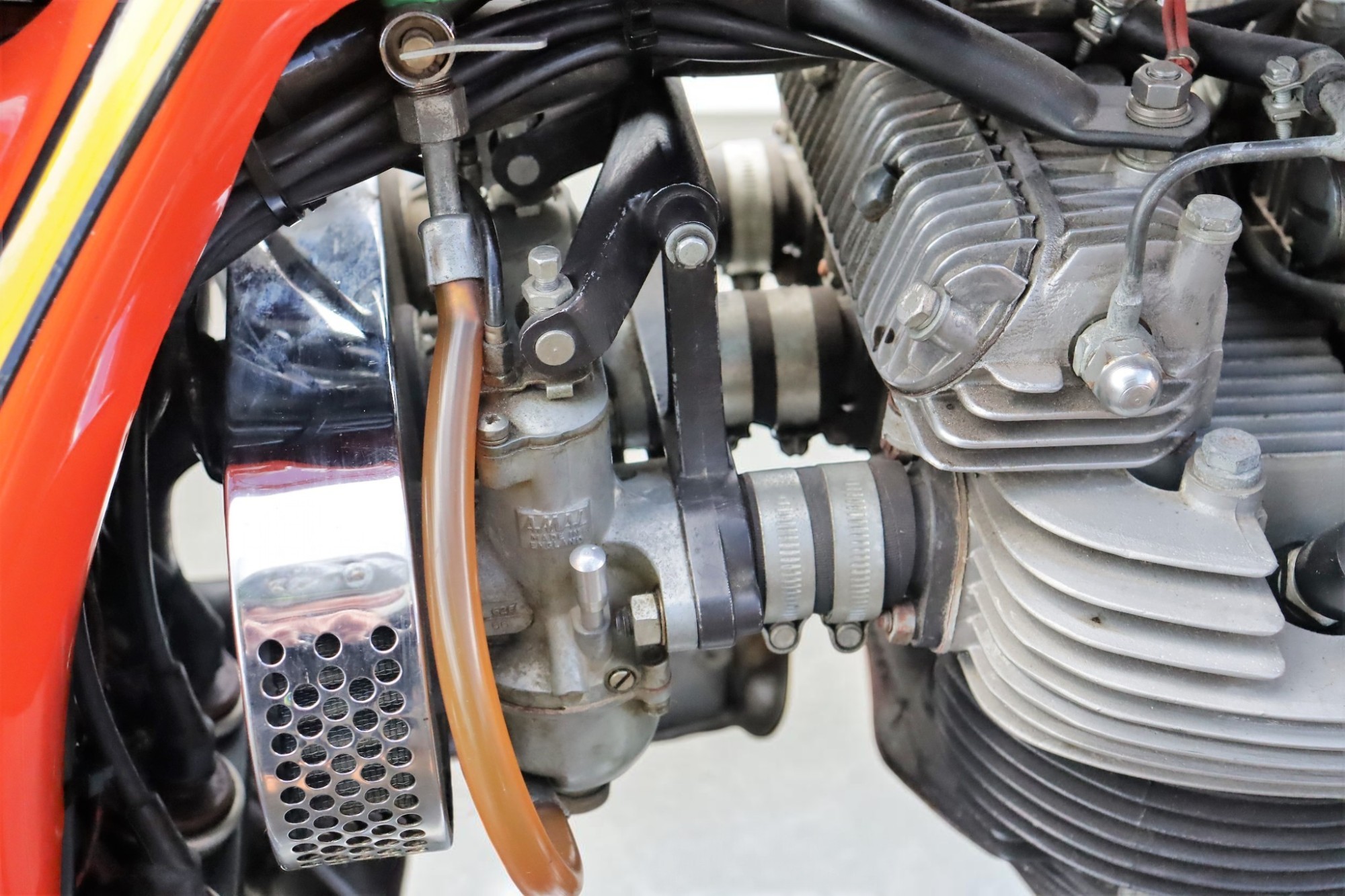
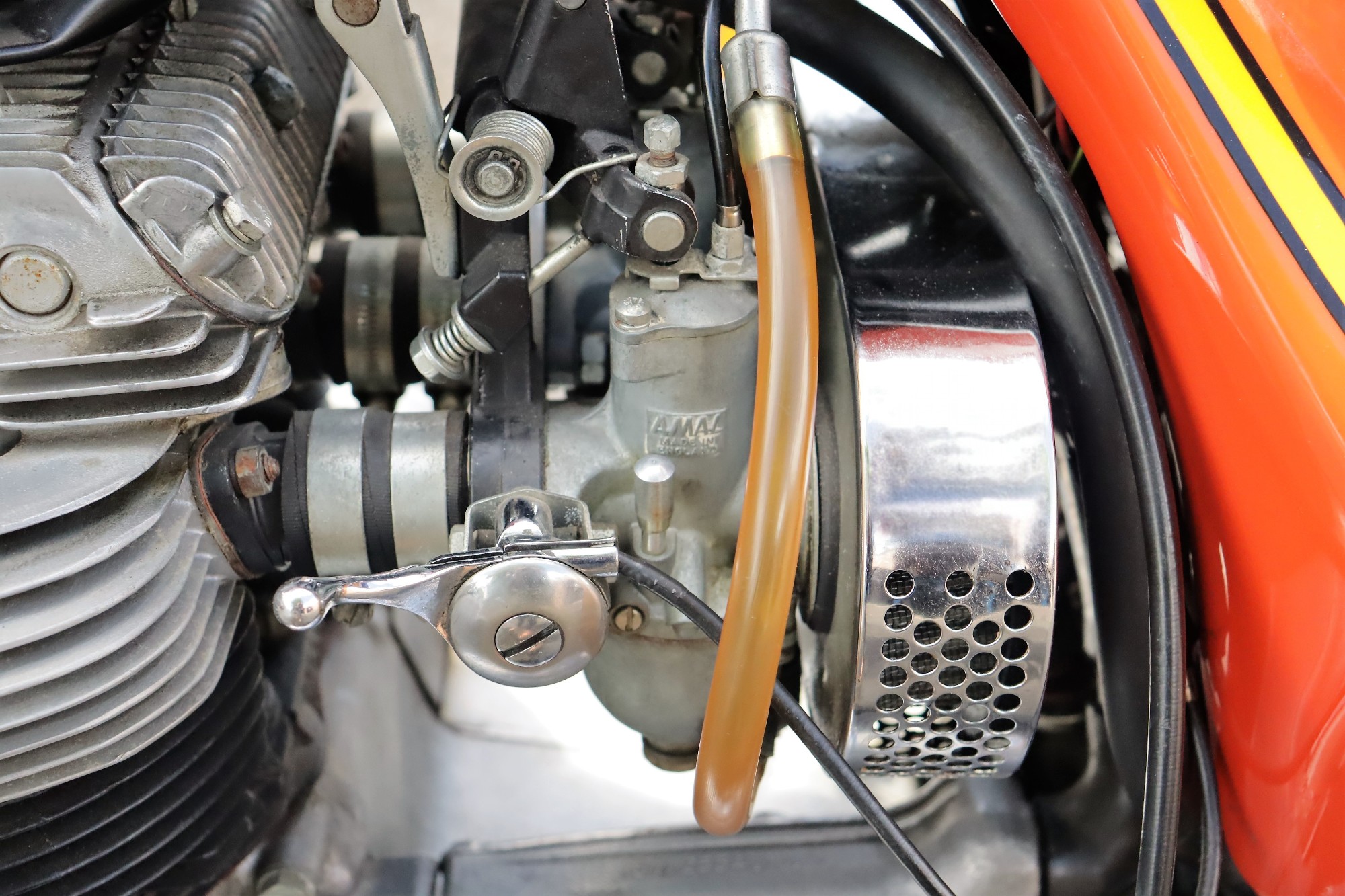
The production motorcycle retained the fundamental 744cc air-cooled overhead-valve inline-three engine associated with the BSA Rocket 3 family. With a 67 x 70 mm bore and stroke, three 27mm Amal carburetors, and a five-speed transmission, the Hurricane remained a genuinely high-performance British triple beneath its highly unusual bodywork.
The most recognizable feature of the X75 is its sculpted fiberglass body. The fuel tank, side panels, and seat area were visually integrated into a continuous design language rather than treated as separate conventional motorcycle components. This gave the Hurricane an exceptionally clean profile and made the motorcycle immediately recognizable even from a distance.
Three upswept exhaust pipes dominate the right-hand side of the motorcycle. Their arrangement became one of the defining visual signatures of the Hurricane, turning the mechanical exhaust system into a major part of the motorcycle's overall styling. The pipes also reinforced the visual impression of forward movement created by the long bodywork and extended front end.
The front end was deliberately altered from the standard Rocket 3 specification. The fork gaiters were removed, the front fork was extended slightly, the front mudguard was shortened, and the headlight was positioned high. These changes exaggerated the visual length of the motorcycle and supported Vetter's objective of creating a more dramatic and balanced machine.
The result was a motorcycle that looked very different from the standard BSA Rocket 3 or Triumph Trident while retaining the mechanical character of the British three-cylinder platform. The Hurricane therefore represents an unusual combination of engineering continuity and radical styling change: familiar British triple-cylinder mechanics underneath an entirely new visual identity.
For collectors, the 1973 Triumph X75 Hurricane is significant because it occupies a unique position between the traditional British motorcycle and the modern factory custom. Its American-designed styling, limited production, BSA Rocket 3 heritage, Triumph identity, and distinctive three-pipe exhaust make it one of the most recognizable motorcycles of the early 1970s.
The history of the Triumph X75 Hurricane begins not with Triumph itself, but with the BSA Rocket 3. In the late 1960s, the BSA-Triumph Group faced a rapidly changing American motorcycle market. The new British three-cylinder motorcycles were mechanically impressive and fast, but the styling was considered conservative compared with the increasingly influential motorcycles coming from Japan and the United States.
BSA's American operation believed that the Rocket 3 needed a stronger visual identity if it was to succeed with younger American riders. Don Brown, a senior BSA executive in the United States, became involved in a project to create a more American-oriented interpretation of the Rocket 3.
In 1969, Brown approached young American designer Craig Vetter. Vetter had already established himself through motorcycle fairing design, but he wanted the opportunity to redesign an entire motorcycle. The Rocket 3 provided the mechanical starting point for what became one of his most important design projects.
Vetter worked on the motorcycle during the summer of 1969, developing a completely different visual concept around the BSA triple. His prototype featured a sculpted fuel tank and body arrangement, longer-looking front end, distinctive seat, and the three upswept exhausts that would later become the signature of the production Hurricane.
The prototype was initially identified as the Vetter BSA Rocket 3 rather than the Triumph X75 Hurricane. It was a BSA project during its early development, and Vetter's own historical account emphasizes that the design originated as a restyling of the BSA Rocket 3 rather than as a Triumph Trident styling exercise.
The redesigned motorcycle attracted substantial attention after appearing in Cycle World magazine in 1970. Public reaction demonstrated that Vetter's design had an appeal that was quite different from the conservative styling of the standard British triples. The project consequently survived internal changes within the BSA-Triumph organization and eventually moved toward limited production.
The transition from BSA prototype to Triumph production motorcycle was driven partly by the collapse of the BSA marque. As the BSA organization deteriorated and the BSA name disappeared from the production plan, the Vetter-designed motorcycle was transferred into the Triumph range.
By late 1972 the name X-75 Hurricane had appeared, replacing the earlier Vetter Rocket 3 identity. The production motorcycle was assembled as a Triumph and became one of the final distinctive special models produced during the closing years of the original British BSA-Triumph motorcycle industry.
Production was extremely limited. Depending on the historical source and method used to count the production run, surviving references cite approximately 1,171, 1,172, or about 1,200 motorcycles. The National Motorcycle Museum describes production as approximately 1,200 examples, making the Hurricane a genuinely limited-production Triumph rather than a high-volume model.
The motorcycle was produced for a very short period around the 1972-1973 model cycle, and its commercial life was brief. The Hurricane was more expensive than standard Triumph triples, and its highly specialized styling appealed to a relatively narrow group of buyers. The model consequently became one of the rarest and most visually distinctive production Triumphs of the era.
Its later reputation has been almost the opposite of its original commercial reception. What was once an expensive and unconventional motorcycle has become a highly collectible design object, recognized for Craig Vetter's styling and for its role in the evolution of the factory-custom motorcycle.
Craig Vetter is central to the identity of the X75 Hurricane. Unlike a conventional motorcycle designer working primarily on engine, chassis, or manufacturing engineering, Vetter approached the motorcycle from the perspective of industrial design and visual proportion.
His objective was to make the Rocket 3 more attractive to American riders by changing the relationship between the fuel tank, seat, side panels, exhaust system, and front end. Instead of adding decorative parts to an existing motorcycle, Vetter treated the machine as a unified visual object.
The resulting fiberglass bodywork became the defining feature of the Hurricane. The fuel tank was small by touring standards, at approximately 2.5 US gallons, but its shape was designed to flow smoothly into the side covers and seat area. This created a continuous sculptural surface that was very unusual for a production motorcycle of the period.
The three right-side exhausts were equally important to the design. Rather than hiding the exhaust system or using conventional mufflers, Vetter made the pipes a dominant visual feature. Their upswept direction visually lifted the rear of the motorcycle and created one of the most memorable silhouettes of any British motorcycle.
The front end was also intentionally simplified. Removing the fork gaiters, shortening the front mudguard, and positioning the headlight high created the visual impression of a longer and more dramatic fork. The front fork was extended by approximately one inch compared with the standard Rocket 3 arrangement.
This approach explains why the X75 Hurricane remains recognizable more than five decades after its production. The design is not dependent on decorative chrome or temporary styling trends alone; its identity comes from the fundamental relationship between the engine, tank, seat, exhaust, front end, and frame.
Vetter's design also anticipated an important direction in motorcycle styling. The Hurricane blurred the traditional distinction between sporting motorcycle, custom motorcycle, and cruiser, and it is frequently described as an early factory-custom or an important precursor to the modern cruiser category.
Under its distinctive bodywork, the X75 Hurricane used the 744cc air-cooled overhead-valve three-cylinder engine derived from the BSA Rocket 3 platform. The engine's 67 x 70 mm bore and stroke gave the triple a relatively compact and responsive character, while the three-cylinder layout provided a distinctive combination of smoothness, torque, and high-rpm performance.
The production Hurricane used three Amal 27mm carburetors, one for each cylinder. This arrangement supported the engine's high-performance character and produced the characteristic induction sound associated with the British triple.
Factory and period specifications commonly quote approximately 58 horsepower for the production X75, with contemporary testing placing top speed in the region of 115 mph. The National Motorcycle Museum lists 58 horsepower and 115 mph, while period-oriented references may differ slightly depending on testing conditions and specification.
The five-speed transmission was another important distinction. The additional ratio allowed the rider to exploit the three-cylinder engine more effectively across a wider range of speeds and helped the Hurricane retain strong acceleration while remaining suitable for sustained road use.
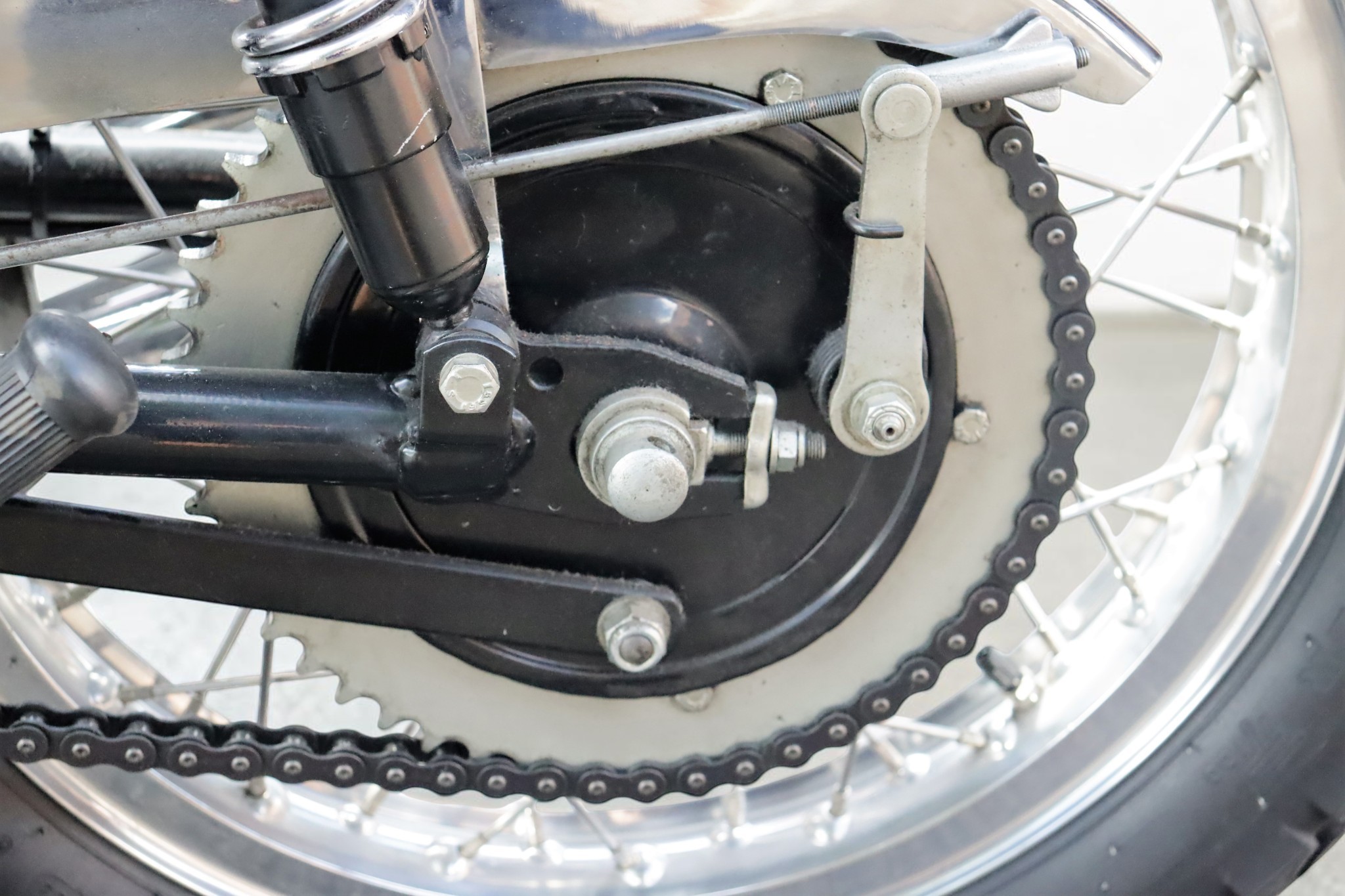
The primary drive used a duplex chain, while final drive was by chain. The electrical system was 12-volt, reflecting the more modern requirements of a high-performance motorcycle intended for the early 1970s market.
The chassis retained the basic Rocket 3 architecture but received significant changes to suit the Hurricane's styling and handling objectives. The motorcycle used a telescopic front fork, swingarm rear suspension with twin shock absorbers, and 19-inch front and 18-inch rear wheels.
The production motorcycle used drum brakes, with a 200mm front brake and 175mm rear brake according to National Motorcycle Museum specifications. This is an important period detail because later performance motorcycles would increasingly move toward disc braking.
The X75 weighed approximately 465 pounds and had a 57-inch wheelbase. Its substantial mass, long visual proportions, and powerful triple gave it a very different road character from lightweight European sporting motorcycles, but the chassis remained capable of spirited riding.
The Hurricane was therefore not merely a styling special. Its 744cc triple, five-speed gearbox, sporting chassis, and high-speed capability made it a genuine performance motorcycle beneath the fiberglass bodywork.
Understanding the X75 Hurricane requires a clear distinction between the motorcycle's mechanical heritage and its final brand identity. The project originated as a redesign of the BSA Rocket 3, and the original prototype was explicitly presented as a BSA-based Vetter Rocket 3.
The production motorcycle, however, became a Triumph X75 Hurricane. This change reflected the rapidly changing fortunes of the BSA-Triumph Group and the eventual disappearance of the BSA marque from the production range.
The X75 therefore carries a unique dual heritage. Its mechanical foundation belongs to the BSA Rocket 3 family of British triples, while its production identity and historical legacy belong to Triumph.
This distinction is particularly important for collectors and researchers. The Hurricane should not be described simply as a Triumph Trident with different bodywork. Craig Vetter's historical account specifically addresses the recurring misconception that the X75 used the Trident engine and frame, and explains that the design originated around the BSA Rocket 3 platform.
The production motorcycle retained the forward-sloping BSA version of the British triple rather than the visually different engine presentation associated with the Triumph Trident. This gives the X75 a distinctive mechanical and visual relationship with the BSA Rocket 3.
The American market was fundamental to the creation of the Hurricane. By the late 1960s, the BSA-Triumph Group recognized that styling and market identity were becoming increasingly important in the United States.
American riders were exposed to a rapidly expanding range of motorcycles, including large Japanese machines and increasingly sophisticated custom motorcycles. The traditional British motorcycle silhouette was beginning to appear conservative in comparison.
The X75 was an attempt to answer this change through design rather than simply through increased engine capacity. Craig Vetter's bodywork gave the British triple a distinctly American visual character while retaining its British engineering foundation.
The motorcycle's long-looking front end, sculpted tank, integrated seat area, and upswept exhausts created a style that was substantially different from conventional British sporting motorcycles. This made the Hurricane particularly relevant to the emerging American custom and cruiser aesthetic.
The result was commercially difficult, however. The Hurricane was more expensive than standard Triumph triples and its unusual styling appealed to a relatively limited audience. The National Motorcycle Museum notes that the model was slow to sell despite its distinctive design and later collectibility.
Ironically, this limited commercial success helped create the rarity that collectors value today. The X75's short production period and low production volume transformed what was originally an experimental market-oriented motorcycle into one of the most recognizable surviving Triumph special models.
The Triumph X75 Hurricane occupies an important place in the history of the factory-custom motorcycle. Instead of leaving customization entirely to individual owners, the manufacturer commissioned a professional designer to create a complete alternative interpretation of an existing production motorcycle and then produced that design through the factory system.
This approach was unusual for the early 1970s. Factory motorcycles were generally developed around engineering platforms and conventional model families, while custom motorcycles were created by dealers, independent builders, or individual owners.
The X75 blurred that boundary. It took the mechanical platform of an established British triple and transformed its visual identity through fiberglass bodywork, custom-style exhausts, altered front-end proportions, and a radically different relationship between the fuel tank and seat.
For this reason, the Hurricane is frequently described as an early factory custom and is often credited as an important precursor to the modern cruiser. Its importance lies not only in its rarity but also in the direction it suggested for motorcycle design.
The influence of the X75 can be seen in the increasing importance of styling, rider lifestyle, American market preferences, and factory customization during the following decades. Although the Hurricane itself had a short production life, its design concept proved considerably more enduring.
The 1973 Triumph X75 Hurricane is collectible for reasons that extend well beyond conventional performance specifications. It represents the meeting point of British engineering, American industrial design, BSA Rocket 3 heritage, Triumph production, and the emerging factory-custom motorcycle movement.
Its production volume is another major factor. Approximately 1,200 Hurricanes were produced, with some specialist and historical sources giving more precise figures around 1,171 or 1,172. Either way, the model was produced in very small numbers compared with mainstream Triumph motorcycles.
The survival of original bodywork is particularly important. The Hurricane's fiberglass components are central to its identity, and incorrect replacement parts or later modifications can significantly change the appearance and historical character of an example.
Collectors should pay close attention to the correct X75 fiberglass tank and side-panel arrangement, seat, three-pipe exhaust system, front-end configuration, wheels, instrumentation, engine and frame numbers, and period-correct paint and decals.
The original Borrani alloy wheels are also an important period detail on correctly specified machines. Their use formed part of the lightweight sporting character of the X75 and is a useful reference point when evaluating originality or restoration quality.
The motorcycle's Craig Vetter connection adds another layer of historical significance. Vetter would later become one of the most influential names in motorcycle aerodynamic design through his Windjammer fairings, but the Hurricane remains one of his most important complete motorcycle designs.
For collectors of rare Triumph motorcycles, British triples, Craig Vetter designs, factory customs, and early cruiser history, the X75 Hurricane occupies an unusually strong position. It is rare, instantly recognizable, mechanically significant, and directly connected to one of the most important American-influenced design projects in British motorcycle history.
This 1973 Triumph X75 Hurricane represents one of the rarest and most visually distinctive production motorcycles of the final British BSA-Triumph era. Its 744cc three-cylinder engine, five-speed transmission, sculpted fiberglass bodywork, and three upswept right-side exhausts make it immediately identifiable as Craig Vetter's landmark factory-custom design.
The Hurricane's historical significance extends beyond its unusual appearance. The motorcycle began as Craig Vetter's 1969 redesign of the BSA Rocket 3 for the American market before evolving through the BSA-Triumph organization into the production Triumph X75 Hurricane. That unusual development history gives the model a direct connection with both BSA Rocket 3 engineering and Triumph's final-generation British triple motorcycles.
With only approximately 1,200 examples produced, the X75 Hurricane is considerably rarer than mainstream Triumph triples of the period. Its combination of limited production, Craig Vetter authorship, British three-cylinder engineering, American-market design influence, and early factory-custom significance makes it one of the most collectible Triumph motorcycles of the early 1970s.
For collectors seeking a rare British triple, a Craig Vetter-designed motorcycle, an early factory custom, or a historically important Triumph from the final years of the original British motorcycle industry, the 1973 X75 Hurricane offers an exceptional combination of design significance, mechanical character, and provenance.
Worldwide shipping is available. Contact us for additional photographs, detailed specification information, engine and frame numbers, restoration details, provenance, originality assessment, and purchasing information for this 1973 Triumph X75 Hurricane.
The Vintage Motorcycles presents a curated selection of historically significant British vintage motorcycles, with a dedicated focus on Triumph Motorcycles, a manufacturer that came to define the global perception of British engineering through a combination of performance-oriented design, mechanical refinement, and industrial scalability. Originating in the late 19th century and evolving through both bicycle and motorized production, Triumph represents a convergence of craftsmanship and engineering discipline that would later influence motorcycle development far beyond the United Kingdom.
This collection is contextualized within the broader ecosystem of global motorcycle history, where you can explore additional manufacturers through our global vintage motorcycle brands archive. Within the British engineering landscape, Triumph occupies a central role, bridging early experimental motorcycle construction with the emergence of standardized, performance-capable machines that gained international recognition. These developments are best understood within the framework of pre-war motorcycle engineering (1900-1939), where competitive racing, mechanical innovation, and industrial organization collectively shaped the evolution of European motorcycles.
Each motorcycle within our collection is carefully selected based on provenance, originality, and mechanical integrity, ensuring alignment with museum-grade preservation standards. Available machines can be explored through our global vintage motorcycle inventory, including a range of Triumph models - from early single-cylinder machines to later configurations that reflect increasing mechanical sophistication - as well as structurally adaptable setups represented in our sidecar motorcycle collection, illustrating the versatility of British engineering across both civilian and applied contexts. All acquisitions are supported by a fully insured international shipping service designed for global collectors.
British engineering has long been associated with a synthesis of performance, precision, and competitive validation, and Triumph stands as one of its most influential representatives. Unlike purely utilitarian manufacturers, Triumph developed motorcycles that balanced everyday usability with measurable performance capabilities, often validated through racing and endurance events. This dual focus contributed to a design philosophy that emphasized not only mechanical reliability, but also responsiveness, power delivery, and rider engagement.
This trajectory becomes clearer when examined through broader historical transitions. During the early 20th century, Triumph played a significant role in the dynamic environment documented in pre-war motorcycle development, where engineering experimentation increasingly converged with competitive performance benchmarks. As global conflict reshaped industrial priorities, motorcycle design shifted toward durability and operational resilience, as reflected in wartime motorcycle engineering, where robustness and ease of maintenance became critical under demanding conditions.
In the post-war period, Triumph emerged as a globally recognized manufacturer, contributing to the expansion of mass production while retaining elements of its performance-oriented heritage. This evolution is further explored in post-war motorcycle development, where standardization, export markets, and cultural influence played an increasingly important role in shaping motorcycle design. Within this broader continuum, Triumph represents a key reference point for understanding how British engineering extended from domestic innovation into an international benchmark for motorcycle performance and identity.
Key Highlights
Collector Assurance
All enquiries handled with discretion. We typically respond within 6 hours.
Choose the payment method that is most convenient for you. We accept widely used international payment methods as well as, where available, local bank transfer options that allow you to pay like a domestic transaction. Full payment instructions are provided for your specific purchase.
Direct international bank wire transfer is available for motorcycle purchases and export transactions.
Credit card payments can be arranged through Wise.com, subject to the applicable payment and processing conditions.
PayPal is accepted. A 5% PayPal processing fee applies to the transaction.