The Vintage Motorcycles
Specialists in antique, classic, veteran and vintage motorcycles.
Specialists in antique, classic, veteran and vintage motorcycles.
A museum-grade collection of Triumph motorcycles representing the earliest era of British motorcycle development. From pre-World War I single-cylinder machines to interwar engineering refinement, these motorcycles illustrate the technical evolution that established Britain as a global leader in early motorcycling.
Curated by international vintage motorcycle specialists. Each Triumph motorcycle is selected based on historical importance, mechanical authenticity, and preservation quality suitable for advanced collectors, museums, and institutional archives.
Triumph is one of the earliest and most influential British motorcycle manufacturers, playing a critical role in the formation of modern motorcycle engineering during the early 20th century.
Unlike later high-performance British machines, early Triumph motorcycles focused on reliability, simplicity, and mechanical efficiency, making them ideal for both civilian transport and military use.
Today, surviving pre-war Triumph motorcycles represent some of the most historically significant examples of early industrial design and engineering innovation.
Early Triumph models from the 1910s, including the renowned Model H, were widely used during World War I and became known as "The Trusty Triumph" for their durability and ease of maintenance under battlefield conditions.
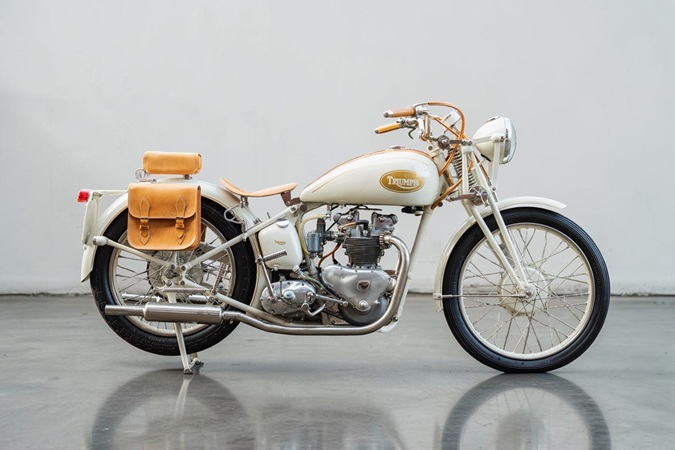
Pre-war civilian models such as the 3-Speed Roadster (1912) demonstrate the transition from bicycle-derived machines to purpose-built motorcycles, marking a key turning point in engineering development.
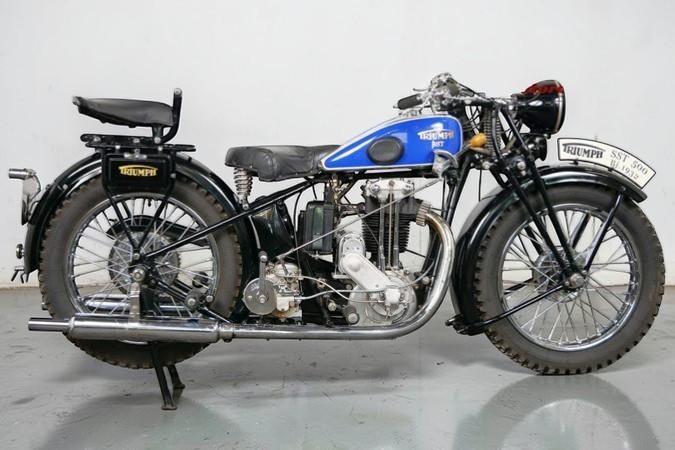
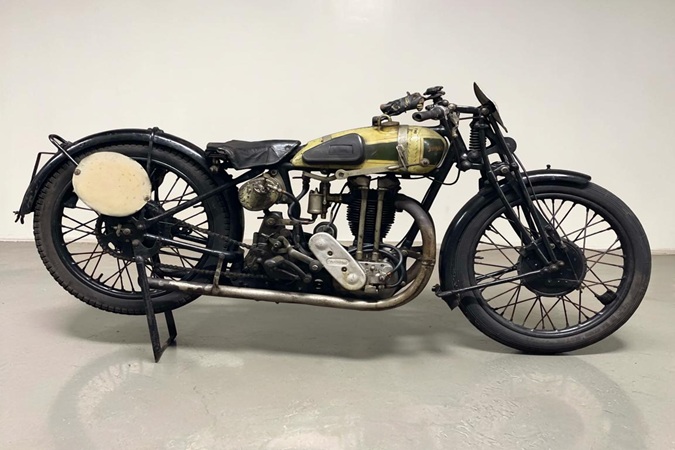
By the early 1930s, models such as the Triumph SST reflected increased refinement, with improved chassis stability, braking systems, and overall ride quality.
These machines provide a clear timeline of British engineering progression, from early experimentation to more advanced interwar mechanical design.
1885 - Triumph was founded in Coventry, England by Siegfried Bettmann, originally importing bicycles before moving into manufacturing.
1902 - The company produced its first motorcycle, marking the beginning of Triumph's engineering journey in motorized transport.
1910s - Triumph expanded rapidly, becoming one of Britain's leading motorcycle manufacturers with strong reliability and export growth.
1914-1918 - During World War I, Triumph supplied thousands of motorcycles to Allied forces, significantly scaling production capacity.
1920s - The brand became known for refined single-cylinder motorcycles and early performance success in road racing events.
1936 - The introduction of the Triumph Speed Twin revolutionized the industry, pioneering the modern parallel-twin motorcycle layout.
1939-1945 - World War II production focused on military motorcycles such as the Triumph 3HW, widely used by British forces.
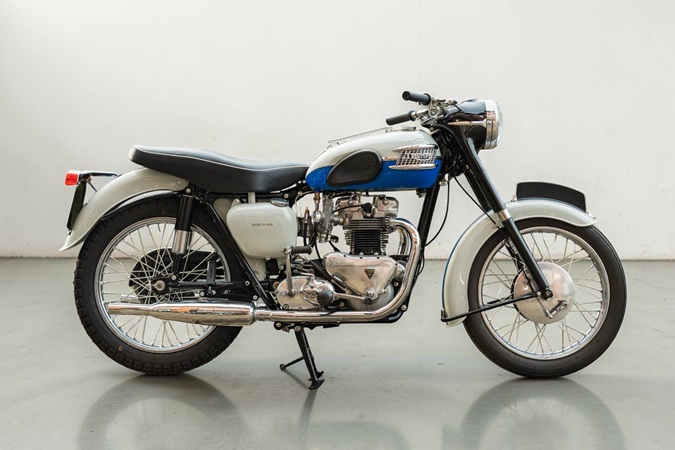
1950s - Triumph entered its golden era with iconic models like the Thunderbird and Bonneville, defining British performance motorcycling culture.
1960s - The Bonneville became a global symbol of cafe racer culture, while competition from Japanese manufacturers began to intensify.
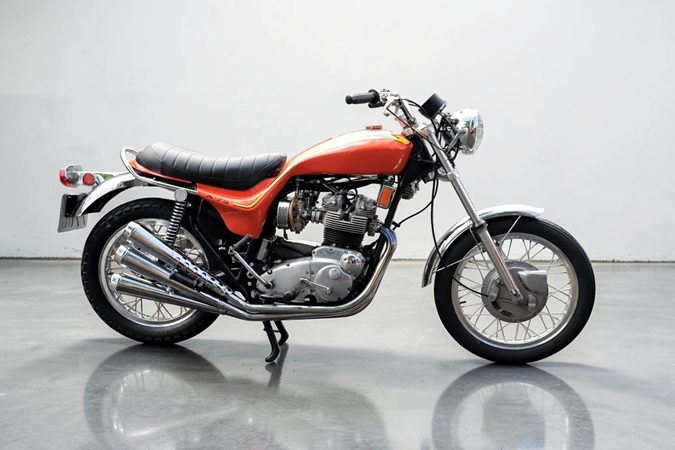
1970s - Financial instability led to the collapse of the original Triumph Engineering company, ending an era of British dominance.
1983 - Triumph Motorcycles was revived under new ownership, beginning a modern restructuring of the brand.
1990s - The company rebuilt its identity with modern engineering while retaining classic British twin-cylinder character.
Modern Era - Triumph remains a global premium motorcycle brand, known for its Bonneville heritage, modern triple-engine platforms, and blend of classic design with contemporary performance.
Pre-World War II Triumph motorcycles are among the most historically important British machines available to collectors today.
Due to age, limited production, and wartime attrition, original examples with documented provenance are increasingly rare.
Early Triumph motorcycles are particularly valued for their authenticity, mechanical simplicity, and direct connection to the origins of modern motorcycling.
Key collector-grade motorcycles in this collection include:
1919 Triumph Model H - Iconic World War I military motorcycle known as "The Trusty Triumph", 1912 Triumph 3-Speed Roadster - Early pre-war road machine representing the transition from motorized bicycles, 1932 Triumph Model SST - Interwar engineering refinement with improved ride stability and design
These motorcycles represent foundational milestones in Triumph's engineering history, illustrating the progression from early experimental machines to more advanced pre-war designs.
Triumph is not only a historic manufacturer - it is one of the key pillars of British motorcycle development.
Its early machines influenced global engineering standards, helping define the transition from primitive motorized bicycles to fully developed motorcycles.
From wartime deployment to civilian transportation, Triumph motorcycles played a central role in shaping early 20th-century mobility.
Pre-1930 Triumph motorcycles are considered highly desirable among collectors focused on early engineering history and industrial heritage.
The strongest collector interest is typically found in: original-condition machines, documented military history (Model H), and rare early production examples from the 1910s.
As supply continues to decline, well-preserved Triumph motorcycles are increasingly viewed as long-term historical assets.
When acquiring a Triumph motorcycle, collectors should prioritize originality, mechanical integrity, and historical documentation.
Key factors include: matching engine and frame numbers, correct period components, and evidence of authentic restoration or preservation.
Each motorcycle in our collection is carefully inspected and documented to meet museum-grade standards.
Below is a curated selection of historically significant Triumph motorcycles available to collectors worldwide. Each example represents a verified piece of early British motorcycling history.
We offer Triumph vintage motorcycles to collectors globally, including Europe, the United Kingdom, the United States, and Asia. Each motorcycle can be professionally prepared for export with secure crating, insurance, and full documentation.
Availability and pricing vary depending on rarity, provenance, and condition. Please contact us for current inventory and private acquisition opportunities.
Contact our specialists for availability, historical details, and worldwide shipping options. Request Availability
The early development of Triumph motorcycles begins within the context of veteran-era motorcycle engineering (pre-1920), where belt-driven systems and lightweight roadster platforms defined the transition from bicycle-based construction to dedicated motorized design. These early machines established the structural and mechanical foundations of British motorcycle manufacturing.
This foundation evolved into the more refined phase of pre-war motorcycle development (1920s-1930s), where Triumph introduced increasingly sophisticated single-cylinder engines and lightweight performance models, positioning itself among the leading British manufacturers of the period.
The broader historical trajectory of Triumph engineering is also shaped by its role in military production, particularly during World War II motorcycle deployment, where reliability and mechanical simplicity were essential. In such environments, motorcycles frequently operated alongside or in conjunction with sidecar-equipped configurations, highlighting the importance of load distribution and utility-focused engineering.
For collectors and researchers seeking comparative perspective across eras and manufacturers, global vintage motorcycle inventory archives provide a broader framework in which Triumph motorcycles can be evaluated within the evolution of early European mobility.
What makes Triumph motorcycles historically significant?
Triumph is one of the earliest British motorcycle manufacturers, with origins in the early 20th century.
Models such as the Model H gained international recognition during wartime service, establishing a reputation for reliability and mechanical durability.
Are vintage Triumph motorcycles rare?
Yes. Early Triumph motorcycles from the veteran and pre-war periods are increasingly scarce, particularly well-preserved examples with original components and documented provenance.
Which Triumph models are most collectible?
Collector interest typically focuses on early roadster platforms, the Model H series, and refined pre-war machines such as the Model SST.
Are Triumph motorcycles a good investment?
Well-preserved Triumph motorcycles with historical significance are considered strong long-term collector assets, particularly those representing key stages of early British engineering development.
Triumph motorcycles represent a foundational chapter in British motorcycling, where early engineering simplicity evolved into refined mechanical systems. From belt-driven veteran machines to pre-war lightweight platforms, Triumph's development reflects a continuous process of adaptation and improvement. For collectors, understanding production context, originality, and mechanical configuration is essential when evaluating these motorcycles as historical artifacts.
The evolution of Triumph is closely connected to the broader trajectory of British industrial engineering and early motorcycle development. This context is explored through comparative studies of motorcycle manufacturers by country, alongside deeper insights into British motorcycle brand development and the historical framework presented in the evolution of British motorcycling.
Within the global vintage motorcycle market, Triumph occupies a position defined by early production rarity and historical importance. These dynamics align with broader observations in vintage motorcycle market analysis, particularly in segments focused on early British machines.
Triumph engineering is defined by its progression from simple belt-drive systems to increasingly refined single-cylinder configurations, emphasizing reliability, efficiency, and mechanical clarity. These machines illustrate the broader evolution of British design philosophy, where functional engineering and adaptability were prioritized across both civilian and military applications.
Browse extensive buying resources paired with deep technical expertise, ranging from worldwide shipping FAQs to brand-level repairs, classic motorcycle common fixes, and garage restoration strategies: