
The Vintage Motorcycles
Specialists in antique, classic, veteran and vintage motorcycles.
Specialists in antique, classic, veteran and vintage motorcycles.
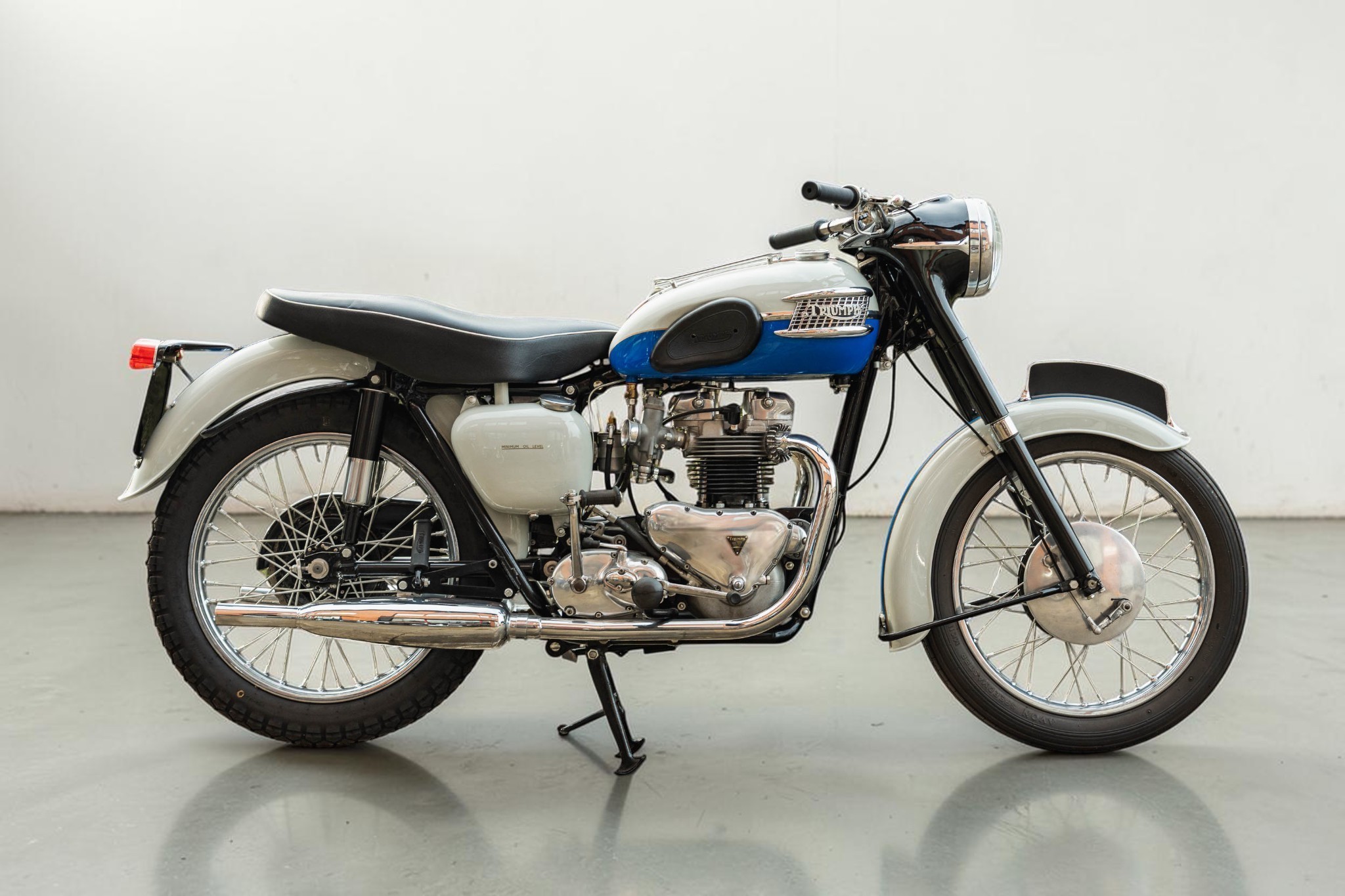
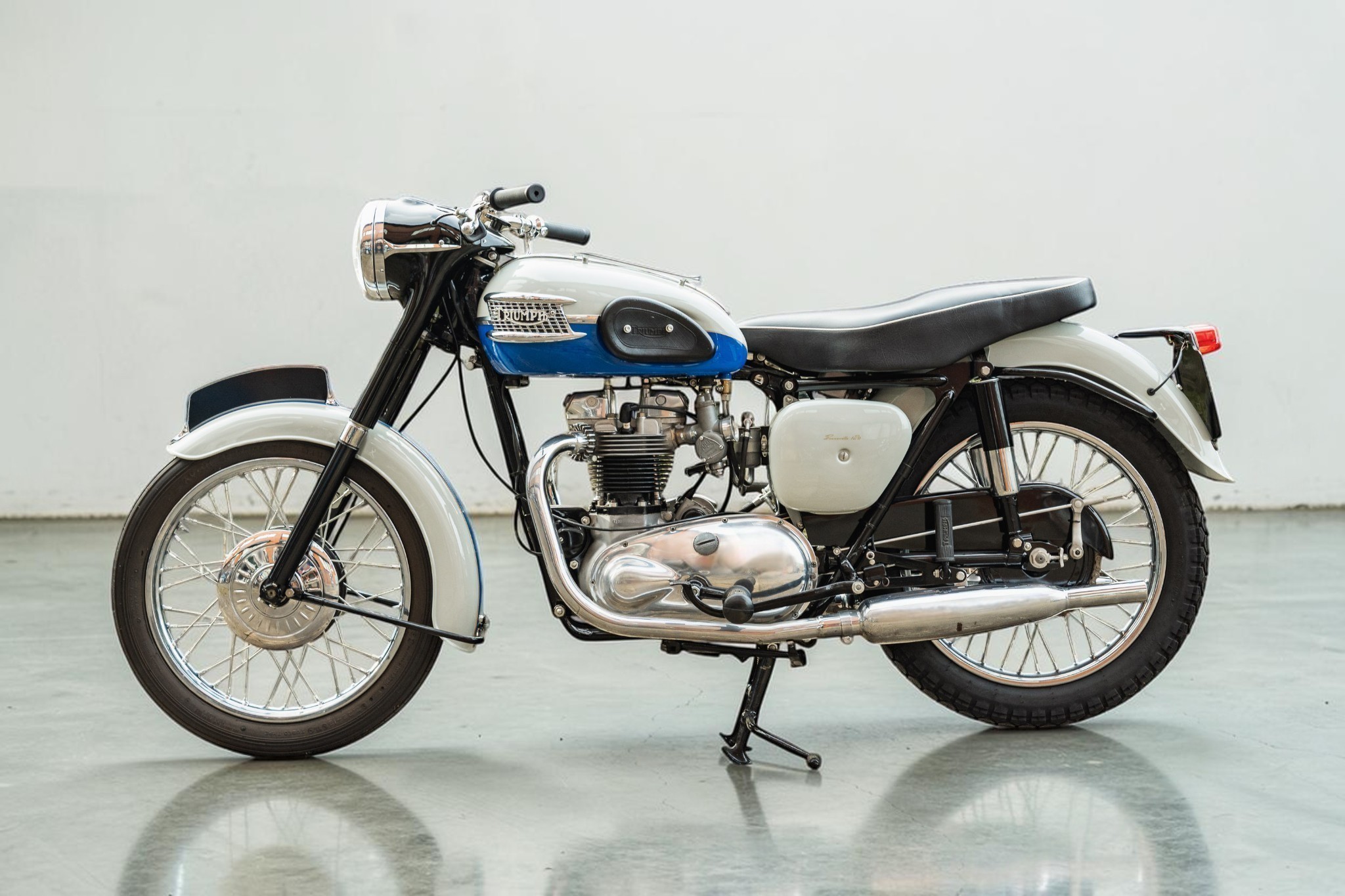
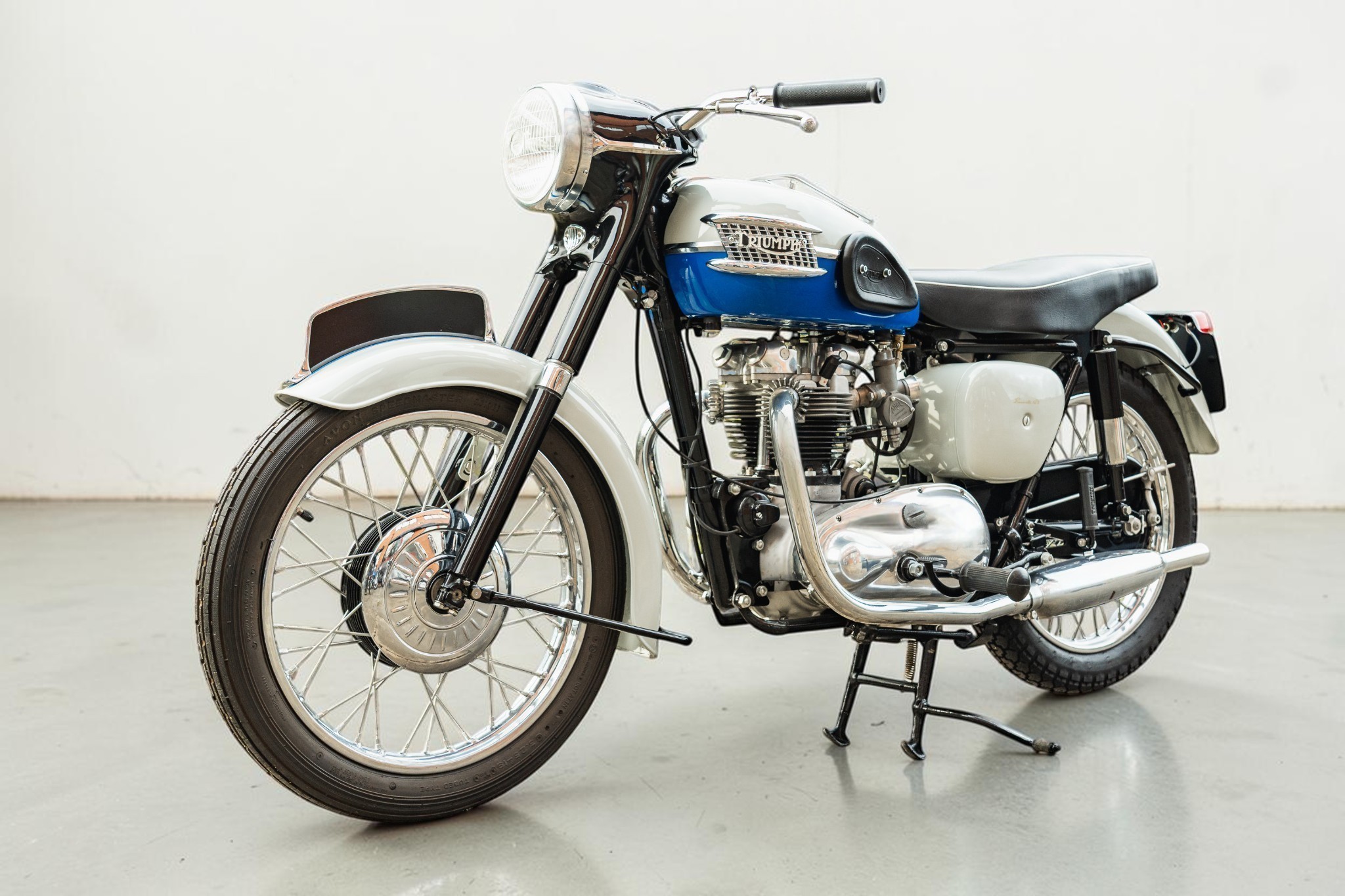
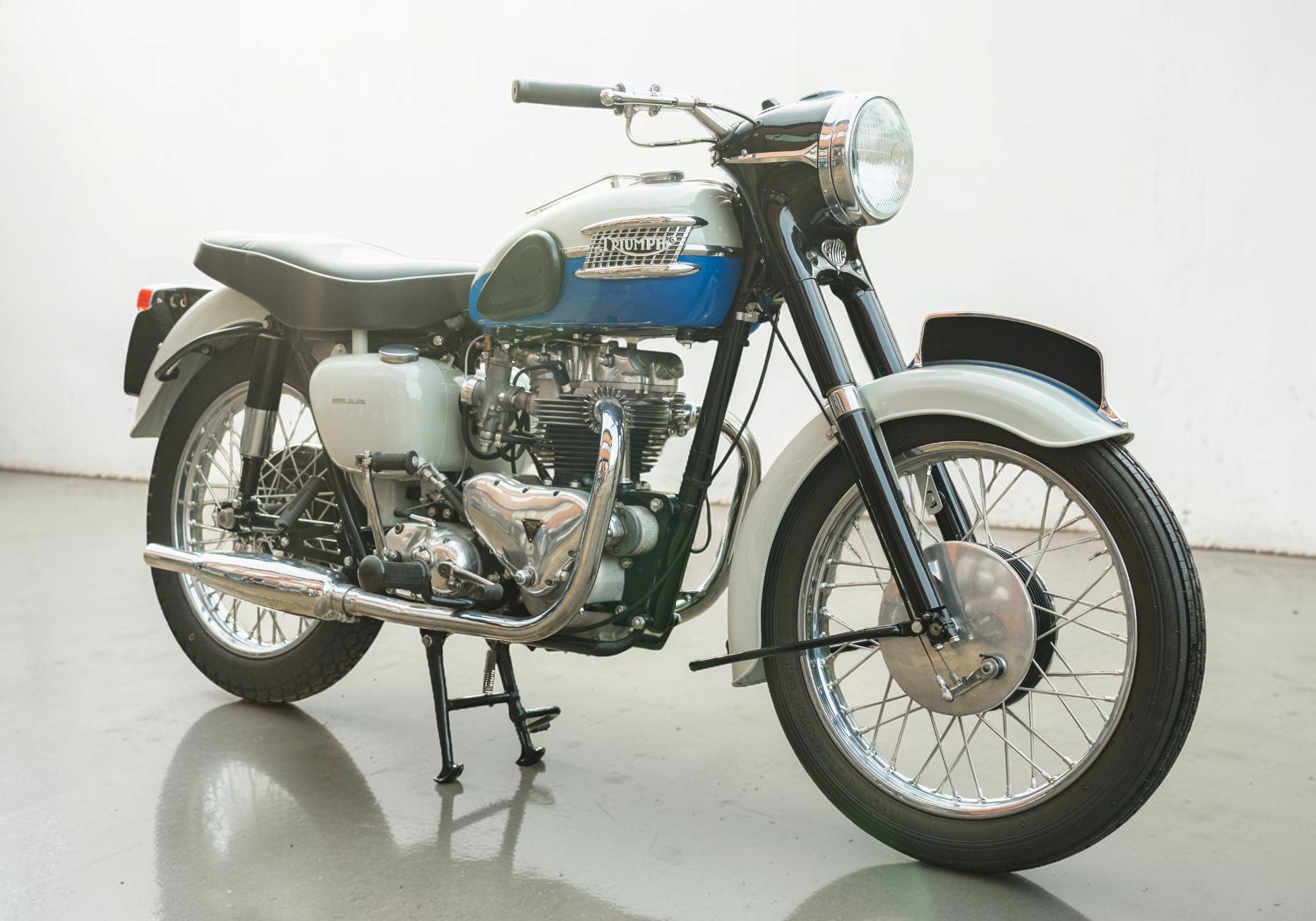
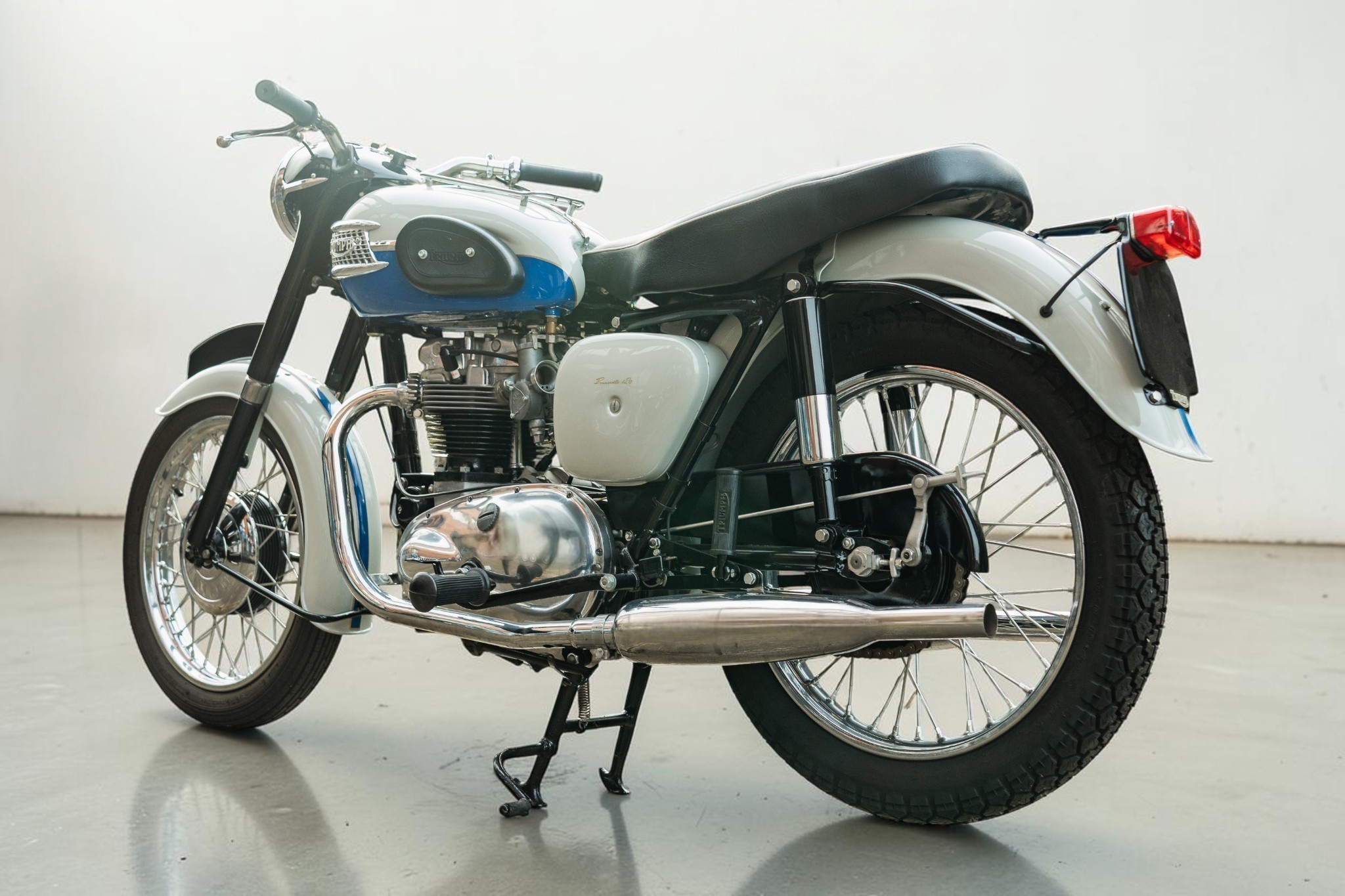

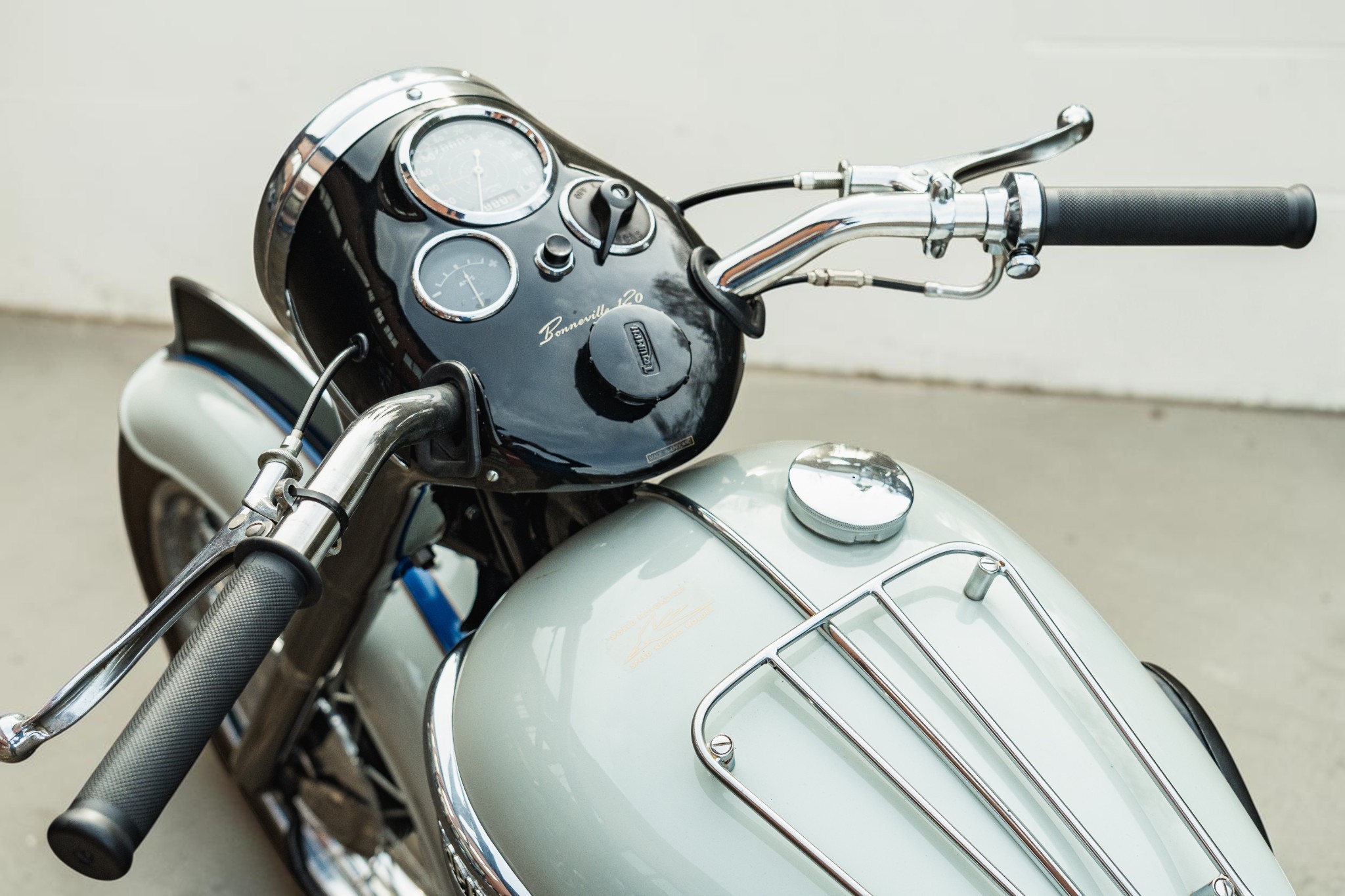
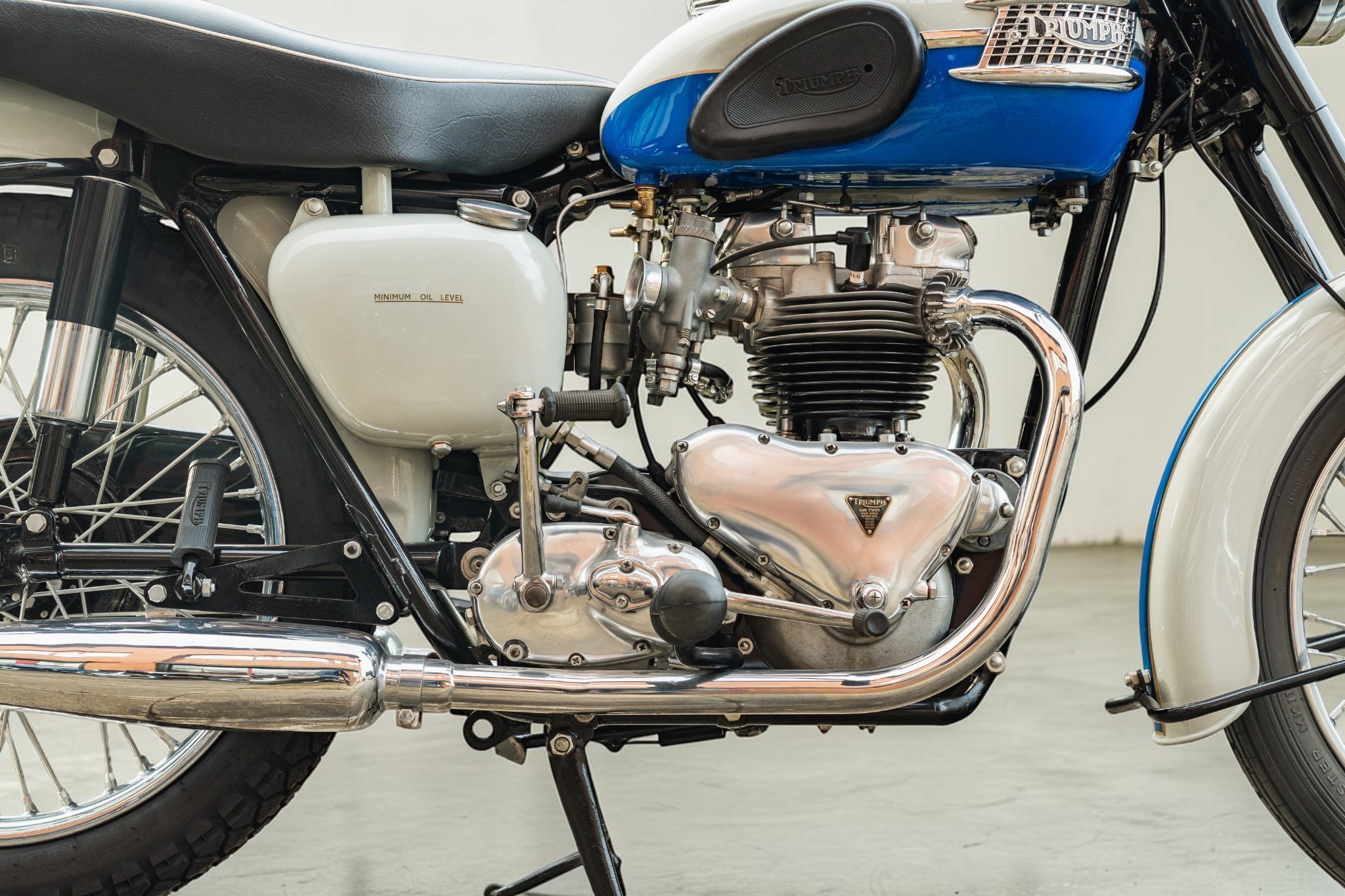

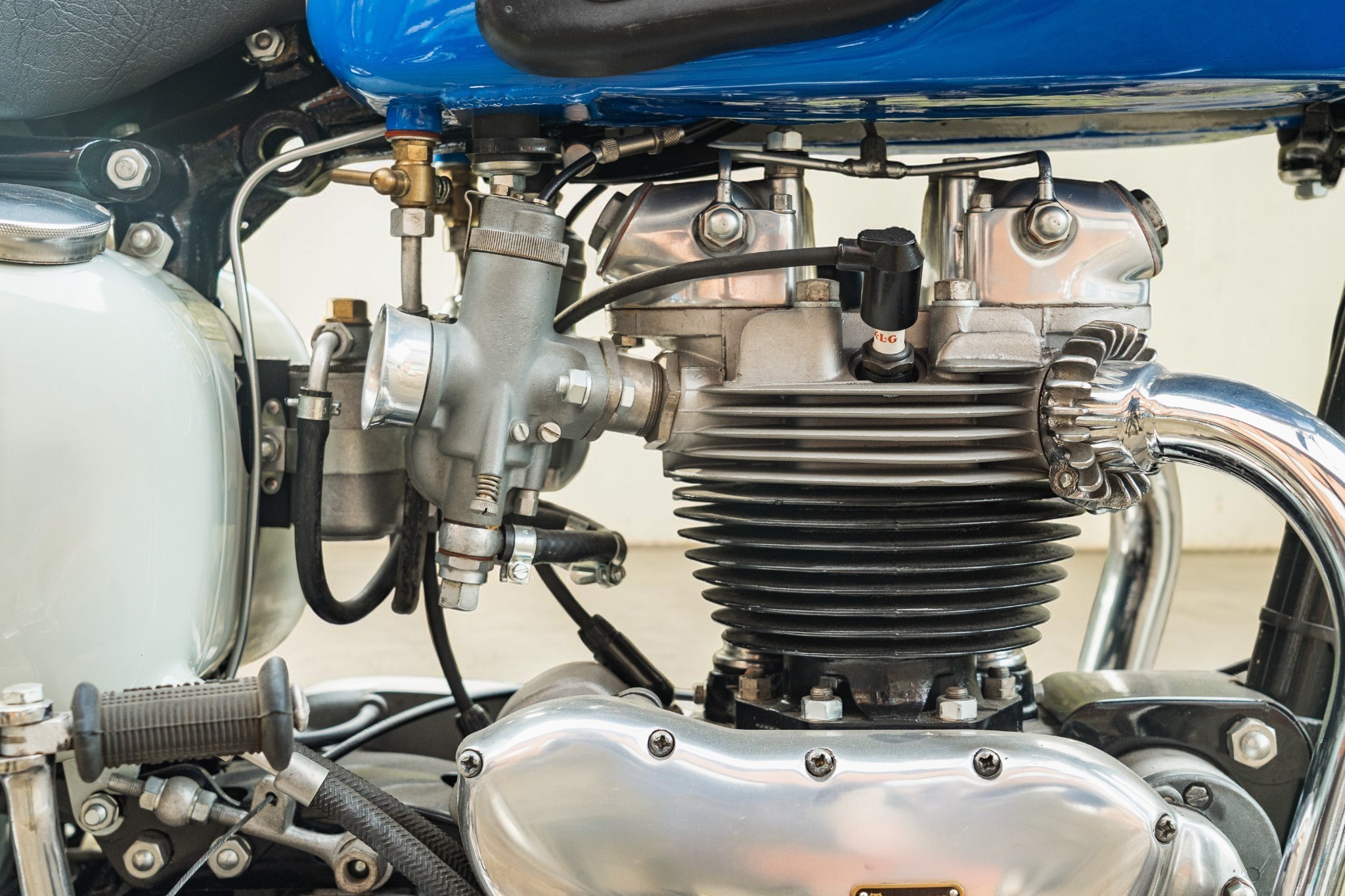

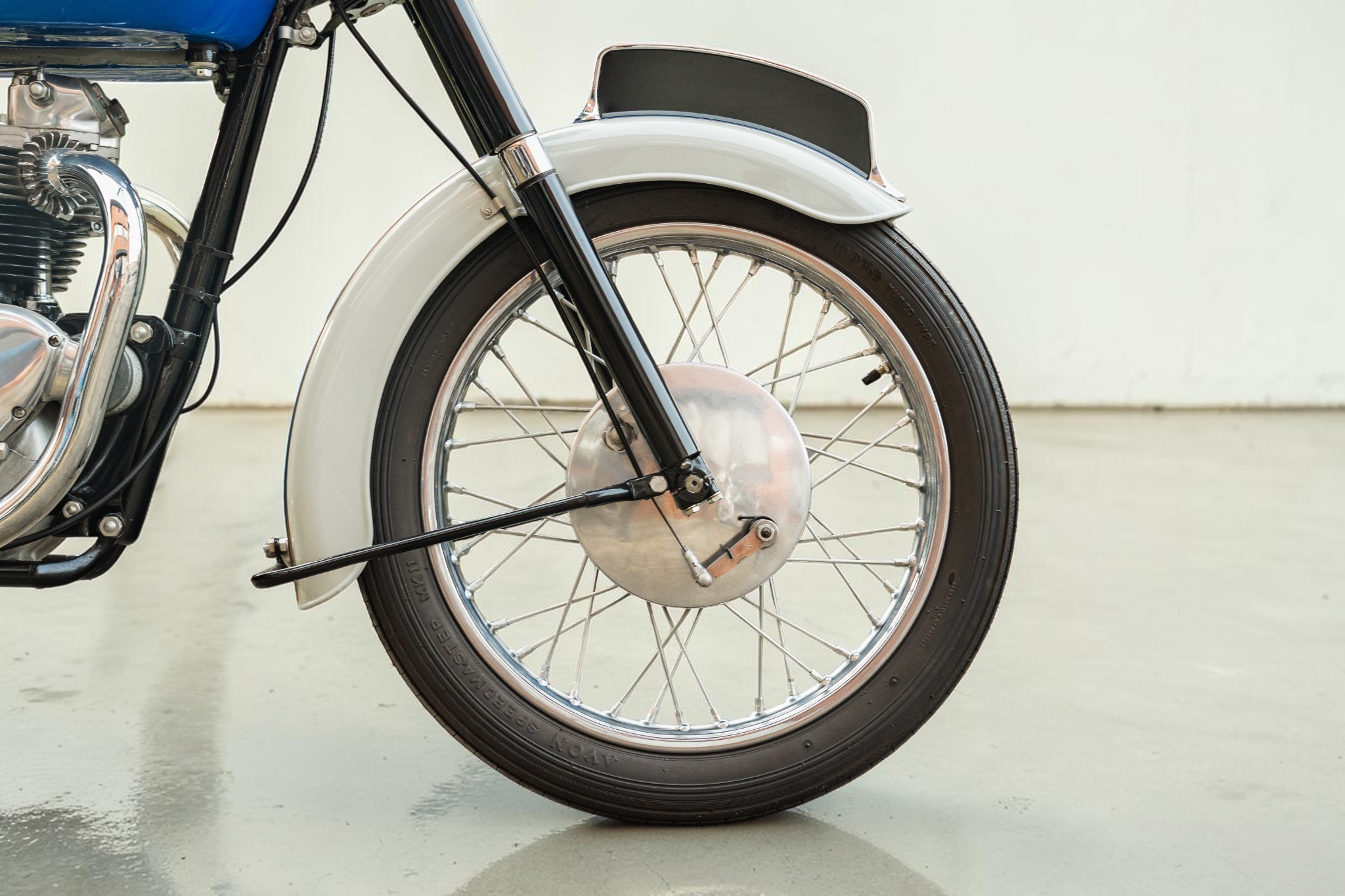

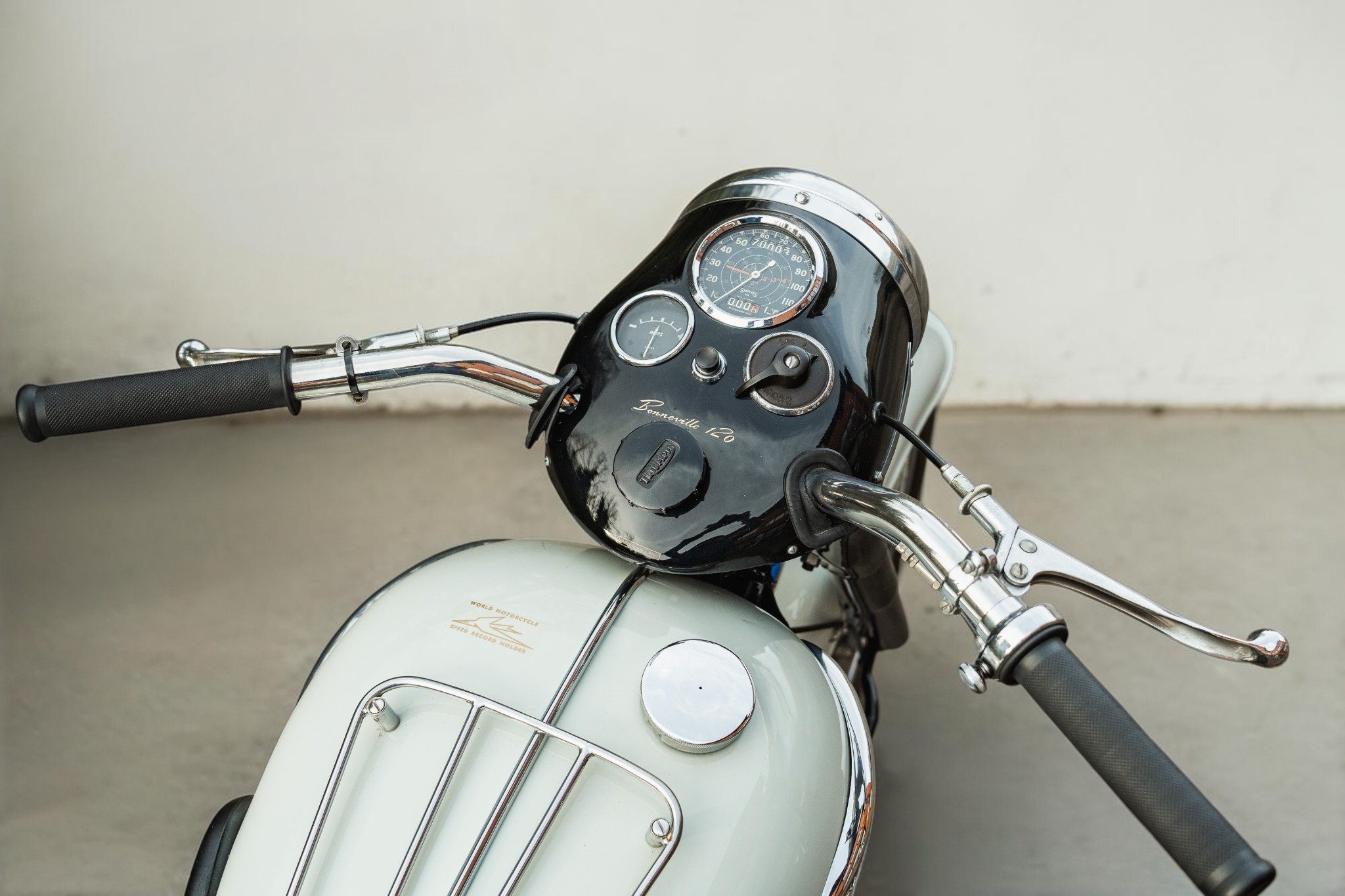
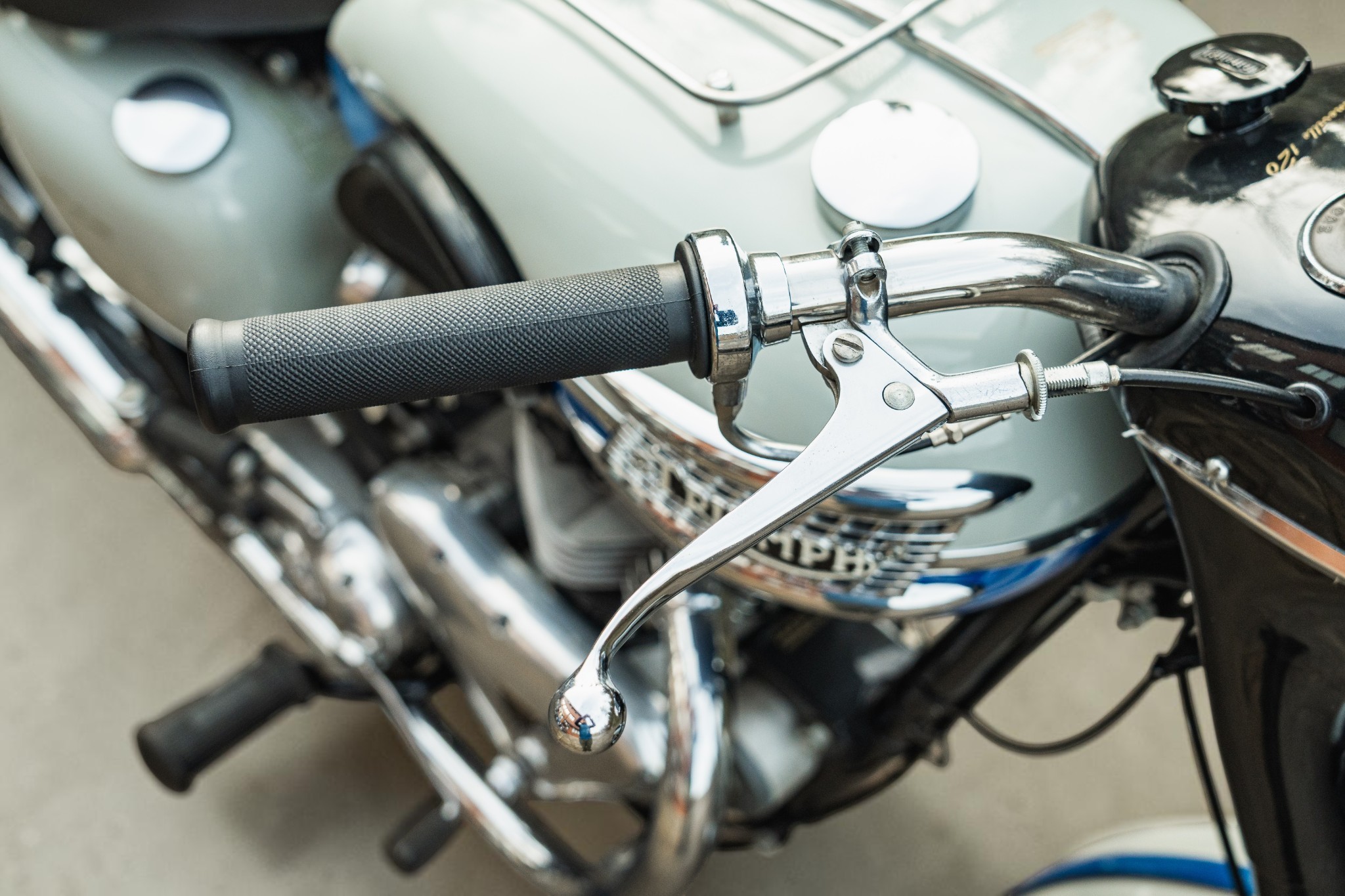
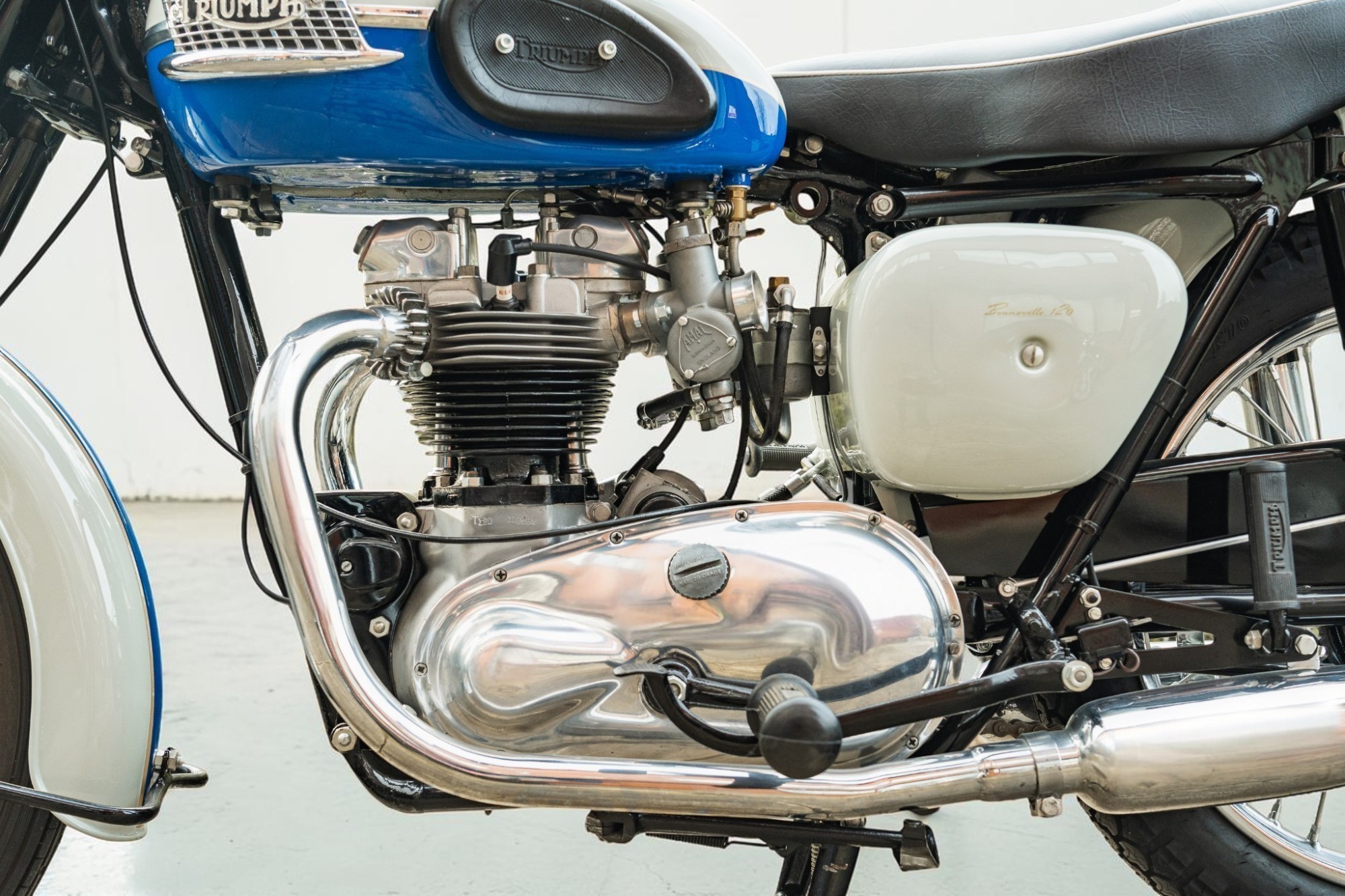

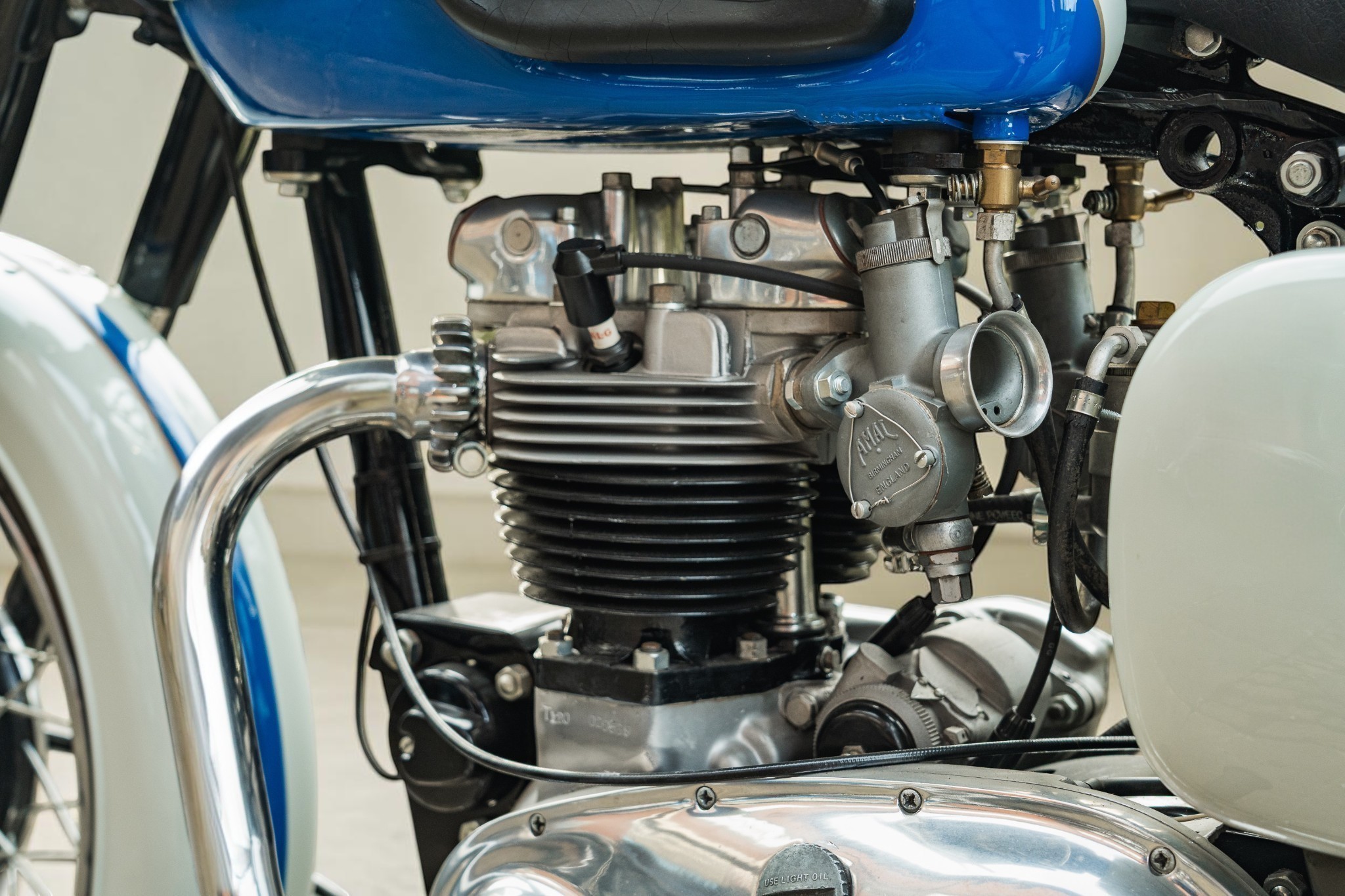
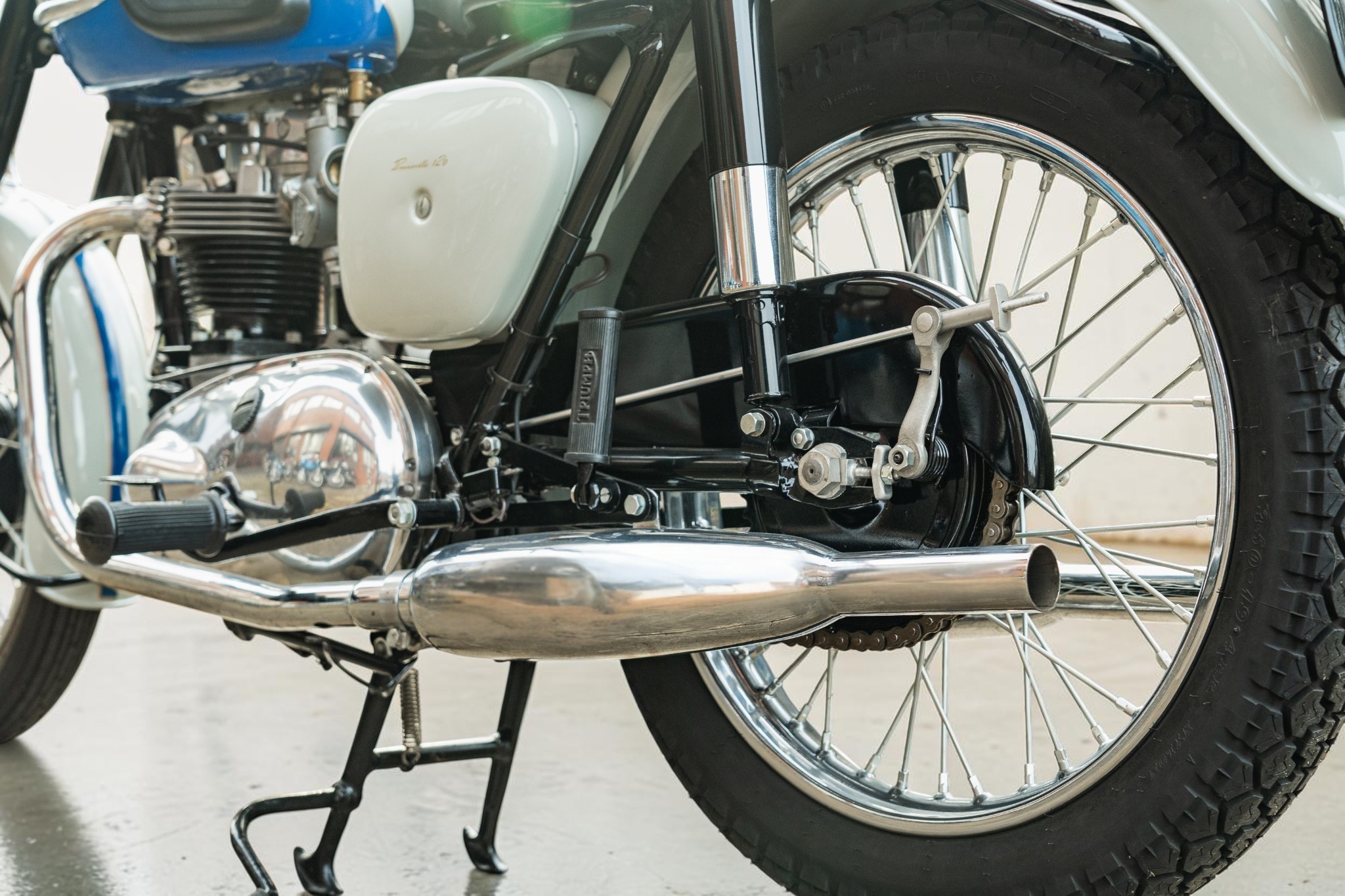
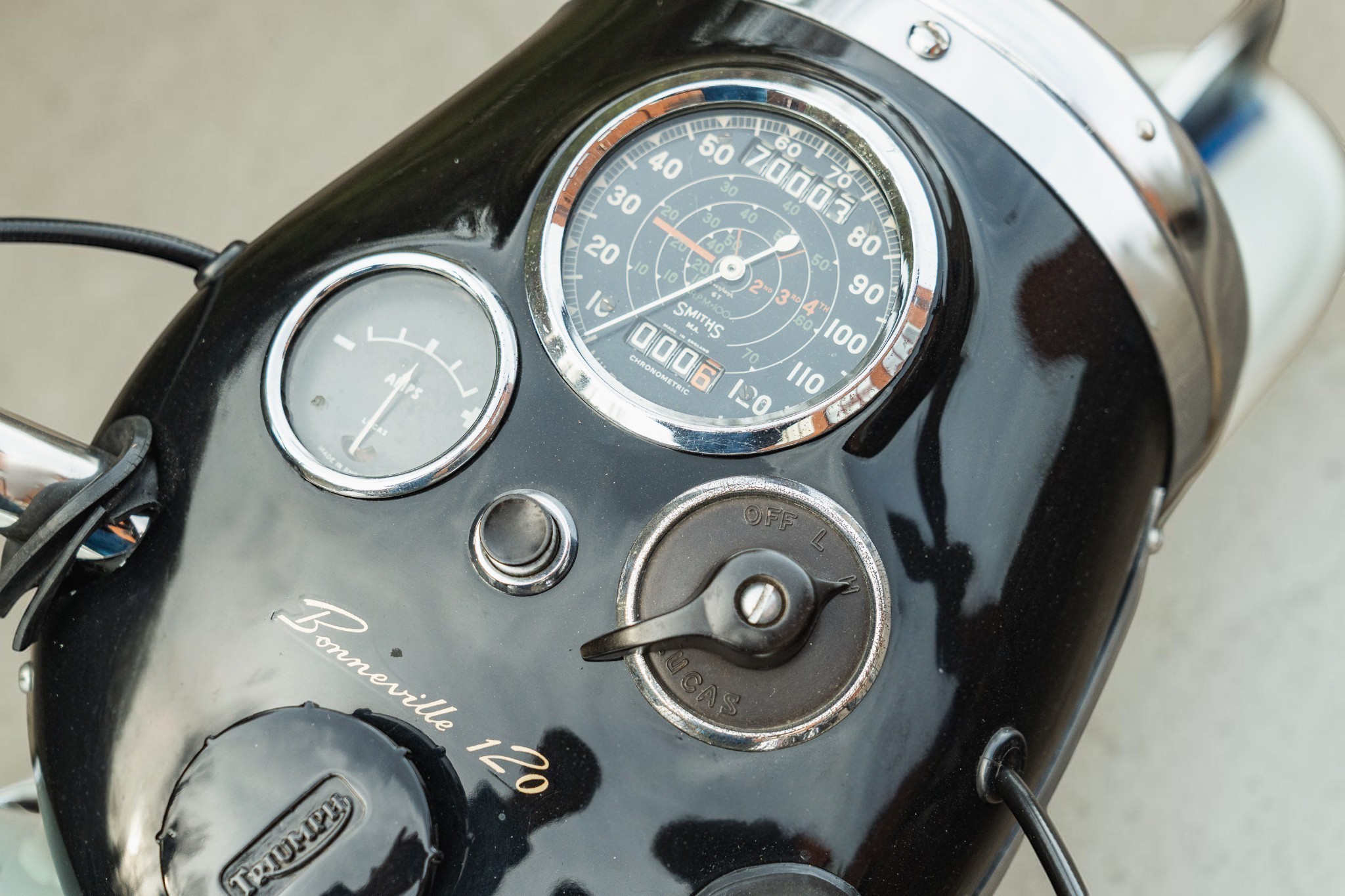

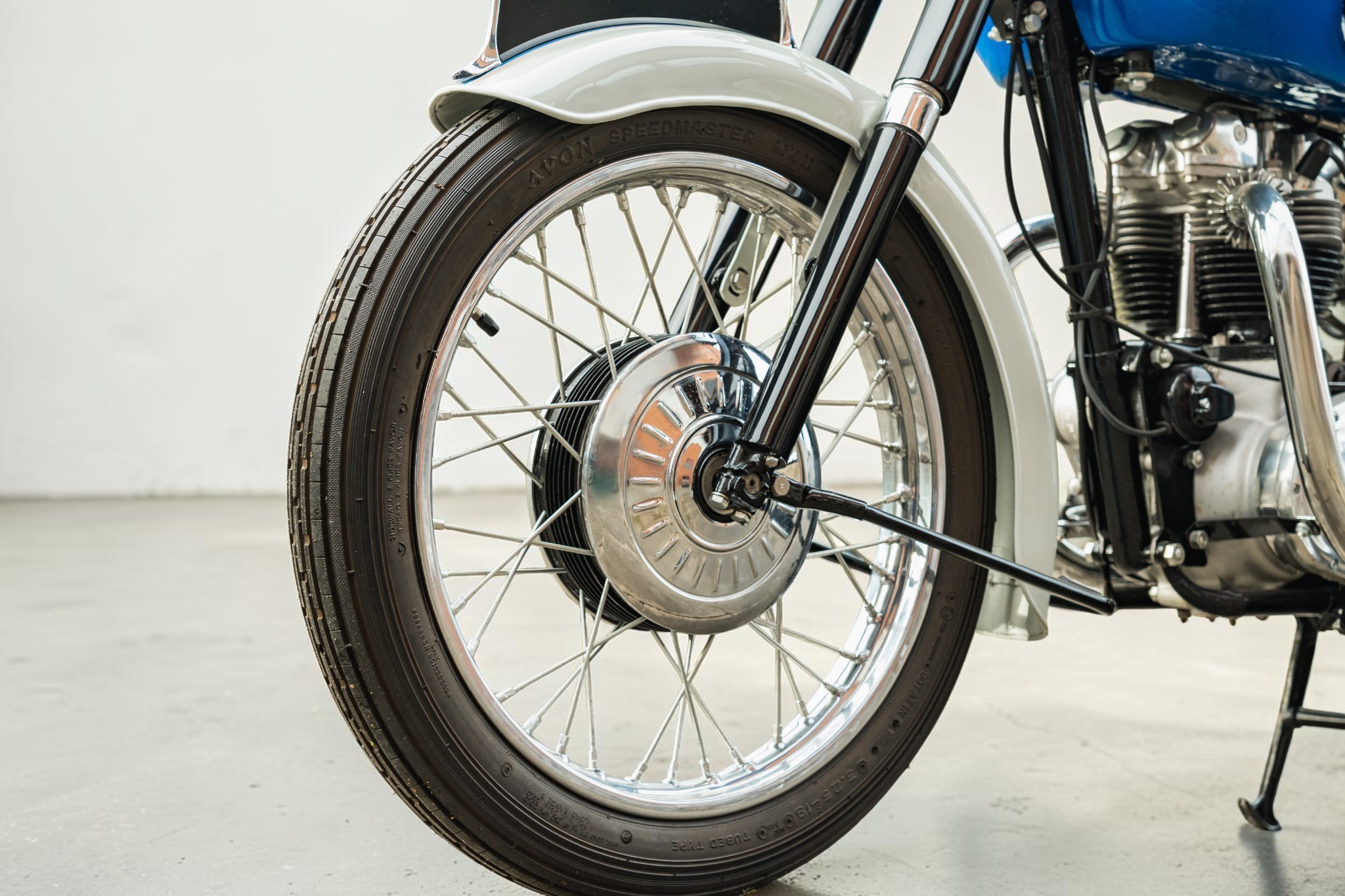
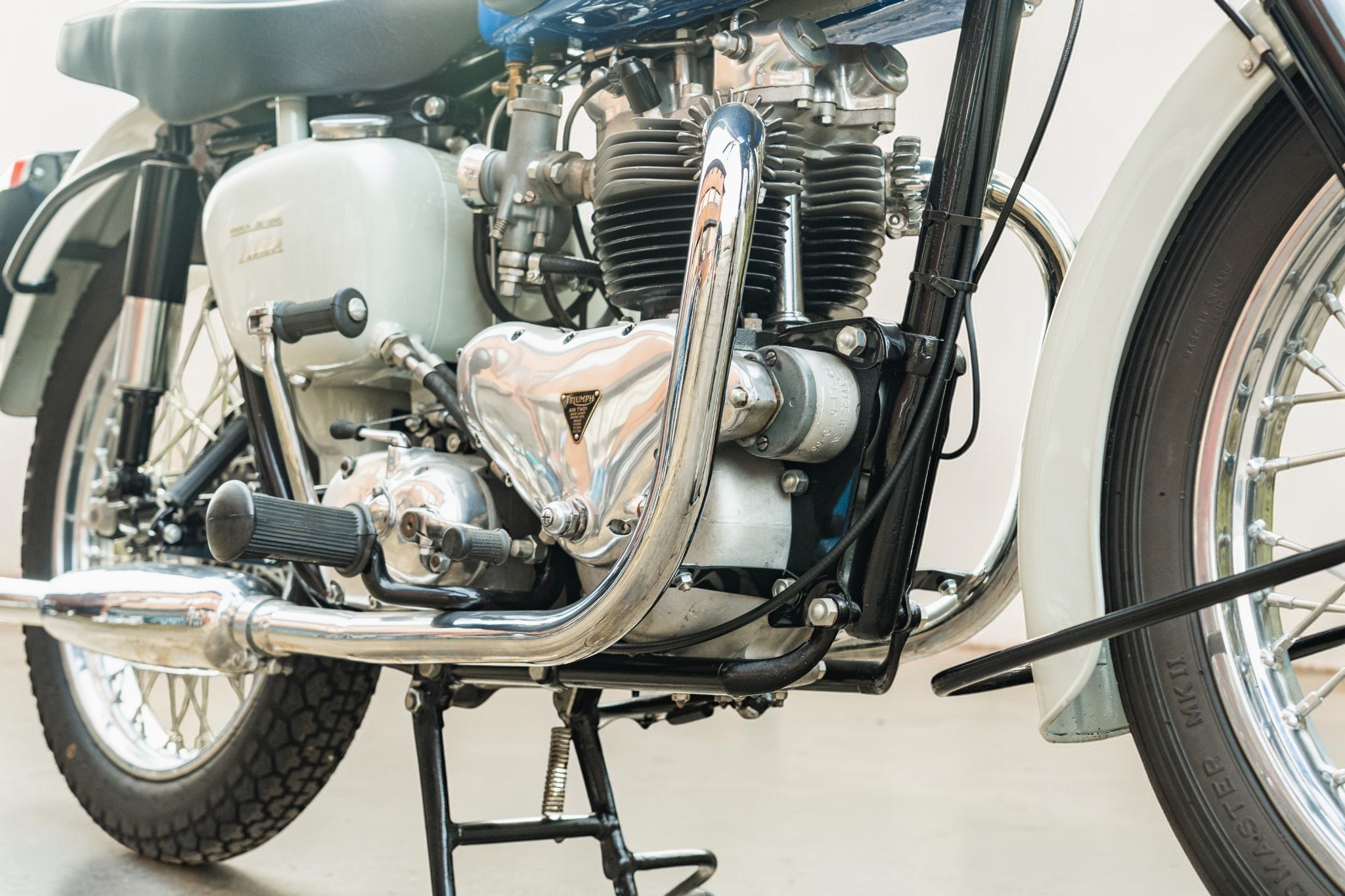

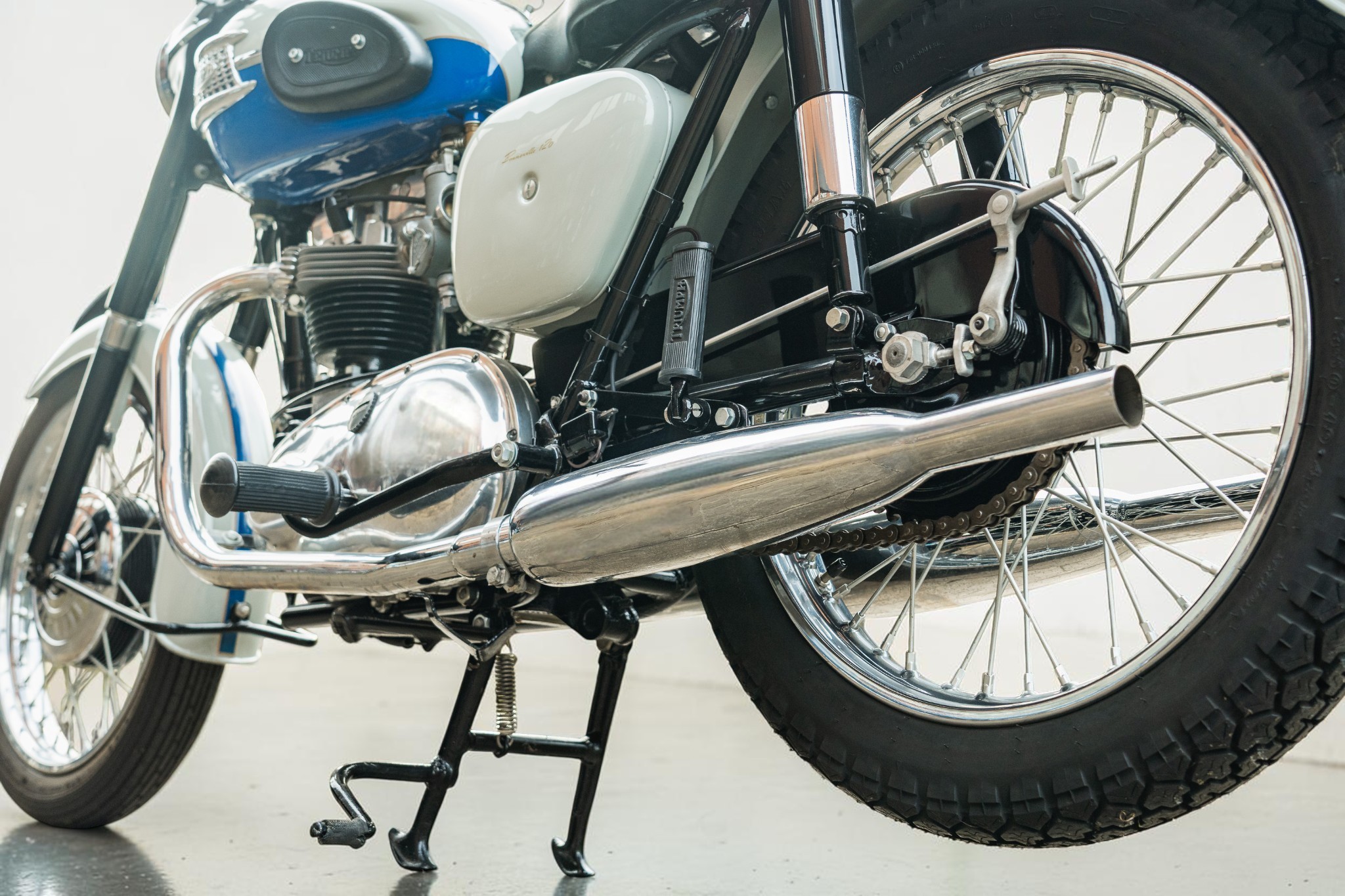
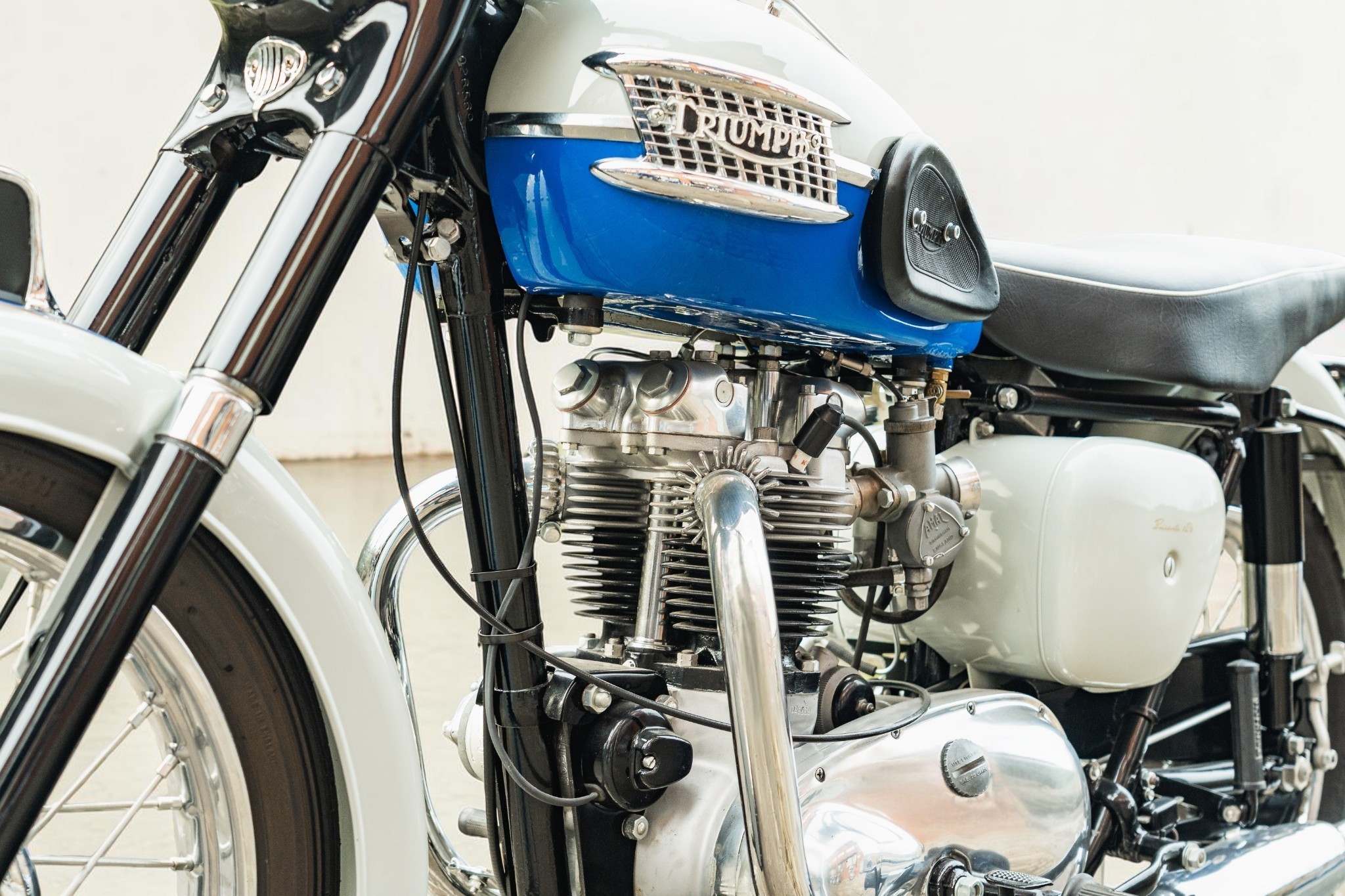
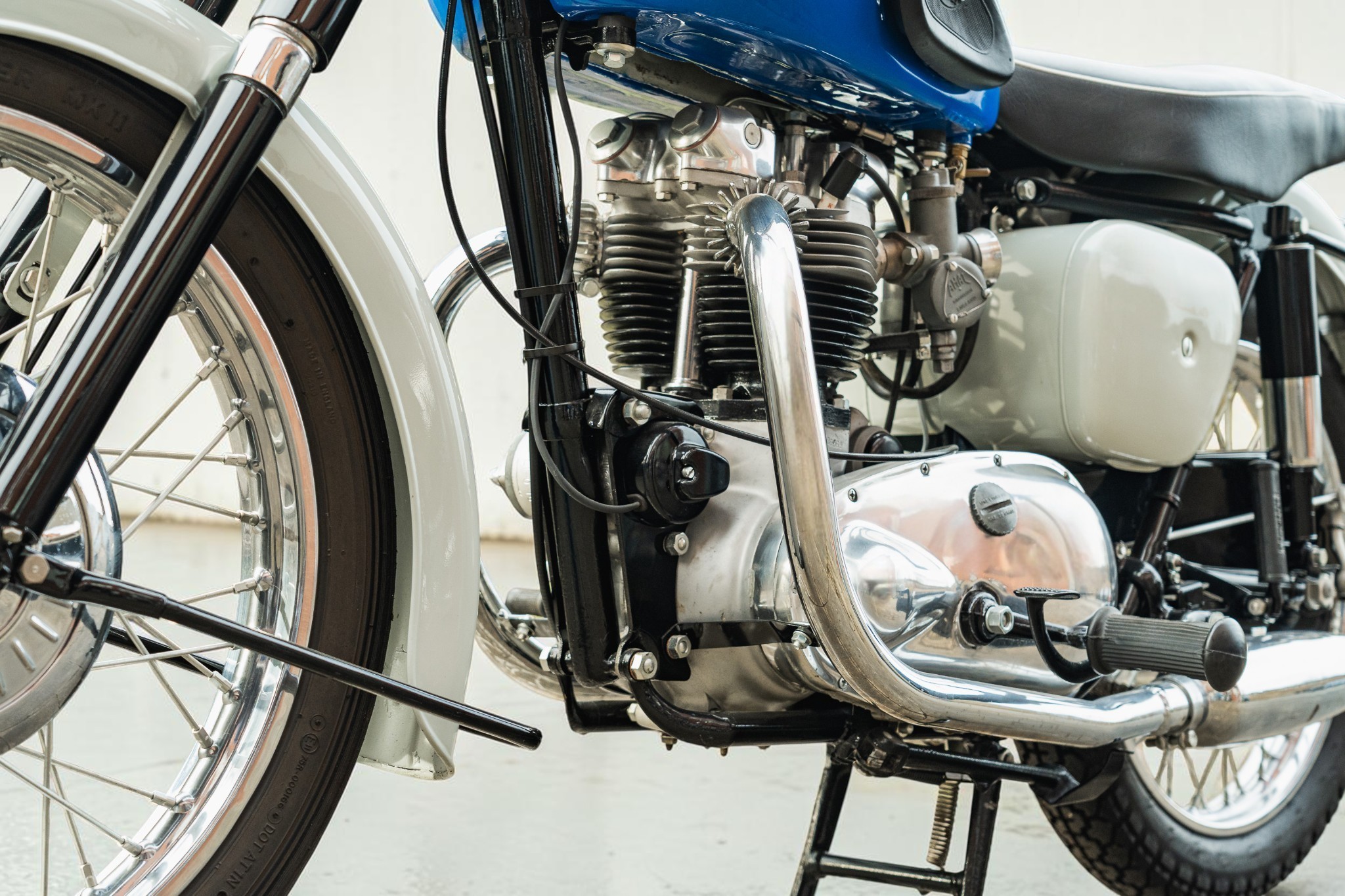
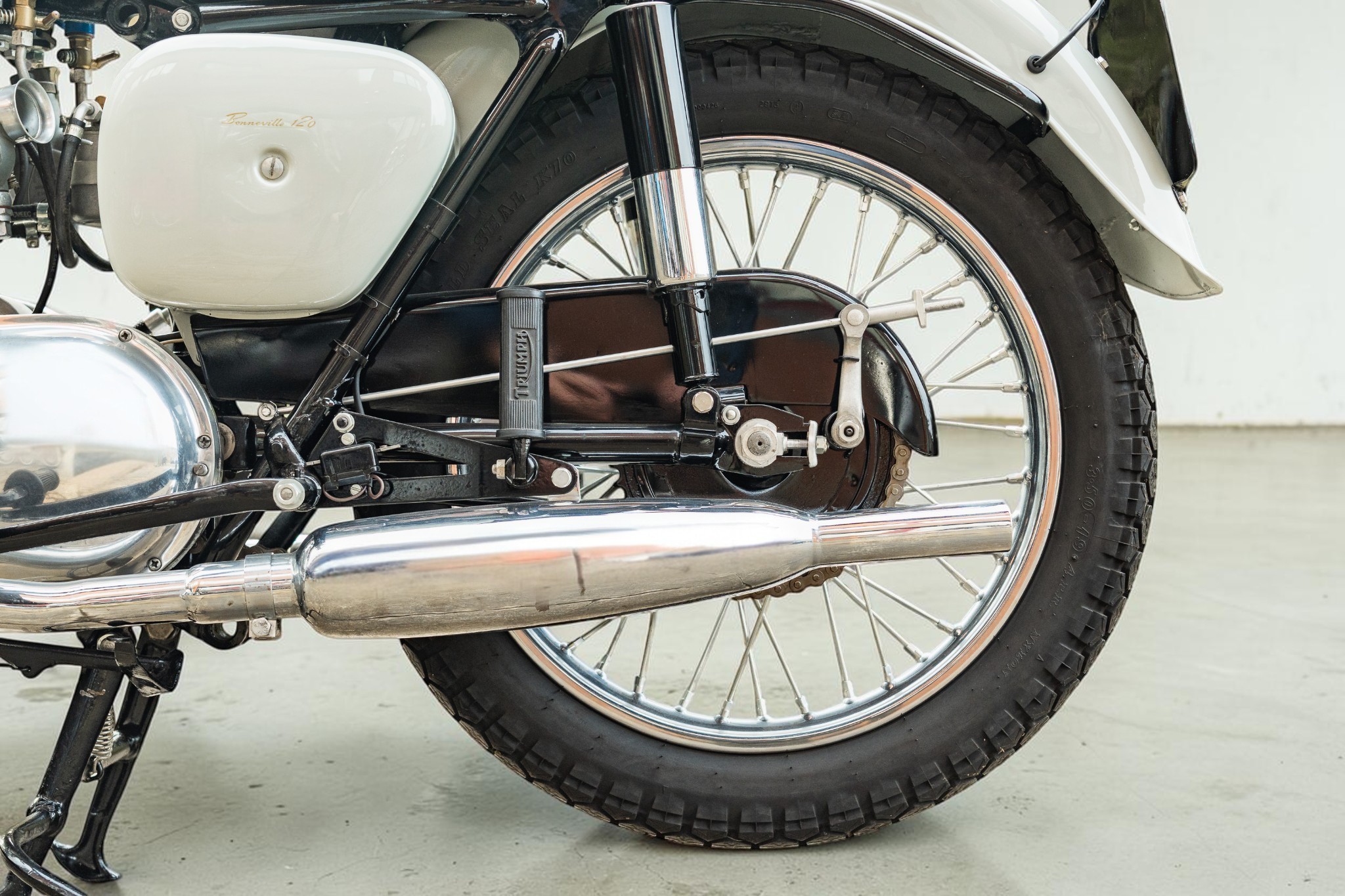
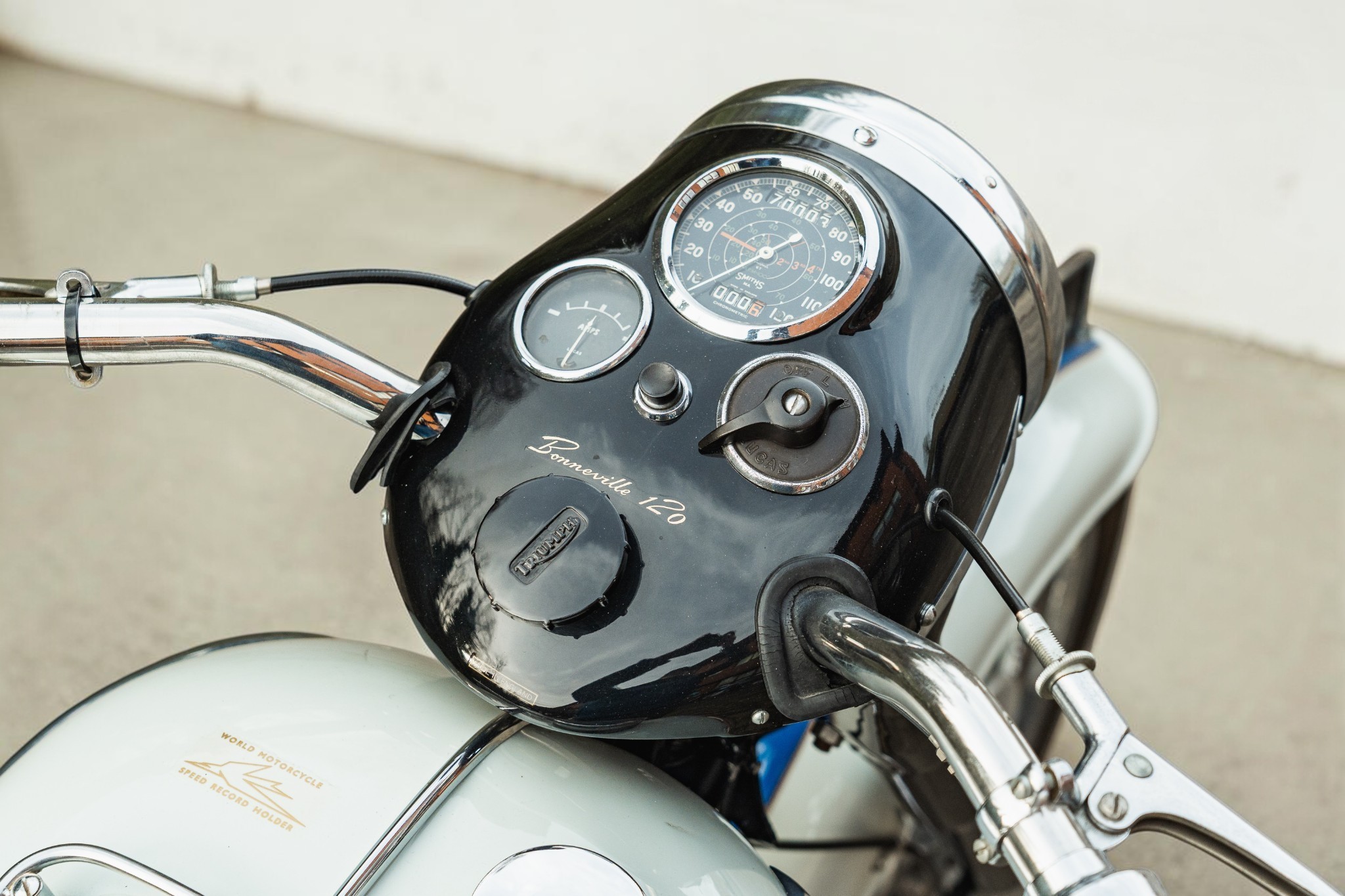
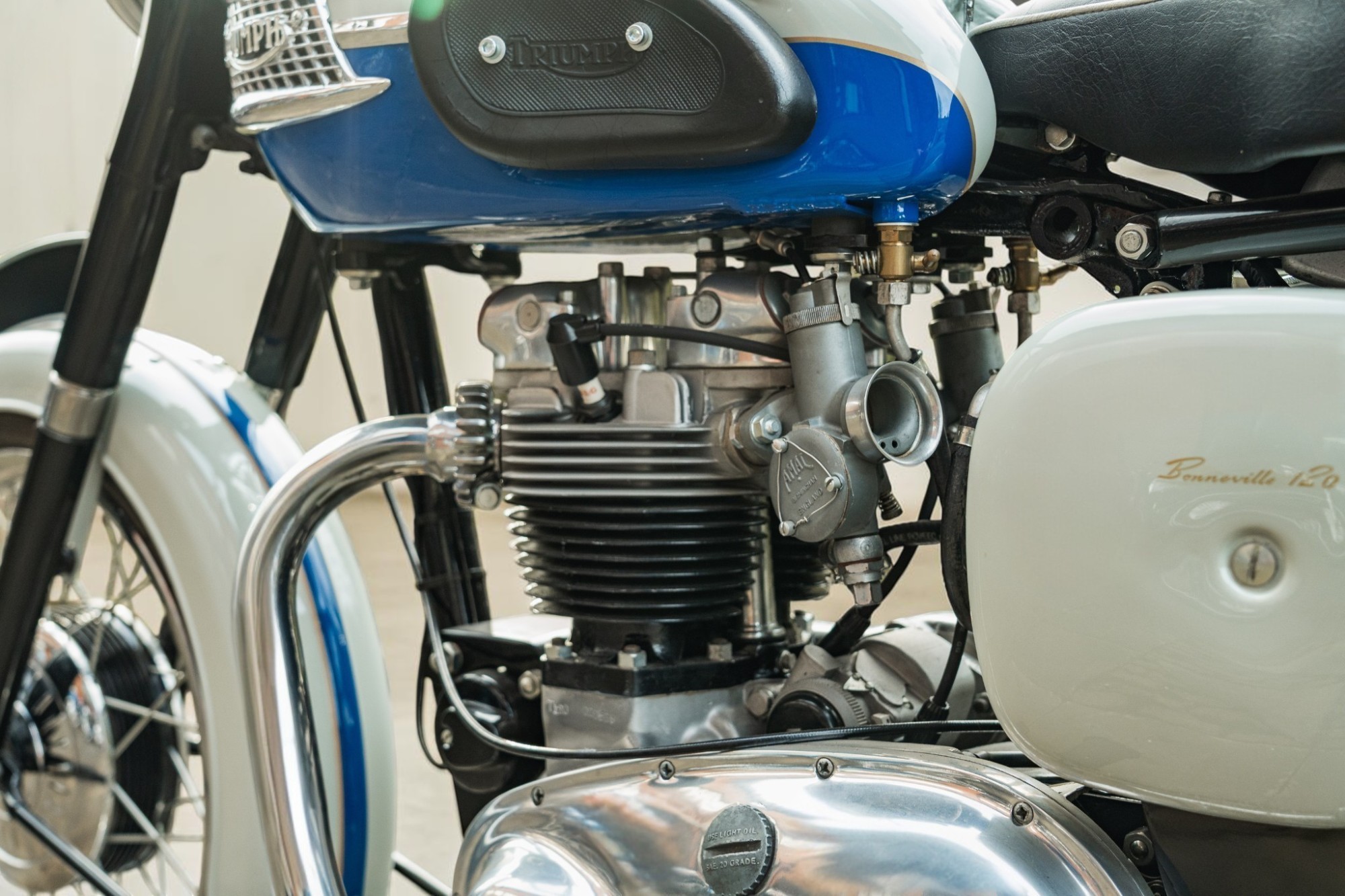
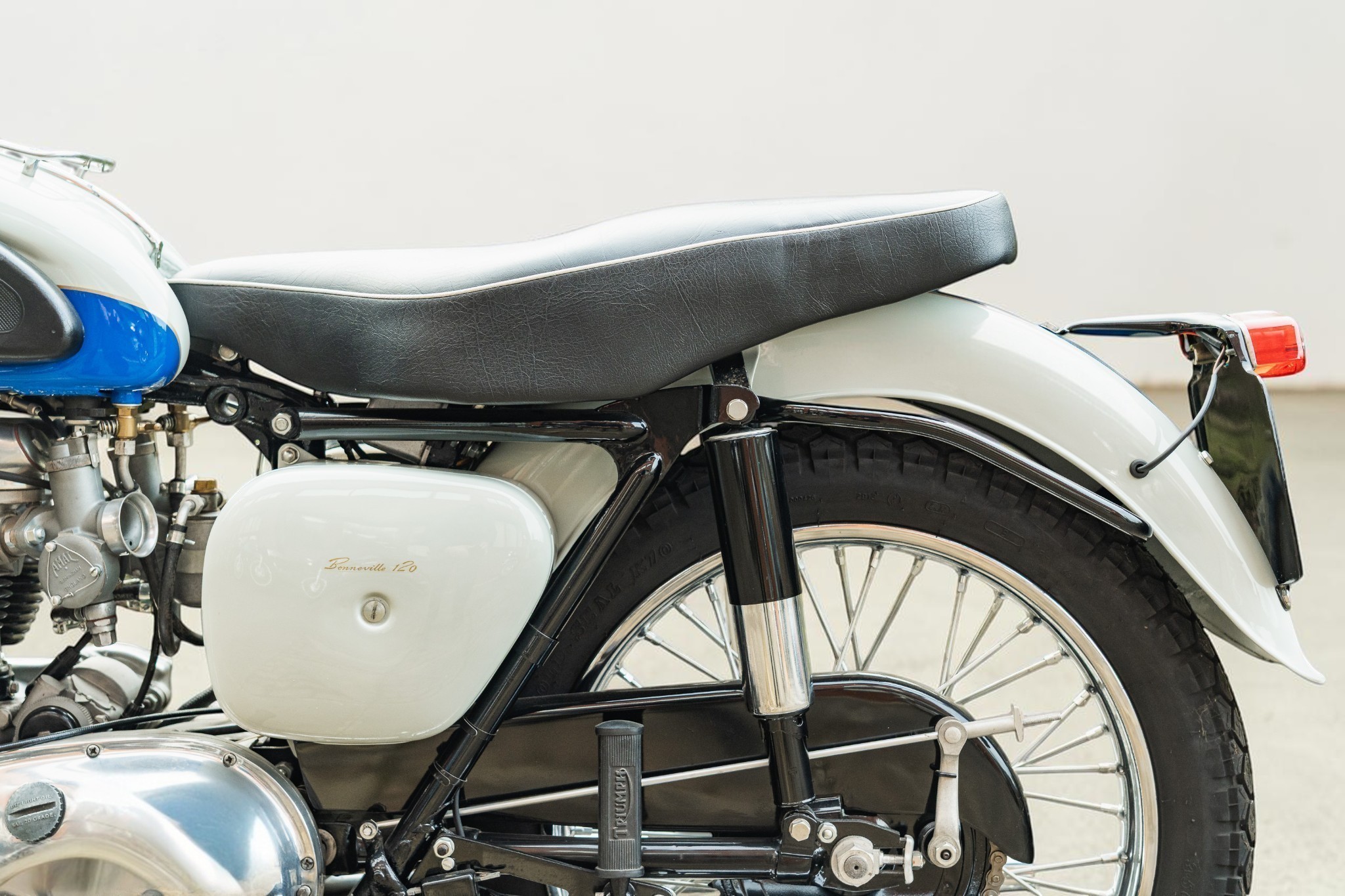


The 1959 Triumph Bonneville T120 is one of the most influential British motorcycles of the post-war era and the machine that established the Bonneville name as a symbol of high-performance Triumph engineering. Introduced at the beginning of the 1959 model year, the T120 evolved directly from Triumph's 650cc performance twins and was developed with the American market firmly in mind.
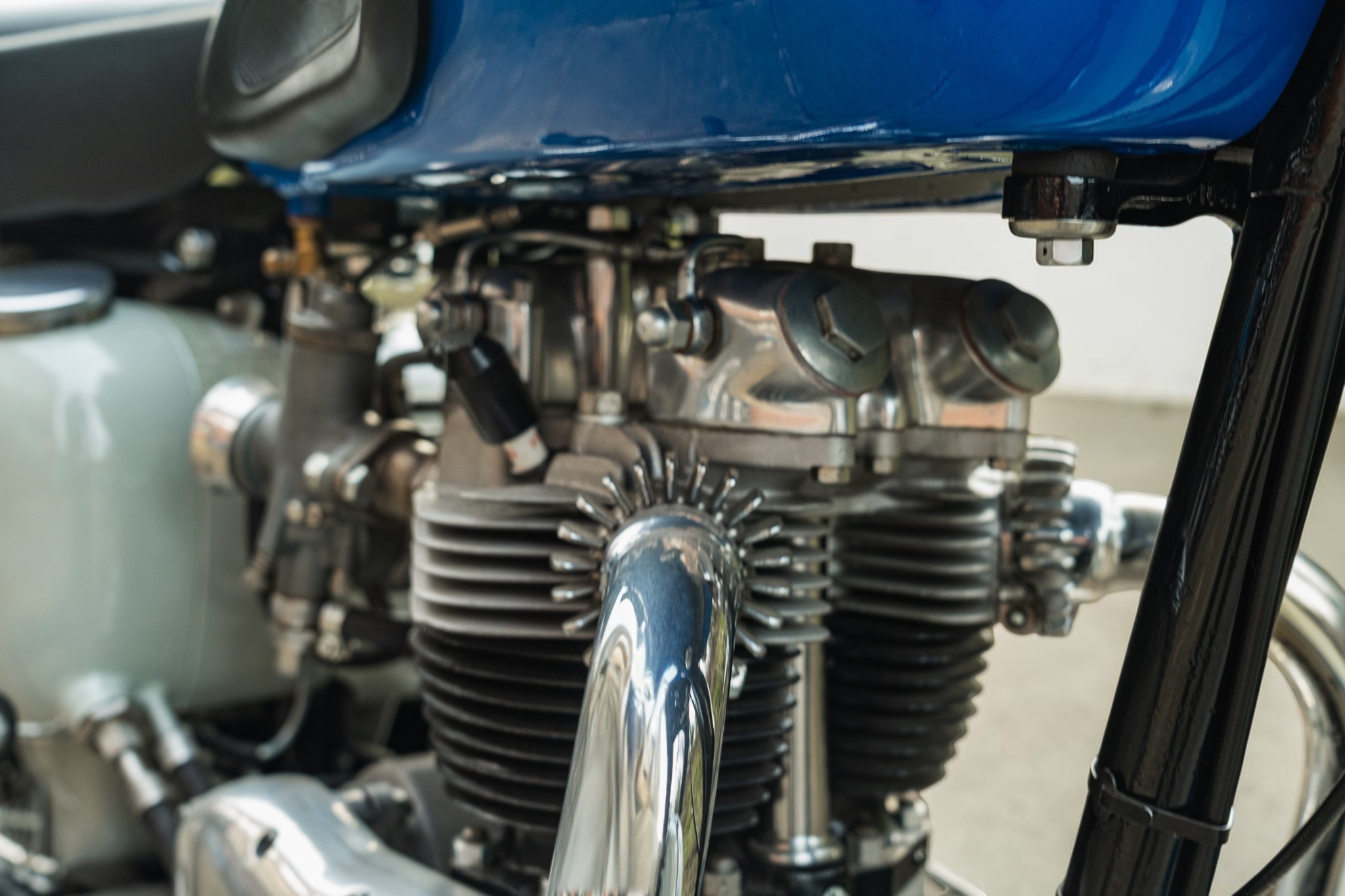
At the heart of the T120 is Triumph's 649cc air-cooled parallel-twin overhead-valve engine. The 650cc twin represented a further development of the Speed Twin and Tiger 100 architecture created under Edward Turner's direction, but the Bonneville received a more performance-oriented specification with twin carburetors and a higher state of tune. The result was a strong, responsive engine capable of combining relaxed road manners with genuinely sporting performance.
The defining mechanical feature of the early Bonneville was its twin-carburetor induction system. Using separate Amal carburetors allowed the two-cylinder engine to breathe more effectively and supported the higher-performance character that distinguished the T120 from the standard Triumph 650 models. The parallel twin retained Triumph's characteristic 360-degree crankshaft arrangement, giving the motorcycle its distinctive exhaust note, vibration pattern, and broad torque delivery.
The engine was coupled to a four-speed transmission and conventional chain final drive. The chassis followed Triumph's established duplex-frame architecture, with telescopic front forks and twin rear shock absorbers providing the suspension. The combination of a relatively compact frame, 19-inch front wheel, and powerful 650cc twin gave the T120 a balanced sporting character that appealed to both everyday riders and performance-oriented enthusiasts.
Styling on the 1959 Bonneville remained unmistakably Triumph. The motorcycle combined a traditional steel fuel tank, slim twin-cylinder frame, chrome detailing, wire wheels, and a clean mechanical layout. The absence of unnecessary bodywork placed the engine and chassis engineering prominently on display, while the distinctive Bonneville tank badges helped establish a visual identity that would become one of the most recognizable in motorcycle history.
The Bonneville name itself was directly connected with speed. Triumph's competition development at the Bonneville Salt Flats had demonstrated the potential of its 650cc parallel twin, and the company used the Bonneville name for its new high-performance production motorcycle. The T120 therefore carried a name that communicated both technical ambition and a direct association with land-speed record competition.
For collectors, the 1959 model is particularly significant because it represents the beginning of the production Bonneville story. Later T120s became increasingly sophisticated and powerful, but the early machine preserves the original concept in a relatively pure form: a compact British 650cc parallel twin, twin carburetors, four-speed transmission, and a direct connection to Triumph's American performance ambitions.
The 1959 Triumph Bonneville T120 is therefore more than simply an early example of a famous model. It is the foundation of one of the longest-running and most influential performance motorcycle names in history, connecting Edward Turner's parallel-twin engineering with Triumph's competition success and the rapidly expanding American motorcycle market.
The history of the Bonneville T120 begins with Triumph's development of the 650cc parallel twin. During the 1950s, Triumph had established the Speed Twin and Tiger 100 engine family as one of the most successful British motorcycle architectures, while American riders increasingly demanded larger and faster machines capable of sustained high-speed road use.
Edward Turner played a central role in shaping Triumph's post-war product strategy. The company's parallel-twin engine had already demonstrated that a compact two-cylinder motorcycle could provide a useful combination of smoothness, performance, and manageable weight. The next logical step was to increase capacity and develop a more sporting version capable of competing with larger American and European motorcycles.
Triumph's 650cc twin became the basis for the Thunderbird and later Tiger and performance models. The T120 Bonneville represented the next important step, adding twin carburetors and a stronger performance emphasis to the established 650cc platform.
The name Bonneville was chosen in recognition of Triumph's high-speed activities at the Bonneville Salt Flats in Utah. Triumph had used a specially prepared 650cc twin in land-speed-record attempts, and the company's success at Bonneville provided the ideal identity for a production motorcycle designed to represent Triumph's fastest road-going twin.
The production Bonneville was introduced for 1959, with the T120 designation reflecting the performance target associated with the model. The motorcycle was developed with the United States as an important market, where the demand for fast, stylish British motorcycles was growing rapidly. The Bonneville's combination of performance, relatively light weight, and simple mechanical design made it especially attractive to American riders.
The first production Bonneville motorcycles were closely related to the existing Triumph 650 range. Rather than creating an entirely new engine, Triumph developed the proven 649cc parallel twin with twin carburetion and a more performance-focused specification. This approach allowed the company to offer a new flagship sporting motorcycle while retaining the proven engineering and manufacturing infrastructure of its existing range.
The 1959 T120 was produced during a period of rapid development in the Triumph model range. Early Bonneville motorcycles should therefore be distinguished from later T120 versions, which received changes to carburetion, frame design, crankcase construction, braking equipment, electrical systems, and other components as Triumph continued refining the motorcycle.
This early production period is one of the reasons the 1959 Bonneville is particularly interesting to collectors. It represents the original specification and styling philosophy before the model evolved through the 1960s into the more familiar Bonneville form associated with the later unit- construction machines.
The Bonneville quickly became one of Triumph's most important export models. Its sporting reputation, high-speed image, and distinctive appearance helped strengthen the company's position in the United States, while its performance credentials contributed to Triumph's growing reputation as one of Britain's leading manufacturers of high-performance motorcycles.
The 1959 Bonneville therefore occupies a pivotal place in Triumph history. It marked the beginning of a model line that would remain in production in various forms for decades and would become one of the most recognizable names in the history of British motorcycling.
The T120's 649cc parallel-twin engine is the defining mechanical feature of the motorcycle. With a bore of approximately 71 mm and a stroke of approximately 82 mm, the long-stroke twin provided a strong combination of torque and high-speed capability. The engine used overhead valves and Triumph's characteristic 360-degree crankshaft configuration.
The major performance distinction between the Bonneville and the standard Triumph 650 twins was its twin-carburetor arrangement. Two Amal carburetors supplied the individual cylinders, improving the engine's breathing and supporting the higher-output character expected from the T120.
The engine's performance was supported by a four-speed gearbox. This allowed the rider to make effective use of the twin's broad torque curve while providing a suitable top gear for sustained high-speed road riding. The conventional chain final drive kept the drivetrain simple and easy to service.
The chassis used Triumph's proven duplex frame, telescopic front fork, and twin rear shock absorbers. This combination provided a useful balance between stability and sporting response. Compared with many heavier contemporary motorcycles, the Bonneville's relatively compact dimensions contributed to its reputation as an agile and responsive high-performance machine.
The braking system used traditional drum brakes, reflecting the technology available at the time. The early Bonneville was not equipped with the disc brakes that would become associated with later high-performance Triumph motorcycles. Its braking, suspension, and tire specification should therefore be understood within the context of late-1950s British motorcycle engineering.
The T120's mechanical character was a major part of its appeal. The parallel twin delivered a distinctive combination of low-frequency torque, strong acceleration, and a characteristic exhaust note produced by the 360-degree crankshaft. For riders accustomed to large single-cylinder motorcycles, the Bonneville offered a smoother and more sustained form of performance without the complexity of a four-cylinder engine.
The result was a motorcycle capable of serving as both a fast road machine and a sporting platform. Its engine architecture was simple enough for private owners and independent mechanics to understand, yet sufficiently capable to support racing, tuning, and high-speed development.
The Bonneville name is inseparable from Triumph's speed-record activities at the Bonneville Salt Flats in Utah. During the 1950s, the salt flats had become one of the world's most important venues for motorcycle land-speed attempts, offering a vast surface on which manufacturers and private teams could pursue high-speed records.
Triumph's 650cc parallel twin proved highly effective in this environment. A specially prepared Triumph ridden by Johnny Allen achieved remarkable speeds at Bonneville, establishing a direct link between the company's competition and record-breaking activities and the name eventually applied to the production T120.
The Bonneville name therefore carried more than marketing value. It represented Triumph's ambition to demonstrate that a relatively compact British parallel twin could compete at extreme speeds against larger and more powerful motorcycles.
This connection is particularly important when understanding the 1959 T120. The production machine was not itself a land-speed-record motorcycle, nor should a standard road-going Bonneville be described as having the exact specification of the record machine. Instead, the production T120 translated the reputation and engineering philosophy of Triumph's Bonneville record program into a motorcycle that private riders could purchase and ride on public roads.
That relationship between record-breaking development and production engineering became a recurring theme in Triumph's history. The Bonneville name effectively transformed a land-speed achievement into a permanent performance identity for the company.
The 1959 Bonneville also represents the maturity of Edward Turner's parallel-twin engineering philosophy. Turner's original Speed Twin concept had demonstrated that two cylinders could provide a powerful alternative to the large singles and V-twins that dominated much of the British market.
By the late 1950s, Triumph's parallel twin had grown from the original 498cc Speed Twin architecture into a 649cc performance engine. The Bonneville represented the sporting peak of this development before later Triumph engineers introduced further changes to crankcases, cylinder construction, gearboxes, and frame architecture.
The T120's importance is therefore not limited to the Bonneville name itself. It represents the point at which Triumph's parallel-twin formula became an internationally recognized high-performance motorcycle concept.
The combination of compact dimensions, relatively low weight, twin-cylinder smoothness, and strong performance proved particularly successful in export markets. In the United States, the Bonneville became closely associated with the emerging performance and custom motorcycle culture of the 1960s.
Later Triumph twins would evolve substantially, but the fundamental T120 formula remained influential: a 650cc British parallel twin, sporting chassis, simple mechanical construction, and enough performance potential to support both road riding and competition use.
The United States was central to the development and success of the Bonneville concept. American riders were increasingly interested in lightweight European motorcycles that offered performance, style, and handling characteristics different from the larger domestic machines available at the time.
Triumph's relatively compact 650cc twin was particularly well suited to this environment. The T120 provided enough performance for American highways while remaining considerably lighter and more compact than many large-displacement motorcycles.
The motorcycle also became attractive to riders interested in personalization and performance tuning. Its accessible parallel-twin architecture could be modified for increased performance, while the relatively simple chassis provided a useful foundation for sporting and custom applications.
This American influence would become increasingly important throughout the 1960s, when Triumph Bonneville motorcycles became closely associated with the emerging café-racer, desert-racing, and custom motorcycle scenes. The 1959 T120 represents the beginning of that cultural trajectory.
The 1959 Triumph Bonneville T120 is one of the most historically significant motorcycles in the entire Triumph catalog. It is the original production generation of a model name that would become synonymous with British performance motorcycling around the world.
Early-production examples are particularly desirable because they preserve the original concept before the Bonneville evolved through numerous mechanical and chassis revisions. Collectors can therefore see the 1959 T120 as a snapshot of Triumph's engineering philosophy at the precise moment when the Bonneville name entered the production motorcycle market.
Correct specification is especially important with early Bonnevilles. Because later T120 models became much more common and many motorcycles have been restored, modified, or upgraded over the decades, original or correctly restored 1959 components can have substantial historical importance.
Collectors should pay particular attention to engine and frame numbers, early tank and badge configuration, correct carburetors, original-style exhaust systems, correct frame components, electrical equipment, and period-correct wheels and braking equipment when evaluating an early Bonneville.
The motorcycle's historical significance is strengthened by its relationship with Triumph's Bonneville Salt Flats record program, Edward Turner's 650cc parallel-twin development, and the rapid growth of the American market for British performance motorcycles.
For collectors of British motorcycles, early Triumph twins, land-speed-record history, and post-war sporting machines, the 1959 T120 offers a rare combination of engineering significance, cultural importance, and model-line provenance.
This 1959 Triumph Bonneville T120 represents the beginning of one of the most important performance motorcycle names in British motorcycle history. With its 649cc OHV parallel-twin engine, twin Amal carburetors, four-speed transmission, duplex frame, and sporting chassis, the early T120 captures Triumph's transition from successful post-war twin-cylinder motorcycles to an internationally recognized high-performance motorcycle brand.
The Bonneville name itself connects this motorcycle with Triumph's record-setting activities at the Bonneville Salt Flats, while the 650cc twin reflects the engineering philosophy developed under Edward Turner. The result is a motorcycle with unusually strong links between production engineering, competition development, and the rapidly expanding American motorcycle market.
For collectors seeking an early British performance motorcycle, an original-generation Triumph Bonneville, or an important Edward Turner-era parallel twin, the 1959 T120 offers exceptional historical significance. Correct specification, originality, provenance, and period-correct components are particularly important when evaluating an early example.
Worldwide shipping is available. Contact us for additional photographs, detailed specification information, engine and frame numbers, restoration details, provenance, and purchasing information for this 1959 Triumph Bonneville T120.
The Vintage Motorcycles presents a curated selection of historically significant British vintage motorcycles, with a dedicated focus on Triumph Motorcycles, a manufacturer that came to define the global perception of British engineering through a combination of performance-oriented design, mechanical refinement, and industrial scalability. Originating in the late 19th century and evolving through both bicycle and motorized production, Triumph represents a convergence of craftsmanship and engineering discipline that would later influence motorcycle development far beyond the United Kingdom.
This collection is contextualized within the broader ecosystem of global motorcycle history, where you can explore additional manufacturers through our global vintage motorcycle brands archive. Within the British engineering landscape, Triumph occupies a central role, bridging early experimental motorcycle construction with the emergence of standardized, performance-capable machines that gained international recognition. These developments are best understood within the framework of pre-war motorcycle engineering (1900-1939), where competitive racing, mechanical innovation, and industrial organization collectively shaped the evolution of European motorcycles.
Each motorcycle within our collection is carefully selected based on provenance, originality, and mechanical integrity, ensuring alignment with museum-grade preservation standards. Available machines can be explored through our global vintage motorcycle inventory, including a range of Triumph models - from early single-cylinder machines to later configurations that reflect increasing mechanical sophistication - as well as structurally adaptable setups represented in our sidecar motorcycle collection, illustrating the versatility of British engineering across both civilian and applied contexts. All acquisitions are supported by a fully insured international shipping service designed for global collectors.
British engineering has long been associated with a synthesis of performance, precision, and competitive validation, and Triumph stands as one of its most influential representatives. Unlike purely utilitarian manufacturers, Triumph developed motorcycles that balanced everyday usability with measurable performance capabilities, often validated through racing and endurance events. This dual focus contributed to a design philosophy that emphasized not only mechanical reliability, but also responsiveness, power delivery, and rider engagement.
This trajectory becomes clearer when examined through broader historical transitions. During the early 20th century, Triumph played a significant role in the dynamic environment documented in pre-war motorcycle development, where engineering experimentation increasingly converged with competitive performance benchmarks. As global conflict reshaped industrial priorities, motorcycle design shifted toward durability and operational resilience, as reflected in wartime motorcycle engineering, where robustness and ease of maintenance became critical under demanding conditions.
In the post-war period, Triumph emerged as a globally recognized manufacturer, contributing to the expansion of mass production while retaining elements of its performance-oriented heritage. This evolution is further explored in post-war motorcycle development, where standardization, export markets, and cultural influence played an increasingly important role in shaping motorcycle design. Within this broader continuum, Triumph represents a key reference point for understanding how British engineering extended from domestic innovation into an international benchmark for motorcycle performance and identity.
Key Highlights
Collector Assurance
All enquiries handled with discretion. We typically respond within 6 hours.
Choose the payment method that is most convenient for you. We accept widely used international payment methods as well as, where available, local bank transfer options that allow you to pay like a domestic transaction. Full payment instructions are provided for your specific purchase.
Direct international bank wire transfer is available for motorcycle purchases and export transactions.
Credit card payments can be arranged through Wise.com, subject to the applicable payment and processing conditions.
PayPal is accepted. A 5% PayPal processing fee applies to the transaction.