
The Vintage Motorcycles
Specialists in antique, classic, veteran and vintage motorcycles.
Specialists in antique, classic, veteran and vintage motorcycles.


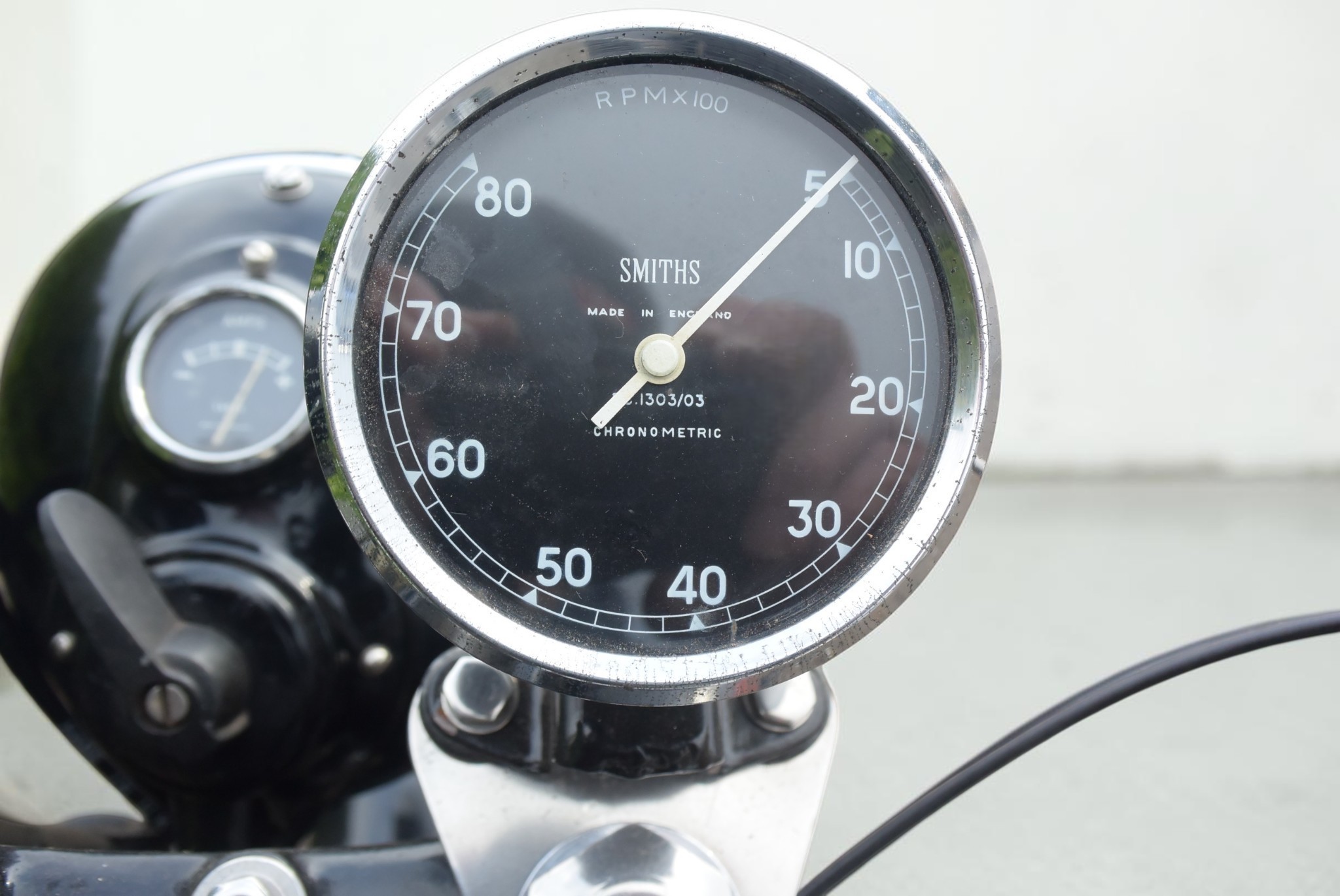


The 1962 BSA Rocket Gold Star was one of the most celebrated high-performance British motorcycles of the early 1960s and the final sporting development of BSA's long-running A10 parallel-twin engine. Introduced in February 1962, the Rocket Gold Star combined the tuned 646cc Super Rocket engine with a Gold Star-type chassis, creating a fast and distinctive motorcycle that bridged BSA's pre-unit twin-cylinder era and the new generation of unit-construction machines.
The Rocket Gold Star was built around a 646cc air-cooled overhead-valve parallel-twin engine with a 70 x 84 mm bore and stroke. The standard engine used a 9:1 compression ratio, a 357 Spitfire camshaft, and an Amal Monobloc carburetor, producing approximately 46 bhp at 6,250 rpm.
For riders seeking greater performance, BSA offered competition-oriented options including an Amal GP2 carburetor, a siamesed exhaust system, and the close-ratio RRT2 gearbox. With the appropriate performance equipment, output was approximately 50 bhp.
The chassis was derived from the Gold Star concept and used a strong duplex-downtube steel frame with swinging-arm rear suspension and telescopic front forks. The combination of a powerful pre-unit twin, relatively light chassis, and sporting geometry gave the Rocket Gold Star an impressive performance for its time.
The motorcycle was produced for only two model years, 1962 and 1963. Total production is generally recorded at 1,584 examples, including 272 off-road scrambler versions. This short production period and limited volume have made the Rocket Gold Star one of the most desirable BSA twins for collectors.
Today, an authentic 1962 Rocket Gold Star is particularly significant because surviving examples are often compared against numerous replicas assembled from Super Rocket and Gold Star components. Original frame and engine numbers, factory documentation, correct equipment, and provenance are therefore extremely important when establishing authenticity.
The Rocket Gold Star was created from the meeting of two established BSA designs: the high-performance Gold Star chassis and the powerful A10 Super Rocket engine.
The idea was initially developed by BSA dealer and Gold Star specialist Eddie Dow. A customer wanted the performance of the Super Rocket twin combined with the handling and appearance of a Gold Star. Dow assembled such a machine using a Gold Star frame and a Super Rocket engine, demonstrating the potential of the combination.
BSA recognized the appeal of the concept and decided to develop it for limited production. The resulting motorcycle became known as the Rocket Gold Star, although it is also frequently referred to as the Gold Star Twin.
The new model was introduced in February 1962. It used the latest 646cc Super Rocket engine, but with additional tuning intended to raise performance beyond the standard Super Rocket specification.
The engine received a 9:1 compression ratio and a 357 Spitfire camshaft. The standard carburetor was a 1 5/32-inch Amal Monobloc, and the standard engine produced approximately 46 bhp.
BSA also offered a selection of competition-oriented equipment. The optional Amal GP2 carburetor, siamesed exhaust system, and RRT2 close-ratio gearbox could raise the performance to approximately 50 bhp and significantly increased the purchase price.
The Rocket Gold Star appeared at a time when BSA was preparing to replace its pre-unit A10 range with the new unit-construction A65 twins. As a result, the RGS had an exceptionally short production life and became the ultimate development of the traditional A10 platform.
Production ended in 1963 as BSA concentrated increasingly on its new unit-construction models. The Rocket Gold Star therefore represents the end of a major chapter in BSA twin-cylinder engineering.
The 1962 BSA Rocket Gold Star uses a 646cc air-cooled four-stroke parallel-twin engine with overhead valves.
The engine has a 70 mm bore and an 84 mm stroke, giving a displacement of 646cc. The cylinders share a common crankcase and use the traditional BSA A10 pre-unit engine architecture.
The standard compression ratio was increased to 9:1 for Rocket Gold Star specification. This was higher than the contemporary standard Super Rocket and helped increase both power and throttle response.
A BSA 357 Spitfire camshaft was fitted to provide more sporting valve timing. The camshaft was derived from BSA's performance development work and helped the Rocket Gold Star deliver stronger power at higher engine speeds.
The standard carburetor was an Amal Monobloc with a 1 5/32-inch bore. BSA also offered an Amal GP2 racing carburetor as an optional performance upgrade.
Standard output was approximately 46 bhp at 6,250 rpm. With the optional performance equipment, the Rocket Gold Star could produce approximately 50 bhp.
The engine retained a 360-degree crankshaft arrangement characteristic of the A10 family. This gave the twin its distinctive firing rhythm and mechanical character.
Lubrication was by a dry-sump system using a separate oil tank. The dry-sump arrangement was retained from the A10 family and was well suited to sustained high-speed operation.
Ignition was provided by a Lucas magneto system. The combination of magneto ignition, dry-sump lubrication, overhead valves, and separate gearbox maintained the traditional pre-unit BSA architecture even though the Rocket Gold Star was a thoroughly performance-oriented motorcycle.
The engine's strong mid-range torque made the Rocket Gold Star effective on the road, while its high-revving capability allowed it to compete with some of the fastest British motorcycles of the period.
The Rocket Gold Star uses a four-speed foot-change gearbox with the gearbox mounted separately from the engine, following the traditional pre-unit BSA arrangement.
The standard gearbox was designed for fast road use, while the RRT2 close-ratio gearbox was available as a highly desirable competition option.
The RRT2 was particularly suited to sporting riding because its closely spaced ratios helped keep the engine within its useful power band during acceleration.
Primary drive is by a single-row chain from the engine to the clutch.
The clutch is a multi-plate unit incorporating a cush-drive arrangement to help absorb transmission shock from the powerful parallel twin.
Final drive is by chain from the gearbox to the rear wheel.
The combination of the tuned 646cc engine and close-ratio transmission made the Rocket Gold Star capable of rapid acceleration and high sustained road speeds.
The pre-unit drivetrain also gives the motorcycle a very distinctive mechanical character. Unlike later unit-construction BSA twins, the engine and gearbox remain separate assemblies, which is one of the defining features of the A10-based Rocket Gold Star.
The Rocket Gold Star uses a strong steel duplex-downtube frame with a full cradle arrangement supporting the engine.
The frame was developed from the Gold Star chassis concept and was designed to provide the rigidity and stability necessary for a high-performance motorcycle.
Rocket Gold Star frames carry the distinctive GA10 frame prefix. This is an important identification feature because authentic RGS frames are different from the frames used on ordinary A10 motorcycles.
The frame does not have the characteristic oil-pump clearance kink found in the frames of the Gold Star single-cylinder models. This distinction is useful when authenticating an RGS.
At the front is a pair of hydraulically damped telescopic forks with coil springs. The telescopic fork represented the modern direction of BSA chassis development by the early 1960s and provided considerably more controlled suspension movement than the girder forks used on earlier Gold Stars.
The rear uses swinging-arm suspension with twin shock absorbers. This was another major difference from the rigid rear chassis of the pre-war M24 and from the earliest Gold Star singles.
The combination of a duplex frame, telescopic forks, swinging arm, and twin shocks gave the Rocket Gold Star a more sophisticated chassis than many earlier BSA performance motorcycles.
The standard Rocket Gold Star uses an 8-inch front drum brake and a 7-inch rear drum brake.
The large front drum provided substantial stopping power for the period, while an optional racing brake was available for riders seeking additional performance.
The chassis was designed around fast road riding and benefited from the stiffness of the duplex frame and the control provided by telescopic front suspension and swinging-arm rear suspension.
Standard wheel sizes were 19 inches at both ends. The motorcycle used alloy wheel rims with wire spokes, helping to reduce unsprung weight and contributing to the sporting nature of the chassis.
The standard front tire was approximately 3.25 x 19 inches, while the rear used approximately 3.50 x 19-inch equipment depending on specification.
The Rocket Gold Star combined relatively compact dimensions with a powerful twin-cylinder engine. This gave it a strong reputation for handling and high-speed stability.
The Gold Star-derived chassis was a major part of the motorcycle's appeal. BSA was not simply installing a larger engine into a standard touring frame; the RGS was deliberately developed as a performance motorcycle.
The 1962 Rocket Gold Star has one of the most recognizable silhouettes of the classic British motorcycle era. Its large chrome and painted fuel tank, narrow seat, exposed parallel-twin engine, alloy rims, telescopic forks, and sporty exhaust arrangement give it an unmistakable appearance.
The motorcycle's styling deliberately drew on the Gold Star tradition. The seat, tank proportions, instrumentation, and overall stance were influenced by the successful Gold Star singles.
Most Rocket Gold Stars were finished in the traditional BSA sporting color schemes, with red and chrome being especially associated with the model. Other finishes, including black and silver examples, were also produced.
The motorcycle could be equipped with an alloy fuel tank, low Ace handlebars, gaitered forks, and other competition-oriented equipment as options.
The optional siamesed exhaust system was particularly distinctive. It combined the two exhaust outlets into a single system and was associated with the higher-performance specification.
The Gold Star identity was important to BSA's marketing. The company was able to combine the prestige of the famous Gold Star name with the smoothness and torque of its 650cc twin-cylinder engine.
The result was a motorcycle that looked like a Gold Star but delivered the performance and character of BSA's most developed A10 twin.
The standard Rocket Gold Star was already a fast motorcycle, but BSA offered several factory performance options for riders who wanted greater speed and competition capability.
The most important engine upgrade was the Amal GP2 carburetor. This larger racing carburetor allowed the engine to breathe more effectively at high rpm.
The optional siamesed exhaust system was another significant performance component. It reduced the complexity of the standard exhaust arrangement and was associated with the higher-output specification.
The RRT2 close-ratio gearbox was one of the most desirable options. Its closely spaced ratios were designed to keep the engine operating near its peak power range.
With the appropriate combination of performance equipment, the Rocket Gold Star was capable of approximately 50 bhp.
Period performance figures commonly place the top speed of a well-prepared Rocket Gold Star at approximately 110 to 115 mph, with the optional high-performance specification capable of greater speed under favorable conditions.
Some period racing and competition preparations went substantially beyond the standard road specification, so surviving motorcycles should be assessed according to their documented configuration rather than assumed performance figures.
The Rocket Gold Star combines the strong torque of a 646cc parallel twin with the relatively light and sporting chassis associated with the Gold Star name.
The engine provides a broad spread of usable power, allowing the motorcycle to accelerate strongly without requiring the rider to constantly change gear.
With the close-ratio RRT2 gearbox, the motorcycle becomes more focused on high-performance riding. The closer ratios allow the engine to remain within its strongest operating range during acceleration.
The telescopic forks and swinging-arm rear suspension give the Rocket Gold Star a more controlled ride than earlier rigid-frame Gold Stars, while the duplex frame provides useful stability at higher speeds.
The motorcycle retains the mechanical feel of a pre-unit British twin, including separate engine and gearbox assemblies, magneto ignition, and dry-sump lubrication.
The result is a motorcycle that combines traditional BSA mechanical character with the more modern chassis technology of the early 1960s.
The Rocket Gold Star was produced only during 1962 and 1963.
Total production is generally recorded at 1,584 motorcycles, including 272 machines built in off-road scrambler specification.
The short production period was directly connected with BSA's transition from the long-established A10 pre-unit twins to the new A65 unit-construction engine family.
The Rocket Gold Star was therefore the final and most highly developed sporting version of the traditional A10 platform.
Its significance extends beyond its relatively small production number. The motorcycle represented BSA's attempt to combine two of its most successful engineering identities: the powerful Super Rocket twin and the celebrated Gold Star chassis.
The model was also part of a rapidly changing British motorcycle industry. Japanese manufacturers were beginning to introduce increasingly sophisticated motorcycles, while BSA and other British companies were transitioning from traditional pre-unit designs to modern unit-construction engines.
The Rocket Gold Star appeared during this transition and consequently became one of the last great examples of the classic British pre-unit performance motorcycle.
The Rocket Gold Star was also available in off-road scrambler form, reflecting BSA's strong competition presence in trials and scrambling during the early 1960s.
Approximately 272 of the 1,584 Rocket Gold Star motorcycles were produced as off-road scramblers.
These machines could use different equipment from the road-going RGS, including competition-oriented exhaust systems, altered mudguards, and other changes intended for off-road competition.
In the United States, the relationship between the Rocket Gold Star and BSA's Spitfire Scrambler range created additional model variations.
The competition history of the A10 engine was already well established before the Rocket Gold Star appeared. The RGS simply brought the highly developed twin-cylinder engine together with one of BSA's most successful sporting chassis concepts.
The 1962 BSA Rocket Gold Star is one of the BSA models for which authenticity deserves particular attention.
Because the motorcycle combines components from the Super Rocket and Gold Star families, it is possible to assemble convincing replicas using genuine BSA parts from other models.
The frame number is therefore extremely important. Genuine Rocket Gold Star frames use the GA10 prefix, and the frame number should be checked against the appropriate production records.
The engine should also be examined for the correct RGS specification. The 646cc engine should have the appropriate Super Rocket-derived components, 9:1 compression ratio, and 357 Spitfire camshaft configuration where originality is claimed.
The gearbox is another important area. A genuine RRT2 close-ratio gearbox is highly desirable, but its presence alone does not prove that a motorcycle is an original RGS.
Other important components include the correct fuel tank, seat, instruments, exhaust system, wheels, forks, brakes, oil tank, and electrical equipment.
The motorcycle's history should ideally be supported by factory records, registration documents, old photographs, competition records, invoices, or other period documentation.
Because the model has been highly collectible for decades, careful verification of frame and engine identity is essential when evaluating any motorcycle represented as an original 1962 Rocket Gold Star.
The 1962 Rocket Gold Star is regarded as one of the most desirable BSA twin-cylinder motorcycles.
Its combination of limited production, Gold Star styling, powerful 646cc engine, sporting chassis, and short two-year production period gives it exceptional historical significance.
Original examples equipped with desirable factory options such as the RRT2 gearbox, Amal GP2 carburetor, siamesed exhaust, alloy fuel tank, and Ace handlebars are particularly sought after.
At the same time, originality is more important than simply accumulating desirable components. A motorcycle assembled from correct period parts may look convincing but does not necessarily have the identity or provenance of a factory-built Rocket Gold Star.
For collectors, a matching and well-documented 1962 machine is therefore considerably more significant than a replica assembled from Super Rocket and Gold Star components.
The 1962 BSA Rocket Gold Star matters because it represents the final high-performance evolution of BSA's famous A10 parallel-twin engine.
By combining the 646cc Super Rocket engine with a Gold Star-derived chassis, BSA created a motorcycle that delivered approximately 46 bhp in standard specification and around 50 bhp with the principal performance options.
The 9:1 compression ratio, 357 Spitfire camshaft, Amal Monobloc carburetor, duplex frame, telescopic forks, swinging-arm rear suspension, and four-speed gearbox gave the Rocket Gold Star a remarkable combination of performance and road manners.
The model's short production run from 1962 to 1963 and total production of approximately 1,584 examples make it considerably rarer than many other BSA motorcycles.
It was also one of the final British motorcycles to combine a separate pre-unit engine and gearbox with a modern sporting chassis before the industry moved decisively toward unit-construction engines.
For collectors and enthusiasts, the Rocket Gold Star represents the closing chapter of the classic BSA A10 performance era and one of the finest expressions of the traditional British parallel twin.
This 1962 BSA Rocket Gold Star represents one of the most desirable British performance motorcycles of the early 1960s and the ultimate sporting development of BSA's traditional A10 parallel twin.
The 646cc overhead-valve engine uses a 70 x 84 mm bore and stroke, 9:1 compression ratio, 357 Spitfire camshaft, and Amal Monobloc carburetor. In standard specification, the engine produced approximately 46 bhp at 6,250 rpm, while factory performance options could raise output to approximately 50 bhp.
The chassis combines a Gold Star-derived GA10 frame with duplex front downtubes, telescopic forks, swinging-arm rear suspension, alloy wheel rims, and large drum brakes.
Performance options including the Amal GP2 carburetor, siamesed exhaust system, and RRT2 close-ratio gearbox made the Rocket Gold Star one of the fastest and most capable British road motorcycles of its period.
Produced only from 1962 through 1963, the Rocket Gold Star had total production of approximately 1,584 motorcycles, including 272 off-road scrambler versions. Genuine examples are highly sought after, and correct frame and engine numbers are essential when establishing authenticity.
A documented and substantially original 1962 Rocket Gold Star represents an important piece of BSA history and the final high-performance chapter of the legendary A10 twin-cylinder engine.
Contact us for additional photographs, detailed specifications, frame and engine numbers, service history, originality assessment, provenance, restoration details, factory options, competition history, and purchasing information for this 1962 BSA Rocket Gold Star.
Explore more BSA motorcycles from the classic and vintage eras.
The Vintage Motorcycles presents a curated selection of historically significant British vintage motorcycles, with a particular focus on machines produced by BSA (Birmingham Small Arms Company), one of the most influential manufacturers in the development of 20th-century motorcycling. From early utilitarian models to refined pre-war touring and performance machines, BSA played a central role in shaping the global identity of British motorcycle engineering.
This collection reflects the broader landscape of British motorcycle manufacturers, where brands such as AJS, Ariel, Matchless, and Triumph contributed to a highly competitive and technically diverse industry. Within this environment, BSA distinguished itself through large-scale production capability, engineering consistency, and a wide-ranging model lineup that served both civilian and military applications. These machines are best understood within the framework of pre-war motorcycle engineering (1900-1939), a period defined by rapid industrial expansion and the transition toward standardized mechanical design.
Each motorcycle within our collection is selected based on provenance, originality, and mechanical authenticity, ensuring alignment with museum-grade preservation standards. Available machines can be explored through our global vintage motorcycle inventory, supported by a fully insured international shipping service designed for collectors and institutions worldwide.
British motorcycle engineering is defined by its integration of industrial manufacturing efficiency with performance-oriented design, and BSA stands as a prime example of this balance. As one of the largest motorcycle producers in the world during its peak, BSA developed machines that combined durability, accessibility, and mechanical refinement, making them widely adopted across both civilian markets and military operations.
From early single-cylinder platforms to more advanced pre-war touring and sporting motorcycles, BSA's engineering evolution reflects the broader trajectory of British motorcycling, where structural reliability, scalable production, and practical performance became defining characteristics. These motorcycles offer critical insight into how industrial capacity and engineering discipline helped position Britain as a global leader in motorcycle manufacturing during the first half of the 20th century.
Key Highlights
Collector Assurance
All enquiries handled with discretion. We typically respond within 6 hours.
Choose the payment method that is most convenient for you. We accept widely used international payment methods as well as, where available, local bank transfer options that allow you to pay like a domestic transaction. Full payment instructions are provided for your specific purchase.
Direct international bank wire transfer is available for motorcycle purchases and export transactions.
Credit card payments can be arranged through Wise.com, subject to the applicable payment and processing conditions.
PayPal is accepted. A 5% PayPal processing fee applies to the transaction.