The Vintage Motorcycles
Specialists in antique, classic, veteran and vintage motorcycles.
Specialists in antique, classic, veteran and vintage motorcycles.
A curated museum-grade collection of BSA motorcycles, spanning the marque's evolution from refined pre-war engineering to the legendary post-war Gold Star performance era. Each machine represents a defining chapter in British industrial history, where precision manufacturing met world-class racing pedigree.
Curated by European vintage motorcycle specialists with extensive experience in sourcing historically significant British machines. Each BSA motorcycle is selected for originality, provenance, and collector-grade authenticity.
BSA (Birmingham Small Arms Company) stands as one of the most important manufacturers in motorcycle history. By the mid-20th century, BSA had become the largest motorcycle producer in the world, exporting British engineering across Europe, North America, and the Commonwealth.
From early pre-war touring machines to the iconic Gold Star performance models, BSA motorcycles represent a complete evolution of mechanical design, combining industrial scale production with competition-proven engineering.
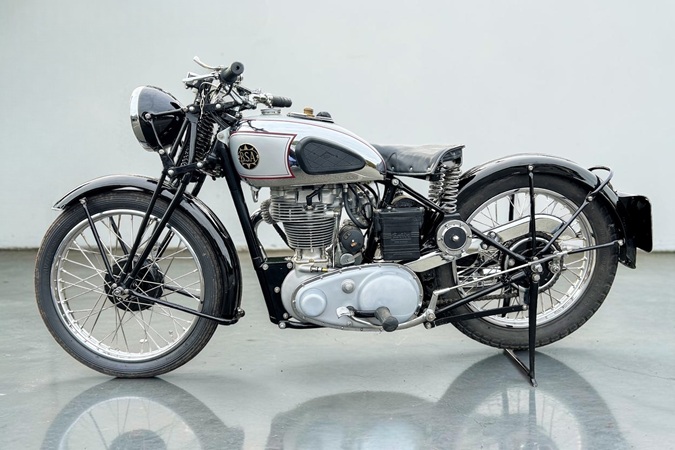
Pre-war BSA motorcycles, such as the Model J11, reflect a period of steady engineering refinement, designed for reliability, touring capability, and everyday usability. These machines formed the backbone of British motorcycling before the disruption of World War II.
Following the war, BSA entered a golden era of performance development, culminating in the legendary Gold Star series - widely regarded as one of the most successful racing-derived motorcycles ever produced.
Today, surviving BSA motorcycles range from accessible collector pieces to highly valuable investment-grade machines, depending on rarity, originality, and historical documentation.
1861 - The Birmingham Small Arms Company (BSA) was founded in Birmingham, England, originally manufacturing firearms and industrial metal components.
1903 - BSA entered motorcycle production, beginning the company's transition into one of Britain's most influential motorcycle manufacturers.
1914-1918 - During World War I, BSA supplied military motorcycles and engineering equipment, greatly expanding its manufacturing capabilities.
1920s - BSA developed a reputation for durable single-cylinder motorcycles, reliable touring machines, and strong competition performance.
1930s - Engineering advancements introduced more refined overhead-valve engines, improved chassis design, and high-performance sporting motorcycles.
1937 - The launch of the BSA Gold Star lineage established a benchmark for British performance singles and racing-oriented engineering.
1939-1945 - BSA became one of the largest military motorcycle suppliers during World War II, producing thousands of M20 models for Allied forces.
1950s - The company entered its golden era with successful parallel-twin development, modern suspension systems, and internationally popular road motorcycles.
1960s - BSA expanded into export markets while refining unit-construction engines and competition-focused models, including motocross and scrambler platforms.
1970s - Financial difficulties and increasing global competition led to the decline of traditional BSA motorcycle production.
Modern Era - The BSA name was revived as a heritage motorcycle brand, combining classic British styling with modern engineering and contemporary manufacturing.
BSA motorcycles occupy a broad spectrum within the collector market, from early pre-war machines with historical significance to highly sought-after post-war performance models.
Gold Star motorcycles, in particular, are among the most collectible British bikes ever produced, with strong demand driven by their racing heritage and mechanical purity.
Well-preserved examples with matching numbers and documented provenance are increasingly viewed as blue-chip assets within the vintage motorcycle market.
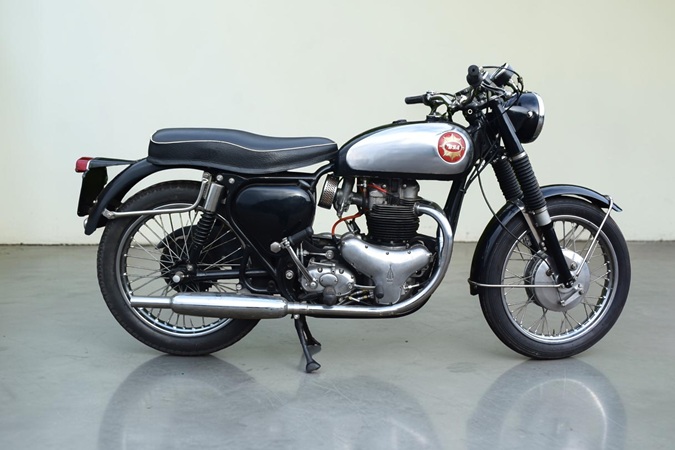
Key collector models include the BSA Model J11 (1933), a refined pre-war touring machine, and the legendary BSA B32GS Gold Star (1955), one of the most iconic high-performance motorcycles of its era. These scooters are highly regarded for their design innovation, cultural significance, and collector appeal. And you can explore our full range of vintage motorcycles in the Inventory page.
These models represent the breadth of BSA engineering, from practical road machines to competition-inspired performance icons.
BSA was not only a manufacturer but a defining force in global motorcycling. At its peak, the company produced more motorcycles than any other brand, shaping the industry through scale, innovation, and racing success.
The Gold Star, in particular, became synonymous with speed, endurance, and mechanical excellence, establishing a legacy that continues to influence collectors and enthusiasts today.
Vintage BSA motorcycles offer a unique combination of accessibility and investment potential. While some models remain attainable entry points into classic motorcycle collecting, rare and well-documented examples - particularly Gold Stars - command premium valuations.
As global interest in vintage British motorcycles continues to grow, BSA remains a cornerstone marque within the collector landscape.
When acquiring a BSA motorcycle, collectors should focus on originality, matching engine and frame numbers, and documented restoration history.
Gold Star models require particular attention due to their performance specifications and desirability, with authenticity playing a crucial role in long-term value.
Each BSA motorcycle in our collection is carefully inspected to ensure mechanical integrity, historical accuracy, and collector-grade standards.
Below is a curated selection of collector-grade BSA motorcycles available for acquisition. Each machine is verified, documented, and offered with full provenance.
We offer BSA vintage motorcycles for sale to collectors worldwide, including the United Kingdom, Europe, United States, Australia, and Asia. Each motorcycle can be securely crated and shipped with full export documentation and insurance.
Pricing varies depending on rarity, originality, and restoration condition. Please contact us for current availability and acquisition details.
Contact our specialists for availability, pricing, and worldwide shipping options. Request Availability!
Pre-war motorcycle engineering between 1900 and 1939 provides essential context for understanding BSA's emergence as one of the largest and most influential British manufacturers. During this period, BSA evolved from industrial production into large-scale motorcycle manufacturing, defining standardized mechanical platforms that contrasted with earlier experimental designs.
This evolution is further contextualized through post-war motorcycle development across Europe, where BSA reached global dominance with refined production models and performance-oriented machines such as the Gold Star series. Wartime production also played a critical role, as explored in WW2 military motorcycle engineering, where British manufacturers including BSA adapted machines for military logistics and durability.
For broader comparison across production-scale manufacturers and utility platforms, collectors often reference global vintage motorcycle inventory archives, alongside specialized categories such as sidecar motorcycles and utility configurations, where BSA heavy-duty and touring models are frequently represented.
What is the most historically important BSA motorcycle?
The BSA Gold Star is widely regarded as the most iconic model, representing peak British single-cylinder performance engineering and racing success.
Are BSA motorcycles rare today?
Yes. While BSA produced motorcycles at scale, well-preserved pre-war machines and original-condition Gold Star models are increasingly scarce within the collector market.
Which BSA models are most collectible?
Collector interest focuses on pre-war J series models, competition-focused Gold Star variants, and early production machines that illustrate BSA's transition into industrial-scale manufacturing.
Do BSA motorcycles hold long-term collector value?
High-quality BSA motorcycles with documented provenance and originality are considered strong long-term assets, particularly models with racing heritage or limited survival rates.
BSA represents one of the most important industrial-scale manufacturers in motorcycle history, bridging early engineering experimentation and standardized production. From pre-war touring machines to post-war performance icons, BSA motorcycles reflect the transition toward mass production, mechanical reliability, and competitive performance. For collectors, evaluating originality, production context, and mechanical condition is essential when assessing BSA motorcycles.
The development of BSA motorcycles is closely tied to the broader evolution of British industrial engineering, where large-scale manufacturing and mechanical standardization defined global motorcycle production. This context is further explored through motorcycle manufacturers across different countries, alongside insights into British motorcycle engineering heritage.
Within the vintage motorcycle market, BSA motorcycles occupy a dual position as both production-scale machines and performance-oriented collector assets. Their value is influenced by model rarity, racing heritage, and originality, aligning with broader insights in global vintage motorcycle market analysis.
BSA engineering is defined by its transition from industrial manufacturing into high-volume motorcycle production, combining durability, mechanical simplicity, and performance adaptability. From early touring machines to competition-focused Gold Star models, BSA motorcycles illustrate the balance between mass production and engineering excellence.
Find detailed purchasing information together with practical mechanical solutions, from international buyer questions to brand-specific diagnostics, typical classic bike issues, and professional restoration workflows: