
The Vintage Motorcycles
Specialists in antique, classic, veteran and vintage motorcycles.
Specialists in antique, classic, veteran and vintage motorcycles.
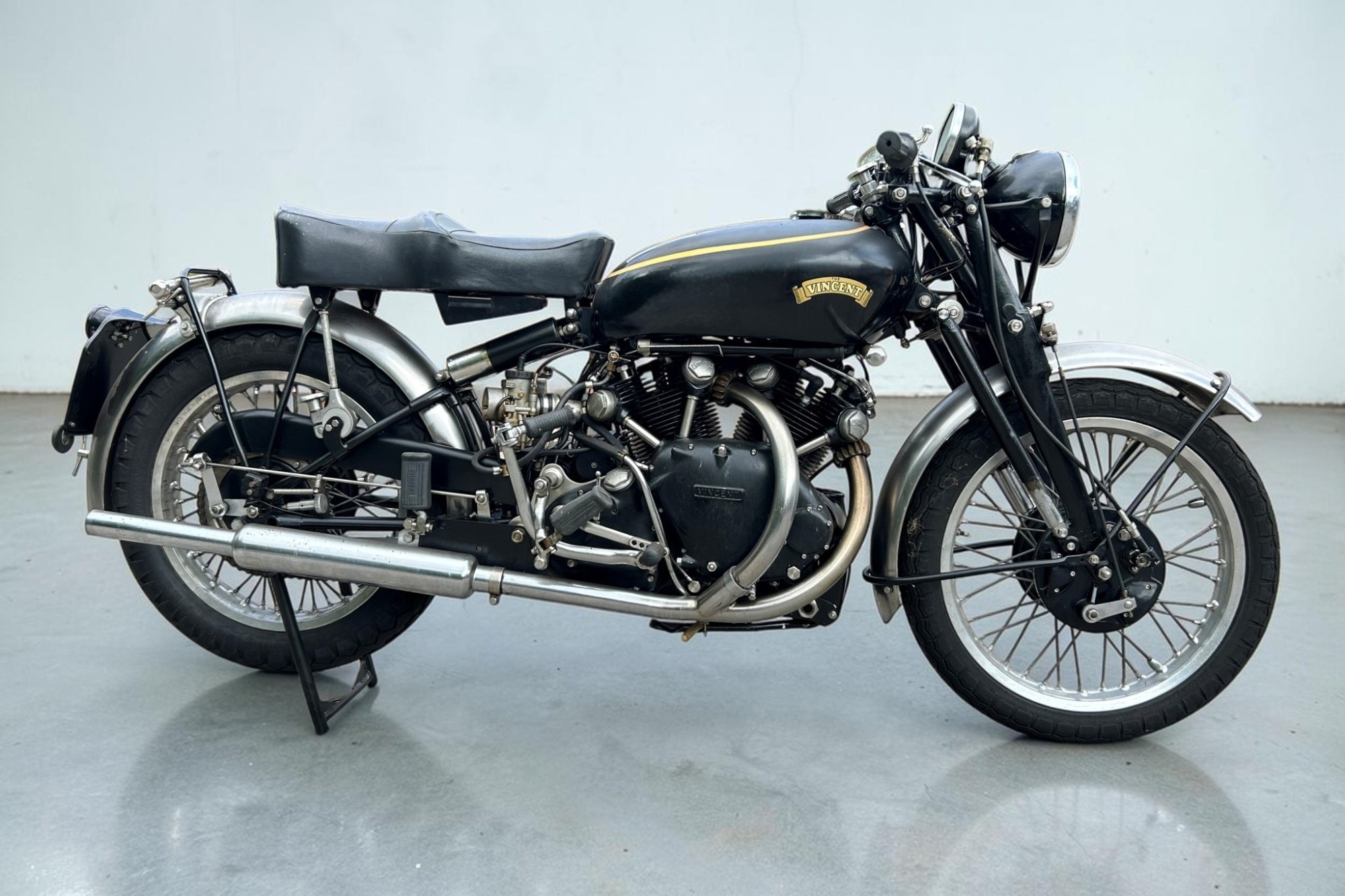

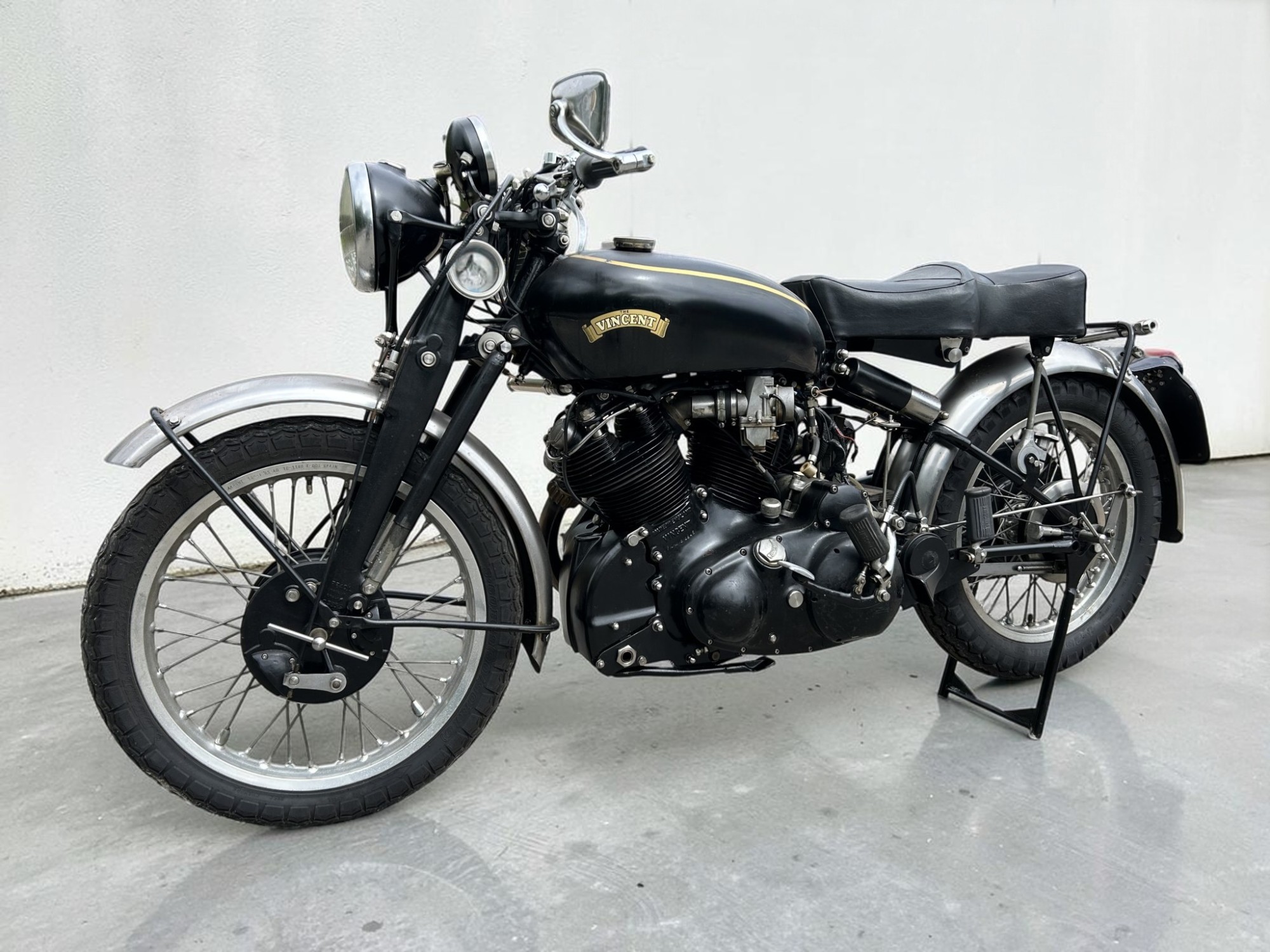
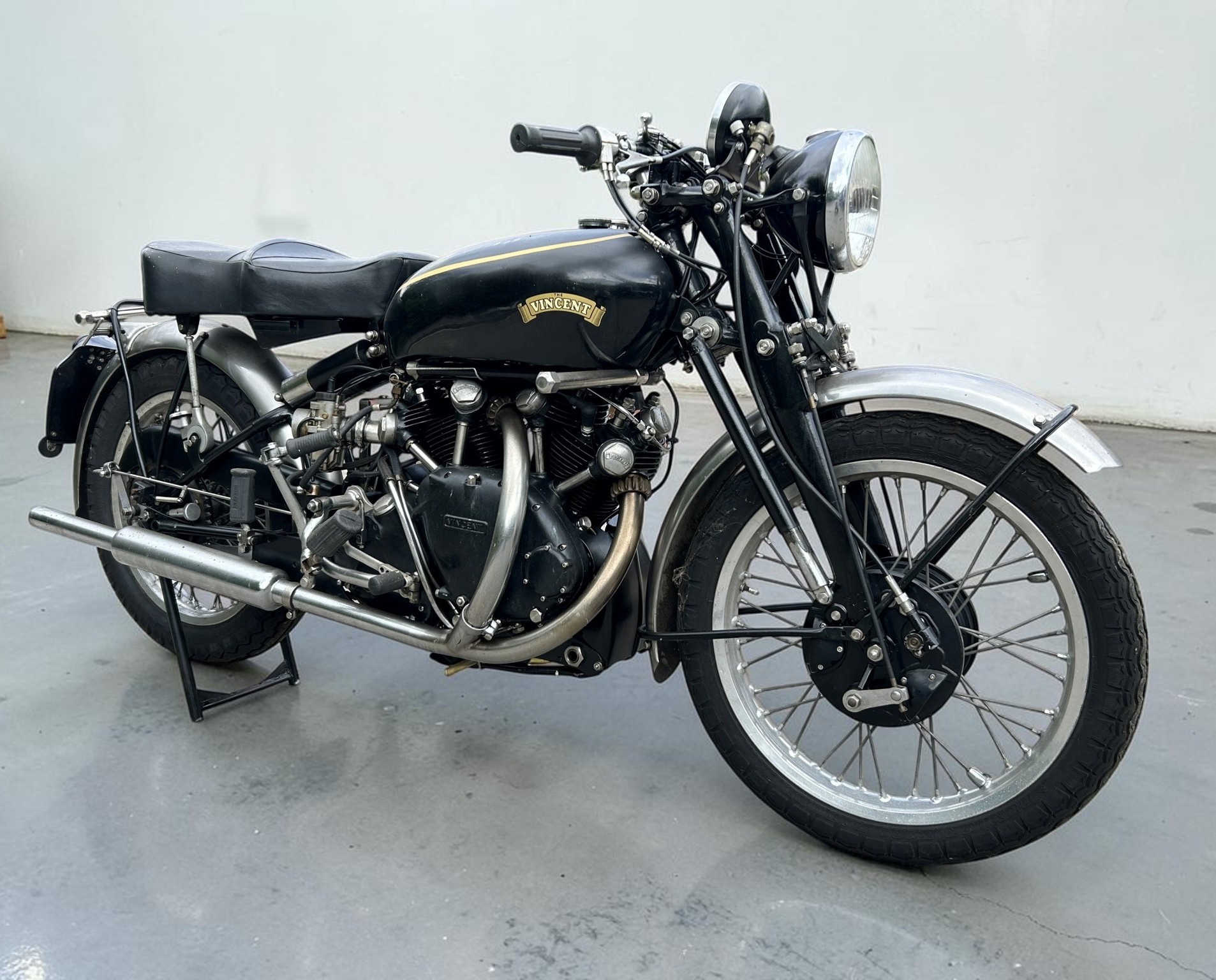
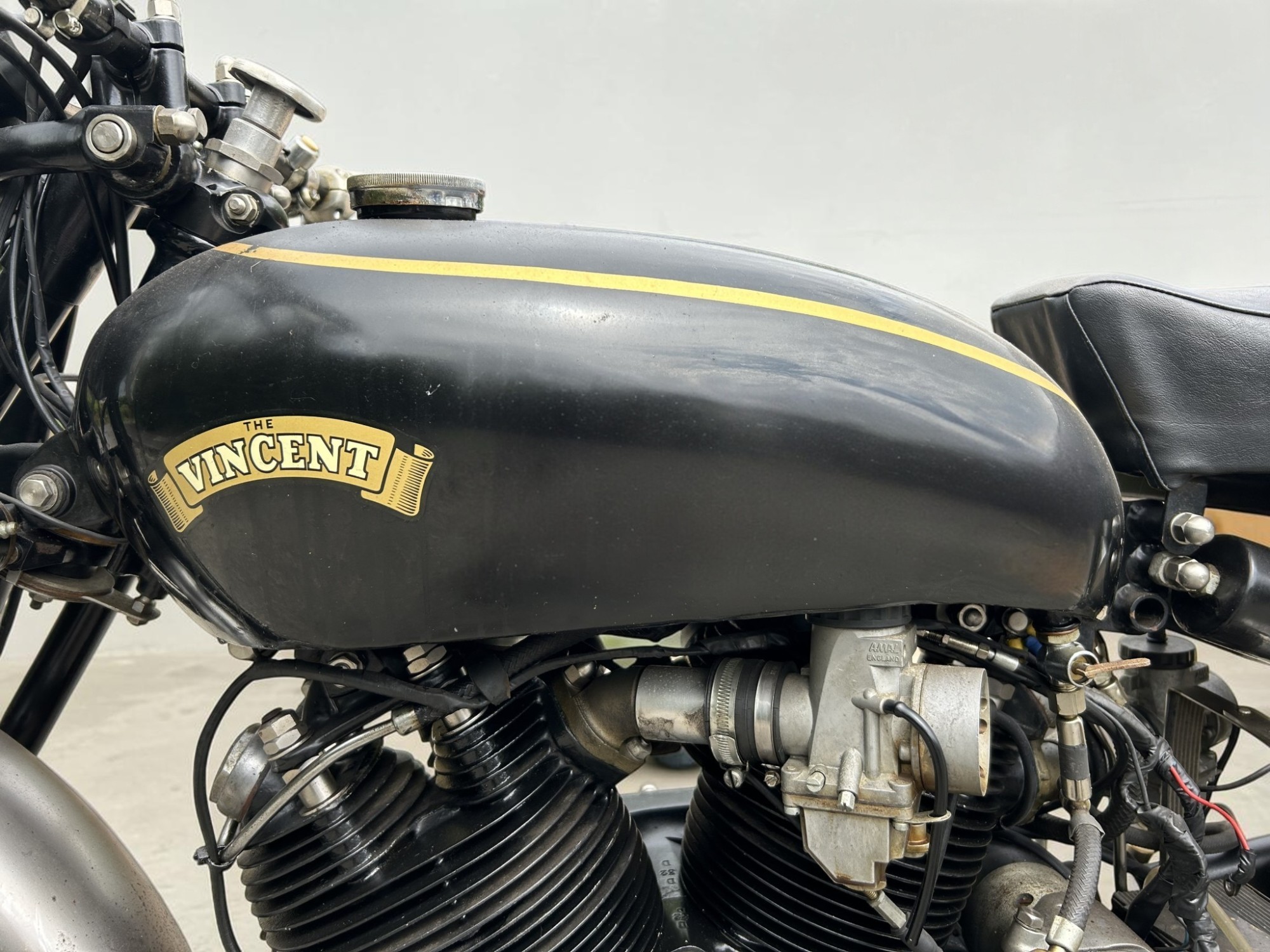
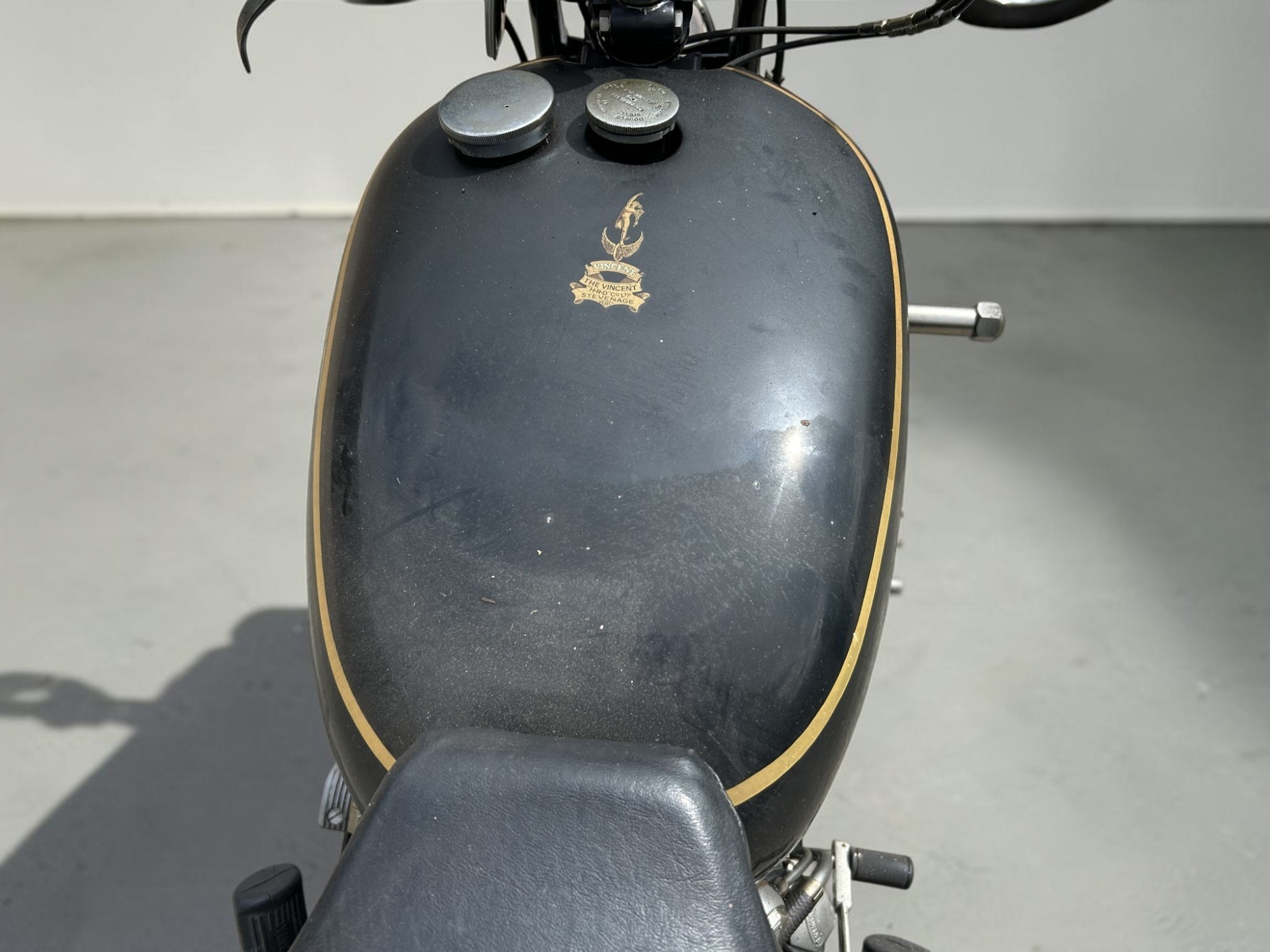
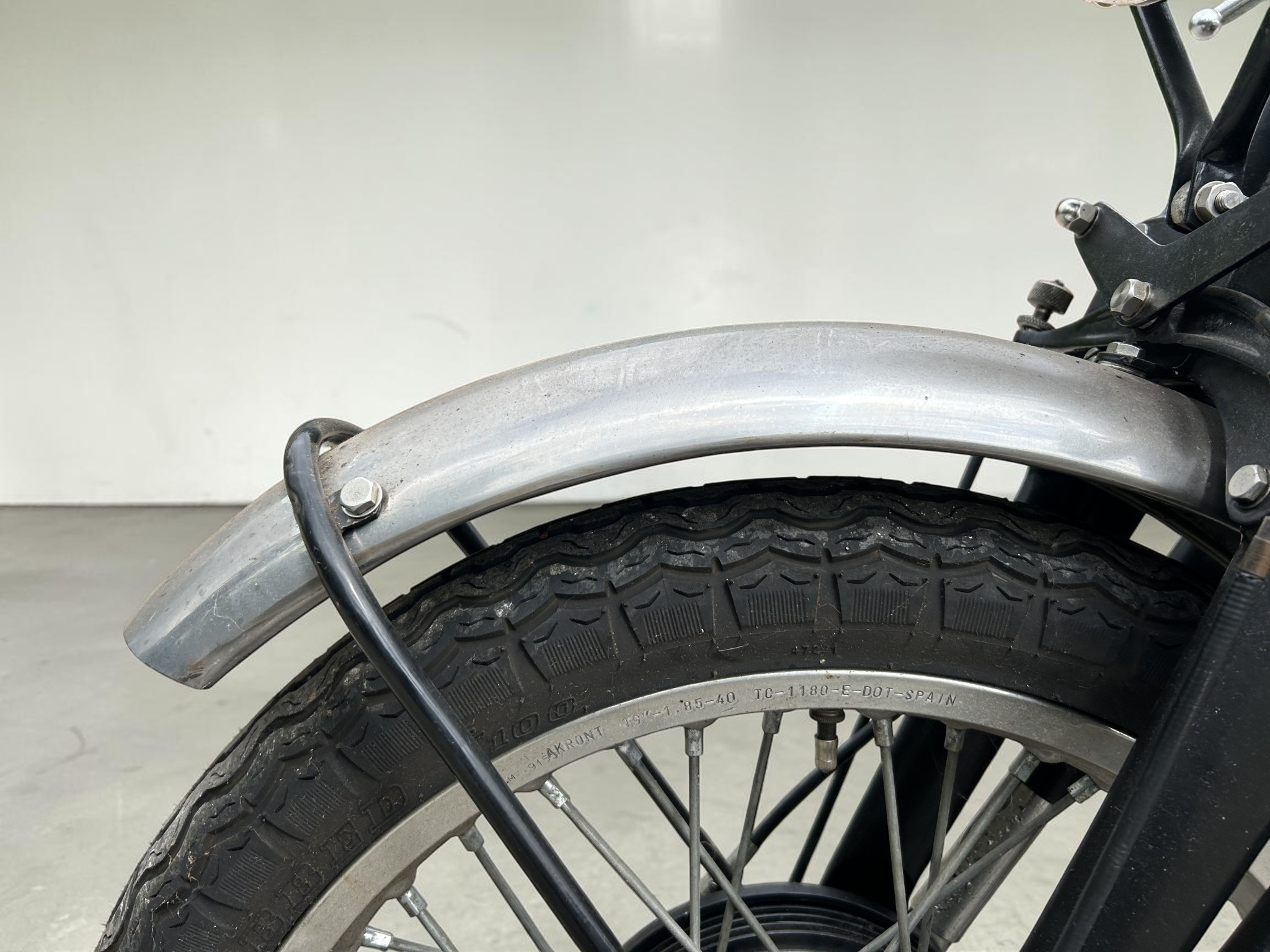

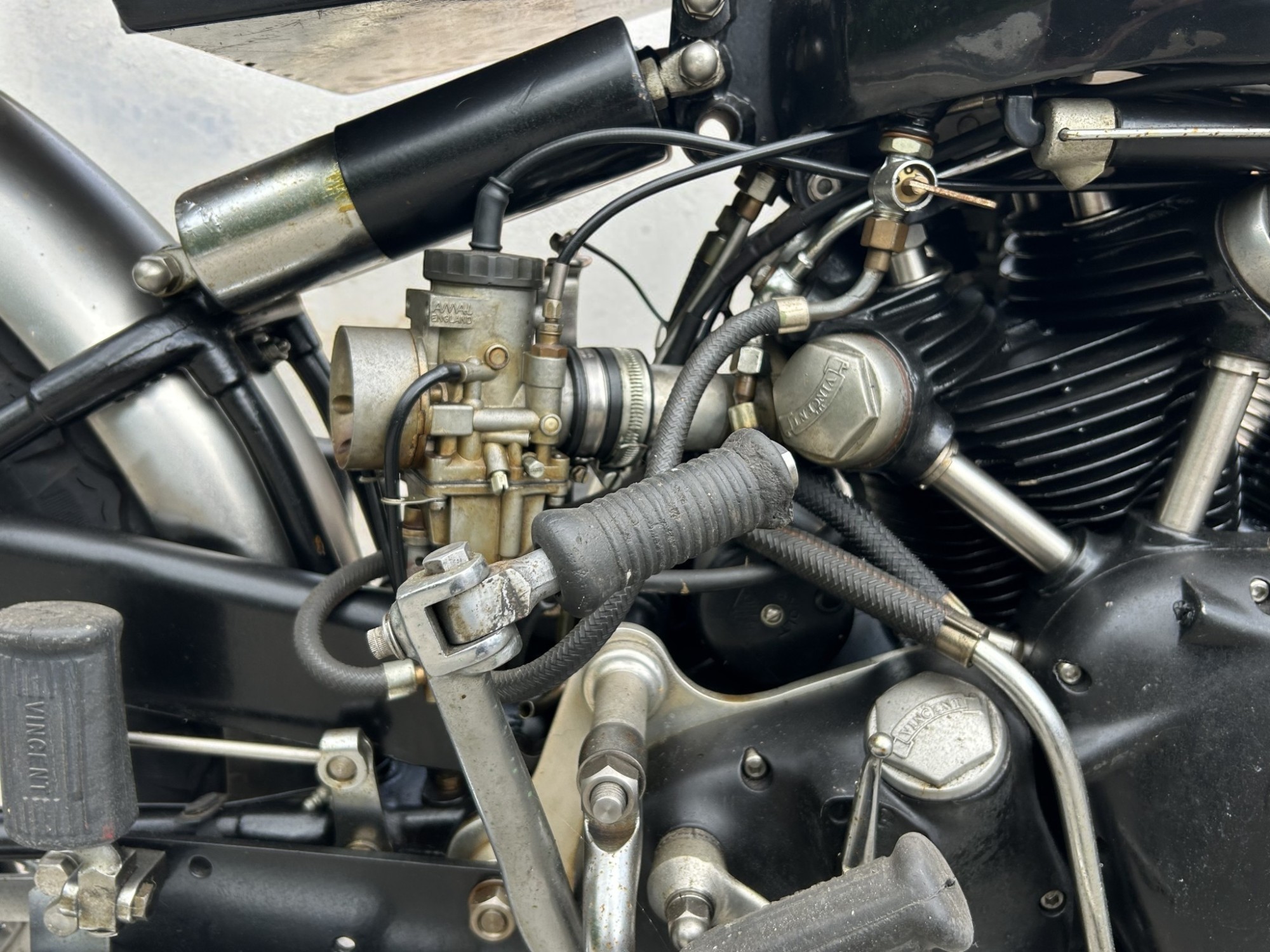
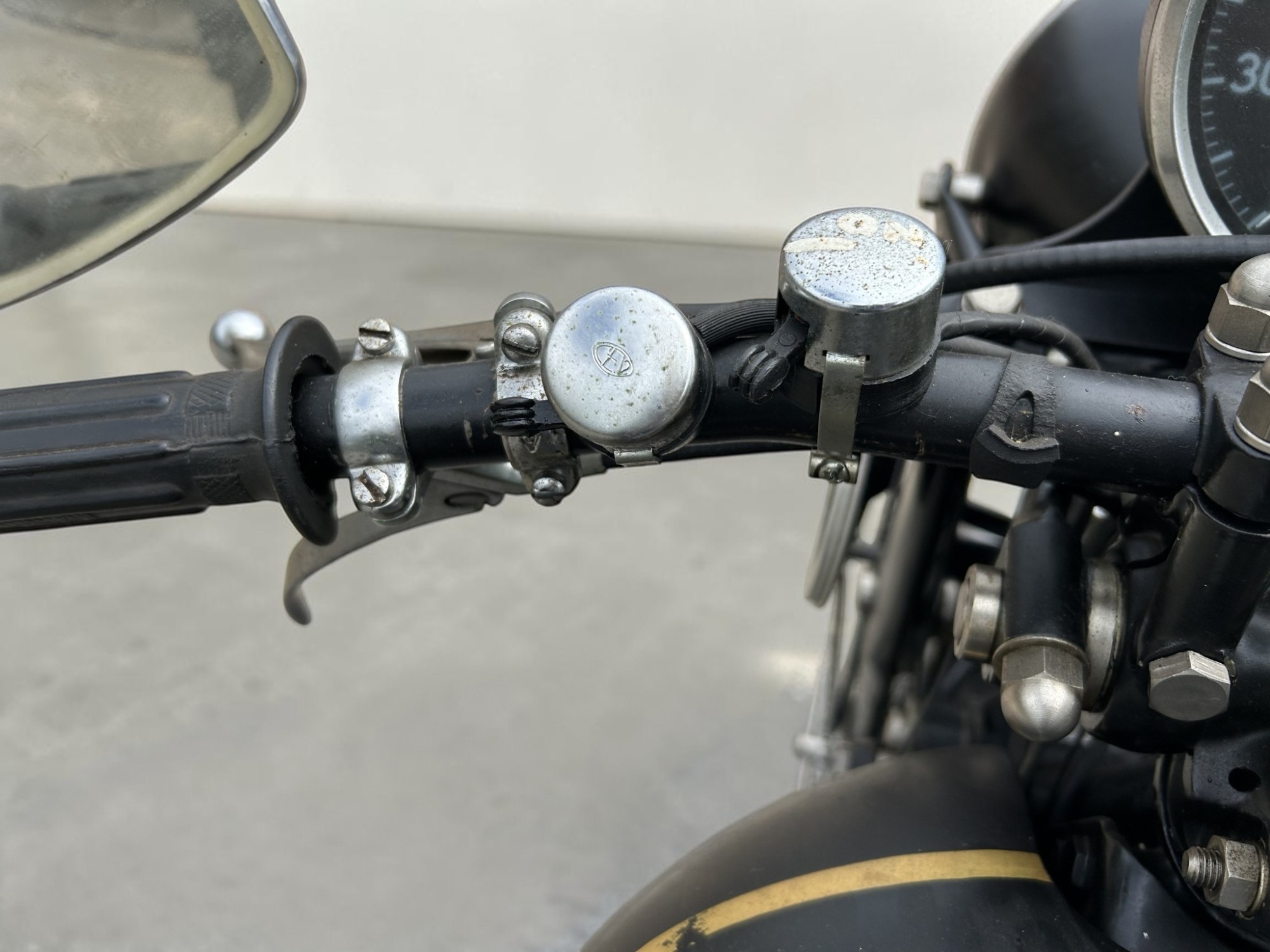
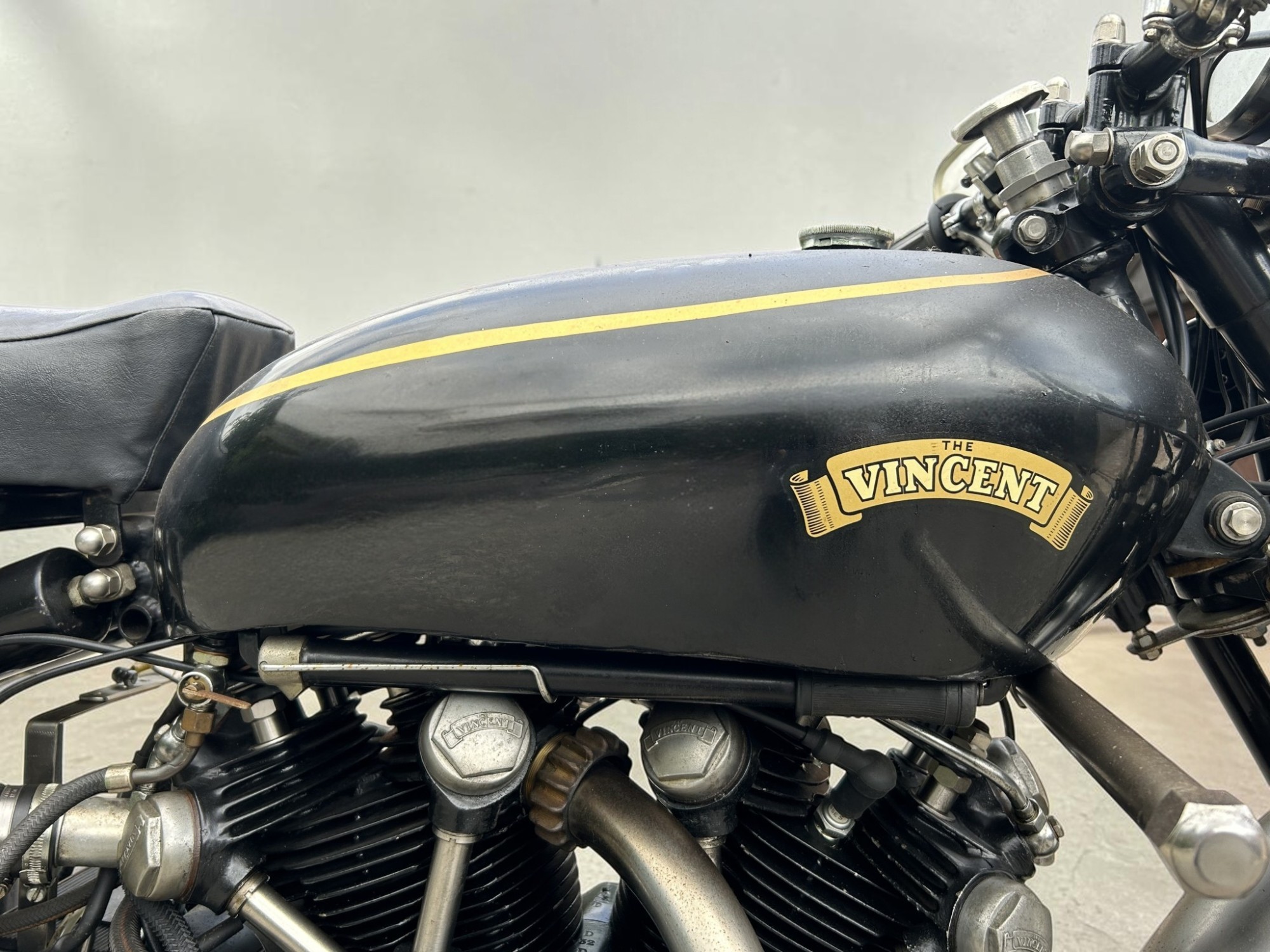
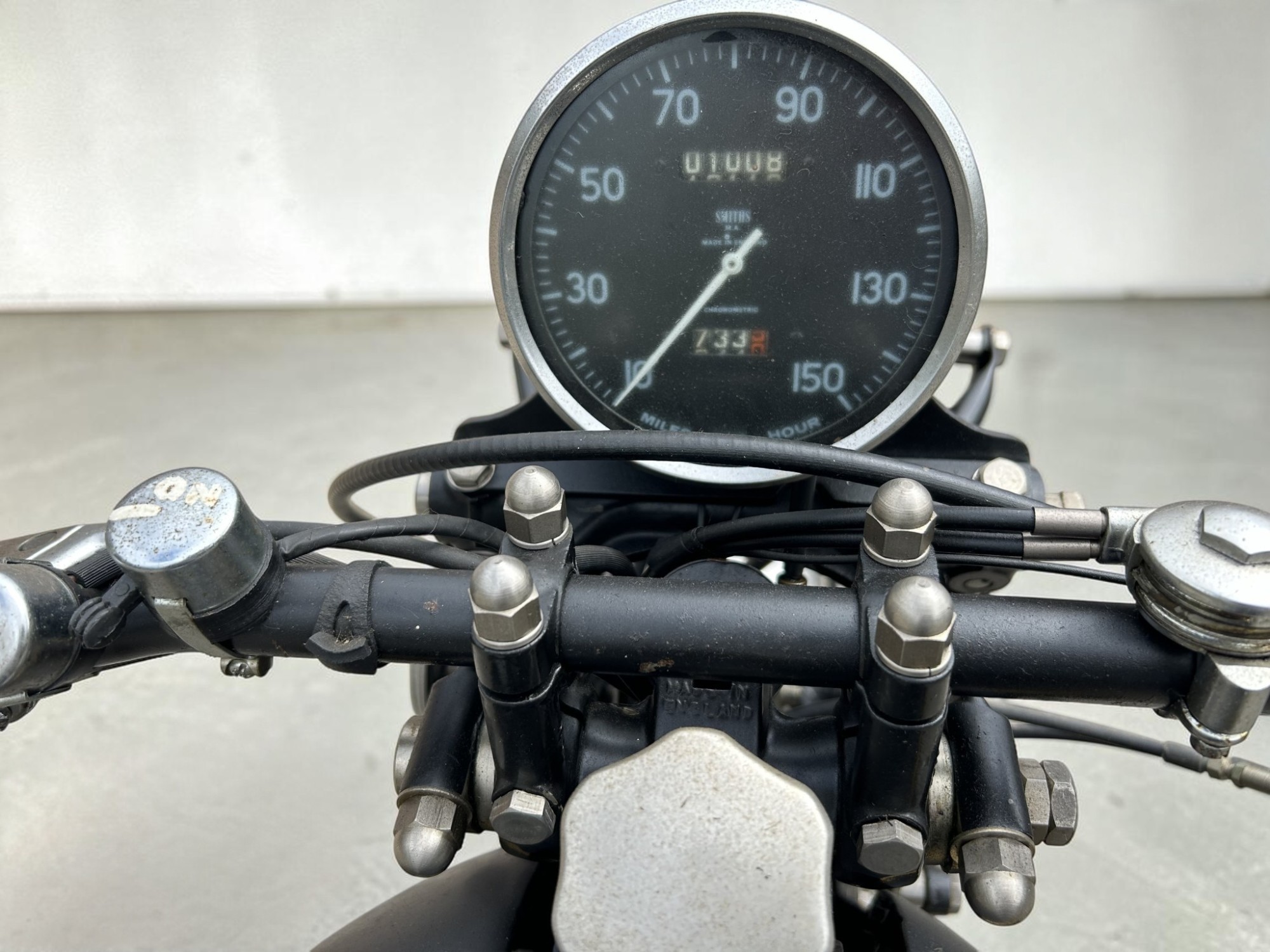
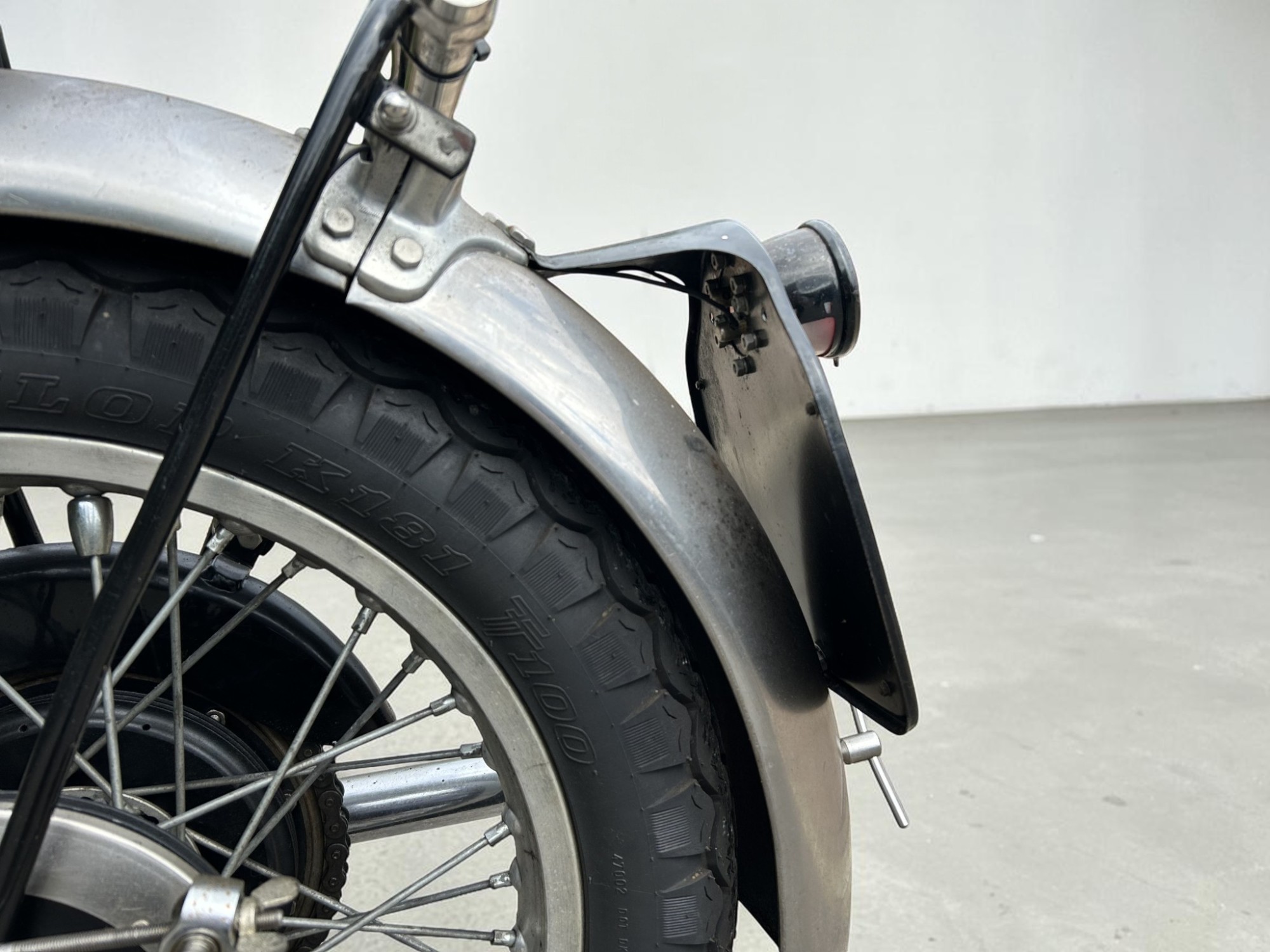
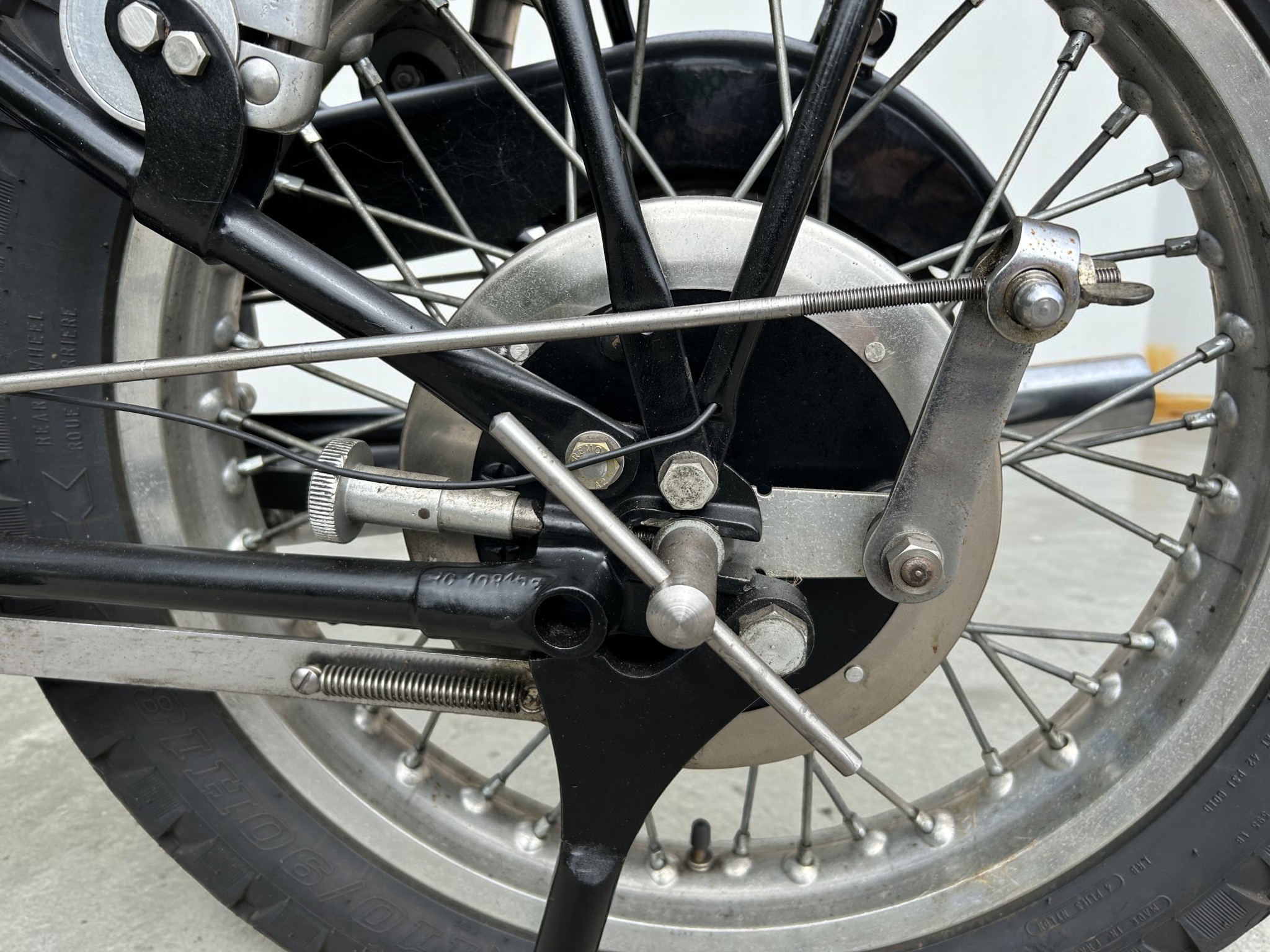
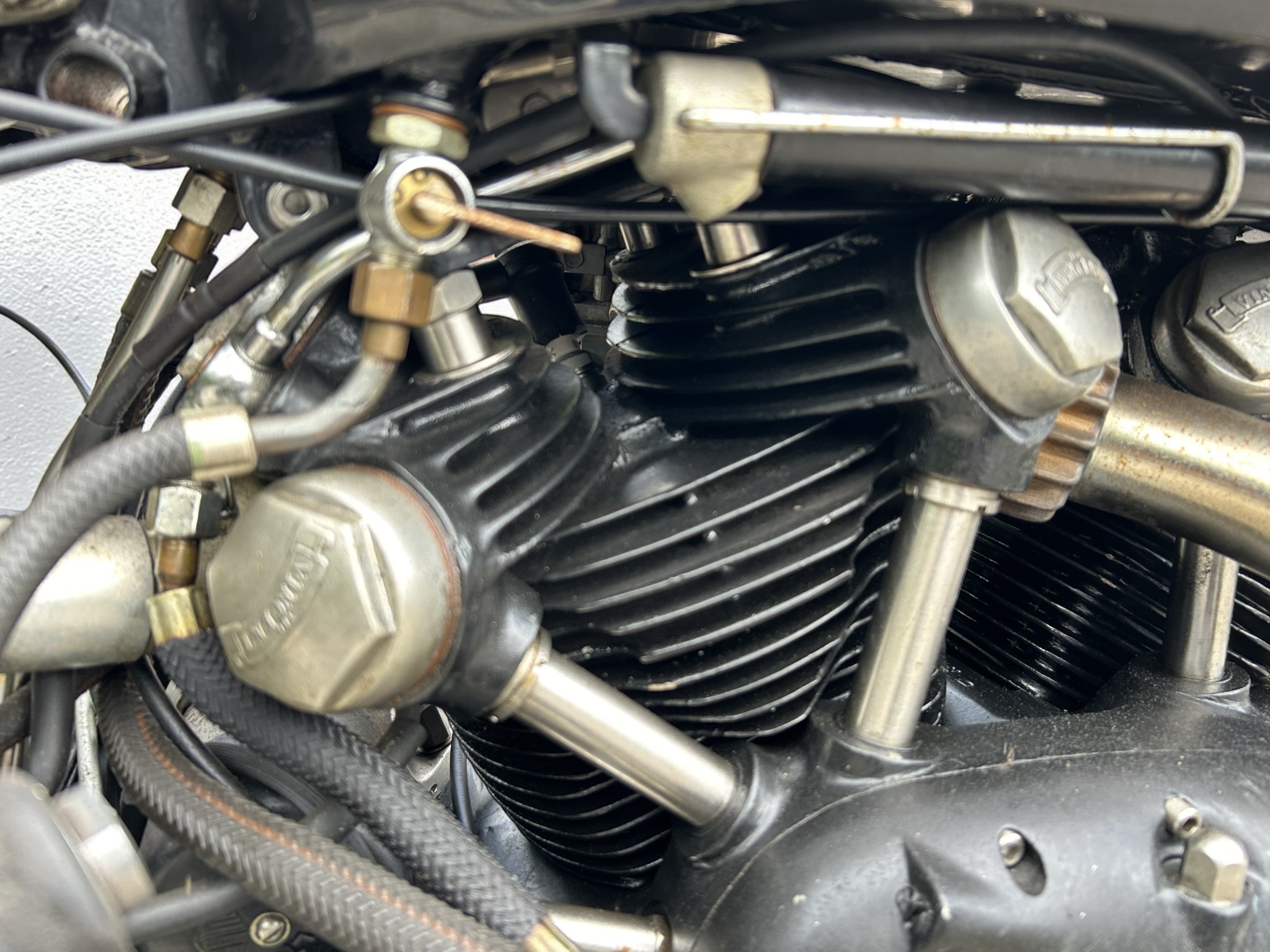
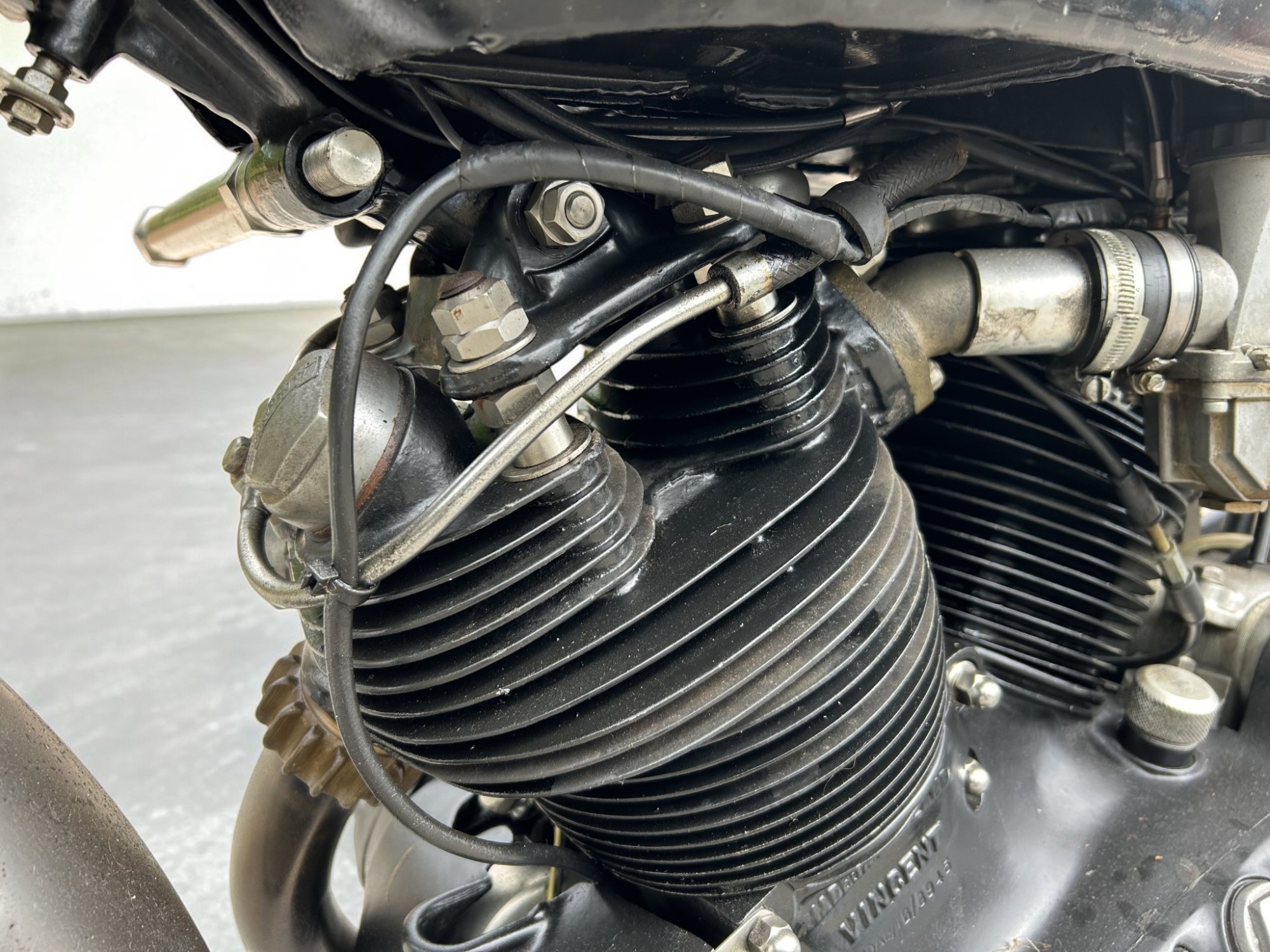
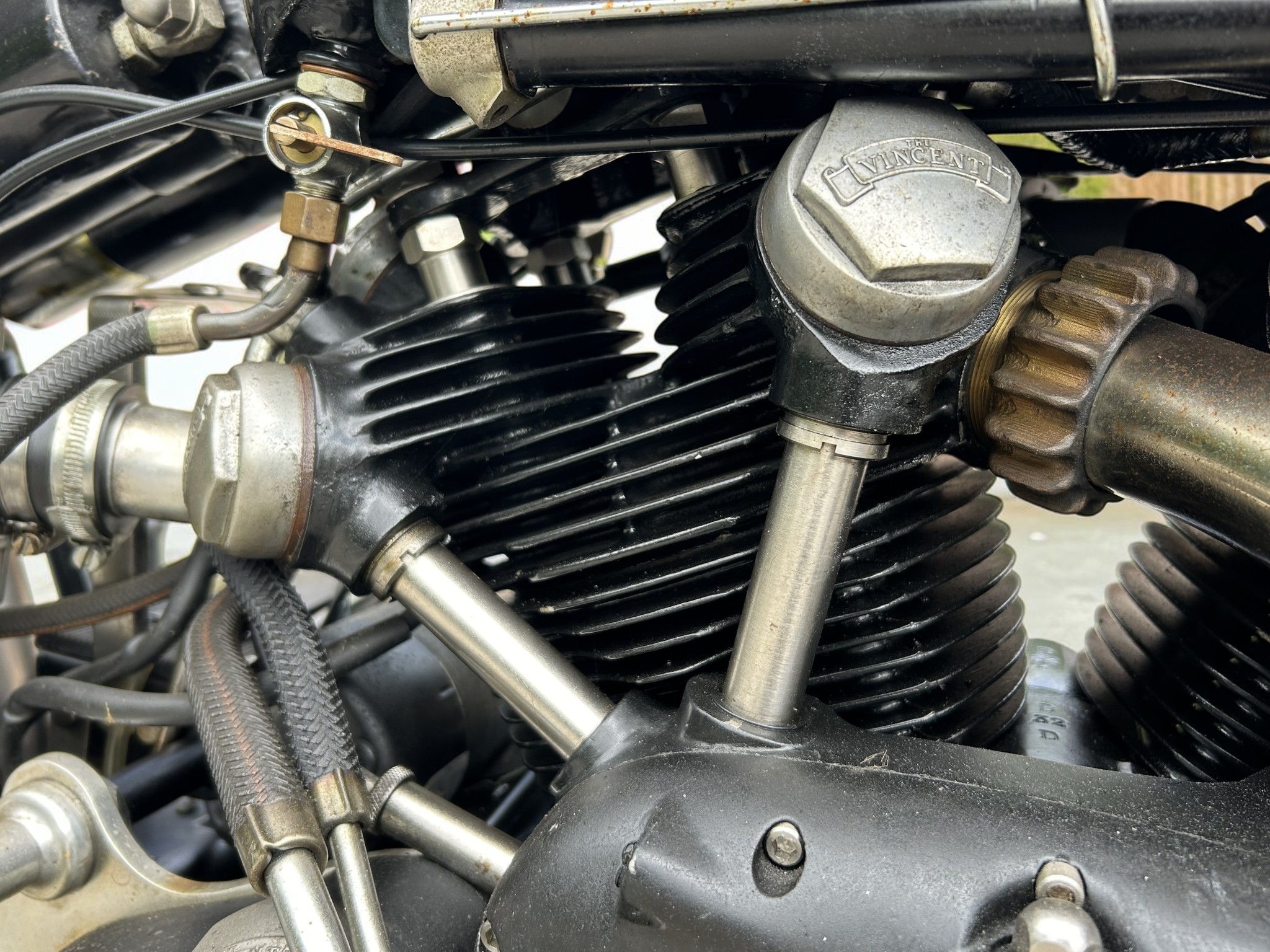
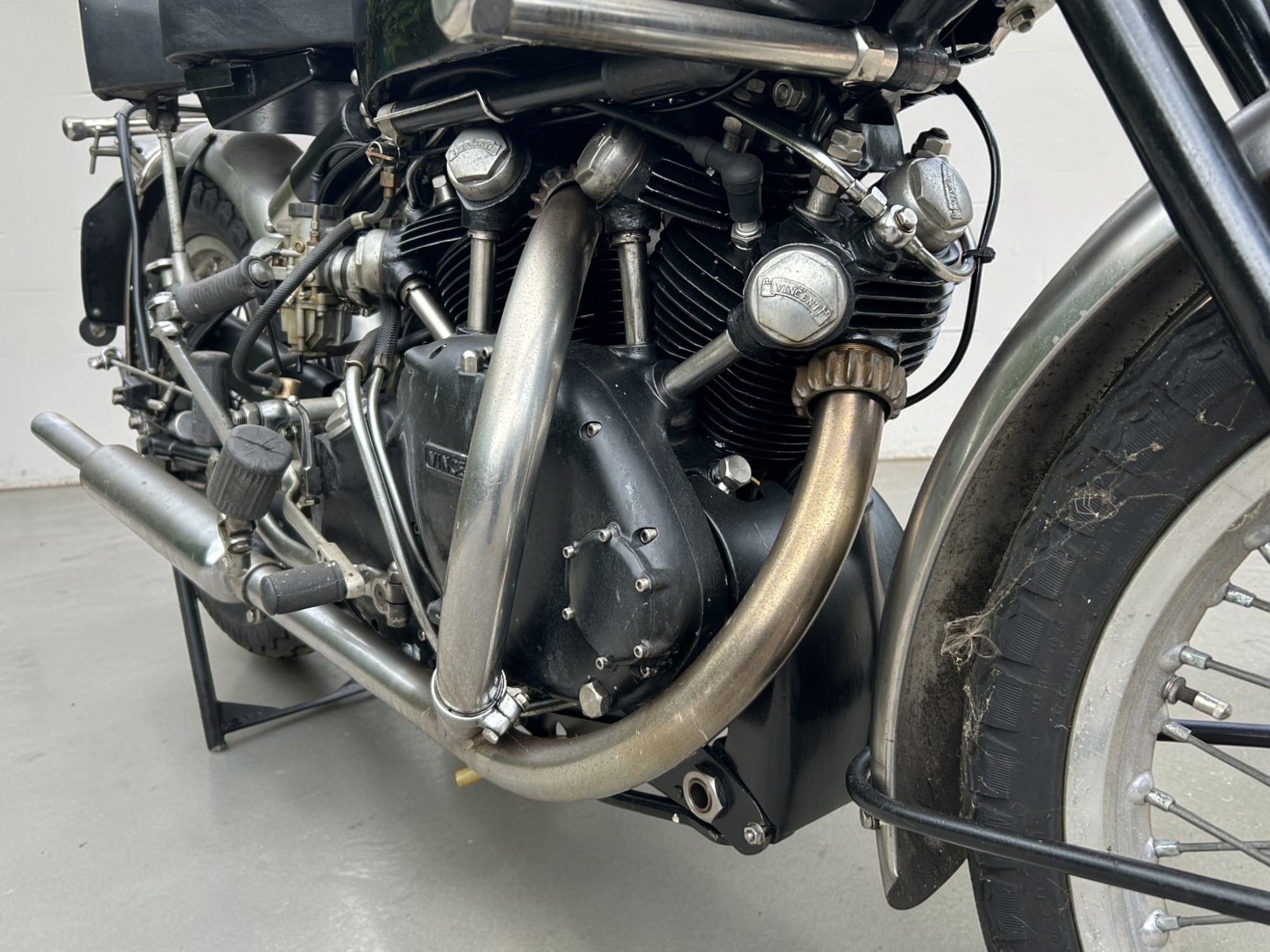
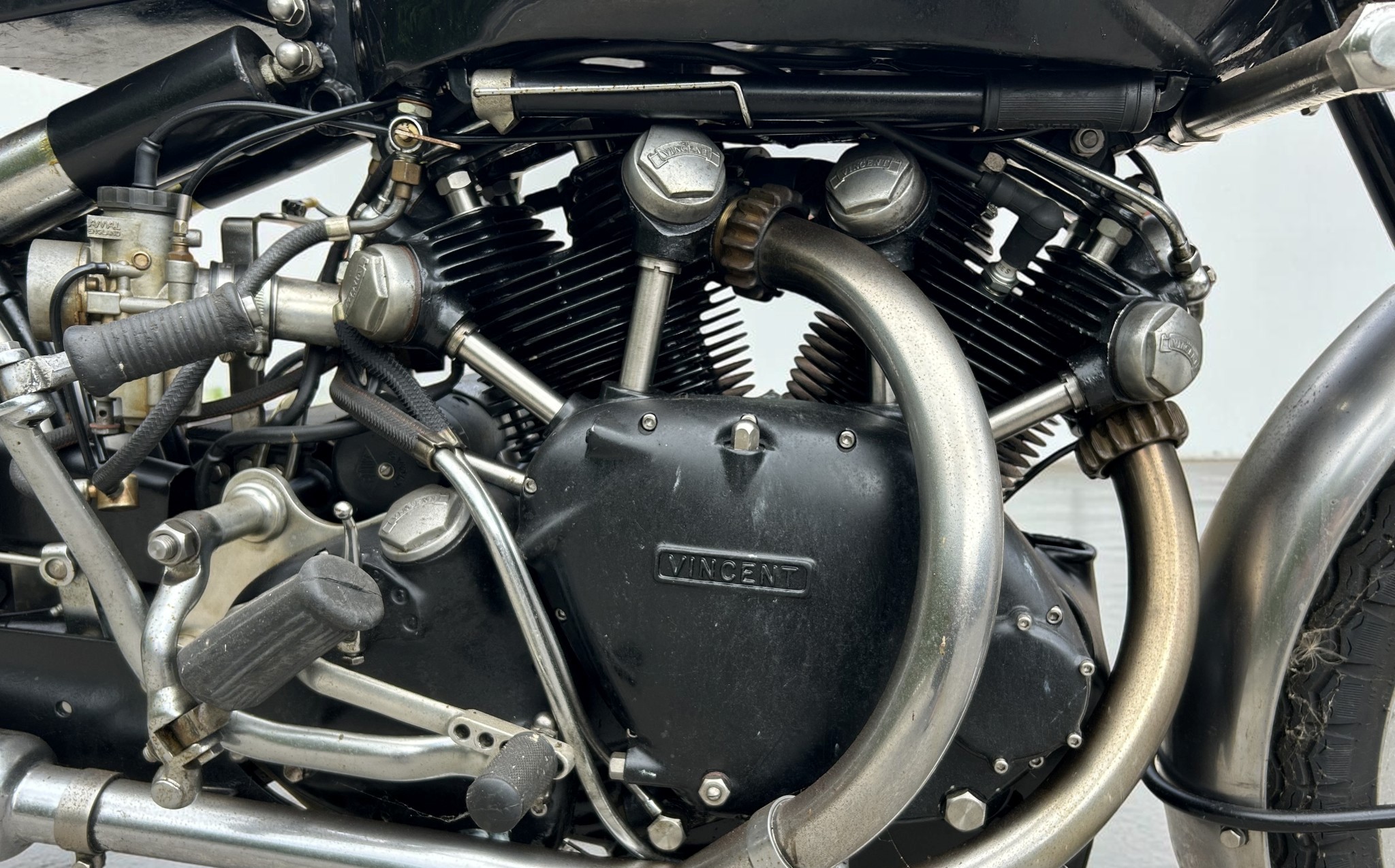
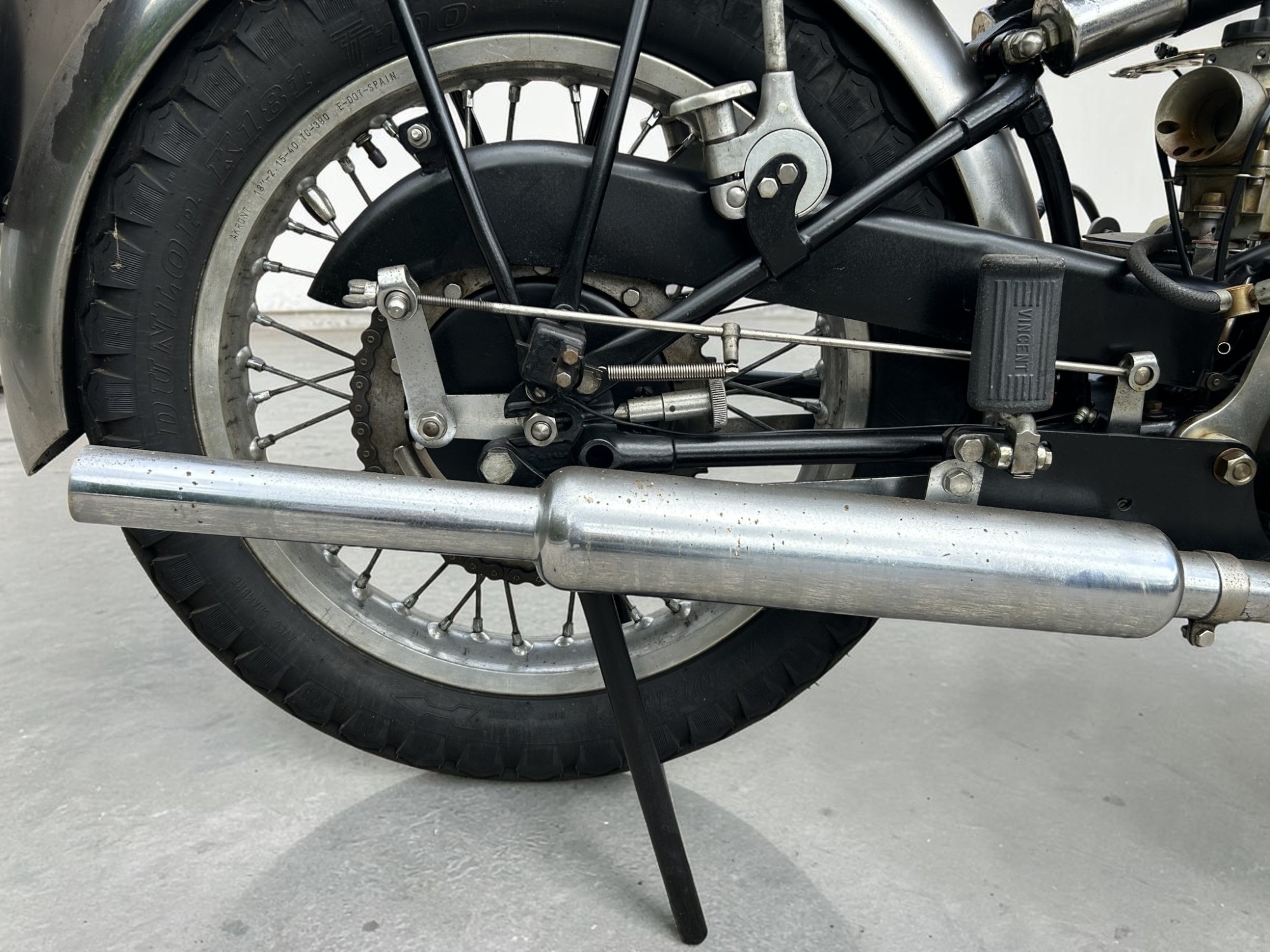
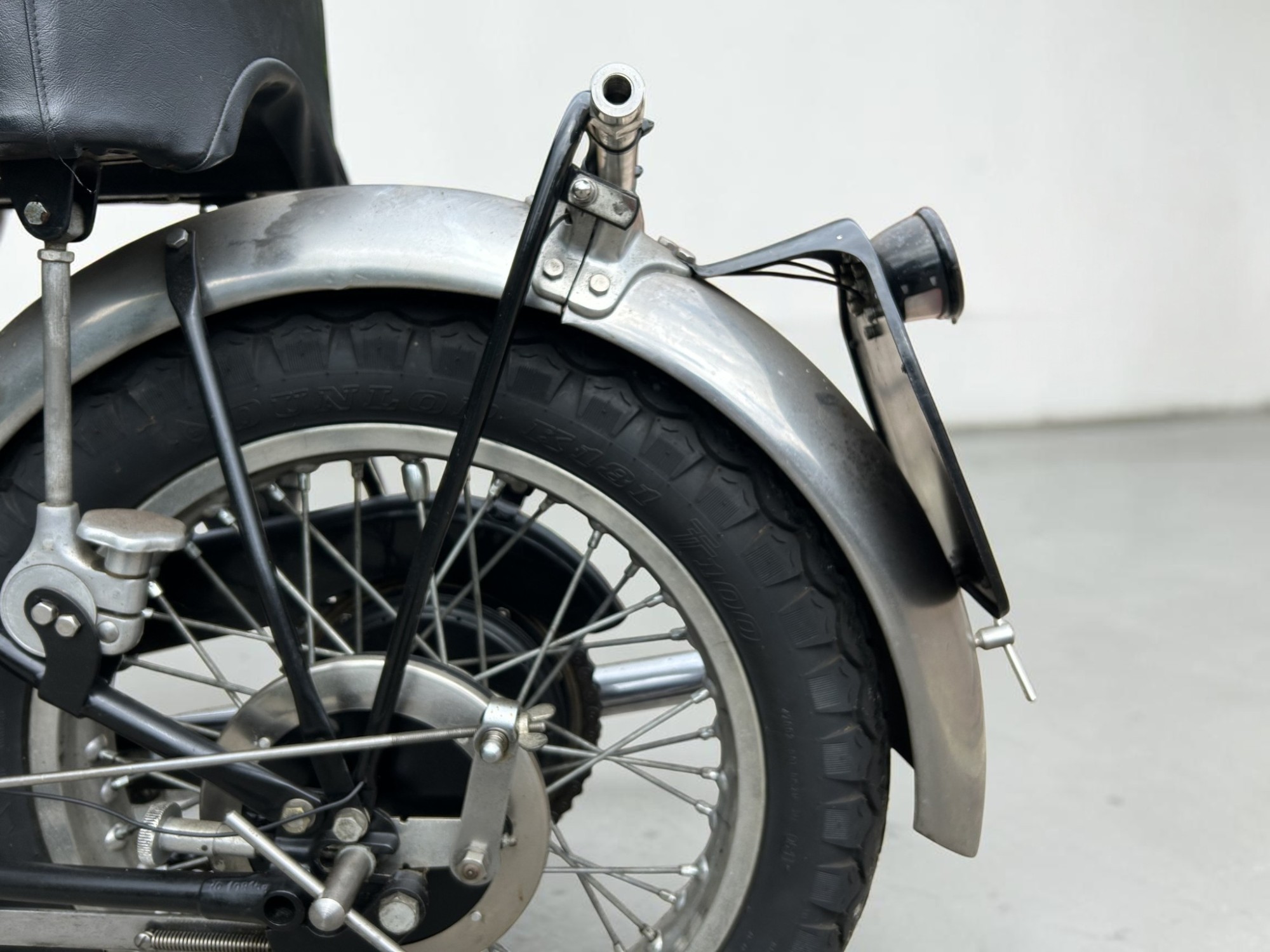
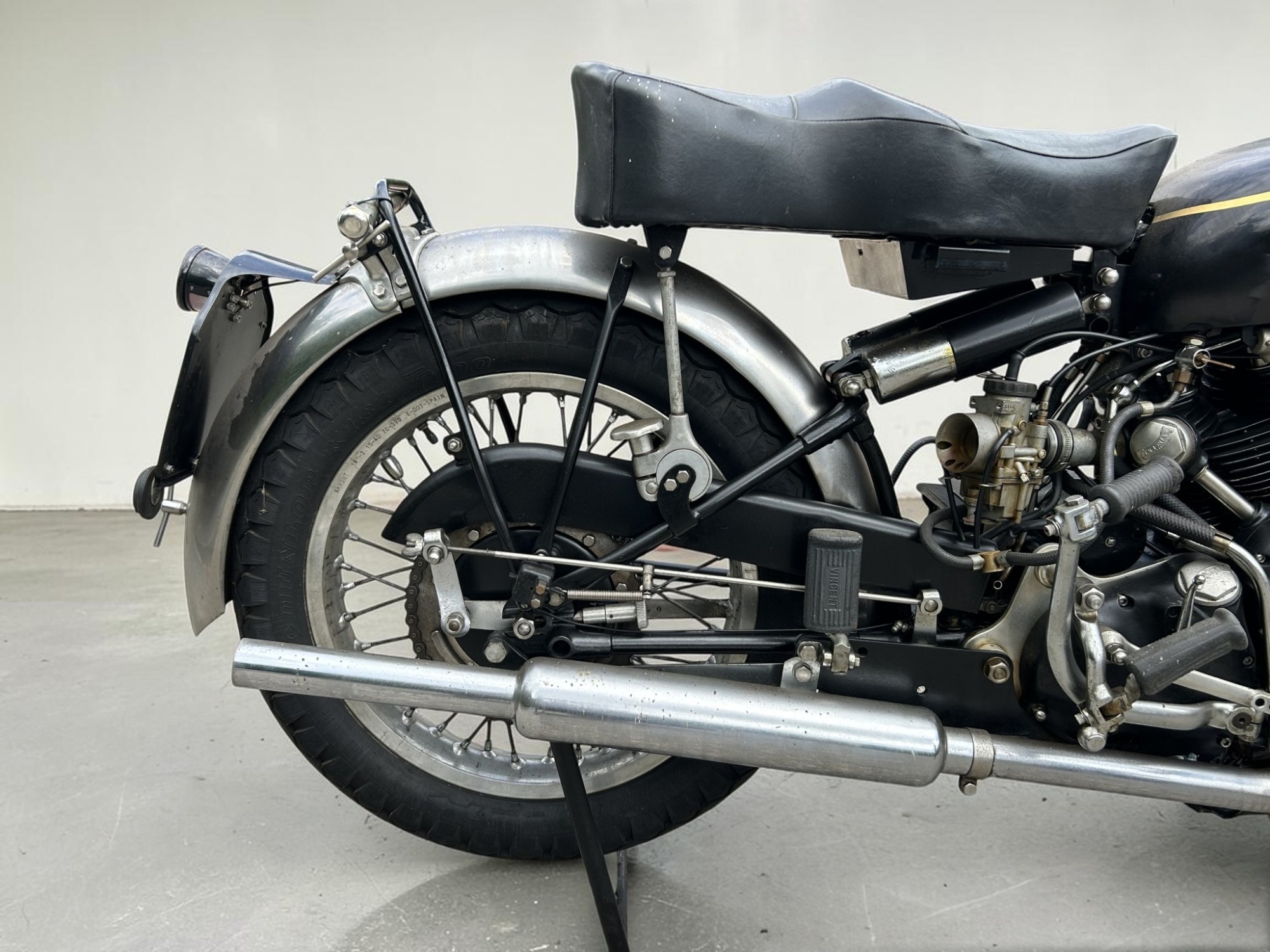
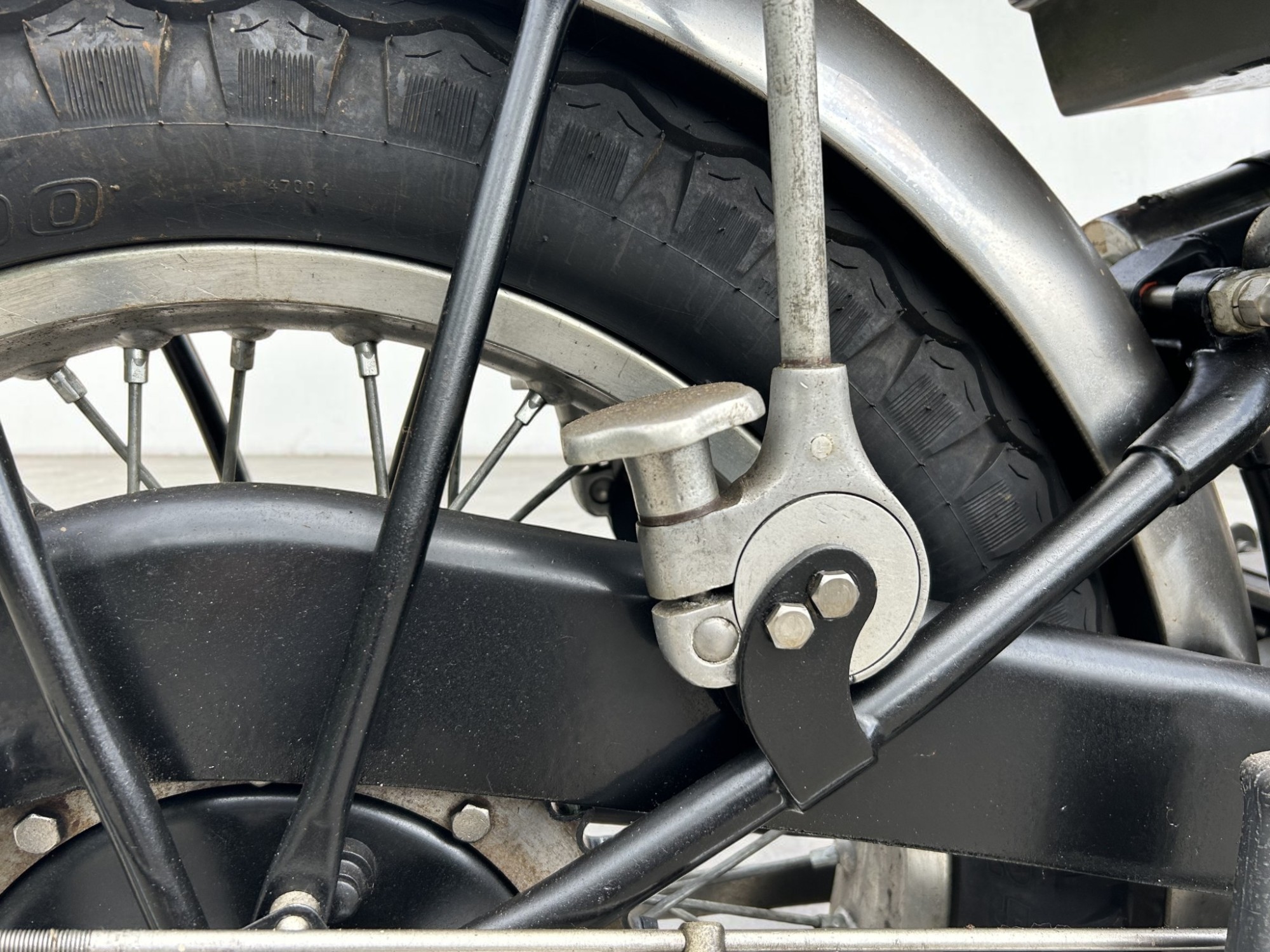
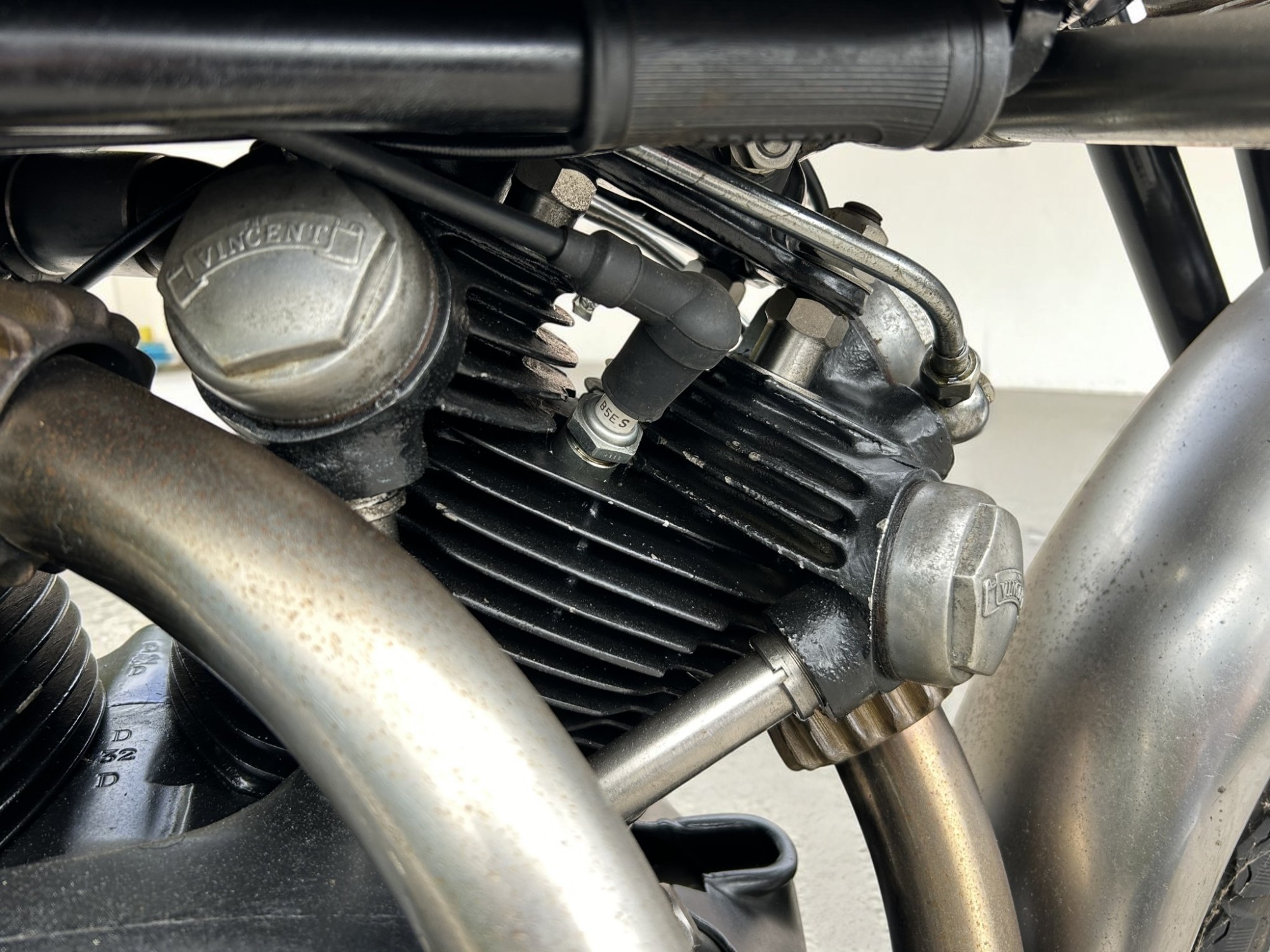
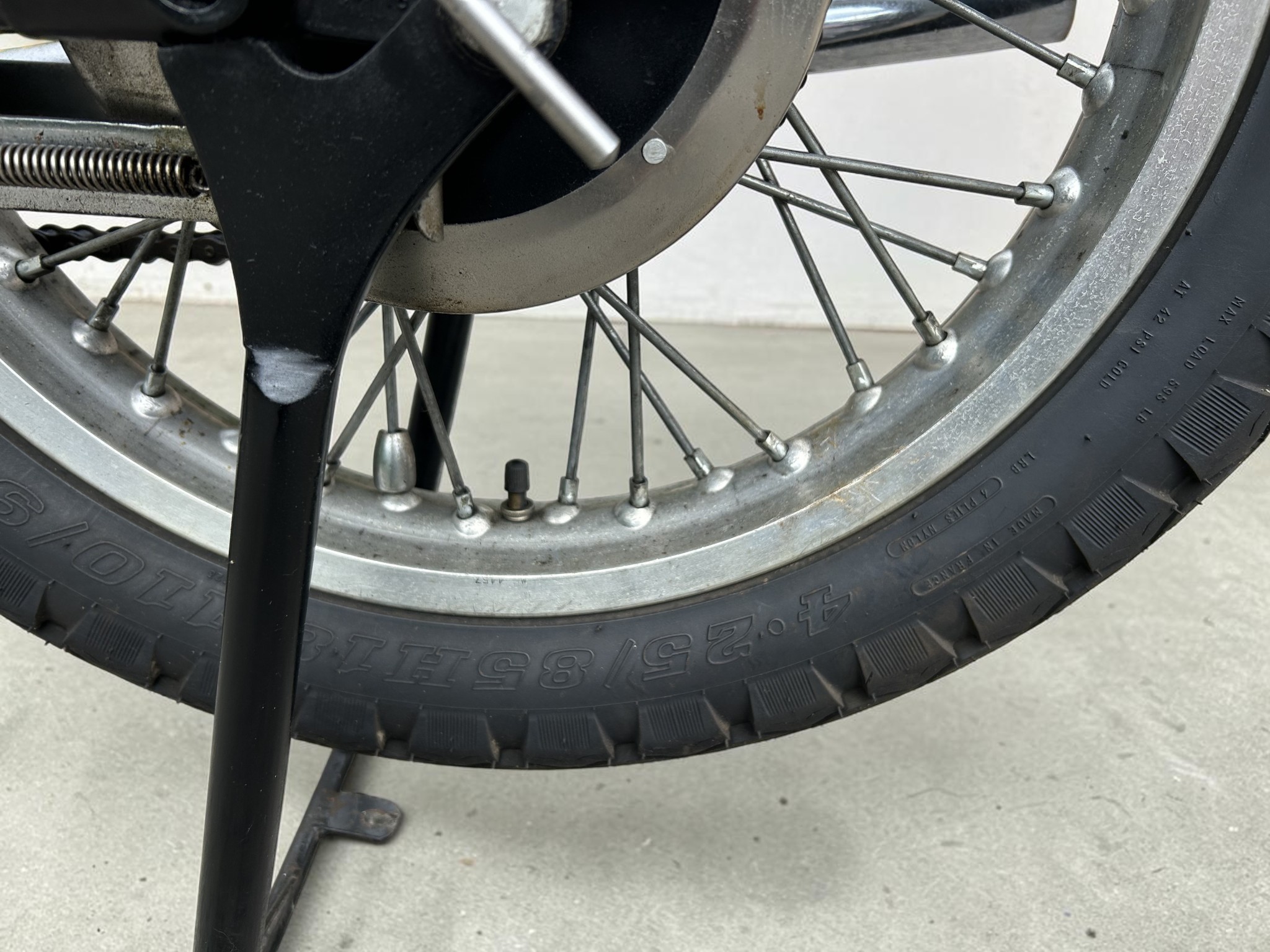
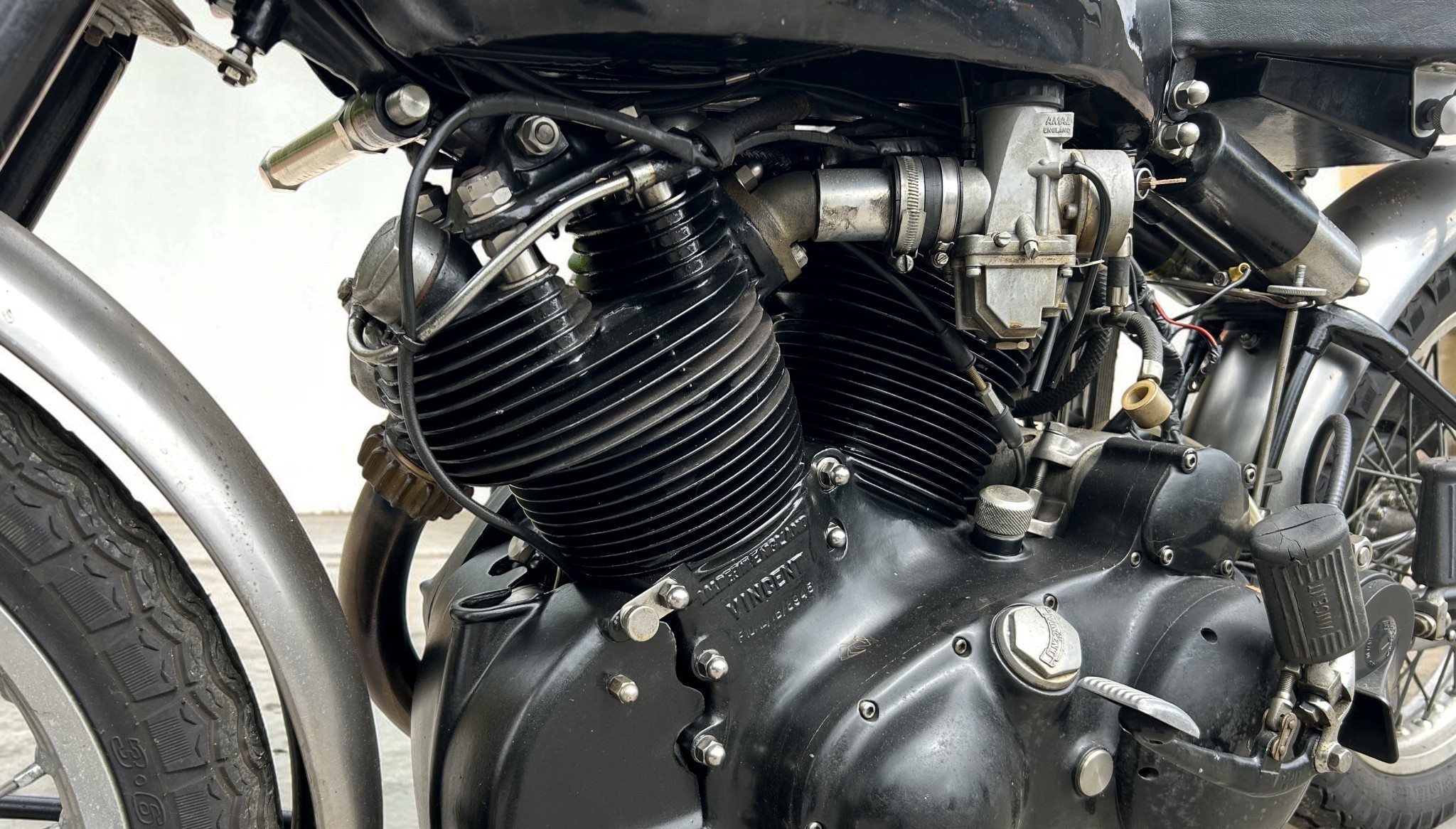
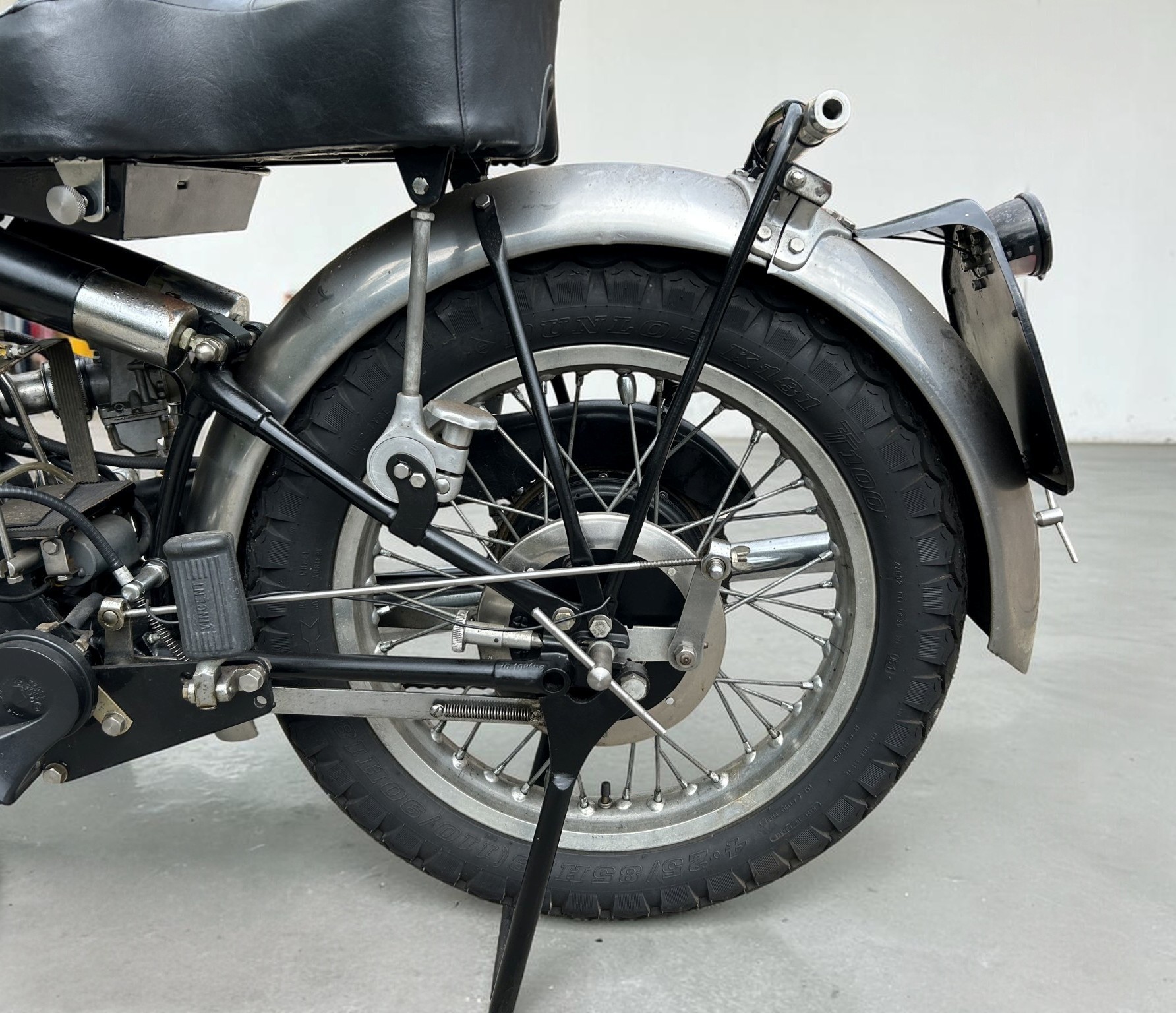
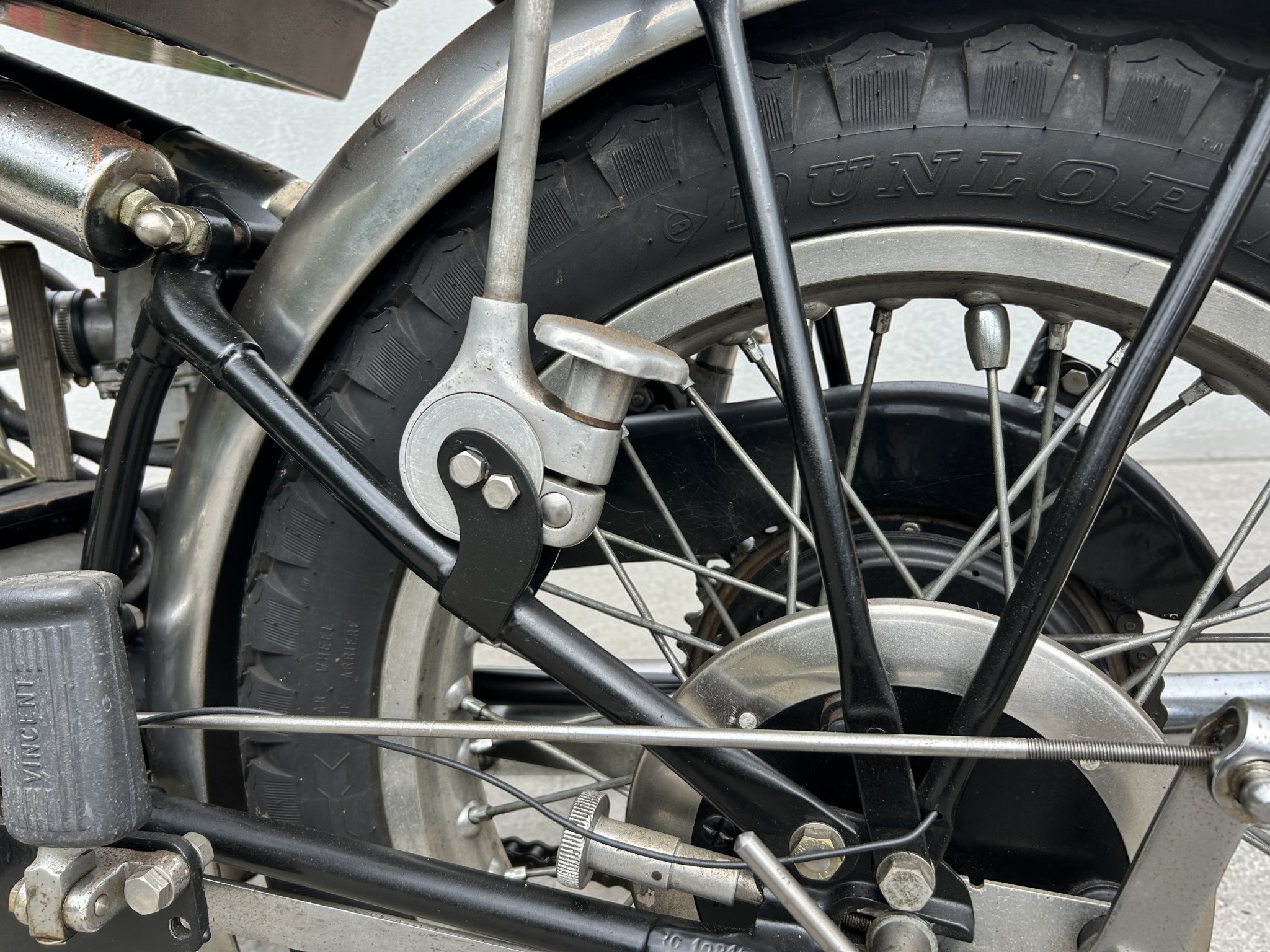
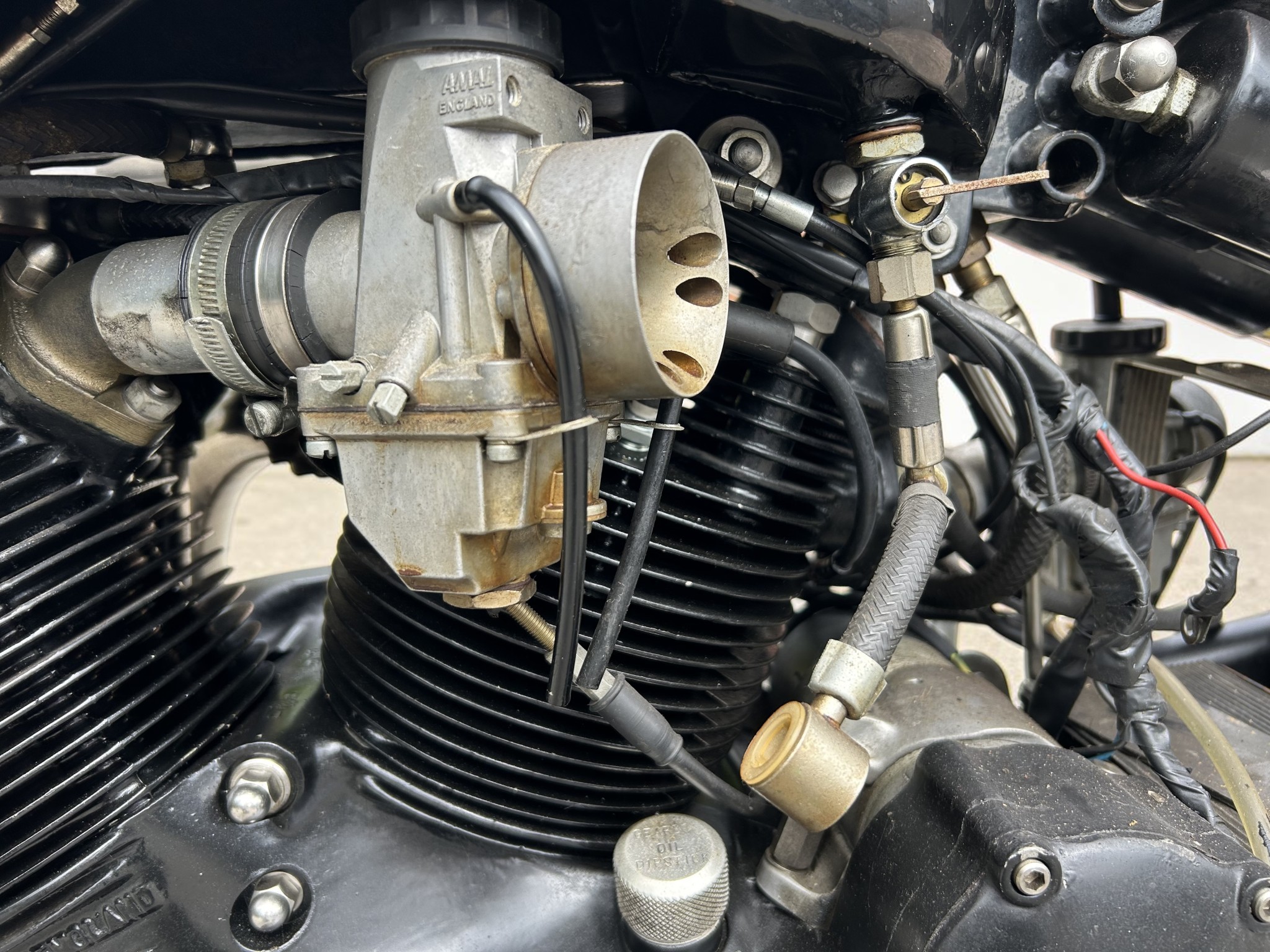
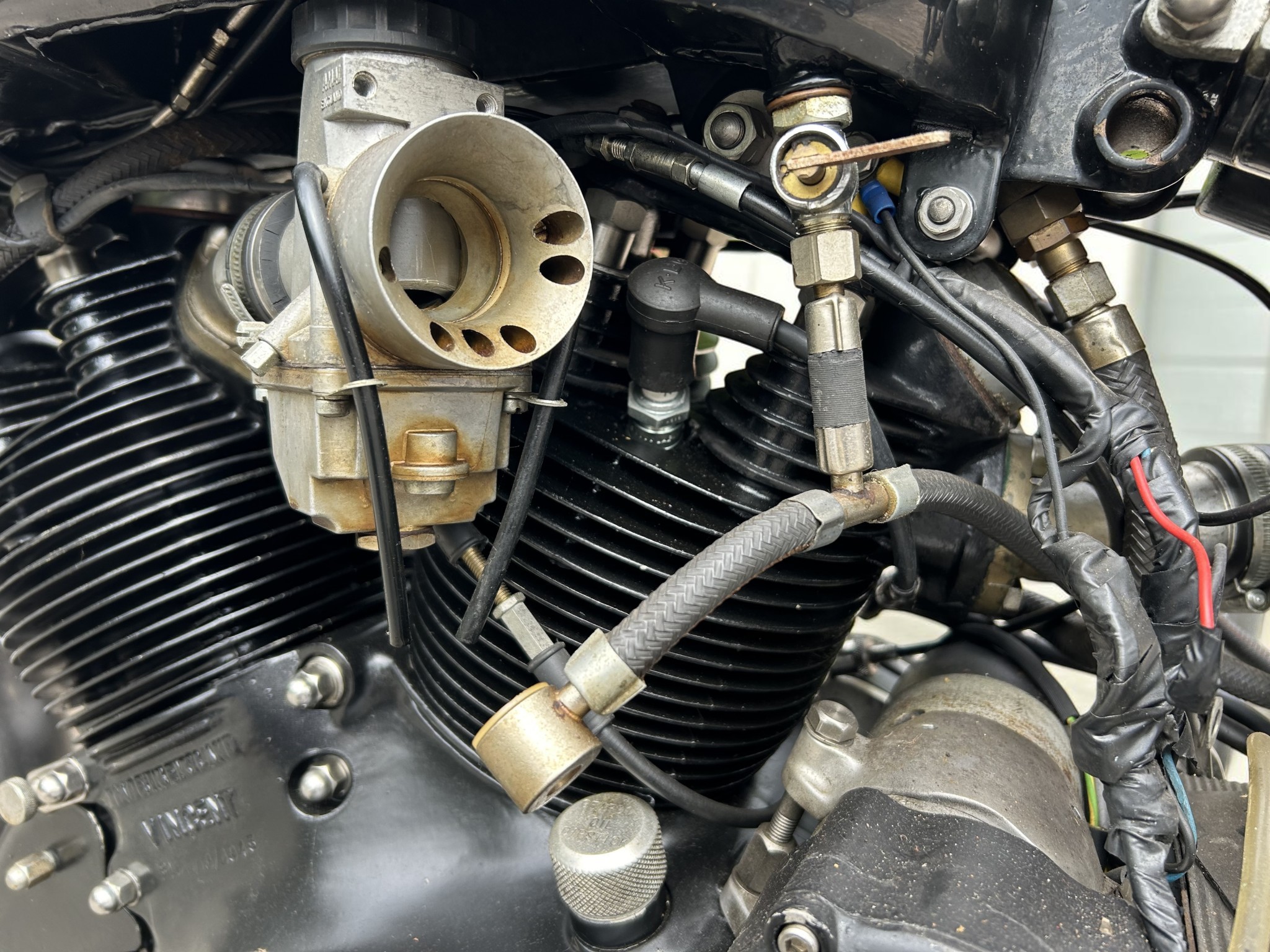
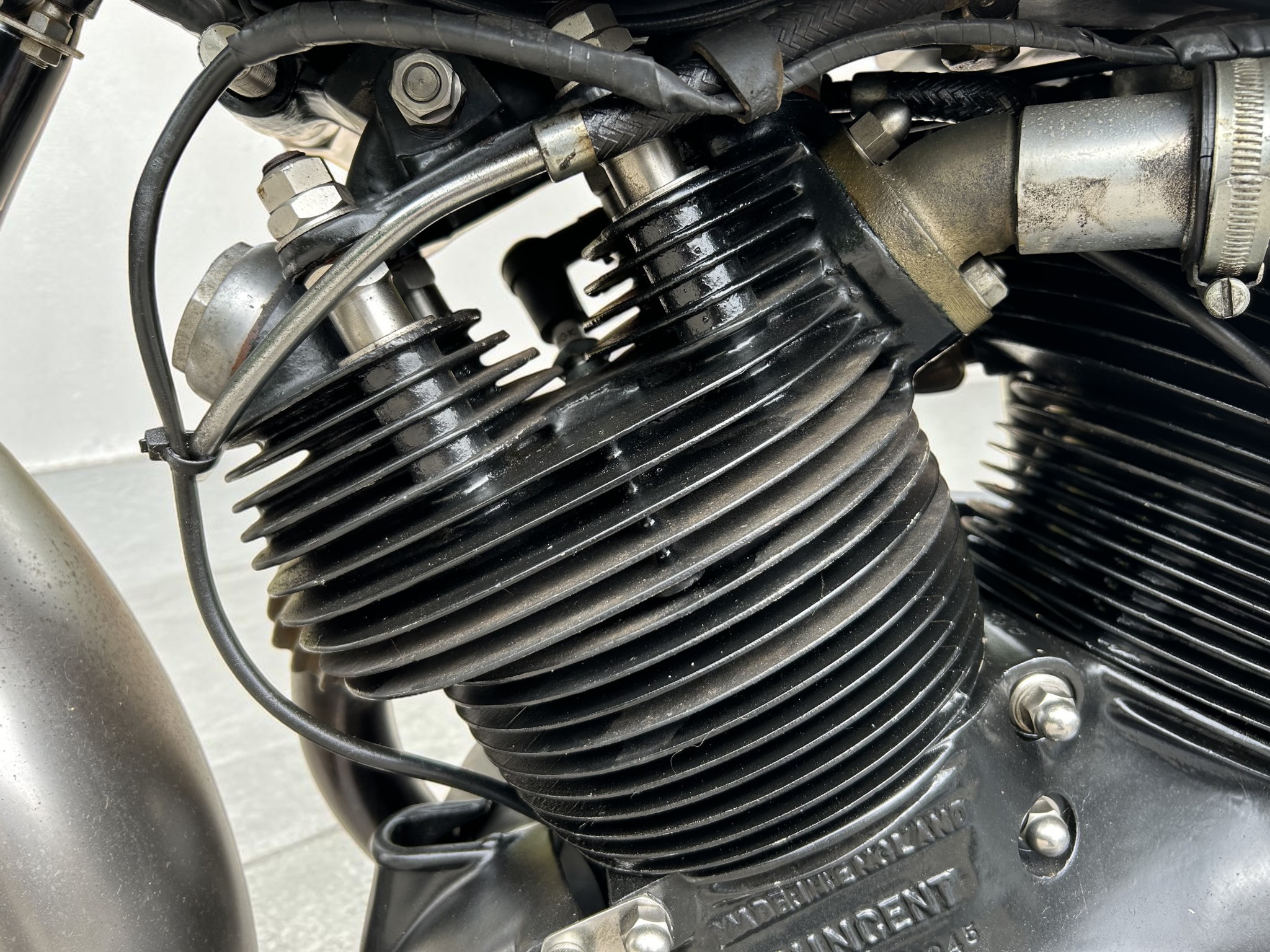
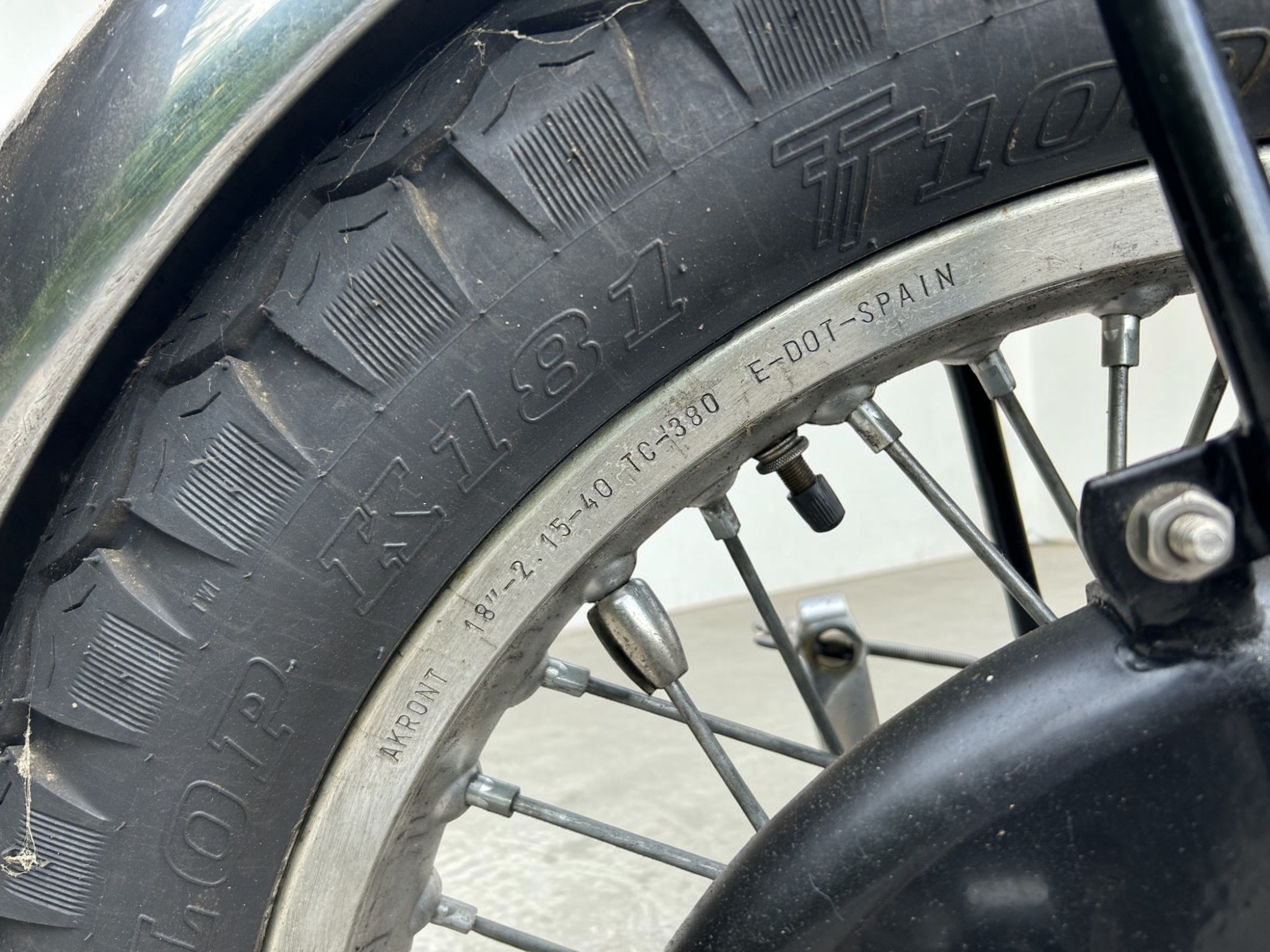
The 1952 Vincent Black Shadow Series C is one of the most celebrated British performance motorcycles of the post-war era. Developed by the Vincent-HRD Company at Stevenage, Hertfordshire, the Black Shadow combined an advanced 998cc V-twin engine, lightweight construction, innovative suspension, and exceptional high-speed performance in a motorcycle that was far ahead of most contemporary road machines.
At the center of the Black Shadow is Vincent's 998cc air-cooled 50-degree V-twin engine. The engine uses an overhead-valve configuration, with the cylinders arranged in Vincent's distinctive semi-stepped layout around the crankcase. In Black Shadow specification, the engine produced approximately 55 bhp, giving the motorcycle performance that was extraordinary for a production road machine in the early 1950s.
The Black Shadow was developed as the high-performance derivative of the Vincent Rapide. Rather than creating an entirely different motorcycle, Vincent engineers increased the performance of the existing V-twin through a higher compression ratio, larger carburetors, revised camshafts, polished internal components, and improved cylinder-head breathing. The result was a road motorcycle capable of delivering exceptional acceleration and a claimed top speed in the region of 125 mph.
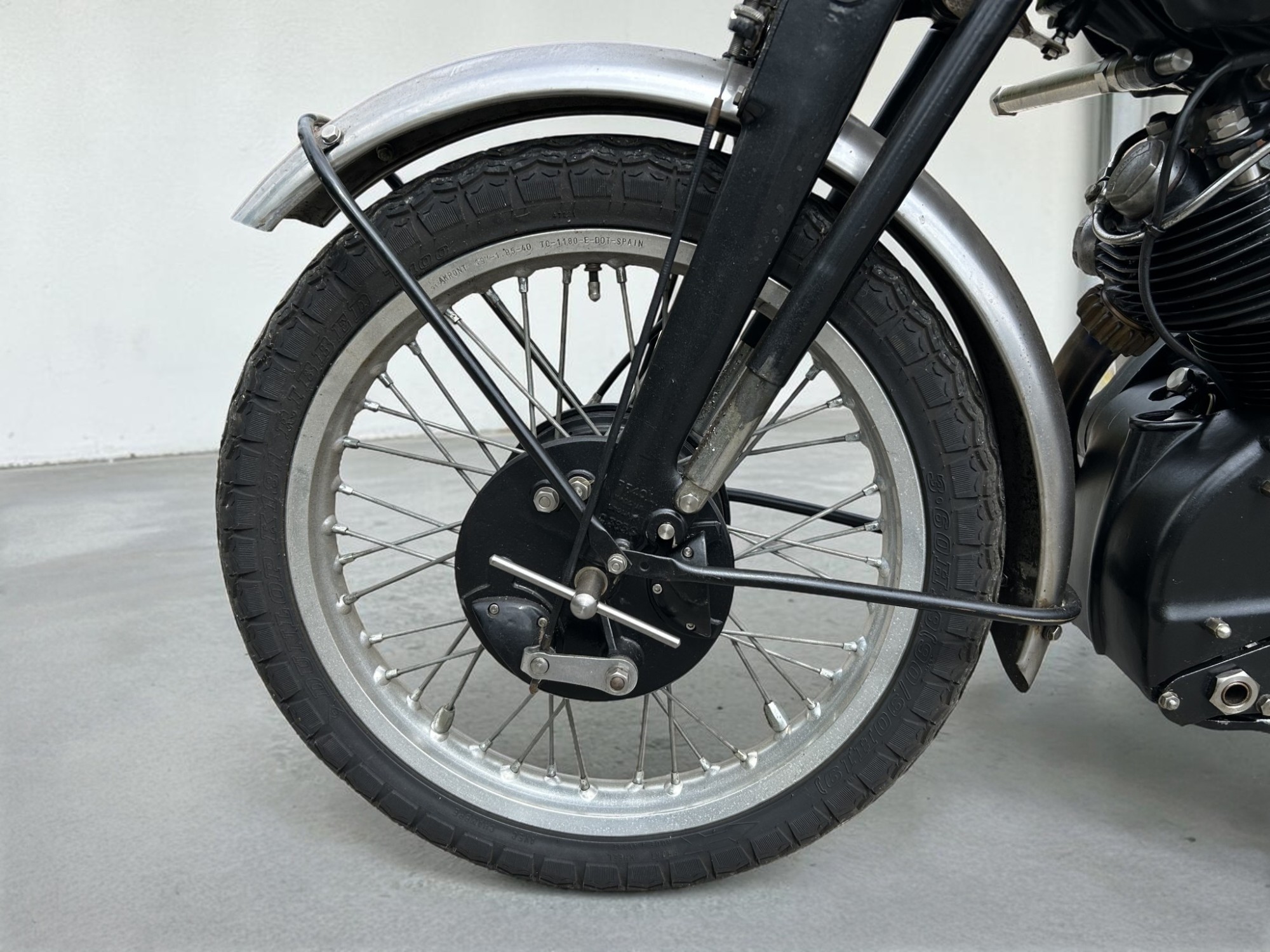
The Series C designation is equally important. Introduced as Vincent's post-war chassis development, Series C brought the company's own Girdraulic front fork, replacing the earlier Brampton arrangement. The Girdraulic combined the basic geometry of a girder fork with hydraulic damping, providing greater control and reduced flex while preserving the compact and structurally efficient design philosophy of the Vincent chassis.
At the rear, Vincent used a distinctive cantilever-style suspension system integrated into the motorcycle's stressed construction. The upper frame member also served as the oil tank, while the engine and gearbox were incorporated into a highly integrated mechanical structure rather than mounted within a conventional full cradle frame.
The Black Shadow's appearance is immediately recognizable. Its engine and gearbox cases were finished in black enamel with polished alloy highlights, creating the visual identity from which the motorcycle took its name. A large Smiths 150 mph speedometer emphasized the machine's exceptional performance credentials and became one of the most famous instruments in classic motorcycle history.
The motorcycle's exposed engineering is an important part of its character. Vincent did not hide the mechanical structure behind extensive bodywork. Instead, the engine, frame components, suspension, controls, and beautifully machined alloy parts form an almost architectural composition.
The riding position was also unusually adjustable for the period. Vincent incorporated adjustable footrests, gear-change controls, brake pedal positioning, and seat arrangements, allowing the rider to configure the motorcycle more precisely than was possible on most contemporary British machines.
The 1952 Series C Black Shadow therefore represents a remarkable combination of speed, engineering innovation, mechanical integration, and craftsmanship. It was not simply a larger British twin; it was a highly developed performance motorcycle designed around Philip Vincent's philosophy that speed, structural efficiency, and engineering sophistication could coexist in a road-legal machine.
The history of the Black Shadow begins with the Vincent-HRD Company and its founder Philip Vincent. Vincent's motorcycles had already established a reputation for advanced engineering before the Second World War, but the post-war Series B and Series C machines transformed the company into one of Britain's most prestigious manufacturers of high-performance motorcycles.
The post-war Series B Rapide introduced a major change in Vincent construction. Instead of relying on a conventional tubular frame surrounding the engine, Vincent developed a stressed-member concept in which the upper frame member, engine, and rear structure worked together as an integrated system. The arrangement reduced unnecessary structure and gave the Vincent a distinctive appearance and excellent rigidity.
The 998cc V-twin itself had roots extending back to the pre-war Vincent Series A Rapide. After the war, the engine was substantially developed and refined. The Series B Rapide introduced the modern post-war Vincent layout, while the Black Shadow took the same basic architecture to a much higher state of tune.
The Black Shadow appeared in 1948 as a sporting version of the Rapide. Vincent engineers increased compression from the Rapide's lower setting, fitted larger Amal carburetors, revised the camshaft specification, and improved the breathing and finish of the engine. These changes raised output from approximately 45 bhp in Rapide form to around 55 bhp in Black Shadow specification.
The motorcycle's reputation was reinforced by Vincent's high-speed achievements. In 1948, Rollie Free famously rode a highly prepared Vincent Black Shadow at Bonneville Salt Flats and recorded an extraordinary speed of 150.313 mph. Although Free's record-setting motorcycle was specially prepared and should not be confused with a standard production Black Shadow, the achievement dramatically strengthened the model's reputation as the ultimate high-performance Vincent.
The early Black Shadow was initially built to Series B specification. As Vincent developed the Series C chassis, the Black Shadow adopted the company's Girdraulic front fork and associated chassis improvements. The Series C therefore represents a major stage in the maturation of the Black Shadow concept.
Series C development began during the late 1940s, with the new Girdraulic fork and revised rear suspension gradually entering production. By 1950, Vincent production motorcycles had moved fully to Series C specification. This makes a 1952 Black Shadow a mature Series C example rather than an early transitional machine.
The 1952 model year falls within the most developed period of the regular-production Series C Black Shadow. Vincent continued refining the motorcycle while maintaining the fundamental 998cc V-twin architecture that had established its reputation.
Production remained limited compared with mass-market British motorcycles. Vincent Owners Club production records list 1,507 Series C Black Shadows built between December 1948 and 1955. This limited production, combined with the motorcycle's technical importance and relatively high original cost, has contributed substantially to its present-day collector status.
By the time the Series C Black Shadow reached the early 1950s, Vincent had created a motorcycle that was simultaneously a sporting machine, a technological showcase, and a luxury product. Its price was considerably higher than many contemporary motorcycles, reflecting the amount of specialized engineering and hand assembly involved in each machine.
Philip Vincent's engineering philosophy is fundamental to understanding the Black Shadow. Rather than simply following the conventional British motorcycle formula of a separate engine mounted in a tubular cradle frame, Vincent pursued a more integrated structural concept.
The motorcycle's upper frame member incorporated the oil tank and connected directly with the engine and rear frame structure. This arrangement allowed the engine to become a major structural element of the motorcycle while eliminating much of the conventional frame tubing found on contemporary machines.
The design was not simply an exercise in weight reduction. Vincent engineers were concerned with rigidity, adjustability, accessibility, and high-speed stability. The resulting motorcycle was compact for a 998cc twin and had a wheelbase of approximately 56 to 56.5 inches depending on specification and measurement reference.
The extensive use of machined alloy components also distinguished Vincent from many competitors. The Girdraulic fork, rear suspension components, engine castings, and numerous control parts were designed with both structural function and precision engineering in mind.
Vincent's approach to rider ergonomics was similarly advanced. Adjustable footrests and controls allowed the motorcycle to be configured for individual riders, while the relatively compact chassis gave the Black Shadow a sporting riding position without requiring the extreme ergonomics associated with a dedicated racing machine.
This combination of structural engineering, performance tuning, and rider adjustability explains why the Black Shadow has remained influential long after its production ended. The motorcycle was designed as a complete performance system rather than simply as an engine fitted into a traditional frame.
The Black Shadow's 998cc engine is a 50-degree air-cooled V-twin with an overhead-valve cylinder-head arrangement. The bore and stroke measure approximately 84 x 90 mm, producing a displacement just under one litre.
In Black Shadow specification, the engine was rated at approximately 55 bhp at around 5,500 rpm. The relatively high output was achieved through a combination of increased compression, larger carburetors, revised camshafts, polished connecting rods and rockers, and careful attention to cylinder-head ports and combustion efficiency.
The engine used twin Amal carburetors, one serving each cylinder. The larger carburetor specification was one of the key differences between the Black Shadow and the standard Rapide and was essential to the higher-performance character of the motorcycle.
The V-twin was coupled to a four-speed gearbox. Power was transmitted through a chain-driven primary system and chain final drive. The gearbox and engine were integrated into the Vincent mechanical architecture, contributing to the motorcycle's compact structure.
The Black Shadow's performance was extraordinary for its time. Contemporary and historical sources commonly associate the production machine with a top speed of approximately 125 mph, although actual performance naturally depended on road conditions, gearing, engine condition, rider position, and individual motorcycle specification.
The importance of this performance should be understood in its period context. During the early 1950s, most family cars were incapable of approaching the speeds available from a Black Shadow. The Vincent therefore occupied an unusual position as a road motorcycle capable of performance that could rival or exceed many contemporary sports cars.
The engine's character was not limited to outright top speed. Its large displacement and long-stroke configuration provided strong torque and acceleration, allowing the rider to exploit the machine on normal roads without constantly operating at the upper limit of the engine's rev range.
This combination of acceleration, high-speed ability, and mechanical sophistication established the Black Shadow as one of the defining high-performance motorcycles of the early post-war period.
One of the defining technical features of the Series C Black Shadow is Vincent's Girdraulic front fork. Introduced as part of the Series C development, the Girdraulic combined a girder-style structure with hydraulic damping.
The fork used rigid blade members with hydraulic dampers mounted to improve suspension control and reduce the lateral flex that could affect earlier girder arrangements. This represented a significant advancement over the previous Brampton fork used on early Vincent machines.
The rear suspension was equally unconventional. Vincent employed a cantilever-style rear system with twin spring boxes and hydraulic damping, integrated into the motorcycle's distinctive rear structure.
Together, the front and rear suspension systems gave the Black Shadow a chassis capable of handling the performance of its 998cc engine. The Series C was therefore not simply a cosmetic update to the earlier Black Shadow; it represented a meaningful development in road-holding and suspension technology.
The chassis design also contributed to the motorcycle's unusual appearance. Without a conventional full frame surrounding the engine, the Vincent exposed much more of its mechanical architecture, making the motorcycle immediately recognizable among contemporary British motorcycles.
The Black Shadow was developed directly from the Vincent Rapide, but the two models occupied different positions within the range. The Rapide was conceived as a fast and refined road motorcycle, while the Black Shadow represented the higher-performance sporting interpretation.
Both motorcycles used the fundamental Vincent 998cc V-twin architecture, but the Black Shadow received a more highly tuned engine. Higher compression, larger carburetors, revised cams, and internal engine preparation increased output to approximately 55 bhp.
The Black Shadow also received its distinctive black engine and gearbox finish and the large Smiths 150 mph speedometer. These features gave the motorcycle a visual identity that was closely connected with its performance role.
The distinction is important for collectors. A standard Rapide converted with Black Shadow components may have the appearance or performance of a Black Shadow, but establishing whether a motorcycle left the Vincent factory as a genuine Black Shadow requires careful examination of its factory documentation, engine and frame numbers, and historical records.
Vincent's complex numbering system makes authenticity unusually important. Multiple matching numbers, crankcase markings, frame components, and factory records can be used to establish whether an individual machine retains its original identity. The Vincent Owners Club maintains extensive marque records that are particularly valuable when researching provenance.
Few motorcycles have a stronger connection between production engineering and land-speed-record history than the Vincent Black Shadow. The model's reputation was dramatically reinforced by American rider Rollie Free's record-setting Vincent at Bonneville Salt Flats in 1948.
Free's machine was a highly prepared Vincent and should not be confused with an untouched production Black Shadow. Nevertheless, the 150.313 mph run demonstrated the extraordinary potential of Vincent's 998cc V-twin and became one of the defining moments in the history of British motorcycling.
The image of Rollie Free riding at Bonneville in minimal clothing, lying prone over the Vincent, became one of the most famous photographs in motorcycle history. The record attempt gave Vincent an enormous international reputation and helped establish the Black Shadow as a symbol of speed.
This history also explains why the large 150 mph Smiths speedometer became such an iconic part of the production Black Shadow. The instrument communicated the motorcycle's performance ambition at a time when few road motorcycles required an instrument capable of displaying speeds beyond 100 mph.
The Bonneville record machine and production Black Shadow should nevertheless remain distinct entities. The record-setting motorcycle was specially prepared for competition, while the Series C Black Shadow was a road-going production motorcycle. The connection between them is one of engineering heritage and performance potential rather than identical specification.
The Black Shadow occupies a unique position in British motorcycle history because it combined performance normally associated with racing machines with the equipment and usability of a road motorcycle.
Its large V-twin engine, sophisticated suspension, four-speed transmission, adjustable controls, and high-speed stability allowed it to function as a genuine long-distance road machine while retaining performance that could compete with specialist sports motorcycles.
The motorcycle also represented an unusual level of engineering expense. Vincent's relatively small production scale allowed the company to use specialized machining and hand-finishing techniques that would have been difficult to justify on a mass-market motorcycle.
The result was expensive, technically sophisticated, and relatively rare. Contemporary riders who could afford a Vincent were purchasing not merely transportation but one of the most advanced performance motorcycles available in Britain.
This combination of rarity and engineering excellence is a major reason the Black Shadow remains one of the most desirable British motorcycles for serious collectors today.
The 1952 Vincent Black Shadow Series C represents one of the most developed versions of the regular production Black Shadow. By this stage, Vincent had established the Series C chassis specification, including the Girdraulic front fork and associated suspension improvements.
The model's limited production is another major factor. Vincent Owners Club production records list 1,507 Series C Black Shadows built from December 1948 through 1955. Compared with mass-produced British motorcycles of the same era, this makes the Black Shadow a genuinely scarce motorcycle.
Authenticity and provenance are especially important with Vincent motorcycles. Because individual components carry detailed factory identification numbers, collectors can often determine whether an engine, upper frame member, rear frame, crankcases, and other major components correspond to the motorcycle's original factory identity.
The condition of major mechanical components is equally important. A beautifully restored Vincent can be highly desirable, but originality may be preferable for some collectors, particularly when rare factory finishes, original instruments, correct carburetors, exhaust components, wheels, and other period details survive.
This 1952 Vincent Black Shadow Series C represents one of the most important British performance motorcycles of the early post-war era. Its 998cc 50-degree V-twin, approximately 55 bhp output, Girdraulic front fork, cantilever rear suspension, four-speed transmission, and distinctive black engine finish combine to create a motorcycle with exceptional historical and engineering significance.
The Series C Black Shadow was the high-performance evolution of Vincent's Rapide and became famous for its extraordinary speed at a time when few production motorcycles could approach 120 mph. Its connection with Vincent's Bonneville speed-record program and Rollie Free's legendary 150.313 mph run further established the Black Shadow as one of the defining names in motorcycle performance.
With only 1,507 Series C Black Shadows recorded by the Vincent Owners Club, the model is genuinely scarce. The importance of matching engine and frame numbers, original factory specification and continuous provenance makes a correctly authenticated example particularly desirable to serious collectors.
For collectors seeking a historically significant British V-twin, a genuine Series C Black Shadow, or one of the most advanced road motorcycles of the early 1950s, the 1952 Vincent Black Shadow offers an exceptional combination of rarity, engineering innovation, competition heritage, and collector prestige.
The Vintage Motorcycles presents a curated selection of historically significant British vintage motorcycles, with a dedicated focus on Vincent-HRD Motorcycles, a manufacturer that represents the upper threshold of performance-oriented British engineering in the pre- and immediate post-war period. Emerging from the integration of HRD engineering concepts with Vincent's design philosophy, these machines reflect a deliberate pursuit of speed, structural innovation, and mechanical efficiency beyond conventional standards of their time.
This collection is contextualized within the broader ecosystem of global motorcycle history, where you can explore additional manufacturers through our global vintage motorcycle brands archive. Within the British engineering landscape, Vincent-HRD occupies a distinct position, often associated with advanced frame integration concepts and high-capacity V-twin configurations that redefined expectations for road-going motorcycles. These developments are best understood within the framework of pre-war motorcycle engineering (1900-1939), where experimental engineering began to converge with measurable performance benchmarks and increasingly sophisticated mechanical systems.
Each motorcycle within our collection is carefully selected based on provenance, originality, and mechanical integrity, ensuring alignment with museum-grade preservation standards. Available machines can be explored through our global vintage motorcycle inventory, including Vincent-HRD models that illustrate the progression from early engineering concepts to highly refined performance machines, alongside structurally adaptable configurations found in our sidecar motorcycle collection, which demonstrate the broader application of British engineering principles across multiple use cases. All acquisitions are supported by a fully insured international shipping service designed for global collectors.
British engineering has often been defined by a balance between tradition and innovation, and Vincent-HRD represents a moment where that balance shifted toward technical ambition. Unlike more conservative manufacturers, Vincent-HRD pursued integrated design solutions, including frameless concepts and high-performance engine configurations, that challenged established norms. This approach positioned the marque at the forefront of engineering development, where performance, structural efficiency, and innovation were closely interlinked.
This trajectory becomes clearer when examined through broader historical transitions. During the late pre-war period, as documented in pre-war motorcycle development, British manufacturers increasingly explored the relationship between mechanical performance and structural design. Vincent-HRD extended this exploration into more radical territory, setting the stage for innovations that would continue into the wartime and immediate post-war years. The demands of global conflict further emphasized durability and reliability, as reflected in wartime motorcycle engineering, even as performance-focused development persisted in parallel.
In the post-war period, Vincent-HRD became synonymous with some of the fastest and most technically advanced production motorcycles of its era. This evolution is further explored in post-war motorcycle development, where engineering priorities expanded to include not only scalability and efficiency, but also the cultural significance of speed and performance. Within this broader continuum, Vincent-HRD remains a critical reference point - illustrating how British engineering could extend beyond incremental refinement into a domain of integrated, high-performance mechanical design.
Key Highlights
Collector Assurance
All enquiries handled with discretion. We typically respond within 6 hours.
Choose the payment method that is most convenient for you. We accept widely used international payment methods as well as, where available, local bank transfer options that allow you to pay like a domestic transaction. Full payment instructions are provided for your specific purchase.
Direct international bank wire transfer is available for motorcycle purchases and export transactions.
Credit card payments can be arranged through Wise.com, subject to the applicable payment and processing conditions.
PayPal is accepted. A 5% PayPal processing fee applies to the transaction.