The Vintage Motorcycles
Specialists in antique, classic, veteran and vintage motorcycles.
Specialists in antique, classic, veteran and vintage motorcycles.
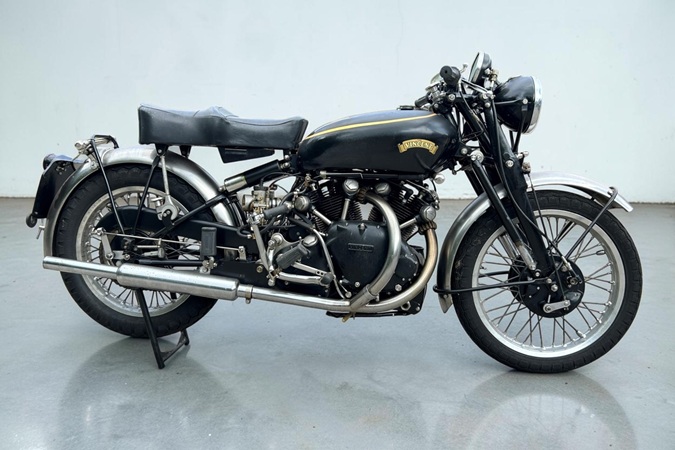
A museum-grade collection of Vincent-HRD motorcycles representing one of the most advanced engineering achievements in pre- and post-war British motorcycling. From the legendary Rapide Series B to the refined Comet Series C, each machine reflects extreme performance innovation, hand-built craftsmanship, and unmatched collector prestige.
Curated by international vintage motorcycle specialists. Each Vincent-HRD motorcycle is selected based on engineering originality, historical significance, and preservation quality suitable for elite collectors and museum-grade exhibitions.
Vincent-HRD stands as one of the most technically advanced motorcycle manufacturers of the 20th century, renowned for its high-performance V-twin engines, precision engineering, and radical design philosophy.
Unlike mass-production manufacturers of its era, Vincent-HRD focused on low-volume, hand-assembled motorcycles that pushed the boundaries of speed, reliability, and mechanical innovation.
Today, Vincent motorcycles are considered among the most desirable British collector machines, representing the pinnacle of pre-modern performance engineering.
The early Vincent-HRD motorcycles of the 1940s introduced groundbreaking performance concepts, including stressed-member engine design and high-output V-twin architecture.
The Rapide Series B (late 1940s) became one of the fastest production motorcycles of its time, establishing Vincent's global reputation for extreme performance engineering.
By the early 1950s, Vincent refined its engineering philosophy with lighter single-cylinder platforms such as the Comet Series C, balancing performance, usability, and long-distance touring capability.
Despite limited production numbers, Vincent-HRD motorcycles achieved legendary status in the collector world due to their rarity and engineering sophistication.
1928 - Vincent Motorcycles was founded in Stevenage, England by Philip Vincent, originally acquiring HRD Motors to begin production under a new engineering vision.
1930s - The company focused on advanced single-cylinder motorcycles with a strong emphasis on performance, innovation, and engineering experimentation.
1936 - Vincent introduced the Series A and B models, showcasing early development of high-performance V-twin concepts and advanced chassis design.
1939-1945 - During World War II, production was limited, with engineering development paused due to wartime restrictions.
1946 - The post-war Series B Rapide was launched, introducing one of the most powerful production motorcycles of its time with a 1000cc V-twin engine.
1948 - The Vincent Black Shadow was introduced, becoming the fastest production motorcycle in the world at the time and a legendary performance benchmark.
1950s - The Black Lightning and other high-performance variants pushed the limits of speed and engineering, cementing Vincent's reputation for extreme performance.
1955 - Financial pressures and limited production scale led to the end of motorcycle manufacturing.
1960s - Vincent Motorcycles ceased operations, but its engineering legacy remained highly influential in performance motorcycle design.
Modern Era - Vincent motorcycles are considered some of the most iconic British machines ever built, known for their advanced V-twin engineering, speed records, and uncompromising performance philosophy.
Vincent motorcycles are among the rarest and most valuable British motorcycles in existence, with extremely limited production numbers and strong global collector demand.
Models such as the Rapide Series B are widely regarded as blue-chip investment motorcycles, often commanding premium valuations in private collections and international auctions.
Original, matching-numbers Vincent motorcycles with documented provenance are considered ultra-elite collector assets, often preserved in museums or high-end private collections.
Key collector-grade Vincent motorcycles in this collection include:
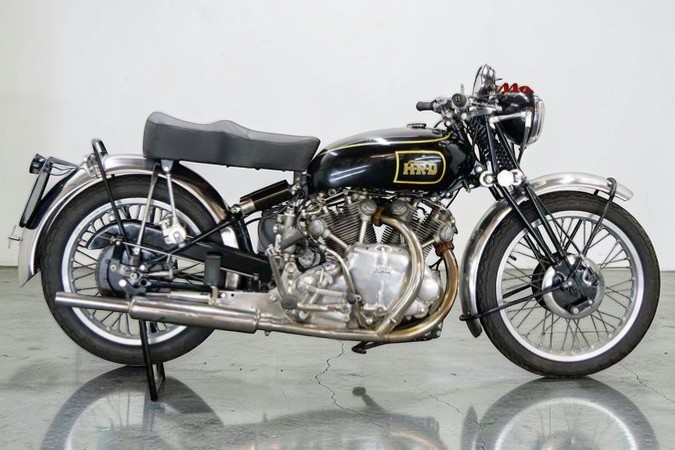
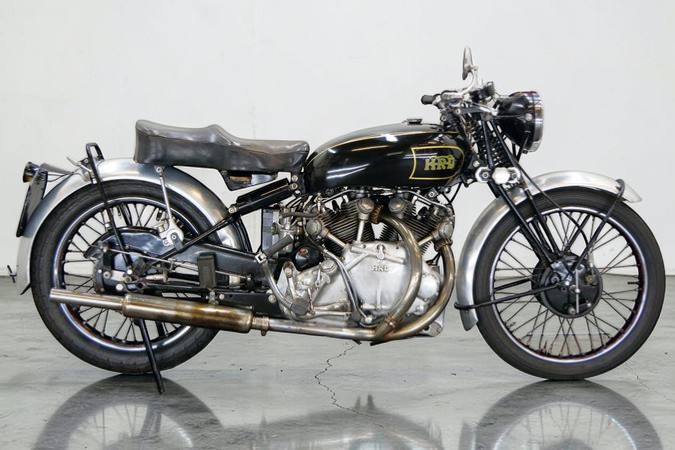
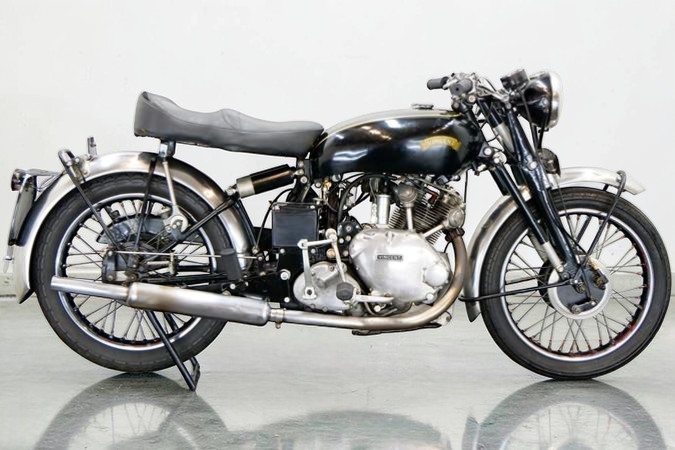
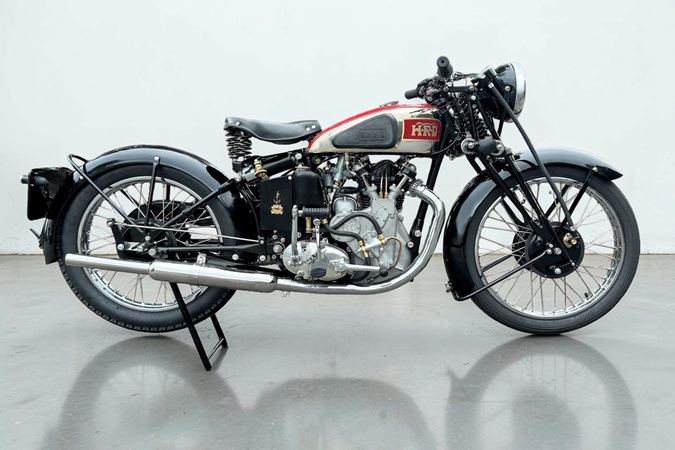
1948 Vincent-HRD Model Rapide Series B, 1947 Vincent-HRD Model Rapide Series B, 1951 Vincent Model Comet Series C
These motorcycles represent the highest level of British motorcycle engineering refinement, combining extreme performance capability with hand-built mechanical precision.
Vincent-HRD is not just a motorcycle manufacturer - it is a symbol of engineering ambition pushed beyond commercial limitations.
Its motorcycles represent a transition point in performance engineering, bridging early mechanical experimentation with modern high-performance motorcycle design principles.
The brand's legacy continues through its influence on modern performance engineering and collector culture worldwide.
Vincent motorcycles occupy a unique tier in the collector market due to extreme rarity, engineering prestige, and historical importance.
The strongest value retention is typically observed in: original Rapide Series models, matching-numbers engines, and fully documented early production motorcycles.
As global demand continues to increase, Vincent motorcycles remain among the most difficult British classics to acquire.
When acquiring a Vincent motorcycle, collectors should prioritize originality, engine authenticity, and verified provenance documentation.
Key verification points include: matching engine/frame numbers, correct factory specifications, and documented restoration or preservation history.
Each Vincent in our collection is professionally authenticated and evaluated to ensure museum-grade collector standards.
Below is a curated selection of Vincent motorcycles available for acquisition. Each example represents extreme rarity, historical importance, and collector-grade preservation quality.
We offer worldwide export of Vincent-HRD motorcycles to collectors in the United States, Europe, United Kingdom, Australia, and Asia. All motorcycles are professionally crated, insured, and shipped with full export documentation.
Pricing depends on rarity, originality, and provenance history. Please contact our specialists for private acquisition opportunities.
Contact our specialists for availability, valuation, and worldwide shipping support.
Request AvailabilityThe engineering origins of Vincent motorcycles can be understood within the broader framework of pre-war motorcycle development (1900-1939), where British manufacturers established the structural and mechanical foundations of modern motorcycle design. Although Vincent's most iconic machines would emerge later, this period defined the baseline from which high-performance engineering could evolve.
Vincent's true significance becomes apparent in the context of post-war motorcycle innovation (1945-1960s), where the brand introduced advanced V-twin configurations, unitized frame concepts, and performance-oriented design philosophies that redefined the limits of production motorcycles.
This transition was shaped by broader industrial and military influences, particularly those seen during World War II motorcycle development, where durability, mechanical efficiency, and structural simplicity became critical engineering priorities. While Vincent itself was not primarily a mass military supplier, the engineering constraints of the era influenced all post-war manufacturers.
In parallel, the evolution of load-bearing and utility-focused configurations - especially those involving sidecar-integrated motorcycle systems-highlighted the importance of chassis rigidity and torque delivery, both of which became defining characteristics of Vincent's high-performance V-twin platforms.
For a broader comparative perspective across manufacturers and engineering philosophies, global vintage motorcycle inventory archives provide context in which Vincent motorcycles can be evaluated alongside other European performance and experimental platforms.
What makes Vincent motorcycles historically significant?
Vincent motorcycles are widely regarded as some of the most advanced British engineering achievements of the mid-20th century, combining high-performance V-twin engines with innovative frame and suspension design.
Why are Vincent HRD motorcycles so rare?
Limited production combined with a high-performance focus resulted in very low survival rates, particularly for original Series B and Series C machines with matching numbers.
Which Vincent models are most collectible?
Collector interest centers on models such as the Rapide Series B, early post-war V-twin configurations, and the Comet Series C, each representing key stages in Vincent's engineering evolution.
Are Vincent motorcycles a good investment?
Well-preserved Vincent motorcycles are considered blue-chip assets within the vintage market, driven by rarity, engineering innovation, and sustained global demand.
Vincent motorcycles represent a unique convergence of performance engineering and structural innovation within post-war British motorcycling. From the introduction of the Rapide Series B to the refinement of later models, Vincent pursued a design philosophy centered on power-to-weight optimization and mechanical integration. For collectors, understanding production context, originality, and engineering variation is essential when evaluating these machines as historical artifacts rather than purely performance vehicles.
The development of Vincent HRD can be contextualized within the broader evolution of British motorcycle engineering, where industrial foundations and post-war innovation intersect. This perspective is explored through comparative studies of motorcycle manufacturers by country, alongside insights into British brand development and the historical framework outlined in the evolution of British motorcycling.
Within the global vintage motorcycle market, Vincent occupies a position defined by engineering rarity and performance heritage. These characteristics align with broader trends observed in vintage motorcycle market analysis, particularly in the segment of post-war high-performance machines.
Vincent HRD engineering is defined by its integration of high-performance V-twin architecture with innovative frame design, eliminating traditional chassis structures in favor of engine-stressed construction. These motorcycles represent a critical stage in the evolution of performance-focused design, where structural efficiency and mechanical output were treated as interconnected systems.
Navigate through key purchasing resources and thorough mechanical tutorials, featuring international buyer FAQs, specific brand repairs, classic motorcycle troubleshooting, and detailed workshop restoration guides: