
The Vintage Motorcycles
Specialists in antique, classic, veteran and vintage motorcycles.
Specialists in antique, classic, veteran and vintage motorcycles.
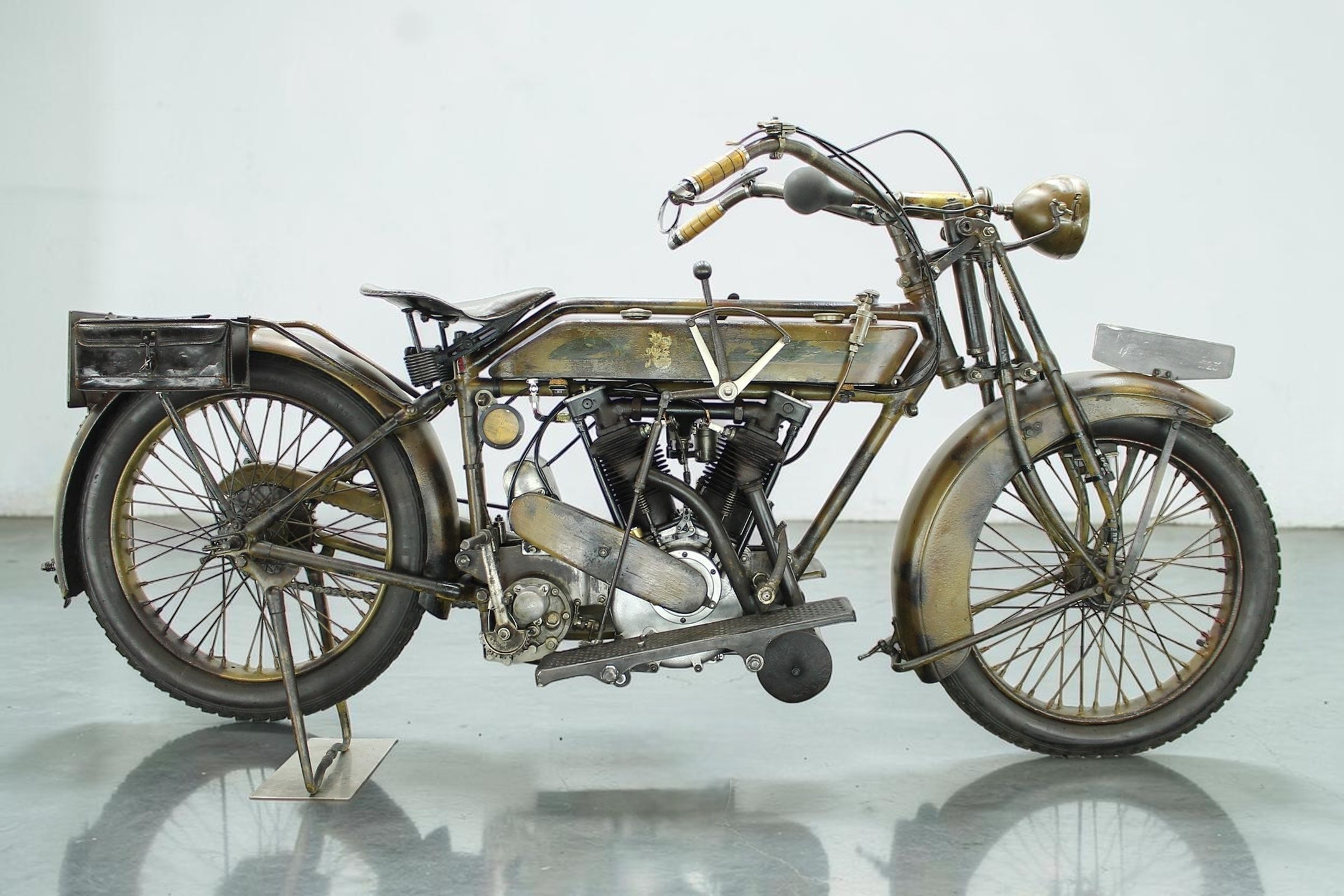
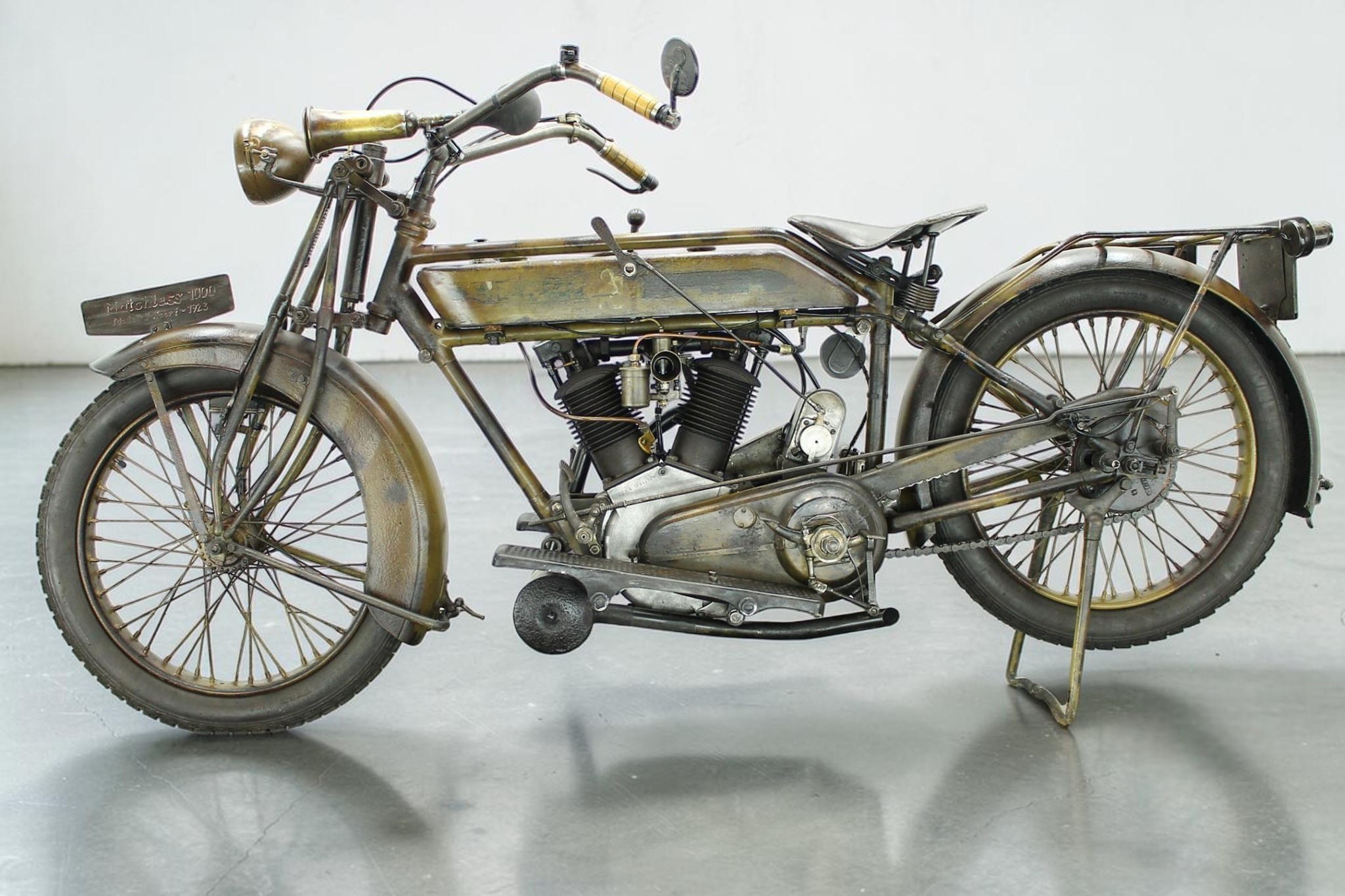
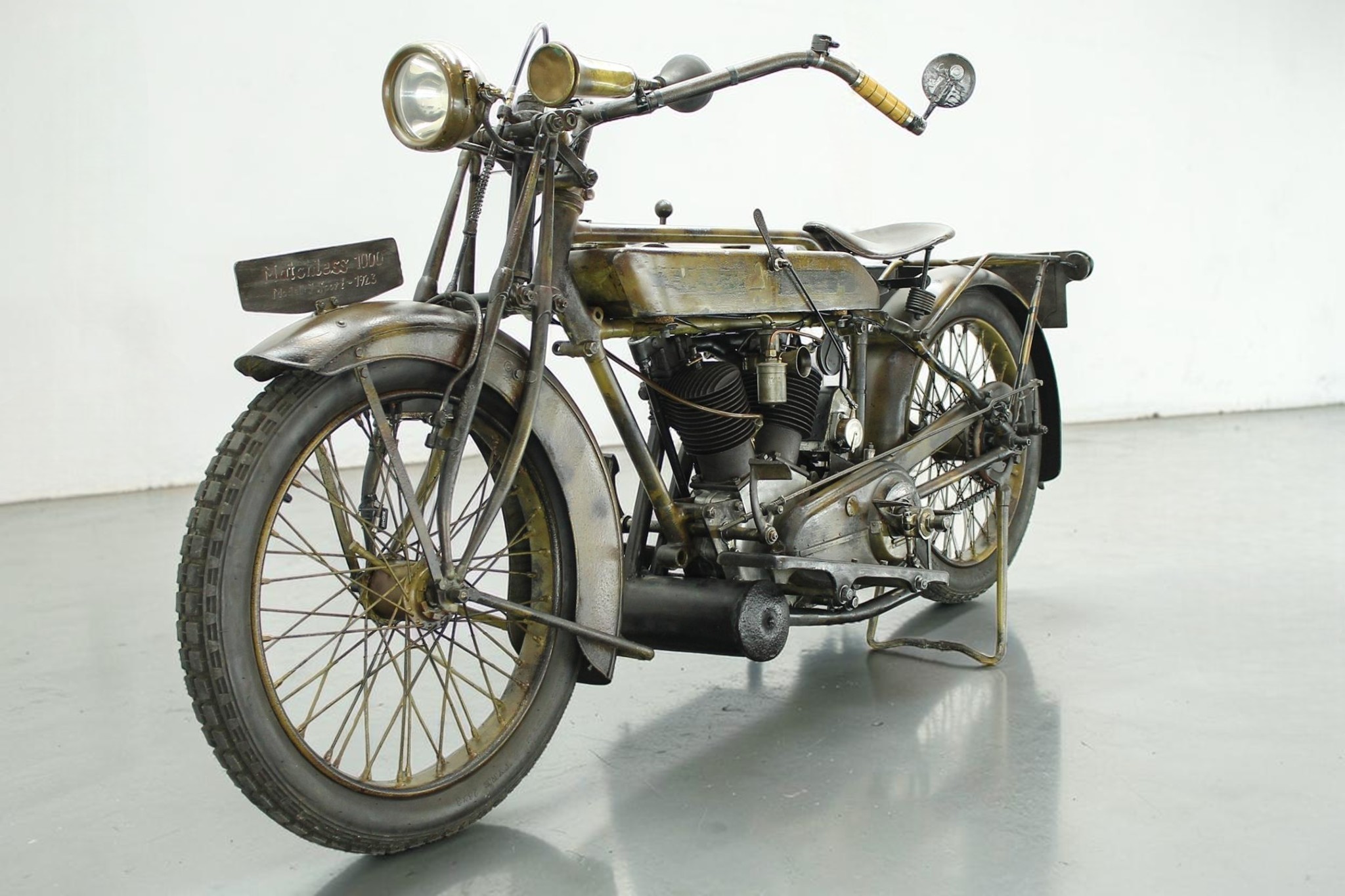
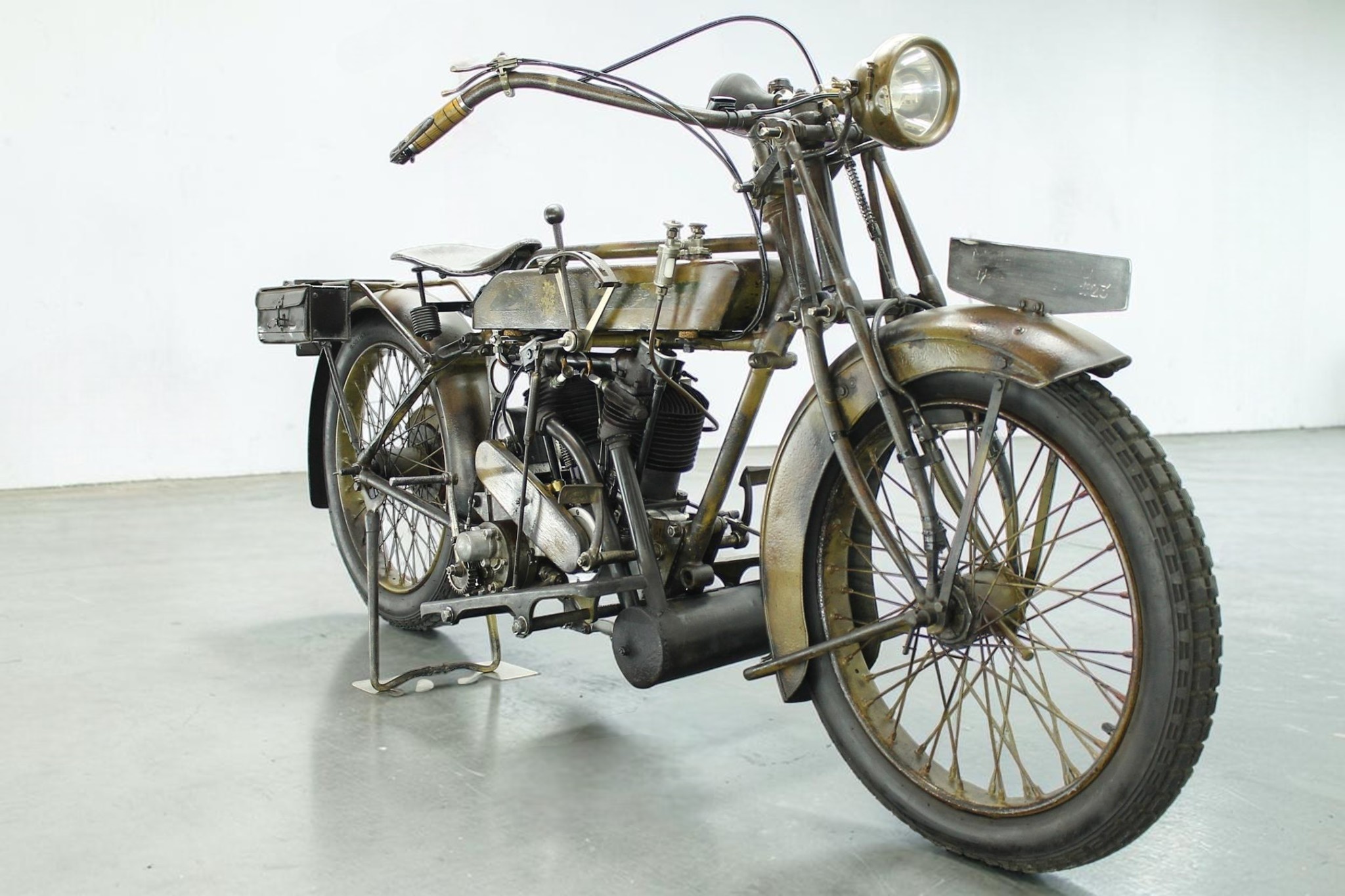
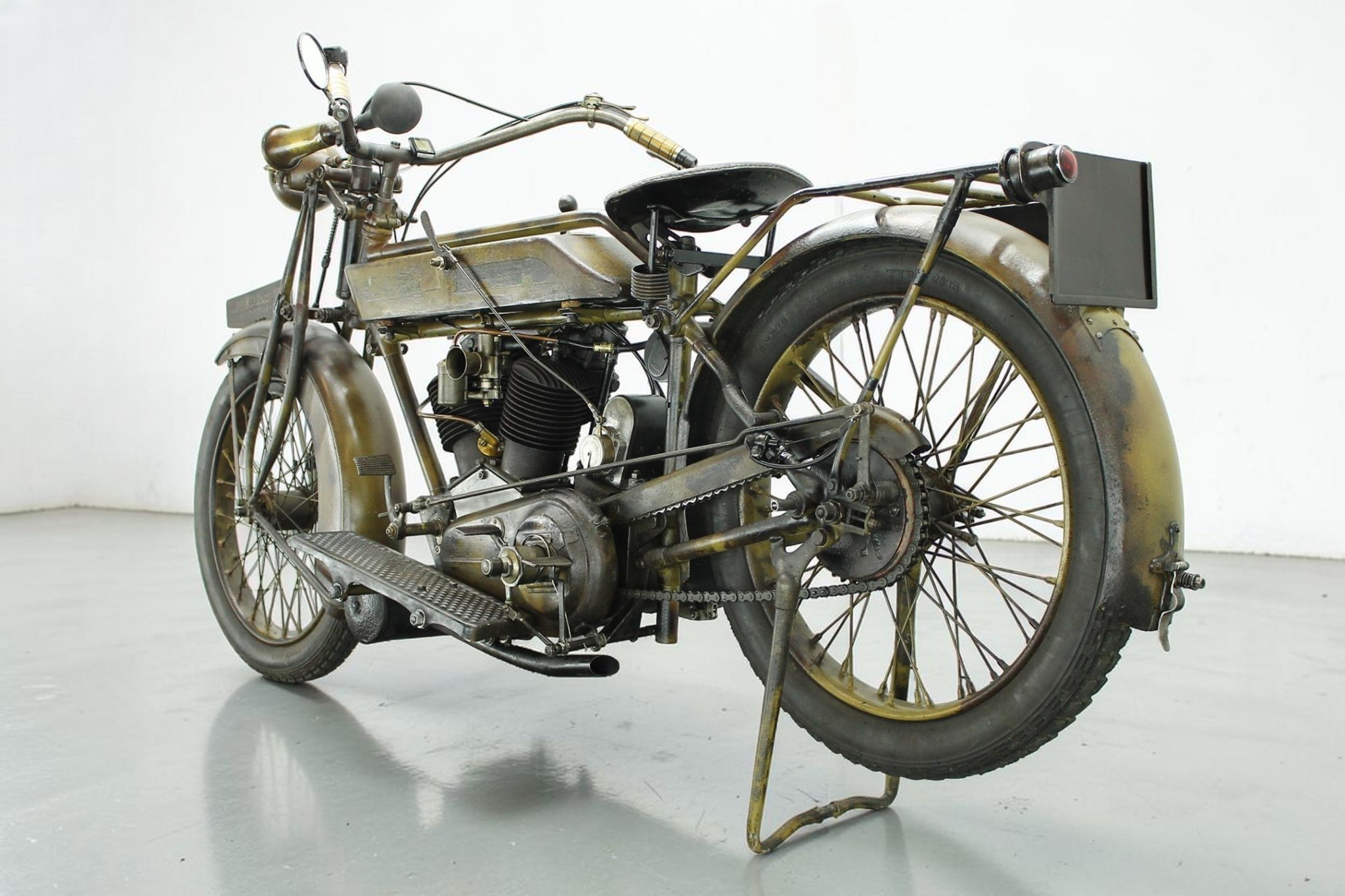

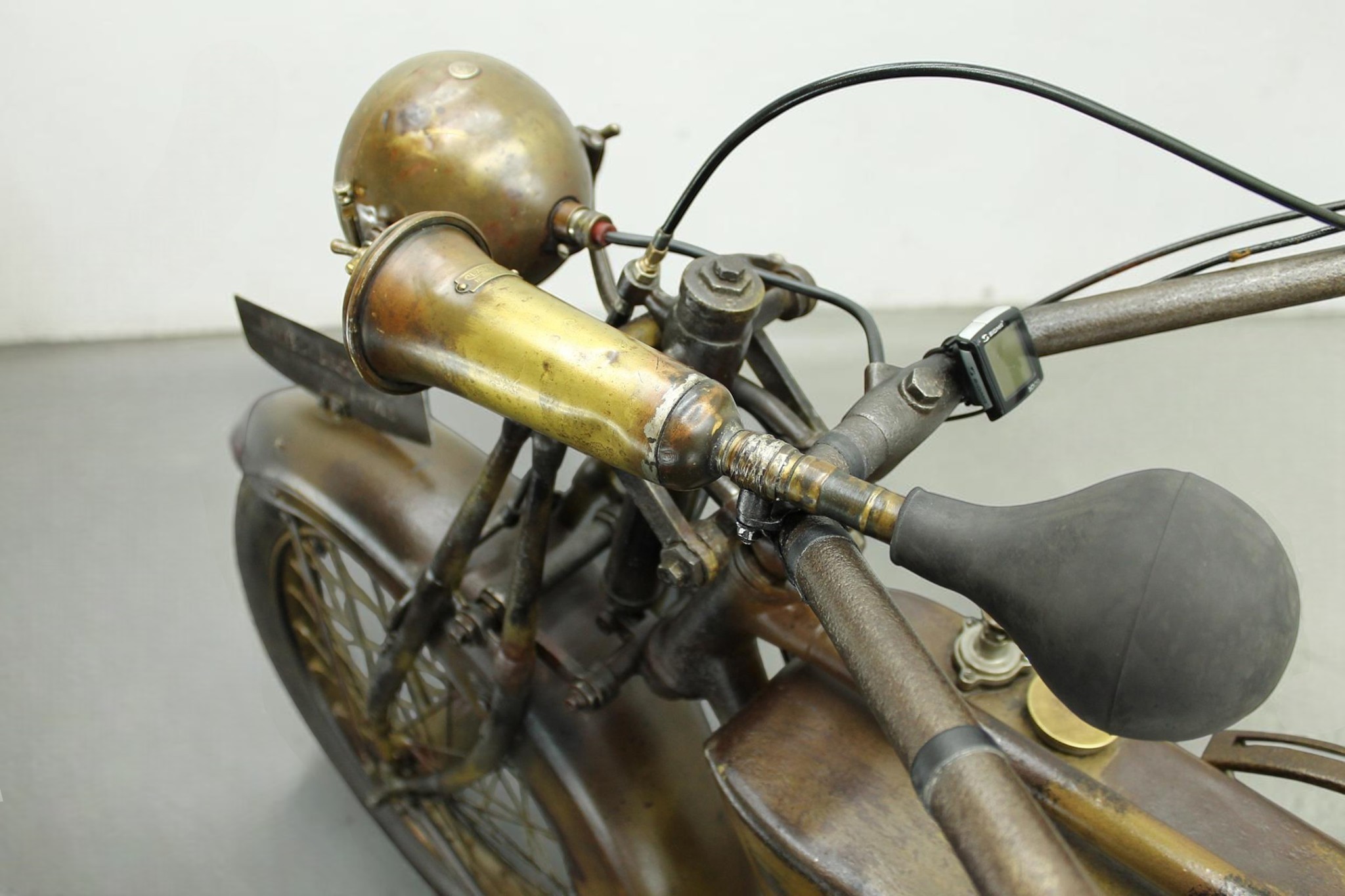
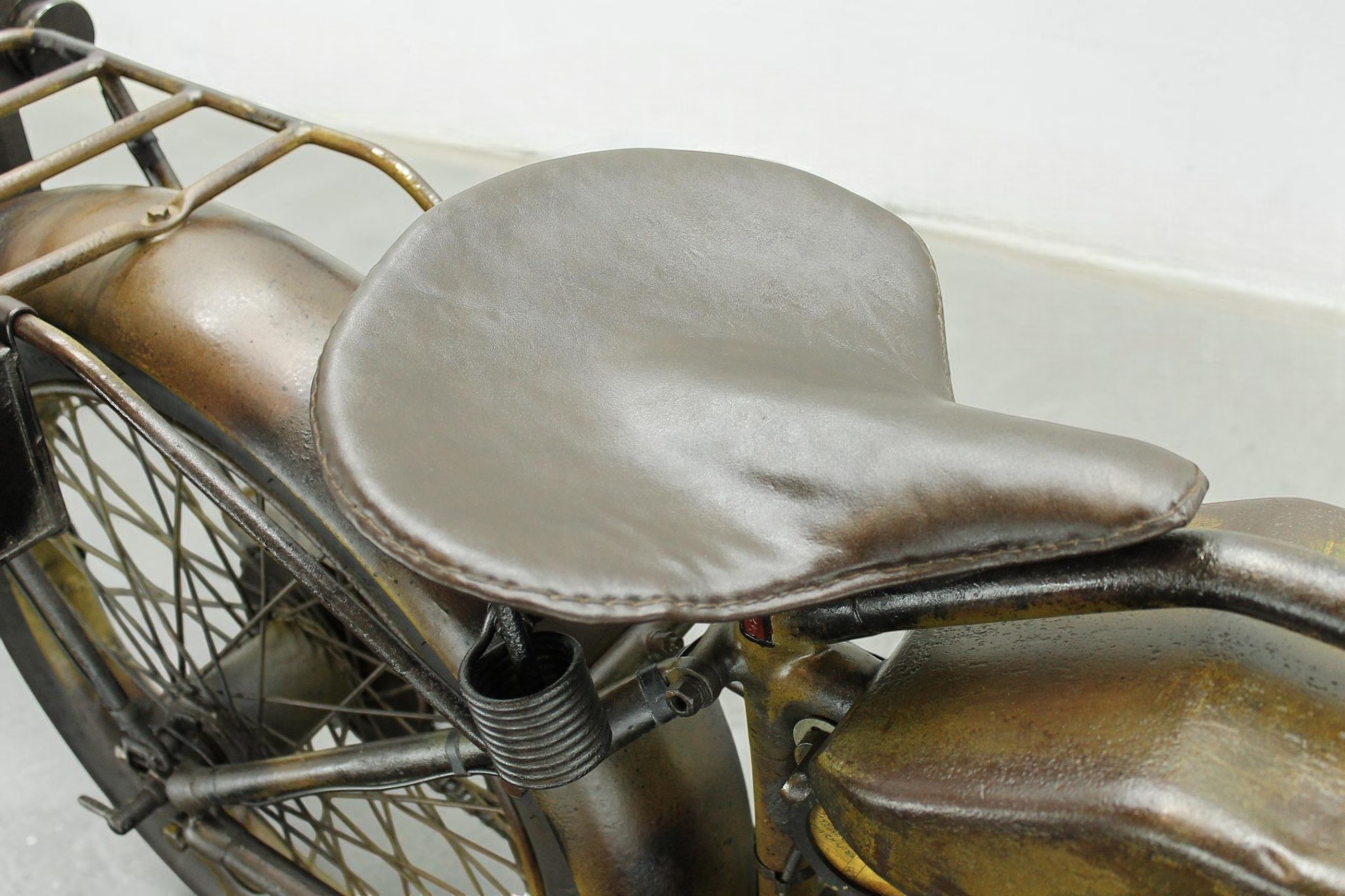
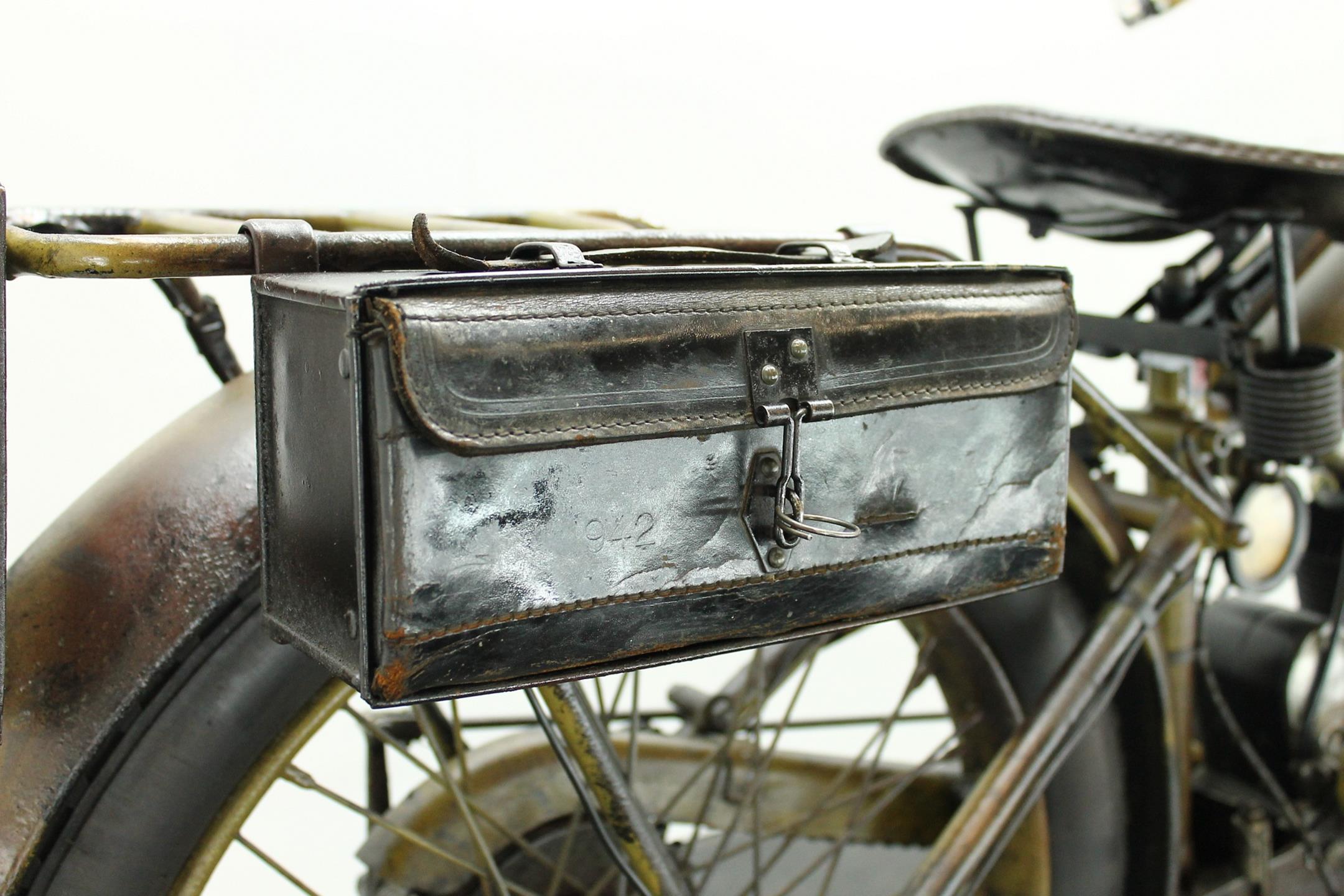
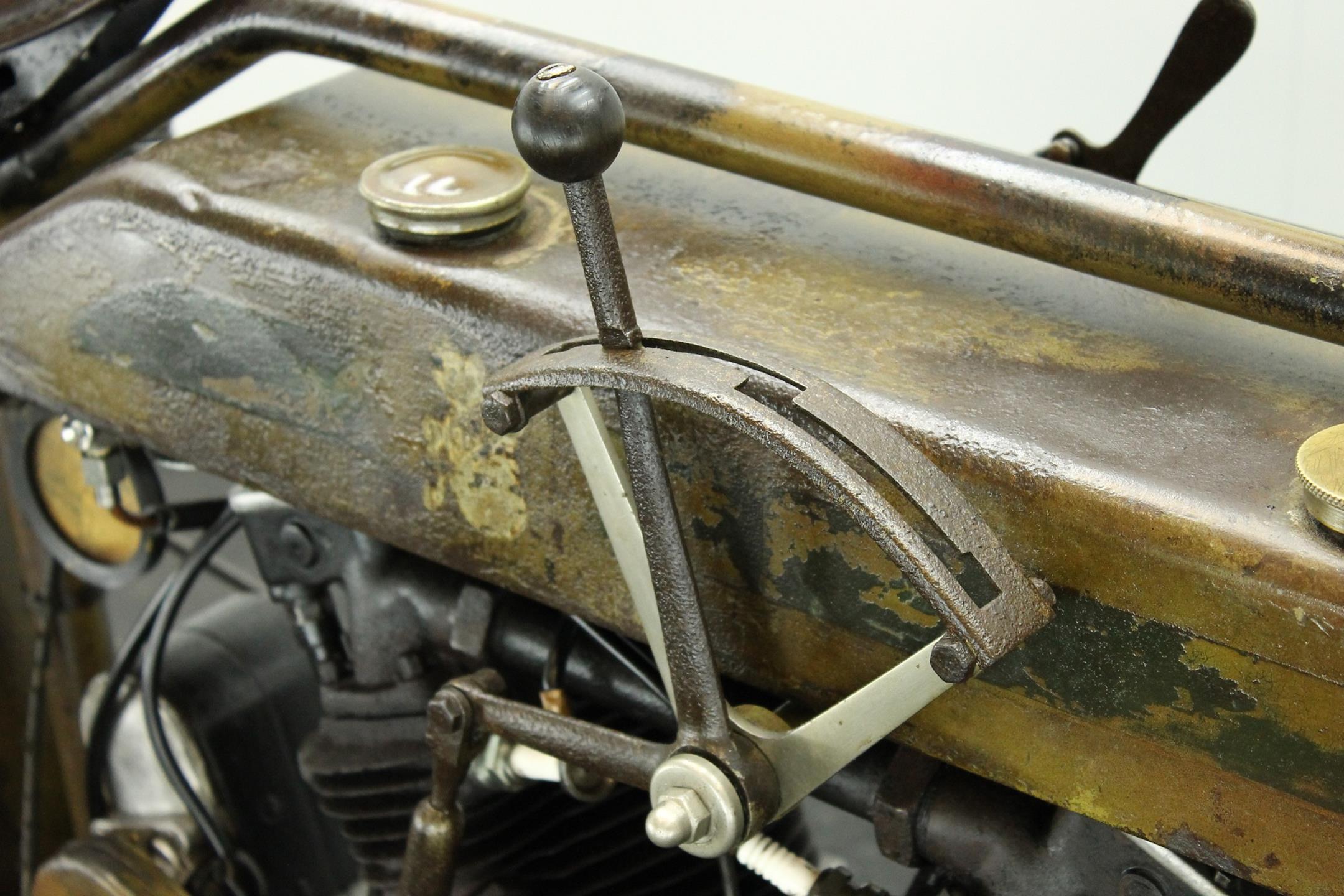


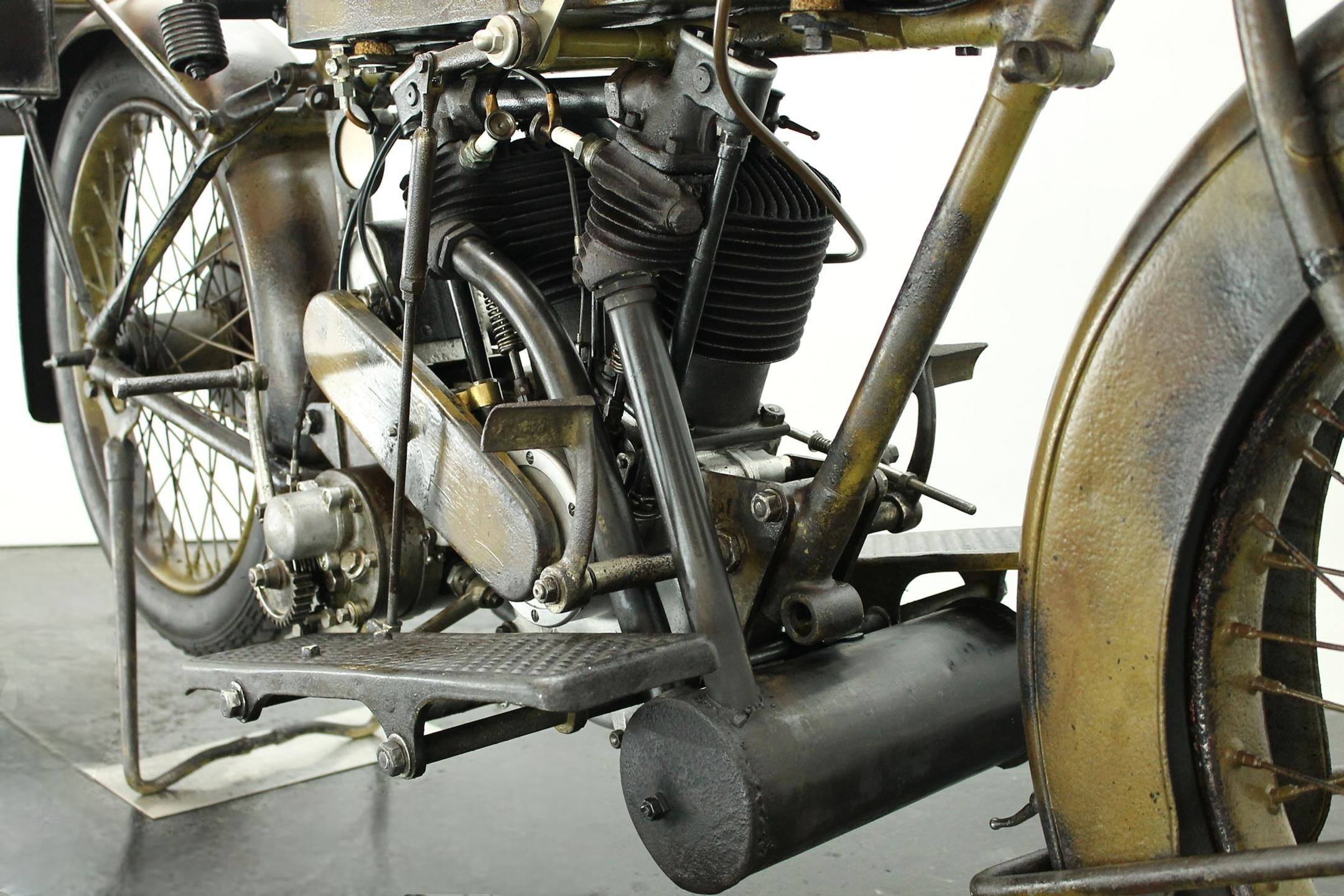
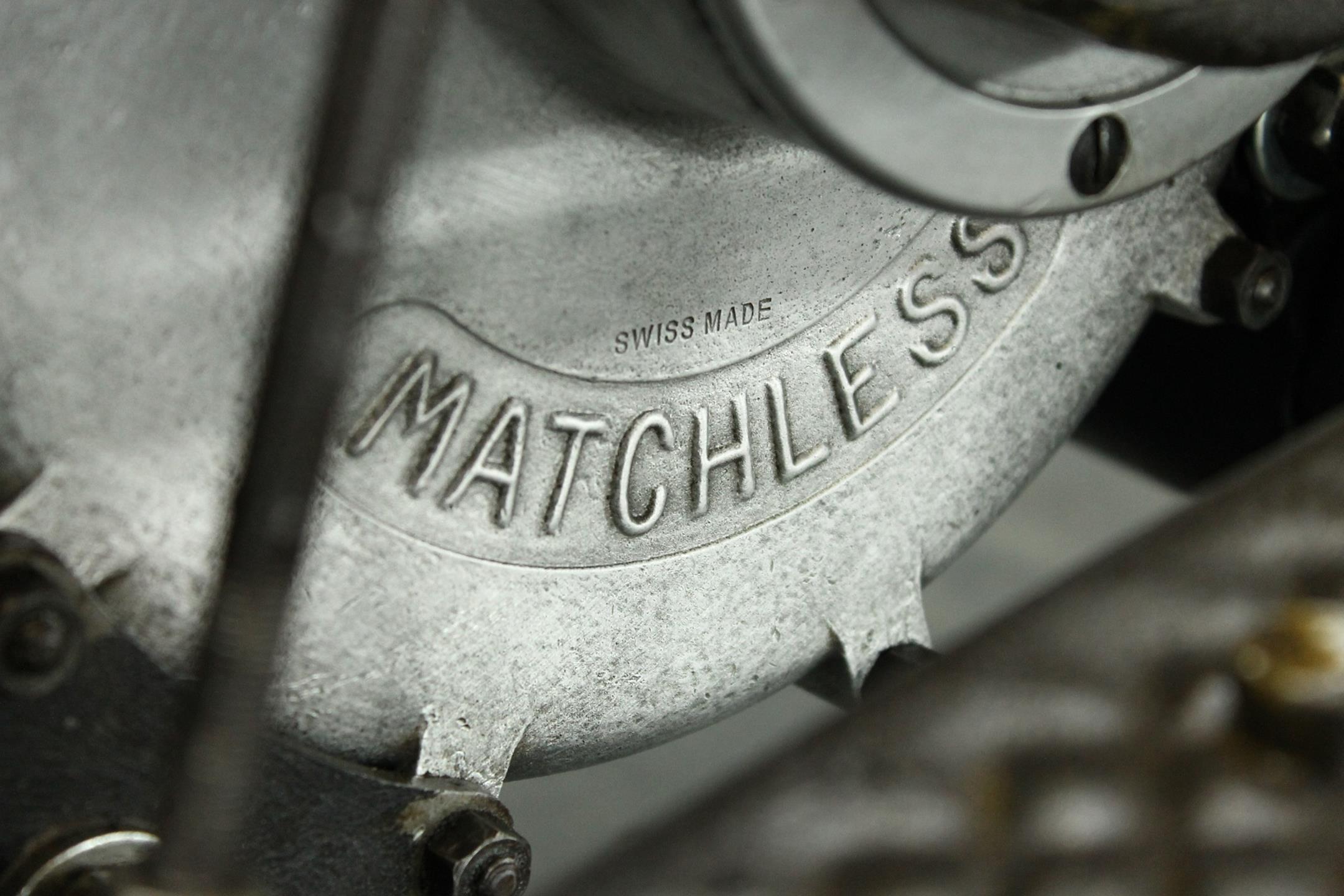
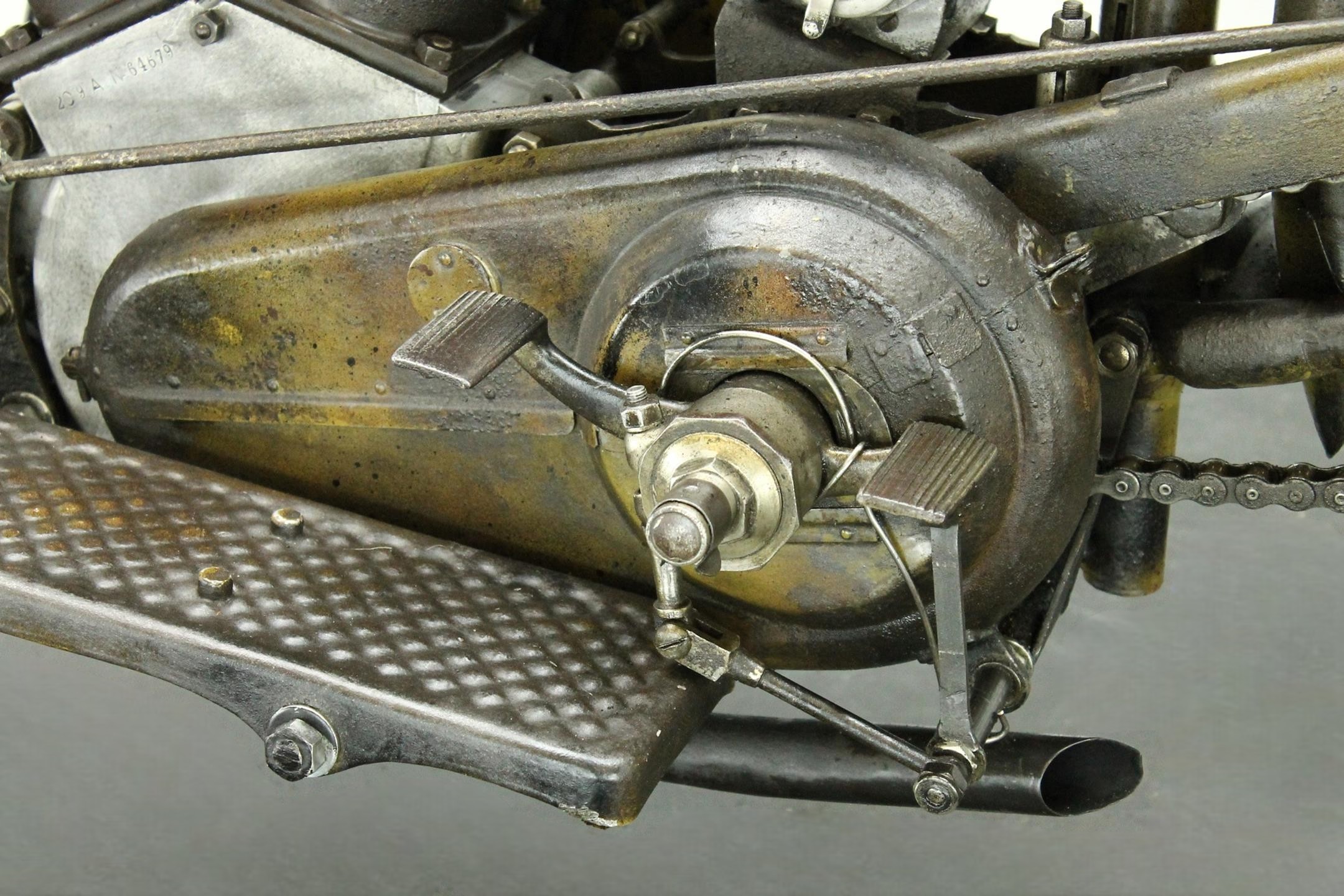
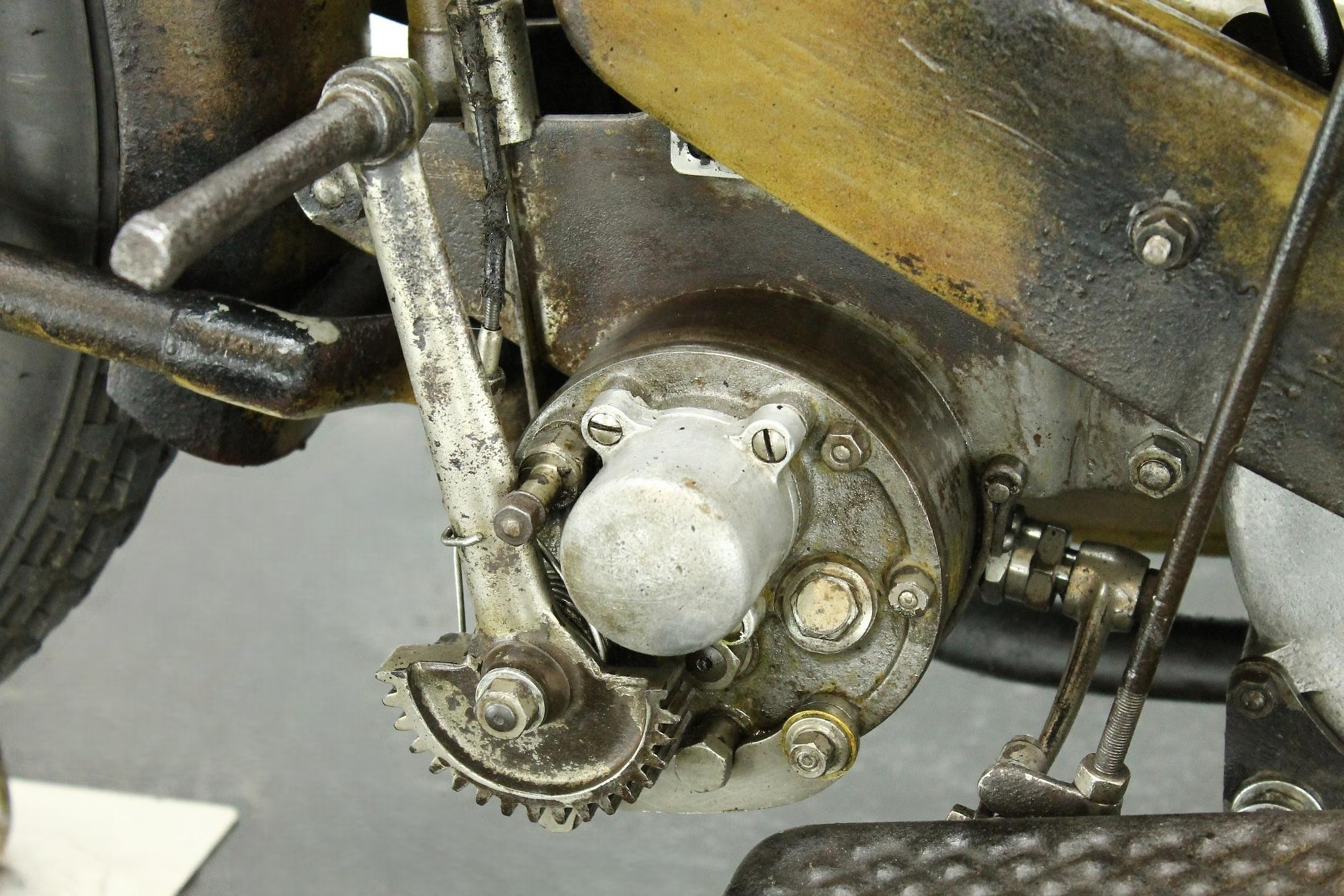
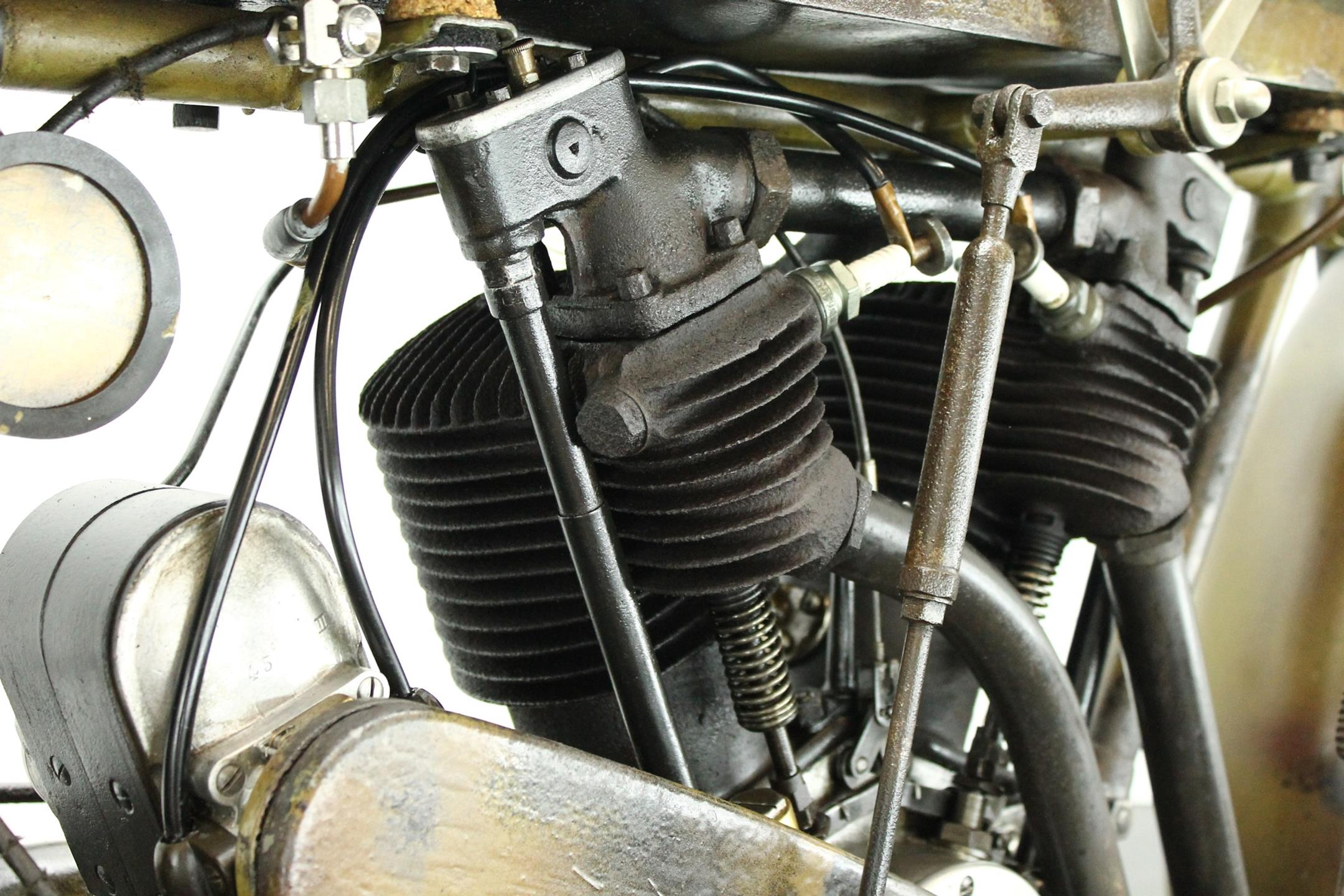
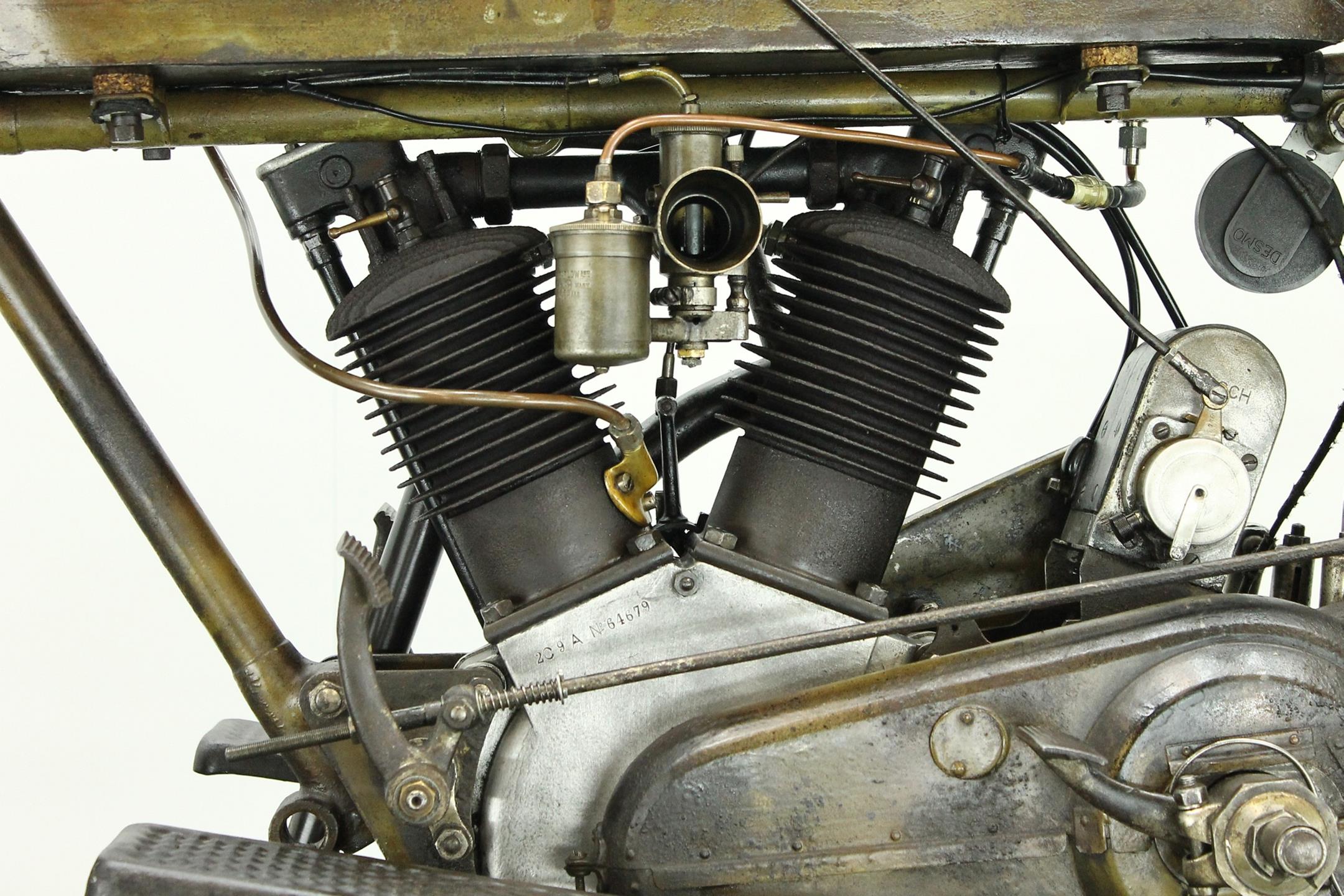
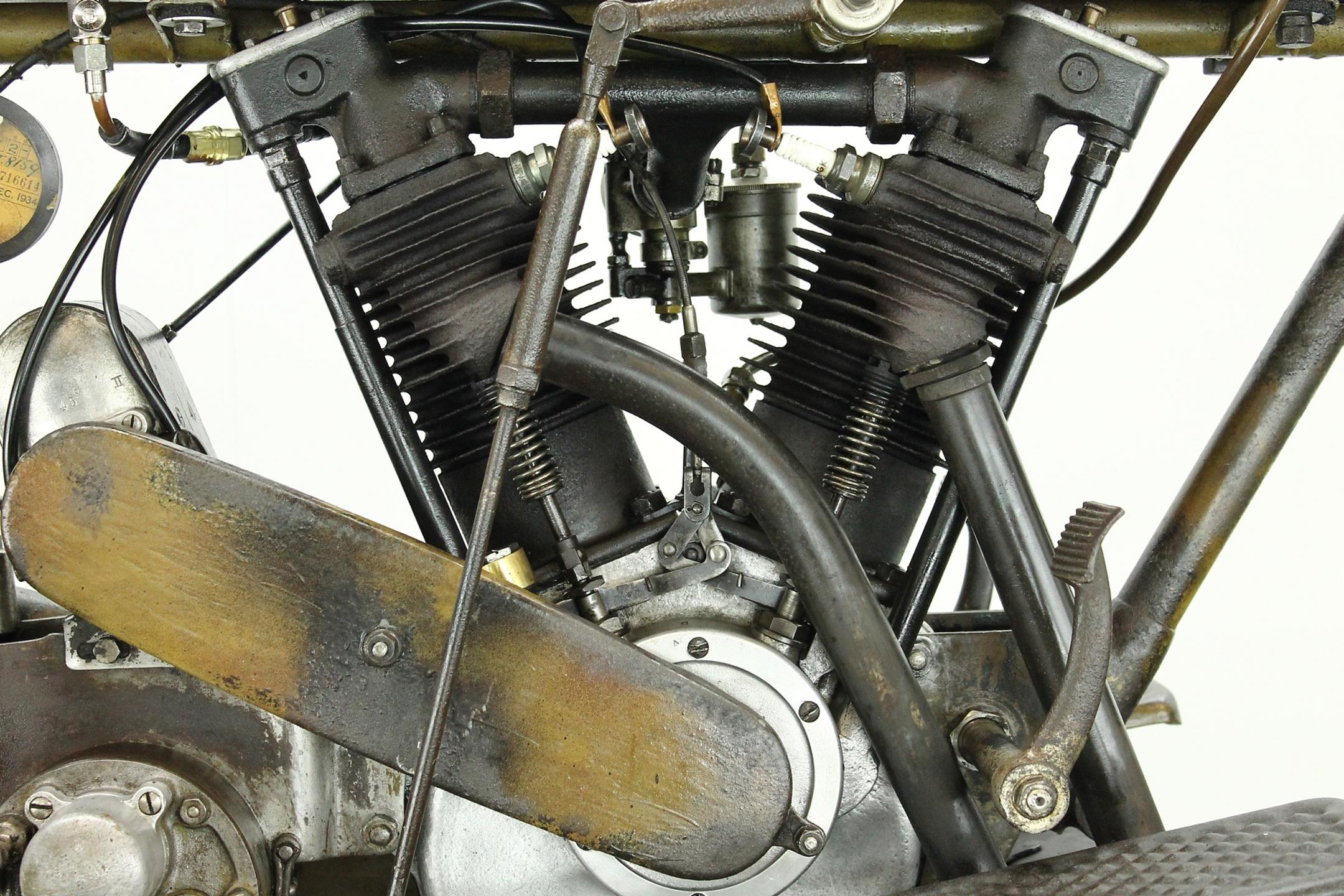

The 1923 Matchless Model J Sport is a rare and significant British sporting motorcycle from the early vintage period. Built by H. Collier & Sons of Plumstead, London, the Model J was developed as a large-capacity V-twin intended primarily for fast solo riding while retaining the practical ability to accept a sidecar.
The 1923 Model J Sport is powered by a 993 cc MAG V-twin engine using an inlet-over-exhaust valve arrangement. With an 82 mm bore and 94 mm stroke, the large-capacity engine provides the substantial torque and flexible power delivery expected from a British big twin of the period.
The motorcycle combines its large V-twin engine with a three-speed countershaft gearbox, chain final drive, rigid rear chassis, period fork, wire wheels, and mechanical braking equipment. The result is a substantial but purposeful motorcycle with the sporting character that distinguished the Model J from Matchless machines intended primarily for sidecar transportation.
The 1923 example is particularly interesting because Matchless returned to single-cylinder production in this period, making the Model J part of the company's final generation of large V-twin motorcycles before its range evolved further during the middle of the decade.
Matchless was the trading name of H. Collier & Sons, one of Britain's pioneering motorcycle manufacturers. The Collier family had begun in the bicycle industry before developing motorcycles and establishing the Matchless name in the early twentieth century.
Matchless developed a strong sporting reputation through motorcycle competition. The company's successes at the Isle of Man TT and other events helped establish Matchless as an important British performance manufacturer.
Following the First World War, Matchless resumed civilian production in 1919. During the early post-war years, the company concentrated heavily on large V-twin motorcycles, particularly machines intended for sidecar use.
The Model J represented a more sporting interpretation of the big-twin formula. It was designed for riders who wanted the performance and flexibility of a large V-twin in a solo motorcycle, although the chassis retained provision for sidecar installation.
The Model J continued into 1923, with surviving documentation confirming dedicated Matchless instruction and illustrated spare-parts literature covering the 1922-1923 Model J.
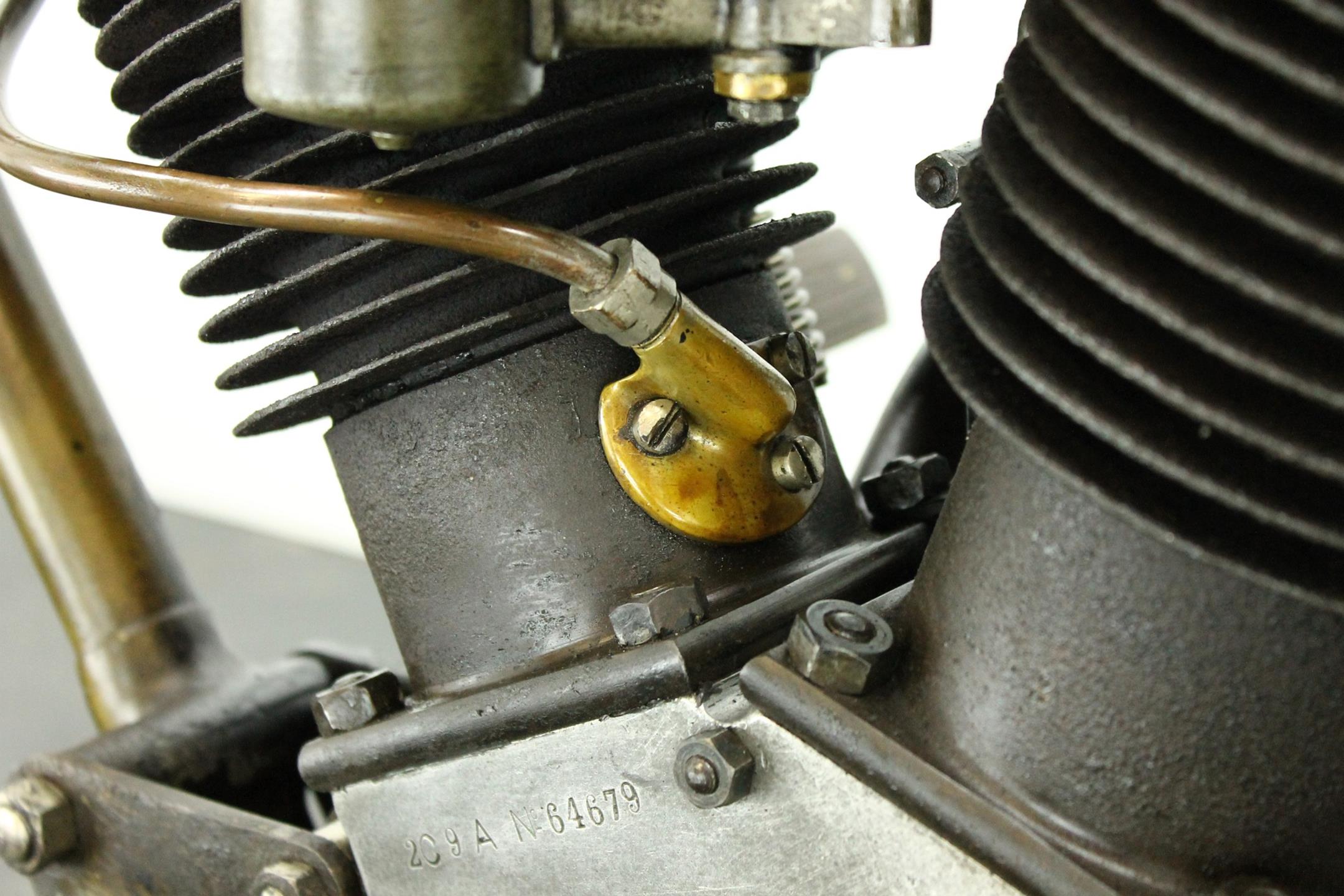
A surviving 1923 example has been documented with a 993 cc MAG V-twin, 82 x 94 mm bore and stroke, approximately 20 hp, a 160 kg weight, frame number 293J, and engine number 2C9A 64679.
The 1923 Matchless Model J Sport uses a 993 cc MAG V-twin four-stroke engine.
The engine has an 82 mm bore and 94 mm stroke and uses an inlet-over-exhaust valve arrangement. This IOE configuration was an important transitional design that combined an overhead inlet valve with a side-mounted exhaust valve.
The large-capacity V-twin produces strong torque and a substantial power delivery for a motorcycle of its period. A documented 1923 Model J Sport is listed at approximately 20 horsepower.
The engine's relatively long stroke contributes to strong low- and mid-range pulling power, making the motorcycle effective both as a fast solo machine and as a potential sidecar combination.
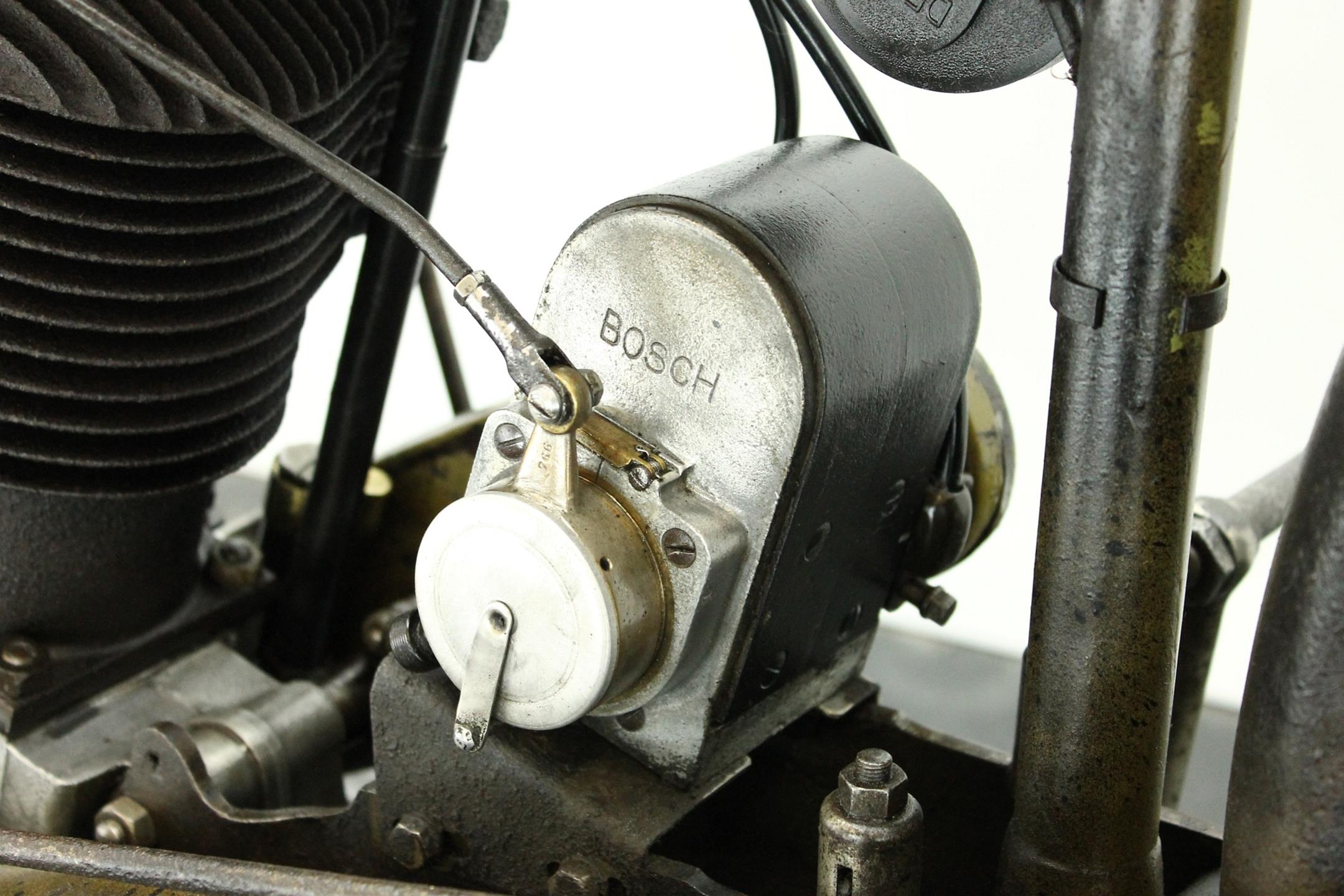
The engine is air-cooled and uses period carburetion and magneto ignition equipment.
Actual performance depends on compression, carburetor condition, ignition timing, valve adjustment, exhaust configuration, lubrication, gearing, and overall mechanical condition.
A restored motorcycle should not be judged solely by historical horsepower figures because the performance of an early V-twin can vary considerably depending on engine wear and the quality of its restoration.
The Model J Sport uses a three-speed countershaft gearbox of Matchless design.
The gearbox provides three ratios suited to the strong torque characteristics of the 993 cc V-twin engine.
The primary transmission uses a Coventry silent chain and is enclosed for protection and lubrication.
Final drive is by chain, with the rear chain protected by a period chain guard.
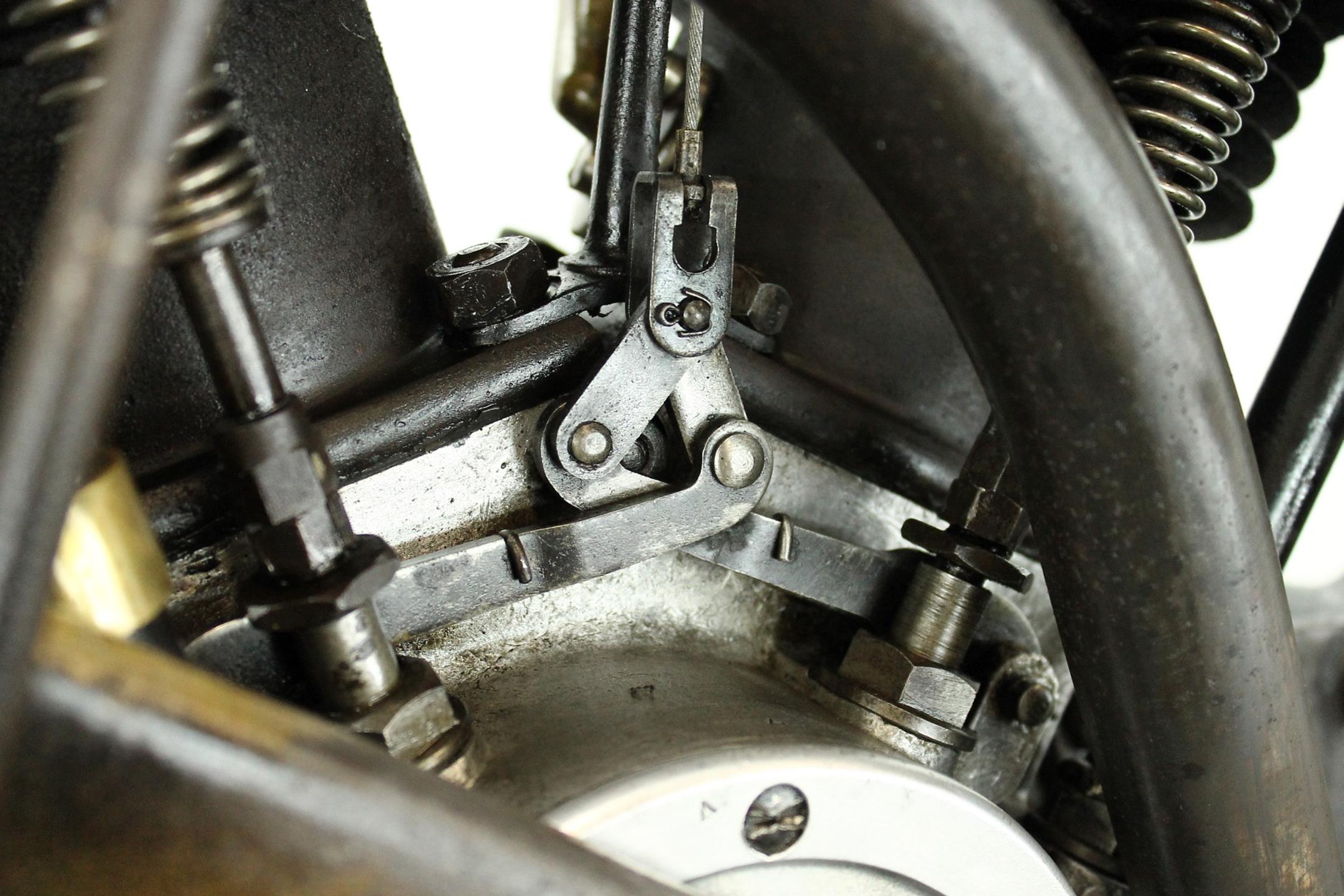
The motorcycle incorporates an automatic exhaust-valve lifter connected with the kick-start mechanism, allowing the rider to operate the starting system while controlling the valve arrangement.
The clutch uses the characteristic period Matchless control arrangement, including foot-controlled operation on documented examples.
The clutch, three-speed gearbox, primary chain, rear chain, sprockets, bearings, gear controls, kick-start mechanism, and exhaust-valve lifter should all be inspected carefully on a surviving motorcycle.
The 1923 Matchless Model J Sport uses a substantial steel frame developed around the large V-twin engine.
The chassis was designed to provide sufficient strength for the engine's torque while maintaining a sporting riding position for solo use.
The rear of the motorcycle uses a rigid frame, as was conventional for large British motorcycles of the period.
The frame also incorporates provisions for fitting a sidecar, making the Model J a versatile machine despite its sporting orientation.
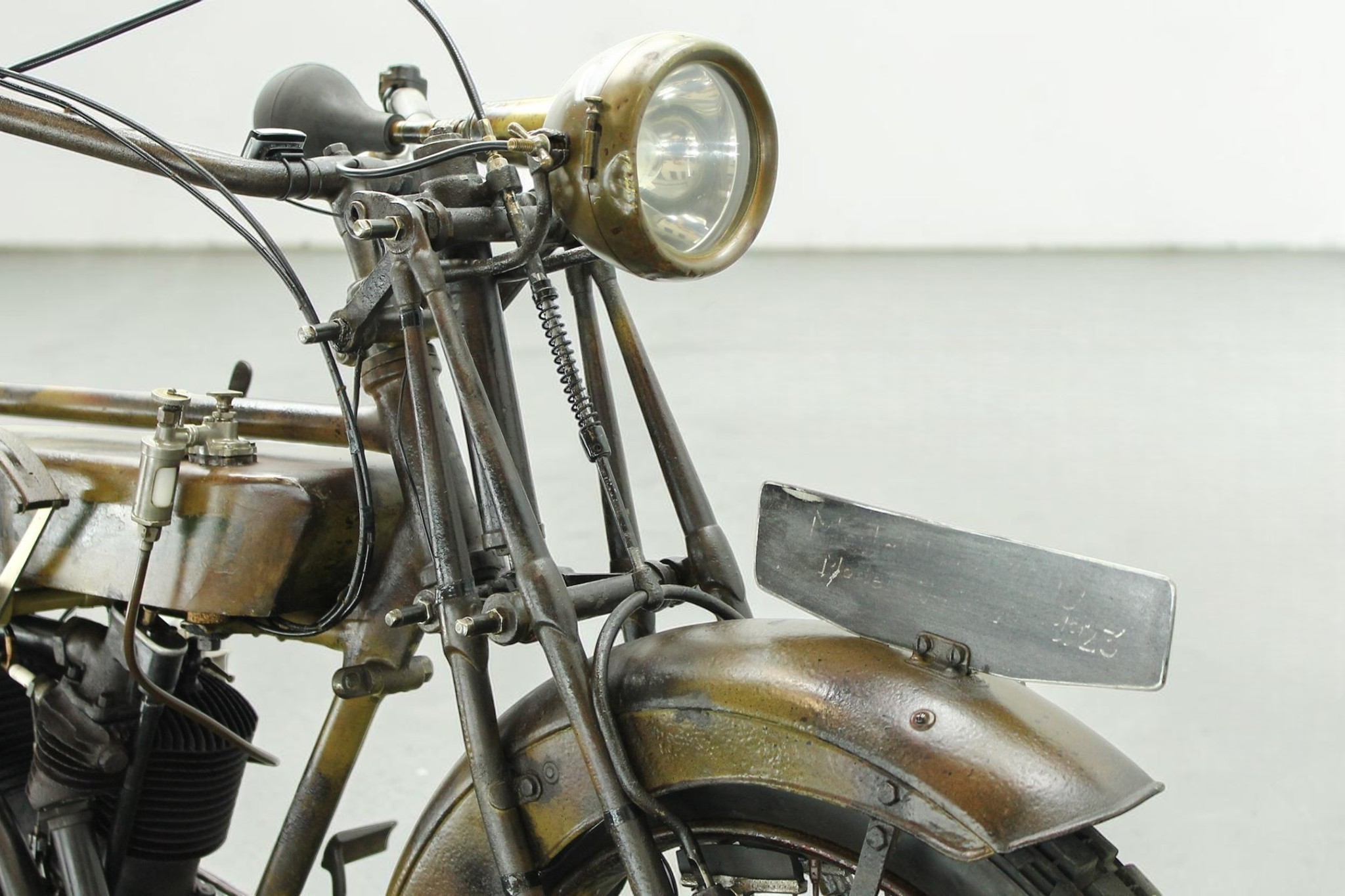
The front suspension uses period Matchless fork technology appropriate to the early 1920s.
The steering head, fork pivots, frame tubes, engine mounting points, sidecar mounting lugs, rear frame, and wheel alignment should be inspected carefully for distortion, cracks, corrosion, or evidence of previous repairs.
The Model J Sport uses traditional wire-spoked wheels and period mechanical braking equipment.
The wheel and brake arrangement reflects the technology available to high-performance motorcycles in the early 1920s.
The braking system is considerably less powerful than that of a modern motorcycle, making careful inspection essential before road use.
Brake drums or rims, shoes, operating mechanisms, cables, wheel bearings, spokes, rims, axles, and tires should all be checked thoroughly.
Correct Matchless hubs, period rims, brake components, and wheel fittings can provide useful evidence when assessing the authenticity of a restored Model J.
The 1923 Matchless Model J Sport uses period British motorcycle ignition and lighting equipment.
Surviving examples can retain Lucas electrical lighting equipment appropriate to the early 1920s, including period headlamp and associated lighting components.
The ignition system is based around magneto equipment suited to the large V-twin engine.
The magneto, wiring, headlamp, switches, horn, rear lamp, and other electrical components should be inspected for both operation and historical correctness.
Restored examples may contain rebuilt magnetos, replacement wiring, modern voltage regulation, or other electrical upgrades. These improvements should be distinguished from original equipment when documenting authenticity.
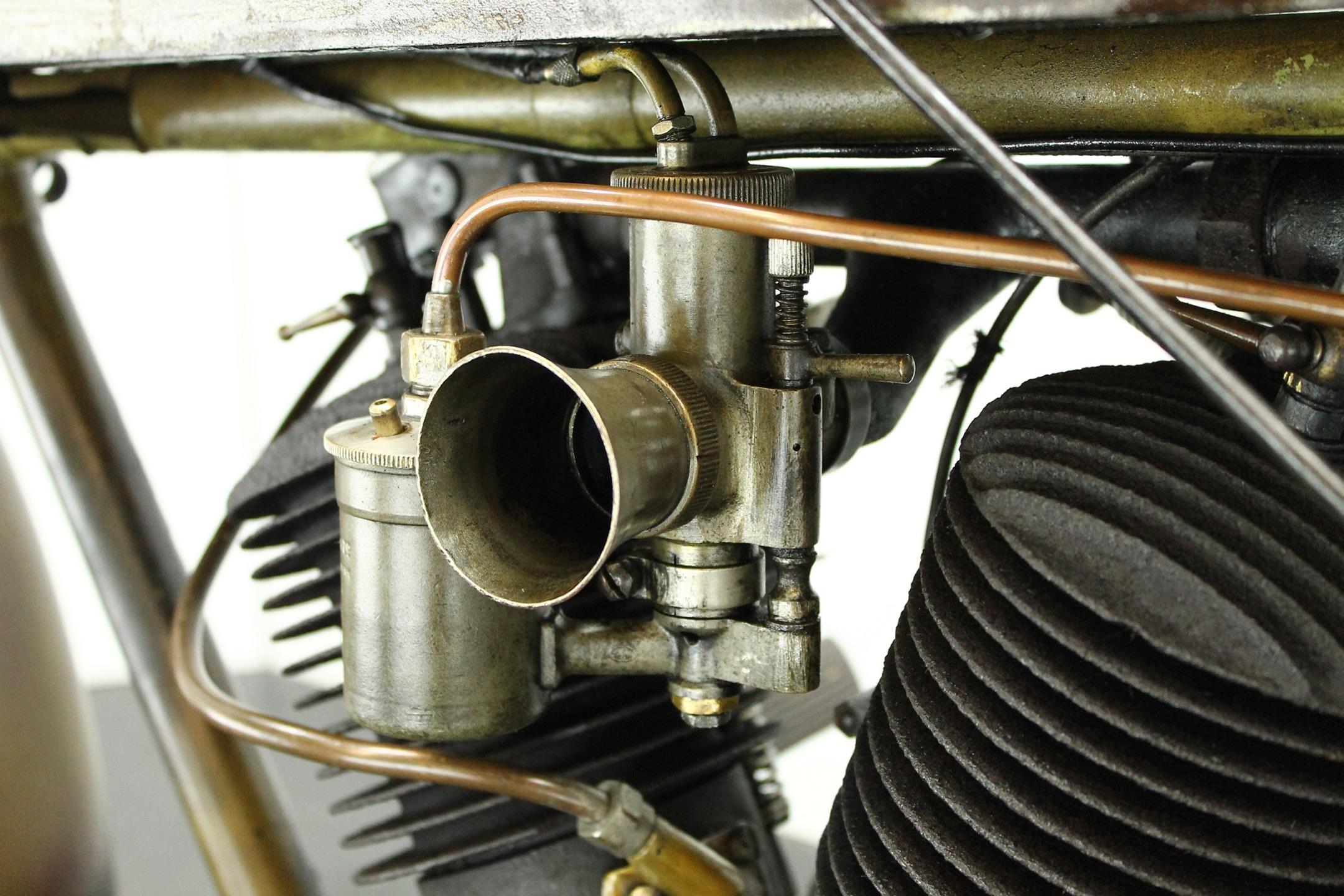
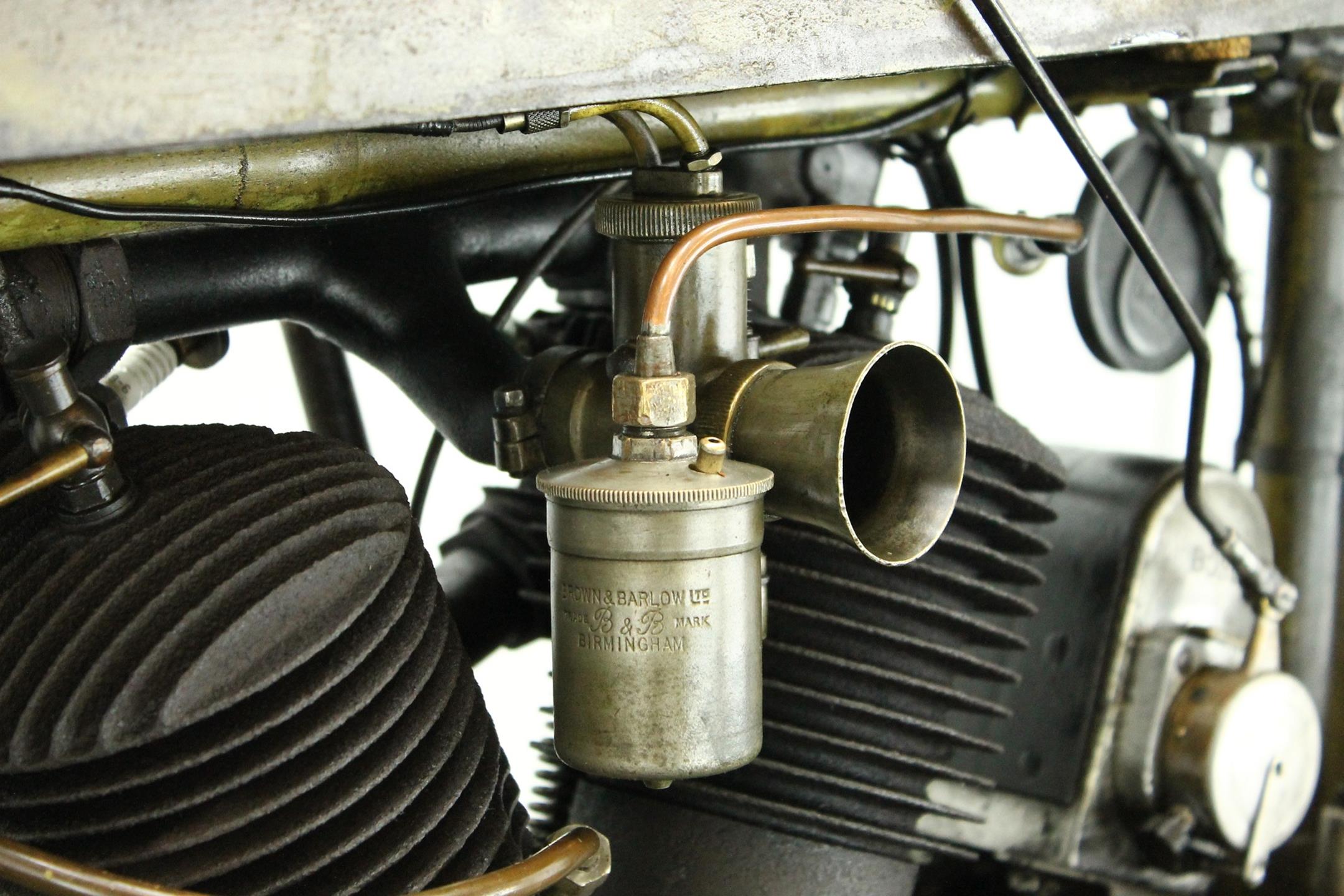
A documented 1923 Model J Sport is equipped with a Brown & Barlow carburetor, a period component associated with the motorcycle's large V-twin engine.
The carburetor provides the fuel-air mixture required for the engine's substantial displacement and performance.
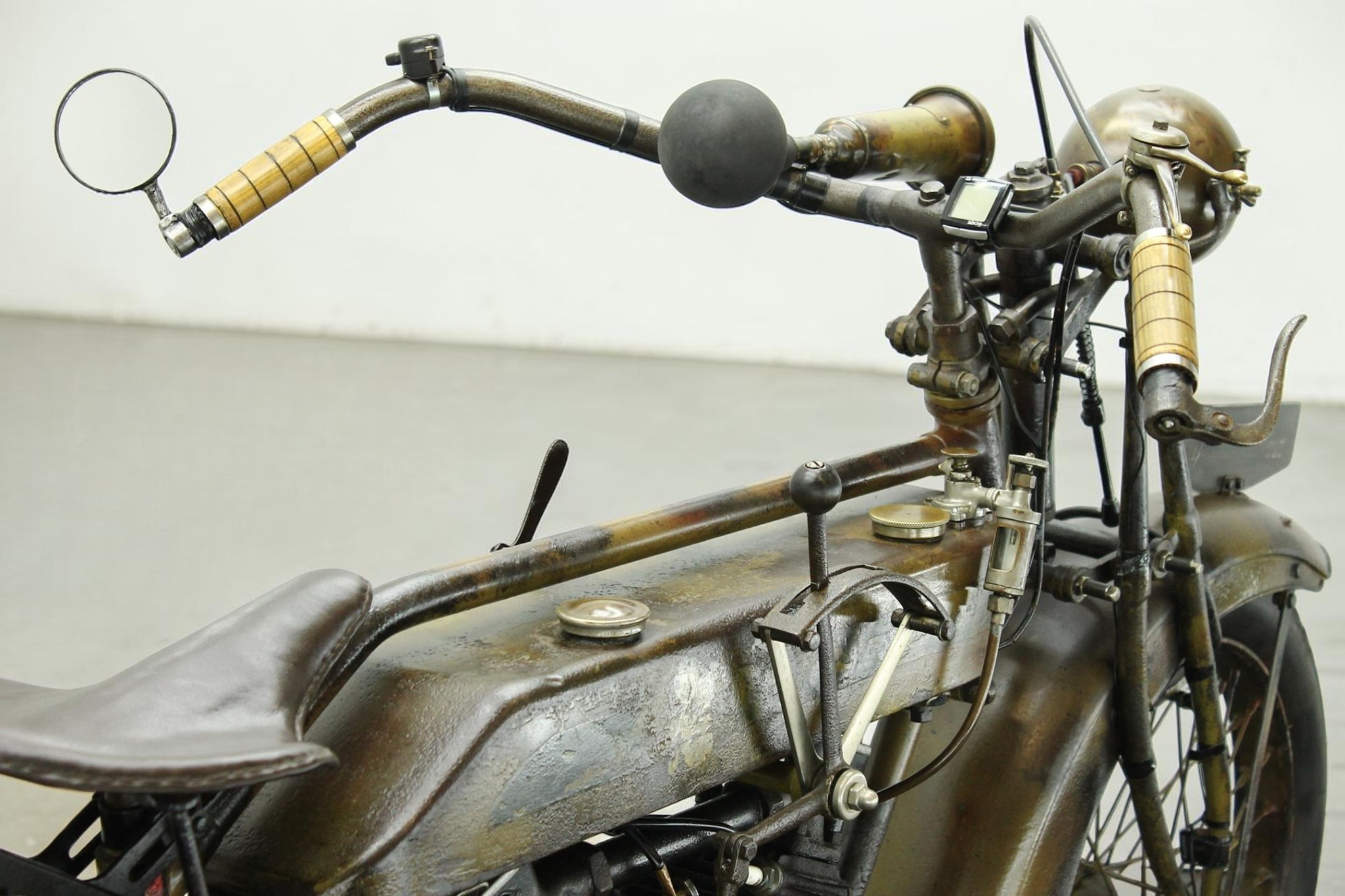
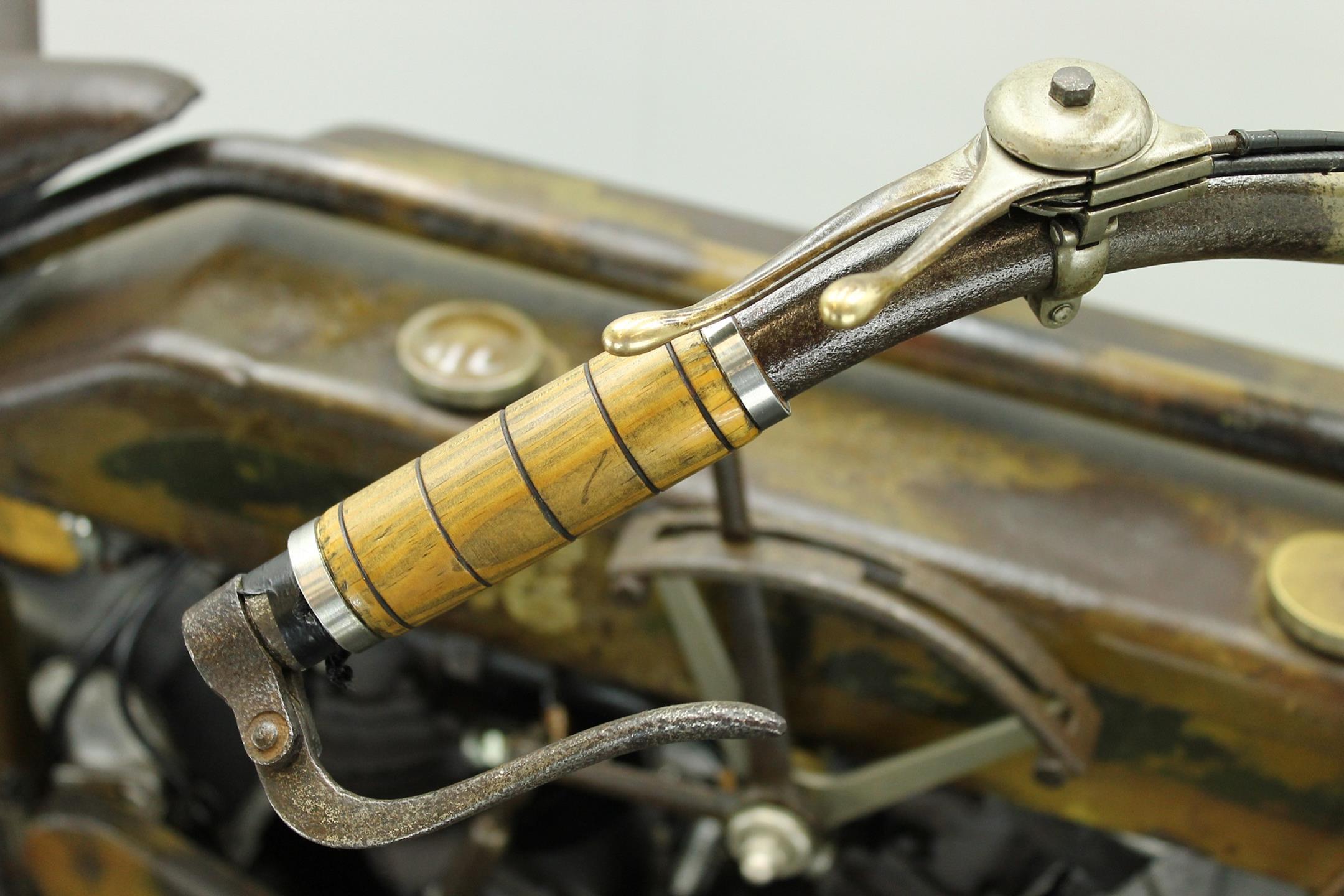
The motorcycle also features distinctive Matchless control arrangements, including a foot-controlled clutch, automatic exhaust-valve lifter, and kick-start mechanism.
The relationship between the kick starter and exhaust-valve lifter is an important mechanical detail of the Model J and can be useful when assessing originality.
Correct carburetor, control levers, cables, clutch pedal, handlebars, footrests, horn, and other controls should be compared with period Matchless documentation when restoring an example.
The 1923 Matchless Model J Sport has the muscular and purposeful appearance associated with large British V-twins of the early vintage period.
The substantial MAG engine dominates the center of the motorcycle, while the narrow fuel tank, exposed mechanical components, rigid frame, wire wheels, and upright controls create a clean but powerful silhouette.
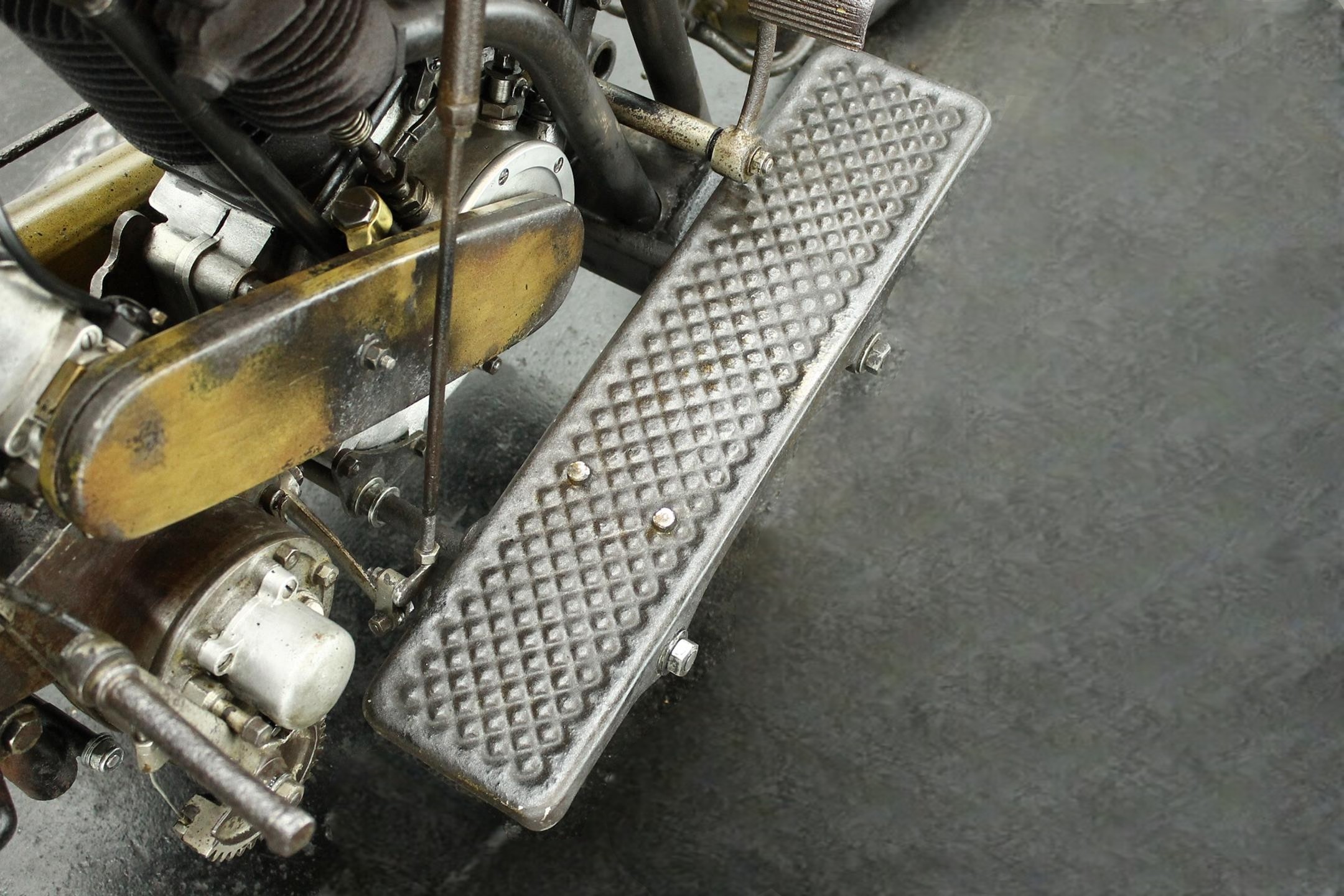
The sporting specification is emphasized by the use of footrests and the relatively uncluttered solo configuration.
The flat fuel tank and period Matchless winged M badge are particularly characteristic of the motorcycle's early-1920s appearance.
Correct tank finish, Matchless badges, engine castings, Brown & Barlow carburetor, exhaust, toolbox, controls, headlamp, wheels, and period fasteners all contribute to an authentic restoration.
The 1923 model year is an important point in the development of the Matchless Model J.
Matchless had concentrated heavily on V-twin production after the First World War, particularly for sidecar applications. By 1923, the company was beginning to expand its range again, including the return of single-cylinder motorcycles.
The Model J therefore belongs to the final phase of the company's early post-war large-twin program.
The 993 cc MAG V-twin, three-speed Matchless gearbox, rigid rear chassis, Coventry silent primary chain, automatic exhaust-valve lifter, and period controls provide a distinctive 1923 specification.
Correct first-period details are important because Matchless changed its model range and component specifications during the following years.
The 1923 Matchless Model J Sport provides the distinctive riding experience of a large British V-twin from the early 1920s.
The approximately 1000 cc MAG engine produces substantial torque and strong acceleration for its period.
The long-stroke engine characteristics allow the motorcycle to pull strongly at relatively modest engine speeds, reducing the need for frequent gear changes.
The three-speed gearbox complements the engine's flexible power delivery, while the rigid rear chassis gives the motorcycle a direct and mechanical feel.
The relatively substantial 160 kg machine has a planted character that contrasts with smaller single-cylinder sporting motorcycles of the same era.
A surviving Model J should be ridden conservatively until the engine, lubrication system, carburetor, magneto, clutch, gearbox, steering, fork, wheels, tires, brakes, and frame have been thoroughly inspected.
Although the Model J Sport was designed primarily as a sporting solo motorcycle, Matchless engineered the chassis so that a sidecar could also be fitted.
The large-capacity V-twin provides useful torque for carrying the additional weight of a passenger and sidecar.
The substantial frame and period gearbox were therefore capable of supporting both sporting solo riding and practical combination use.
A surviving motorcycle showing evidence of former sidecar use should be inspected carefully for reinforced frame sections, altered mounting points, repaired lugs, wheel-alignment changes, and other modifications.
A period-correct sidecar can add considerable historical interest, but the age and provenance of the sidecar should be established independently of the motorcycle.
The 1923 Matchless Model J Sport is historically important because it represents the mature form of Matchless's early post-war large-capacity sporting V-twin.
The motorcycle combines a nearly 1000 cc IOE engine with a Matchless-designed gearbox and a sporting solo chassis, demonstrating the company's ability to integrate proprietary components with specialist engine technology from MAG.
The Model J also illustrates the transition taking place within Matchless during 1923 as the company began returning to single-cylinder production after several years of concentrating heavily on V-twins.
Its design sits between the veteran era and the more sophisticated vintage motorcycles that would appear later during the 1920s.
The Model J therefore provides an important link between early British V-twin development, post-war motorcycle production, and the emergence of modern sporting road motorcycles.
The 1923 Matchless Model J Sport is highly appealing to collectors specializing in British pre-war motorcycles and early V-twins.
Its 993 cc MAG engine, IOE valve arrangement, sporting solo specification, Matchless gearbox, and rarity give it considerable historical interest.
Collectors should pay close attention to the engine, crankcases, cylinder heads, valve gear, Brown & Barlow carburetor, magneto, gearbox, kick-start mechanism, clutch, frame, fuel tank, fork, wheels, brakes, exhaust, toolbox, controls, and lighting equipment.
Engine and frame numbers are especially important because early motorcycles were frequently rebuilt or fitted with replacement components.
A documented 1923 example is recorded with frame number 293J and engine number 2C9A 64679, illustrating the importance of preserving matching or historically documented identifiers.
Original MAG engine components, correct Model J chassis parts, period Matchless controls, Brown & Barlow carburetion, Lucas lighting, correct tank details, and documented ownership history can substantially increase collector interest.
Authenticating a 1923 Matchless Model J Sport requires examination of the complete motorcycle and confirmation that its engine and chassis correspond with the Model J specification.
The engine should be identified as the appropriate MAG V-twin, with attention paid to the 82 x 94 mm dimensions, IOE valve arrangement, crankcase castings, cylinder heads, rocker components, carburetor, magneto, and period fittings.
The frame should be checked for the correct rigid rear construction, steering head, engine mounting points, sidecar lugs, frame-number markings, and period geometry.
The three-speed Matchless countershaft gearbox, Coventry silent primary chain, automatic exhaust-valve lifter, kick-start arrangement, clutch controls, braking equipment, fuel tank, lighting, and toolbox should all be compared with period documentation.
Dedicated Matchless instruction and illustrated spare-parts literature covering the 1922-1923 Model J provides an important reference for checking component details.
Engine and frame numbers should be photographed, recorded, and preserved as part of the motorcycle's historical documentation.
Registration documents, factory literature, period photographs, restoration invoices, previous sales records, and ownership history can provide valuable supporting evidence of authenticity.
The 1923 Matchless Model J Sport matters because it represents one of the final and most developed forms of Matchless's early post-war large-capacity V-twin program.
Its 993 cc MAG IOE engine provided strong performance, while the Matchless three-speed gearbox, rigid sporting chassis, period controls, and lightweight visual design gave it the character of a genuine sporting motorcycle.
The model also captures an important transition within Matchless itself, as the company began returning to single-cylinder motorcycles in 1923 after concentrating heavily on V-twins during the immediate post-war period.
For collectors, the combination of British manufacture, MAG V-twin engineering, Matchless proprietary components, early vintage styling, and rarity makes the 1923 Model J Sport particularly significant.
A well-preserved or accurately restored 1923 Matchless Model J Sport with its correct MAG engine, Model J chassis, period equipment, and documented provenance represents a significant example of early British motorcycle engineering.
This 1923 Matchless Model J Sport represents a rare and historically important example of early British large-capacity V-twin engineering.
Its 993 cc MAG V-twin engine, IOE valve arrangement, three-speed Matchless gearbox, Coventry silent primary drive, rigid sporting chassis, period controls, and distinctive flat-tank styling give it an unmistakable early-vintage character.
The Model J was designed as a sporting big twin for solo riders while retaining the ability to accept a sidecar. The large MAG engine provided strong torque and approximately 20 horsepower, making the motorcycle a serious performance machine for its period.
The 1923 model year is particularly significant because it represents the final phase of Matchless's early post-war V-twin program just as the company was beginning to broaden its range with the return of single-cylinder motorcycles.
For collectors, the correct MAG engine, Model J frame and gearbox, original control arrangement, Brown & Barlow carburetor, period lighting, correct tank details, and documented engine and frame numbers are particularly important when establishing authenticity.
A well-preserved or accurately restored 1923 Matchless Model J Sport with correct period components and strong documentation represents a significant piece of British motorcycle history and an important example of the evolution of the sporting V-twin.
Contact us for additional photographs, detailed specifications, engine and frame numbers, service history, originality assessment, restoration information, historical documentation, and purchasing information for this 1923 Matchless Model J Sport.
The Vintage Motorcycles presents a curated selection of historically significant British machines, where Matchless represents one of the longest-standing names in early motorcycle manufacturing. Founded in the late 19th century, Matchless developed from bicycle production into a key contributor to British motorcycle engineering, producing machines defined by mechanical durability, competition heritage, and structural refinement.
Within the broader network of global vintage motorcycle manufacturers, Matchless occupies an important position in shaping early British design philosophy. Its development is closely tied to the evolution of pre-war motorcycle engineering (1900-1939), a period characterized by rapid innovation, racing influence, and the gradual standardization of engine and chassis architecture.
This progression continued into post-war motorcycle development, where Matchless, as part of the Associated Motor Cycles (AMC) group, contributed to the refinement of British single and twin-cylinder platforms. These machines reflected a balance between performance-oriented engineering and everyday usability, reinforcing the brand's long-standing identity.
Each Matchless motorcycle within our collection is selected based on provenance, originality, and mechanical integrity, ensuring alignment with museum-grade preservation standards. Collectors can explore available acquisition opportunities through our global vintage motorcycle inventory, with all motorcycles supported by a fully insured international shipping service.
Matchless developed during a period when British engineering was heavily influenced by competition and long-distance reliability. Early participation in endurance events and road racing helped shape the brand's mechanical philosophy, emphasizing robust construction and consistent performance.
This engineering approach can be better understood within the broader historical framework of WW2 military motorcycle development, where British manufacturers produced machines designed for durability and operational reliability under demanding conditions. These experiences directly influenced post-war production models, including those developed by Matchless.
In addition to solo motorcycles, British engineering during this period also incorporated utility-focused designs, including configurations related to sidecar-equipped motorcycles, which expanded the functional capabilities of two-wheel platforms across both civilian and military applications.
British motorcycle engineering, as represented by Matchless, is characterized by a focus on mechanical reliability, serviceability, and long-distance performance. Unlike more experimental continental approaches, British manufacturers prioritized structural consistency and practical engineering solutions suited to a wide range of riding conditions.
From early V-twin and single-cylinder machines to later competition-inspired models, Matchless developed a diverse lineup that reflected the broader trajectory of British motorcycle design. These machines illustrate a continuous refinement of core engineering principles rather than radical reinvention, resulting in motorcycles known for their durability and historical significance.
Today, Matchless remains an important reference point in the study of British motorcycle history, representing a lineage that connects early industrial experimentation with the mature engineering systems of the mid-20th century. For collectors, these motorcycles offer a combination of historical depth, mechanical integrity, and enduring relevance within the global vintage market.
Key Highlights
Collector Assurance
All enquiries handled with discretion. We typically respond within 6 hours.
Choose the payment method that is most convenient for you. We accept widely used international payment methods as well as, where available, local bank transfer options that allow you to pay like a domestic transaction. Full payment instructions are provided for your specific purchase.
Direct international bank wire transfer is available for motorcycle purchases and export transactions.
Credit card payments can be arranged through Wise.com, subject to the applicable payment and processing conditions.
PayPal is accepted. A 5% PayPal processing fee applies to the transaction.