
The Vintage Motorcycles
Specialists in antique, classic, veteran and vintage motorcycles.
Specialists in antique, classic, veteran and vintage motorcycles.


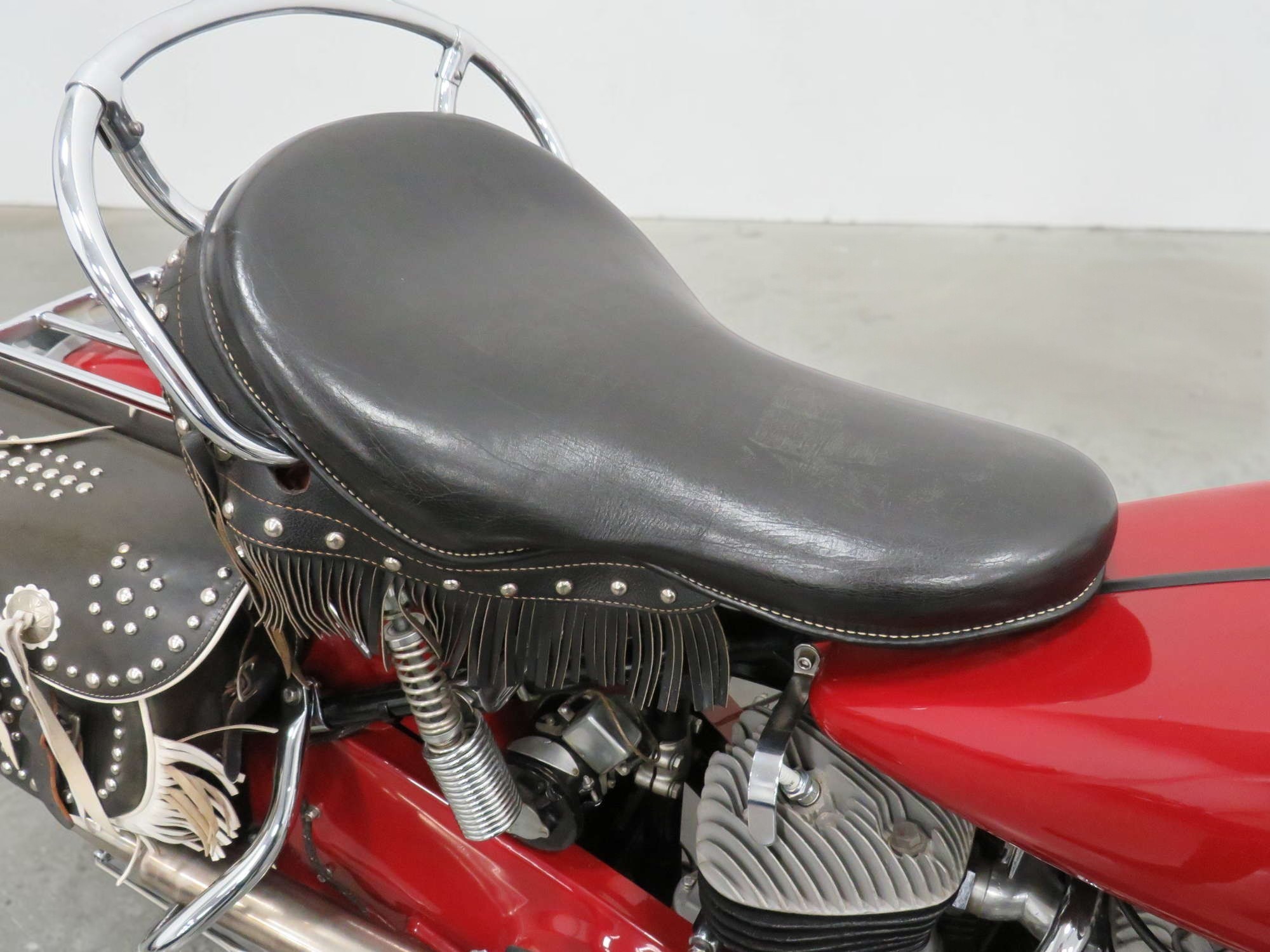


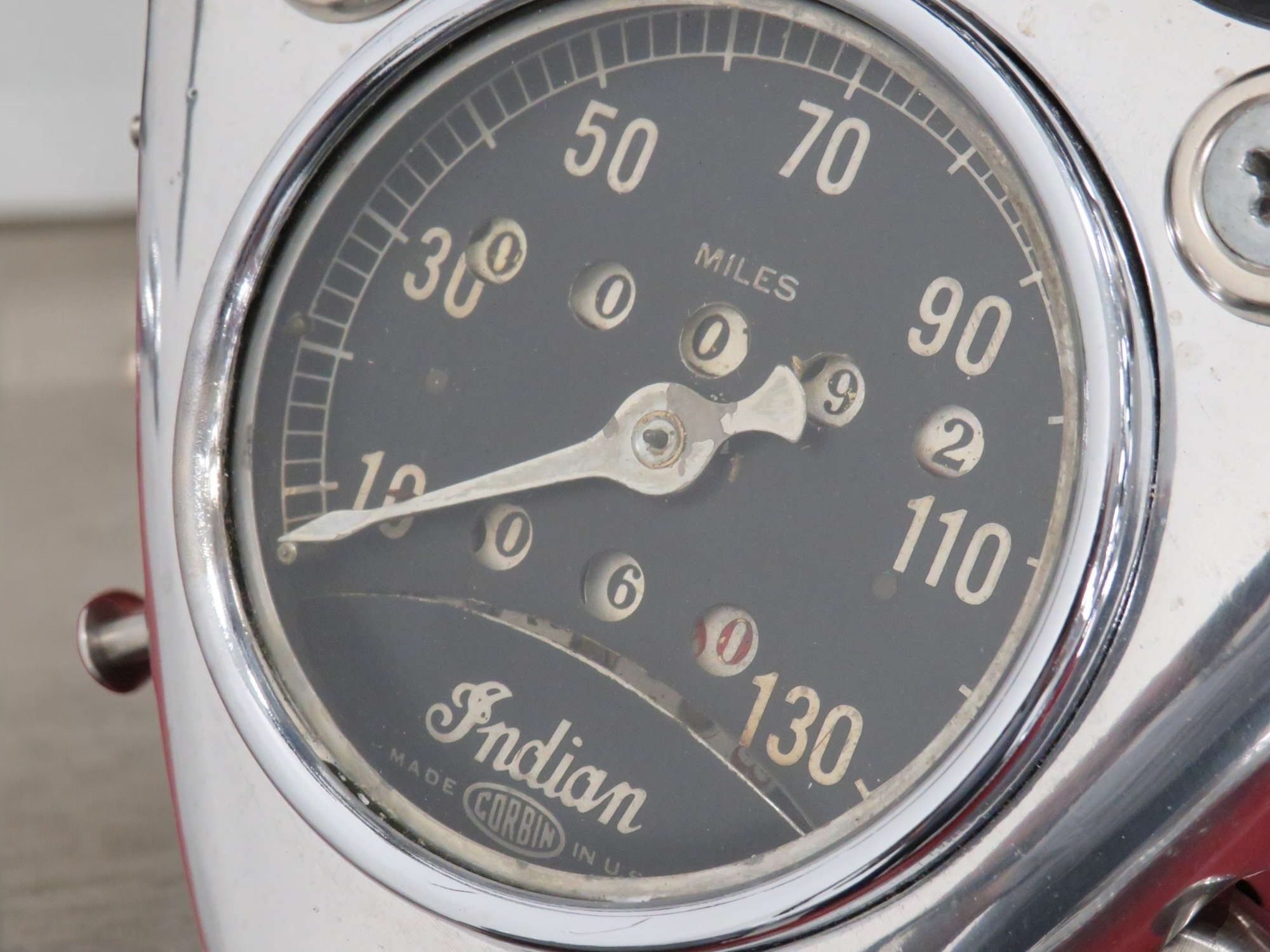

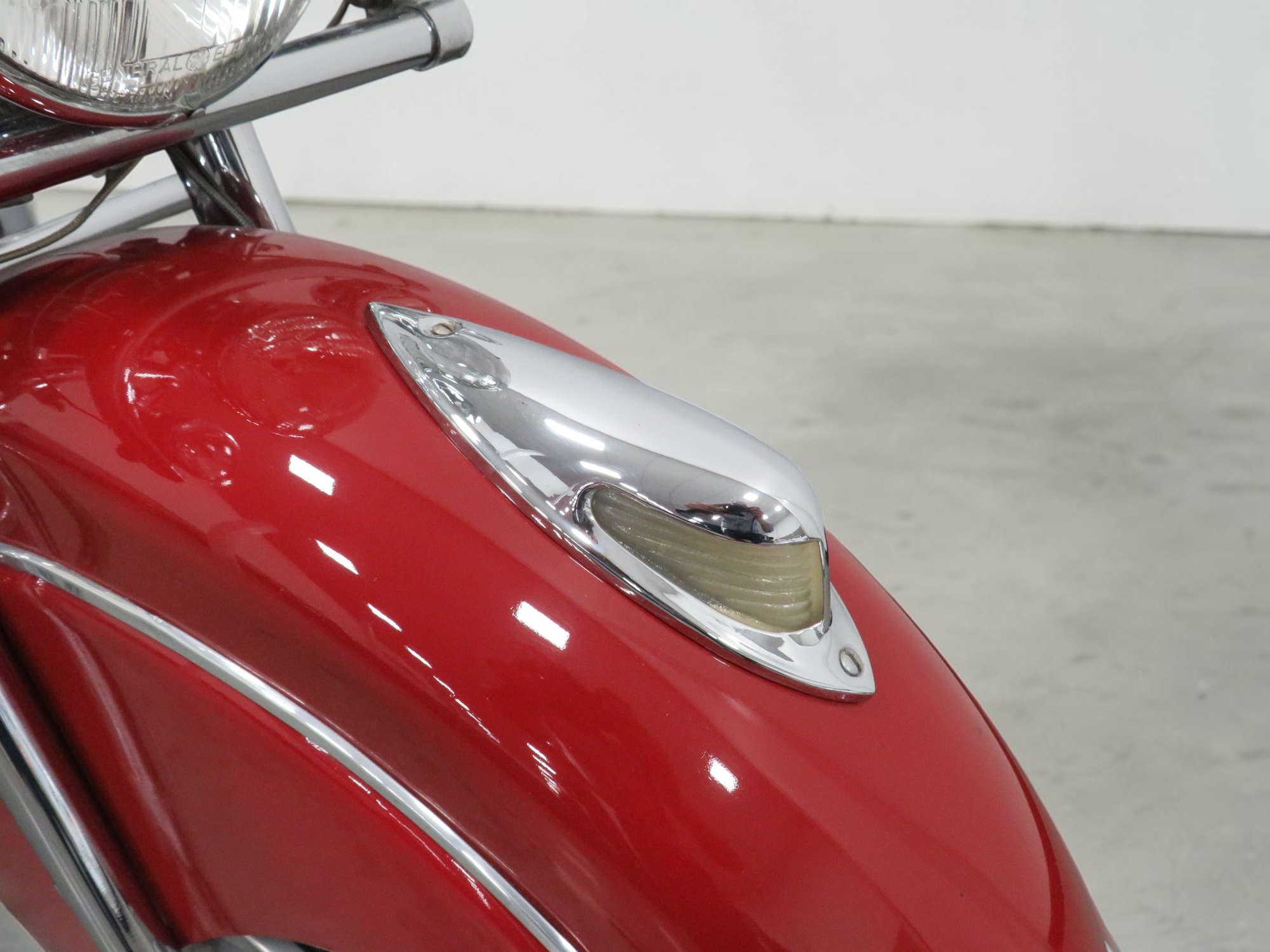


The 1946 Indian Chief is one of the most important post-war American motorcycles produced by the Indian Motocycle Company. Returning to civilian production after the Second World War, Indian revived the legendary Chief as its flagship large-displacement V-twin, combining traditional Indian engineering with the styling and equipment expected from a premium American motorcycle of the mid-1940s.
The 1946 Chief is powered by Indian's 74 cubic inch side-valve V-twin engine. The large-displacement engine delivers strong low-speed torque and a smooth, relaxed power delivery suited to touring and long-distance road use.
The Chief retained the distinctive Indian silhouette, including the large skirted fenders, deeply valanced front and rear bodywork, prominent fuel tank, large saddle, and characteristic Indian styling. These features helped make the Chief one of the most recognizable American motorcycles of its era.
The 1946 model year is particularly significant because it marks the return of Indian's civilian Chief following the company's wartime production. The model represents an important transition between Indian's pre-war motorcycles and the company's final generation of traditional Chiefs.
The Indian Chief was introduced in the 1920s and quickly became one of the company's defining large V-twin motorcycles.
During the 1930s, Indian developed the Chief into a sophisticated touring motorcycle with a large side-valve V-twin engine, substantial frame, skirted fenders, and comfortable road-going equipment.
Civilian motorcycle production was interrupted by the Second World War as Indian concentrated heavily on military contracts and wartime manufacturing.
Following the end of the war, Indian returned to the civilian market and revived the Chief for the 1946 model year.
The post-war Chief continued the fundamental architecture that had made the model successful before the war, but the motorcycle was positioned for a new generation of riders returning to civilian transportation and recreational motorcycling.
The 1946 Indian Chief is powered by a 74 cubic inch, approximately 1,213 cc, air-cooled side-valve V-twin four-stroke engine.
The large V-twin uses Indian's traditional longitudinal engine layout and is designed to provide substantial torque at relatively low engine speeds.
The 74 cubic inch engine gives the Chief strong pulling power and a relaxed character suited to touring, passenger carrying, and sustained road use.
The side-valve design is mechanically straightforward compared with overhead-valve engines and reflects Indian's long development of large-displacement V-twin motorcycles.
Fuel is supplied through a carburetor, with the exact equipment on an individual motorcycle depending on production specification and later restoration.
Actual performance of a surviving Chief depends heavily on engine condition, compression, carburetor adjustment, ignition timing, lubrication, gearing, tire condition, and restoration quality.
The 1946 Indian Chief uses a three-speed transmission designed to complement the strong torque characteristics of the 74 cubic inch V-twin.
The gearbox provides practical ratios for starting, city riding, highway travel, and touring.
The large engine allows the Chief to operate comfortably without requiring frequent gear changes under normal road conditions.
Power is transmitted to the rear wheel through a chain final drive.
The clutch, transmission, primary drive, chain, sprockets, bearings, and rear hub should all be inspected carefully on a surviving motorcycle.
Because many Chiefs remained in regular use for decades, replacement mechanical components are common. Original or correctly reproduced drivetrain parts are particularly important when evaluating a historically significant example.
The 1946 Chief uses a substantial steel frame designed to support the large V-twin engine and provide stable handling during long-distance touring.
The chassis reflects Indian's long experience with large touring motorcycles and emphasizes strength, stability, and rider comfort.
The front suspension uses Indian's characteristic girder-style spring fork, an important visual and mechanical feature of the Chief.
The motorcycle's long wheelbase and substantial chassis give it a stable and deliberate road-going character.
Frame alignment is particularly important on an older Chief. The steering head, frame tubes, engine mounts, fork components, rear axle alignment, and previous repair areas should all be examined carefully.
Original frame and suspension components are highly desirable because Chiefs were frequently modified, customized, and rebuilt during their long service lives.
The 1946 Indian Chief uses large wire-spoked wheels designed for touring and dependable road operation.
The large wheels work with the substantial chassis to provide stability and predictable handling.
Braking is provided by period mechanical brake assemblies, which are considerably simpler than the hydraulic systems found on later motorcycles.
Brake drums, shoes, operating mechanisms, cables, wheel bearings, spokes, rims, and tires should all be inspected carefully before road use.
Because the Chief is a large and relatively heavy motorcycle, the condition and adjustment of the braking system are particularly important.
Modern tires and carefully rebuilt brake components can improve safety while retaining the motorcycle's original mechanical character.
The 1946 Indian Chief uses a period electrical system designed for civilian road use after the war.
Lighting equipment includes the characteristic large headlamp and rear lighting required for road operation.
The ignition and charging systems use period motorcycle electrical components, with surviving examples often having rebuilt or replacement units.
Original generator equipment, distributor or ignition components, switches, wiring, headlamp, horn, and rear lamp can provide valuable evidence of originality.
Many Chiefs have received modern wiring or upgraded electrical components during restoration, so the electrical system should be evaluated separately from the rest of the motorcycle.
The 1946 Indian Chief has one of the most recognizable silhouettes in American motorcycle history.
The large skirted fenders are among its defining features, covering much of the wheels and creating the substantial appearance associated with post-war Indian Chiefs.
The large fuel tank sits prominently between the frame rails, while the deep fenders, large saddle, wire wheels, and exposed V-twin engine create a distinctive combination of luxury touring and mechanical character.
The front fork and fender assembly give the Chief a particularly imposing presence when viewed from the front.
Indian's traditional styling was retained after the war, making the 1946 Chief immediately identifiable as a continuation of the pre-war Indian design philosophy.
The 1946 Indian Chief is historically important because it represents the return of Indian's flagship civilian motorcycle after the Second World War.
Indian had spent the war years producing military motorcycles and other wartime equipment, and the return to civilian Chief production marked an important change in the company's priorities.
The 1946 model retained the 74 cubic inch side-valve V-twin and the traditional Chief chassis and styling.
The motorcycle was aimed at riders seeking a powerful American touring machine at a time when civilian transportation was rapidly expanding again after the war.
The 1946 Chief therefore occupies an important position between Indian's celebrated pre-war motorcycles and the company's later post-war production.
The 1946 Indian Chief delivers the classic character associated with a large American side-valve V-twin.
The 74 cubic inch engine produces strong low-speed torque and a steady power delivery that suits relaxed touring.
The substantial frame and long wheelbase provide a stable ride, while the large wheels and period suspension help the motorcycle cope with imperfect road surfaces.
The three-speed transmission is relatively simple to operate, and the broad torque characteristics of the engine reduce the need for frequent gear changes.
The Chief is not designed to behave like a lightweight sporting motorcycle. Its strengths are smooth cruising, stability, mechanical presence, and long-distance comfort.
A surviving example should be ridden conservatively and only after the engine, fuel system, ignition, lubrication, steering, suspension, wheels, tires, drivetrain, and brakes have been carefully inspected.
The 1946 Indian Chief is historically important because it represents Indian's return to the civilian motorcycle market after World War II.
The Chief had already become one of the company's most important models before the war, and its post-war revival demonstrated Indian's intention to continue producing large American touring motorcycles.
The 74 cubic inch side-valve V-twin represented the culmination of Indian's long development of traditional large-displacement V-twin technology.
The motorcycle also reflects the changing American motorcycle market of the immediate post-war period, when returning servicemen and an expanding civilian economy created renewed interest in motorcycles.
The Chief's recognizable styling helped maintain Indian's distinctive identity during a period when competition from other American manufacturers was becoming increasingly intense.
The 1946 Indian Chief is highly desirable among collectors of American motorcycles, particularly those interested in Indian's post-war history.
Its first-year post-war significance, 74 cubic inch V-twin, traditional Chief styling, large skirted fenders, and connection with Indian's pre-war heritage make authentic examples especially attractive.
Collectors should pay close attention to the engine, crankcases, cylinders, frame, fuel tank, fork, fenders, transmission, carburetor, ignition system, wheels, exhaust, saddle, controls, and electrical equipment.
Matching or correctly documented engine and frame numbers can provide valuable evidence of authenticity.
Original fenders, tank components, Indian hardware, correct engine castings, period controls, factory finishes, and documented provenance can significantly increase historical interest.
Because Chiefs were commonly customized and modified during the decades following the war, a motorcycle retaining its original configuration is particularly desirable.
Authenticating a 1946 Indian Chief requires examination of the complete motorcycle and comparison with reliable period documentation.
The engine should correspond to the 74 cubic inch Chief V-twin configuration, with correct crankcase construction, cylinder arrangement, valve covers, carburetion, ignition components, and period casting details.
The frame should be checked for correct Chief construction, engine mounting points, steering-head details, and frame numbering.
The distinctive skirted fenders, fuel tank, front fork, wheels, transmission, controls, exhaust, saddle, and electrical equipment should also be compared with contemporary Indian specifications.
Engine and frame numbers should be recorded and checked against appropriate Indian production references whenever possible.
Period registration documents, photographs, factory brochures, ownership records, restoration invoices, and auction documentation can provide additional evidence of authenticity.
Originality should be assessed component by component because many Chiefs were modified during their long service lives.
The 1946 Indian Chief matters because it marks the return of one of America's most famous motorcycles to civilian production after World War II.
Its 74 cubic inch side-valve V-twin, substantial chassis, three-speed transmission, large skirted fenders, and distinctive Indian styling represent the continuation of a motorcycle design that had become an American icon.
The model also provides a direct connection between Indian's pre-war engineering heritage and its post-war attempt to remain competitive in the rapidly changing motorcycle market.
For collectors, the 1946 Chief represents an important transitional motorcycle and an especially meaningful example of Indian's return to civilian production.
A surviving 1946 Indian Chief with its correct engine, frame, fenders, tank, period equipment, and documented provenance represents an important piece of post-war American motorcycle history.
This 1946 Indian Chief represents the return of Indian's legendary flagship V-twin motorcycle to civilian production following the Second World War.
Its approximately 1,213 cc, 74 cubic inch side-valve V-twin engine, three-speed transmission, substantial touring chassis, large skirted fenders, and traditional Indian styling make it one of the defining American motorcycles of the immediate post-war period.
The 1946 model retains the mechanical character and visual identity that made the Chief famous before the war while representing a new chapter in Indian's history as civilian motorcycle production resumed.
For collectors, the correct Chief engine and frame, original skirted fenders, fuel tank, fork, transmission, wheels, controls, electrical equipment, period hardware, and documented provenance are particularly important when establishing authenticity.
A well-preserved or accurately restored 1946 Indian Chief with correct period components and strong historical documentation represents a significant example of post-war American motorcycle history.
For more information about the Indian marque and its historic motorcycles, visit Indian vintage motorcycles.
Contact us for additional photographs, detailed specifications, frame and engine numbers, service history, originality assessment, provenance, restoration information, historical documentation, and purchasing information for this 1946 Indian Chief.
The Vintage Motorcycles presents a curated selection of historically significant American motorcycles, with a primary focus on Indian Motorcycle, one of the earliest and most influential manufacturers in United States motorcycle engineering. Founded during the pioneering era of motorized transport, Indian played a central role in defining the identity of American motorcycles, combining mechanical durability with performance-oriented design and long-distance capability.
This collection is part of a broader global archive of historical manufacturers, accessible through our global vintage motorcycle brands archive, where American engineering is studied alongside European developments to highlight parallel innovation paths. Within this context, Indian stands out for its early adoption of V-twin engines and its strong association with endurance riding and competition success. These machines are best understood within the framework of pre-war motorcycle engineering (1900-1939), a defining period that established the mechanical foundations of modern motorcycling.
Each motorcycle within our collection is selected based on provenance, originality, and mechanical authenticity, ensuring alignment with museum-grade preservation standards. Available machines can be explored through our global vintage motorcycle inventory, including historically significant American platforms that reflect early long-distance touring and performance engineering. All acquisitions are supported by a fully insured international shipping service, ensuring secure worldwide delivery for collectors and institutions.
American motorcycle engineering developed within a rapidly expanding industrial landscape, where performance, durability, and long-distance usability became defining characteristics. Indian Motorcycle emerged as one of the leading forces in this environment, producing machines that combined robust V-twin power delivery with structural reliability suited to the evolving road networks of the United States.
This engineering evolution can be understood within a broader historical framework, beginning with the experimental foundations of the pre-war motorcycle era, where manufacturers established core mechanical architectures. During World War II, American motorcycle production shifted toward military applications, as reflected in military motorcycle development, where durability and field reliability became essential. Following the war, these engineering principles evolved into standardized production systems, explored in post-war motorcycle development, which further refined the legacy established by early pioneers such as Indian.
Key Highlights
Collector Assurance
All enquiries handled with discretion. We typically respond within 6 hours.
Choose the payment method that is most convenient for you. We accept widely used international payment methods as well as, where available, local bank transfer options that allow you to pay like a domestic transaction. Full payment instructions are provided for your specific purchase.
Direct international bank wire transfer is available for motorcycle purchases and export transactions.
Credit card payments can be arranged through Wise.com, subject to the applicable payment and processing conditions.
PayPal is accepted. A 5% PayPal processing fee applies to the transaction.