
The Vintage Motorcycles
Specialists in antique, classic, veteran and vintage motorcycles.
Specialists in antique, classic, veteran and vintage motorcycles.


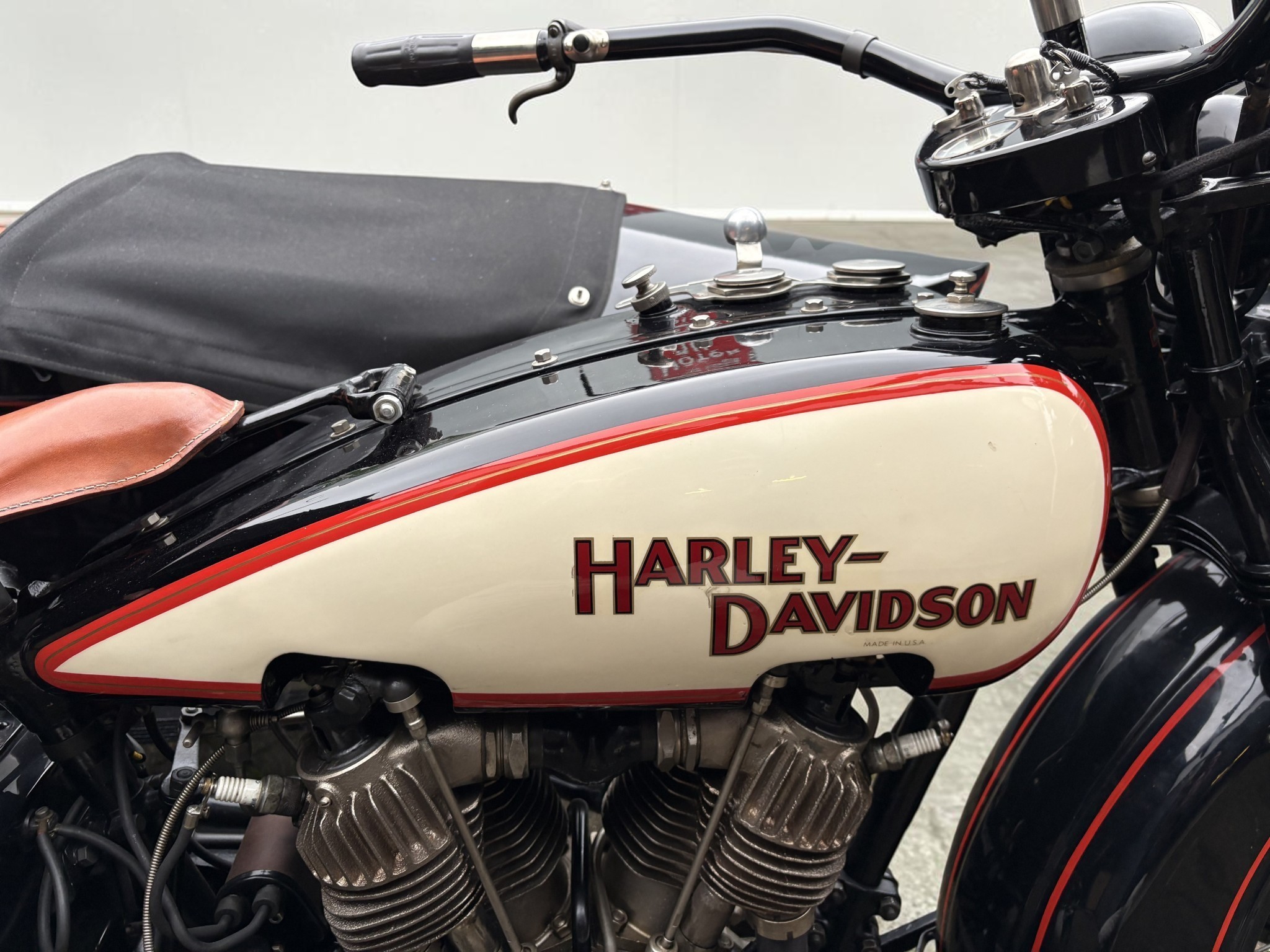

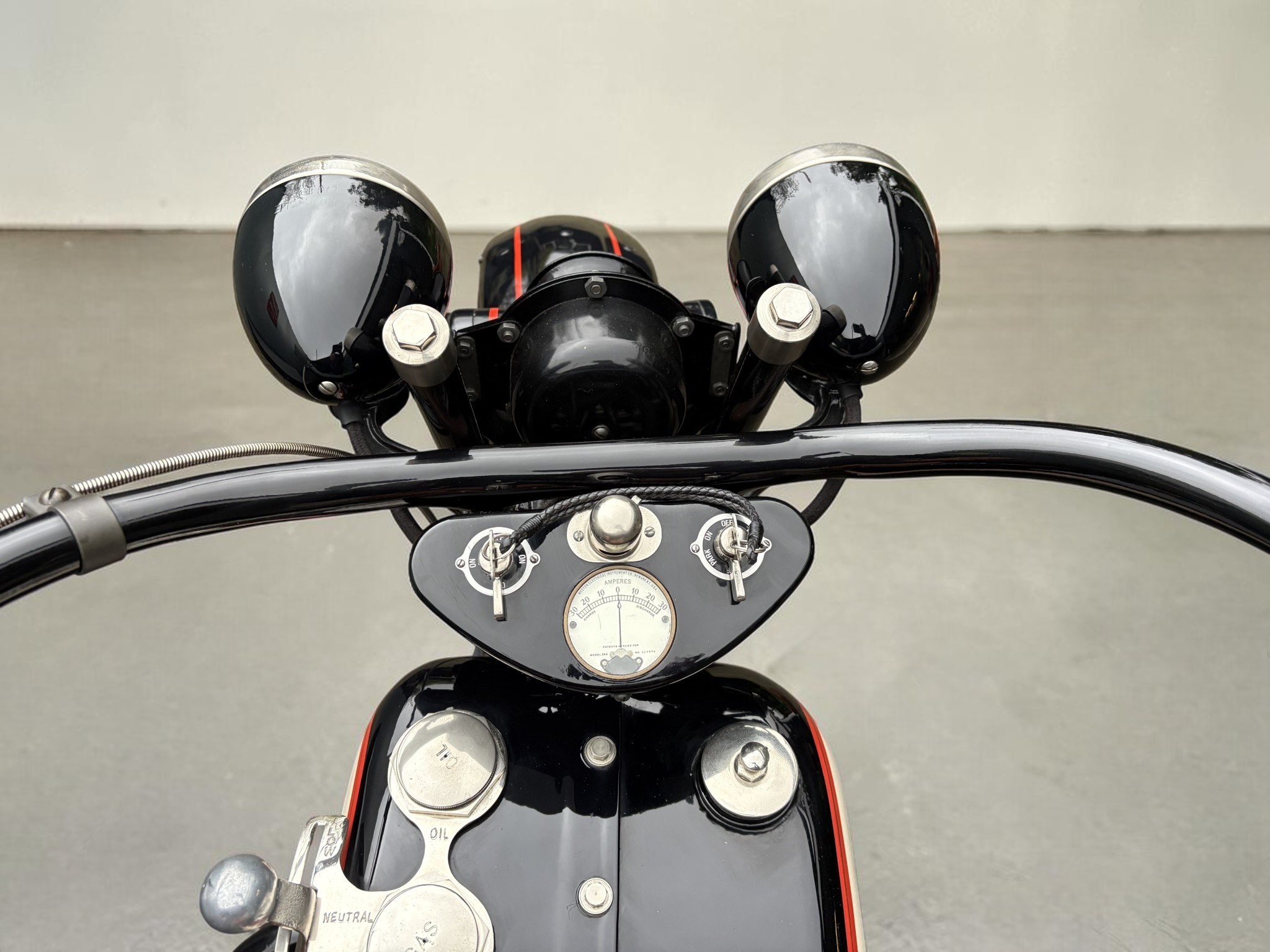


Representing the maturity of Harley-Davidson's legendary J-series platform, the 1929 Harley-Davidson Model JD with Sidecar stands as one of the most iconic American touring and utility motorcycles of the late 1920s. Produced during a period when motorcycle manufacturers were refining large-capacity V-twin machines for both civilian and commercial use, the Model JD reflects Harley-Davidson's position as a dominant force in the global motorcycle industry prior to the economic challenges of the Great Depression.
At the heart of the machine is Harley-Davidson's proven 74 cubic inch (approximately 1200cc) side-valve V-twin engine, a powerplant celebrated for its reliability, smooth torque delivery, and exceptional durability. Introduced as the successor to the earlier J-series models, the JD offered increased displacement and improved performance, making it one of the most capable long-distance motorcycles available in North America during its era.
The addition of a factory-style sidecar transforms the motorcycle from a solo touring machine into a versatile transportation platform. During the 1920s and early 1930s, sidecar-equipped Harley-Davidsons served a wide variety of purposes, ranging from family transportation and commercial delivery duties to police and municipal service. This configuration illustrates a period when motorcycles frequently fulfilled roles later assumed by automobiles and light utility vehicles.
Visually, the Model JD with Sidecar embodies the distinctive character of late-1920s American motorcycling. Its substantial V-twin engine, rigid frame construction, deeply valanced fenders, expansive fuel tank, and elegantly integrated sidecar create a commanding presence that reflects both mechanical sophistication and practical functionality. Every element of the design speaks to Harley-Davidson's commitment to building motorcycles capable of covering significant distances across the rapidly expanding road networks of the United States.
This example represents a significant chapter in Harley-Davidson vintage motorcycle history and has been restored with careful attention to period-correct specifications, authentic finishes, and historically accurate details. The restoration preserves the machine's historical integrity while presenting it to a standard befitting serious collectors of pre-war American motorcycles.
As one of the most desirable side-valve V-twin models produced before Harley-Davidson's transition into the 1930s, the 1929 Model JD with Sidecar offers exceptional appeal to collectors seeking motorcycles that illustrate the evolution of American touring culture, utility transportation, and large-capacity V-twin engineering. Its rarity, visual impact, and historical significance ensure its place among the most respected motorcycles of the Classic Era.
By 1929, Harley-Davidson had spent more than a quarter-century establishing itself as one of the world's most influential motorcycle manufacturers. Founded in Milwaukee in 1903, the company had evolved from producing modest single-cylinder machines into a major industrial enterprise known for robust V-twin motorcycles that served riders across North America and increasingly around the world.
The Model JD represented the culmination of Harley-Davidson's highly successful J-series development program. Introduced in 1925, the JD featured a larger 74 cubic inch side-valve engine that provided greater power and flexibility than its predecessors. The model quickly earned a reputation for reliability and long-distance capability, qualities that made it popular among touring riders, commercial operators, law enforcement agencies, and government institutions alike.
The late 1920s marked an important period in American transportation history. While automobile ownership was expanding rapidly, motorcycles remained a practical and economical solution for many individuals and businesses. Sidecar combinations such as the Model JD offered enhanced carrying capacity while retaining the maneuverability and operating economy that motorcycles provided. These machines were frequently used for passenger transport, courier work, rural travel, and commercial delivery services throughout the United States.
The year 1929 occupies a particularly significant place in American history, coinciding with the onset of the Great Depression following the Wall Street Crash. Motorcycles produced during this transitional period capture the final years of the prosperous Roaring Twenties while foreshadowing the changing economic realities that would influence transportation and manufacturing throughout the following decade. As a result, surviving motorcycles from this production year hold considerable historical interest beyond their engineering significance alone.
Original Model JD motorcycles equipped with sidecars are increasingly scarce today. Many were subjected to decades of hard service, modifications, or attrition before vintage motorcycle preservation became widely practiced. Consequently, examples restored to historically accurate standards are highly sought after by collectors of pre-war Harley-Davidson motorcycles and enthusiasts of early American transportation history.
Today, the 1929 Harley-Davidson Model JD with Sidecar is recognized as one of the defining American motorcycles of the interwar period. It embodies the engineering confidence, mechanical durability, and touring spirit that established Harley-Davidson's international reputation while serving as a tangible link to an era when motorcycles played a central role in everyday transportation across the United States.
The Vintage Motorcycles presents a curated selection of historically significant American motorcycles, centered on Harley-Davidson, a defining name in United States motorcycle engineering and one of the most influential manufacturers in global motorcycling history. From early single-cylinder machines to large-displacement V-twin platforms, Harley-Davidson represents the evolution of American industrial power translated into mechanical mobility.
This collection is part of a broader historical archive of global manufacturers, accessible through our global vintage motorcycle brands archive, where American engineering is positioned alongside European developments to illustrate the parallel evolution of motorcycle design philosophies. Harley-Davidson's identity is deeply rooted in the industrial expansion of the United States, where engineering focused on torque, durability, and long-distance usability. These machines are best understood within the framework of pre-war motorcycle engineering (1900-1939), a period that established the mechanical foundations of modern motorcycling.
Each motorcycle within our collection is selected based on provenance, originality, and mechanical authenticity, ensuring alignment with museum-grade preservation standards. Available machines can be explored through our global vintage motorcycle inventory, including historically significant American machines that reflect early road expansion and long-distance riding culture. All acquisitions are supported by a fully insured international shipping service, ensuring secure global delivery for collectors and institutions.
American motorcycle engineering developed through a strong industrial foundation, where scalability, durability, and torque-focused design became defining characteristics. Harley-Davidson emerged as one of the most recognizable expressions of this philosophy, producing V-twin motorcycles that prioritized low-end power delivery and long-distance reliability.
This engineering evolution can be contextualized within broader historical developments, beginning with the experimental foundations of the pre-war motorcycle era, when global manufacturers were still defining basic mechanical architectures. During World War II, American motorcycle production shifted toward military requirements, where reliability and field performance became critical, as seen in military motorcycle development. In the post-war period, these engineering principles evolved into standardized production systems supporting global consumer demand, reflected in post-war motorcycle development.
Key Highlights
Collector Assurance
All enquiries handled with discretion. We typically respond within 6 hours.