
The Vintage Motorcycles
Specialists in antique, classic, veteran and vintage motorcycles.
Specialists in antique, classic, veteran and vintage motorcycles.


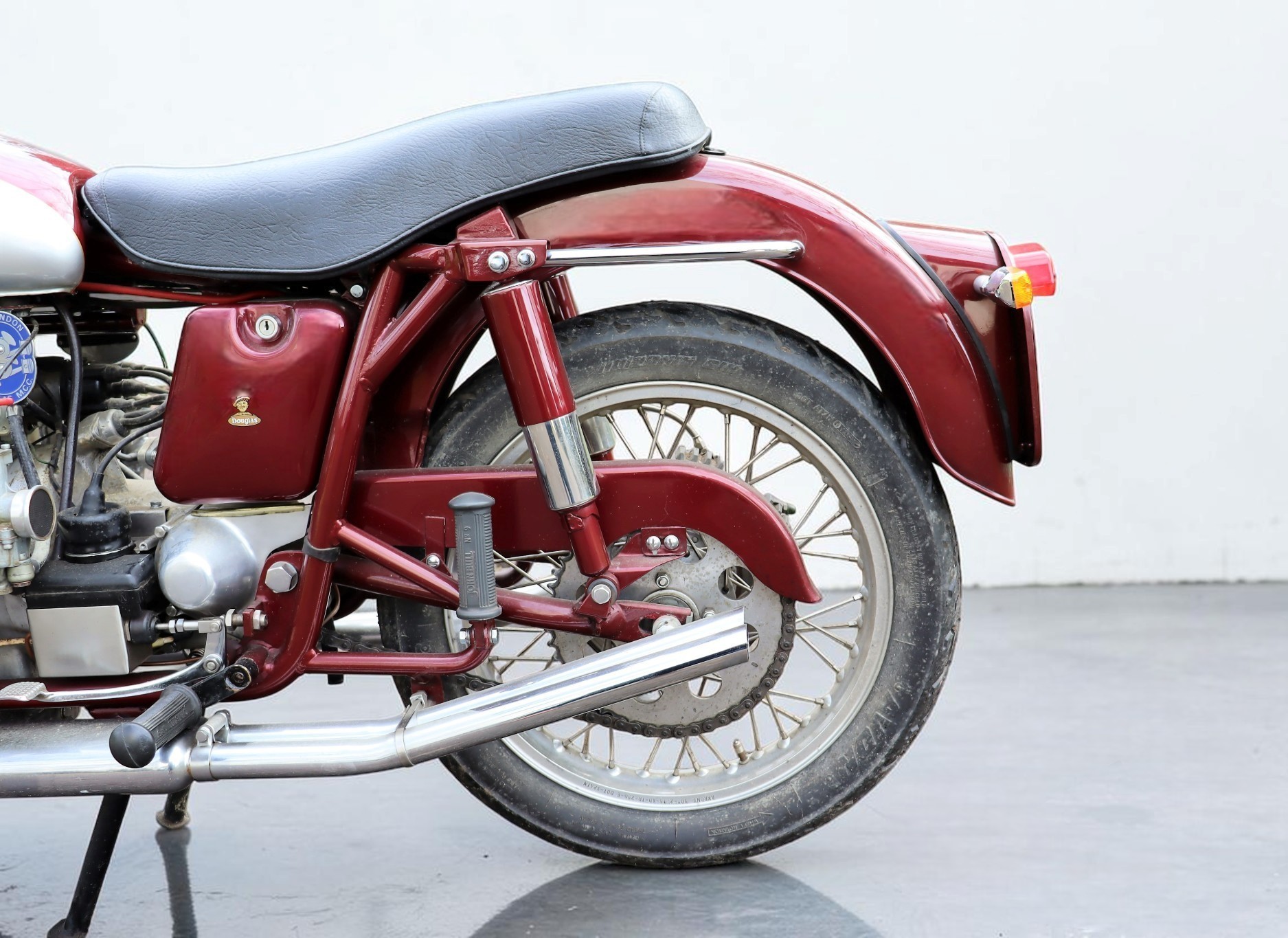


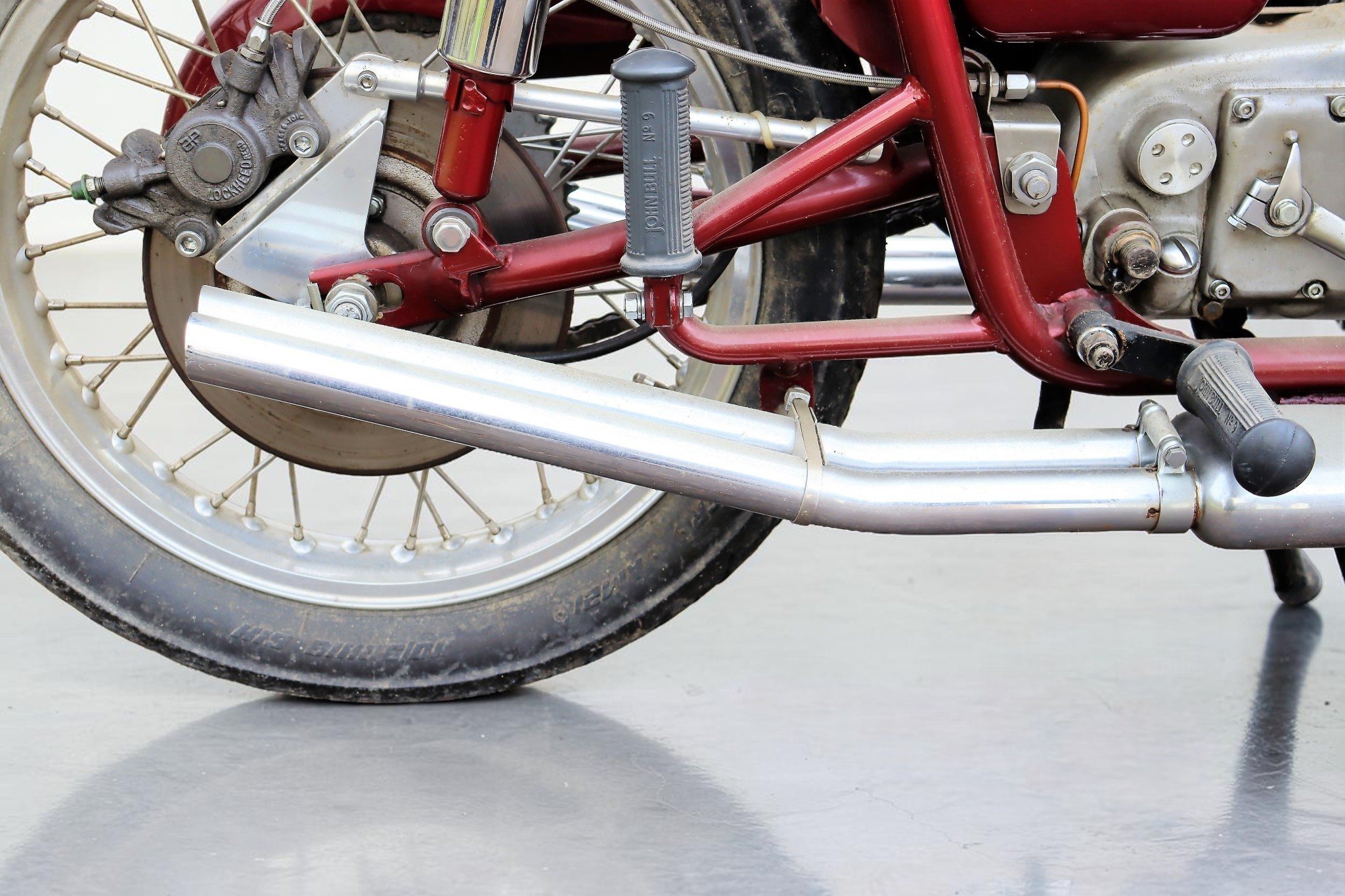


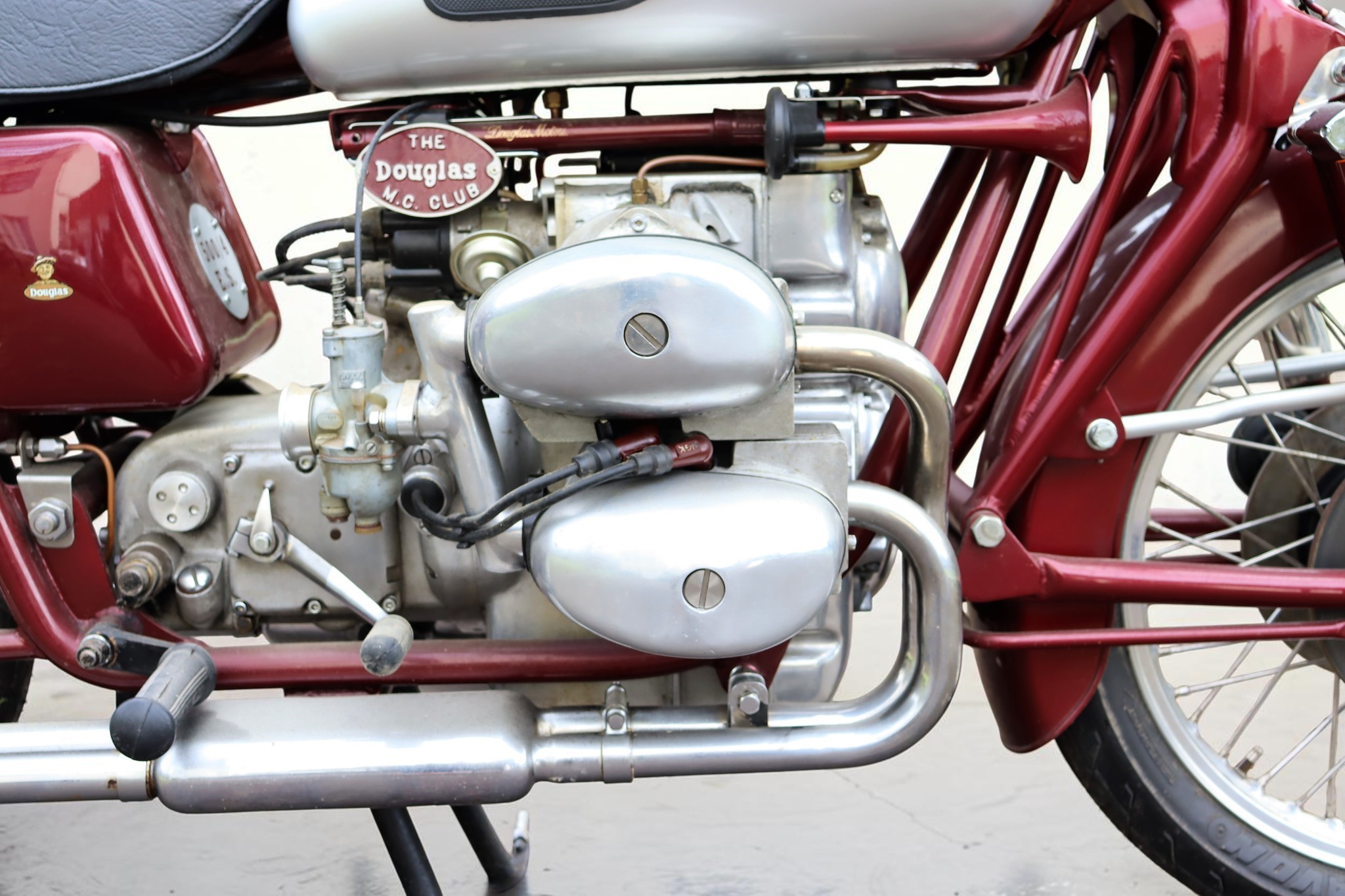

The 1956 Douglas Model Dream Four is not a factory-produced Douglas model but a highly unusual one-off four-cylinder special built around Douglas engineering. The machine is commonly known as the Douglas Dragon Four or Dream Four and was created by combining two Douglas 350cc horizontally opposed twin-cylinder engines into a single four-cylinder power unit.
The concept is closely associated with Douglas enthusiast Don Brown, who developed the original Dragon Four during the late 1990s. The idea was to explore what a four-cylinder Douglas might have looked and sounded like if the company had pursued the concept using components already available from its 350cc motorcycle engine.
The resulting engine is effectively a vertically stacked pair of Douglas flat twins. The two engines are mechanically coupled together, producing a four-cylinder horizontally opposed configuration with two cylinders on each side of the motorcycle.
The Douglas factory itself had considered the possibility of producing a four-cylinder motorcycle during the early 1950s. Correspondence between Eddie Withers and the factory reportedly discussed the possibility of creating a four-cylinder engine from existing 350cc twin components, but no production four-cylinder Douglas motorcycle resulted from the proposal.
The Dream Four therefore represents an intriguing realization of an idea that remained outside Douglas's production range. It combines genuine Douglas mechanical components with extensive specialist engineering rather than representing a standard factory model.
The motorcycle is particularly rare because the documented examples are specials rather than mass-produced motorcycles. One known version was described as the Mk2 Dragon Four, incorporating improvements such as electric starting, disc brakes, and indicators while retaining the distinctive Douglas flat-four concept.
Douglas motorcycles were manufactured in Bristol from 1907 until the company's motorcycle production ended in the late 1950s. Throughout much of its history, Douglas became closely associated with horizontally opposed twin-cylinder engines.
After the Second World War, Douglas concentrated heavily on its 350cc overhead-valve flat twin. The post-war Mark series and later Dragonfly continued this basic configuration, eventually developing into the company's final production motorcycle design.
During the early 1950s, Douglas considered expanding beyond the 350cc twin. A 500cc prototype was developed, but the company did not have sufficient resources to establish a competitive larger-capacity production motorcycle.
There was also interest in the possibility of producing a four-cylinder engine from existing 350cc Douglas components. This idea appears to have remained at the experimental or discussion stage and never became a factory production model.
The later Dragon Four project revisited this concept independently. Don Brown developed a four-cylinder Douglas using two 350cc engines stacked vertically and mechanically coupled together.
The first Dragon Four was reportedly developed in the late 1990s. A later Mk2 version refined the concept and incorporated more modern equipment, including electric starting, disc brakes, and discreet indicators.
The 1956 designation associated with the motorcycle refers to the Douglas Dragonfly frame and mechanical foundation used for the special rather than indicating that Douglas manufactured a four-cylinder model in 1956.
This distinction is important for collectors. The Douglas factory's 1956 production motorcycle was the 348cc Dragonfly, while the Dream Four is a later custom-built special using Douglas components.
The Dream Four uses a four-cylinder engine created by combining two Douglas 350cc horizontally opposed twin-cylinder engines.
The underlying Douglas engines are based on the company's 348cc overhead-valve flat-twin architecture. Each original twin therefore contributes two horizontally opposed cylinders to the completed four-cylinder arrangement.
The resulting engine is commonly described as a Douglas flat four. The cylinders are arranged in two banks, with two cylinders on each side, producing a visually distinctive engine that fills much more of the space beneath the motorcycle's fuel tank than the standard Dragonfly engine.
The mechanical challenge was considerable. Combining two separate Douglas twin-cylinder units required the crankshafts to be coupled and the lubrication and induction systems to be adapted so that the resulting four-cylinder engine could operate as a unified powerplant.
Contemporary descriptions of the project explain that the crankshafts were coupled at the front of the engine using a larger-diameter idler arrangement. The upper engine did not use its own conventional flywheel in the same manner as the lower unit.
Carburetion and oiling presented additional engineering difficulties. These problems were reportedly resolved during development, allowing the special to operate reliably.
There is no authoritative factory horsepower figure for the Dream Four because Douglas never produced or tested it as a production model. Published figures for the standard 348cc Dragonfly should therefore not be presented as official Dream Four output.
The four-cylinder arrangement nevertheless provides substantially different mechanical character from the standard Douglas twin. The additional cylinders give the engine a distinctive exhaust note that has been compared with the sound of other four-cylinder motorcycles.
The Dream Four retains the basic Douglas motorcycle drivetrain concept, although the four-cylinder engine required substantial custom engineering to connect the paired engine assemblies into the motorcycle's transmission system.
The standard Douglas Dragonfly used a four-speed gearbox. The Dream Four's transmission arrangement is based around Douglas components but should not be treated as a factory four-cylinder specification because no such production specification existed.
The custom engine coupling was one of the most technically demanding aspects of the project. Two originally separate Douglas power units had to operate together while delivering their combined output through a single motorcycle transmission.
The final drive remains based on the conventional chain-driven Douglas motorcycle layout.
Because the Dream Four is a special rather than a factory model, exact drivetrain details can vary between individual builds. Any surviving machine should therefore be documented according to its actual components rather than assigned a fictional factory specification.
The documented Dream Four was based on a Douglas Dragonfly chassis. The Dragonfly was Douglas's final production motorcycle design and used a completely new frame compared with the earlier Mark series.
The Dragonfly chassis was designed around the 348cc flat twin but provided enough physical space for the unusual four-cylinder conversion.
The standard Dragonfly used a strong lightweight cradle frame with leading-link front suspension. Its styling was substantially more streamlined than the earlier Mark V.
The front suspension was based on Douglas's development of the Earles-type leading-link arrangement, using spring and damper units rather than the conventional telescopic fork found on many competing motorcycles.
The rear suspension used twin spring-and-damper units mounted at the rear of the frame.
On the Dream Four, the chassis had to accommodate the additional height and mass of the vertically stacked engine assemblies. This made the conversion substantially more involved than simply installing a larger conventional engine into an existing frame.
The standard Douglas Dragonfly used wire-spoked wheels and period drum braking equipment.
The Mk2 Dragon Four project differed from the original Douglas braking arrangement by incorporating disc brakes as part of its modernized specification.
This change was deliberate. The builder wanted the special to retain the appearance and engineering character of a Douglas factory motorcycle while benefiting from selected modern refinements.
Because the Dream Four is a custom motorcycle, brake specification should be checked against the individual machine. The presence of disc brakes should not be interpreted as evidence of an original 1956 Douglas factory specification.
The combination of a four-cylinder engine and upgraded braking system gives the special a substantially different technical character from the standard Dragonfly.
The Dream Four is visually striking because the engine occupies the central area of the chassis in a way that the standard Douglas flat twin never did.
The two Douglas twin-cylinder units are positioned one above the other, creating a compact four-cylinder arrangement while retaining the horizontally opposed cylinder philosophy of the original engines.
The lower and upper cylinder banks project outward from the crankcase, producing the appearance of a miniature horizontally opposed four-cylinder engine.
The design has an unusual but logical connection with Douglas engineering. Rather than replacing the company's characteristic flat-twin architecture with a completely unrelated engine, the Dream Four extends the same basic idea by doubling the number of cylinders.
The Dragonfly bodywork gives the special a convincing period appearance. The streamlined tank and fixed headlamp arrangement are characteristic of the production Dragonfly, helping the custom motorcycle look like a plausible Douglas development.
The Mk2 version also incorporated discreet indicators and other modern equipment without abandoning the overall Douglas styling concept.
The riding character of the Dream Four is fundamentally different from that of a standard Douglas Dragonfly because the additional cylinders alter the engine's balance, output characteristics, and sound.
The horizontally opposed arrangement retains the low center of gravity associated with Douglas motorcycles, while the four-cylinder configuration provides a smoother and more substantial engine character.
The exhaust note is one of the most distinctive aspects of the motorcycle. Contemporary descriptions of the project have compared its sound with that of an Ariel Square Four, reflecting the unusual combination of four cylinders and a compact motorcycle engine layout.
The low-mounted engine should preserve some of the stable handling qualities associated with the Douglas flat twin, although the additional engine mass changes the balance of the Dragonfly chassis.
The upgraded brakes and electric starting system on the Mk2 version make it more practical to operate than a purely period-correct conversion.
The Dream Four should therefore be regarded as an engineering special intended to explore the possibilities of Douglas's flat-twin architecture rather than as a conventional vintage production motorcycle.
The historical significance of the Dream Four is closely connected with the possibility that Douglas itself considered a four-cylinder motorcycle.
During the early 1950s, Douglas was attempting to find ways to expand its product range while remaining competitive with the larger British motorcycle manufacturers.
A 500cc prototype was produced, but the company lacked the financial resources to develop a full range of larger motorcycles.
At approximately the same time, correspondence between Douglas personnel and the factory reportedly considered whether two existing 350cc twin-cylinder engines could be developed into a four-cylinder unit at relatively modest cost.
The concept would have allowed Douglas to increase cylinder count without abandoning its established opposed-twin architecture.
Nothing comparable entered production. Douglas ultimately continued with the 350cc twin and developed the Dragonfly as its final new motorcycle.
The later Dragon Four project is therefore particularly interesting because it effectively revisited a Douglas engineering possibility that had never progressed into a factory motorcycle.
There was no factory production run of the 1956 Douglas Dream Four.
The standard Douglas motorcycle in 1956 was the Dragonfly, a 348cc overhead-valve horizontally opposed twin-cylinder motorcycle.
Douglas produced approximately 1,570 Dragonfly motorcycles before motorcycle production ended. The company was subsequently taken over by Westinghouse Brake and Signal, and the Bristol factory eventually concentrated on other products and Vespa scooter production.
The Dream Four was created independently as a special using Douglas components. The best-documented version was developed by enthusiast Don Brown, with the Mk2 subsequently refined by another owner.
One documented Mk2 Dragon Four was described by H&H as a one-off special based on a 1956 Douglas Dragonfly. It carried a 496cc engine designation, reflecting the approximately 500cc combined capacity of the two 350cc-derived engine assemblies after accounting for their actual displacement.
That machine was sold by H&H as a unique four-cylinder special rather than as a factory-built Douglas production motorcycle.
The Dream Four is significant primarily as an engineering special and as a physical interpretation of a four-cylinder Douglas concept.
Its rarity is considerably greater than that of the already uncommon Dragonfly because only a very small number of these custom four-cylinder Douglas motorcycles are known.
For collectors, the provenance of the conversion is as important as the age of the underlying chassis. Documentation showing the construction process, photographs, engine components, frame identity, and ownership history can establish the authenticity of the special.
A genuine Dream Four should not be evaluated using the same criteria as an original production Dragonfly. The custom engine, modified drivetrain, braking system, electrical equipment, and other alterations are fundamental parts of the motorcycle's identity.
The relationship between the original Dragonfly components and the later four-cylinder conversion should therefore be clearly documented.
Because the project is associated with a known enthusiast-built engineering concept, photographs and historical records of the construction can add considerable interest and value.
Authenticating a 1956 Douglas Dream Four begins with establishing that the underlying motorcycle is a genuine Douglas Dragonfly or other appropriate Douglas chassis and then documenting the four-cylinder conversion.
The Dragonfly frame number is located on the left-side gusset plate below the swinging-arm pivot. The engine number on a standard Dragonfly is located on the left-hand cylinder-base area, while the gearbox number is positioned on top of the gearbox toward the left side.
The Dragonfly production range ran from frame number 1009/6 through approximately 2573/6, following the earlier pre-production machines.
The engine should then be examined to determine how the two Douglas twin-cylinder assemblies were combined. The crankshaft coupling, upper engine arrangement, lubrication system, carburetion, ignition, and mounting structure are all important evidence of the conversion.
The presence of modern disc brakes, electric starting, or indicators may indicate the later Mk2-style conversion rather than the earlier Dragon Four build.
A claimed factory four-cylinder Douglas should be treated with caution. Douglas did not put a four-cylinder Dream Four into series production, and the documented Dream Four is a later specialist-built interpretation of the concept.
The 1956 Douglas Dream Four matters because it demonstrates what could be achieved by extending Douglas's famous flat-twin architecture into a four-cylinder configuration.
The concept is particularly fascinating because Douglas itself had considered four-cylinder development during the early 1950s but never brought such a motorcycle to production.
By combining two 350cc Douglas engines, the Dragon Four project created a unique flat-four powerplant while preserving the essential mechanical character of the Douglas marque.
The use of a Dragonfly chassis also connects the special directly with the final chapter of Douglas motorcycle production.
The machine therefore occupies an unusual place in motorcycle history. It is neither a standard production Douglas nor a completely unrelated custom motorcycle; instead, it is a specialist engineering exercise built around a genuine Douglas concept and genuine Douglas components.
For enthusiasts of unusual British motorcycles, the Dream Four is particularly valuable because it gives physical form to a four-cylinder Douglas idea that otherwise remained largely theoretical.
This 1956 Douglas Model Dream Four represents one of the most unusual interpretations of Douglas motorcycle engineering and should be understood as a rare four-cylinder special rather than an original factory production model.
The motorcycle is based on the Douglas Dragonfly and incorporates a unique flat-four engine created by combining two Douglas 350cc horizontally opposed twin-cylinder power units into a vertically stacked four-cylinder assembly.
The concept revisits an idea that Douglas had reportedly considered during the early 1950s, when the company explored ways of expanding its engine range using existing 350cc twin-cylinder components.
The documented Mk2 Dragon Four conversion was developed with considerable attention to detail and incorporated modern refinements including electric starting, disc brakes, and discreet indicators while retaining the appearance and engineering character of a Douglas motorcycle.
The engine conversion involved substantial specialist engineering, including mechanical coupling of the two engine assemblies and modifications to the lubrication and carburetion systems. The resulting motorcycle has a distinctive four-cylinder exhaust note and a character unlike any standard Douglas production model.
The underlying Dragonfly chassis is itself historically important. Douglas produced only about 1,570 Dragonfly motorcycles before motorcycle production ended, making an extensively documented four-cylinder conversion based on one of these machines especially unusual.
H&H has documented a unique 1956 Douglas Dragonfly four-cylinder special with a 496cc engine, describing it as a well-constructed Douglas Four and recording it as a one-off machine.
Contact us for additional photographs, detailed specifications, frame and engine numbers, construction history, originality assessment, provenance, restoration details, historical documentation, and purchasing information for this 1956 Douglas Model Dream Four.
Explore more Douglas motorcycles from the vintage and classic eras.
The Vintage Motorcycles maintains a carefully curated collection of historically significant Douglas motorcycles, documenting the evolution of one of Britain's most distinctive motorcycle manufacturers. Spanning multiple decades of production, the collection explores the engineering developments, technological innovations, and industrial heritage that shaped Douglas throughout its history.
From early pioneer-era machines and interwar flat-twin motorcycles to later post-war models such as the Dream Four, the collection highlights the remarkable diversity of Douglas engineering. These motorcycles illustrate how the company continuously adapted to changing technologies, rider expectations, and market conditions while maintaining a strong sense of mechanical individuality.
The collection also provides insight into the broader narrative of motorcycle development during the first half of the twentieth century. Through Douglas, it is possible to trace the evolution of British engineering from the experimental years of early motorcycling through the industrial maturity of the post-war period.
Each motorcycle is assessed according to provenance, originality, historical significance, and mechanical authenticity. Available examples may be explored through our vintage motorcycle inventory, while motorcycles associated with touring, utility, and period transport applications can also be viewed within our sidecar motorcycle collection. International acquisitions are supported through our dedicated global shipping service.
The historical significance of the Douglas Dream Four extends beyond the motorcycle itself. It represents a broader narrative within British industrial history, documenting how established manufacturers responded to technological change, shifting consumer demands, and increasing global competition during the post-war period.
Throughout its existence, Douglas remained associated with engineering originality. Whether through pioneering flat-twin motorcycles, competition machines, military applications, or later post-war developments, the company consistently pursued solutions that differed from mainstream industry trends. This commitment to individuality became one of the defining characteristics of the Douglas legacy.
The preservation of motorcycles such as the Dream Four contributes to a deeper understanding of manufacturing history, transportation technology, and the evolution of British engineering. These machines provide valuable evidence of how motorcycle design adapted across multiple generations while reflecting broader social and economic changes throughout the twentieth century.
Viewed within the wider context of British industrial heritage, the 1956 Douglas Dream Four stands as a reminder of the innovation, resilience, and technical ambition that characterized one of Britain's most distinctive motorcycle manufacturers. Its survival helps preserve a unique chapter in the history of motorcycling and offers an enduring connection to the people, industries, and engineering traditions that shaped modern transportation.
Key Highlights
Collector Assurance
All enquiries handled with discretion. We typically respond within 6 hours.
Choose the payment method that is most convenient for you. We accept widely used international payment methods as well as, where available, local bank transfer options that allow you to pay like a domestic transaction. Full payment instructions are provided for your specific purchase.
Direct international bank wire transfer is available for motorcycle purchases and export transactions.
Credit card payments can be arranged through Wise.com, subject to the applicable payment and processing conditions.
PayPal is accepted. A 5% PayPal processing fee applies to the transaction.