
The Vintage Motorcycles
Specialists in antique, classic, veteran and vintage motorcycles.
Specialists in antique, classic, veteran and vintage motorcycles.


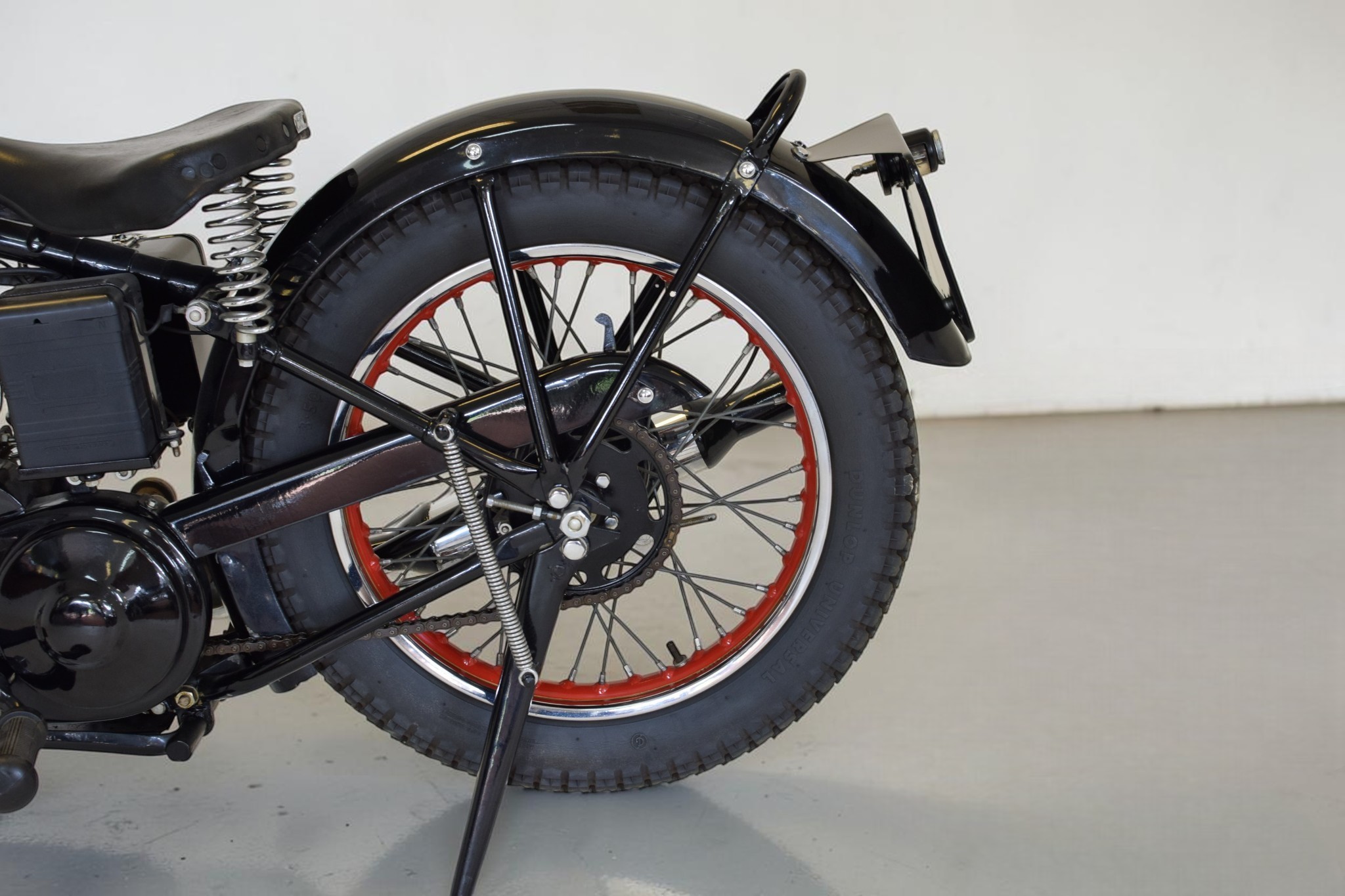


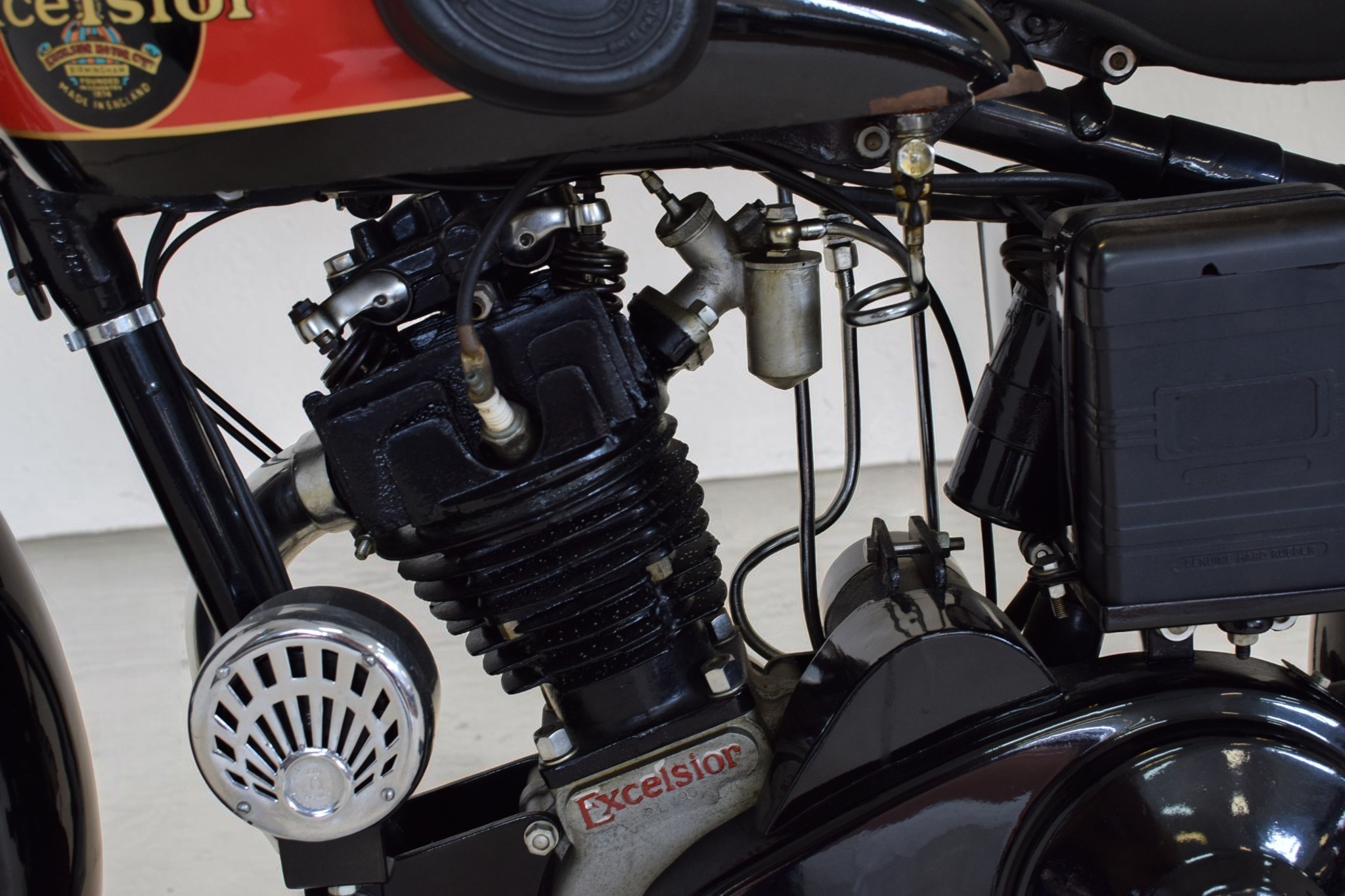
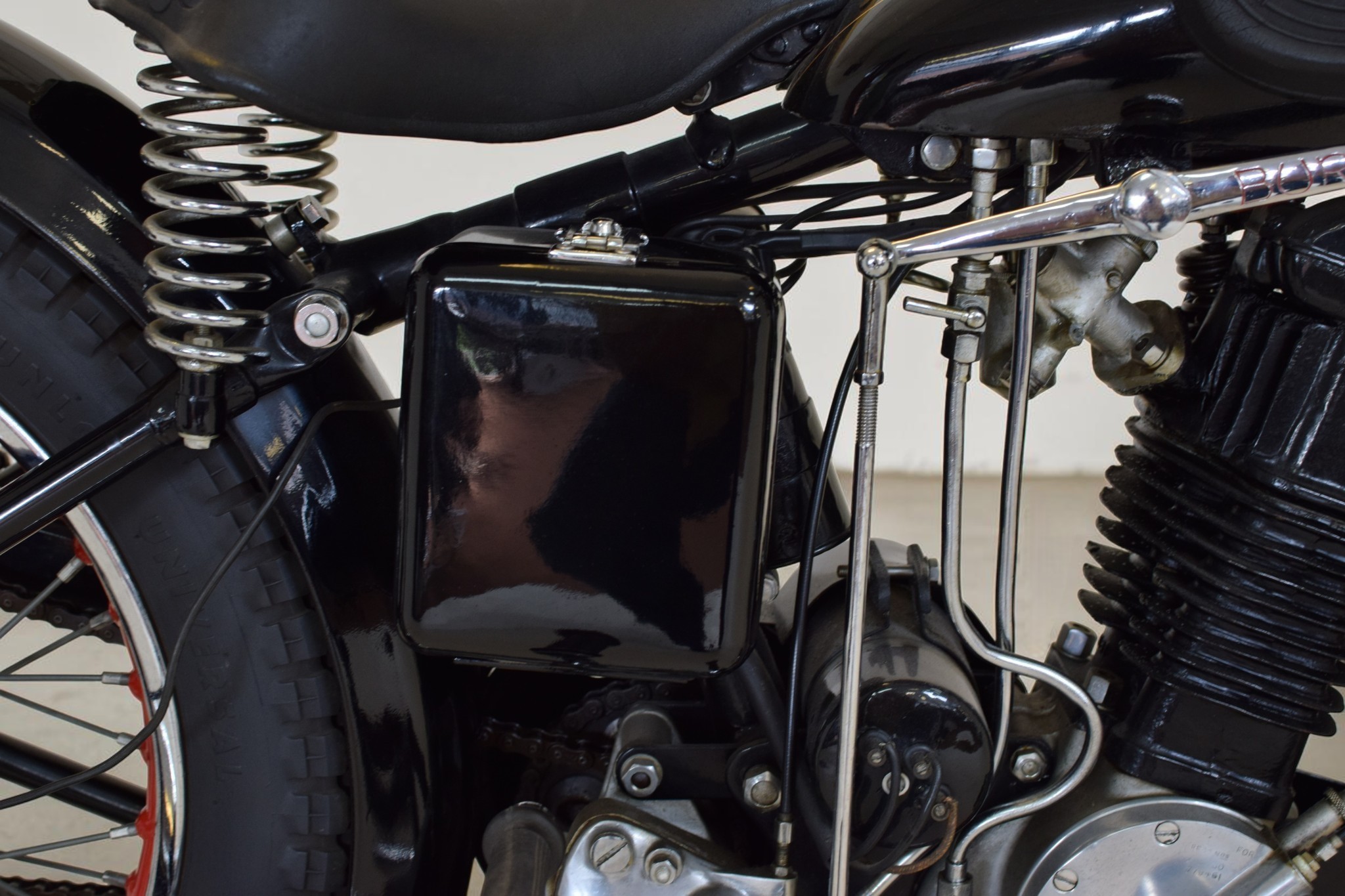
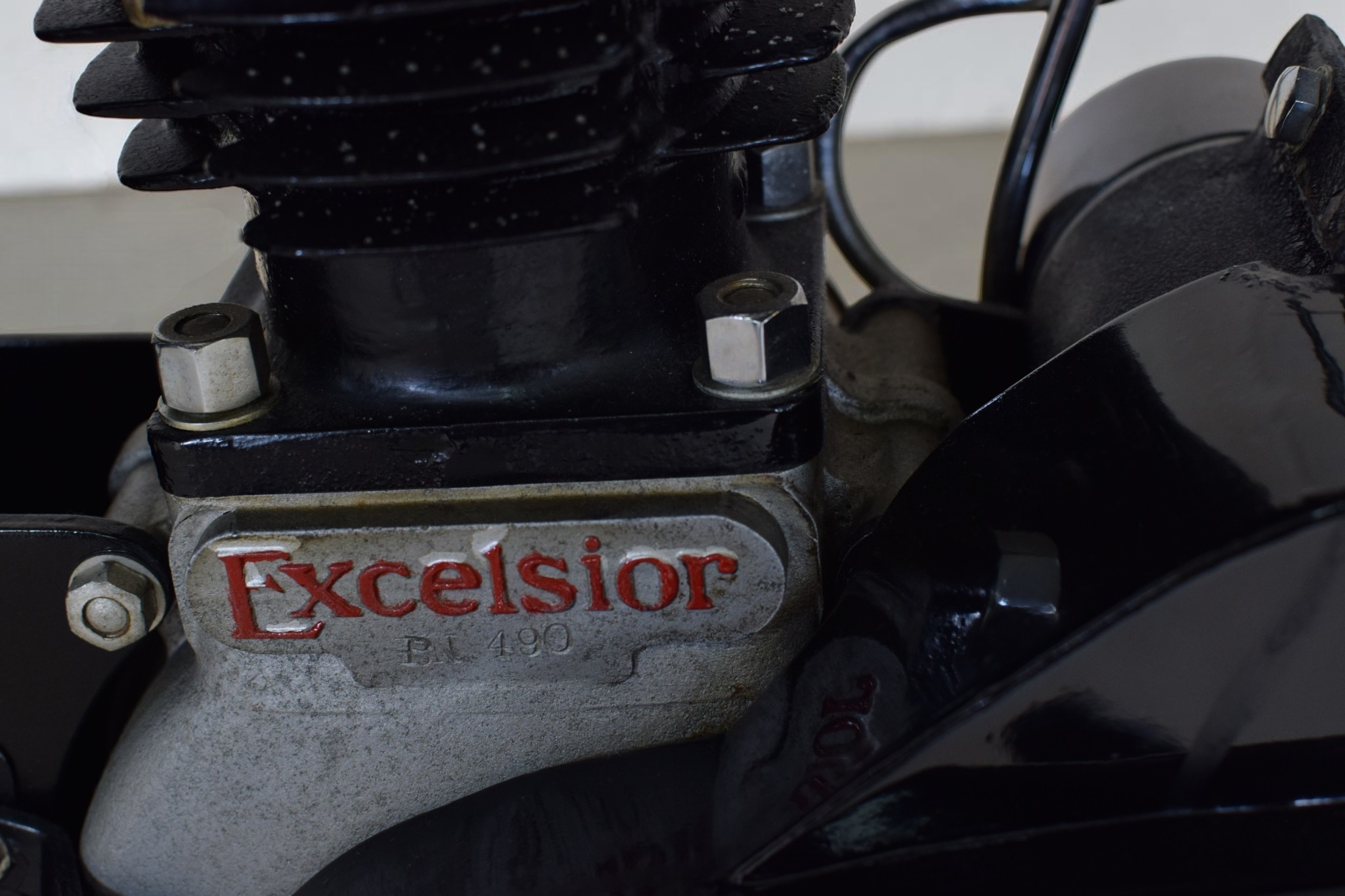

The 1934 Excelsior D7 Pathfinder was a British lightweight motorcycle produced by the Excelsior Motor Company of Birmingham. The Pathfinder was one of the company's distinctive small-capacity models of the 1930s and used Excelsior's own 247cc overhead-valve single-cylinder engine.
The D7 designation identifies the 1934 model year within Excelsior's frame-number system. From 1931 onward, Excelsior used alphabetical prefixes to identify model years, with A representing 1931, B 1932, C 1933, and D 1934.
The 247cc overhead-valve engine was one of the most important features of the Pathfinder. Unlike many small British motorcycles that relied on proprietary engines from outside suppliers, the D7 Pathfinder used an Excelsior-designed power unit.
The motorcycle combined this compact engine with a three-speed Burman gearbox, Lucas electrical equipment, Amal carburetion, and Webb front forks. The resulting machine was a practical but technically interesting lightweight motorcycle for the British market.
The 1934 D7 Pathfinder is particularly significant today because relatively few examples survive. Its unusual combination of an Excelsior-built overhead-valve engine and proprietary British components makes it an interesting representative of the smaller British manufacturers of the pre-war period.
Excelsior was one of Britain's early motorcycle manufacturers and had its roots in the Bayliss, Thomas & Co. business. By the early 1930s the company was operating from Birmingham and producing a range of motorcycles covering both lightweight and larger-capacity markets.
During the 1930s Excelsior increasingly developed motorcycles around its own model families while continuing to use specialist components from established British suppliers.
The Pathfinder was positioned within the lightweight section of the range and was intended to provide economical road transportation without sacrificing the more modern characteristics of an overhead-valve engine.
The 1934 model was identified as the D7, with the D prefix corresponding to the 1934 model year. The frame-number system provides an important means of identifying surviving examples and distinguishing the D7 from later Pathfinder models.
The Pathfinder continued in later years with changes to its model designation and specification. The 1936 version, for example, carried the F7 designation because the letter F corresponded to the 1936 model year.
Surviving 1934 D7 Pathfinders are uncommon, and documented examples can be especially valuable to collectors because original factory records and detailed period literature are relatively scarce.
The 1934 Excelsior D7 Pathfinder is powered by a 247cc air-cooled overhead-valve single-cylinder four-stroke engine.
The engine was developed by Excelsior and is one of the defining features of the Pathfinder. Its overhead-valve configuration provided a more modern breathing arrangement than the side-valve engines still widely used in small British motorcycles during the period.
The engine uses a compact single-cylinder layout suited to lightweight road use. Its relatively modest capacity was intended to provide economical transportation rather than high-performance riding.
Period references and surviving-machine specifications generally place maximum speed at approximately 55 mph, although actual performance depends on engine condition, gearing, rider weight, road conditions, and restoration quality.
The air-cooled engine uses carburetion and period coil ignition equipment. Lucas electrical components and an Amal carburetor are associated with the D7 Pathfinder specification.
The engine should be evaluated carefully on a surviving motorcycle because the Pathfinder's uncommon Excelsior-built cylinder head and related engine components can be considerably harder to replace than standard proprietary cycle parts.
The D7 Pathfinder uses a three-speed manual gearbox supplied by Burman.
The Burman gearbox was a widely used British motorcycle component during the period and provided the Pathfinder with a conventional and serviceable transmission arrangement.
The rider changes through three forward ratios, allowing the engine to operate effectively during starting, climbing, and normal road cruising.
Power is transmitted to the rear wheel through a conventional chain final drive.
The combination of an Excelsior engine and Burman gearbox illustrates the common British manufacturing practice of combining a manufacturer's own major mechanical design with components from specialist suppliers.
On a surviving D7, the clutch should be checked for smooth engagement and the gearbox should be inspected for correct operation of all three ratios, selector wear, bearing condition, and abnormal noise.
The primary and final-drive chains, sprockets, chain alignment, and rear-wheel hub should also be inspected carefully during a restoration or mechanical assessment.
The 1934 Excelsior D7 Pathfinder uses a lightweight steel motorcycle frame designed around the compact 247cc engine.
The chassis follows the construction methods commonly used by British manufacturers during the 1930s, combining a relatively light frame with standardized proprietary components.
The front suspension uses Webb forks. Webb was one of Britain's major specialist motorcycle fork manufacturers and supplied suspension components to numerous motorcycle companies during the pre-war period.
The D7 Pathfinder's Webb fork arrangement was based on pressed-steel construction and was characteristic of the type of practical suspension equipment used on British motorcycles of the period.
The rear chassis is essentially rigid, with rider comfort provided by the saddle, tires, and front suspension rather than a fully sprung rear suspension system.
Frame alignment, steering-head condition, fork straightness, engine mounting points, wheel alignment, and corrosion around the pressed-steel fork components should be carefully checked on an unrestored or restored example.
The 1934 Excelsior D7 Pathfinder uses spoked motorcycle wheels appropriate to a lightweight British motorcycle of the period.
Surviving Pathfinder specifications indicate a relatively compact wheel and tire arrangement suited to the motorcycle's lightweight design. Exact tire dimensions should be verified against the individual machine and period documentation before restoration.
The braking system uses mechanically operated brakes appropriate to the early 1930s.
As with other motorcycles from this period, braking performance is considerably more limited than that of modern motorcycles, making correct adjustment and mechanically sound components especially important.
The brake drums, shoes, operating mechanisms, cables, wheel bearings, spokes, rims, and tires should all be inspected carefully.
When assessing originality, later replacement wheels, brake components, or modern tires should be distinguished from the equipment originally supplied with the D7 Pathfinder.
The 1934 Excelsior D7 Pathfinder has the compact and purposeful appearance typical of a British lightweight motorcycle from the early 1930s.
The small overhead-valve single-cylinder engine gives the motorcycle a clean mechanical profile, while the steel frame, fuel tank, mudguards, saddle, and exposed cycle components create a distinctly pre-war appearance.
The Pathfinder was designed as a practical motorcycle rather than a dedicated racing machine, but its overhead-valve engine gave it a more modern technical character than many basic lightweight motorcycles of the period.
The use of Webb forks, Burman transmission, Lucas electrical equipment, and Amal carburetion also gives the motorcycle a recognizable British component specification.
These proprietary components were widely used across the British motorcycle industry, making the Pathfinder's overall design easier to service than its uncommon Excelsior engine might suggest.
The D7's compact proportions and relatively light construction made it particularly appropriate for riders seeking economical personal transportation during the interwar period.
The D7 Pathfinder belongs specifically to Excelsior's 1934 model range.
The D prefix in the frame number is an important identifying feature because Excelsior began using alphabetical model-year prefixes in 1931.
The 1934 D7 uses the 247cc Excelsior overhead-valve single-cylinder engine and a three-speed Burman gearbox.
The motorcycle also used a combination of specialist British components, including Webb forks, Lucas electrical equipment, and an Amal carburetor.
The D7 should not be confused with later Pathfinder versions carrying different alphabetical prefixes. The 1936 Pathfinder, for example, was designated F7 because the F prefix represented the 1936 model year.
Later Pathfinder models may share the basic concept of the D7 but can differ in engine, chassis, equipment, and component specification.
The 1934 Excelsior D7 Pathfinder provides the lightweight and direct riding experience characteristic of a small British motorcycle from the pre-war period.
The 247cc overhead-valve engine offers sufficient performance for normal road use while keeping the motorcycle relatively light and economical.
The three-speed gearbox provides useful flexibility compared with the simpler transmissions found on some earlier lightweight motorcycles.
The Webb front fork helps absorb road shocks while the rigid rear frame retains the straightforward construction typical of the period.
The approximately 55 mph maximum speed often associated with the model makes the Pathfinder capable of useful road travel, although modern traffic conditions demand considerably more caution than the motorcycle's original environment.
The modest braking performance, narrow period tires, limited suspension travel, and manual gearbox require a deliberate riding style and careful anticipation of road conditions.
The 1934 Excelsior D7 Pathfinder is important because it represents the work of a smaller British manufacturer competing in a market dominated by much larger companies.
During the 1930s the British motorcycle industry included a large number of manufacturers, many of which specialized in particular capacities or relied on combinations of proprietary components.
Excelsior's decision to use its own 247cc overhead-valve engine for the Pathfinder demonstrates the company's ability to develop technically distinctive motorcycles rather than simply assembling an externally supplied engine into a conventional chassis.
At the same time, the use of Burman, Lucas, Amal, and Webb components illustrates how specialist suppliers supported the broader British motorcycle industry.
The Pathfinder therefore provides an excellent example of the way British motorcycle manufacturers combined proprietary engineering with a common network of specialist component suppliers.
The rarity of surviving D7 Pathfinders gives the model additional historical significance today.
The 1934 Excelsior D7 Pathfinder is an unusual collector motorcycle because of its relatively small production presence and distinctive Excelsior-built overhead-valve engine.
The 247cc engine is particularly important to the model's identity. Contemporary restoration experience indicates that the Excelsior cylinder head and other engine-specific components can be difficult to source.
The Burman gearbox, Webb forks, Lucas electrics, and Amal carburetor are important period components but are more widely encountered than the Excelsior engine itself.
Original engine and frame numbers are therefore particularly valuable when assessing an individual Pathfinder.
Documented registration history, period photographs, factory literature, original instruction books, parts lists, and long-term ownership records can significantly strengthen the provenance of a surviving example.
A Pathfinder retaining its original engine, correct D7 frame, period cycle components, and documented history is especially interesting to collectors of rare British motorcycles.
Authenticating a 1934 Excelsior D7 Pathfinder requires careful examination of the frame, engine, gearbox, forks, wheels, electrical equipment, and period controls.
The frame number is particularly useful because Excelsior's alphabetical numbering system identifies the model year. A D7 frame designation is consistent with a 1934 Pathfinder.
The engine should be the 247cc Excelsior overhead-valve single-cylinder unit associated with the D7 model.
The three-speed Burman gearbox, Webb front forks, Lucas electrical equipment, and Amal carburetor provide additional period reference points.
The cylinder head deserves particular attention because it is one of the more difficult D7-specific components to replace and can provide useful evidence when evaluating originality.
Replacement proprietary components are not necessarily evidence of a poor restoration because motorcycles of this age were commonly repaired throughout their working lives. However, later components should be identified and documented.
A convincing D7 Pathfinder should demonstrate consistency between its D7 frame number, Excelsior 247cc engine, three-speed gearbox, cycle components, controls, and available historical records.
The 1934 Excelsior D7 Pathfinder matters because it represents the engineering and manufacturing character of Britain's smaller motorcycle companies during the interwar period.
Its 247cc overhead-valve engine demonstrates Excelsior's willingness to develop its own power units for the lightweight market.
The combination of an Excelsior engine with Burman, Webb, Lucas, and Amal components also illustrates the specialist-supplier structure that supported Britain's extensive motorcycle industry.
The D7 frame-number system provides a useful example of how Excelsior identified its model years during the 1930s.
Its relatively low survival rate makes an authentic D7 Pathfinder much less commonly encountered than motorcycles from larger British manufacturers.
For collectors of unusual pre-war motorcycles, the 1934 Excelsior D7 Pathfinder offers distinctive engineering, lightweight road-going character, British component heritage, and genuine rarity.
This 1934 Excelsior D7 Pathfinder represents a rare example of British lightweight motorcycle engineering from the interwar period and one of Excelsior's distinctive 250cc models.
The 247cc air-cooled overhead-valve single-cylinder engine is the defining mechanical feature of the Pathfinder, providing a more modern specification than many contemporary small-capacity side-valve motorcycles.
The three-speed Burman gearbox, Webb front forks, Lucas electrical equipment, Amal carburetor, and chain final drive provide a representative specification of the specialist British components used on the model.
The D7 frame designation is also historically important because Excelsior used alphabetical prefixes to identify model years, with D corresponding to 1934.
Surviving examples are uncommon, and the original Excelsior engine and cylinder-head components are particularly important when assessing authenticity and restoration quality.
Contact us for additional photographs, detailed specifications, frame and engine numbers, service history, originality assessment, provenance, restoration details, historical documentation, and purchasing information for this 1934 Excelsior D7 Pathfinder.
The Vintage Motorcycles maintains a curated collection of historically significant Excelsior motorcycles, documenting the evolution of one of Britain's earliest and most innovative motorcycle manufacturers. The collection spans early experimental machines, interwar lightweight models, and racing-derived engineering developments that defined the marque's identity.
This collection is situated within the broader historical context of pre-war motorcycle development, a period defined by rapid mechanical innovation and strong industrial competition. Excelsior's contribution to this era is particularly notable for its emphasis on small-capacity engineering and its integration of motorsport experience into production motorcycles.
Each motorcycle is evaluated based on provenance, originality, mechanical authenticity, and historical significance. Available examples may be explored through our vintage motorcycle inventory, while selected machines associated with touring and utility applications can also be viewed within our sidecar motorcycle collection. International acquisitions are supported through our dedicated global shipping service.
The significance of the Excelsior Model D7 Pathfinder extends beyond its mechanical specification, representing a broader phase of transition in British motorcycle manufacturing during the 1930s. This era saw manufacturers balancing innovation with economic realities, leading to the development of efficient, practical machines such as the 247cc lightweight class.
Excelsior's sustained involvement in motorcycle racing ensured that even its production models retained a connection to performance engineering. This interplay between competition and road use helped define the company's identity and influenced the development of motorcycles across multiple capacity classes.
Viewed within the wider context of British industrial heritage, the 1934 Model D7 Pathfinder reflects a period of technical refinement rather than radical experimentation. Its continued preservation provides insight into the engineering priorities, manufacturing constraints, and rider expectations that shaped interwar motorcycle development.
Today, the Model D7 Pathfinder remains an important reference point for understanding the evolution of the 248cc class and the broader trajectory of lightweight British motorcycles during the pre-war era.
Key Highlights
Collector Assurance
All enquiries handled with discretion. We typically respond within 6 hours.
Choose the payment method that is most convenient for you. We accept widely used international payment methods as well as, where available, local bank transfer options that allow you to pay like a domestic transaction. Full payment instructions are provided for your specific purchase.
Direct international bank wire transfer is available for motorcycle purchases and export transactions.
Credit card payments can be arranged through Wise.com, subject to the applicable payment and processing conditions.
PayPal is accepted. A 5% PayPal processing fee applies to the transaction.