
The Vintage Motorcycles
Specialists in antique, classic, veteran and vintage motorcycles.
Specialists in antique, classic, veteran and vintage motorcycles.
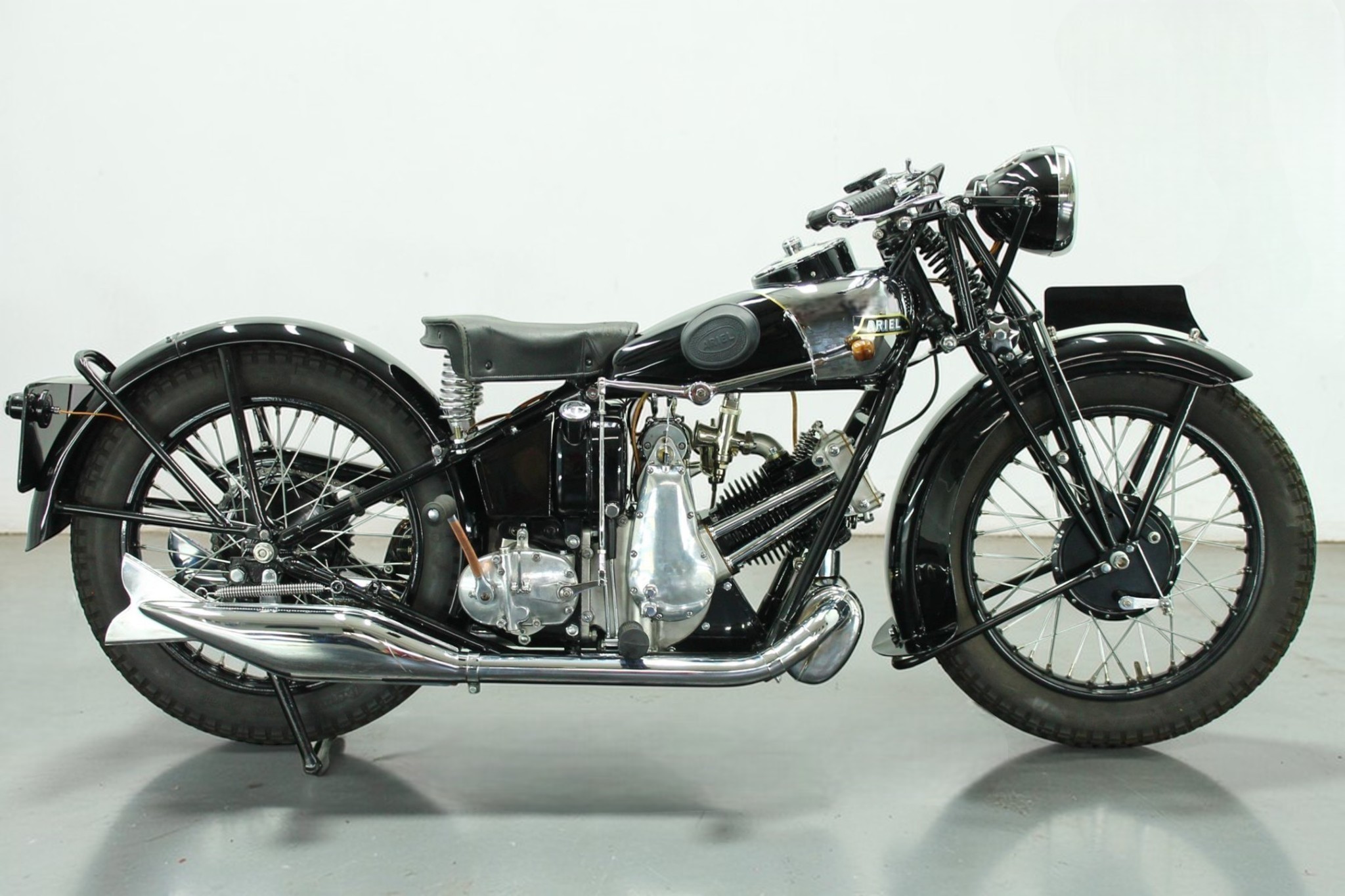

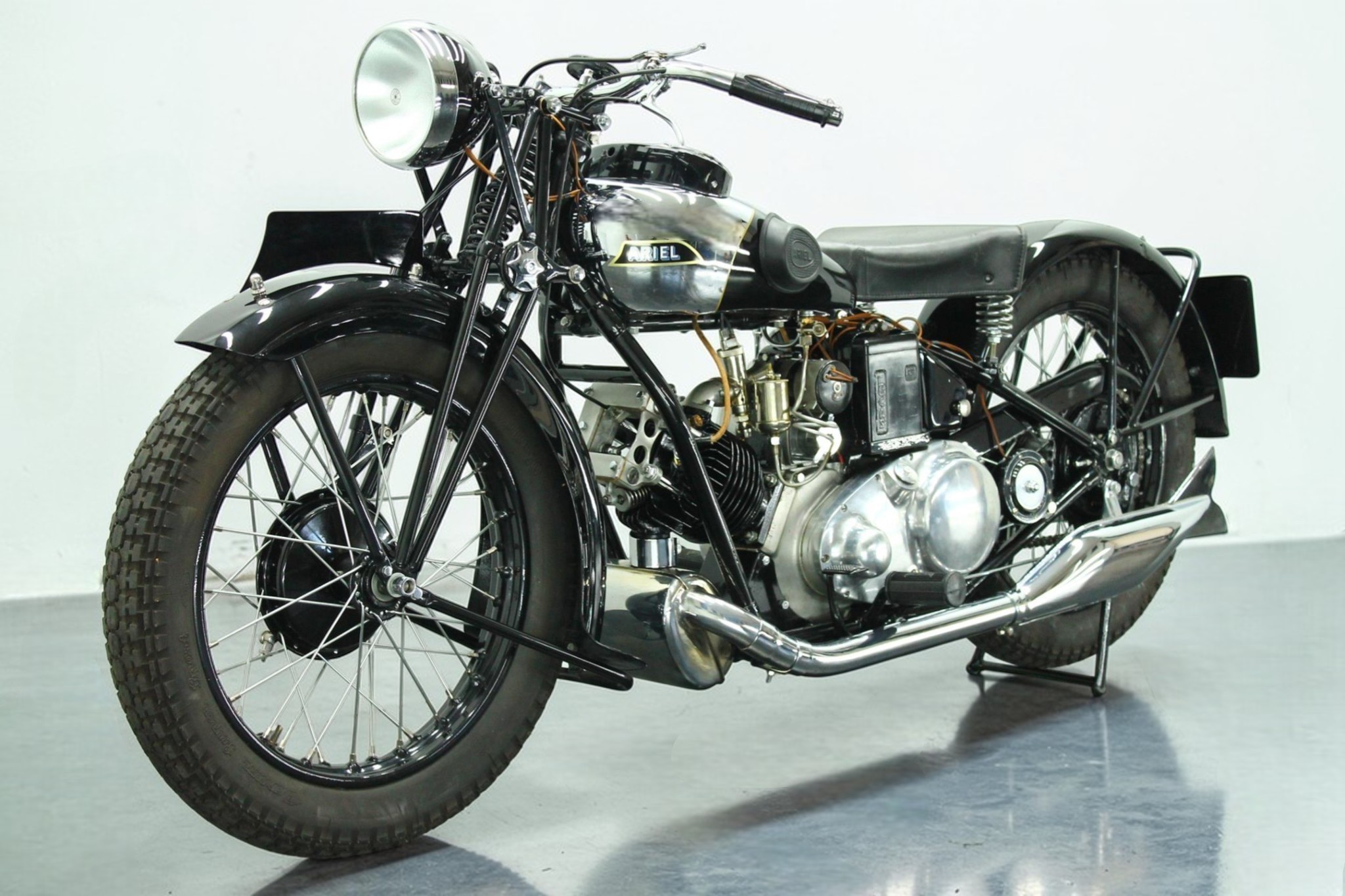
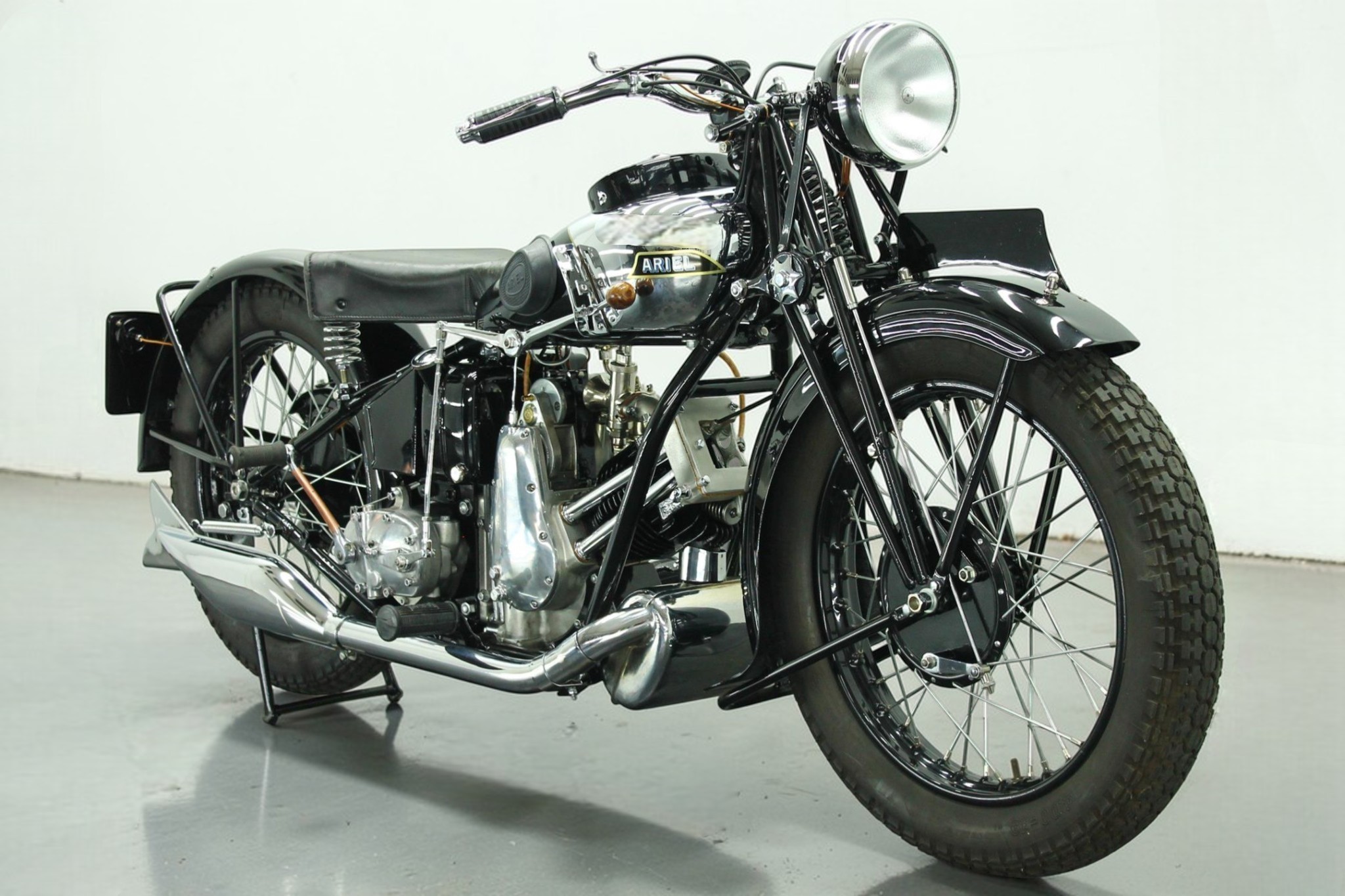
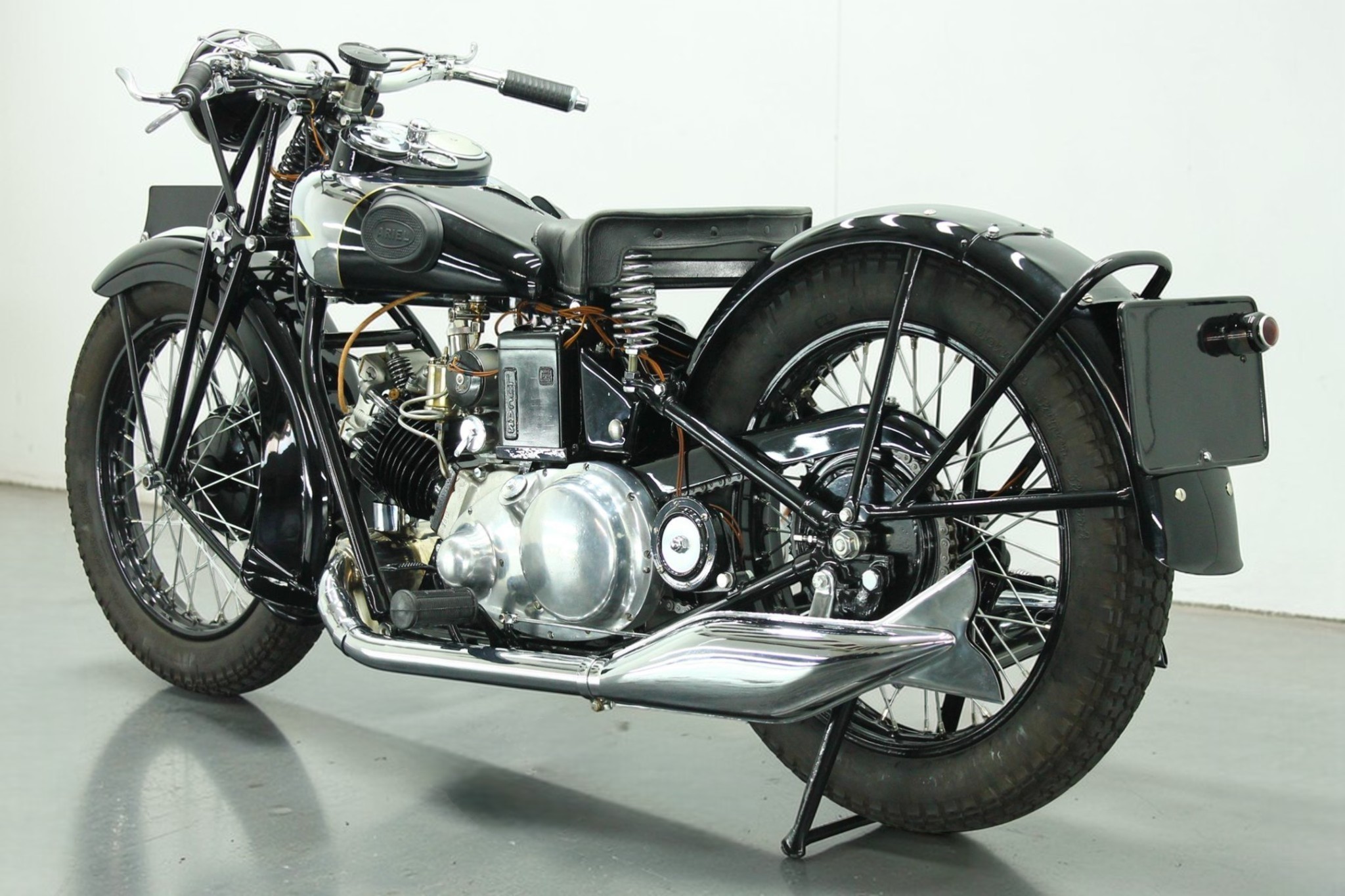
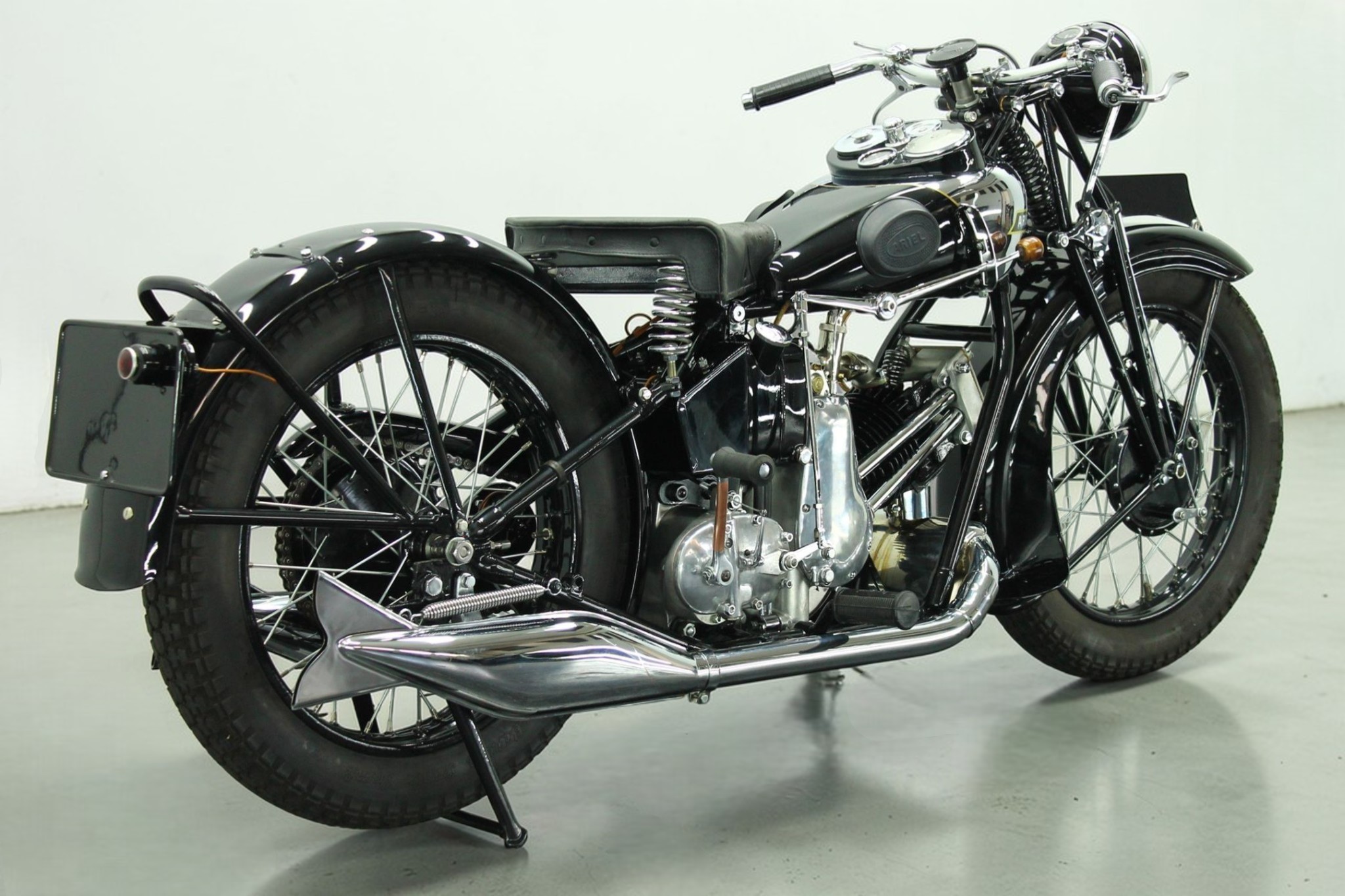
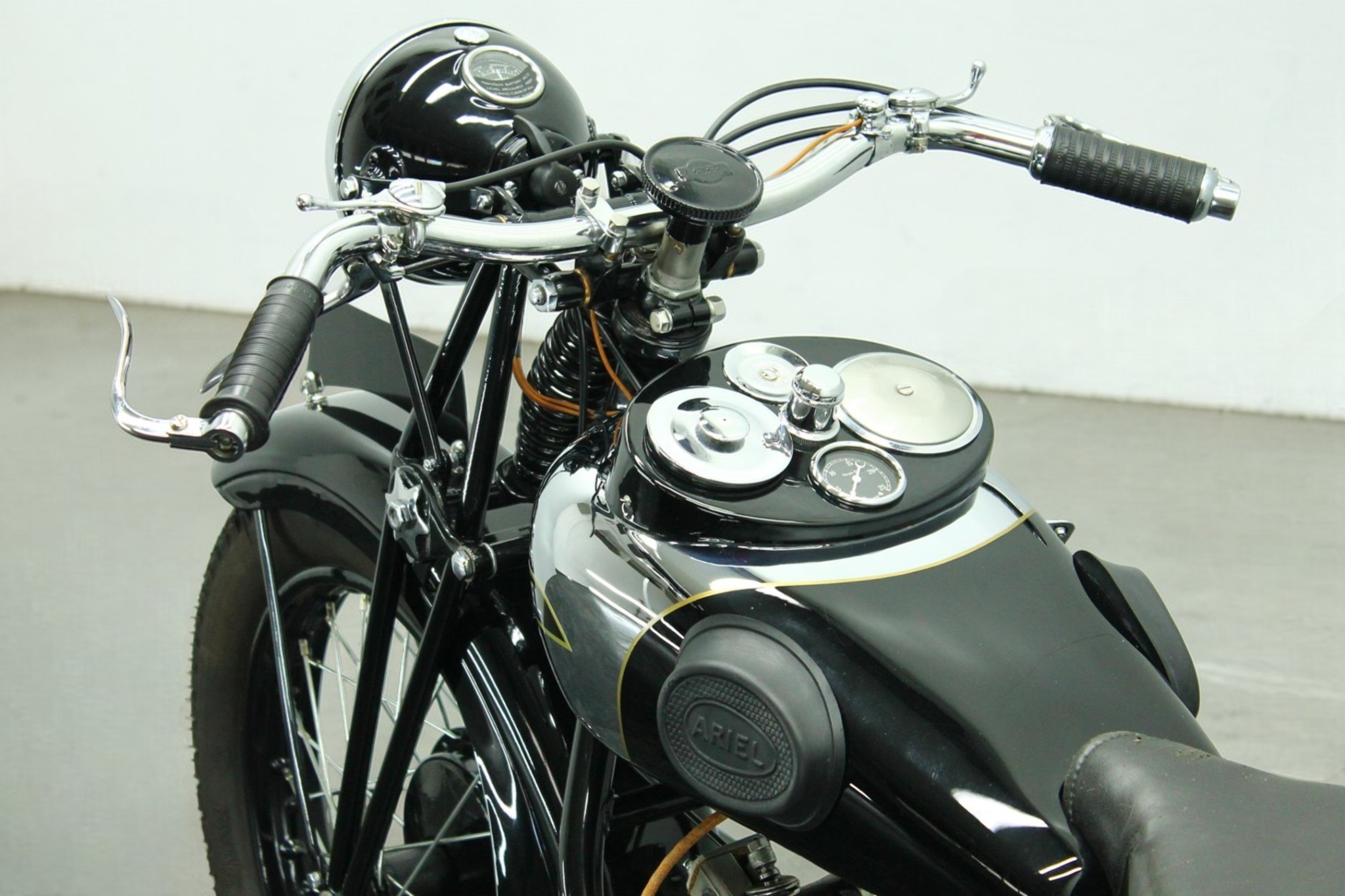
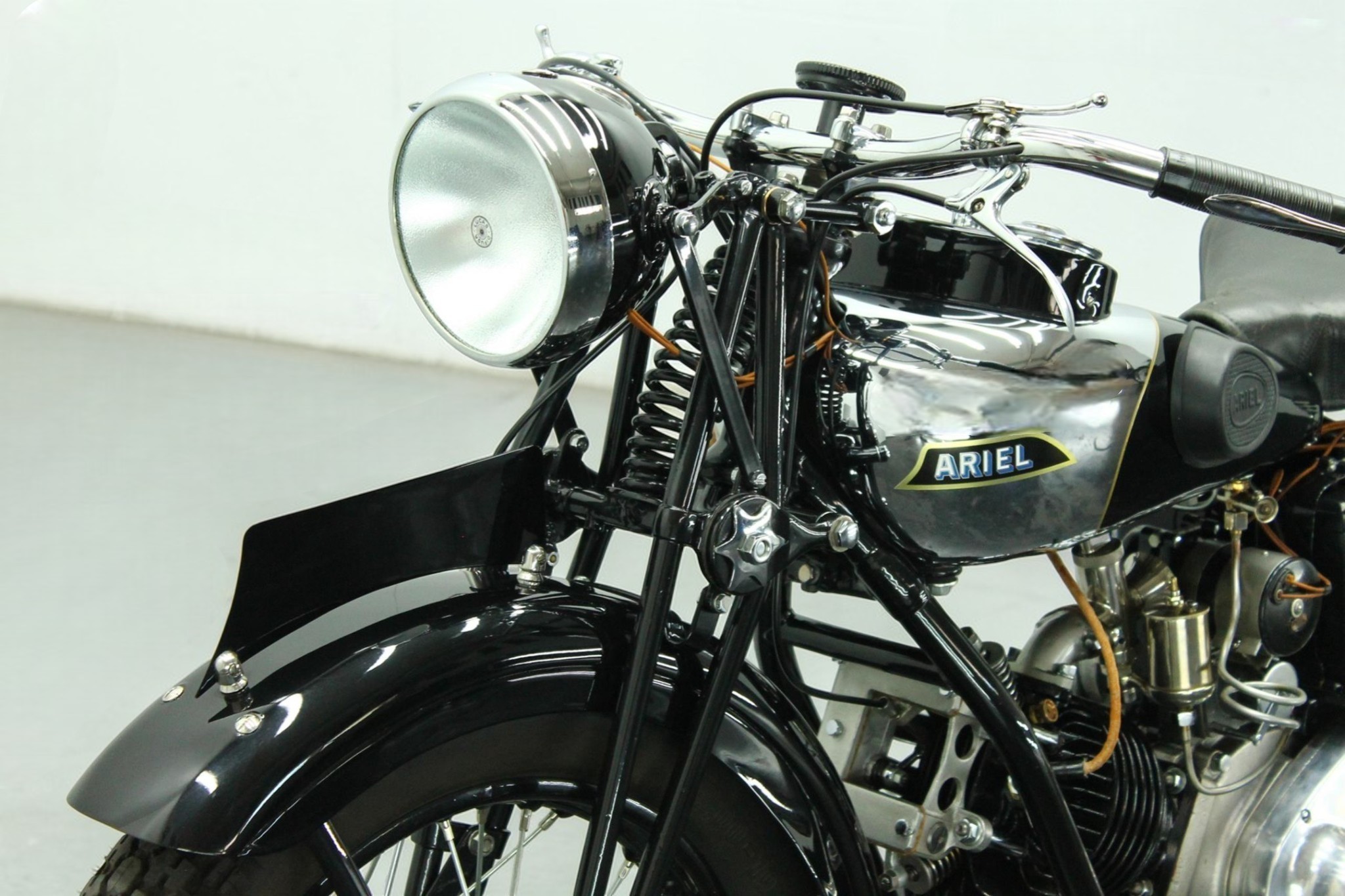

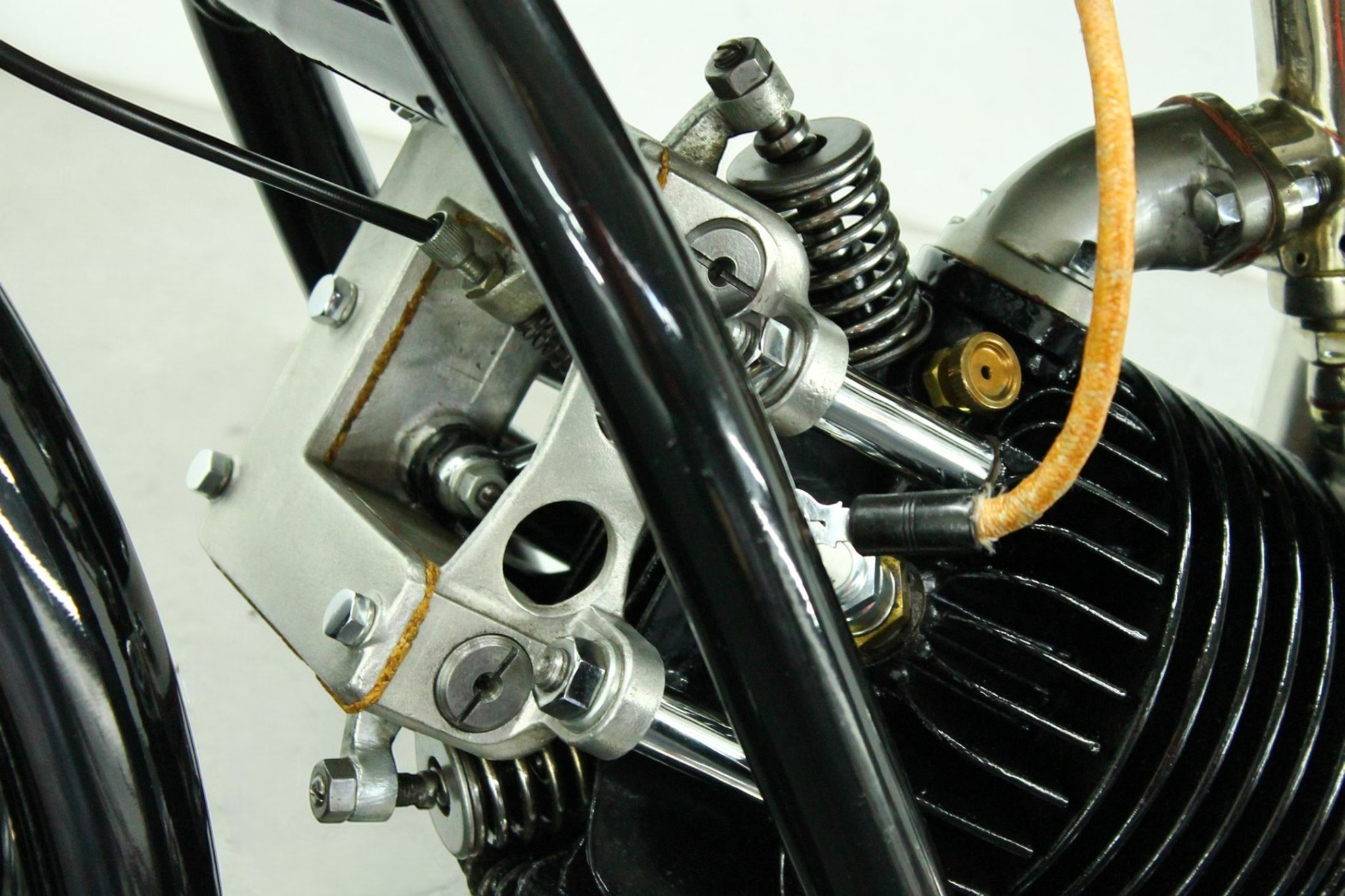
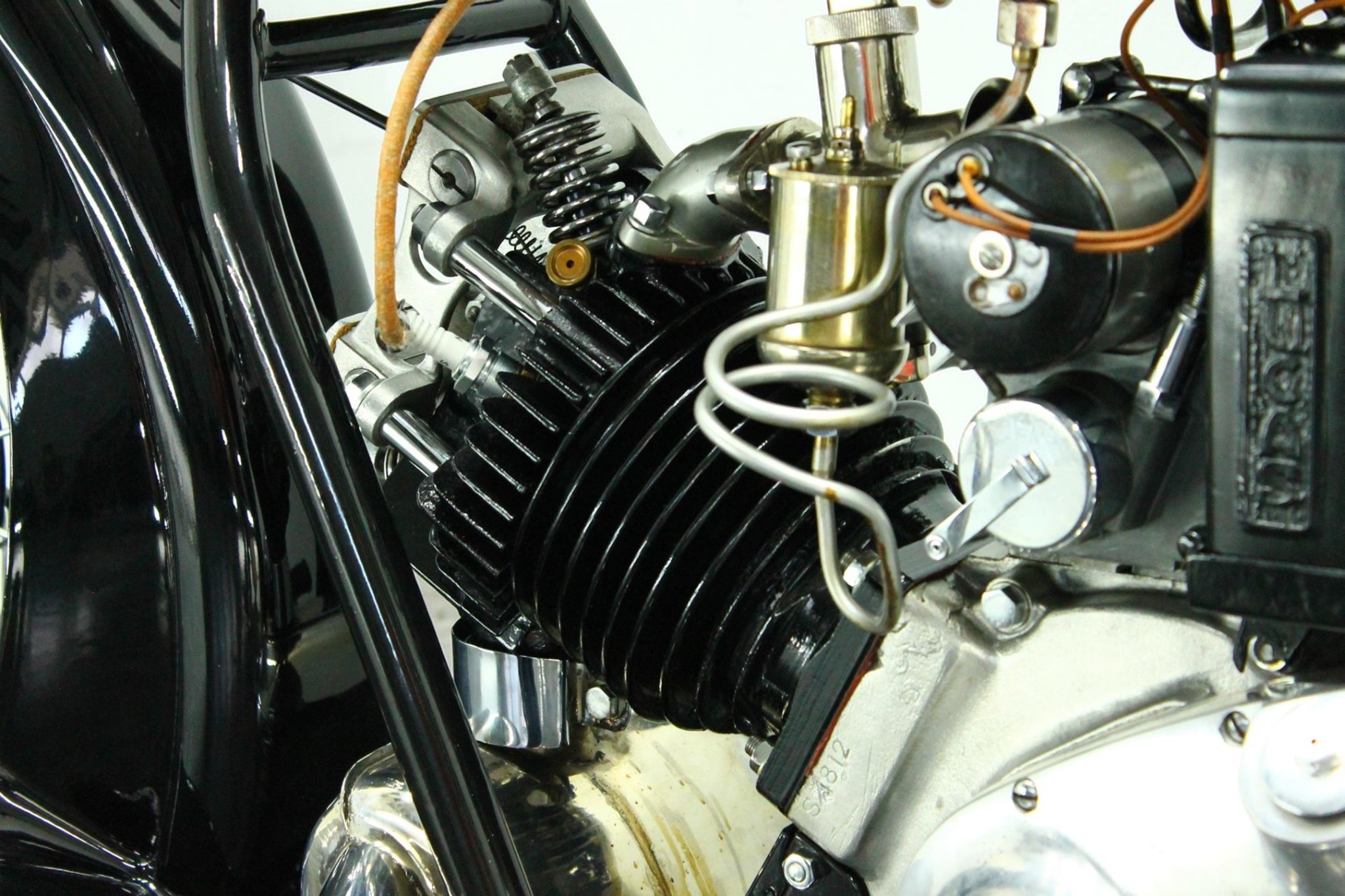

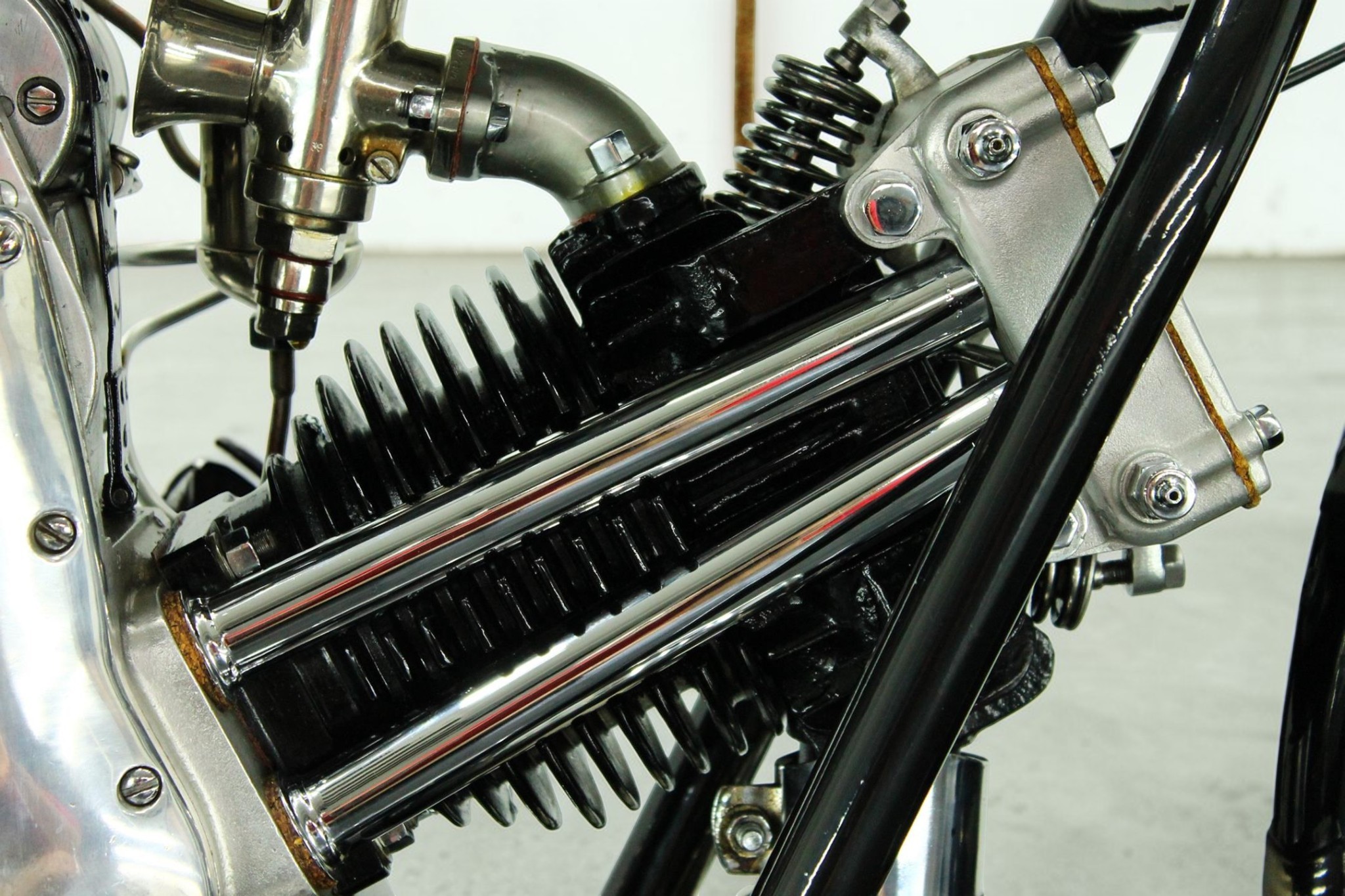

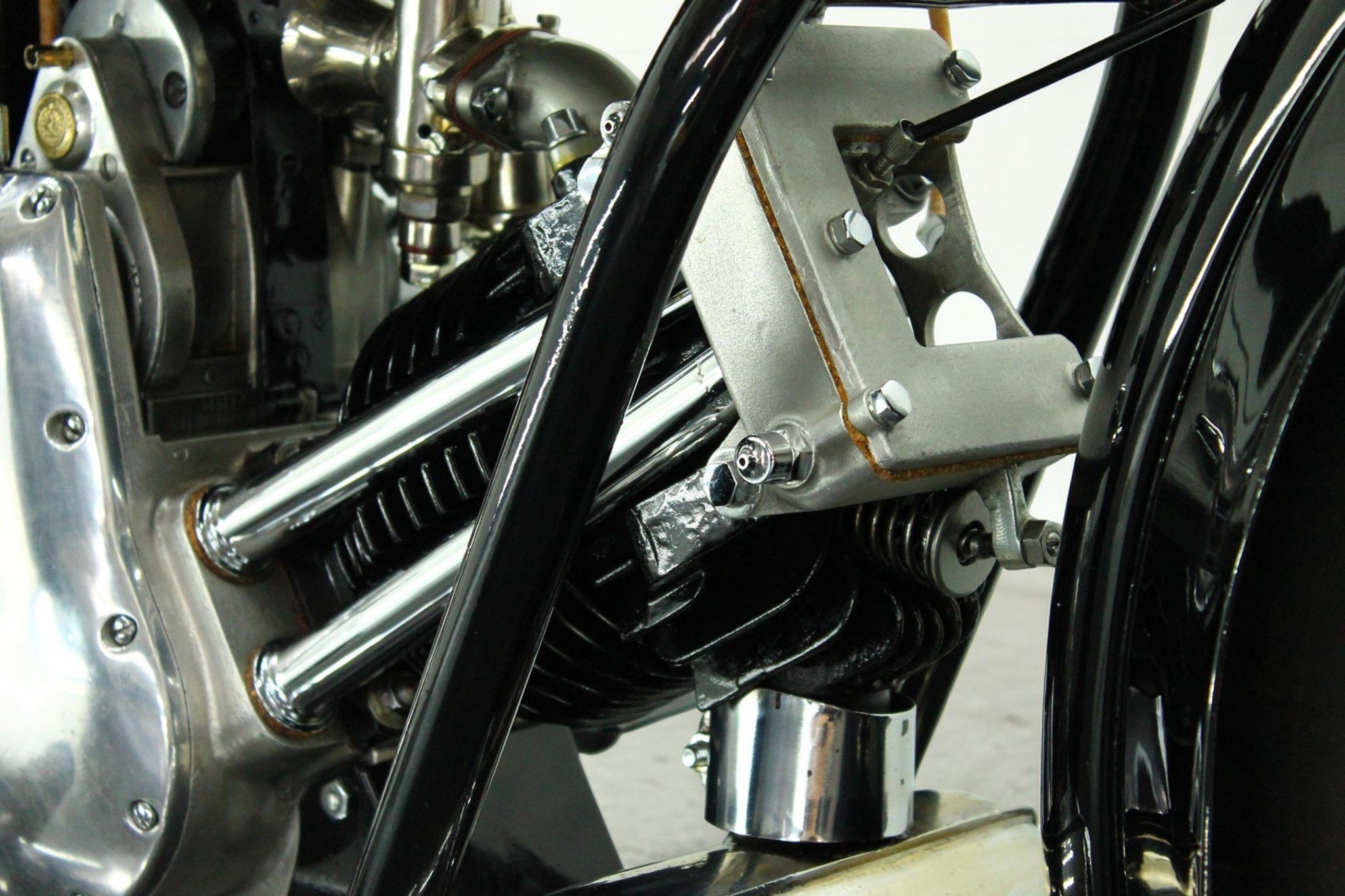
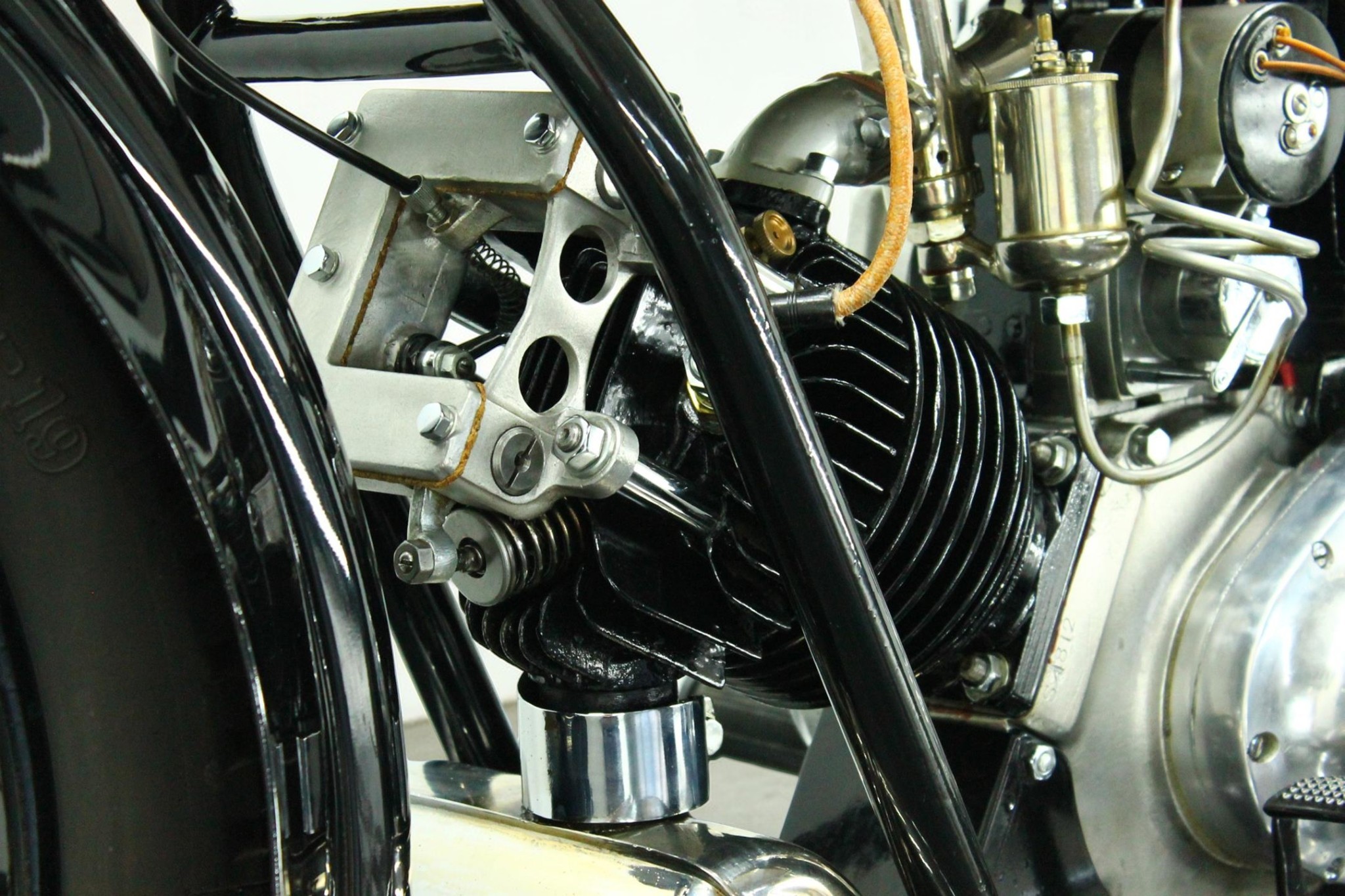
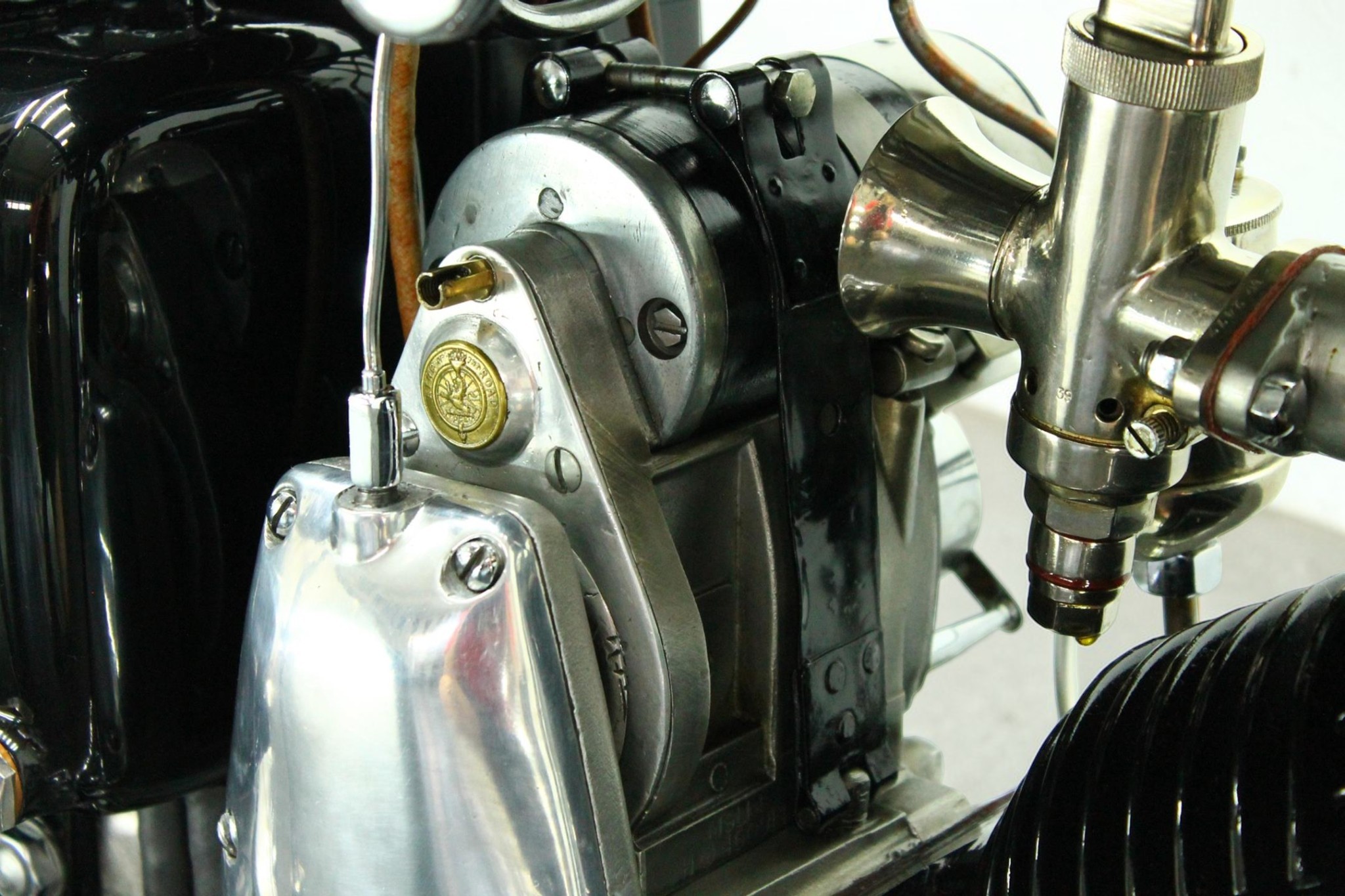
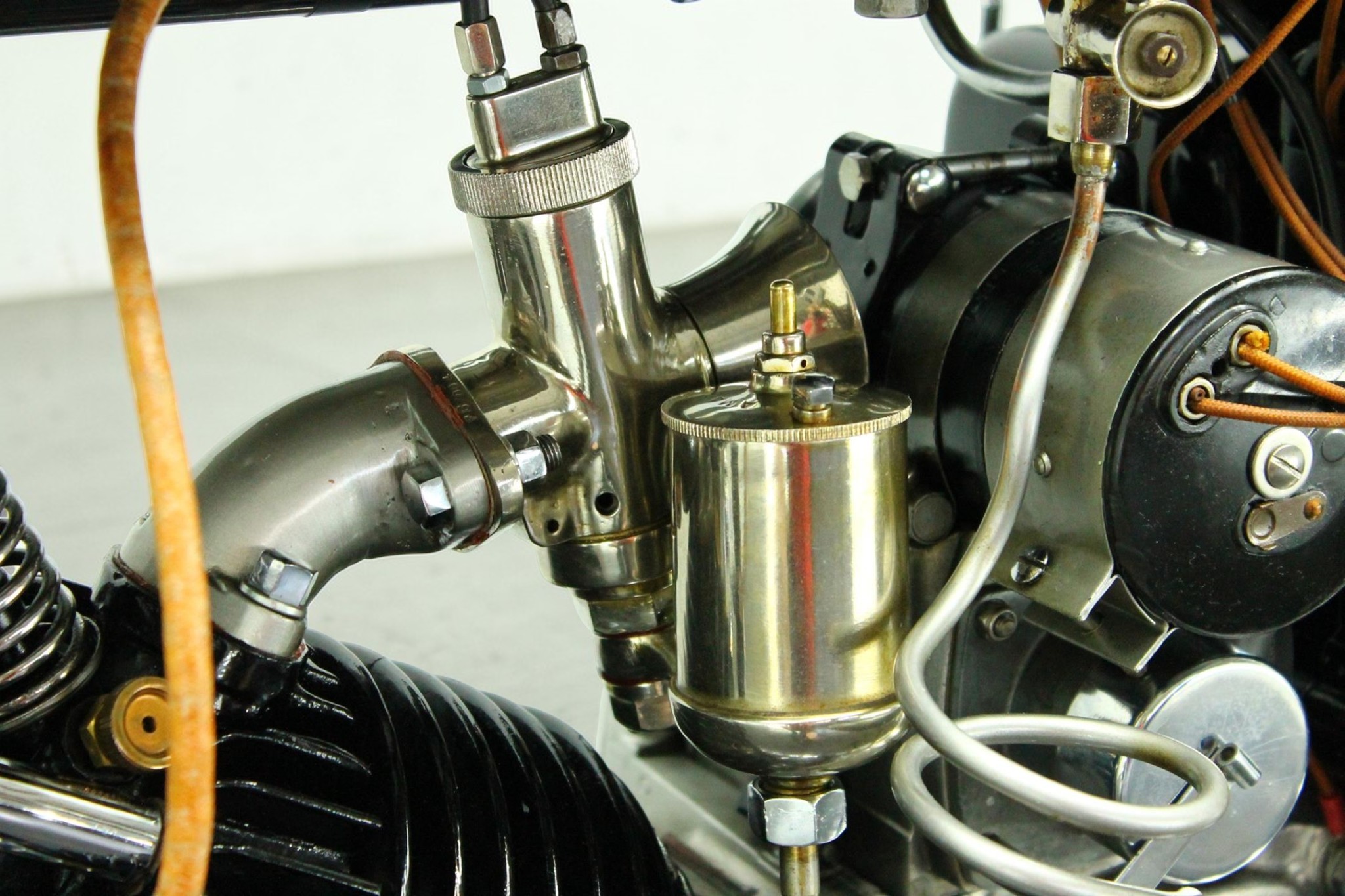
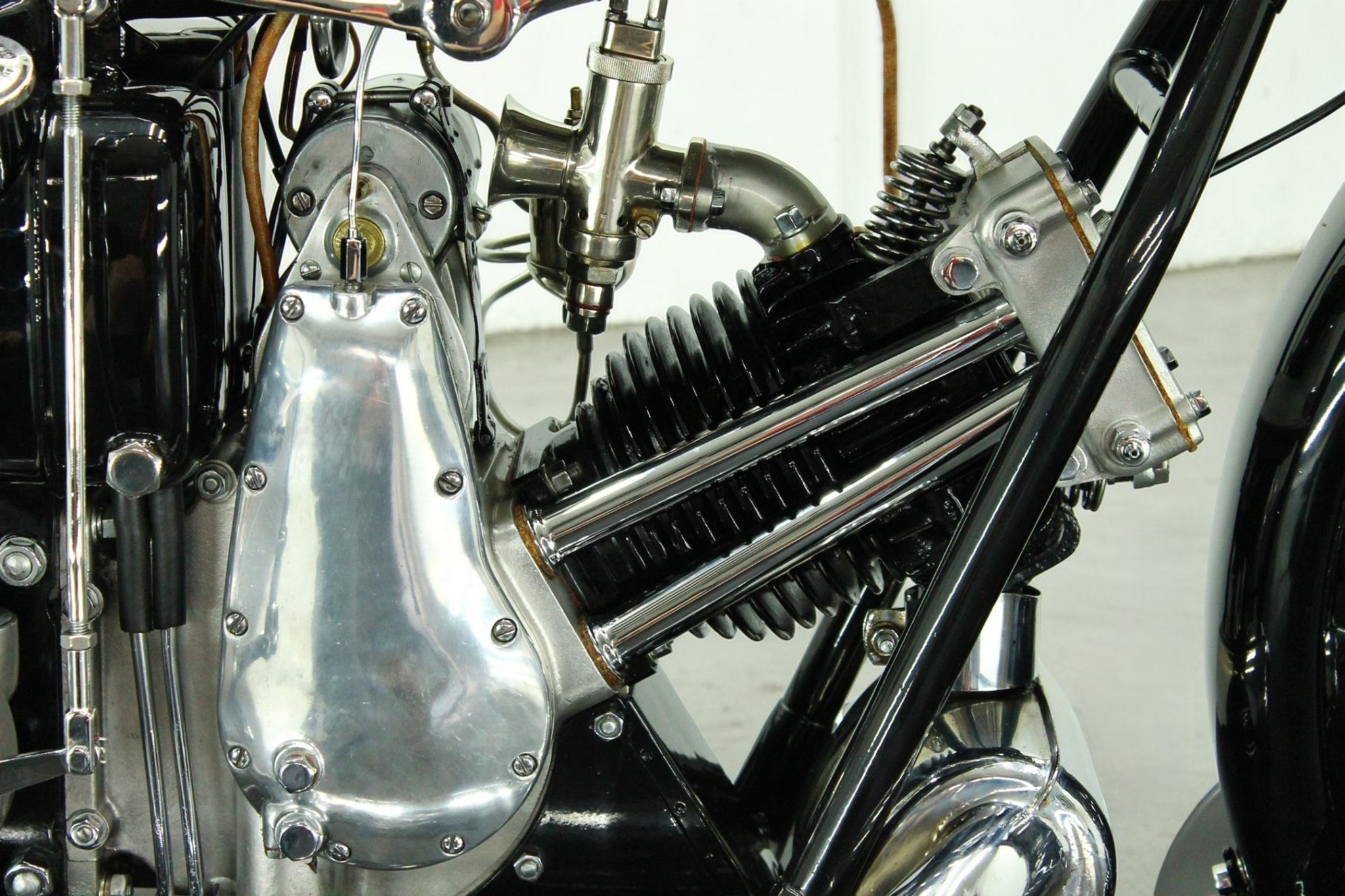


The 1931 Ariel SF31 was one of Ariel's new 500cc Sloper motorcycles introduced for the 1931 season. It used a 499cc overhead-valve single-cylinder engine mounted at an angle, following the contemporary trend toward inclined-cylinder motorcycles.
The SF31 was the two-valve member of Ariel's 500cc Sloper range, positioned alongside the more advanced four-valve SG31. The sloping engine layout lowered the center of gravity and placed the cylinder head in a favorable position for airflow and maintenance.
The SF31 engine was inclined approximately 30 degrees from the horizontal. This arrangement gave the motorcycle its distinctive low-slung appearance while also allowing the engine to sit lower in the chassis.
The 499cc single-cylinder overhead-valve engine was derived from Ariel's established heavyweight single-cylinder design but incorporated the new sloping configuration. The model used two valves per cylinder and was intended as a practical road-going machine rather than a dedicated competition motorcycle.
Ariel equipped the SF31 with a conventional manual gearbox, chain final drive, girder front fork, and rigid rear frame. The motorcycle was built around a substantial chassis suitable for both solo riding and the demands of period road use.
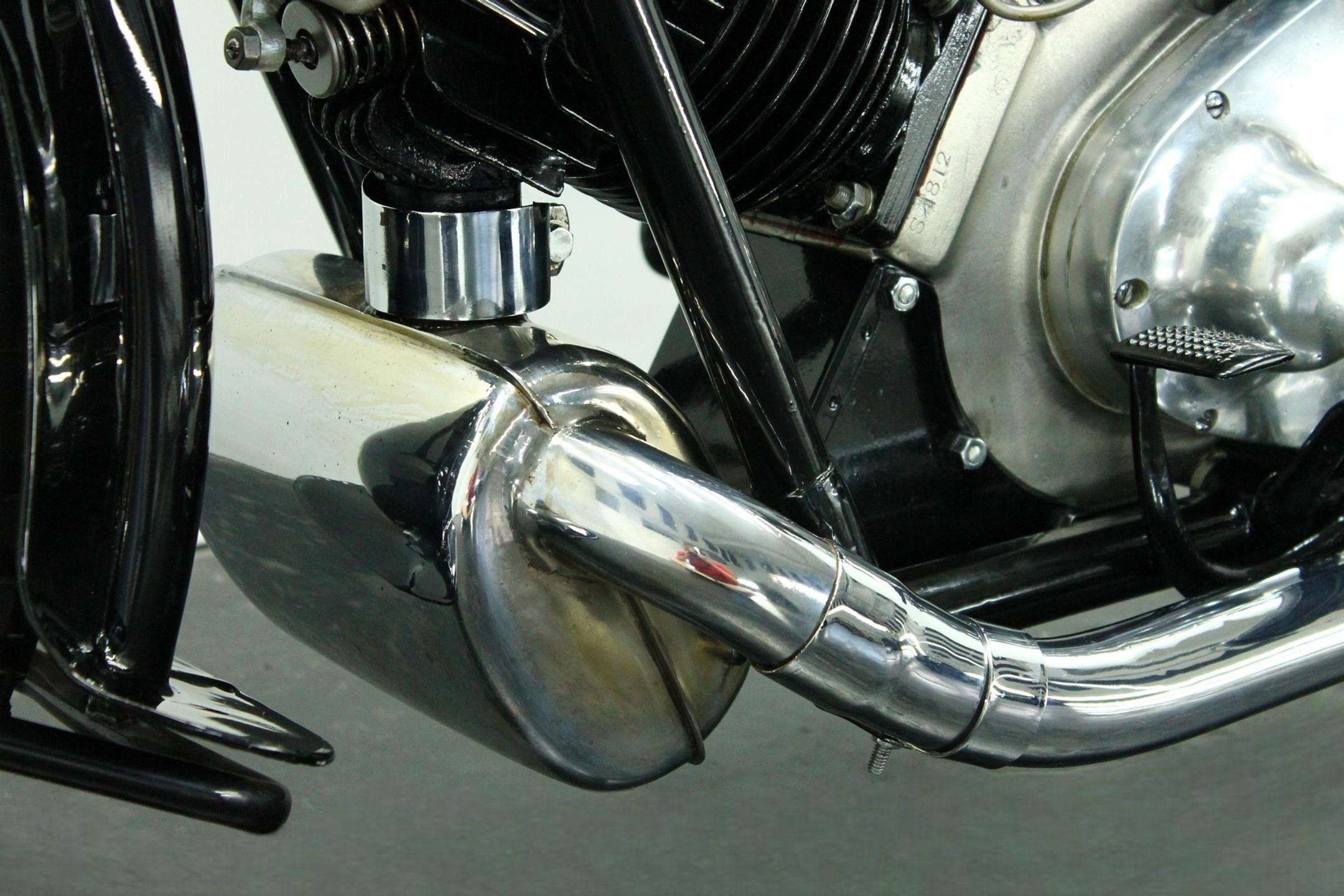
A particularly distinctive feature of the SF31 was its twin-pipe exhaust system. The exhaust gases were collected through a transverse silencer arrangement positioned low and forward of the engine before being carried away through separate pipes.
The SF31 was introduced in 1931 and belonged to a short-lived generation of Ariel Sloper motorcycles. Its rarity today reflects the limited production period and the economic conditions facing the British motorcycle industry at the beginning of the 1930s.
Ariel introduced a completely revised range of Sloper motorcycles for the 1931 season. The new machines followed the contemporary fashion for inclined engines while retaining the company's established single-cylinder architecture.
The SF31 was the 500cc two-valve overhead-valve Sloper. Ariel's 1931 range also included the 350cc MF31, the 500cc four-valve SG31, and the 550cc side-valve SB31. The SF31 therefore occupied an important position within a broad family of new inclined-engine motorcycles.
Ariel's Sloper engines were associated with Val Page's engineering work and represented a significant change from the more conventional vertical engines used in the preceding Ariel range.
The 30-degree inclined engine offered several practical advantages. Lowering the engine helped reduce the motorcycle's center of gravity, while the position of the cylinder head improved access to the valve gear and exposed the upper engine to useful airflow.
The SF31 was introduced during a difficult economic period. The Great Depression placed severe pressure on British motorcycle manufacturers, and Ariel's Sloper range was relatively short-lived compared with some later Ariel designs.
Contemporary and historical records identify the SF31 as a 499cc OHV Sloper produced from 1931 into the early 1930s, although surviving examples and period model-year references can differ in how production dates are described.
The Ariel SF31 uses a 499cc air-cooled four-stroke single-cylinder overhead-valve engine with two valves.
The engine is inclined approximately 30 degrees from the horizontal. This is the defining engineering feature of the SF31 and gives the motorcycle its characteristic Sloper appearance.
The inclined cylinder lowers the mass of the engine within the frame and contributes to a lower center of gravity. It also places the cylinder head and valve gear in a practical position for inspection and maintenance.
The two-valve cylinder head uses conventional overhead-valve operation, with the inlet and exhaust valves positioned above the combustion chamber rather than alongside the cylinder.
The SF31 was designed as a road motorcycle with useful torque and dependable operation. Its large 499cc single-cylinder engine was particularly well suited to the steady pace and relatively demanding road conditions of the early 1930s.
The SF31 should not be confused with the SG31, which used a more sophisticated four-valve cylinder head. The SF31 was deliberately the simpler two-valve version of Ariel's 500cc Sloper concept.
The large single-cylinder layout gives the SF31 the characteristic mechanical rhythm associated with heavyweight British singles of the period, while the sloping cylinder distinguishes it visually from Ariel's earlier vertical-engine motorcycles.
The SF31 uses a conventional separate gearbox positioned behind the engine. The transmission was designed to provide practical gearing for road use and to work with the strong pulling characteristics of the 499cc single-cylinder engine.
Power is transmitted to the rear wheel through a chain final drive. Chain drive was standard practice for British motorcycles of the period and allowed straightforward adjustment and servicing.
The drivetrain layout keeps the inclined engine visually prominent within the frame while placing the gearbox behind and below the rear portion of the engine.
The large single-cylinder engine and relatively modest number of transmission ratios reflect the practical touring role of the SF31. The motorcycle was designed to provide useful acceleration and climbing ability without the complexity of a multi-cylinder power unit.
The clutch and gearbox were conventional mechanical components for the period, with manual gear selection rather than the foot-operated transmission controls that became increasingly common on later British motorcycles.
The combination of a large single, conventional gearbox, and chain final drive made the SF31 relatively straightforward to maintain compared with more complicated motorcycle designs.
The SF31 uses a rigid motorcycle frame designed around Ariel's new Sloper engine configuration. The frame places the inclined cylinder and crankcase low within the chassis, complementing the engine's lowered center of gravity.
The front suspension uses a girder-type fork, a standard arrangement for heavyweight British motorcycles of the early 1930s.
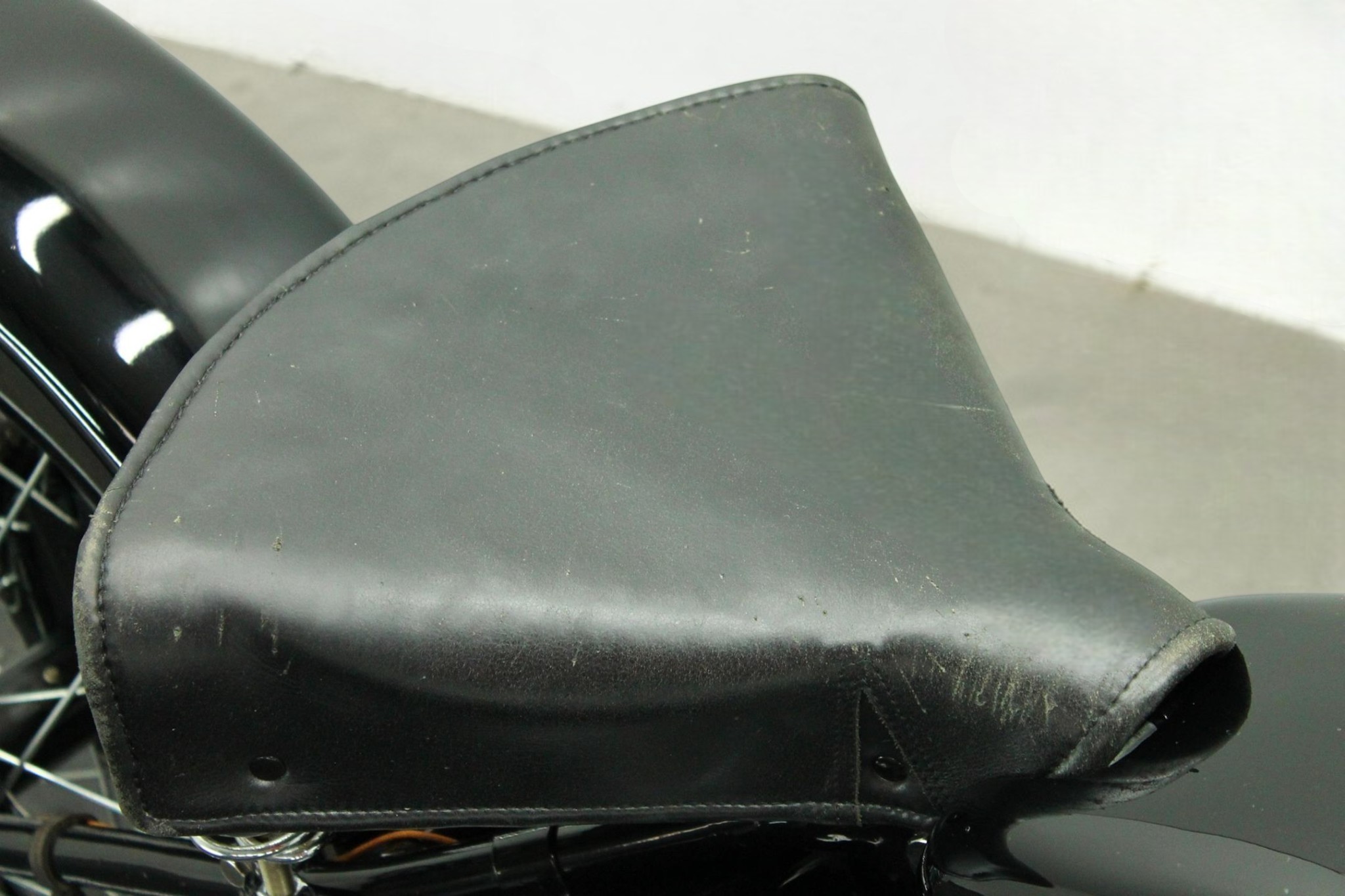
The rear wheel is rigidly mounted, with rider comfort provided through the sprung saddle and the motorcycle's substantial tires rather than a dedicated rear suspension system.
The combination of a low-mounted engine, rigid rear frame, and large wheels gives the SF31 a stable character suited to touring and ordinary road use.
The Sloper layout also helps keep the motorcycle's overall mass concentrated relatively low in the chassis. This was one of the principal reasons for adopting the inclined-cylinder configuration.
The chassis was sufficiently robust for Ariel's heavyweight motorcycle range and could accommodate the additional demands associated with period touring equipment and sidecar use.
The 1931 Ariel SF31 has one of the most distinctive appearances in Ariel's pre-war range. The 30-degree inclined single-cylinder engine immediately identifies it as a Sloper.
The cylinder slopes forward and downward rather than standing vertically. This gives the engine a lower visual profile and creates the characteristic silhouette associated with Ariel's early-1930s Sloper motorcycles.
The large fuel tank sits above the low-mounted engine and contributes to the motorcycle's long, substantial appearance.
The twin-pipe exhaust arrangement is another defining feature. The pipes emerge from a low transverse silencer arrangement ahead of the engine, producing a distinctive exhaust layout unlike the more conventional exhaust systems of earlier Ariel singles.
The girder fork, wire wheels, deep mudguards, tubular frame, and exposed mechanical components give the motorcycle the unmistakable appearance of a British heavyweight motorcycle from the early 1930s.
The SF31 combines practical engineering with a strong visual identity. Its styling was largely a consequence of the mechanical layout rather than decorative treatment, making the motorcycle particularly interesting to collectors of early Ariel engineering.
The SF31 was part of Ariel's 1931 family of Sloper motorcycles. The company offered several versions using the same general concept but different engine capacities and valve configurations.
The 500cc SF31 used a two-valve overhead-valve cylinder head, while the SG31 used four valves. The 350cc MF31 provided a smaller-capacity alternative, and the SB31 used a 550cc side-valve engine.
This range demonstrated Ariel's willingness to experiment with different engine layouts and valve arrangements while retaining the same basic inclined-cylinder philosophy.
The SF31 was arguably the most conventional of the 500cc OHV Slopers because its two-valve head used a relatively straightforward arrangement. The SG31 represented Ariel's more technically ambitious four-valve development.
The Sloper engine design also anticipated an important direction in motorcycle engineering: placing the engine mass lower in the frame to improve handling while simultaneously improving cooling and access to the cylinder head.
The SF31 therefore occupies an important position between Ariel's earlier vertical singles and the company's later, more refined motorcycle designs.
The SF31's inclined engine was intended to provide more than a distinctive appearance. Lowering the engine helped reduce the center of gravity and could improve the motorcycle's balance and handling.
The large single-cylinder engine provides the steady power delivery expected from a heavyweight British single. Rather than relying on high engine speeds, the SF31 was designed around useful torque and practical road performance.
The rigid rear chassis and girder front fork give the motorcycle a distinctly pre-war riding character. The suspension technology is simple by modern standards but was typical of heavyweight motorcycles in 1931.
The low engine position contributes to the motorcycle's planted feel and gives the SF31 a noticeably different character from Ariel's earlier upright-engine machines.
The motorcycle's substantial frame and large wheels also make it suitable for the uneven road surfaces common during the period.
The SF31 should therefore be viewed as a practical heavyweight road motorcycle whose engineering priorities were stability, durability, useful torque, and ease of maintenance rather than outright speed.
The 499cc SF31 was suitable for the practical sidecar market that remained important in Britain during the early 1930s.
A 500cc single-cylinder engine provided the torque necessary for carrying the additional weight of a sidecar and passenger, while the substantial chassis was designed to handle the increased loads.
The low center of gravity created by the inclined engine was also advantageous for combination work, where stability was particularly important.
The rigid rear chassis and girder front fork were conventional choices for a motorcycle expected to operate with additional passenger and luggage weight.
Sidecar use was an important part of the British motorcycle market during this period because a motorcycle and sidecar could provide practical passenger transportation at considerably lower cost than a car.
The SF31's heavyweight construction and 499cc engine therefore gave it a useful role beyond solo touring.
The SF31 has the characteristic mechanical personality of a large British single-cylinder motorcycle, but its inclined engine gives it a distinctive feel compared with conventional vertical singles.
The 499cc overhead-valve engine delivers its power through a relatively simple mechanical arrangement. The two-valve head provides improved breathing while avoiding the additional complexity of the four-valve SG31.
The low-mounted engine makes the motorcycle feel visually and mechanically compact around its center of mass. The sloping cylinder also creates a clear separation between the SF31 and Ariel's earlier upright-engine models.
The chain final drive is straightforward and easy to service, while the separate gearbox follows conventional British practice.
The twin-pipe exhaust system is one of the most memorable mechanical features of the motorcycle. Its low-mounted arrangement contributes to the low-slung appearance and makes the exhaust system an integral part of the SF31's design.
Overall, the SF31 combines Ariel's established single-cylinder engineering with a new chassis philosophy centered on a low-mounted inclined engine.
The SF31 was introduced for the 1931 season as part of Ariel's new Sloper range. Historical model listings identify the SF31 as a 500cc OHV Sloper and place its production in the early 1930s.
The model was produced during a difficult economic period. The Great Depression reduced demand for motorcycles and placed significant pressure on manufacturers to simplify their ranges and concentrate on models with the strongest commercial potential.
The SF31's short production life contributes to its rarity today. Surviving examples are much less common than later Ariel models such as the Red Hunter.
The motorcycle is historically important because it represents Ariel's attempt to combine a modern inclined-engine layout with its established heavyweight single-cylinder engineering.
The same period also saw the arrival of Edward Turner's Square Four, which would become one of Ariel's most famous motorcycles. The SF31 therefore belongs to an exceptionally interesting period of experimentation and change within Ariel.
The model's combination of a 500cc two-valve Sloper engine and distinctive chassis makes it an important transitional motorcycle in the company's pre-war history.
The 1931 Ariel SF31 is particularly significant to collectors because it was one of Ariel's first Sloper motorcycles and because the model was produced for only a relatively short period.
Its rarity is reinforced by the fact that it appeared during the difficult economic conditions of the early 1930s, when many British motorcycle manufacturers were reducing production and consolidating their model ranges.
Originality is especially important when evaluating an SF31. The correct 499cc two-valve sloping engine, rocker box, carburetor, magneto, gearbox, frame, girder fork, wheels, fuel tank, exhaust system, controls, and mudguards should all be examined carefully.
The engine and frame numbers should be checked against surviving Ariel records and period documentation whenever possible. A documented example with matching numbers and evidence of continuous history is particularly desirable.
The engine should be inspected for cylinder wear, valve and rocker condition, crankshaft and big-end wear, oil-pump operation, and evidence of previous repairs.
The gearbox, clutch, primary drive, final-drive chain, wheels, steering bearings, fork components, and brake assemblies should also be carefully examined on any surviving example.
The twin-pipe exhaust system deserves particular attention because replacement systems can significantly change the appearance and originality of the motorcycle.
A well-preserved SF31 with correct mechanical components and documented provenance represents a rare opportunity to own one of Ariel's early Sloper motorcycles and an important example of British pre-war engineering.
The 1931 Ariel SF31 matters because it represents Ariel's transition from conventional vertical singles to the distinctive Sloper engine architecture that briefly defined the company's early-1930s range.
Its 499cc two-valve overhead-valve engine was inclined approximately 30 degrees from the horizontal, lowering the center of gravity and improving access and airflow around the cylinder head.
The SF31 was one of three 500cc Sloper models introduced in 1931, alongside the more advanced four-valve SG31 and other Sloper variants in Ariel's range.
The low engine position, girder fork, rigid rear frame, chain drive, and twin-pipe exhaust system created a motorcycle with a highly distinctive mechanical and visual identity.
The SF31 also belongs to a crucial period in Ariel history when the company was experimenting with several new engine concepts. The introduction of Edward Turner's Square Four in the same era would eventually become one of the defining developments in Ariel's history.
For collectors, the 1931 Ariel SF31 offers a rare connection to this transitional period and represents one of the earliest examples of Ariel's Sloper engineering.
This 1931 Ariel SF31 represents one of the rare early examples of Ariel's distinctive Sloper motorcycle range and an important stage in the development of the company's heavyweight single-cylinder engineering.
The 499cc two-valve overhead-valve single-cylinder engine is inclined approximately 30 degrees from the horizontal, creating the characteristic low-slung appearance while lowering the motorcycle's center of gravity and improving access to the cylinder head.
The SF31 combines this unusual engine layout with a conventional manual gearbox, chain final drive, girder front fork, rigid rear chassis, and Ariel's distinctive twin-pipe exhaust arrangement.
Introduced for the 1931 season, the SF31 belonged to a short-lived family of Ariel Sloper motorcycles. Its rarity today makes an original or correctly restored example particularly interesting to collectors of pre-war British motorcycles.
The SF31 is also historically significant because it comes from the same period in which Ariel introduced the revolutionary Square Four, making the early 1930s one of the most important periods of engineering development in the company's history.
Contact us for additional photographs, detailed specifications, frame and engine numbers, service history, originality assessment, provenance, restoration details, and purchasing information for this 1931 Ariel SF31.
Explore more Ariel motorcycles from the pre-war and classic eras.
The Vintage Motorcycles presents a curated selection of historically significant British vintage motorcycles, with a particular focus on Ariel as one of the most technically refined manufacturers in early 20th-century engineering. From early single-cylinder machines to later high-performance designs, Ariel played a central role in advancing both structural design and engine innovation within the British motorcycle industry.
This collection includes machines from Ariel alongside other historically important British motorcycle manufacturers, each contributing to the evolution of performance engineering, metallurgy, and mechanical efficiency. Ariel motorcycles are best understood within the broader framework of pre-war motorcycle engineering (1900-1939), followed by continued development in post-war motorcycle engineering, where the brand became closely associated with advanced engine configurations and competition heritage.
Each motorcycle within our collection is sourced based on historical provenance, structural originality, and mechanical integrity, ensuring alignment with museum-grade preservation standards. For collectors seeking acquisition opportunities, available machines can be explored through our global vintage motorcycle inventory, supported by a fully insured international shipping service.
Ariel engineering is characterized by a strong emphasis on precision manufacturing and innovative engine development, most notably through advanced overhead valve systems and later high-performance configurations that influenced British motorcycle design. The brand is particularly associated with technically sophisticated models that balanced road usability with competitive performance.
From early pre-war machines to more refined later developments, Ariel motorcycles illustrate the progression of British engineering from foundational mechanical experimentation to highly optimized performance systems. This legacy positions Ariel as an important reference point within the broader study of global motorcycle engineering evolution.
Key Highlights
Collector Assurance
All enquiries handled with discretion. We typically respond within 6 hours.
Choose the payment method that is most convenient for you. We accept widely used international payment methods as well as, where available, local bank transfer options that allow you to pay like a domestic transaction. Full payment instructions are provided for your specific purchase.
Direct international bank wire transfer is available for motorcycle purchases and export transactions.
Credit card payments can be arranged through Wise.com, subject to the applicable payment and processing conditions.
PayPal is accepted. A 5% PayPal processing fee applies to the transaction.