
The Vintage Motorcycles
Specialists in antique, classic, veteran and vintage motorcycles.
Specialists in antique, classic, veteran and vintage motorcycles.
A curated museum-grade selection of NSU motorcycles, representing one of the most technically important early German manufacturers in pre-war motorcycle development. Renowned for lightweight engineering, mechanical efficiency, and early sport-oriented motorcycle design, NSU established a foundation that influenced European engineering standards for decades.
Curated by European vintage motorcycle specialists with extensive experience in sourcing historically significant German machines. Each NSU motorcycle is selected based on provenance, originality, and engineering authenticity.
NSU motorcycles represent an early phase of German engineering evolution, where bicycle manufacturing transitioned into precision motorcycle production. The brand became known for lightweight construction philosophy, mechanical balance, and early experimentation with sport-oriented performance machines.
Within the context of pre-war motorcycle development (1900-1939), NSU emerged as a technically refined manufacturer, prioritizing engineering efficiency over mass production scale, positioning itself as a key contributor to early European motorcycle architecture.
During the late 1920s, NSU developed a range of lightweight motorcycles designed for both road use and early performance riding culture, forming the foundation of its engineering identity.
The 1927 NSU Model 502 Sport represents one of the earliest expressions of NSU's sport-focused engineering direction, emphasizing lightweight chassis design, mechanical simplicity, and responsive handling characteristics.
The 1929 NSU Model 501 S reflects a more refined evolution of this philosophy, introducing improved structural stability and enhanced mechanical balance, marking a transition toward more sophisticated pre-war engineering execution.
These machines form part of NSU's broader development lineage, which would later influence German engineering standards across multiple industrial sectors.
1873 - NSU (Neckarsulm Strickmaschinen Union) was founded in Neckarsulm, Germany, originally as a knitting machine manufacturer.
1901 - NSU entered the motorcycle industry, producing early motorized bicycles and establishing itself as a pioneer in German motorcycle engineering.
1900s-1910s - The company expanded rapidly, developing reliable single-cylinder motorcycles and gaining recognition in European endurance competitions.
1914-1918 - During World War I, NSU production was partially redirected toward military supply while continuing limited motorcycle development.
1920s - NSU became one of Germany's leading motorcycle manufacturers, known for lightweight engineering and efficient commuter motorcycles.
1930s - The brand introduced more advanced designs, including improved chassis geometry, higher-performance engines, and streamlined racing machines.
1936 - NSU set world speed records with its streamlined racing motorcycles, showcasing cutting-edge aerodynamic engineering.
1940-1945 - World War II disrupted civilian production, with NSU contributing to military manufacturing efforts.
1950s - Post-war NSU experienced a strong revival, producing successful lightweight motorcycles and expanding into international markets.
1955 - NSU launched advanced small-capacity models like the Quickly moped, which became one of the best-selling mopeds in Europe.
1950s-1960s - The company reached peak engineering ambition with high-performance projects such as the NSU Rennmax racing program.
1969 - NSU merged with Auto Union under Volkswagen Group ownership, later becoming part of Audi's automotive history.
Modern Era - NSU is remembered for its pioneering role in German motorcycle innovation, especially in lightweight engineering, racing development, and early aerodynamic breakthroughs.
NSU occupies a historically important position within the vintage motorcycle collector market, defined by engineering refinement rather than production volume or racing dominance.
Early models such as the 501 S and 502 Sport are particularly valued for their representation of transitional German engineering philosophy, bridging bicycle heritage and advanced motorcycle architecture.
For broader contextual evaluation, NSU machines are often studied alongside other European manufacturers within the global vintage motorcycle archive system.
NSU should be understood as part of a structured engineering knowledge cluster that includes:
Each model contributes to a broader historical narrative rather than functioning as isolated collector artifacts.
NSU motorcycles are increasingly recognized as important historical references within early German engineering development. Their value is driven by originality, mechanical authenticity, and their role in shaping lightweight motorcycle design philosophy.
Due to limited survival rates of pre-war machines, well-preserved examples of the 501 S and 502 Sport are considered highly significant within specialist collections.
When acquiring an NSU motorcycle, collectors should prioritize originality, matching engine and frame numbers, and preservation of early mechanical components.
Given the brand's early engineering complexity, proper evaluation of historical documentation and structural authenticity is essential for long-term collector value.
Each motorcycle in our collection is evaluated to meet strict museum-grade standards of authenticity and mechanical integrity.
Below is a curated selection of collector-grade NSU motorcycles available for acquisition. Each machine is verified, documented, and presented within its engineering and historical context.
We offer NSU vintage motorcycles for collectors worldwide, including Europe, the United States, Australia, and Asia. Each motorcycle is professionally crated and shipped with full export documentation and insurance.
Availability and pricing vary depending on rarity, condition, and historical significance. Please contact us for current acquisition opportunities.
Contact our specialists for availability, historical documentation, and international shipping options. Request Availability!

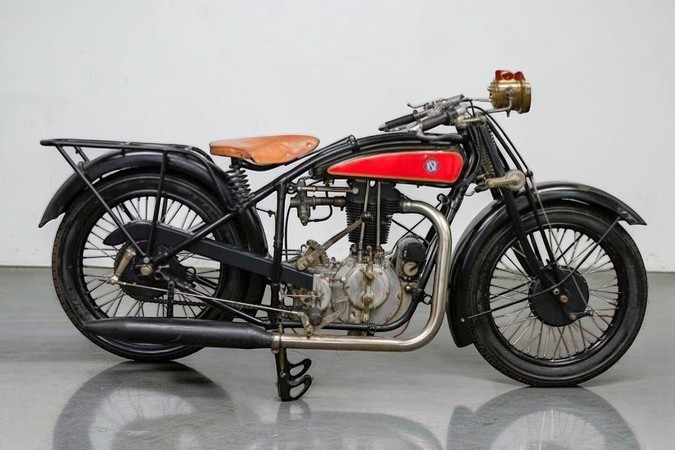
The engineering identity of NSU is best understood within the broader framework of pre-war motorcycle development between 1900 and 1939, a period in which German manufacturers refined lightweight construction principles, high-revving single-cylinder configurations, and increasingly precise chassis geometry. Within this environment, NSU established a reputation for compact mechanical efficiency and performance-oriented road machines, particularly through its early sport and touring platforms.
Following the Second World War, the evolution of NSU engineering can be contextualized through post-war European motorcycle development (1945-1960s), where German manufacturers transitioned from pre-war mechanical experimentation into more standardized production systems, while still preserving performance-focused engineering traditions seen in NSU's continued model evolution.
For a wider comparative perspective across global manufacturers, global vintage motorcycle inventory archives provide a structured reference point where NSU motorcycles can be analyzed alongside British, Italian, and German contemporaries within a unified historical and engineering taxonomy.
What defines the historical importance of NSU motorcycles?
NSU is historically significant for its early contributions to lightweight German engineering, particularly through refined single-cylinder and sport-oriented machines that emphasized mechanical balance, efficiency, and accessible performance during the pre-war era.
Why are NSU motorcycles considered collectible today?
Collectibility is driven by a combination of early industrial heritage, limited survival rates of pre-war machines, and NSU's transitional role between artisanal engineering and modern mass motorcycle production in Germany.
Which NSU models are most significant to collectors?
Collector attention is often focused on pre-war sport and touring machines such as the NSU Model 501 S and NSU Model 502 Sport, which represent early experimentation with performance-oriented road motorcycles.
Do NSU motorcycles retain long-term collector value?
Yes. Well-preserved pre-war NSU motorcycles, particularly original examples with matching numbers and documented provenance, continue to show stable long-term collector demand due to rarity and historical relevance.
NSU occupies a distinctive position in early German motorcycle history, where lightweight engineering and sport-oriented development gradually replaced early experimental designs. From pre-war single-cylinder machines to refined sport models such as the 501 S and 502 Sport, NSU reflects a clear progression toward performance-focused engineering within a compact mechanical architecture. Understanding originality, configuration, and historical placement is essential for collectors evaluating these machines.
The development of NSU can be better understood within the wider context of German industrial engineering, where precision manufacturing and functional design defined early motorcycle evolution. This framework is explored through comparative studies of global motorcycle manufacturers across different countries, as well as focused analysis of German vintage motorcycle engineering traditions.
Within the global collector ecosystem, NSU motorcycles occupy a niche defined by early German engineering transition, where rarity is strongly influenced by survival rate, originality, and documented historical usage. These factors align with broader market dynamics described in vintage motorcycle market analysis, where historically significant pre-war machines increasingly outperform standard production motorcycles in collector valuation frameworks.
NSU engineering is defined by its emphasis on lightweight construction, mechanical efficiency, and performance-oriented single-cylinder architecture. Early models such as the Model 501 S and Model 502 Sport demonstrate a clear focus on agility, structural refinement, and accessible sport performance, positioning NSU as one of the key contributors to early German motorcycle development.
Navigate through key purchasing resources and thorough mechanical tutorials, featuring international buyer FAQs, specific brand repairs, classic motorcycle troubleshooting, and detailed workshop restoration guides: