
The Vintage Motorcycles
Specialists in antique, classic, veteran and vintage motorcycles.
Specialists in antique, classic, veteran and vintage motorcycles.
A curated historical collection exploring Coventry Eagle motorcycles, one of the early British manufacturers shaped by the industrial ecosystem of Coventry. Known for producing bicycles and motorcycles during the formative decades of motorised transport, Coventry Eagle represents the transition from Victorian engineering craftsmanship to early twentieth-century motorcycle development.
Curated by vintage motorcycle historians and collectors specializing in early British manufacturers, with a focus on provenance research, industrial history, and pre-war mechanical development. Each Coventry Eagle machine is evaluated for historical authenticity, originality, and its role within the broader evolution of British motorcycling.
Coventry Eagle emerged during a formative period in British industrial history, when Coventry was one of the most important centers of bicycle, motorcycle, and automotive production in Europe. Unlike later luxury-focused marques, Coventry Eagle developed within a practical engineering environment defined by utility, reliability, and incremental mechanical innovation.
The company's evolution reflects the broader transformation of early transport engineering in Britain, where bicycle manufacturers gradually transitioned into motorcycle production as internal combustion technology matured. This shift laid the foundation for the emergence of structured motorcycle manufacturing across the United Kingdom.
Coventry Eagle's motorcycles should be understood within the broader context of early British motorcycling, where engineering experimentation and industrial adaptation defined the pre-war period. Many manufacturers of the era operated within the same ecosystem of component suppliers, engine builders, and regional workshops that shaped the British motorcycle industry.
During the 1920s, increasing demand for personal mobility led to the development of more capable machines designed for longer journeys and improved reliability. This period saw the rise of larger-capacity touring motorcycles alongside lightweight commuter machines, reflecting the diversification of rider needs across Britain.
Within this environment, Coventry Eagle contributed to the expanding landscape of pre-war motorcycle engineering (1900-1939), a foundational era that defined the mechanical architecture and design philosophy of modern motorcycles.
The development of Coventry Eagle motorcycles can be understood as part of a broader industrial transition in Coventry, where bicycle manufacturers gradually adapted to the emerging internal combustion era. Rather than a linear performance-driven evolution, the brand's history reflects incremental engineering adoption shaped by supplier ecosystems and regional manufacturing capability.
1897 - Coventry Eagle is established in Coventry, England, initially focusing on bicycles during the height of British cycle manufacturing.
1905 - Early experimentation with motorised bicycle conversions begins, reflecting broader industry interest in internal combustion propulsion.
1910s - The company operates within a rapidly expanding Coventry industrial ecosystem, alongside other cycle and automotive pioneers, gradually integrating motor components sourced from external engine manufacturers.
1920 - Post-World War I industrial recovery accelerates demand for affordable personal transport, influencing Coventry Eagle's shift toward motorcycle production.
1925 - Larger-capacity machines begin to appear as British riders demand improved touring capability and mechanical durability for longer-distance travel.
1929 - Models such as the Coventry Eagle Model E120 1000cc reflect a late interwar trend toward higher-displacement touring motorcycles, representing the marque's most ambitious engineering direction.
1930s - The brand operates within a highly competitive British motorcycle landscape, where specialization and supplier-based manufacturing define production strategies.
Late 1930s - Economic pressure and industrial consolidation reshape the British motorcycle industry, affecting smaller manufacturers including Coventry Eagle.
Post-War Era - Coventry Eagle gradually fades from active motorcycle production as larger manufacturers dominate industrial output and standardization increases.
Modern Era - Coventry Eagle survives primarily as a historical entity within the study of early British motorcycle manufacturing and Coventry industrial heritage.
The city of Coventry played a central role in the development of British industrial manufacturing. Its concentration of bicycle makers, precision engineers, and early automotive firms created a unique environment where technical knowledge and production capability evolved rapidly.
Coventry Eagle was part of this industrial fabric, alongside numerous other manufacturers who contributed to Britain's reputation for mechanical innovation. This regional ecosystem influenced not only motorcycle design, but also the broader evolution of engineering standards in the United Kingdom.
The company's motorcycles therefore represent more than individual machines - they reflect a wider industrial culture that shaped early mobility technology.
Coventry Eagle produced a range of motorcycles during its operational period, varying from lightweight commuter machines to larger-capacity touring motorcycles. These models were typically defined by practical engineering choices, often utilising available engine suppliers and focusing on durability and usability.
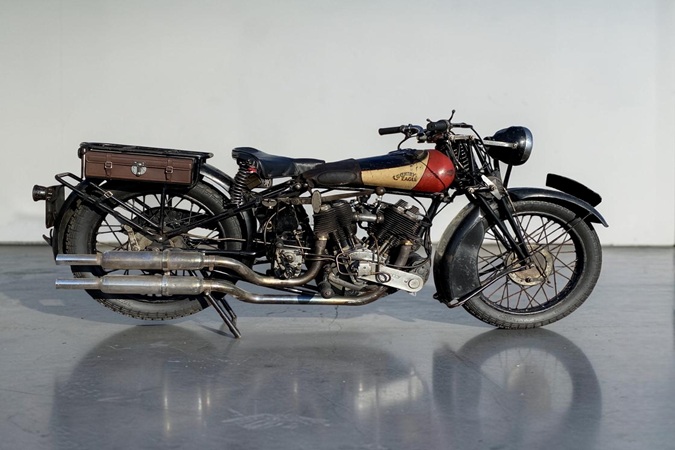
One of the most notable surviving examples is the 1929 Coventry Eagle Model E120 1000cc, a rare large-capacity V-twin motorcycle that reflects the industry's experimentation with higher-displacement touring machines during the late interwar period.
This model is representative of Coventry Eagle's later engineering direction, where increasing engine capacity and touring capability became more prominent in response to evolving rider expectations. Surviving examples such as the E120 provide valuable insight into this transitional phase of British motorcycle development.
The evolution of Coventry Eagle is closely tied to the broader transformation of the British motorcycle industry during the early twentieth century. As internal combustion technology improved, manufacturers moved from experimental construction toward more standardized production methods.
This transition is best understood within the framework of pre-war motorcycle history, a period defined by rapid mechanical development, regional manufacturing clusters, and increasing public adoption of motorised transport.
Coventry Eagle, like many of its contemporaries, reflects this shift from artisanal bicycle production to industrial motorcycle engineering.
Today, Coventry Eagle motorcycles are primarily valued for their historical and industrial significance rather than performance pedigree. Surviving machines offer insight into early British manufacturing practices, component sourcing strategies, and the development of motorcycle design during its formative decades.
Collectors often regard Coventry Eagle as an important example of early British motorcycle diversity, particularly within the context of Coventry's industrial output and regional engineering identity.
When evaluating Coventry Eagle motorcycles, collectors typically focus on originality, mechanical completeness, and historical documentation. Due to the age and rarity of surviving examples, provenance and preservation quality play a central role in assessment.
Each motorcycle associated with Coventry Eagle in our collection is selected based on historical relevance and structural authenticity, ensuring alignment with museum-grade preservation principles.
Explore surviving Coventry Eagle motorcycles representing early British engineering heritage and interwar motorcycle development. Each example is carefully documented and positioned within its historical context.
We present select Coventry Eagle motorcycles available for acquisition, including rare pre-war machines. The most notable example is the 1929 Coventry Eagle Model E120 1000cc, a significant representation of the marque's touring evolution.
Contact our specialists for availability, provenance details, and international acquisition support. Request Information
The historical development of Coventry Eagle motorcycles is best understood within the broader transformation of British industrial manufacturing during the late nineteenth and early twentieth centuries. Rather than emerging as a luxury performance marque, Coventry Eagle developed within the practical engineering environment of Coventry, a city widely regarded as one of the foundational centers of bicycle and early motorcycle production in Britain.
During the formative decades of motorised transport, machines associated with the pre-war motorcycle era (1900-1939) represented a transition from pedal-powered bicycles to mechanically assisted mobility. Coventry Eagle participated in this evolution by adapting bicycle manufacturing expertise toward early internal combustion applications, reflecting a broader industrial shift rather than a single engineering philosophy.
The onset of global conflict and subsequent industrial reorganization introduced significant changes across British manufacturing. While Coventry Eagle was not primarily defined by military motorcycle production, the wider WW2 military motorcycle context reshaped engineering priorities across the industry, emphasizing durability, mechanical simplicity, and field serviceability. These influences indirectly affected post-war design expectations and supplier-based production models.
In the decades following 1945, the post-war motorcycle period marked a structural consolidation of the British motorcycle industry. Larger manufacturers began to dominate production, while earlier regional marques such as Coventry Eagle were absorbed into historical classification rather than continued industrial output. This transition reflects the broader modernization of British engineering and industrial standardization.
For collectors and researchers situating Coventry Eagle within this historical continuum, the global vintage motorcycle inventory provides access to surviving examples across multiple eras of British motorcycle development. Within this framework, machines such as the 1929 Coventry Eagle Model E120 1000cc represent the most advanced expressions of the marque's late interwar engineering direction, particularly in larger-capacity touring motorcycle design.
What is Coventry Eagle known for?
Coventry Eagle is known as an early British manufacturer that transitioned from bicycle production into motorcycle engineering during the early 20th century, reflecting the industrial evolution of Coventry.
Are Coventry Eagle motorcycles rare?
Yes. Surviving Coventry Eagle motorcycles are relatively rare today, as many early machines were used extensively or lost during industrial transitions and post-war restructuring.
What is the significance of the 1929 Coventry Eagle Model E120?
The Model E120 represents one of the marque's larger-capacity touring motorcycles, reflecting late interwar experimentation with higher-displacement engines and improved long-distance capability.
Where can Coventry Eagle motorcycles be viewed or acquired?
Selected surviving examples can be explored through curated collections and
international vintage motorcycle listings,
where machines are contextualized by era, originality, and historical significance.
Coventry Eagle motorcycles occupy an important position within early British industrial history, representing the intersection of bicycle manufacturing heritage and the emergence of powered two-wheeled transport. Their study contributes to a broader understanding of how regional engineering centers such as Coventry influenced the development of national motorcycle production capabilities.
The evolution of Coventry Eagle is closely tied to the broader development of British industrial manufacturing networks, particularly during the early twentieth century when regional specialization defined production capabilities. Within this system, bicycle manufacturers, component suppliers, and early engine producers formed interconnected supply chains that enabled rapid experimentation in motorcycle design.
This industrial structure is documented within the broader context of motorcycle manufacturers by country, where national engineering identities emerged through regional clusters such as Coventry, Birmingham, and Nottingham. Coventry Eagle represents one of the early participants in this distributed manufacturing ecosystem.
Comparative analysis with other British manufacturers highlights how early motorcycle development was not centralized but instead evolved through collaborative industrial networks. This framework is further explored in the history of British motorcycle engineering, where innovation emerged from both competition and shared technological advancement.
Within this broader landscape, Coventry Eagle serves as a historical example of transitional engineering - bridging bicycle manufacturing traditions with early motorcycle production techniques that defined the pre-war mobility era.
Uncover valuable buyer tips alongside deep engineering knowledge, including export procedure FAQs, manufacturer-specific troubleshooting, classic motorcycle care, and workshop restoration techniques: