
The Vintage Motorcycles
Specialists in antique, classic, veteran and vintage motorcycles.
Specialists in antique, classic, veteran and vintage motorcycles.


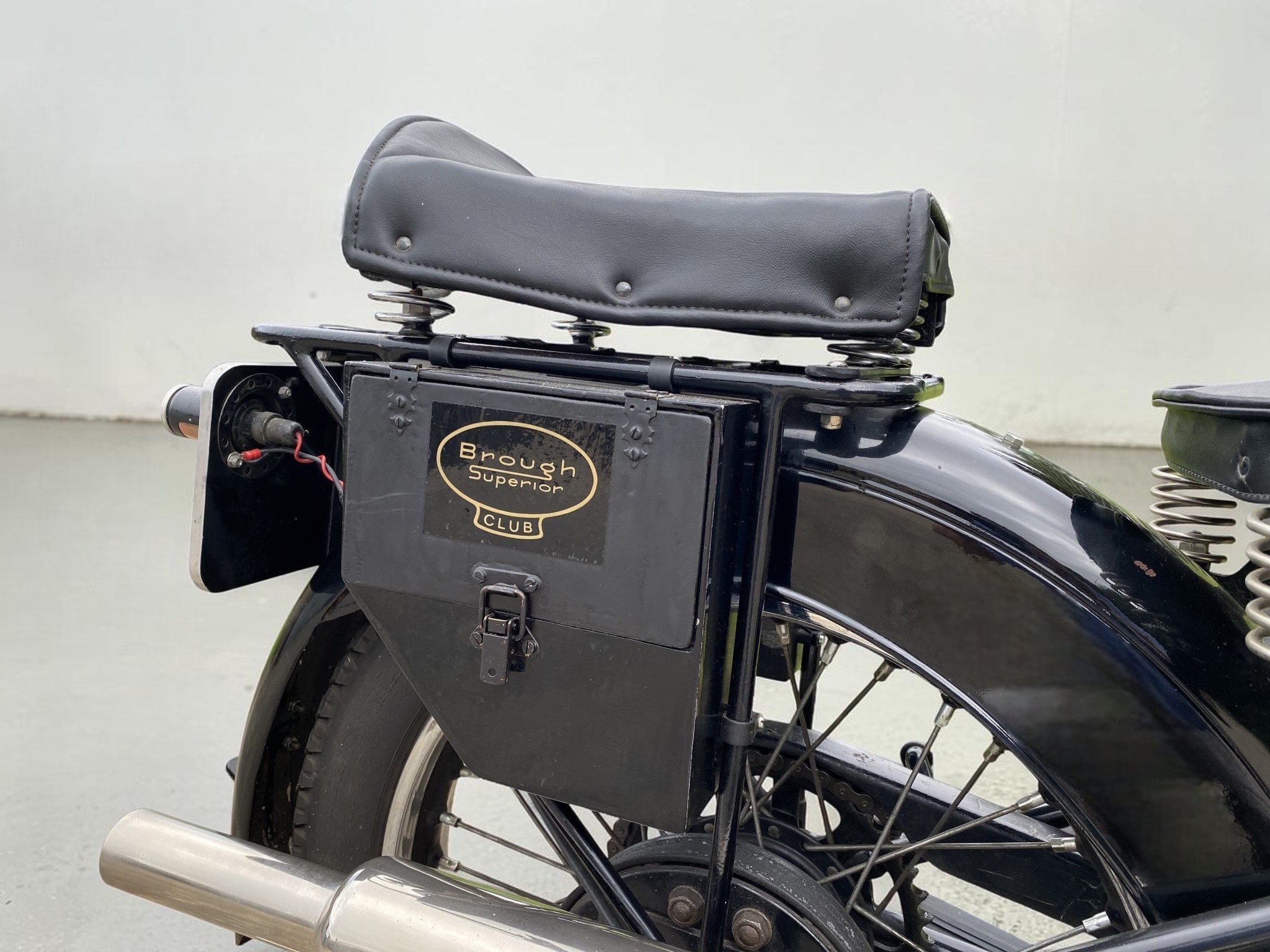


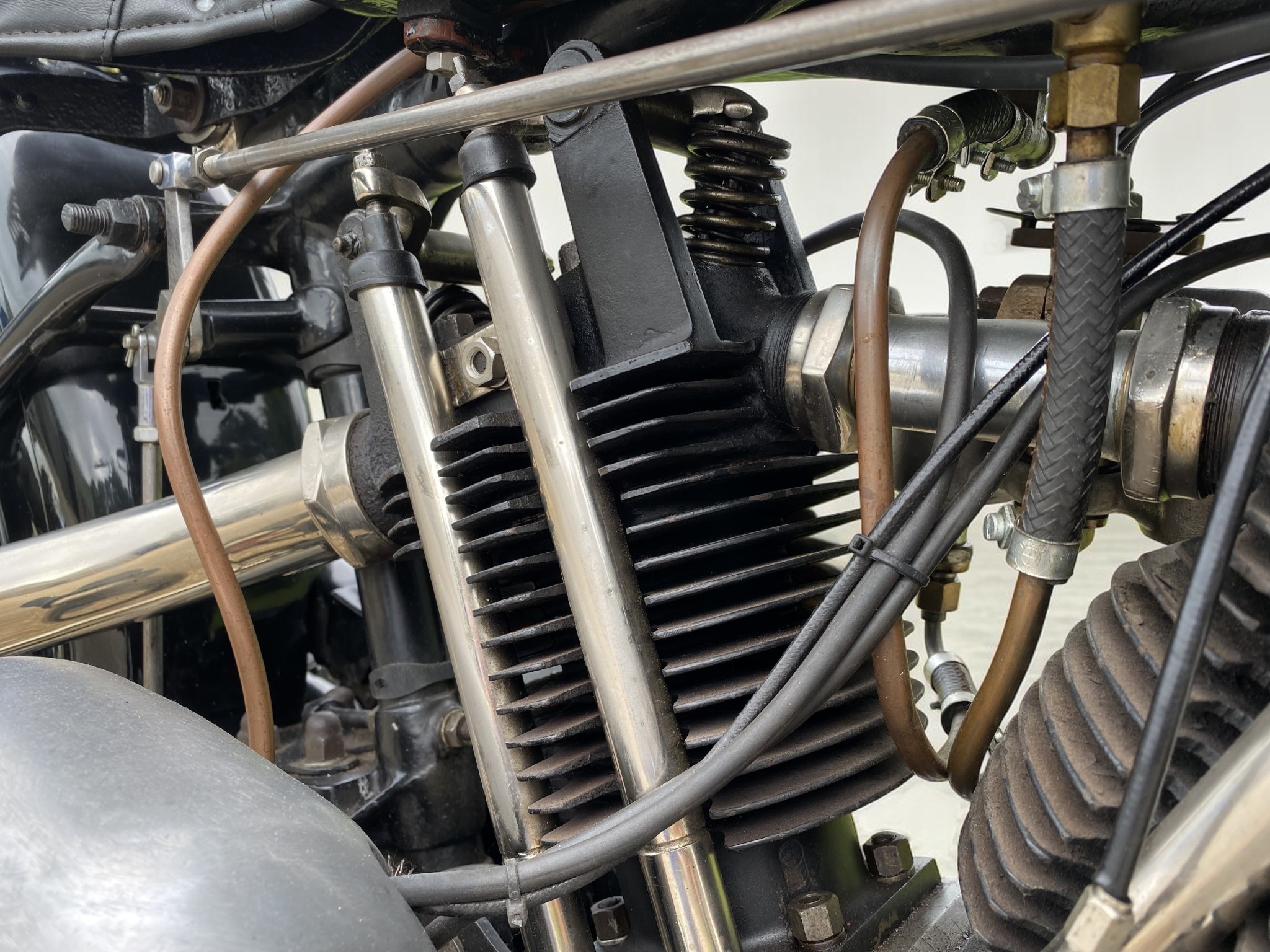
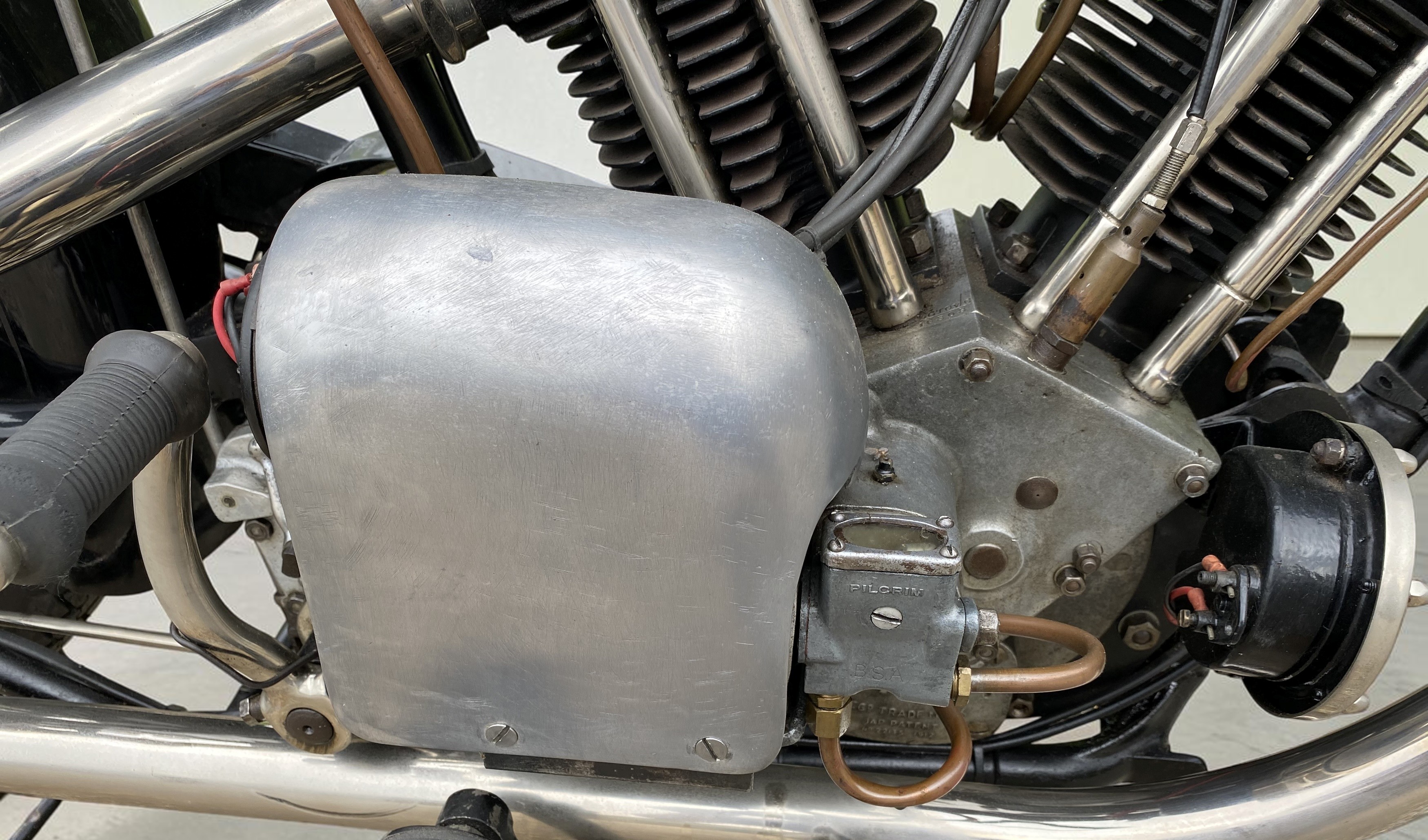


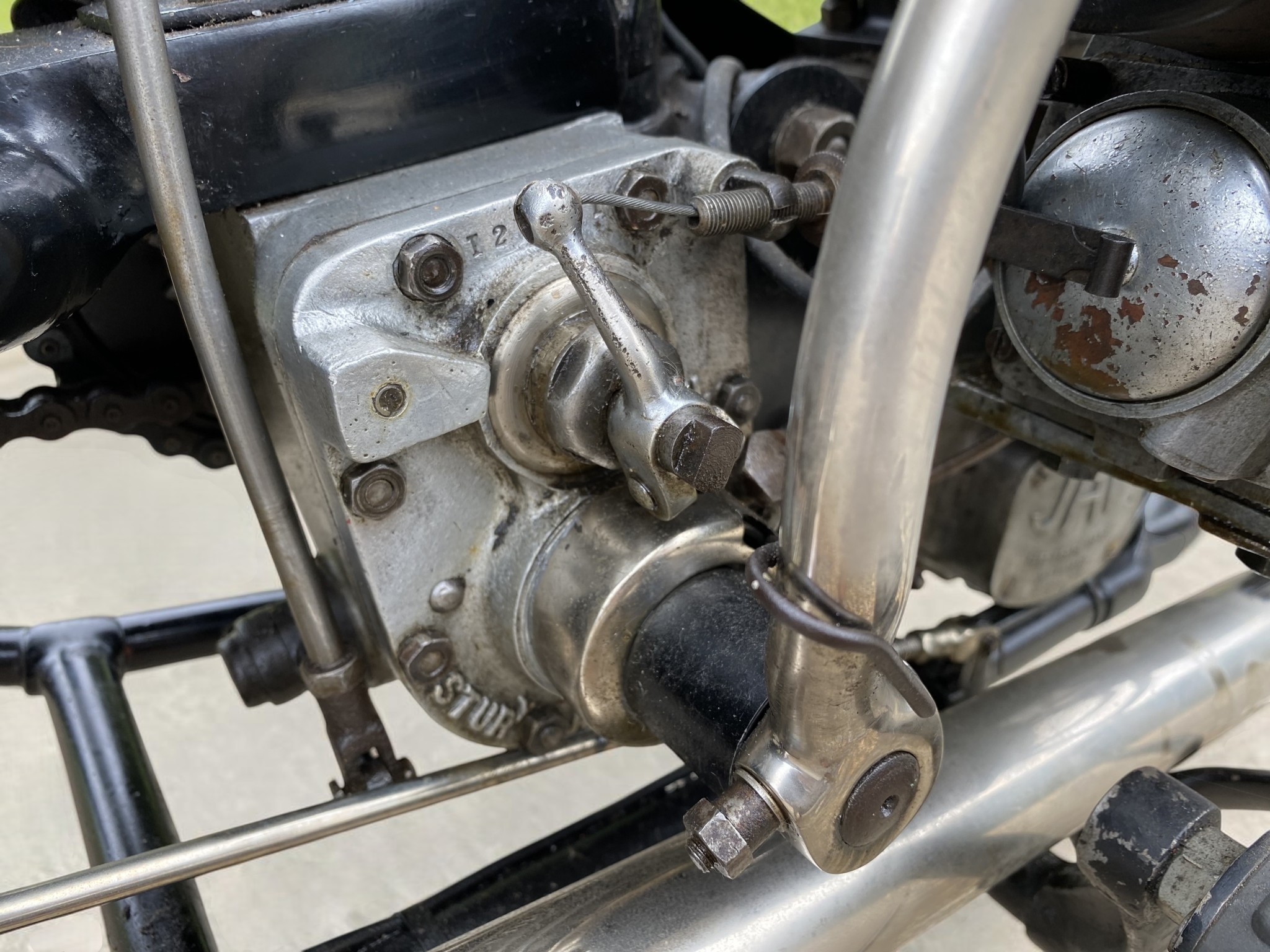


The 1928 Brough Superior Model 680 was one of the most prestigious British motorcycles of the late 1920s. Built in Nottingham under George Brough's direction, the Model 680 combined a 680cc J.A.P. overhead-valve V-twin engine with high-quality chassis components, careful finishing, and the engineering standards that established Brough Superior as one of the leading names in luxury motorcycles.
The Model 680 was introduced in 1926 and remained in production through 1936, making it one of the longer-running models in the Brough Superior range. It was positioned below the larger and faster SS100 but retained the same emphasis on performance, refinement, quality, and individual customer specification.
The 1928 Model 680 used a 50-degree V-twin engine supplied by J.A.P. The engine had a 70 x 88 mm bore and stroke, giving a displacement of approximately 680cc. The engine used overhead valves and twin remote-float Amal carburetion.
Power was transmitted through a four-speed Sturmey-Archer gearbox and chain primary drive, with the motorcycle using a conventional chain final drive.
The chassis incorporated Brough Superior's characteristic Castle-type girder front fork with friction damping, a sprung saddle, 19-inch wheels, and drum brakes at both ends.
The combination of a powerful V-twin engine, high-quality components, careful assembly, and distinctive styling made the Model 680 an expensive and highly desirable motorcycle when new.
Brough Superior motorcycles were frequently built to individual customer requirements, and surviving machines can therefore differ in equipment and detail. This makes the original factory Works Record Card particularly valuable when establishing the exact specification of an individual Model 680.
George Brough founded Brough Superior after leaving his father's Brough company and established his own motorcycle business in Nottingham in the early 1920s. The new company quickly developed a reputation for producing exceptionally well-finished motorcycles with strong performance.
Brough Superior did not manufacture its own engines. Instead, George Brough selected engines from specialist British suppliers, including J.A.P., and combined them with Brough Superior chassis, transmissions, finishes, and equipment.
The Model 680 was introduced in 1926 as a 680cc V-twin and continued through the following decade. The model was intended as a high-quality touring motorcycle and offered a slightly smaller and less powerful alternative to Brough Superior's larger models.
In 1928, Brough Superior production remained extremely limited. The National Motorcycle Museum records that only 155 Brough Superior motorcycles of all models were produced during 1928, illustrating the rarity of the marque even when new.
The limited production, high purchase price, individual customer specifications, and exceptional build quality helped establish Brough Superior motorcycles as prestige machines rather than mass-market transportation.
The marque also attracted wealthy and prominent owners. T. E. Lawrence, better known as Lawrence of Arabia, was among the most famous Brough Superior enthusiasts, although individual ownership histories must always be verified from surviving documentation rather than assumed from the model alone.
Surviving Model 680s with original frame, engine, and gearbox numbers matching their factory documentation are especially important because Brough Superior motorcycles were assembled using components from multiple specialist suppliers and were often individually specified.
The Model 680 is powered by a 680cc air-cooled four-stroke V-twin engine supplied by J.A. Prestwich Industries, commonly known as J.A.P.
The engine has a 50-degree cylinder angle and a 70 mm bore with an 88 mm stroke. The resulting displacement is approximately 680cc.
The overhead-valve configuration provided more efficient breathing than a comparable side-valve engine and helped give the Model 680 its strong performance and touring capability.
Fuel is supplied through twin remote-float Amal carburetors. The separate carburetion arrangement allowed each cylinder to receive its own mixture supply and was characteristic of high-performance British V-twin motorcycles of the period.
Ignition was provided by a magneto, while the motorcycle used a battery and magneto-dynamo electrical system for its electrical equipment.
The long 88 mm stroke gave the engine substantial torque and a strong pulling character. This suited the Model 680's role as a fast touring motorcycle and made the engine well matched to the four-speed gearbox.
The Model 680 was not intended to compete directly with the flagship SS100 in outright performance. Instead, it offered a more practical combination of performance, refinement, and long-distance usability while retaining the prestige associated with the Brough Superior name.
The Model 680 uses a four-speed Sturmey-Archer gearbox. Sturmey-Archer was one of Britain's leading suppliers of motorcycle transmissions, and its gearboxes were widely used by premium motorcycle manufacturers during this period.
The four-speed transmission gave the 680 a useful spread of ratios for both acceleration and sustained road speeds.
Primary drive is by chain, transmitting power from the V-twin engine to the clutch and gearbox.
Final drive is also by chain, carrying the gearbox output to the rear wheel.
The combination of a flexible V-twin engine and four-speed gearbox gave the Model 680 a strong and adaptable drivetrain for long-distance road use.
The transmission arrangement also reflects Brough Superior's approach to motorcycle construction. Rather than manufacturing every component internally, George Brough selected established specialist suppliers and combined their components into a carefully assembled complete motorcycle.
Because Brough Superior motorcycles could be individually specified, surviving examples should be examined against their original Works Record Cards when determining whether their gearbox and drivetrain components are correct for the particular machine.
The Model 680 uses a substantial Brough Superior frame designed to provide a stable platform for the large V-twin engine.
At the front is Brough Superior's Castle-type girder fork, equipped with a friction damper. The girder fork was a characteristic feature of high-quality British motorcycles during the period and provided a strong and relatively sophisticated front suspension arrangement for the late 1920s.
The rear of the motorcycle uses a rigid frame, with rider comfort assisted by a sprung saddle rather than a separately sprung rear wheel.
The chassis was designed for high-speed road touring and emphasized stability, strength, and predictable handling.
The Model 680's large 19-inch wheels contributed to its substantial road presence and helped the motorcycle deal with uneven road surfaces.
The suspension and chassis arrangement was typical of the period but was executed to the high standards expected from Brough Superior.
The motorcycle's carefully constructed frame was also important to the company's reputation because Brough Superior's prestige depended not only on engine performance but also on the quality and finish of the complete machine.
The Model 680 uses drum brakes at both the front and rear. Drum braking was standard on high-quality motorcycles of the period and provided the stopping power necessary for a large and relatively fast V-twin motorcycle.
The substantial chassis and girder fork were designed to provide stability at touring speeds rather than the lightweight steering characteristics associated with later sporting motorcycles.
The 19-inch wheels helped maintain predictable handling over rough road surfaces and contributed to the motorcycle's stable touring character.
The low and relatively compact V-twin engine installation helped keep the motorcycle's center of mass within the frame while the long-stroke engine provided strong torque without requiring extremely high engine speeds.
The sprung saddle added another level of comfort for long-distance riding, particularly because the rigid rear chassis transmitted more road movement than a modern suspension system.
The Model 680's handling therefore reflects the priorities of a high-quality 1920s touring motorcycle: stability, composure, mechanical strength, and confidence at sustained road speeds.
The 1928 Brough Superior Model 680 is immediately recognizable by its large V-twin engine, substantial fuel tank, exposed mechanical components, and carefully finished chassis.
Brough Superior motorcycles were often associated with nickel-plated fuel tanks, high-quality leather equipment, polished metal components, and exceptional attention to detail.
The design was purposeful as well as luxurious. The large V-twin engine provided strong performance, while the substantial frame and large wheels gave the motorcycle a commanding road presence.
The Brough Superior name was deliberately positioned as a premium marque. George Brough was both a designer and accomplished rider, and he personally inspected and certified the motorcycles produced by his company.
The Model 680 therefore represented more than a collection of mechanical components. It was intended to be a complete luxury motorcycle in which performance, engineering, finish, and exclusivity were equally important.
The visual balance between the large V-twin engine, long fuel tank, girder fork, and slim rear frame remains one of the defining characteristics of Brough Superior motorcycles from this period.
The Model 680 occupied an important position within Brough Superior's range during the late 1920s and early 1930s.
Its 680cc V-twin was smaller than the engines used by the company's larger flagship models, but it retained the same basic philosophy of combining a powerful British engine with a high-quality Brough Superior chassis.
The 680 was less extreme than the SS100 and was intended more toward fast touring and general road use.
The model's long production period from 1926 to 1936 demonstrates that Brough Superior considered the 680 an important part of its range rather than a short-lived experiment.
The Model 680 also illustrates the company's practice of using engines from specialist manufacturers. J.A.P. supplied the overhead-valve V-twin, while Sturmey-Archer supplied the gearbox.
This approach allowed Brough Superior to concentrate on chassis design, specification, assembly, finishing, and customer requirements while selecting high-quality components from established British suppliers.
The Model 680 was particularly well suited to fast touring. Its 680cc V-twin provided strong torque, while the four-speed gearbox gave the rider greater control over engine speed and road conditions than a simpler transmission.
The large-capacity engine allowed the motorcycle to maintain useful road speeds without requiring the high engine revolutions associated with smaller motorcycles.
The substantial frame, girder fork, large wheels, and sprung saddle were all consistent with long-distance touring requirements.
The Model 680's mechanical specification also made it suitable for carrying additional touring equipment, and Brough Superior motorcycles were frequently equipped to individual customer requirements.
The motorcycle's reputation for refinement was an important part of its appeal. Owners were not simply purchasing transportation; they were buying one of the most prestigious and carefully finished motorcycles available in Britain.
Brough Superior production was extremely limited compared with mainstream British motorcycle manufacturers. The company operated on a relatively small scale and emphasized individual assembly and quality control.
In 1928, only 155 Brough Superior motorcycles of all models were produced according to the National Motorcycle Museum, making any surviving motorcycle from that production year a relatively rare artifact.
The company used specialist suppliers for important mechanical components. The Model 680's J.A.P. engine and Sturmey-Archer gearbox are examples of this approach.
Many motorcycles were built to order, meaning that equipment and specification could vary between individual machines.
This practice makes factory documentation particularly important for collectors. A Works Record Card can provide evidence of the original engine, gearbox, frame, finish, equipment, and other details supplied with an individual motorcycle.
The emphasis on individual construction also explains why two Model 680 motorcycles from the same year may not be completely identical.
The 1928 Brough Superior Model 680 is highly significant to collectors because it represents the marque's philosophy of combining specialist British engineering with exceptional finishing and low-volume production.
The 680 was produced over a much longer period than some Brough Superior models, but early examples remain particularly desirable because they illustrate the development of the company during its formative years.
Originality is extremely important when assessing a Model 680. The frame, engine, gearbox, fuel tank, fork, wheels, brakes, carburetors, magneto, exhaust system, controls, and other components should be checked against surviving factory documentation.
Because Brough Superior used outside suppliers and often built motorcycles to individual customer specifications, a matching frame, engine, and gearbox combination is especially valuable.
The original Works Record Card is one of the most important pieces of documentation that can accompany a Brough Superior. It can help confirm that the machine is factory-built and establish its original specification.
Collectors should also inspect the J.A.P. engine carefully for cylinder wear, valve and rocker condition, crankshaft and big-end wear, oiling-system condition, and evidence of previous repairs.
The Sturmey-Archer gearbox should be checked for gear engagement, bearing condition, shaft wear, and evidence of non-original internal components.
The Castle girder fork, friction damper, frame, wheels, drum brakes, and steering head should also be inspected for wear, distortion, corrosion, and previous repairs.
A correctly documented and substantially original 1928 Model 680 represents one of the most important surviving examples of Britain's pre-war luxury motorcycle industry.
The 1928 Brough Superior Model 680 matters because it captures the engineering philosophy that made Brough Superior one of the most famous motorcycle manufacturers of the pre-war period.
Its 680cc 50-degree J.A.P. overhead-valve V-twin combined a 70 x 88 mm bore and stroke with twin Amal carburetors, providing the large-capacity performance expected from a premium British motorcycle of the late 1920s.
The four-speed Sturmey-Archer gearbox, chain primary drive, chain final drive, Castle girder fork, sprung saddle, 19-inch wheels, and drum brakes created a complete touring motorcycle rather than simply a powerful engine installed in a frame.
The extremely low production volume of Brough Superior motorcycles makes the 1928 machines particularly significant. Only 155 Brough Superior motorcycles of all models were produced during 1928, according to the National Motorcycle Museum.
The Model 680 also demonstrates George Brough's distinctive approach to motorcycle manufacturing. Specialist engines and components were combined with a Brough Superior chassis and individually specified equipment, followed by careful assembly and inspection.
For collectors, the Model 680 offers a direct connection to the period when Brough Superior motorcycles were establishing their reputation as some of the finest and most exclusive motorcycles available.
This 1928 Brough Superior Model 680 represents a rare example of one of Britain's most prestigious pre-war motorcycle marques and a significant stage in the development of George Brough's luxury touring motorcycles.
The 680cc J.A.P. overhead-valve V-twin uses a 50-degree cylinder arrangement, 70 x 88 mm bore and stroke, and twin remote-float Amal carburetors. The engine is paired with a four-speed Sturmey-Archer gearbox and chain primary and final drives.
The chassis features Brough Superior's Castle-type girder front fork with friction damping, a sprung saddle, 19-inch wheels, and drum brakes at both ends.
The Model 680 was produced from 1926 through 1936 and was positioned as a high-quality touring motorcycle below the larger SS100. It retained the exceptional finishing, specialist components, and individual customer specification associated with the Brough Superior name.
Only 155 Brough Superior motorcycles of all models were produced during 1928, making a genuine example from this production year a particularly rare survivor.
A well-documented Model 680 with matching frame, engine, and gearbox numbers and an original Works Record Card is especially desirable to collectors because factory documentation can establish the machine's original specification and authenticity.
Contact us for additional photographs, detailed specifications, frame and engine numbers, service history, originality assessment, provenance, restoration details, Works Record Card information, and purchasing information for this 1928 Brough Superior Model 680.
Explore more Brough Superior motorcycles from the pre-war and classic eras.
The Vintage Motorcycles presents a curated selection of historically significant British vintage motorcycles, representing one of the most influential engineering traditions in European motorcycling history. From early single-cylinder machines developed during the formative years of industrial mobility to highly refined pre-war and post-war performance motorcycles, British manufacturers played a defining role in shaping both road and racing motorcycle development.
This collection includes machines from landmark marques such as AJS, Triumph, Vincent, Sunbeam, Matchless, BSA, Norton, Douglas, Royal Enfield, and other historically important British motorcycle manufacturers, each contributing to advancements in engine architecture, chassis design, and competitive performance engineering. These motorcycles are best understood within the broader framework of pre-war motorcycle engineering (1900-1939), as well as the subsequent evolution seen in post-war motorcycle development, where British engineering became closely associated with racing success and mechanical refinement.
Each motorcycle within our collection is sourced based on historical provenance, structural originality, and mechanical integrity, ensuring alignment with museum-grade preservation standards. For collectors seeking acquisition opportunities, available machines can be explored through our global vintage motorcycle inventory, supported by a fully insured international shipping service.
British motorcycle engineering during the interwar era became closely associated with precision craftsmanship, high-performance touring capability, and the pursuit of mechanical refinement. Within this landscape, Brough Superior motorcycles emerged as some of the most technically ambitious and meticulously constructed machines of their generation, establishing a reputation that extended far beyond conventional transportation.
Founded in Nottingham by George Brough, the marque distinguished itself through unusually rigorous production standards and the integration of premium proprietary components, particularly JAP V-twin engines. Unlike many contemporaries that emphasized mass production, Brough Superior approached motorcycle construction with a philosophy closer to bespoke engineering, where performance, reliability, and aesthetic proportion were treated as inseparable elements of the machine itself.
This engineering approach evolved alongside broader developments within British motorcycle history, where advances in metallurgy, frame geometry, lubrication systems, and long-distance reliability increasingly shaped the direction of motorcycle design during the 1920s and 1930s. Machines such as the Model 680 reflected these priorities through their balance of smooth power delivery, structural stability, and refined touring performance.
Beyond their mechanical specifications, Brough Superior motorcycles became enduring symbols of Britain's wider industrial and engineering identity during the early twentieth century. Their influence continues to occupy an important place within the historical study of luxury motorcycles, demonstrating how craftsmanship, technical innovation, and cultural aspiration converged to define one of the most respected names in pre-war motorcycling.
Key Highlights
Collector Assurance
All enquiries handled with discretion. We typically respond within 6 hours.
Choose the payment method that is most convenient for you. We accept widely used international payment methods as well as, where available, local bank transfer options that allow you to pay like a domestic transaction. Full payment instructions are provided for your specific purchase.
Direct international bank wire transfer is available for motorcycle purchases and export transactions.
Credit card payments can be arranged through Wise.com, subject to the applicable payment and processing conditions.
PayPal is accepted. A 5% PayPal processing fee applies to the transaction.