
The Vintage Motorcycles
Specialists in antique, classic, veteran and vintage motorcycles.
Specialists in antique, classic, veteran and vintage motorcycles.
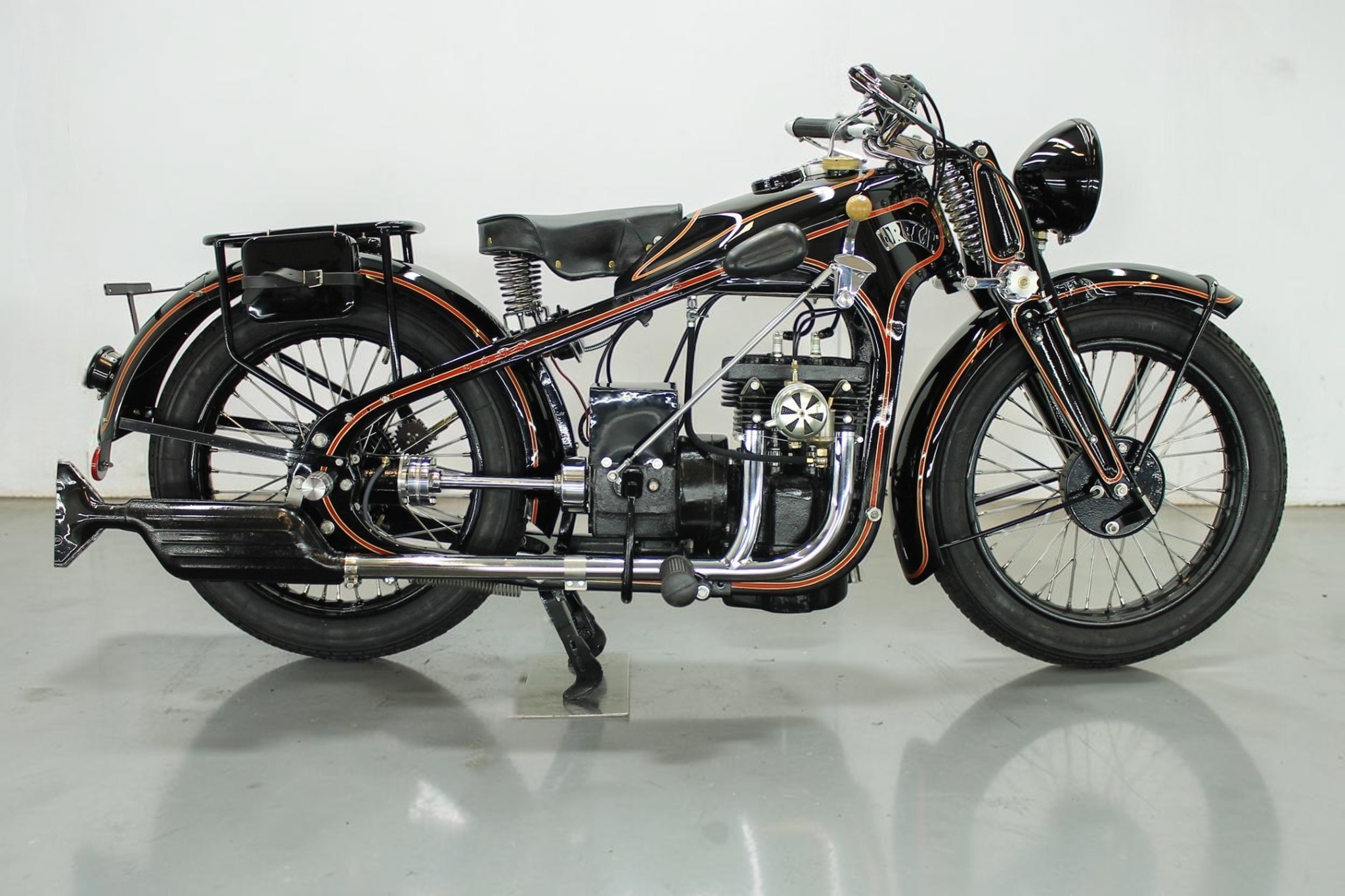
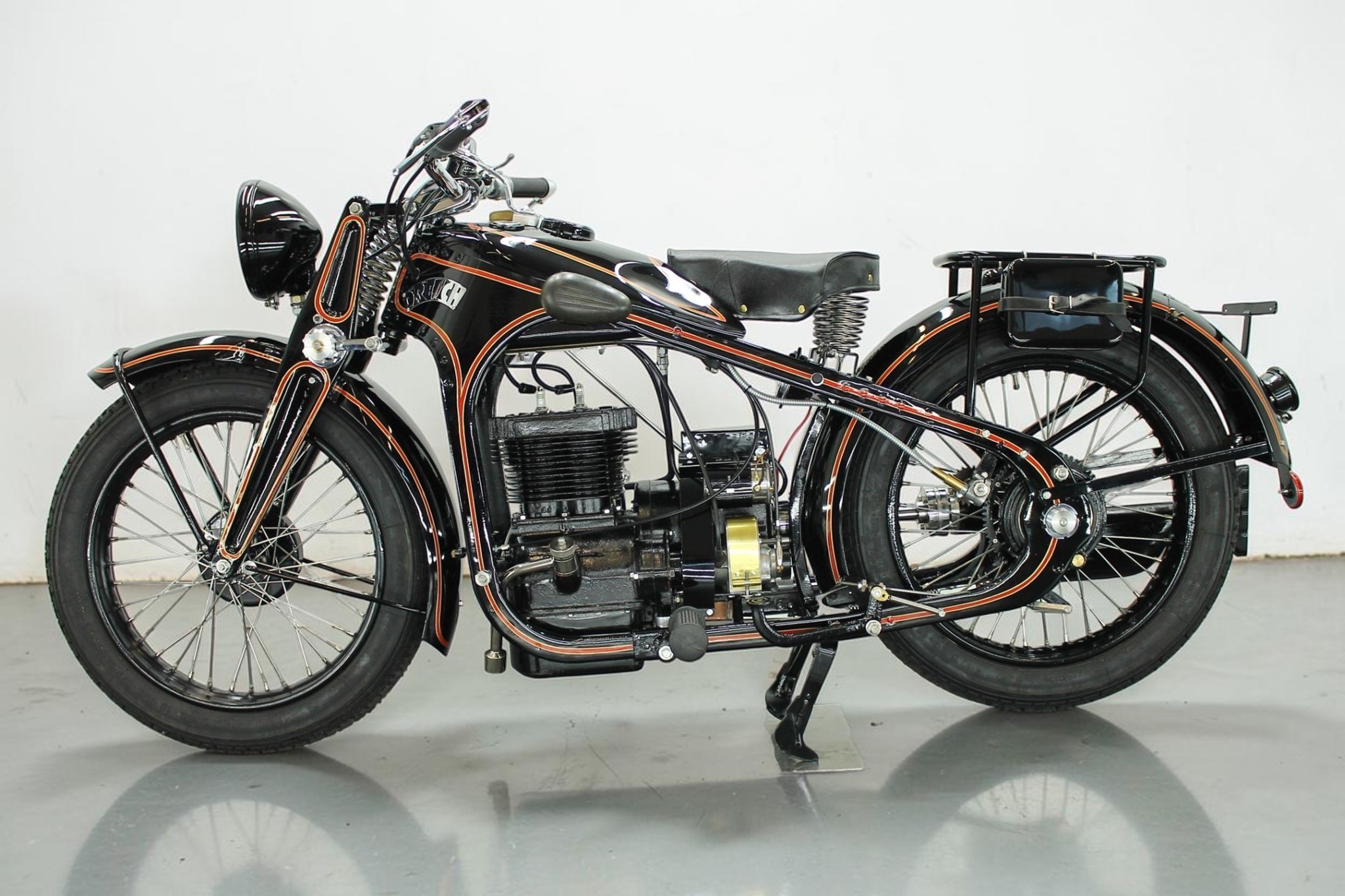

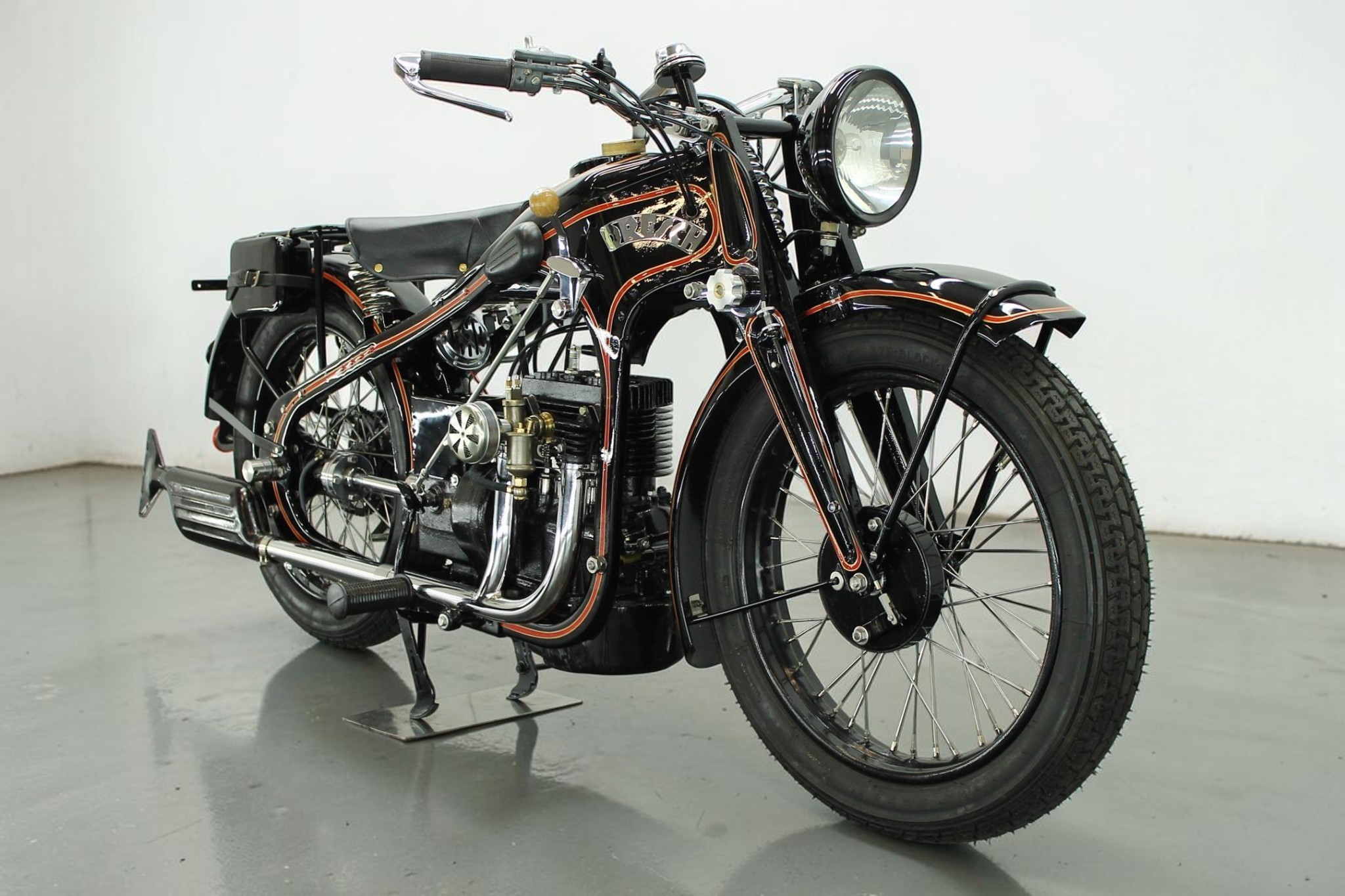

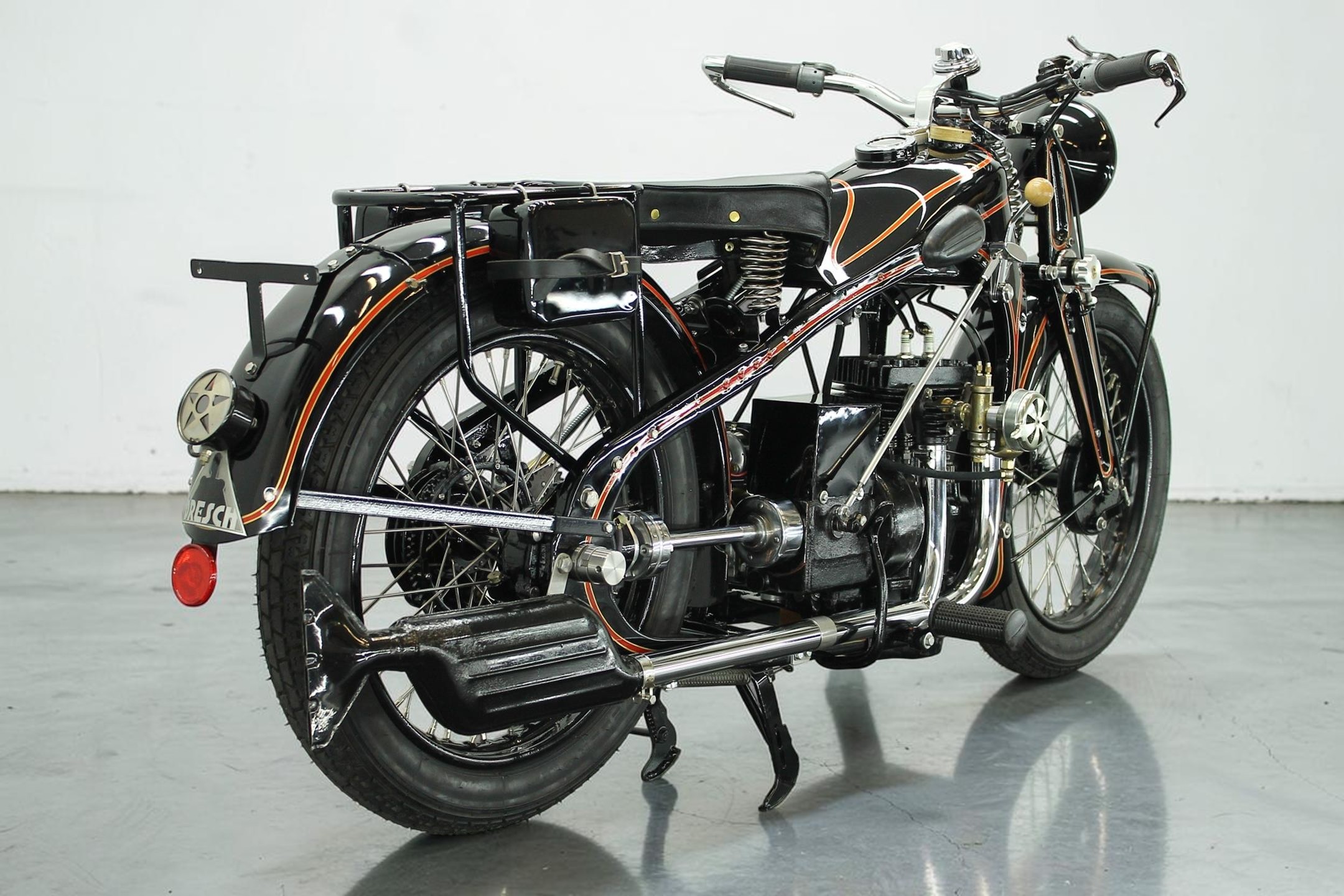
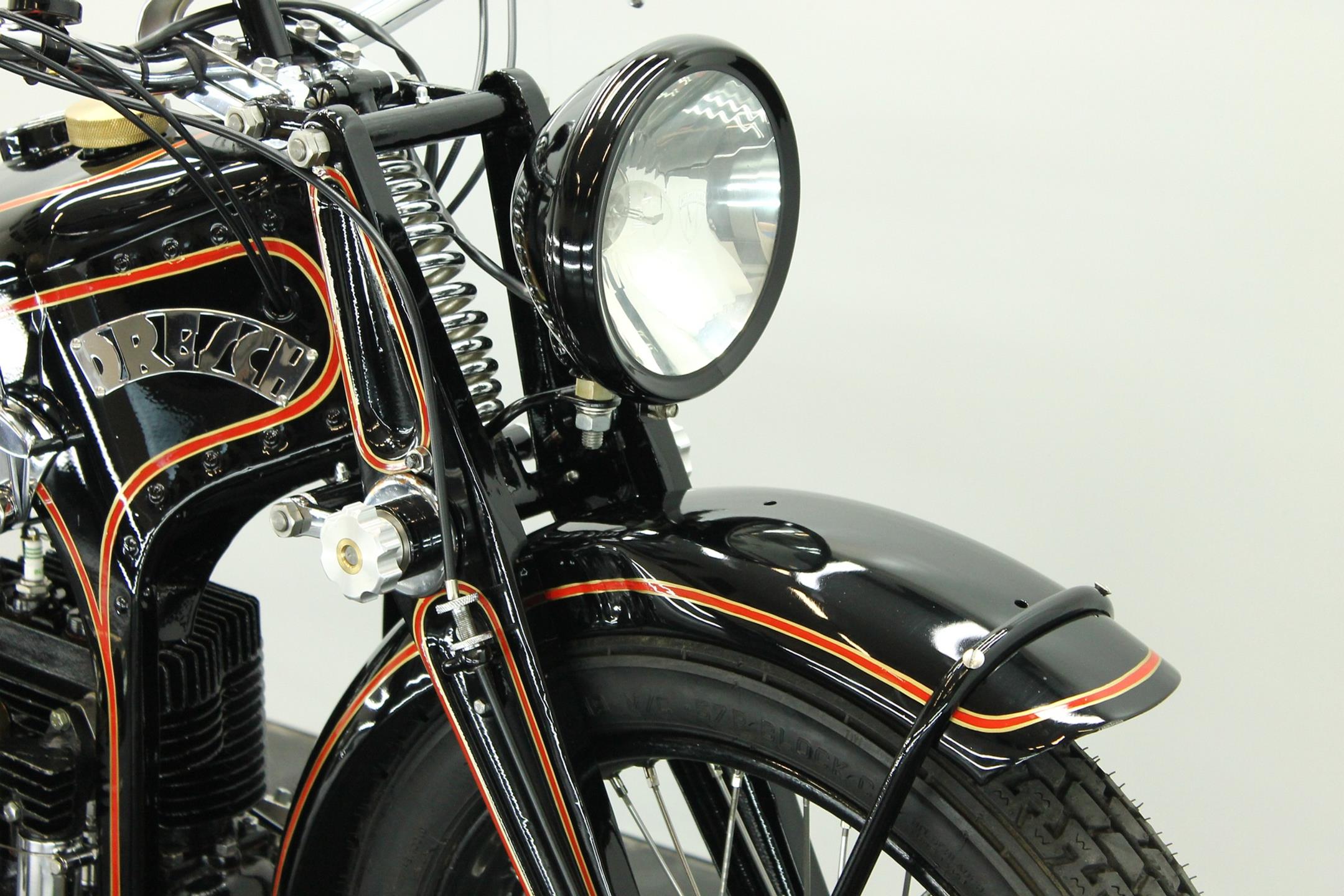
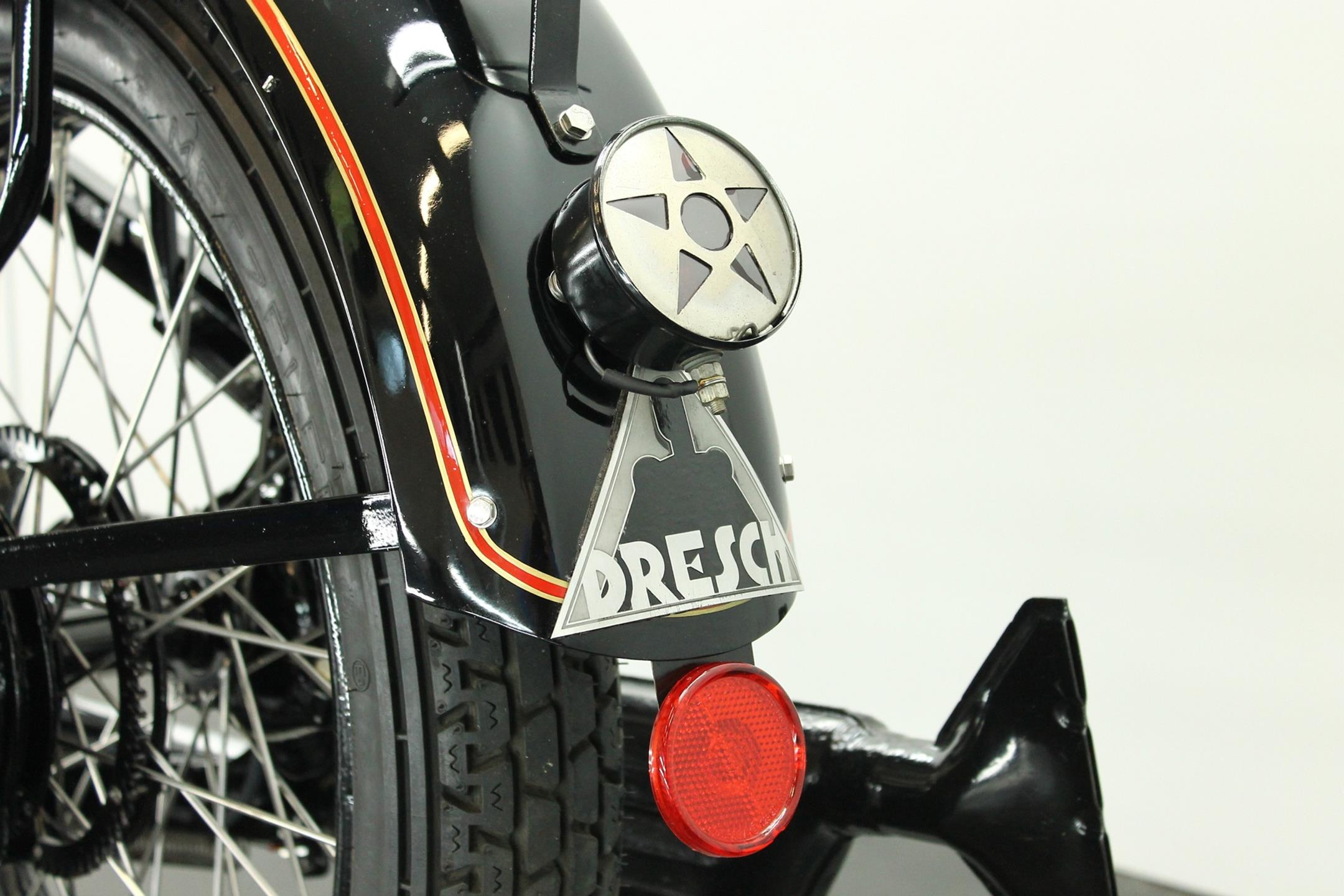

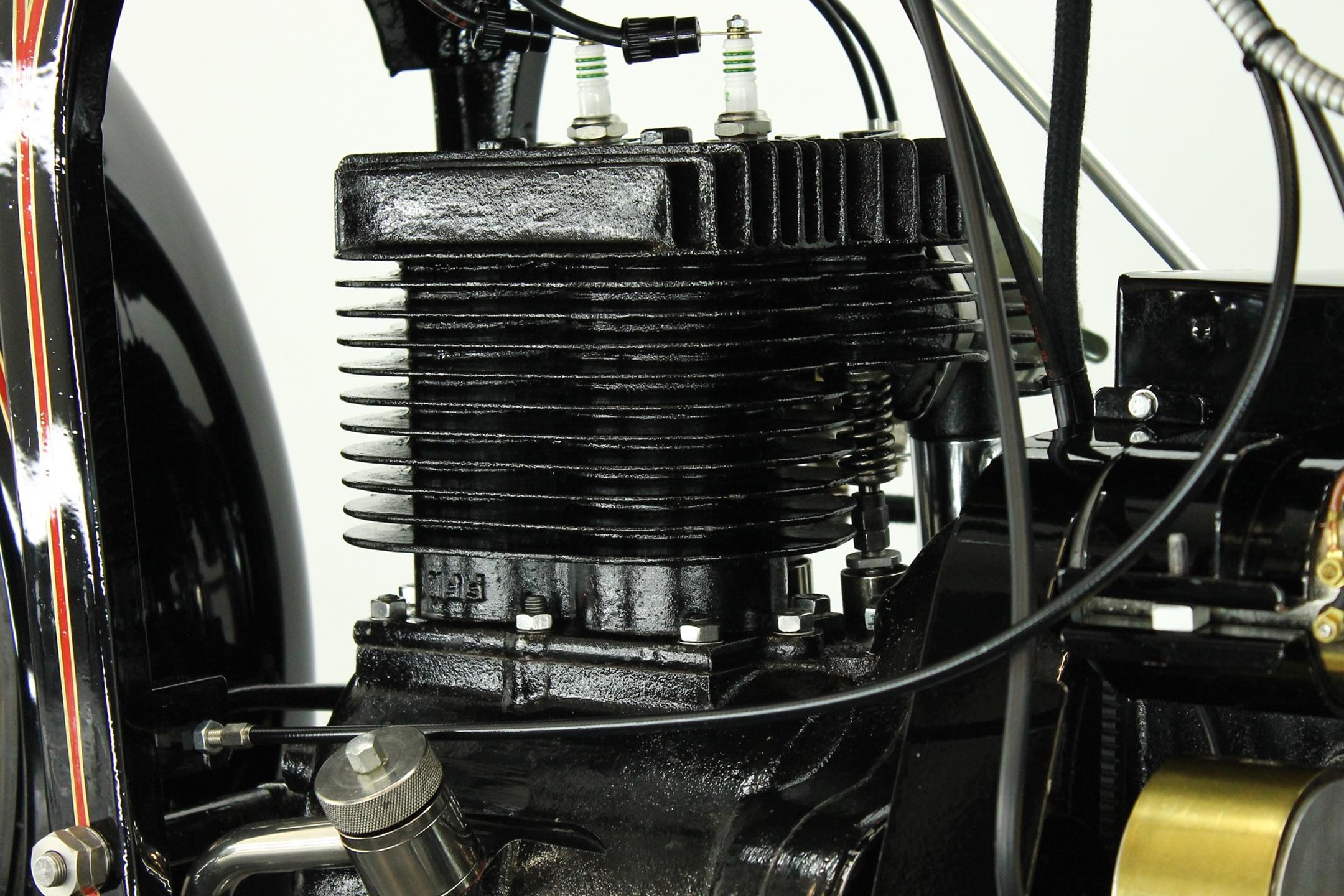
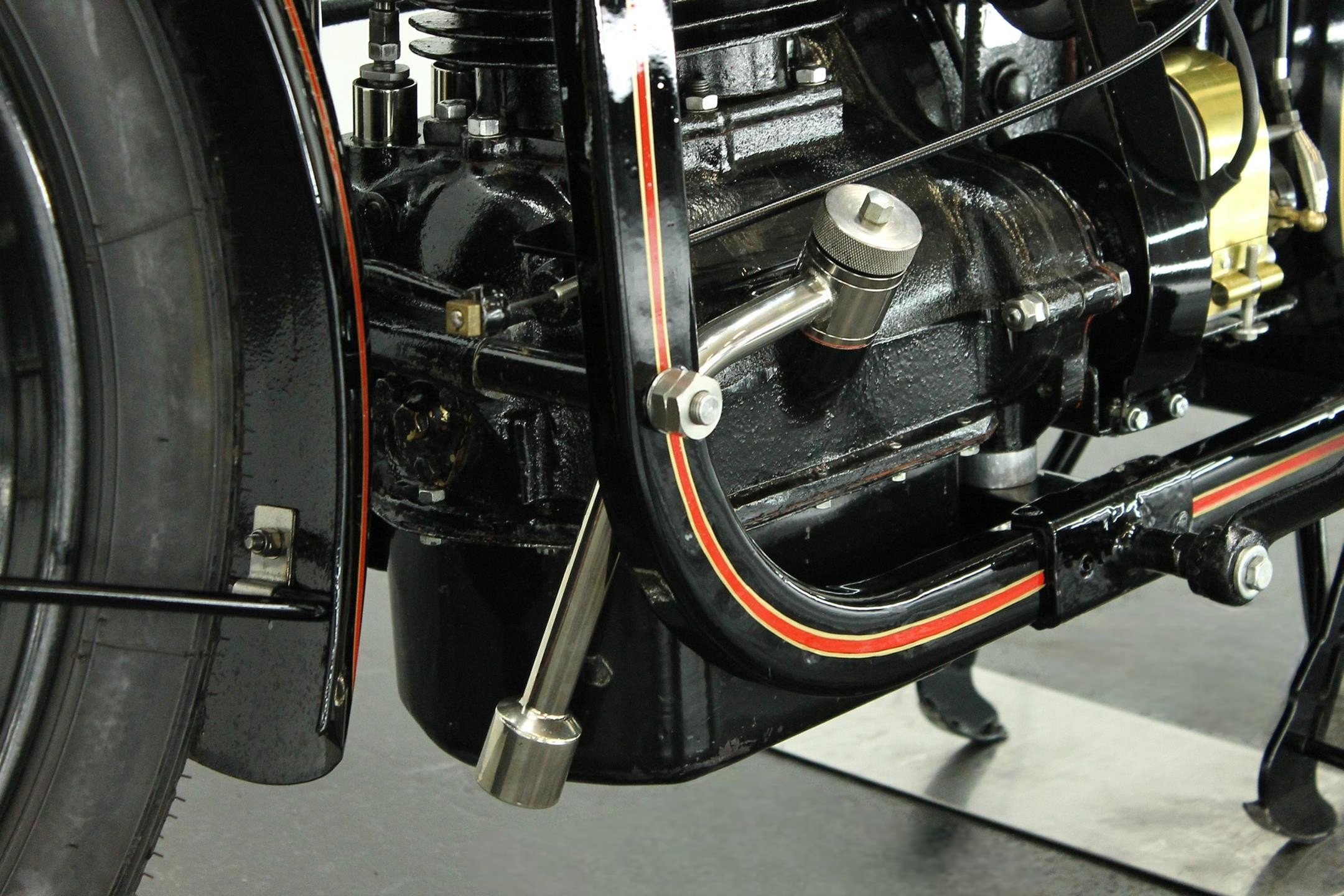

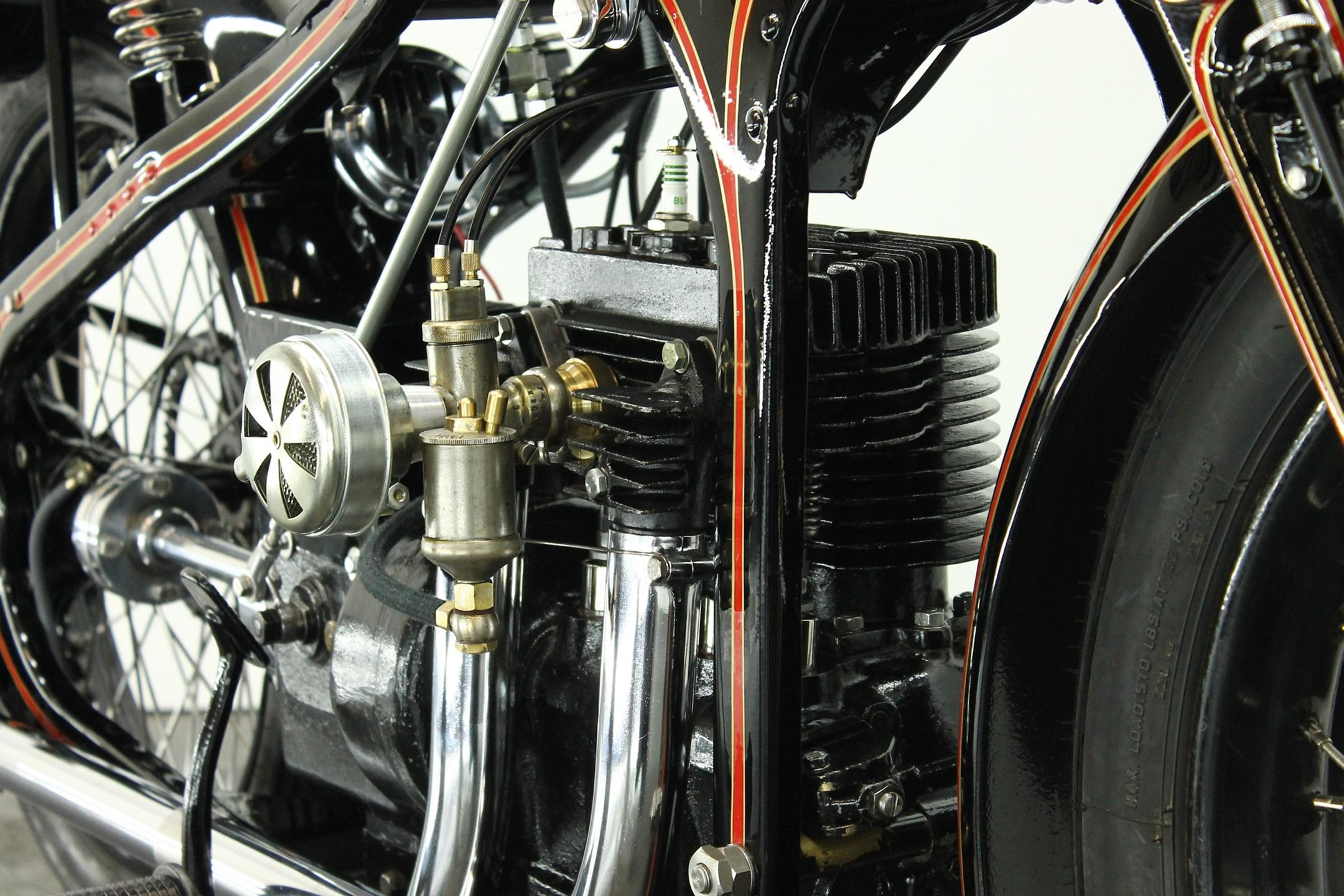
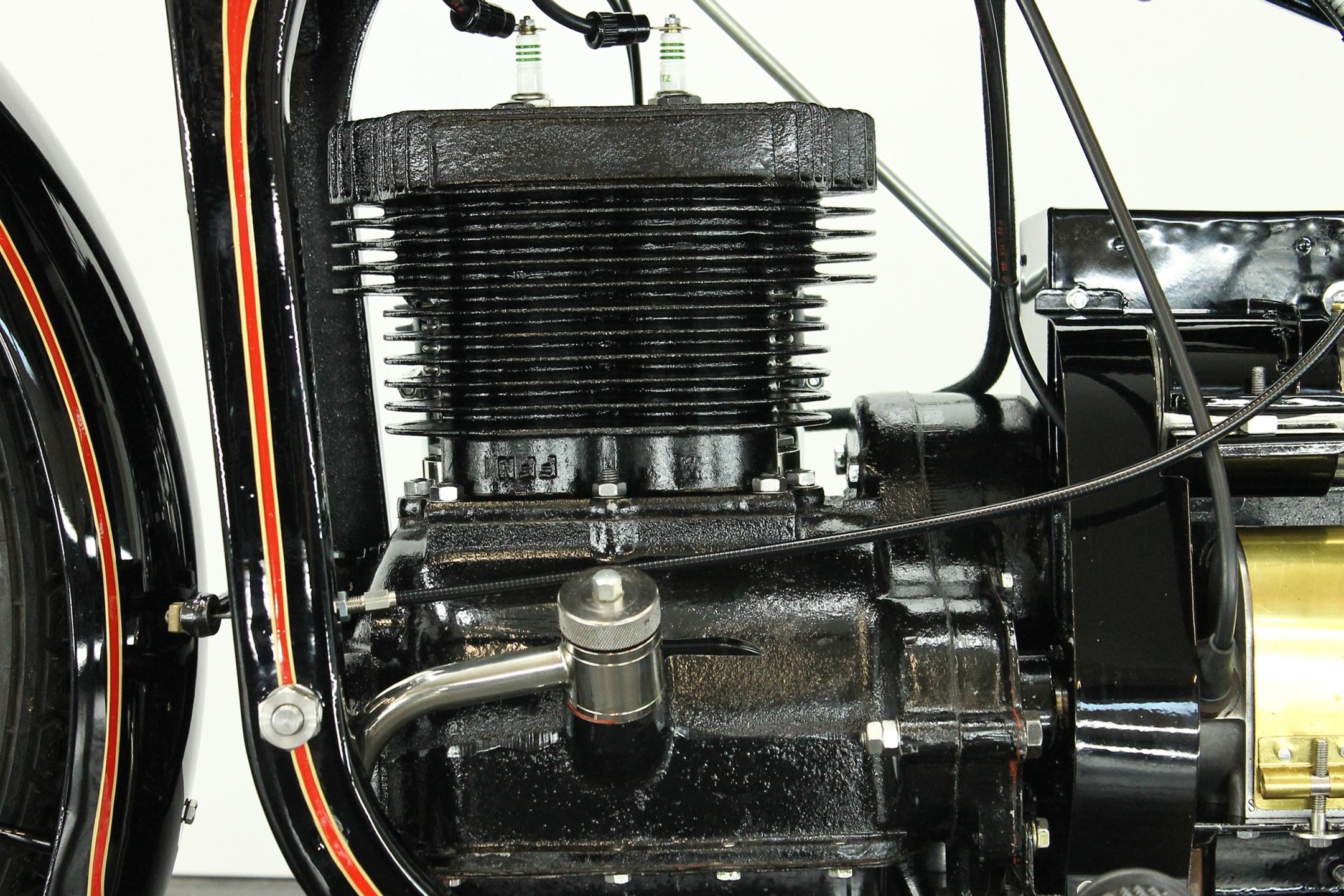

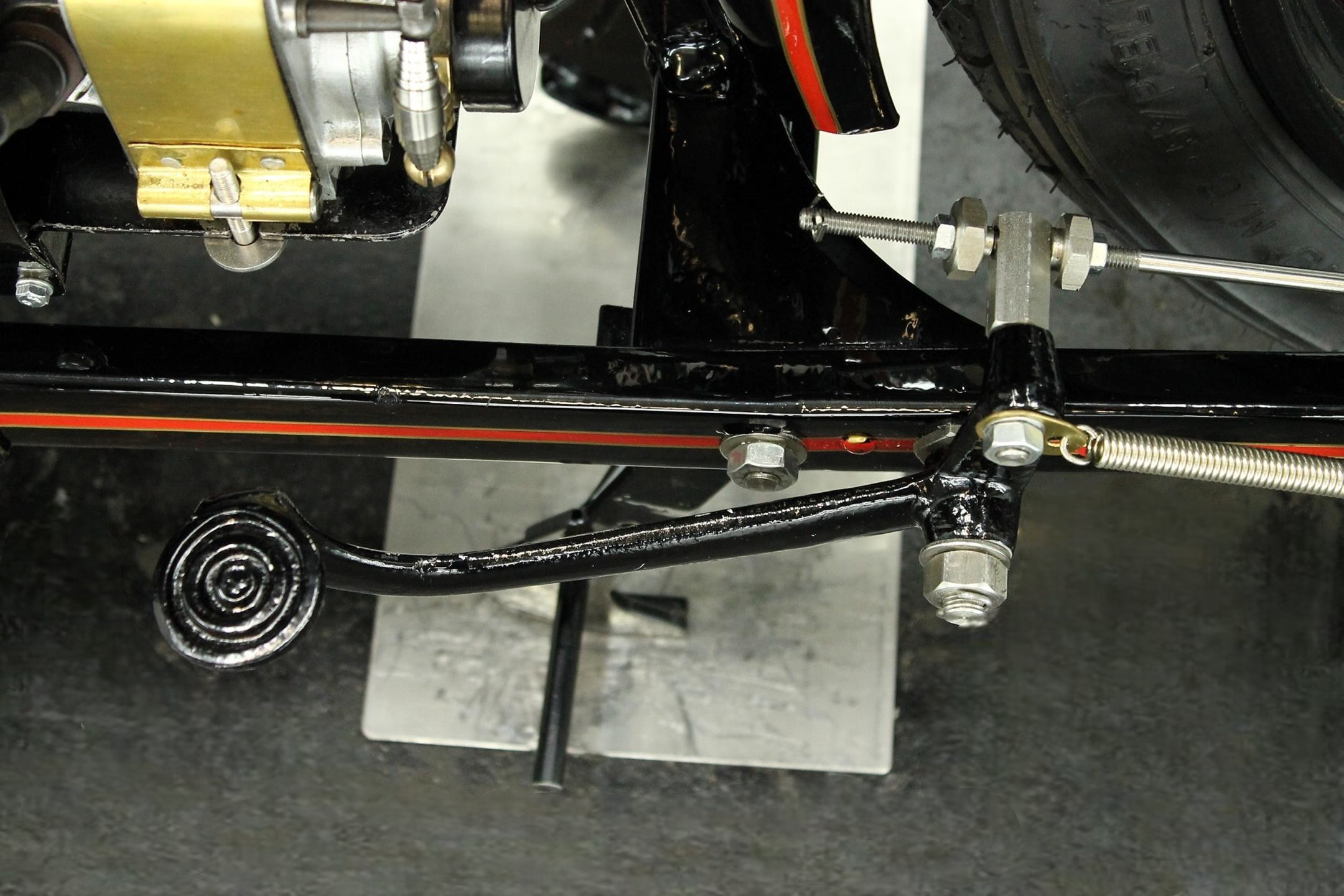
The 1931 Dresch Monobloc was a distinctive French 500cc motorcycle developed by Pierre de Font-Réaulx for Henri Dresch's motorcycle company. Introduced in 1930, the Monobloc represented a major step in Dresch's engineering program, combining a 499cc inline-twin side-valve engine with a pressed-steel frame and shaft final drive.
The engine is a longitudinally mounted parallel-twin with a 360-degree crankshaft arrangement. It uses a 64mm bore and 77mm stroke, giving a displacement of approximately 499cc. Period and reference sources place output in the region of 14 horsepower, with top speed generally quoted around 105-110 km/h depending on specification and conditions.
The Monobloc's most unusual feature is its integrated drivetrain. The clutch and three-speed gearbox are mounted at the end of the camshaft and transmit power through bevel gearing and a shaft to the rear wheel. Although Dresch advertising referred to the system as cardan drive, contemporary technical descriptions indicate that the system did not use a conventional universal-jointed propeller shaft.
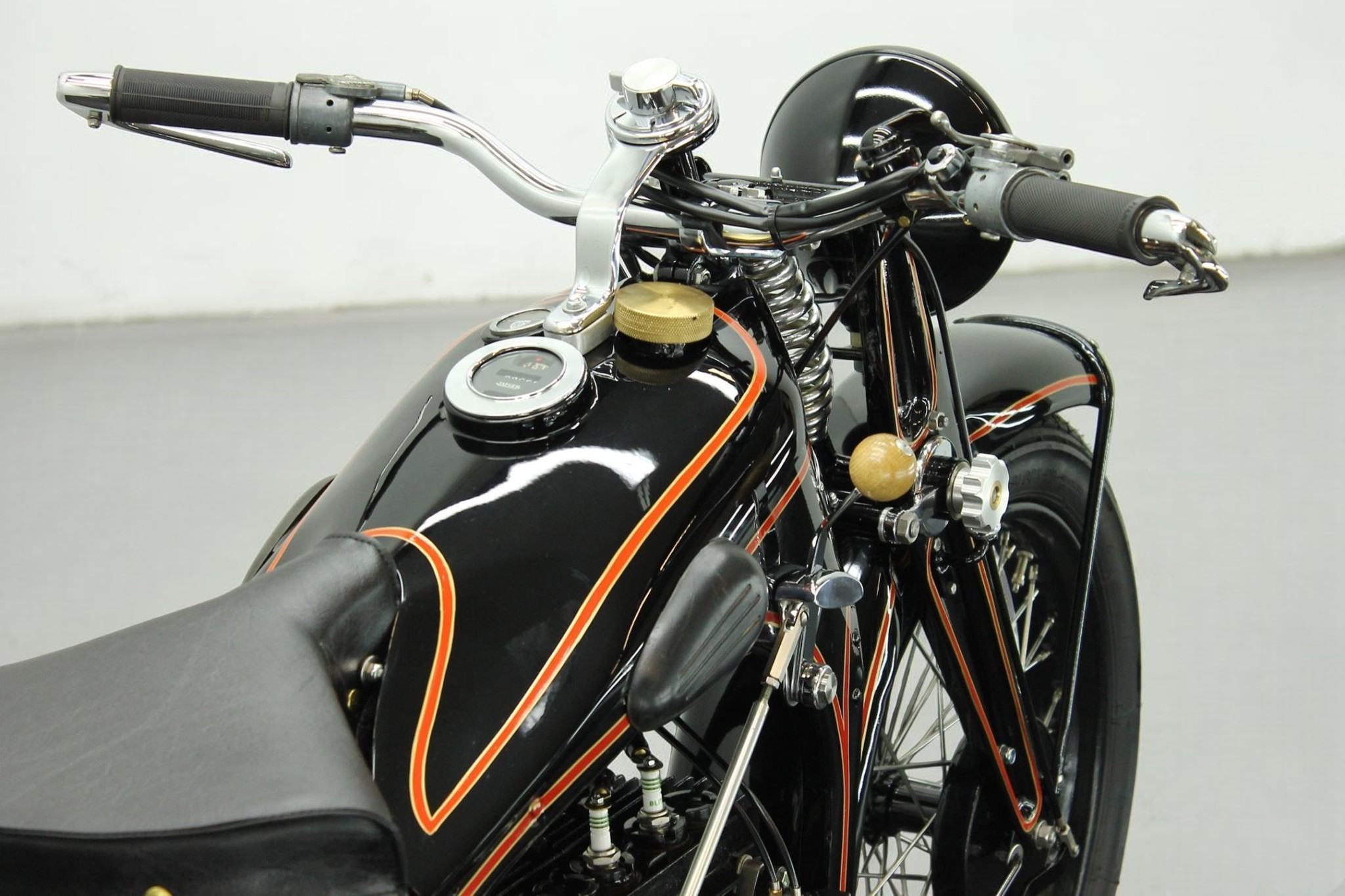
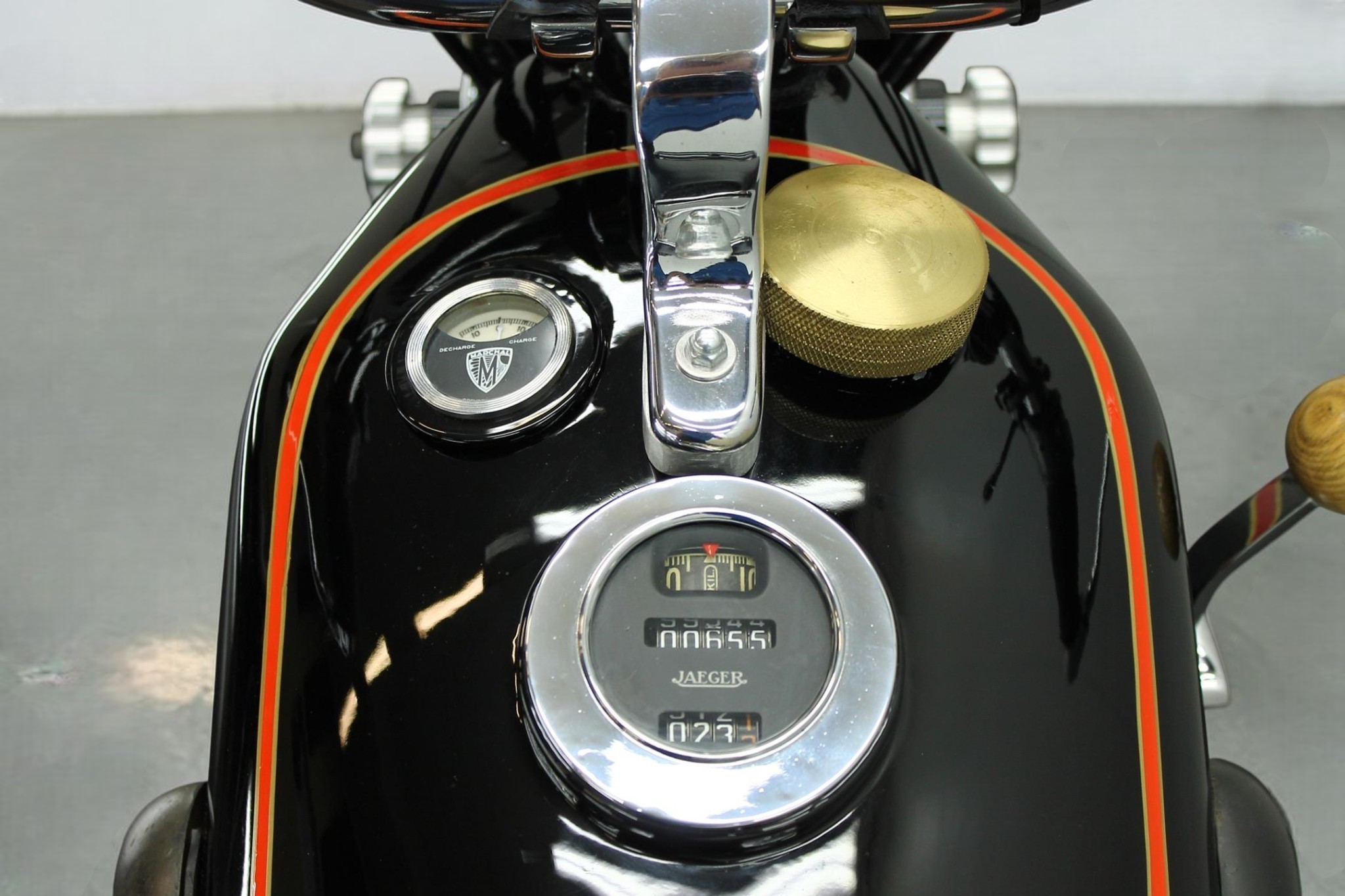
The chassis uses a pressed-steel double-cradle frame, an advanced construction method for its period. The motorcycle was also equipped with distinctive Gazda flexible leaf-spring handlebars and a comprehensive instrument arrangement that could include an ammeter, speedometer, and Jaeger eight-day clock mounted above the fuel tank.
The 1931 Monobloc is an important example of French interwar motorcycle engineering because it combined unusual mechanical design with a practical road-going format. Its rarity today makes surviving original and correctly restored examples especially significant to collectors.
Henri Dresch established his motorcycle company in France during the 1920s with the objective of producing motorcycles that were practical, reliable, and comparatively affordable. By the end of the decade, Dresch had become an established French manufacturer and was developing increasingly sophisticated motorcycles.
Pierre de Font-Réaulx, associated with the DFR marque, was responsible for the design of the Monobloc. The motorcycle was introduced in 1930 and represented a new generation of Dresch machines built around a pressed-steel chassis and integrated powertrain.
The 500cc Monobloc was presented prominently at the 1930 Paris Salon. Its design was intended to provide a modern and compact motorcycle while retaining the practical characteristics expected by French riders.
The Monobloc continued into the 1931 model year and remained part of Dresch's range through the 1930s. Reference sources generally place Monobloc production from 1930 to 1938, although exact production totals are not firmly established.
The motorcycle was also associated with French public-service use. Historical references identify the Monobloc as a standard motorcycle for the Paris gendarmerie from its introduction, demonstrating the confidence placed in the model's practical design.
The 1931 model is particularly interesting because it represents an early production version of the 500cc Monobloc before the later development of the 500cc overhead-valve Supersport derived from the same basic concept.
The 1931 Dresch Monobloc uses a 499cc four-stroke parallel-twin engine with side-valve operation.
The cylinders are arranged longitudinally in the frame and use a 64mm bore and 77mm stroke. The crankshaft is phased at 360 degrees, giving both pistons the same position in their cycle while the firing intervals remain appropriate to the twin-cylinder configuration.
Reference specifications generally give output at approximately 14 horsepower at around 3,500 rpm. Other period and secondary references quote slightly different power figures, so an exact factory-output figure should be treated according to the particular specification and source.
The engine is air-cooled and uses magneto ignition. A separate dynamo is driven by a V-belt from the magneto drive system to provide electrical power.
Lubrication is provided by an automotive-type oil pump, another indication of the engineering approach used by Dresch on the Monobloc.
Period road-performance figures generally place maximum speed at approximately 105-110 km/h. Actual performance varies according to engine condition, carburetion, ignition timing, gearing, tire condition, and restoration quality.
The 500cc twin was designed as a substantial road motorcycle rather than a lightweight sporting machine, providing useful torque and steady performance for touring and official road use.
The Monobloc uses a three-speed manual transmission integrated into the motorcycle's unusual powertrain arrangement.
The clutch and gearbox are mounted at the end of the camshaft and are driven through a pair of bevel gears. This arrangement allowed Dresch to package the transmission within the overall power unit rather than using a conventional separate gearbox positioned behind the engine.
Power is then transmitted to the rear wheel through a longitudinal shaft and bevel final drive.
Dresch advertisements described the system as cardan transmission, but technical descriptions of the Monobloc indicate that the shaft system did not use a conventional cardan universal joint. The shaft arrangement incorporated an elastic coupling on the gearbox side and a rigid coupling at the bevel-drive end.
The rear-drive arrangement was one of the most technically distinctive aspects of the Monobloc and helped give the motorcycle a clean and enclosed final-drive layout.
Later development of the braking and rear-drive arrangement moved the rear braking system to the wheel side of the bevel drive rather than retaining the earliest arrangement on the transmission shaft.
On a surviving 1931 example, the gearbox should be checked for correct engagement of all three ratios, clutch operation, bevel-drive condition, shaft alignment, bearing wear, and abnormal mechanical noise.
The 1931 Dresch Monobloc uses a pressed-steel double-cradle frame, one of the model's most significant structural features.
Pressed-steel construction allowed Dresch to produce a strong and relatively compact chassis while supporting the company's emphasis on standardized manufacturing and cost control.
The frame surrounds and supports the 500cc twin-cylinder power unit and provides a distinctive appearance compared with the tubular frames used by many contemporary motorcycles.
The front suspension uses a period parallelogram-type fork. The design provides limited suspension movement appropriate to the technology of the early 1930s.
The rear of the chassis is essentially rigid, with the rider's comfort assisted by the sprung saddle and the flexible Gazda handlebars.
The Gazda handlebars are particularly characteristic of Dresch motorcycles. They use spring-like leaf elements to provide additional compliance at the handlebars and reduce the transmission of road shocks to the rider.
When evaluating a surviving Monobloc, the pressed-steel frame should be checked carefully for corrosion, deformation, previous repairs, cracks around mounting points, and evidence of accident damage.
The 1931 Dresch Monobloc uses conventional spoked motorcycle wheels and period balloon-type tires.
Reference specifications commonly associate the Monobloc with 19-inch wheels and 3.50 x 19 tires, although individual surviving motorcycles should be checked for their exact period equipment.
The front brake is a mechanically operated drum brake.
The earliest Monobloc braking arrangement used an unusual rear brake acting on the transmission shaft through an external-shoe mechanism. The system was subsequently moved to the rear wheel on the opposite side of the bevel-drive assembly.
This unusual braking arrangement is an important technical detail when assessing a 1931 motorcycle because surviving machines may show variations according to production sequence or restoration history.
The brake drums, shoes, operating levers, cables, hubs, wheel bearings, and tires should all be inspected carefully before operating a preserved or restored example.
Compared with modern motorcycles, the braking performance is limited, and safe operation requires consideration of the original braking technology and period tire characteristics.
The Monobloc has a distinctive appearance that reflects Dresch's attempt to create a modern French motorcycle at the beginning of the 1930s.
The pressed-steel frame gives the motorcycle a clean and substantial structure, while the longitudinal parallel-twin engine creates a distinctive mechanical profile.
The motorcycle was generally finished with a restrained presentation rather than excessive decoration. Dresch's engineering philosophy emphasized practical transportation and manufacturing efficiency.
The fuel tank incorporates a metal cover over its upper surface. Depending on specification, this cover could accommodate an ammeter, speedometer, and Jaeger eight-day clock.
The Jaeger clock is particularly notable because its dial could carry the Dresch name, making it both a useful instrument and a distinctive period detail.
The flexible Gazda handlebars are another defining feature and are among the most recognizable details of the Monobloc's chassis.
Together, the pressed-steel frame, inline-twin engine, shaft drive, flexible handlebars, and integrated instruments give the 1931 Monobloc an appearance unlike most contemporary French motorcycles.
The 1931 Dresch Monobloc belongs to the early production period of the 500cc model introduced in 1930.
The motorcycle continued to use the 499cc side-valve parallel twin with its 64mm bore and 77mm stroke, three-speed integrated gearbox, and shaft final drive.
The pressed-steel frame remained central to the model's design and was part of Dresch's broader effort to standardize production across its range.
The 1931 Monobloc should not be confused with the later 500cc Supersport. The Supersport was introduced in 1932 and used an overhead-valve engine derived from the Monobloc concept.
The 1931 model therefore represents the original side-valve form of the 500cc Monobloc before the development of the more powerful OHV derivative.
Exact production numbers for the individual 1931 model year are difficult to establish, so claims of a precise surviving population should be treated cautiously.
The 1931 Dresch Monobloc has the substantial road presence expected from a 500cc motorcycle but retains the relatively compact proportions of the Dresch chassis.
The parallel-twin engine provides smooth and steady power delivery compared with a contemporary single-cylinder motorcycle, while the three-speed transmission keeps the mechanical arrangement relatively simple.
The shaft final drive gives the motorcycle a clean drivetrain and eliminates the exposed final-drive chain used by many motorcycles of the period.
The flexible Gazda handlebars help reduce vibration and road shock reaching the rider, complementing the sprung saddle and rigid rear chassis.
With a period top speed of approximately 105-110 km/h, the Monobloc was capable of sustained road travel but was not intended to provide the high-speed performance of later sporting motorcycles.
The rider must account for the period braking system, narrow tires, limited suspension travel, and three-speed gearbox when operating a surviving example today.
The Dresch Monobloc occupies an important position in the development of French motorcycles during the early 1930s.
Its pressed-steel frame and integrated engine, clutch, gearbox, and shaft-drive arrangement demonstrate the extent to which French manufacturers were experimenting with motorcycle construction during the interwar period.
The 499cc side-valve twin provided a substantial power unit for the time while the enclosed shaft final drive gave the motorcycle a sophisticated appearance and reduced exposure of the drivetrain to road dirt.
The Monobloc also served as the basis for later Dresch developments, including the 500cc Supersport introduced in 1932 with an overhead-valve engine.
The model's association with the Paris gendarmerie further contributes to its historical importance and illustrates its reputation as a practical and capable road motorcycle.
Dresch continued to develop motorcycles during the 1930s, but the economic environment became increasingly difficult and the company eventually disappeared as a significant motorcycle manufacturer.
The 1931 Dresch Monobloc is a highly distinctive collector motorcycle because it combines French interwar engineering with an unusual integrated powertrain.
Surviving examples are rare compared with motorcycles produced by larger European manufacturers, making original mechanical components and documented history particularly valuable.
The 499cc side-valve twin, pressed-steel frame, three-speed gearbox, shaft final drive, Gazda flexible handlebars, and period instrument arrangement are central to the identity of the model.
The Jaeger eight-day clock, where fitted, is an especially interesting period accessory because its dial could carry Dresch branding.
Original frame and engine numbers, correct early Monobloc components, original paint, period controls, correct wheels, and surviving factory equipment can all contribute to collector significance.
Provenance supported by French registration documents, factory literature, period photographs, military or government records, and long-term ownership history can substantially strengthen an example's historical value.
Authenticating a 1931 Dresch Monobloc requires careful examination of the engine, frame, transmission, shaft drive, chassis components, and period equipment.
The motorcycle should have the 499cc parallel-twin side-valve engine with the correct 64mm bore and 77mm stroke configuration.
The integrated three-speed transmission and shaft final drive are essential characteristics of the Monobloc and should be examined carefully for correct construction and period components.
The pressed-steel double-cradle frame is another major identifying feature. Frame repairs, replacement sections, corrosion damage, and alterations should be documented during an originality assessment.
The Gazda flexible handlebars are particularly valuable evidence of period specification, while the tank-mounted instrument cover and optional Jaeger clock can provide additional clues to the motorcycle's original configuration.
The front drum brake and unusual rear braking arrangement should also be examined because changes to the braking system may have occurred during restoration.
The 1931 Monobloc should be distinguished from the later 1932 500 Supersport, which used an overhead-valve engine. A side-valve 499cc twin is consistent with the earlier Monobloc design.
A convincing example should demonstrate consistency between its engine, frame, gearbox, shaft drive, braking system, controls, bodywork, instruments, and historical documentation.
The 1931 Dresch Monobloc matters because it represents one of the more unconventional approaches to motorcycle engineering during the interwar period.
Its 499cc parallel-twin side-valve engine, integrated three-speed transmission, shaft final drive, and pressed-steel frame demonstrate Dresch's willingness to move beyond the conventional motorcycle layouts of the period.
The motorcycle also illustrates the influence of Pierre de Font-Réaulx, whose engineering work helped shape the Monobloc and later DFR-related developments.
The model's association with the Paris gendarmerie adds another important element to its historical story, showing that the design was considered suitable for practical official service.
The 1931 version is especially significant because it represents the early side-valve form of the 500cc Monobloc before the arrival of the OHV Supersport derivative in 1932.
For collectors of rare European motorcycles, the 1931 Dresch Monobloc offers a combination of unusual engineering, French industrial history, distinctive styling, and scarcity that makes it an important pre-war motorcycle.
This 1931 Dresch Monobloc represents an exceptionally distinctive example of French pre-war motorcycle engineering and the early production form of Dresch's innovative 500cc flagship.
The 499cc side-valve parallel-twin engine uses a 64mm bore and 77mm stroke and produces approximately 14 horsepower at around 3,500 rpm. Period and reference sources generally place maximum speed in the region of 105-110 km/h.
The integrated three-speed gearbox, unusual clutch and bevel-drive arrangement, shaft final drive, pressed-steel double-cradle frame, and Gazda flexible handlebars make the Monobloc technically distinctive among motorcycles of its period.
The motorcycle's period equipment could include a speedometer, ammeter, and Jaeger eight-day clock incorporated into the metal cover above the fuel tank, providing additional evidence of the sophisticated equipment offered by Dresch.
As an early Monobloc, the 1931 model is also historically significant because it predates the 1932 500cc Supersport and retains the original side-valve twin-cylinder configuration.
Contact us for additional photographs, detailed specifications, frame and engine numbers, service history, originality assessment, provenance, restoration details, historical documentation, and purchasing information for this 1931 Dresch Monobloc.
The Vintage Motorcycles presents a curated selection of historically significant French vintage motorcycles, with a dedicated focus on Dresch Motorcycles, a manufacturer that reflects the practical engineering mindset of early 20th-century France. Developed during a formative industrial period, Dresch motorcycles represent a transition stage between bicycle-derived motorized frames and more structured pre-war motorcycle architecture.
This collection is contextualized within the broader ecosystem of global motorcycle history, where you can explore additional manufacturers through our global vintage motorcycle brands archive. Within the French engineering landscape, Dresch stands alongside other important marques that contributed to early mobility solutions. These machines are best understood within the framework of pre-war motorcycle engineering (1900-1939), a period defined by experimentation, mechanical diversity, and gradual standardization of motorcycle design across Europe.
Each motorcycle within our collection is carefully selected based on provenance, originality, and mechanical integrity, ensuring alignment with museum-grade preservation standards. Available machines can be explored through our global vintage motorcycle inventory, including both solo machines and historically accurate configurations such as sidecar applications found in our sidecar motorcycle collection. All acquisitions are supported by a fully insured international shipping service designed for global collectors.
French motorcycle engineering developed through a period of intense mechanical experimentation, where manufacturers such as Dresch focused on creating practical, road-oriented machines for everyday use. Rather than pursuing extreme performance, Dresch emphasized mechanical accessibility, durability, and adaptability to varied road conditions typical of early European infrastructure.
This engineering evolution can be further understood by examining broader historical transitions, from the experimental pre-war era documented in pre-war motorcycle development, to the more structured and industrialized approaches that emerged after global conflict. During and after World War II, motorcycle design increasingly shifted toward utility and military applications, as seen in wartime motorcycle engineering, where durability and field reliability became essential design priorities.
In the post-war period, this evolution continued toward mass production and standardized engineering solutions, which is further explored in post-war motorcycle development. Across all these phases, Dresch represents an important reference point in understanding how French manufacturers contributed to the broader trajectory of European motorcycle design.
Key Highlights
Collector Assurance
All enquiries handled with discretion. We typically respond within 6 hours.
Choose the payment method that is most convenient for you. We accept widely used international payment methods as well as, where available, local bank transfer options that allow you to pay like a domestic transaction. Full payment instructions are provided for your specific purchase.
Direct international bank wire transfer is available for motorcycle purchases and export transactions.
Credit card payments can be arranged through Wise.com, subject to the applicable payment and processing conditions.
PayPal is accepted. A 5% PayPal processing fee applies to the transaction.